Blitz Distribution leases 38,000 sqm at Garbe Industrial site in Werne

Blitz Distribution GmbH, a subsidiary of GigaCloud Technology Inc., has signed a lease for logistics and office space at Garbe Industrial’s facility in Werne, North Rhine-Westphalia. The lease includes approximately 37,000 square metres of warehouse space and 1,000 square metres of office and social space. The company plans to use the site for fulfilment operations involving furniture, household goods, and fitness equipment.

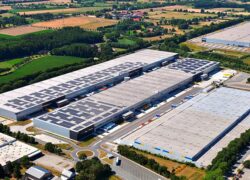
Garbe Industrial’s logistics centre in the Wahrbrink industrial estate, where the leased space is located, was developed following the acquisition of a former IKEA site in 2018. The site spans a total area of 295,000 square metres. Garbe Industrial renovated the location, developed over 123,000 square metres of new building area, and leased the revitalised space to various tenants. An additional 45,000 square metres continues to be used by logistics and manufacturing firms.

The leased facility includes 30 loading docks to support efficient handling of goods. According to Garbe Industrial, the site offers strategic benefits due to its location within the Rhine-Ruhr metropolitan region and its proximity to key transportation infrastructure. It lies directly on the B54 federal road, with access to the A1 and A2 motorways, linking Hamburg to Cologne and Berlin to the Ruhr area. A bus stop offering public transport access is located 200 metres from the property.

The new buildings at the Werne site are certified to the Gold Standard by the German Sustainable Building Council (DGNB). A photovoltaic installation on the warehouse roofs provides a peak energy output of 4.8 megawatts, contributing to the site’s renewable energy usage.

Garbe Industrial stated that demand for high-quality logistics space remains steady, even in a challenging market. The leasing process was facilitated by BNP Paribas Real Estate Düsseldorf. Blitz Distribution’s presence in Werne is intended to expand the group’s fulfilment capacity in Germany and support its cross-border logistics operations in Europe.
MS Galleon Group signs lease for new office space at Diuna complex in Warsaw

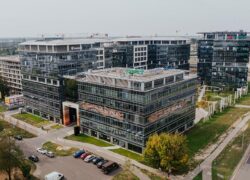
MS Galleon Group, a major private capital group owned by Michał Sołowow, has signed a lease agreement for 3,000 square meters of office space in the Diuna office complex in Warsaw’s Służewiec district. An additional 700 square meters will be dedicated to a showroom featuring the group’s flagship brands, Cersanit and Barlinek. The company’s employees are expected to begin relocating to the new headquarters in September.

The leased space spans Buildings B and D at 7 Taśmowa Street. The office will accommodate over 200 employees from MS Galleon’s portfolio companies, including Barlinek, Columbus Pro, Corab, Cersanit, Ekovoltis, and Komfort. MS Galleon oversees more than 30 companies across sectors such as manufacturing, renewable energy, retail, biotechnology, and advanced technologies, employing over 15,000 people globally and operating in more than 100 countries.

According to Piotr Lipko, Managing Director and Board Member at MS Galleon Group, the decision was based on the need for a modern, flexible workspace in Warsaw with strong transport links to key regional hubs in Kielce, Olsztyn, and Łódź. The inclusion of a showroom for Cersanit and Barlinek was also a significant consideration in the selection of the site.

Ewa Lubańska, Leasing Director at Syrena Real Estate, noted that Diuna aims to support the growth of innovative businesses and welcomed MS Galleon’s decision to establish its headquarters there. Grey Select advised MS Galleon during the leasing process.

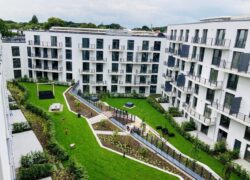
Diuna, formerly Marynarska Business Park, has undergone significant modernization to align with current market standards. Renovations included redesigned entrance lobbies, revitalized outdoor spaces, and the transformation of a former 6,000-square-meter concrete car park into a public green space featuring 50 trees, 96 species of shrubs, a stream, and an educational pavilion.

The complex has achieved several sustainability and quality certifications, including BREEAM In-Use at the “Excellent” level, WELL WSR, and WiredScore. With a total usable area of 46,000 square meters, Diuna is home to tenants such as Colgate, Ford, Daikin Europe, JDE, S.C. Johnson, Accord, and Business Lease. The complex also includes services such as the LUX MED medical center, HARMONIA mental health clinic, Veterio 24-hour veterinary service, and food and beverage outlets including Green Caffè Nero and Gorąco Polecam.

The relocation of MS Galleon further strengthens Diuna’s position as a hub for established enterprises in Warsaw’s commercial landscape.

First tenants move into Bahrenfelder Carré following completion by Catella Investment Management

Catella Investment Management GmbH (CIM), based in Berlin, has completed construction of the Bahrenfelder Carré residential project in Hamburg’s Altona district, marking a significant milestone in the company’s investment strategy in energy-efficient housing. The development comprises 289 residential units—229 privately financed and 60 publicly subsidized—along with five commercial spaces and 139 parking spaces. The building was constructed in accordance with the KfW55 energy efficiency standard.

CIM originally acquired the Bahrenfelder Carré project in 2021 and assumed full responsibility for construction at the end of 2023 after releasing the initial developer from its obligations. The first residents began moving into the completed apartments in mid-July 2025. According to CIM, 50 percent of the apartments were rented or reserved before completion, with subsidized units offered at €6.60 per square meter.

Michael Keune, Managing Director of CIM, stated that the addition of nearly 300 new homes—60 of them publicly subsidized—contributes meaningfully to Hamburg’s housing supply. He noted that the project was delivered during a difficult period for the real estate market, requiring significant coordination among stakeholders. Keune emphasized that affordable, energy-efficient rental properties continue to represent stable investments, even amid broader economic uncertainty.

Georg Nunnemann of Timberment GmbH, who served as an external consultant and client liaison for CIM, highlighted the challenges of taking over a partially completed development. He credited the successful and timely delivery by the end of Q2 2025 to the collaboration and dedication of all project partners.

Located in Hamburg’s Bahrenfeld neighborhood, part of the larger Altona district, the development offers good access to public transit and road networks. Nearby bus stops and S-Bahn stations provide connections to central Hamburg within minutes. Residents also benefit from proximity to green spaces, including Altonaer Volkspark, Goldschmidtpark, and Lutherpark.

The Bahrenfelder Carré is part of the Catella European Residential III (CER III) fund, which focuses on acquiring newly built, energy-efficient, and affordable housing in high-growth regions across Europe. Established in 2019, CER III currently manages approximately €1.0 billion in assets, with a portfolio spanning Germany, Austria, the Benelux countries, France, Scandinavia, Spain, and the United Kingdom.

Average apartment rent in Slovakia reaches €727 in Q2 2025, with regional divergences

The average monthly rent for an apartment in Slovakia reached €727 in the second quarter of 2025, according to a rental market analysis by Deloitte. This figure represents a 5.3 percent decline compared to the first quarter of the year but marks a 2.1 percent increase year-on-year. The data reflect a complex market dynamic, where overall annual growth contrasts with short-term regional fluctuations.

Among Slovakia’s regional centres, Banská Bystrica recorded the highest quarterly growth in rent at 3 percent, followed by Trenčín with a 1.4 percent increase. In contrast, several cities experienced a decline in rental prices over the same period. Bratislava saw the sharpest drop at 8.6 percent, while Žilina and Nitra also recorded quarterly decreases of 6.1 percent and 5.2 percent respectively.

Trenčín had the lowest average monthly rent at €544, while Bratislava remained the most expensive city for tenants with an average monthly rent of €890. Within Bratislava, the district of Vrakuňa recorded a local rise to €669, while Podunajské Biskupice remained the city’s most affordable area with an average rent of €632.

From a year-on-year perspective, Prešov saw the most significant increase in rental prices at 11.1 percent. Other cities with notable annual growth included Banská Bystrica at 10.7 percent, Košice at 7.1 percent, Trenčín at 3.9 percent, and Trnava at 3.8 percent. Conversely, Poprad experienced a year-on-year decline of 4.8 percent, and Žilina followed with a 2.6 percent drop.

Rents for one- and two-room apartments across Slovakia rose by an average of 7.7 percent over the past year. In Bratislava, one-room units saw a 7.6 percent annual increase, while two-room apartments rose by 6.9 percent. Three-room apartments in the capital experienced a more moderate growth of 1.3 percent year-on-year. In contrast, rents for apartments in newly built developments remained stable, indicating a plateau in pricing for premium residential stock.

The variation in price movements across different regions and apartment types highlights ongoing shifts in rental demand. Analysts attribute these trends to post-pandemic mobility, regional economic performance, and the ongoing adaptation to hybrid working models. The Deloitte report provides further evidence of a maturing rental market that is increasingly shaped by local factors rather than uniform national growth.

Source: TASR

EU–US trade agreement tiggers mixed reactions across Europe amid concerns over 15% tariffs

The European Union’s new trade agreement with the United States, concluded on Sunday, has sparked a wave of mixed reactions across European capitals. The deal, which imposes a 15% tariff on EU exports to the US, has been framed by some as a pragmatic resolution to escalating trade tensions, while others see it as a capitulation that may damage the bloc’s long-term economic interests.

European Trade Commissioner Maroš Šefčovič described the agreement as the best outcome achievable under the current circumstances. With the US previously threatening to impose 30% tariffs across a wide range of goods, Šefčovič argued that the deal helped avoid a more damaging scenario and provided much-needed clarity in transatlantic trade relations. Speaking at a press briefing, he acknowledged that the compromise was far from perfect, but maintained it would stabilize an otherwise deteriorating relationship between the two trading powers.

Not all European leaders shared his assessment. French Prime Minister François Bayrou called the outcome a “grim day” for the continent and criticized the EU for what he described as subordination to US interests. Hungarian Prime Minister Viktor Orbán also condemned the result, stating that President Trump had “served von der Leyen for breakfast,” in reference to European Commission President Ursula von der Leyen. In contrast, Italian Prime Minister Giorgia Meloni praised the deal for averting a potentially destructive economic confrontation, labeling the 15% tariff level as sustainable given the alternatives.

In the Czech Republic, responses have also been divided. Agriculture Minister Marek Výborný told the Czech News Agency that while the result was not worth celebrating, it at least brings an end to the prolonged uncertainty that has surrounded EU-US trade relations in recent months. Industry and Trade Minister Lukáš Vlček echoed this sentiment, emphasizing that the deal was not ideal but preferable to a deeper trade conflict.

Economists remain cautious about the potential effects on national economies. David Marek, chief economist at Deloitte, estimated that the 15% tariff could reduce the Czech Republic’s GDP by 0.3 to 0.4 percent. He noted that key export sectors such as machinery, electronics, chemicals, and pharmaceuticals would likely bear the brunt of the impact. Analysts at the Czech News Agency also projected a slight slowdown in the Czech economy as a result of the agreement, particularly if certain sectors struggle to absorb the new costs.

Meanwhile, market reactions have been volatile. European stock indices initially surged to a four-month high following the announcement but later retreated as investors reassessed the long-term implications. Reuters reported that the deal largely favors Washington, with Brussels lacking sufficient leverage to extract better terms.

Despite the criticism, some observers viewed the agreement as a necessary step to avoid broader economic disruption. Pavel Peterka, chief economist at XTB Czech Republic, argued that while the tariff is far from ideal, the greater risk had been an uncontrolled escalation in trade tensions. He said that a full-blown tariff war could have triggered higher inflation in the Czech Republic and dampened global demand for Czech exports, outcomes that have now likely been averted.

Industry groups were quick to assess the practical impact. The Confederation of Industry of the Czech Republic welcomed the avoidance of a tariff war but warned that the agreed 15% duties could harm key industries, including engineering, automotive, and electronics. The Czech Automotive Industry Association issued a cautious statement, saying the deal restored a degree of predictability but that the details of implementation would be decisive. They expressed particular concern over the continued tariffs on cars and auto parts, which they described as high and potentially damaging to competitiveness.

While the trade agreement may have defused a tense standoff, it has also raised questions about the EU’s negotiating power and the long-term trajectory of transatlantic economic relations. With both sides expected to reconvene in the coming months to review implementation and consider adjustments, European stakeholders are watching closely to determine whether the current terms can evolve into a more balanced and mutually beneficial framework.

Source: CTK

Czech housing prices and rents continue to climb in Q2 2025

The Czech residential real estate market saw continued quarter-on-quarter growth in both flat prices and rental rates during the second quarter of 2025, while single-family home prices remained flat at the national level. Compared to the same period in 2024, however, all housing types posted year-on-year increases, according to data from Bezrealitky.cz.

The average price for resale flats in good condition reached CZK 108,486 per square meter (sqm), reflecting robust demand amid improving financing conditions. Mortgage rates, which had been declining in recent months, played a key role in stimulating buyer activity across both the primary and secondary housing markets. Detached family homes sold at an average of CZK 62,904 per sqm, unchanged from Q1. Meanwhile, residential rents rose to an average of CZK 351 per sqm nationwide.

Prague Leads in Price and Rent Growth

In Prague, the average sale price for flats rose by 5% quarter-on-quarter to CZK 146,653 per sqm in Q2. Demand was concentrated in smaller units, which remain more affordable in absolute terms despite their higher price per square meter compared to larger apartments. This aligns with broader affordability trends reported in the capital in recent quarters.

Central Bohemia followed with a 4% increase to CZK 88,940 per sqm, while Brno recorded a 1% quarter-on-quarter rise to CZK 100,409. The Liberec and Hradec Králové regions saw the sharpest increases—both up 9%—with average flat prices reaching CZK 72,748 and CZK 79,235 per sqm, respectively. These gains were attributed to growing demand for recreational housing in foothill regions.

In contrast, the Zlín Region was the only area to record a quarterly decline, with flat prices falling 3% compared to Q1 2025.

Family House Market Mixed Across Regions

While national prices for family houses remained flat, regional differences were more pronounced. In the South Moravian Region, prices for single-family homes surged 9% quarter-on-quarter to CZK 66,568 per sqm. Similar growth was reported in the Plzeň and Karlovy Vary regions, both up 7% to CZK 51,258 and CZK 40,099 per sqm, respectively.

Despite no price change in Prague (holding at CZK 110,541 per sqm), the Moravian-Silesian Region saw a 6% decline, bringing the average price down to CZK 42,550 per sqm—one of the lowest nationally.

Rent Prices Hit Record Levels in the Capital

Rental prices in Prague grew 7% quarter-on-quarter to a record CZK 434 per sqm—the largest increase since Q2 2022. Demand for rental units remains intense, with each listing in the capital attracting an average of 45 inquiries. Nationwide, the average was 25 inquiries per listing, indicating broader market pressure.

In the Central Bohemian Region, rents increased to CZK 301 per sqm. In Brno and surrounding areas, however, rents remained stable at CZK 326 per sqm, following significant hikes in 2024.

Market Outlook

Commenting on the trends, Hendrik Meyer, CEO of European Housing Services (owner of Bezrealitky.cz), noted that recent mortgage incentives had stimulated transactions in both flats and houses. “While Prague’s flat prices are steadily increasing, regions like Brno and South Moravia are seeing more volatile patterns, possibly pushing buyers toward single-family homes,” Meyer said.

He also pointed to signs of market saturation in some regions, such as Plzeň and Olomouc, where price ceilings may have been reached. Meanwhile, Meyer expects regional cities to drive the next wave of growth, especially in the rental segment.

According to Czech National Bank data (June 2025), average mortgage rates fell to 4.2%—the lowest level in over 18 months—providing further stimulus for homebuyers amid limited new housing supply.

Source: Bezrealitky.cz and CTK

Metropolis residential project redefines urban housing standards in Central Bratislava

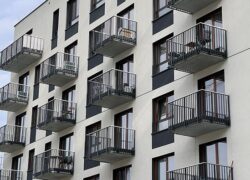
The completion of the Metropolis development at the intersection of Bottova and Chalupkova streets has introduced a new standard for residential living in the heart of Bratislava. Developed by Mint Investments, the two-tower project brings 298 residential units and integrated civic amenities to the city’s downtown, following four years of construction.

The project officially welcomed its first residents in May 2025. According to a press statement from Mint Investments (July 2025), the design focuses on efficient layouts, energy efficiency, and the integration of advanced interior technologies. All apartments—ranging from one-room “Smart City” units to five-room “Premium Living” apartments—feature ceiling-mounted heating and cooling systems, air regeneration systems with up to 94% filtration efficiency (including dust and pollen), and private outdoor space (balconies, terraces, or ground-floor gardens).

Each unit also includes underground parking and direct access to brick storage units. The developer emphasized its focus on energy efficiency and indoor air quality, citing rising demand among buyers for healthy and sustainable living environments.

According to Sebastien Dejanovski of Mint Investments, the design and technology choices were driven by long-term value and resident wellbeing. “Even several of the owners have already purchased, or are considering, a second unit,” Dejanovski stated in a company release. As of July 2025, approximately 80% of the units had been sold.

The ground level of both towers includes a two-storey commercial zone with 20 retail units. The leasing agent Herrys reported that 80% of these commercial spaces have already been secured by tenants, with the Italian food retailer Parmipasta confirmed as one of the initial operators. Katarína Žolák Kupcová of Herrys stated that most businesses are expected to open by the end of 2025 (Herrys, July 2025). The commercial offer includes spaces ranging from 11 sqm to 222 sqm, designed to accommodate diverse service providers including cafés, medical practices, and beauty salons.

The Metropolis complex was designed by City Work Architects, a Czech studio. Chief architect Juraj Sonlajtner noted the importance of integrating urban context and human scale in the project. “The goal was to deliver modern architecture that remains functional and visually coherent over time,” he explained. The semi-private courtyard, designed for communal use and relaxation, includes a children’s play area and green landscaping inspired by London’s residential gardens.

The project’s location in Bratislava’s downtown zone, near major transport routes and the central business district, has made it attractive for both owner-occupiers and property investors. According to Mint Investments, while some units were acquired for investment and rental, the majority of buyers intend to use the residences for their own housing needs—including a share of foreign nationals.

The Metropolis development joins several ongoing projects that reflect growing demand for high-quality urban housing in Bratislava. According to data from the National Association of Real Estate Offices of Slovakia (NARKS), central locations in the capital remain among the most in-demand residential zones, with average new-build prices exceeding €4,800 per sqm in Q2 2025.

The original Istropolis building, located nearby, was constructed in the 1980s and demolished in 2022 to make way for broader redevelopment of the Trnavské mýto area. The Metropolis project represents part of this shift toward higher-density, mixed-use urban environments—a trend also supported by Bratislava’s current zoning and urban planning strategy.

Source: NARKS, Bratislava and TERAZ

Preparatory work set to begin on new Istropolis project in Bratislava

Developer Immocap will begin preparatory infrastructure work by the end of July on the New Istropolis project at Trnavské mýto in Bratislava’s Nové Mesto district. The works, set to take place on a 4.3-hectare site, will initiate the first phase of construction for a major urban redevelopment project that has been described as having city-wide significance.

According to a statement by Immocap cited, the initial activities include utility relocation—water, gas, electricity, and telecommunications—construction site setup, logistical route preparation, fencing adjustments, and modifications to local traffic flows. Arborist interventions are also planned as part of the site clearance.

The first construction phase will consist of two office buildings and one residential building, with an expected completion time of approximately 2.5 years. Immocap plans to begin marketing and selling residential units by autumn 2025.

The developer confirmed that the project has received a valid zoning decision and final building permit for the commencement of works. Further permits will be obtained incrementally throughout the development process. Early construction activity will concentrate along Vajnorská Street and the nearby intersection with Škultéty Street.

Immocap has committed to minimizing disruptions for local residents during construction, including the use of dust control measures, the designation of safe pedestrian corridors, and optimized logistics for heavy machinery access.

The New Istropolis is envisioned as a multipurpose development comprising nine new buildings. Plans include a 3,000-capacity cultural and social hall, two public squares, water features, 600 apartments, and commercial spaces projected to support up to 5,000 jobs. The hall is intended to serve as a modern cultural anchor for Bratislava.

The redevelopment replaces the original Istropolis building, constructed in the 1980s as a congress center for the communist regime. After 1989, ownership transferred to trade unions. In 2017, the building was sold to a private investor following failed negotiations with the Nové Mesto municipal government.

The current project design was publicly presented by Immocap in February 2025. The development is being carried out in partnership with the City of Bratislava under a memorandum of understanding, with both parties identifying the creation of a modern cultural venue as a strategic goal for the capital

Experts criticize Czech government for inaction on housing despite infrastructure gains

Despite major investments in transport and energy infrastructure during the current parliamentary term, the Czech government has failed to address critical shortcomings in the housing sector, according to leading industry experts. While improvements in the country’s road and rail network have been welcomed, the lack of progress in housing construction—particularly in easing bureaucratic barriers and digitizing permitting processes—remains a pressing concern.

Petr Dufek, economist at Creditas Bank, pointed out that the government has not succeeded in reducing the regulatory burden on the construction industry, which continues to hinder new housing projects. “Expectations were high for the digitization of construction proceedings, but these were not fulfilled. As a result, construction activity lags significantly behind domestic demand,” Dufek said. However, he noted that infrastructure investments have helped address long-standing deficits in transport development.

Jan Kasl, chairman of the Czech Chamber of Architects, expressed similar criticism, especially regarding the cancellation of the Supreme Building Authority and the disruption to reforms following amendments to the Building Act. According to Kasl, while there was no collapse in the permitting system, the state halted many long-term conceptual reforms. He emphasized the importance of continuing the recodification of spatial planning and praised Minister Petr Kulhánek for recognizing this need. Kasl also voiced support for policies promoting timber construction, an initiative advanced by Minister Lukáš Vlček.

Concerns about the lack of systemic solutions for affordable housing were raised by Michaela Váňová, executive director of Central Group. She argued that future governments must prioritize public investment in residential construction and criticized the disparity in institutional support between transport and housing. “Transport infrastructure benefits from a dedicated Transport and Energy Construction Authority. A similar body for housing would be a major step forward,” Váňová said.

Housing affordability has also become a focal point in pre-election platforms. The governing coalition TOGETHER has pledged to revive its affordable rental housing program, aiming to facilitate the construction of up to 40,000 new apartments annually. The ANO movement has yet to publish its housing policy, though Vice-President Karel Havlíček has advocated for creating a new Ministry of Economy that would include construction within its remit.

Minister Petr Kulhánek (STAN), who succeeded Ivan Bartoš (Pirates) at the Ministry of Regional Development, has maintained support for cooperative and municipal housing initiatives as well as the revitalization of underused housing stock. Other parties, such as SPD, continue to advocate for cooperative housing and subsidized loans for families. The Social Democrats propose the establishment of a state housing fund to deliver 20,000 units annually, backed by an annual budget of CZK 80 billion—equivalent to 1% of GDP—arguing that public investment in housing should match defense spending.

As the election season approaches, housing policy is likely to remain a key issue. However, experts caution that without significant structural reforms and streamlined permitting procedures, ambitions to increase housing availability may once again fall short.

Source: CTK

Bratislava launches long-awaited tram line through Petržalka

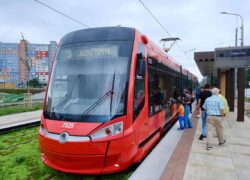
A major public transport milestone was reached today with the launch of tram service through Petržalka, Slovakia’s largest housing estate. The completion of this new tram line marks the end of a decades-long wait for a modern transit connection between Petržalka and the city centre.

The new infrastructure offers improved public transport access and includes upgraded roads, pavements, and a 6-kilometre dedicated cycling route. City officials anticipate that the line will ease daily commutes, enhance mobility across the Danube, and raise the overall quality of urban life in the capital.

Mayor Matúš Vallo highlighted the project’s significance, thanking residents for their patience and acknowledging the complex implementation process. “We faced numerous challenges, but the outcome is a transport system that benefits the entire city,” said Vallo. He also credited the European Union and the Slovak Ministry of Transport for financial support.

The tram line—designated as Line 3—is expected to become the city’s most frequented, with nearly 500 connections per day. It is designed to integrate with local bus routes to ensure easy access from areas outside the tram corridor. Transit infrastructure, including combined bus and tram stops, has been strategically placed to maximize convenience and safety for users.

Jozef Ráž, Minister of Transport, confirmed that the project received €86 million in funding, including €73 million from EU sources and €8.6 million from the state budget. He emphasized that rail-based solutions like the Petržalka tram are a core part of the government’s sustainable urban transport strategy.

Juraj Droba, Chairman of the Bratislava Self-Governing Region, described the tram line as a key step toward rebalancing public and private transport in the region. Currently, about three-quarters of commuters rely on private cars. Regional authorities are aiming for a 50:50 modal split through a Sustainable Mobility Plan, in which projects like the Petržalka tram play a central role.

Iveta Jančoková, Deputy Mayor of Petržalka, expressed hope that the tram extension will boost both local mobility and inter-district connectivity, encouraging visits to Petržalka for cultural and recreational activities.

Martin Rybanský, Chair of the Board of Bratislava’s Transport Company, said the tram line will provide fast, ecological transport. “We aim to offer a public transport system that is a real alternative to car use,” he added.

A representative of the European Commission’s office in Slovakia emphasized that the tram line demonstrates the tangible benefits of EU membership, calling it an example of improved connectivity, sustainability, and quality of life supported by European funds.

Construction on the line began in late 2021 and faced numerous delays due to COVID-19, inflationary pressures linked to the war in Ukraine, and unexpected site conditions, including hazardous waste, wartime remnants, and structural obstacles. Despite these setbacks, the project was completed and began operation as scheduled.

In addition to the tram line itself, the development includes a new 6 km segregated cycle path connecting Petržalka to the city centre. Several roads and intersections were reconfigured, and new bridges were constructed, including a major crossing at Rusovská Road and a 110-metre tram bridge near the Parish Church of the Holy Family.

Environmental considerations were also incorporated. Over 22,000 m² of green track cover has been installed, along with more than 1,500 trees and 7,000 m² of shrubbery planted along the corridor. Additional trees and bushes were planted as part of offset requirements, and green roofs have been added to tram shelters.

While some finishing work along the route remains, the tram is now fully operational. Attention is shifting to the modernization of the Ružinov tram line—one of the city’s remaining radial routes—with procurement for construction already underway.

The project was co-financed by the European Union under the Programme Slovakia.

Source & Photo: Bratislava.sk

LATEST NEWS