Global residential real estate market reaches €260 trillion, Czech Republic ranked 34th

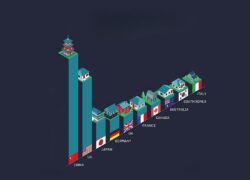
The global residential real estate market was valued at approximately €260 trillion (CZK 6,500 trillion) at the end of 2024, according to an analysis by Savills World Research. This marks a 2.7% year-on-year decline, yet the total value remains 19% above pre-pandemic levels recorded in 2019, reflecting long-term growth trends following the COVID-19 recovery period.

Despite the annual drop in total value, the majority of countries saw an increase in residential real estate driven by rising property prices and expanding housing stock. The Czech Republic is positioned 34th globally, with an estimated residential property value of €1 trillion (roughly CZK 25 trillion), based on Savills data.

China and the United States continue to dominate the global residential landscape. China accounts for 29% of the total value, while the U.S. contributes 18%, which represents a 5.1% increase compared to the previous year. Other top-ranking countries include Japan, Germany, the United Kingdom, France, Canada, Australia, South Korea, and Italy. Together, these ten markets make up 71% of the global residential real estate value.

Australia and Italy are among the latest entrants into the top ten. Australia rose from 11th place in 2019 to 8th in 2024, while Italy advanced from 12th in 2022 to 10th in 2024. Within Europe, the Netherlands and Spain have also made notable gains. The Netherlands climbed from 19th to 15th position between 2019 and 2024, and Spain moved up from 20th to 17th, largely due to constrained housing supply pushing up property prices.

Paul Tostevin, Head of Savills World Research, noted that while increasing residential value may reflect economic growth and market expansion, it can also be indicative of declining housing affordability in key global cities. Tostevin further emphasized that residential wealth remains unevenly distributed. Europe holds roughly 25% of the global residential real estate value despite comprising only 10% of the global population. Similarly, North America accounts for 22% of value while housing just 6% of the world’s population. In contrast, Asia and Africa, which are home to the largest shares of global population, hold significantly lower proportions of residential wealth.

Savills highlights India as a prime example of untapped potential. Although it is the world’s most populous nation, India currently ranks only 16th globally in terms of total residential property value, underscoring the scope for future market expansion in rapidly developing regions.

These findings illustrate not only the global concentration of residential wealth but also point to regions where demographic and economic shifts may drive future growth. The data underlines the enduring structural imbalances in global housing markets and the continued importance of policy measures to manage both supply and affordability.

Source: Savills World Research

Warsaw office market sees surge in new supply amid decline in development pipeline

The Warsaw office market experienced a significant increase in new office space completions in Q2 2025, with nearly 80,000 sqm delivered—the highest quarterly volume since late 2022. This uptick was driven by major projects such as The Bridge by Ghelamco (47,000 sqm), Office House by Echo Investment (27,800 sqm), and Nowa Bellona (4,800 sqm), all of which were completed in the Rondo Daszyńskiego area. The data comes from BNP Paribas Real Estate Poland’s latest Review: Warsaw Office Market, Q2 2025.

Despite the surge in completions, the development pipeline is contracting. At the end of June, only around 150,000 sqm of office space was under construction—the lowest level recorded in several years. This suggests that new, modern office space, particularly in prime locations, may become more limited in the near future.

Key projects currently under construction include Upper One (35,500 sqm), V Tower (30,800 sqm), and Studio A (26,600 sqm), all of which are located in central Warsaw.

Demand for office space remains steady. Gross leasing activity in Q2 2025 totalled 154,700 sqm, bringing the H1 total to more than 300,000 sqm, which represents a year-on-year decrease of 5%. Lease renewals dominated Q2 transactions, accounting for 59% of activity, while new leases made up 34% and expansions 6%. Pre-lease agreements remained limited, contributing just 4.1% to the total, according to BNP Paribas Real Estate Poland.

The largest transaction in the quarter involved Polkomtel, which extended its 22,000 sqm lease at Multimedialny Dom Plusa in Służewiec. Other large transactions included an 18,000 sqm lease by an undisclosed tenant at Generation Park X in City Centre West and PZU’s 6,500 sqm renewal at Konstruktorska Business Center.

Vacancy rates across Warsaw stood at 10.8% at the end of June 2025, with 683,000 sqm of space unoccupied. The vacancy rate in the city centre declined to 7.8%, while in non-central areas it rose to 13.3%. The highest rate was observed in Służewiec (21.1%), while City Centre West and Ursynów-Wilanów recorded the lowest (5.4% and 7.3%, respectively). Buildings completed in the past five years had the lowest vacancy rate at 4.9%, compared to 7% for buildings aged six to ten years and 13.7% for those over ten years old.

Rental levels have remained stable, particularly in central locations. According to Ewa Nicewicz, Senior Consultant at BNP Paribas Real Estate Poland, prime rents in the city centre range from EUR 22.50 to EUR 26.00 per sqm per month, with top-end developments reaching up to EUR 28.00. Rents in non-central zones vary between EUR 14.00 and EUR 18.00 per sqm, with service charges reaching PLN 40 per sqm.

This mix of robust leasing activity and a shrinking development pipeline signals that availability in Warsaw’s office market could tighten, particularly in central zones, if new supply does not increase in the coming quarters.

Source: BNP Paribas Real Estate Poland

DIW Economic Barometer signals sluggish German recovery amid ongoing uncertainty

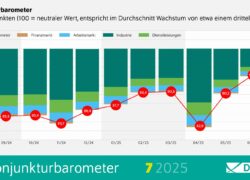
Germany’s economic recovery remains uneven, according to the latest data from the German Institute for Economic Research (DIW Berlin). The DIW Economic Barometer for July dropped slightly to 92.3 points, down from 93.2 in June, moving further below the neutral 100-point benchmark that signals average economic growth.

While June had marked a two-year high, July’s decline underscores continued volatility. DIW’s Chief Economist, Geraldine Dany-Knedlik, stated that the recovery is proceeding as anticipated, but not without disruptions. She noted that a temporary boost in exports during the first half of the year—prompted by anticipated tariff hikes from the United States—has now faded. Meanwhile, recently announced investment measures aimed at stimulating public and private spending are expected to have a delayed impact.

Germany’s export sector is under pressure from structural challenges, including declining international competitiveness and persistent trade policy tensions. Although a recent agreement between the European Union and the United States has helped reduce immediate uncertainty, its long-term stability and implications remain unclear. According to Dany-Knedlik, this environment of unpredictability is likely to encourage continued caution among businesses and consumers.

German industry has shown signs of modest improvement since the downturn experienced last winter. Industrial production increased in May, but order intake remains low. Government investment packages may support higher order volumes in the future, although concerns about high production costs and weak global competitiveness persist. The ifo Business Climate Index showed a slight improvement in July, suggesting that clearer policy signals are helping firms with planning and forecasting, despite ongoing tariff effects.

The services sector has yet to show meaningful signs of recovery. Retail activity has been stagnant, and consumer sentiment remains subdued amid ongoing labour market pressures. Job security and income stability remain top concerns, contributing to weak household spending. Analysts expect that any noticeable rebound in consumption is unlikely before 2026.

Economic expert Guido Baldi of DIW Berlin suggested that Germany will need to remain patient as it waits for momentum to build. He highlighted the broader geopolitical context as a continuing constraint but noted that forthcoming government investments could begin to produce tangible economic benefits in the near term.

Source: DIW Berlin

Opteamic explores acquisitions to expand presence in Poland’s temporary labour market

Polish outsourcing firm Opteamic Group has announced plans to expand through acquisitions of local temporary employment agencies. The move is part of a broader strategy to enhance its service offering and respond more effectively to regional labour market dynamics.

According to the Polish HR Forum, Poland’s temporary employment sector serves over one million workers annually, with a growing proportion made up of foreign nationals. This has increased the demand for service providers who can manage recruitment, employment planning, cost control, and legal compliance. Opteamic President Jakub Kizielewicz stated that employers increasingly expect comprehensive support, particularly with the legalisation of foreign workers and compliance with labour regulations.

Opteamic currently operates across several regions in Poland and aims to grow its local presence both through acquisitions and organically. The company is also expanding its consulting services, advising clients on flexible employment models and large-scale recruitment programmes, particularly for logistics and industrial operations. Kizielewicz emphasized that Opteamic seeks to act not merely as a labour provider, but as a long-term partner familiar with the operational needs of the sectors it serves.

Market compliance and regulatory transparency remain central to Opteamic’s approach. As noted by Kizielewicz, companies that prioritise transparency and adhere to environmental, social and governance (ESG) principles have a competitive advantage. Opteamic claims to provide clear contracts, compliance with the Labour Code, and trained staff familiar with legal and procedural requirements. This is particularly relevant in a sector where, according to industry observers, the grey economy and undeclared work remain ongoing concerns.

A third of all temporary workers in Poland are foreign nationals, many of whom lack local language skills or familiarity with Polish institutions. In response, Opteamic provides employees with assistance beyond the employment contract, including help with accommodation, legal paperwork, and access to training and development programmes. The company also organises integration initiatives to build cohesion within local teams.

There are currently around 9,000 employment agencies operating in Poland, with several thousand focused on temporary labour. Industry consolidation is ongoing, as smaller agencies seek partnerships with firms that can offer legal support and digital infrastructure. Kizielewicz stated that Opteamic prefers to work with agencies that already have solid reputations and client relationships, offering clear acquisition procedures and support for integration.

The company sees its acquisition strategy as a means to enhance regional responsiveness while maintaining its operational standards. Kizielewicz concluded that Opteamic is seeking partners who share its emphasis on legal compliance, employee welfare, and transparent practices. The aim, he said, is to build a modern labour services offering that balances efficiency with social responsibility.

Panattoni completes logistics facility in Szczecin, generating 500 new jobs

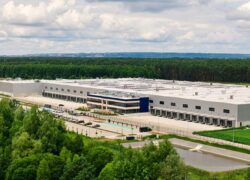
Panattoni has completed a major logistics development in Szczecin, delivering a build-to-suit (BTS) distribution centre for an international non-food discount retailer. Located in the Dunikowo Special Economic Zone, the project comprises over 54,000 sqm of space, including 51,500 sqm of warehouse area and 2,870 sqm allocated to office and staff functions. Approximately 500 new jobs are expected to result from the facility’s operations.

The building was developed to meet specific operational requirements, incorporating elements such as optimised traffic layout, advanced ventilation systems, and dedicated zones for automated sorting and picking technologies. The project was designed and executed in accordance with the BREEAM Outstanding certification criteria, the highest rating under the scheme.

Located near the A6 motorway and roughly 26 km from the German border, the site enables efficient logistics servicing of both northwestern Poland and the Berlin metropolitan area. The facility’s location is intended to strengthen cross-border distribution capacity while leveraging regional infrastructure and labour availability.

Dorota Jagodzińska, Managing Director at Panattoni, noted that Szczecin’s strategic location within international supply routes, combined with its workforce and the supportive stance of local authorities, contributes to the region’s growing significance in the logistics sector. She also pointed to Panattoni’s continued investment in West Pomerania, including projects in Stargard and Koszalin.

Sustainability measures at the facility include the integration of energy-efficient heating via heat pumps, LED lighting systems, and infrastructure designed for photovoltaic energy generation. The site also includes landscaped green areas using native plant species, permeable surfaces in parking zones, and ecological enhancements such as birdhouses and insect hotels to support biodiversity.

Employee amenities include outdoor seating areas, recreational facilities such as table football and ping-pong tables, bike shelters, and electric vehicle charging stations. The facility is also accessible by public transport through the Szczecin SKM rail network.

Prague’s new apartment market expands, prices reach record highs

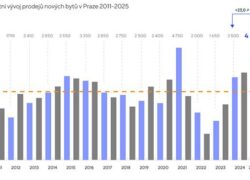
The number of newly sold apartments in Prague rose significantly in the first half of 2025, with developers reporting 4,300 transactions, representing a 23% increase compared to the same period last year. The data, compiled by developers Trigema, Central Group, and Skanska Residential, also shows that the average price per square meter surpassed CZK 170,000 for the first time.

Although the second quarter saw a slight decline in sales compared to the same period in 2024—1,750 units sold, down approximately 8%—demand remains roughly 20% higher than the long-term average. The half-year result is the second-highest in 15 years of recorded data, trailing only the first half of 2021, when 4,750 apartments were sold.

Market analysts attribute the strong sales to easing mortgage conditions and a broader recovery in economic sentiment. According to ČBA Hypomonitor, the average interest rate on new mortgages fell to 4.56% per annum in June. Since the beginning of the year, banks have issued new mortgages worth CZK 150 billion—CZK 50 billion more than during the same period last year.

Despite the rise in apartment availability to 5,750 units, supply continues to fall short of market demand. Districts Prague 4, 5, 9, and 10 account for the majority of new housing transactions.

Developers note that improving lending conditions and economic stability are drawing both end users and investors to the market. According to Juraj Murín, Director of Project Development at Skanska Residential, current buyer behaviour reflects an attempt to secure property before prices rise further or financing conditions change. He points to a combination of easing interest rates, attractive project offerings, and deferred demand from previous years as the main drivers of the ongoing market rebound.

If current trends continue, full-year sales could exceed 8,000 units—setting a new record for annual apartment transactions in Prague.

Sources: Analysis by Central Group, Trigema and Skanska Residential

IMF upgrades Global Economic Forecast amid trade uncertainty and policy shifts

The International Monetary Fund (IMF) has raised its global growth forecasts for 2025 and 2026 in its July 2025 World Economic Outlook, projecting real GDP growth at 3.0% in 2025 and 3.1% in 2026. These represent upward revisions of 20 and 10 basis points, respectively, driven largely by preemptive trade activity ahead of anticipated tariff hikes and a favorable fiscal environment supported by a weaker US dollar. Despite these adjustments, the IMF notes that growth remains below the pre-pandemic average of 3.7%, underlining persistent structural challenges.

The IMF expects global inflation to ease, with headline rates forecast at 4.2% in 2025 and 3.6% in 2026. However, inflation dynamics remain uneven. In the US, tariffs are expected to push inflation above the Federal Reserve’s 2% target, while in other advanced economies, inflationary pressures are expected to remain subdued or decline.

Advanced economies are forecast to grow moderately, with the 2025 and 2026 projections both raised by 10 basis points to 1.5% and 1.6%, respectively. Notably, US GDP growth is projected to reach 1.9% in 2025 and 2.0% in 2026, reflecting looser financial conditions, legislative fiscal support, and reduced tariff levels compared to earlier expectations. Meanwhile, Euro area growth was adjusted to 1.0% for 2025 due to stronger-than-expected performance in Ireland, which contributed significantly through pharmaceutical exports. Japan’s outlook was slightly revised upward for 2025, but slightly down for 2026.

Among emerging markets, China’s growth forecast saw a major upgrade, with real GDP growth now expected at 4.8% in 2025 and 4.2% in 2026, thanks to robust Q1 performance and a significant reduction in tariffs. For the broader Emerging Market and Developing Economies group, growth was revised to 4.1% in 2025 and 4.0% in 2026.

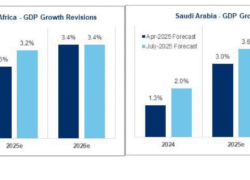
The Middle East and North Africa region experienced one of the most notable upward revisions. Real GDP growth in the region is now expected at 3.2% in 2025, up 60 basis points from earlier projections, largely due to stronger forecasts for oil exporters like Saudi Arabia. The IMF anticipates the region will continue to recover in 2026 with growth reaching 3.4%. Saudi Arabia’s own forecast was upgraded to 3.6% for 2025, supported by plans to reverse OPEC+ production cuts.

Other regional highlights include Sub-Saharan Africa, where growth is forecast to rise to 4.0% in 2025 and 4.3% in 2026. Latin America and the Caribbean are expected to experience slower growth at 2.2% in 2025, before rebounding to 2.4% the following year. In contrast, Emerging and Developing Europe faces a downward revision for 2025, with growth now expected at 1.8%, although it is projected to recover to 2.2% in 2026.

Trade volumes surged in early 2025 due to front-loading in anticipation of new trade barriers but are expected to contract in the second half of the year. The IMF revised its global trade volume forecast upward for 2025 but lowered its 2026 projection. A weaker US dollar has compounded the tariff shock, boosting the US current account but adding to global economic uncertainty. Rising geopolitical risks, including conflicts in the Middle East and Ukraine, pose additional threats to trade routes and commodity markets, potentially driving up prices and complicating monetary policy decisions.

Despite these headwinds, the IMF highlighted that credible trade agreements and coordinated reforms could provide a foundation for medium-term growth. Enhanced cooperation in trade, labor mobility, and regulatory reform could reduce uncertainty and support broader economic stability in the years ahead.

Source: Kamco Invest

CEE economies eye opportunity amid EU–US trade agreement

Central and Eastern Europe (CEE) stands to benefit from the recently concluded trade agreement between the European Union and the United States, despite the headline 15% tariffs on EU exports. Announced jointly by President Donald Trump and European Commission President Ursula von der Leyen, the agreement is being met with cautious optimism across the region, as it averts a deeper trade conflict and offers potential openings for long-term economic gains.

Grzegorz Sielewicz, Head of Economic & Market Insights for CEE at Colliers, emphasized that while the agreement introduces certain risks, it also creates room for strategic opportunity. Key provisions of the deal include a 15% tariff on major EU exports such as pharmaceuticals, automotive components, and semiconductors. In parallel, the EU has committed to investing USD 600 billion in the US economy and purchasing USD 750 billion in US energy exports. Although these figures are headline-grabbing, their structural implications for trade flows and investment patterns could be even more significant for the CEE region.

The agreement also brings macroeconomic relief by removing the threat of even higher tariffs, which had previously loomed as a potential 30% penalty on EU goods. This resolution could help ease inflationary pressure and support a dovish trajectory for the European Central Bank. A looser monetary stance would create more favourable financing conditions, especially relevant to CEE markets where real estate and manufacturing sectors are sensitive to capital costs.

The CEE-6 countries—Poland, Czechia, Romania, Hungary, Slovakia, and Bulgaria—currently represent a small share of the EU’s exports to the US. However, with cost-efficient production, modern logistics infrastructure, and growing reputations for reliability, they are well positioned to fill supply gaps created by the tariffs on Western European goods. The result may be an acceleration of trade diversification and increased export volumes from the region to the US.

CEE countries could also attract increased American investment. The agreement encourages a strategic rebalancing of supply chains, and the CEE region’s industrial capabilities make it an appealing alternative to more mature Western markets. Energy sector cooperation is also likely to intensify, with Poland and Romania expected to strengthen their roles as regional LNG hubs. This would improve energy security and potentially reduce costs for industrial consumers in the region.

Despite these positives, certain sectors remain exposed. Hungary and Slovakia, for instance, are deeply integrated into Germany’s automotive export ecosystem, which may face demand shocks under the new tariff regime. Nonetheless, since the US represents a relatively minor share of exports from most CEE economies, the direct negative impact is expected to be limited.

Commercial real estate is among the sectors most likely to benefit. In the first half of 2025, investment volumes in CEE real estate rose by 52% year-on-year. Analysts expect this trend to continue as demand increases for logistics and industrial space, driven by nearshoring and production shifts. Infrastructure investments and reconstruction needs linked to Ukraine are also expected to play a role in the growth of logistics corridors across the region.

With interest rate cuts on the horizon and yields in the CEE remaining higher than those in Western Europe, the region remains attractive to international capital. Office markets in key urban centres and second-tier cities could see renewed interest, particularly as investment grows in IT, shared services, and high-tech industries.

Overall, while the EU–US trade agreement introduces new costs for some exporters, it also provides the CEE region with fresh avenues for growth. From expanded trade and energy partnerships to increased investor interest in industrial and real estate assets, the long-term outlook for the region appears increasingly resilient in the face of global shifts.

Source: Colliers

Austrian industry and construction see broad decline in June 2025

Austria’s industrial and construction sectors experienced a broad-based downturn in June 2025, according to flash estimates released by Statistics Austria. Compared to the same month in 2024, turnover in both sectors declined by 2.4%, while the number of hours worked dropped sharply by 7.5%. Employment levels also contracted, falling by 1.6% year-on-year.

Breaking down the figures, turnover in industry declined by 2.1%, while construction turnover saw a sharper drop of 3.6%. The volume of hours worked in both sectors decreased by a similar margin—7.4% in industry and 7.5% in construction. Employment also continued to fall, with a 1.7% decrease in industry and a 1.1% decline in construction.

April 2025 presented a more mixed picture. While overall turnover in the industrial and construction sectors remained nearly flat at €32.2 billion, this masked underlying shifts. Industry turnover dropped by 1.2% year-on-year to €26.7 billion, whereas construction saw a 5.7% increase to €5.5 billion. Despite these diverging trends, total employment across the two sectors was down by 2.0% from April 2024, with 998,212 workers reported.

In terms of sold production, the industrial sector recorded a nominal decline of 2.7% in April. Notable reductions were observed in electricity and gas supply (–7.0%) and machinery and equipment manufacturing (–6.9%). The manufacture of computer, electronic, and optical products also fell (–4.1%). However, there were increases in some areas, such as food production (+7.5%) and wood and cork products excluding furniture (+5.4%).

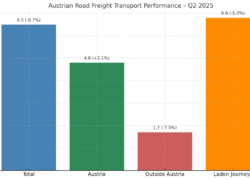
Road freight transport by Austrian enterprises also contracted during the second quarter of 2025. Total volume fell by 1.3% to 93.2 million tonnes compared to the same period last year. Although transport performance within Austria increased by 2.1%, international freight activity declined significantly by 7.5%. The total transport performance stood at 6.5 billion tonne-kilometres, representing a 0.7% decline overall.

The current data release is based on short-term statistical surveys and model-based estimations that utilize early business reporting and administrative data. While the flash estimates offer an early snapshot of economic activity, Statistics Austria notes that revisions may follow as more data is collected and validated.

Strategic growth and diversified offerings drive strong H1 2025 results for developer

Our diversified pricing strategy has enabled us to connect with a broader customer base. Looking ahead, we aim to sustain our growth by expanding our portfolio and aligning our offerings with evolving market demands. The results from the first half of 2025 demonstrate the effectiveness of this approach, reinforcing our position in the development sector.

Tomasz Kaleta, Managing Director of Sales and Marketing at Develia
In the first half of 2025, we achieved sales results slightly above our targets. We sold 1,699 apartments under development and preliminary agreements, compared to 1,949 during the same period last year, and delivered 1,193 units to clients – a 13% increase compared to the previous year.

After the first half of the year, we maintain our sales target for this year of 3,100-3,300 apartments. We also aim to deliver 2,900-3,100 units, which would allow us to exceed the record number of 2,865 apartments delivered in 2024. These plans do not include the acquisition of Bouygues Immobilier Polska, which significantly increased our sales potential in subsequent years.

In the first half of this year, sales were primarily impacted by macroeconomic factors, including persistently high loan costs, which limited their availability, and the lack of home purchase support programs. We are optimistic about the second half of the year, expecting further market stabilization and increased customer activity following interest rate cuts.

Zbigniew Juroszek, CEO of Atal
In the first half of 2025, we concluded 735 development and preliminary agreements. The current situation is primarily influenced by the still very expensive mortgage loan. The H1 result is below our potential. The lack of a new support program, combined with further interest rate cuts, will slowly translate into an increase in contracting. Customers will no longer wait for election promises to be fulfilled and will begin to decide to finalize their property purchases.

Andrzej Gutowski, Sales Director, Ronson Development
In the first half of 2025, we sold a total of 183 units. Although this result was slightly lower than in the same period last year, it reflected our limited supply and the company’s cautious approach to the uncertain situation in the housing market at the time. We waited for the right moment to adapt our sales strategy to market realities and simultaneously prepare for a potential recovery.
Therefore, when interest rates fell, especially the latter, there was a clear impetus to increase investment activity. In response to signs of an improving economic climate, we have decided to launch new residential projects in Wrocław, Poznań, and Szczecin. We expect the second half of the year to be stronger in terms of sales.

Zuzanna Potrzebta, Commercial Director at Eco Classic
In the first half of this year, we recorded a slight decline in sales. This is not surprising given the low real demand and the increase in supply associated with the announcement of the government’s loan subsidy program. In addition to persistently high interest rates, the decline in supply was also influenced by a decline in investment demand. A majority of individual real estate investors have moved to the Spanish, Portuguese, and even Bulgarian markets due to war concerns, but also due to a decline in profits caused by a slowdown in price growth.

Janusz Miller, Sales and Marketing Director at Home Invest
In the first half of 2025, we signed over two hundred new contracts with clients. Compared to the same period in 2024, this represents an increase of approximately 64%. Compared to the second half of 2024, the number of contracts in the first half of 2025 was 41% higher, confirming the company’s dynamic growth. The second quarter of 2025 stands out in this context, with the number of transactions reaching one of the highest levels in our twenty-year history.

The main factors driving sales in the first half of 2025 were an attractive offer and development projects that met diverse customer needs, from compact apartments to spacious apartments. The high efficiency of the sales and marketing team also played a key role. Favorable market conditions, including stabilizing property prices and improved mortgage availability, further encouraged customers to make purchasing decisions.

The introduction of new investments in attractive locations and Our flexible approach to offerings, encompassing various price segments, has allowed us to reach a wider audience. We plan to continue our dynamic growth, focusing on further expanding our portfolio and adapting our offerings to changing market expectations. The results for the first half of 2025 confirm that our strategy is delivering tangible results, and the company is strengthening its position in the development market.

Mirosław Bednarek, Regional Business Director, President of the Management Board of Matexi Polska
In the second quarter of this year, we observed an increase in customer activity. This was due to the first interest rate cut, but in our opinion, also to the fact that some customers stopped waiting for the government program. We are also pleased with the positive customer response to new projects, which confirms the validity of our product strategy based on excellent locations and the quality of investment implementation. In the second quarter of this year, we concluded a total of 99 development agreements with clients, including 78 in Warsaw and 21 in Krakow. This represents an increase of nearly 40%, both compared to the first quarter of this year, when 71 apartments were sold, and the same period of the previous year, when 72 units were contracted.
Cumulatively, a total of 170 apartments were sold in the first half of the year, 121 in Warsaw and 49 in Krakow, a result similar to the comparable period of the previous year.

Mariusz Gajżewski, Head of Sales, Marketing and Communication, BPI Real Estate Poland
In the first half of 2025, we recorded stable and satisfactory sales levels, remaining at a similar level to the second half of 2024. Compared to the same period of the previous year, there was a noticeable increase in the number of concluded contracts, which is primarily due to the offer of apartments in completed projects in attractive locations. Sales of move-in-ready buildings are characterized by much greater dynamics than at the beginning of construction, when customers are offered a proverbial “hole in the ground.” We’re also seeing an acceleration in purchasing decisions among clients who were previously interested in our projects but had been holding off.

Michał Witkowski, Sales Director, Lokum Deweloper
In the first half of 2025, we contracted 65 apartments. For comparison, in the same period of 2024, we had 115 units. However, a six-month improvement is visible, as we sold 42 units in the second half of 2024. The largest impact on sales results was due to very expensive mortgages and insufficient creditworthiness, which effectively prevented a large portion of potential buyers from purchasing properties. Therefore, the majority of our clients were cash-strapped individuals purchasing large apartments for their own needs.
The May interest rate cut had a positive impact on customer sentiment, but its scale was too small to significantly increase mortgage availability and thus translate into a real increase in apartment sales. Despite this, we are seeing the first signs of recovery and a gradual improvement in creditworthiness among our clients. However, purchasing decisions are still being made with great caution. A further decline in interest rates combined with a stabilization of banks’ lending margin policies could bring real improvement in the second half of the year.

A more significant increase in buyer activity can then be expected. If the customer situation improves sufficiently, we will be able to respond by introducing the company’s Wrocław investments to our offerings.

Joanna Chojecka, Sales and Marketing Director for Warsaw and Wrocław at Robyg Group
In the first half of 2025, the TAG Group signed over 1,080 preliminary and development agreements, plus approximately 160 additional reservation agreements, which remain to be finalized as development agreements soon. Robyg signed approximately 960 preliminary and development agreements, as well as approximately 160 reservation agreements.

In H1 2025, the TAG Group completed and recognized over 640 units in revenue. 516 apartments were handed over to clients, and over 130 units were offered for rent. Robyg completed and handed over over 460 units to clients. In H1 2025, the TAG Group in Poland had over 7,400 apartments and commercial spaces under construction. The Group’s rental apartment portfolio totaled 3,350 units. Robyg currently offers nearly 1,950 units.

In 2025, the Group plans to sell 2,800 apartments and increase its rental portfolio to over 3,600 units. By 2028, the TAG Group plans to reach 10,000 rental units in Poland. Furthermore, the Group is expanding its land bank, which includes the potential for the construction of approximately 28,000 units across Poland, and is seeking investment opportunities in new land. We are also setting new trends in the real estate market by introducing the institution of a customer advocate.

Photo: Warszawski Swit, Home Invest
Source: dompress.pl

LATEST NEWS