WING’s Polish subsidiary concludes major residential transaction

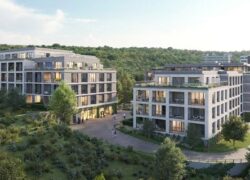
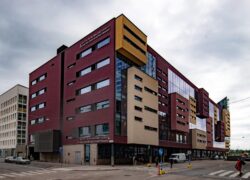
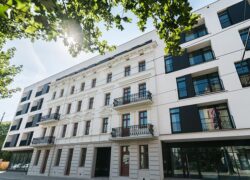
WING’s Polish subsidiary has concluded one of the largest transactions in Poland’s residential rental market, with the planned sale of more than half of Resi4Rent’s portfolio to Vantage Development, part of the TAG Immobilien Group.

According to the preliminary agreement signed on 16 August, Vantage will acquire 18 residential projects comprising 5,322 rental units across Warsaw, Cracow, Gdansk, Wroclaw, Lodz and Poznan. The transaction is valued at PLN 2,405 million (EUR 565 million) and remains subject to approval from the Polish antimonopoly authority.

Resi4Rent, founded in 2018, is a rental housing platform developed and co-owned by Echo Investment – majority-owned by WING – alongside a global investment fund advised by Griffin Capital Partners. The company currently operates nearly 10,000 units and is Poland’s largest institutional residential rental provider. Following the transaction, Echo Investment will continue to develop and expand the remaining portfolio, which includes approximately 1,700 operational units, 2,200 under construction and more than 600 in planning.

The portfolio being transferred is almost fully leased, with occupancy close to 100%. The deal reflects a yield of 6.3%, highlighting continued investor demand for rental housing in Poland’s largest cities. Echo Investment stated that proceeds from the sale will be directed toward financing new development projects.

Resi4Rent’s business model covers the full investment cycle, from planning and design through construction, property management and leasing. The platform provides furnished, fully equipped units that currently accommodate around 18,000 residents.

For WING, one of Hungary’s largest real estate development and investment companies, the sale further consolidates its regional presence. Through its residential brand LIVING, the company has delivered more than 2,000 apartments in Budapest and is pursuing additional residential projects in Hungary and internationally.


Poland: Job offers for Science graduates continue to grow, while overall market remains steady

The Job Offer Barometer, compiled by the University of Information Technology and Management in Rzeszów together with the Office for Investment and Economic Cycles, recorded a slight increase in July to 258.5 points from 255.6 in June. This marks the first rise after three consecutive months of decline, although overall job offer numbers have remained stable for the past 18 months.

Compared to July 2024, the volume of job advertisements was largely unchanged. Notable growth was recorded in vacancies for science graduates, continuing an eight-month upward trend. The increase is driven primarily by renewed recruitment in IT roles and the construction sector. In contrast, offers for manual workers have declined for four months, while job availability in the social sciences and services sectors has remained steady.

Regionally, the largest month-on-month increases in online job offers were seen in the Lubelskie, Podkarpackie, and Zachodniopomorskie provinces. Declines occurred only in Lubuskie and Warmińsko-Mazurskie. Several provinces, including Podkarpackie, Kujawsko-Pomorskie, Lubelskie, Podlaskie, and Wielkopolskie, reported more vacancies than a year earlier, while Lubuskie and Śląskie posted year-on-year decreases.

In professions linked to social sciences and law, stable demand continues for call centre staff, financiers, HR specialists, and banking professionals. Marketing roles have seen modest growth over the past six months, while vacancies in real estate, legal, and office positions have been falling for several months. Legal roles, in particular, have recorded five consecutive months of decline.

Among science and engineering roles, all categories except traditional engineering posted increases in July. Programming positions have grown for nine straight months following earlier steep declines, though the trend is concentrated among a small number of large employers. R&D roles and occupational health and safety positions also saw gains, with OHS vacancies remaining high by historical standards.

In services, the education sector registered its largest single monthly increase in several years. Media industry vacancies rose slightly but remain on a long-term downward trend. Tourism job offers fell slightly but remain comparatively high, while logistics saw its fifth consecutive monthly decline, extending a three-year downward trend.

The registered unemployment rate, excluding seasonal workers, rose in June by 0.3 percentage points to 5.4% — the highest level and largest monthly change in several years.

Source: BIEC

NEAR Living residential project to deliver over 200 apartments near Karlín and Palmovka

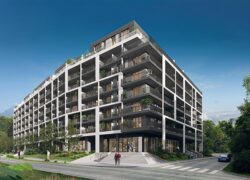
Developer Fidurock has announced plans for NEAR Living, a residential project located between the districts of Karlín and Palmovka in Prague. The development, which is scheduled for completion in late 2027, will provide 212 apartments, 101 underground parking spaces, commercial units, and a 425 m² community garden.

The apartments will range from studios to two-bedroom units. According to the developer, the buildings will achieve an EPC energy rating of B, with features including underfloor heating and a heat recovery ventilation system. The design was prepared by Ian Bryan Architects, and sales will be handled by Luxent real estate agency.

Construction is set to begin in September 2025. The structural phase is expected to be completed in the fourth quarter of 2026, with final approval scheduled for the third quarter of 2027.

The project is located within reach of Karlín, Palmovka, and Holešovice, in an area that has seen significant redevelopment in recent years. Local amenities in the vicinity include shops, restaurants, schools, healthcare facilities, and cultural venues.

Further details on pricing, unit layouts, and the number of apartments available will be released on October 1, 2025.

Skanska begins construction of Czech Republic’s largest wooden apartment building in Prague

Skanska has launched construction of its D.O.K. residential project in the Radlice district of Prague, a 1.6 billion CZK development that will feature the country’s largest wooden apartment building upon completion. The project, scheduled for delivery in 2027, will comprise three buildings with a total of 177 apartments.

Located on a redeveloped brownfield site along Radlická Street, near the Radlická metro and tram station, the complex has been designed by Jakub Cigler Architects. The scheme includes the “Dřevák” building, which will set a new benchmark for timber construction in the Czech Republic.

“The D.O.K. area creates a calm, well-structured inner courtyard, offering views of the adjacent natural landscape and the Radlická Valley, while maintaining both connection to the surroundings and a sense of privacy,” said Jakub Cigler, founder of the architectural studio.

Apartment layouts will range from compact 1+kk units to larger 4+kk homes with terraces, as well as one 5+kk unit. Prices start at around CZK 6 million for a 34 m² 1+kk and reach up to CZK 24 million for a 115 m² 4+kk. All buildings will meet the highest energy efficiency standards and incorporate sustainable features such as green roofs and water recycling systems.

The project comes amid recent regulatory changes that have expanded the permissible height for wooden structures from 12 meters to 22.5 meters, enabling more ambitious timber developments. Until now, multi-storey wooden residential projects have been rare in the Czech Republic, with notable examples including UBM’s Timber Prague in Řeporyje, part of the Arcus City complex, and planned rental housing projects in Žďár nad Sázavou by Dostupné bydlení České spořitelny.

UFA to relocate headquarters to BE.YOND OFFICE Berlin in 2026

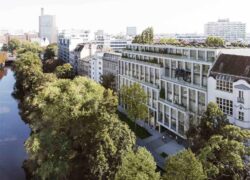
The Empira Group has secured UFA, a major German-speaking media company, as a tenant for its BE.YOND OFFICE Berlin project at Schöneberger Ufer 69. UFA will relocate its corporate headquarters from Potsdam-Babelsberg to Berlin in 2026, occupying approximately 2,840 sq. m across the building’s top three floors, including rooftop terraces with views over the city.

The move is part of UFA’s broader strategy to position itself closer to industry talent and partners. The new headquarters is intended to support a collaborative, flexible, and sustainable work environment in line with the company’s cultural transformation.

BE.YOND OFFICE Berlin, acquired by SORAVIA and also home to DATEV since February 2025, is being developed with a focus on sustainability and contemporary workplace standards, aimed at attracting companies from creative and knowledge-based sectors.

HIH extends Solingen Town Hall lease until 2050

HIH Invest Real Estate has signed an early extension of its lease agreement with the city of Solingen for approximately 12,458 square meters in the town hall complex at Walter-Scheel-Platz 1. The new agreement secures the tenancy until the end of 2050 and includes commitments for energy efficiency upgrades and preparatory work for renewable energy installations.

The property, part of a special fund managed by HIH Invest Real Estate, comprises three buildings. Building A, which accounts for 10,786 square meters — around 70 percent of the total space — had been leased in full by the city until 2038. The new extension brings that term forward by 12 years. Additionally, the city extended its lease for 1,688 square meters of office and storage space in Building C. The remaining 2,000 square meters in Buildings B and C are occupied by retail, therapy, and office tenants. The city’s lease also covers 129 parking spaces.

As part of the lease agreement, HIH will convert the leased areas to LED lighting and carry out a full roof renovation to enable the installation of a photovoltaic system by the municipal utilities. HIH will oversee the planning and construction work required for the PV installation.

Ken Kuhnke, Head of Key Account Management at HIH Real Estate, noted that the agreement reflects ongoing dialogue with major tenants: “The municipality’s plans for LED conversion and renewable energy were incorporated into a comprehensive leasing package. By combining these measures with the lease extension, we created a long-term solution that meets the city’s needs and supports its sustainability goals.”

Frederik Lammersen, Co-Head of Fund Management at HIH Invest, highlighted the company’s proactive tenant engagement: “We aim to be a strategic partner rather than just a lease administrator. Close cooperation between asset management and fund management allows us to identify tenant requirements early and respond quickly with tailored solutions.”

Modern technology in historic buildings: Navigating the challenges of museum modernization

Poland’s market for adapting historic buildings is expanding by about 15% annually, as developers increasingly see value in restoring heritage properties such as old factories and Renaissance palaces. These projects often achieve rents 20–35% higher than standard office buildings, largely due to the integration of advanced HVAC systems. However, installing such technology in historic structures presents both technical and regulatory challenges.

According to Marcin Kosieniak, MEP specialist and co-owner of PM Projekt, early consultation with heritage conservators is critical. “Any visible changes to a façade, vaulted ceilings, or interior details can be questioned. Even minor elements like ventilation grilles require approval in listed buildings,” he notes. The lack of space for technical infrastructure in historic structures means HVAC components must often be hidden within cornices, built-in furniture, or behind parapets on rooftops.

Museums present additional complexities. Climate control is essential not only for visitor comfort but also for protecting collections. Advanced building management systems, automated blinds, air-flow algorithms, and heat recovery systems are used to maintain strict temperature and humidity levels. In a Wrocław museum modernization project, the HVAC system was designed to respond automatically to occupancy levels, regulate sunlight exposure, and reuse recovered heat for dehumidification.

Historic buildings, often built with vapor-permeable materials and without moisture insulation, require careful ventilation planning to avoid dampness, condensation, and material degradation when repurposed for functions with higher humidity loads.

While installation costs in historic buildings are typically 30–50% higher due to custom solutions and conservation requirements, operational savings can be significant. Modern HVAC systems can reduce energy costs by 30–40%, translating into substantial annual savings for large facilities. Investors who lead in adapting heritage properties with high climate standards can secure a competitive advantage, offering unique spaces with environmental controls comparable to new-build offices while commanding premium rents.

Geosan Development secures permit for 283-unit Re.Start Petynka project in Prague 6

Geosan Development has obtained a valid building permit for its Re.Start Petynka residential project in Prague 6, with construction scheduled to begin in September 2025 and completion expected in the third quarter of 2028. The development will be built on a long-vacant site near the Petynka swimming pool and will comprise 283 residential units across nine floors. Approximately 40% of the apartments have already been sold.

Initial sales were dominated by smaller one- and two-room units, but interest in larger layouts and premium apartments on the upper floors has increased. The later sales phases will include maisonette units and four penthouses with terraces, green atriums, and views of Prague Castle.

The project offers a mix of compact studios, two-room apartments, practical family layouts, and high-end units. Smaller apartments, with sizes up to 30 m² for studios and up to 48 m² for two-room layouts, have attracted investor interest due to their suitability for both long- and short-term rentals.

A commercial section on the ground floor will provide retail and services for residents and the surrounding area. Negotiations are underway with potential tenants, including a supermarket, with announcements expected during construction.

Re.Start Petynka is located in a quiet residential area with access to green spaces such as Kajetánka Park, Maxe van der Stoela Park, and the gardens of Břevnov Monastery. Local amenities are available on nearby Bělohorská Street, while the Nový Smíchov shopping center is a 10-minute drive away. The site is well connected by public transport and car, offering a balance between city accessibility and a calm neighborhood setting.

Green hydrogen expansion in Germany unlikely to strain water resources, but location still key

A study by the German Institute for Economic Research (DIW Berlin) concludes that Germany’s planned expansion of green hydrogen production will not create widespread water shortages, although local water availability could influence where new electrolysis plants are built. The analysis, based on model projections for 2030, finds that water demand for electrolysis will remain low in relation to total water consumption in nearly all regions, even under scenarios of significant hydrogen production growth.

Germany currently consumes about 46 terawatt hours of hydrogen annually, most of it “grey hydrogen” made from natural gas. By 2030, demand is expected to more than double, with a substantial share coming from green hydrogen produced using renewable electricity and water. The study finds that if the federal government’s planned hydrogen core network is completed, production could be concentrated in areas where both renewable energy and water are abundant, particularly in northern states. Without the network, production would be more decentralized and closer to industrial consumers, but even then, water demand for electrolysis would generally remain below 0.5% of state-level water use.

The cost of water for electrolysis is minimal, averaging around 0.6% of total production costs, assuming the pipeline network is in place. The DIW researchers recommend accelerating network development to allow siting in regions with stable water resources and integrating water stress considerations more explicitly into permitting and subsidy processes. They also suggest improving transparency on water pricing to assess its role in investment decisions.

Electrolysis uses electricity to split water into hydrogen and oxygen, requiring about nine liters of purified water per kilogram of hydrogen produced, plus additional water for cooling. In cases of freshwater scarcity, desalinated seawater could be an alternative, though at higher cost. The study estimates that meeting Germany’s target of ten gigawatts of electrolysis capacity by 2030 would require about 26 million cubic meters of water annually — roughly 0.15% of current national water withdrawals.

Source: DIW Berlin

Deka Immobilien sells health centre in Finland

Deka Immobilien has sold an health centre in Helsinki for around EUR 100 million. The property is part of the real estate assets of the open-ended real estate fund WestInvest ImmoValue, which targets exclusively institutional investors. Finnish investor VVT, which specialises in commercial real estate in Finland’s largest cities, is acquiring the property for its VVT Property Fund ll KY fund.

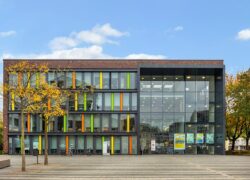
The Kalasatama Health Centre comprises 19,800 sqm of leasable space and 35 parking spaces. It is located around three kilometres east of the Central Business District, directly on the coast in the Finnish capital. The property was completed in 2017 and is fully leased on a long-term basis with the City of Helsinki as the main tenant.

The sale sees the fund management of WestInvest ImmoValue taking advantage of a favourable sales opportunity while at the same time divesting itself of a property that no longer aligns with its strategy. Investors have generated a positive performance contribution with the property over the holding period of around ten years.

Photo: hel.fi

LATEST NEWS