Paris Office Market H1 2025: Leasing Slows, Vacancy Tops 10%, Investment Ticks Up

Office demand in the Paris region weakened in the first half of 2025, even as investment volumes improved from last year, underscoring a market split between resilient prime addresses and softer non-prime locations.

ImmoStat data cited by CBRE show take-up in Île-de-France reached 768,400 m² in H1 2025, down 12% year on year and 25% below the ten-year average. The second quarter was particularly subdued at 337,300 m², 21% lower than Q2 2024. Immediate supply continued to build. Market trackers report available space near 6.0 million m² by mid-year, with the regional vacancy rate a little above 10%—BNP Paribas Real Estate put it at 10.8%, with roughly 4.7% in the Paris CBD and above 15% in the inner ring and La Défense.

Capital markets were comparatively firmer. Commercial real estate investment in France totaled roughly €5.9 billion in H1 2025, up about 29–30% versus the same period of 2024, though activity remained uneven quarter to quarter.

Brokers and researchers describe a sharpening bifurcation. High-quality space in prime central districts continues to hold up better on rents and occupancy than older or peripheral assets, a pattern echoed across Europe.   Global outlooks from major firms suggest 2025 should bring gradual stabilization rather than a swift recovery, with tenants still cautious on large commitments amid economic and policy uncertainty.

Bottom line: First-half figures confirm a cautious leasing environment in Greater Paris, rising vacancy at the regional level, and a selective rebound in investment. Performance gaps between best-in-class, centrally located offices and the rest of the market are likely to persist through the remainder of 2025.

Source: comp.
Paris Office Market H1 2025: Leasing Slows, Vacancy Tops 10%, Investment Ticks Up

Office demand in the Paris region weakened in the first half of 2025, even as investment volumes improved from last year, underscoring a market split between resilient prime addresses and softer non-prime locations.

ImmoStat data cited by CBRE show take-up in Île-de-France reached 768,400 m² in H1 2025, down 12% year on year and 25% below the ten-year average. The second quarter was particularly subdued at 337,300 m², 21% lower than Q2 2024. Immediate supply continued to build. Market trackers report available space near 6.0 million m² by mid-year, with the regional vacancy rate a little above 10%—BNP Paribas Real Estate put it at 10.8%, with roughly 4.7% in the Paris CBD and above 15% in the inner ring and La Défense.

Capital markets were comparatively firmer. Commercial real estate investment in France totaled roughly €5.9 billion in H1 2025, up about 29–30% versus the same period of 2024, though activity remained uneven quarter to quarter.

Brokers and researchers describe a sharpening bifurcation. High-quality space in prime central districts continues to hold up better on rents and occupancy than older or peripheral assets, a pattern echoed across Europe.   Global outlooks from major firms suggest 2025 should bring gradual stabilization rather than a swift recovery, with tenants still cautious on large commitments amid economic and policy uncertainty.

Bottom line: First-half figures confirm a cautious leasing environment in Greater Paris, rising vacancy at the regional level, and a selective rebound in investment. Performance gaps between best-in-class, centrally located offices and the rest of the market are likely to persist through the remainder of 2025.

Source: comp.

Bratislava’s Dúbravka District Set for Expansion with New Housing and Services

The Dúbravka district of Bratislava is preparing for further urban transformation as the Green Záluhy project from developer Devecorp moves forward into its second stage. Following the successful completion of the first phase on Hanulova Street, which delivered 76 apartments, revitalized public greenery, a children’s playground, and underground parking, the continuation of the scheme is now in the advanced permitting stage.

The second phase of Green Záluhy, designed by the architectural studio shujan_stassel, will add two eight-storey residential buildings northeast of the existing block, near Michal Schneider-Trnavský Street. In total, 62 apartments are planned, ranging from compact 1.5-room units to spacious five-room residences. The ground floor will feature three civic amenity spaces alongside entrances, shared facilities, and technical areas, while both buildings will be linked by an underground garage with 99 parking spaces. A small landscaped square will be created between the buildings to reinforce the project’s ecological character and provide residents with recreational space.

Apartment sales began earlier this summer. The most expensive units, located on the top floor, measure over 150 square metres with terraces exceeding 120 square metres, priced at around €800,000. Two-room flats of approximately 50 square metres are offered for €251,000 to €269,000, while the cheapest available 1.5-room apartment, at 37.3 square metres plus a loggia, is priced at €189,900. According to the developer, 21 units have already been sold or reserved.

Construction was initially scheduled to begin in the third quarter of 2025, but delays in permitting mean work is unlikely to start before mid-2026. Completion of the structural phase is now targeted for mid-2027, with final approvals and handover to residents expected by the end of that year.

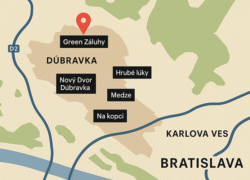
The Dúbravka district is experiencing a wave of development. Nearby, Penta Real Estate is advancing its large-scale Medze project, designed in cooperation with Pantograph studio, which will eventually deliver 225 apartments, 86 hotel rooms, and extensive green and public spaces. Other notable projects include Saratovská by Macho Consulting, Na kopci by FINEP, Nový Dvor Dúbravka by JTRE, Hrubé lúky by Corwin, and several mixed-use schemes by Hornex Residential and Strabag Real Estate.

With multiple developments underway, Dúbravka—once a largely residential suburb—appears set to become one of western Bratislava’s most modern and attractive urban districts, combining housing, services, and green spaces in line with broader citywide urban renewal trends.

Source: YIM.BA

Bratislava’s Dúbravka District Set for Expansion with New Housing and Services

The Dúbravka district of Bratislava is preparing for further urban transformation as the Green Záluhy project from developer Devecorp moves forward into its second stage. Following the successful completion of the first phase on Hanulova Street, which delivered 76 apartments, revitalized public greenery, a children’s playground, and underground parking, the continuation of the scheme is now in the advanced permitting stage.

The second phase of Green Záluhy, designed by the architectural studio shujan_stassel, will add two eight-storey residential buildings northeast of the existing block, near Michal Schneider-Trnavský Street. In total, 62 apartments are planned, ranging from compact 1.5-room units to spacious five-room residences. The ground floor will feature three civic amenity spaces alongside entrances, shared facilities, and technical areas, while both buildings will be linked by an underground garage with 99 parking spaces. A small landscaped square will be created between the buildings to reinforce the project’s ecological character and provide residents with recreational space.

Apartment sales began earlier this summer. The most expensive units, located on the top floor, measure over 150 square metres with terraces exceeding 120 square metres, priced at around €800,000. Two-room flats of approximately 50 square metres are offered for €251,000 to €269,000, while the cheapest available 1.5-room apartment, at 37.3 square metres plus a loggia, is priced at €189,900. According to the developer, 21 units have already been sold or reserved.

Construction was initially scheduled to begin in the third quarter of 2025, but delays in permitting mean work is unlikely to start before mid-2026. Completion of the structural phase is now targeted for mid-2027, with final approvals and handover to residents expected by the end of that year.

The Dúbravka district is experiencing a wave of development. Nearby, Penta Real Estate is advancing its large-scale Medze project, designed in cooperation with Pantograph studio, which will eventually deliver 225 apartments, 86 hotel rooms, and extensive green and public spaces. Other notable projects include Saratovská by Macho Consulting, Na kopci by FINEP, Nový Dvor Dúbravka by JTRE, Hrubé lúky by Corwin, and several mixed-use schemes by Hornex Residential and Strabag Real Estate.

With multiple developments underway, Dúbravka—once a largely residential suburb—appears set to become one of western Bratislava’s most modern and attractive urban districts, combining housing, services, and green spaces in line with broader citywide urban renewal trends.

Source: YIM.BA

Ludwig Theuvsen: New Federal Government Signals Shift in Agricultural Policy

The early months of Germany’s new federal government, led by a CDU/CSU–SPD coalition, have marked a notable change of course in agricultural policy. According to Ludwig Theuvsen, former university lecturer, former state secretary in the Lower Saxony Ministry of Agriculture, and current adviser at the REWE Group’s Competence Centre for Agriculture, the government has so far delivered on its election promise to place greater emphasis on food security, domestic food production, and the strengthening of the farming sector.

Theuvsen points to the reintroduction of the agricultural diesel rebate, the abolition of the material flow balance requirement to reduce bureaucracy, and the extension of the transitional period for the Animal Husbandry Labelling Act as examples of this shift. The government has also partially recognised the wolf’s favourable conservation status, a measure seen as a signal of support for pasture owners and rural communities.

However, the sector faces challenges from other policy decisions. Theuvsen notes that the significant increase in the minimum wage, strongly backed by the SPD, could place considerable pressure on labour-intensive branches such as fruit, wine, and vegetable farming, where margins are already tight.

Theuvsen also addressed the strained relationship between farmers and policymakers, which came to the fore in the mass protests at the start of 2024. He argues that the new government offers an opportunity to rebuild trust, but only if it continues to act decisively to cut bureaucratic burdens and remove investment barriers, particularly in construction and environmental regulation. Farmers, he stressed, need to see practical improvements on the ground before confidence can be fully restored. The European Union, too, should play its part by adopting measures that ease regulatory pressures.

Signs of cautious optimism have already appeared. A recent press release from the Agricultural Pension Bank reported a 77 percent increase in new production loans in the first half of 2025, suggesting that sentiment among farmers is beginning to improve.

Looking ahead, Theuvsen highlighted the importance of reforming the Animal Husbandry Labelling Act, which has faced heavy criticism for its lack of integration with private-sector initiatives and potential enforcement problems. The extension of the transitional period for fresh pork labelling until March 2026 was, in his view, unavoidable. The coalition has pledged a fundamental reform of the legislation with broader stakeholder involvement, and Agriculture Minister Rainer has announced more practical and less bureaucratic rules.

Theuvsen remains cautiously optimistic that a reformed law will align better with the Borchert Commission’s proposals, which call for labelling across all animal species and sales channels. Success, however, will depend on close cooperation between farmers, processors, retailers, and policymakers.

Source: REWE Group

New Car Registrations in Austria Rise Sharply Through August 2025

New passenger car registrations in Austria surged by 10.7 percent in the first eight months of 2025 compared with the same period in 2024, according to the latest data from Statistics Austria. A total of 189,370 passenger cars were newly registered by August, contributing to 260,233 motor vehicle registrations overall—an increase of 3.4 percent year on year.

August marked a significant monthly uptick in passenger car registrations, which rose by 25.3 percent from August 2024 to reach 21,452 new registrations. Hybrid vehicles were particularly popular, with petrol-electric hybrids accounting for 35.9 percent of new car registrations during that month—an increase of 59.8 percent. Fully electric cars made up 20.1 percent, up 39.2 percent year-on-year. Diesel-electric hybrids and conventional petrol and diesel vehicles comprised a smaller share of the market.

Over the broader January–August period, 39.8 percent of new passenger cars featured conventional fuel systems, down sharply as hybrids accounted for 32.8 percent and electric vehicles held 21.5 percent of newly registered cars.

Private buyers accounted for 36.9 percent of new passenger car registrations, and they predominantly opted for alternative fuel vehicles: among this group, nearly 59.1 percent chose hybrids or electric cars, compared with 40.9 percent selecting traditional petrol or diesel models. Companies, municipalities, and other legal entities represented the remaining 63.1 percent of new registrations.

Volkswagen led manufacturer shares from January through August with 14.1 percent, followed by Škoda (10.8 percent), BMW (7.3 percent), and Audi (6.3 percent). Cupra recorded the largest relative gain, up 100.1 percent, while other manufacturers such as Škoda, Dacia, Hyundai, Audi, BMW, Mercedes, Volkswagen, and Toyota also reported increases. Among electric models, BMW, VW, Tesla, Škoda, and BYD were the most registered brands.

In contrast, the commercial vehicle segment declined, with new registrations in categories such as light lorries and articulated trucks falling between 10 and 30 percent year-over-year. Two-wheeled vehicle registrations also dropped sharply: mopeds by 19.1 percent and motorcycles by 9.2 percent.

Statistics Austria compiled the data using registration records collected from insurance companies and registration offices. The figures include short-term and standard registrations for new vehicles, ensuring comprehensive coverage.

Source: Statistik Austria

German Industry Edges Up in July Despite Trade Slump

Germany posted a modest rebound in industrial production in July, but this was overshadowed by a downturn in exports, signaling a mixed outlook for Europe’s largest economy.

According to Destatis, factory output climbed by 1.3% in July compared to June (seasonally and calendar-adjusted), beating analyst expectations of 1.0%. The increase was led by machinery and equipment, which surged by 9.5%, while the automotive and pharmaceutical sectors posted gains of 2.3% and 8.4% respectively. However, the energy sector declined by 4.5%, offsetting some of the overall gains. Excluding energy and construction, industrial production rose by a robust 2.2%. On a year-over-year calendar-adjusted basis, output was up 1.5%.   

Despite the industrial upswing, German exports fell unexpectedly by 0.6% from June. The decline was driven largely by a sharp 7.9% drop in exports to the United States, which followed the imposition of new tariffs. Lower exports were complemented by a 0.1% decrease in imports, reducing the trade surplus to €14.7 billion from €15.4 billion in June.   

Meanwhile, the decline in industrial orders continued, with a 2.9% drop in July marking the third consecutive monthly fall. Overall orders remain below their long-term average, prompting downgrades in economic growth forecasts for 2025 and 2026. 

Additional economic indicators signal broader softening in domestic demand. Producer prices dropped 1.5% year-on-year in July, exceeding analyst expectations, while retail sales fell 1.5% month-on-month—far steeper than the anticipated 0.4% decline. 

Taken together, the data paints a cautious picture: industry shows signs of stabilization, but weak demand—especially from key export markets like the U.S.—plus falling orders and muted domestic activity suggest underlying fragility. Analysts remain watchful for further indicators before declaring a sustained recovery.

Fintechs Advance AI-First Strategies Amid Rising Adoption and Emerging Challenges

Fintech companies are increasingly moving towards AI-First strategies, a shift that places artificial intelligence at the very foundation of product design. Rather than treating AI as an add-on, firms are re-engineering their processes to begin with data flows and machine learning models that drive insights, user interactions, and operational efficiency. Innovify argues that this model allows financial technology firms to deliver hyper-personalized services, reduce operational costs through automation, and strengthen risk management across lending, payments, and wealth management.

AI is not only reshaping back-end operations but is also transforming customer engagement. According to Innovify, fintechs are now deploying AI-powered chatbots and virtual assistants capable of providing real-time guidance, conversational support, and tailored recommendations. These tools, already embedded in mobile apps and digital banking platforms, are helping firms create deeper relationships with their customers by offering more intuitive and responsive services.

The momentum behind this transition is reinforced by rising investment. A recent study from Infosys and HFS Research shows that financial institutions are increasing AI budgets by about 25 percent in 2025, with AI projects now accounting for around 16 percent of overall technology spending. Despite this, only a small share of firms report having robust AI governance frameworks in place, leaving many initiatives siloed and without consistent oversight. Analysts warn that this imbalance between growing investment and weak governance could create risks as adoption accelerates.

The operational impacts of AI adoption are already evident. Fintech firms report that AI has become a “foundational tool” underpinning decisions on credit scoring, fraud detection, and digital advisory services. Research also suggests that stronger AI adoption is closely linked to greater innovative capacity and improved financial inclusion, particularly for underserved groups. For emerging markets, where access to traditional banking services is limited, AI-driven fintech platforms are proving vital in expanding participation in the financial system.

Still, the rapid deployment of AI in finance raises concerns. Industry experts and academics highlight challenges including algorithmic bias, data privacy breaches, a lack of transparency, and systemic risk. A recent review of global regulatory trends calls for risk-based oversight frameworks that enforce standards of fairness, explainability, and ethical accountability. Without such safeguards, the benefits of AI could be undermined by public mistrust and regulatory intervention.

The picture that emerges is one of both opportunity and risk. Fintech firms that succeed in embedding AI deeply into their products, while at the same time building strong governance and ethical safeguards, will be well positioned to lead the next phase of digital finance. Those that fail to align innovation with oversight may find themselves overtaken by competitors—or constrained by regulators—as AI becomes an inseparable part of financial services.

© 2025 www.cijeurope.com

Poland’s Development Act Amendment Brings Greater Transparency to Housing Market

An amendment to Poland’s Development Act, which came into force in July 2025, introduces new transparency rules for residential property sales. For the first time, developers are obliged to publish full and up-to-date information about their projects, including prices per square metre, additional costs, and the history of price changes. These details must be available not only on company websites but also uploaded daily to a central register and made accessible via a public data portal.

The change responds to growing concerns about opaque pricing practices in Poland’s housing market. Until now, buyers often had to rely on advertisements, sales conversations, or incomplete prospectuses when making decisions. According to the Ministry of Development and Technology, the reform aims to “level the playing field” for individual buyers by providing a reliable tool for comparing offers and checking price history.

The amendment aligns with broader EU consumer protection measures, particularly the Omnibus Directive, which requires sellers, including real estate developers, to provide transparent information on price history and discounts. Together, the new rules limit the use of so-called “apparent reductions” – promotions that suggest price cuts where none exist – and provide buyers with a clearer basis for decision-making.

Market observers note that the new regulations will not resolve structural issues such as high housing prices, limited land availability, or the low creditworthiness of many Polish households. However, they reduce uncertainty and make the purchasing process more predictable. “For young buyers in particular, this means less guesswork and more confidence when committing to their first mortgage,” said analysts quoted by Property Forum【source: property-forum.eu】.

For the financial sector, the introduction of standardised, transparent data is expected to simplify mortgage simulations and client assessments. Banks and brokers will be able to prepare comparisons faster and with fewer discrepancies, while developers may benefit from more stable sales strategies over time.

For developers, the law introduces new reporting obligations but also opportunities. Companies that have already practised clear communication may gain a competitive advantage, while those relying on marketing gimmicks will face greater scrutiny. Transparency, analysts argue, could become a new form of market currency, helping rebuild trust between developers and buyers.

The amendment does not overhaul the market overnight, but it sets new expectations. Buyers gain access to reliable data, brokers and banks gain tools for clearer financial planning, and developers face pressure to compete on real value rather than information asymmetry. As Poland’s housing market continues to grapple with affordability challenges, the July 2025 reform is being described by policymakers as a “first step toward normalisation”.

Statistics Poland: Over 1 Million Foreigners Working in Poland in March 2025

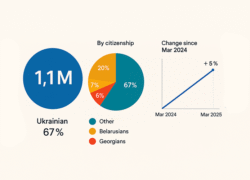
The number of foreigners performing work in Poland exceeded one million at the end of March 2025, according to new data published by Statistics Poland. The report shows that 1.067 million foreigners were active in the labour market, representing a 5.5 percent increase year-on-year and a 0.9 percent rise compared with February 2025. Foreigners accounted for 6.5 percent of all persons performing work in Poland.

Men continued to make up the majority of the foreign workforce at 59.9 percent, a slight increase from the previous year. Both male and female employment grew, with the number of men up 6.0 percent and women up 4.7 percent compared to March 2024.

Contracts of mandate and related agreements remain a significant form of employment. As of March 2025, 405,100 foreigners worked exclusively under such contracts, up 5.6 percent year-on-year.

Ukrainian citizens were by far the largest group, numbering 714,900 and accounting for 67 percent of all foreign workers. Their share decreased slightly compared with March 2024, although their absolute numbers increased by 3.6 percent year-on-year.

In terms of geography, almost one-fifth of all foreigners working in Poland resided in the Warszawski stołeczny region (19.9%), while the Świętokrzyskie region continued to host the smallest number, less than one percent of the total.

Statistics Poland notes that, starting in 2025, the data also includes foreign owners, co-owners, and leaseholders of private agricultural holdings together with contributing family workers. The results are based on administrative sources, covering both employed persons in the national economy and those working under mandate contracts subject to social or health insurance contributions.

The report confirms that foreigners performing work in Poland come from more than 150 countries, with Ukraine remaining the dominant source of labour migration.

Source: Statistics Poland

LATEST NEWS