EU Hosts 4.3M Ukrainians as Youth Suicide Remains a Challenge

The European Union continues to provide temporary protection to millions of Ukrainians displaced by the war, while new figures also highlight the ongoing challenge of suicide among young people across member states.

Eurostat reported that as of July 31, approximately 4.34 million non-EU citizens fleeing Ukraine were registered under temporary protection in the EU, up slightly from 4.31 million in June and 4.28 million in May. Since February 2022, EU countries have granted such protection to more than 6.5 million individuals. June alone saw 62,400 new protection decisions, the highest monthly figure since October 2024. Germany, Poland, and Czechia host the largest absolute numbers, but in relative terms Czechia continues to have the highest share of beneficiaries, followed by Poland and Estonia. On average, there are 9.6 people under temporary protection per 1,000 EU inhabitants, compared to 34.7 in Czechia. Women make up nearly half of those protected, while men account for about a quarter and minors roughly a third, a distribution that has remained stable in recent months.

Alongside these humanitarian statistics, Eurostat also released figures marking World Suicide Prevention Day that point to troubling health trends among Europe’s youth. In 2022, more than 5,000 people aged 15 to 29 died from intentional self-harm, making suicide the second leading cause of death in this age group after accidents. The number equates to one in six deaths among young people, a stark contrast to the general population where suicide accounts for about one in 100 deaths. The highest rates were recorded among men aged 25 to 29, with levels around four times higher than those for women.

Despite these figures, youth suicide in the EU has declined over the past decade, falling by nearly 20 percent since 2011. Nonetheless, suicide remains a widespread issue, with 49,042 deaths across all ages in 2022, equal to 10.6 deaths per 100,000 inhabitants. While the overall trend is downward, sharp differences persist between member states. Slovenia, Lithuania, and Hungary recorded the highest suicide rates, while Cyprus, Greece, and Malta had the lowest. Lithuania presents a striking paradox, as it has been ranked the happiest country in the world for people under 30, yet continues to experience some of the highest suicide levels in Europe, especially among older populations.

The two sets of statistics underscore distinct but pressing challenges for the EU. On one side, the bloc continues to accommodate millions of displaced Ukrainians, requiring ongoing adaptation of protection and integration systems. On the other, it faces persistent mental health risks among its youth, which vary widely across member states and demand targeted intervention. Together, they highlight the extent to which humanitarian policy and social resilience remain central to the EU’s agenda.
Polish Airspace Violated by Drones During Russian Attack on Ukraine

Polish authorities confirmed that drones crossed into the country’s airspace on Tuesday during Russian strikes on Ukrainian territory, in what officials described as an unprecedented incident. The violations occurred in the Podlaskie, Mazowieckie, and Lubelskie regions, raising immediate security concerns.

According to Deputy Prime Minister and Defense Minister Władysław Kosiniak-Kamysz, Polish and allied radar systems tracked several drones that entered national airspace. On the order of the Operational Commander of the Armed Forces, defense procedures were activated and drones that posed a potential threat were shot down. Search operations are continuing to locate the remains of the downed objects.

Authorities have urged residents to avoid handling any unidentified debris that may be linked to the incident, warning that such materials could be hazardous. Citizens are advised to report sightings of suspicious objects to emergency services via the 112 hotline or at the nearest police station.

The Ministry of National Defense noted that the operation involving Polish and allied aircraft has concluded and that the country’s air defense and radar systems have returned to normal operation. Officials expressed appreciation for the support of NATO’s Allied Air Command and the Royal Dutch Air Force, whose F-35 fighter jets were deployed as part of the response.

Poland’s armed forces remain on heightened readiness and continue to monitor the situation in Ukraine closely, emphasizing their commitment to maintaining the security of Polish airspace.

Source: gov.pl

Slovak Industrial Production Declines Further in July as Energy and Metal Output Weakens

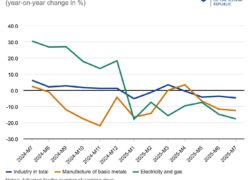
Slovakia’s industrial sector recorded a sharper contraction in July, with production falling by 4.6 percent year-on-year compared to a 3.6 percent decline in June. According to the Statistical Office of the Slovak Republic, this was the fourth consecutive monthly decline and the sixth drop since the beginning of the year. The downturn was driven mainly by weaker performance in energy supply and metal production, alongside declines in machinery and transport equipment manufacturing.

The metal industry, which has been struggling for several months, reported a year-on-year drop of more than 12 percent in July, marking the third month of contraction. Electricity and gas supply also fell sharply, down nearly 18 percent. Machinery and equipment manufacturing contracted by more than 11 percent, while transport equipment output decreased by just over 3 percent, only the second monthly decline in car production this year.

Positive contributions from other sectors were not enough to offset the downturn. Growth in smaller categories such as other manufacturing, coke and petroleum products, and computer products provided some relief, with increases ranging from 16 to more than 20 percent. On a seasonally adjusted basis, overall industrial production rose by 0.9 percent compared to June, but the year-on-year results remained negative.

From January to July 2025, industrial production in Slovakia declined by 2.2 percent compared to the same period in 2024. Over this seven-month period, eight out of fifteen monitored sectors recorded lower performance. The cumulative results were supported by a more than 6 percent rise in transport equipment production, which provided the largest positive contribution. However, this was outweighed by significant declines in energy supply, metal production, machinery, and electrical equipment manufacturing, all of which dragged the sector into negative territory.

The Statistical Office noted that the impact of company-wide holidays in July was minimal, as shutdowns occurred at similar times as in the previous year, meaning the declines were primarily the result of weaker sector performance rather than seasonal effects.

Families and Friends Provide Majority of Care in Germany, Study Finds

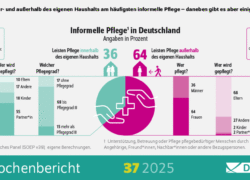
Informal caregiving by relatives, friends, and acquaintances remains the backbone of Germany’s care system, according to a new study by the German Institute for Economic Research (DIW Berlin), the German Centre for Ageing Research (DZA), and the Technical University of Dortmund. The research shows that of the roughly five million people in Germany who live at home and require care, about four million rely primarily on unpaid support from family members or close contacts.

The study highlights that informal care is diverse, shaped by different caregiving arrangements, time commitments, financial pressures, and the social backgrounds of caregivers. Most care is provided by people aged 50 to 65, often for parents, and usually takes place outside the caregiver’s own home. In contrast, in-home care is less common and typically involves partners. Women shoulder most of the responsibility in both scenarios, accounting for 64 percent of caregivers overall and 83 percent of those providing in-home care.

Caregiving often brings financial strain. Half of all households providing in-home care face additional costs averaging €138 per month, while one-fifth of households providing out-of-home care face higher average costs of €226 per month. Beyond direct expenses, many caregivers reduce their working hours or leave the workforce entirely, which can lower household income and increase reliance on state support.

To address these challenges, the federal government is considering the introduction of a family care allowance, potentially in the form of a wage replacement benefit for relatives who reduce or suspend work to provide care. While researchers acknowledge this could help stabilize the finances of some households, they caution that it may not go far enough, particularly for those in long-term care situations or outside the labor market.

The authors stress that demographic change will increase demand for care and that families and friends cannot shoulder the burden alone. They argue that professional care services must be expanded, and the financial stability of social care insurance strengthened. “Informal care is indispensable, but it must not be overburdened,” said Peter Haan, head of the State Department at DIW Berlin.

The study concludes that while unpaid family care will remain a central part of the system, Germany must invest in professional services and reform its long-term care insurance to ensure sustainability and to prevent care shortages in the future.

Source: DIW Berlin

GARBE Expands Industrial Park in Pohořelice to Over 100,000 sqm, Adds Retail Component

GARBE has obtained a building permit for the second phase of its GARBE Park Brno South project in Pohořelice, about 30 kilometers south of Brno. The expansion will add two new halls with areas of 60,000 and 20,000 square meters, increasing the total park size to 111,000 square meters across four buildings. Construction is set to deliver the new space within eight months of commencement.

The development is designed to accommodate logistics and manufacturing companies, with the second phase including halls offering clear heights of up to 18 meters. According to the company, this is above the market standard in the Czech Republic and allows for the installation of automation, mezzanines, or high-bay warehouses.

Located along the R52 expressway toward Vienna, the site offers regional connectivity and access to Brno’s labor market. GARBE is also planning a retail zone within the project, intended to serve both park employees and residents of nearby municipalities. A similar concept has already been introduced at GARBE Park České Budějovice, where a grocery retailer operates on-site.

Since entering the Czech market five years ago, GARBE has developed industrial parks in České Budějovice, Chomutov, and Klášterec nad Ohří. The company has focused on projects that incorporate ESG principles and sustainable design, which it says contributes to tenant and investor demand.

Czech Trade Price Indices Show Decline; Inflation Eases Slightly in August

New data from the Czech Statistical Office reveals continued declines in both export and import price indices during July, alongside a modest easing of consumer inflation in August.

In July, the CZSO reported a 0.7 percent decrease in both export and import price indices compared to the previous month. Year-on-year, export prices declined by 2.4 percent and import prices by 3.0 percent, while the terms of trade—representing the ratio of export to import prices—held steady month-on-month and rose slightly year-on-year to 100.6 percent. Notably, the drop in export prices was driven by reductions in categories such as waste services, agriculture, and paper products, while energy-related categories like electricity and refined petroleum saw increases.

Meanwhile, inflation continued to moderate. The flash estimate of consumer prices for August recorded a month-on-month increase of just 0.1 percent, with year-on-year inflation at 2.5 percent . These figures align with the Czech National Bank’s reported year-on-year inflation rate and suggest ongoing stability in price growth.

Taken together, the July goods trade price index figures and August CPI data suggest that while both export and import cost pressures are receding, households still face modest inflation. The decline in trade prices—particularly in staples and industrial inputs—may gradually ease supply-side cost burdens. Meanwhile, the moderated inflation rate in August reflects a subdued rise in consumer prices.

Automation vs. Augmentation: Sector Nuance Will Shape Nordic Workplace and Real Estate Strategy

The Nordic workplace is on the brink of major change as automation and human–machine collaboration increasingly reshape how tasks are performed. According to the World Economic Forum’s Future of Jobs Report 2025, by 2030 the share of work handled exclusively by humans is expected to fall from 47 percent to 33 percent. The remainder will be divided almost evenly between automation carried out by machines and algorithms, and augmentation in which technology supports human capabilities.

For the Nordic region, this transformation has implications that extend well beyond leased office space. Many of the sectors most affected by automation and augmentation are significant owner-occupiers of real estate, including manufacturing, finance, healthcare, and government institutions. This means the issue is not only about reducing or reconfiguring rented footprints but also about how organisations choose to invest in, repurpose, or divest assets that sit directly on their balance sheets.

The impact is not uniform across industries. In sectors such as advanced manufacturing, electronics, and financial services, a high share of task reduction will be driven by automation. For these industries, fewer people in back offices and robotics-enabled production facilities could leave companies with surplus space. Decisions will then centre on whether to reinvest in key sites to improve productivity, sell underutilised properties, or convert them to alternative uses. In contrast, industries such as healthcare, public administration, and energy technology are more likely to see augmentation dominate. In these cases, real estate demand will remain stable, but facilities will require significant investment to integrate new technology while still supporting human-centred activity. Hospitals, civic offices, and energy control centres will need upgrades that balance advanced digital systems with environments designed for human expertise.

The consequences for Nordic corporate real estate are far-reaching. Companies in manufacturing, healthcare, and the public sector will need comprehensive, data-driven reviews of their estates to decide which properties to retain, modernise, or release. At the same time, augmentation-heavy sectors must prepare for higher capital expenditure as they adapt buildings to accommodate both people and new technologies, all while meeting increasingly strict sustainability standards. For industries leaning toward automation, surplus properties may be sold or converted, sometimes through sale-and-leaseback arrangements that release capital but allow operational continuity. In cities where older assets become obsolete, there may be opportunities to repurpose them for housing, education, or innovation clusters, aligning with municipal development strategies.

Although the World Economic Forum’s report does not provide Nordic-specific data, the implications for the region are clear. From manufacturing plants in Denmark to hospitals in Finland and civic offices in Norway, owner-occupiers face a strategic choice: whether to adapt, release, or reinvest in their properties as the balance between human work, automation, and augmentation continues to shift.

The report signals that automation and augmentation are no longer distant trends but active forces that will influence economic competitiveness and asset strategy across the Nordics in the years to come. Understanding where each sector lies on this spectrum is becoming as critical to long-term value as location or the physical quality of a building.

Source: Christer Farstad, Head of Occupier Services, CBRE Nordics

OECD: Housing Affordability Worsens in Czech Republic, Impacting Young, Elderly, and Vulnerable

The Organisation for Economic Co-operation and Development (OECD) has identified housing affordability as an escalating challenge in the Czech Republic, particularly impacting young families, seniors, and other vulnerable groups. In a report published in collaboration with the Czech Ministry for Regional Development (MMR), the OECD highlights rising property and rental prices, inadequate housing quality, and a substantial share of unoccupied apartments as key contributors to the issue.

From 2008 to 2024, property prices in the Czech Republic rose by over 30 percent, a rate slightly higher than the OECD average. Rental costs nearly doubled during the same period, according to estimates cited by OECD and supported by data from Deloitte, which found the average apartment price was 110,100 CZK per square meter late last year; rent rose from 309 to 316 CZK per square meter per month by early 2025 .

OECD analysis underscores that fragmented, short-term solutions are insufficient. It calls for a coordinated long-term strategy linking housing with urban policy, taxation, and social services. The report recommends supporting non-profit housing providers, defining “affordable” and “social” housing clearly in law, establishing sustainable financing mechanisms, and strengthening cooperation between municipalities and non-profits.

Barriers within urban planning are also identified as impediments. The OECD suggests streamlining approval processes, bolstering municipal incentives for housing development, and reforming property taxes to bolster local infrastructure and affordable housing funding.

The study offers a regional comparison, noting that Poland faces similar affordability constraints, with 12 percent of homes unoccupied. Moreover, demand in Poland has surged due to the influx of over 1 million Ukrainian refugees since 2022. The Czech Republic has seen about 581,000 Ukrainian residents by June 2025, representing more than half of its foreign population.

These trends underscore a growing risk of housing inequality that threatens social cohesion and economic stability unless systemic reforms are adopted.

Panattoni Secures €30.5 Million Financing from PKO Bank Polski for Sosnowiec Project

Panattoni has obtained €30.5 million in financing from PKO Bank Polski to support the development of Panattoni Park Sosnowiec V, a new warehouse and logistics complex in Poland’s Silesian Voivodeship.

The first stage of the investment involves constructing a hall of more than 33,000 square meters, with completion scheduled for the fourth quarter of 2025. A second building of nearly 19,000 square meters is planned as part of the park’s future expansion.

The project’s first tenant is the Hebe drugstore chain, part of the Jeronimo Martins Group. Hebe has leased 22,000 square meters for a built-to-suit distribution center, which will include a pick-tower mezzanine, internal transport systems, and employee facilities.

Panattoni Park Sosnowiec V will be developed in line with sustainability standards and is intended to achieve BREEAM Excellent certification. Planned features include energy- and water-saving technologies, infrastructure for photovoltaic installations, and charging stations for electric vehicles.

Sosnowiec has long been one of Panattoni’s key locations, with the developer having already delivered over half a million square meters of space in the city. Across the wider Silesian Voivodeship, Panattoni’s portfolio exceeds 3 million square meters, making it the company’s largest market in Poland.

The project benefits from its location 2.2 kilometers from the S1 expressway and 12 kilometers from its junction with the A4 motorway, providing access to national and regional transport routes.

Romania’s Hotel Market Outshines Expectations in H1 2025, Bolstering CEE Investment Appeal

Romania’s hotel sector continued its strong trajectory in the first half of 2025, outperforming forecasts and strengthening its position as one of the most attractive segments for investors in Central and Eastern Europe. Data from Cushman & Wakefield, based on STR hotel performance samples, shows that nationwide occupancy grew by around 4 percent compared to the same period last year. The average daily rate rose by about 8 percent in local currency, leading to a year-on-year increase of approximately 12 percent in revenue per available room.

In Bucharest, the upward trend was similar. Occupancy levels rose by roughly 3 percent, the average daily rate climbed by 7.5 percent, and revenue per available room advanced by 11 percent between January and June compared with 2024. This growth outpaced inflation, which Moody’s placed at an average of 5.28 percent over the same period, making hotel assets particularly appealing as an investment class.

Across the wider CEE region, hotel performance indicators also moved sharply higher. Revenue per available room increased by 9.3 percent, supported by a 6.9 percent rise in average rates and a 3.4 percentage-point gain in occupancy, which reached 65 percent. Although still below 2019 levels by 6.5 points, the RevPAR index for all capital cities in the region surpassed pre-pandemic benchmarks. Warsaw led with an index of 138.9 percent, followed by Sofia at 128.4 percent and Prague at 125.5 percent. Warsaw and Sofia were the only cities to exceed their 2019 occupancy levels, standing at 104.6 and 100.2 percent respectively.

Development activity in the first half of 2025 delivered an additional 1,600 rooms across the six main CEE capitals, representing a 1.7 percent annual increase in supply. Growth was concentrated in the luxury and upscale categories, with Warsaw, Prague and Bucharest accounting for most of the expansion. Among the most notable openings were the Fairmont Golden Prague and the Corinthia Grand Hotel Bucharest. In Romania’s capital, supply is expected to grow at a compound annual rate of 3 percent over the next three years, according to Cushman & Wakefield, with more than 1,000 rooms scheduled to enter the market by 2027.

Investor sentiment has strengthened in parallel with operational performance. In the CEE-6 region, hotel transaction volume reached €682 million in the first half of 2025, up 364 percent compared to the same period in 2024 and the highest level since 2019. Most of the deals involved upper upscale and luxury properties. Romania alone recorded more than €50 million in hotel transactions, up from around €35 million in the same timeframe last year, with one major deal agreed in the summer expected to close officially in September.

Alina Cazachevici, Partner and Head of Valuation & Advisory, Hospitality & Alternatives for CEE/SEE at Cushman & Wakefield, noted that the domestic market continues to demonstrate resilience. She said the growing involvement of local investors is providing stability at a time when international capital remains cautious amid political uncertainties in the region.

With robust operational results, a healthy development pipeline and rising transaction volumes, Romania’s hotel market is positioning itself as a compelling opportunity for both local and regional investors, while also contributing to the broader strength of the hospitality sector across Central and Eastern Europe.

LATEST NEWS