Drone Violations of Polish Airspace Test Alliance Defenses and Market Confidence

Airspace restrictions and defense deployments ripple into aviation, logistics, and infrastructure investment.

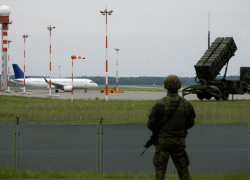
Poland has entered one of its most serious security episodes since the start of Russia’s war in Ukraine, after at least 19 Russian drones crossed into its airspace during overnight strikes on Ukrainian territory earlier this week. According to Reuters, Polish F-16s supported by Dutch F-35s, NATO surveillance aircraft, and refueling planes intercepted multiple drones, while one UAV struck a house in the village of Wyryki-Wola in Lublin Voivodeship, damaging its roof but causing no injuries. The government imposed sweeping air-traffic restrictions in eastern regions, banning drone flights and small aircraft operations until December 9, while allowing commercial flights above three kilometers to continue. The incident, which Polish Prime Minister Donald Tusk described as the gravest threat to national security since World War II, has prompted NATO consultations under Article 4 and an emergency UN Security Council debate scheduled for September 12.

The crisis coincided with a surprising diplomatic development. The United States announced that Belarus would release 52 political prisoners, including 14 foreign nationals, in exchange for partial sanctions relief on its national airline Belavia. U.S. envoy John Coale confirmed the move, which allows Belavia to service and source parts for its existing fleet, though broader sanctions remain in place. Minsk made the announcement just as it prepared to host joint military drills with Russia near the Polish and Lithuanian borders. For Warsaw, the juxtaposition of drone incursions launched from Belarusian territory and sanctions relief for a Belarusian state company sends a troubling message at a time when deterrence is critical.

Analysts interpret the drone violations as calibrated provocations designed to test NATO’s defenses, expose response times, and highlight the cost imbalance between low-cost UAVs and expensive allied interceptors. The Council on Foreign Relations has warned that such tactics are aimed at probing thresholds without triggering outright war. The Moscow Times described the operation as the boldest test yet of Western airspace readiness. NATO allies have reacted swiftly, with Germany expanding its air policing missions and the Netherlands deploying additional Patriot missile batteries, underscoring that the alliance is treating the incursions as a systemic threat rather than an isolated episode.

The investment implications are immediate. Airlines are diverting routes away from eastern Poland, insurers are reassessing premiums for aviation and cargo, and logistics operators in Lublin, Białystok, and Rzeszów report mounting pressure from tenants to incorporate resilience features such as backup power, secure communications, and alternative transport options. Some occupiers are shifting capacity toward hubs west of Warsaw, particularly Łódź and Poznań, which are seen as more stable in the current environment. In Warsaw itself, the capital’s position as NATO’s coordination center is bolstering demand from diplomatic, defense, and consultancy occupiers, partially offsetting the volatility further east.

For investors, Poland now represents a dual reality. On one side, the eastern border remains exposed to repeated probing, with elevated risk for assets closest to Belarus and Ukraine. On the other, NATO’s rapid deployments, Poland’s modernization program, and continued EU backing reinforce the country’s long-term appeal as one of the most resilient destinations in Central and Eastern Europe. The U.S. sanctions relief for Belavia adds a further complication: while the release of political prisoners demonstrates diplomatic progress, it raises concerns in Warsaw and Vilnius that Belarus is being rewarded despite facilitating drone incursions. Should Minsk continue to tolerate UAV launches, calls inside the EU for tougher sanctions on Belarusian aviation, energy, and potash sectors are likely to intensify.

The trajectory from here will depend on whether Belarus reins in drone activity and whether NATO deterrence proves sufficient to prevent escalation. A best-case scenario would see limited incidents, successful defensive interceptions, and gradual relaxation of restrictions by December. The more probable baseline is a prolonged period of tension, with continued drone harassment, NATO reinforcing its eastern flank, and aviation and logistics operators adapting to a climate of persistent uncertainty. The worst-case scenario, in which a drone strike causes civilian casualties or damages critical infrastructure, could force NATO into harsher military responses and raise investor risk premia across the region.

For the real estate and investment community, the lesson is clear. Geopolitics has moved from being a background risk to a frontline factor shaping market sentiment. Poland’s strong fundamentals, EU integration, and NATO security guarantees continue to underpin its attractiveness. Yet investors must now incorporate security overlays into their risk assessments, from infrastructure resilience to regional exposure.

Robert Fletcher, CEO & Editor-in-Chief of CIJ EUROPE, commented: “This crisis demonstrates that the investment story in Poland and CEE cannot be separated from the security environment. NATO’s response shows the strength of the collective backstop, but for investors it means factoring in resilience and risk management alongside yield and location. Poland remains one of the most compelling markets in Europe, yet it is also where geopolitics and real estate now intersect most directly.”

Editor’s note: The views expressed in this evaluation reflect professional analysis of potential implications for the real estate and investment markets, and are not definitive forecasts of government or military actions.”

Sources: comp.
External and Domestic Factors Support Disinflation in Poland

The Future Inflation Index (WPI), which forecasts changes in consumer prices several months ahead, remained unchanged in September compared with August. Despite this pause, the index has been on a downward trend since March, pointing to continued easing of consumer price inflation.

Most underlying factors currently support disinflation. On the external side, global commodity prices have been stable, particularly in food and energy, which typically have a strong influence on overall inflation. Domestically, inflation expectations among both households and businesses continue to decline.

The latest consumer survey shows that the share of households expecting higher prices is broadly unchanged from recent months and five percentage points lower than a year earlier. However, there has been a slight increase in the number of respondents expecting prices to rise faster than at present.

Among businesses, inflation expectations have also weakened. Since January, the balance between companies planning price increases and those expecting reductions has narrowed from 13.3 percentage points to 2.3. This indicates a broad shift toward more cautious pricing strategies, though differences remain across industries. Durable and non-durable consumer goods producers, including food manufacturers, along with transport equipment companies, are still more likely to raise prices, largely in response to higher household incomes and rising consumer spending.

Poland’s economy is currently in an early recovery phase, which reduces incentives for firms to increase prices. Businesses are prioritising turnover growth over margin expansion. Nevertheless, strong consumer demand, which has been a consistent driver of economic growth in recent years, poses a potential risk to price stability if production capacity cannot keep pace.

Source: BIEC

Fake E-shops Target Czech Consumers, Thousands Reported Defrauded

A new wave of fraudulent e-shops imitating well-known Czech retailers has appeared online, causing financial losses for thousands of consumers, according to the Czech Association of Trade and Tourism.

Over the past two weeks, websites copying established brands such as Sportisimo, Tescoma, and Super Zoo have been detected. These sites often advertise on Facebook with discounts of 70 to 90 percent, directing users—mainly via mobile devices—to counterfeit domains where payments are taken but goods are never delivered.

“The fraudulent pages and ads are technically sophisticated. The only clear warning sign is the unrealistic discounts,” said association president Tomáš Prouza.

Retailers affected say their warnings to regulators and platforms have had little effect. Luboš Rejchrt of Super Zoo noted that fraudsters frequently switch domains to avoid detection, and criticized the slow response of both Facebook and Czech authorities.

The Czech Trade Inspection Authority (ČOI) confirmed it is monitoring the issue but emphasized that criminal cases fall outside its direct remit. “If deficiencies are found, the inspection imposes measures to remove them, but the collection of money from consumers is a criminal matter,” said ČOI spokesman František Kotrba.

The Association of Trade and Tourism has urged stronger coordination between the Ministry of Industry and Trade, the Ministry of Justice, the police, and consumer representatives. It argues that current legislation does not provide sufficient tools to block fraudulent websites or compel platforms such as Facebook to remove deceptive ads.

The Association for Electronic Commerce (APEK) has also pointed out that enforcement against foreign online marketplaces has been inadequate. According to ČOI, inspections last year found legal violations in 82 percent of audited e-shops, resulting in fines totalling CZK 15.6 million. The most common breach was insufficient information provided to customers about complaints and claims procedures.

Source: CTK

Slovak Finance Ministry Presents €2.7 Billion Consolidation Package

Slovakia’s Ministry of Finance has presented a new consolidation package aimed at reducing the country’s budget deficit. The measures, worth around €2.7 billion, are designed to improve the sustainability of public finances but have drawn strong criticism from the opposition and analysts.

Finance Minister Ladislav Kamenický said the package includes 22 measures, almost half of which focus on reducing state spending. Planned steps include limiting wage costs across ministries, with redundancies not ruled out, while still allowing for targeted pay rises for teachers, doctors, and nurses. Municipalities will be expected to save about €130 million.

On the revenue side, the government proposes higher taxes on high earners and politicians, an increase in compulsory health insurance contributions from employees and sole traders, and higher taxation of gambling operators. The state expects €358 million from health insurance changes and €206 million from higher income taxes on top earners. The package also introduces a higher 23 percent VAT rate for some foodstuffs containing salt and sugar, up from the current 19 percent.

Other measures include new fees on the extraction of gravel, sand, and stone; restrictions on VAT deductions for vehicles used partly for private purposes; and adjustments to unemployment benefits, which would be reduced after four months of registration. The lowest social security contributions would rise by 20 percent. Employers would also be required to cover a longer share of sick pay.

Kamenický, deputy chairman of the ruling Smer-SD party, argued the government must consolidate finances after deficits left by previous administrations. Slovakia’s public deficit reached 5.27 percent of GDP in 2024, above the EU’s 3 percent ceiling, and the country is currently under an EU excessive deficit procedure.

Opposition leaders condemned the plan. Progressive Slovakia’s Michal Šimečka called it a “frontal attack on working people,” warning of lower consumption and recession risks. Igor Matovič of the Movement Slovakia said the government was burdening households, while Marián Viskupič of Freedom and Solidarity described it as further impoverishment.

Analysts also voiced concern. Slovenská sporiteľňa’s Matej Horňák wrote that lower net incomes and fewer holidays would reduce consumption and investment, likely slowing GDP growth below the bank’s 2026 projection of 1.3 percent. The Independent Budget Council noted that many of the measures are temporary or one-off, and therefore insufficient for long-term fiscal stability.

The government has already introduced two earlier consolidation packages worth a combined €4.7 billion since taking office last year. Like the latest plan, they relied heavily on tax increases and compulsory levies.

The cabinet is expected to discuss the new package this week.

Larry Ellison Overtakes Elon Musk as World’s Richest Person

Larry Ellison, co-founder and chairman of Oracle, has surpassed Tesla chief executive Elon Musk to become the world’s richest individual, according to Bloomberg’s Billionaires Index.

Ellison’s net worth rose sharply to around $393 billion after Oracle shares surged more than 40 percent following the company’s latest quarterly earnings release. Musk’s fortune is currently estimated at $385 billion, placing him second on the index. (Bloomberg Billionaires Index)

Oracle reported strong growth in demand for its cloud services, particularly from companies in artificial intelligence. The firm said it expects Oracle Cloud Infrastructure revenue to reach $78 billion in the current fiscal year and to more than double to $144 billion by 2030. Chief executive Safra Catz highlighted new contracts with major AI companies including OpenAI, xAI, Nvidia, Meta and AMD.

Ellison, 81, owns about 41 percent of Oracle. He founded the company in 1977 and served as chief executive until 2014. He now holds the roles of chairman and chief technology officer.

Ellison is known for his investments in real estate, yachts, aviation, and his ownership of most of the Hawaiian island of Lanai.

Musk, 54, remains Tesla’s largest shareholder, but the company’s stock has struggled in 2025 amid weaker sales, growing competition, and criticism of Musk’s political activities.

Source: Bloomberg’s Billionaires Index

DHL Supply Chain Names New European and Regional Leaders

DHL Supply Chain has announced leadership changes in its European operations. Rainer Haag has been appointed Chief Executive Officer for DHL Supply Chain Europe, while Filip Budík will take over as Chief Executive Officer for Central & Eastern Europe (CEE).

Haag succeeds Hendrik Venter, who has become CEO of DHL Supply Chain and joined the Management Board of DHL Group. In his new role, Haag will be responsible for 16 Central European markets. He joined DHL Group in 2010 and has held senior positions in Spain and Germany, including Managing Director for Life Sciences & Healthcare Germany and CEO for Germany & Alps.

Filip Budík, who joined the company in 2000, has been appointed CEO for the CEE region, reporting directly to Haag. He has previously served as Managing Director of DHL Supply Chain Czech Republic, where he also held positions in business development and regional operations. He replaces Orkun Saruhanoglu, now CEO for the Middle East & Africa region.

The Central & Eastern Europe cluster covers four markets and provides logistics services to industries including technology, automotive, retail, consumer goods, e-commerce, and fashion. According to the company, the region continues to be influenced by consumer demand, nearshoring trends, and supply chain digitalization.

Immocap Advances with Istropolis Redevelopment at Trnavské mýto, Bratislava

Preparatory work is progressing on the transformation of Trnavské mýto into Istropolis, a large-scale mixed-use development being delivered by developer Immocap. The project, also branded as Kvartér, will replace the former House of Trade Unions (Dom odborov Istropolis) with a new cultural, residential, and business hub.

Immocap envisions Istropolis as a new meeting place for the city. Plans include a modern cultural and social hall with capacity for 3,000 people, along with housing, office space, retail units, and publicly accessible green areas. The development is intended to create a new urban destination in Bratislava that combines cultural life, work, and leisure.

Preparatory works at the site are already under way. The developer has begun equipping the construction site, relocating utilities, and making temporary adjustments to pedestrian routes around Trnavské mýto. According to Immocap, these steps are critical before the main construction phase begins. The start of full construction is scheduled for this autumn, following the receipt of a key building permit for road and infrastructure modifications.

Traffic and pedestrian circulation in the surrounding area will be improved as part of the redevelopment. Planned changes include the modification of sidewalks, the addition of bicycle paths, and upgrades to intersections to increase safety and accessibility. The aim is not only to deliver a modern city quarter but also to enhance everyday mobility in this central part of Bratislava.

“Istropolis will transform Trnavské mýto into a vibrant meeting place for the whole city,” the developer stated. “After meticulous preparations, we will move on to the construction of a new cultural and urban landmark. We already hold one of the most important permits, bringing us closer to the complete transformation of the area.”

Immocap has presented the project as part of its wider portfolio of urban redevelopments in Bratislava. With construction expected to start in the coming months, Trnavské mýto is set to undergo a fundamental change, creating a cultural and commercial centre designed to meet the needs of residents, visitors, and businesses alike.

Immocap Converts Former Henkel HQ into Residential Project at Záhradnícka, Bratislava

Developer Immocap is converting the former Henkel headquarters on Záhradnícka Street into a residential building, known simply as Záhradnícka. The project involves renovating a 7-story office building and repurposing it into homes, targeting completion near the end of 2025 or early 2026.

The converted building will contain 43 residential units, including sixteen two-bedroom flats, twenty three-bedroom flats, and three four-bedroom units. All apartments will feature higher-than-normal ceiling heights (most up to about 3 meters), large French windows for added natural light, and balconies. Some units will include a cellar. A number of smart building features are planned, such as balcony covers for air conditioning units and pre-installation for cooling in each flat.

Sustainability and reuse are part of the vision: by reworking an existing office structure rather than building anew, Immocap aims to preserve the building fabric while adapting to current residential standards. The project is part of the broader revitalization trend seen in Bratislava, converting older office or industrial buildings for housing use.

Construction has now advanced to the finishing stages. According to the developer, “At Záhradnícka, we are moving from the facade to the balconies and terraces. Step by step, we are approaching the moment when Záhradnícka will be completely finished on the outside – only the balconies and terraces remain to be completed. We are very much looking forward to being able to hand over the keys at the end of this year to those who will find a nice place to live at a good address.”

Záhradnícka is located in the Ružinov / Bratislava II area. Its developer is Immocap, a company with over thirty years of experience in Bratislava’s real estate market. The building’s permit for residential use has been obtained, and as of recent reports there are still a small number of units available.

Given its location and design, Záhradnícka is positioned to appeal to those seeking housing with character in central-Bratislava, especially buyers who value architectural details and good daylight. The inclusion of balconies, large windows, and functional layouts reflects current expectations for modern city living.

German Automotive Suppliers Remain Most Exposed to Rising Insolvencies

Corporate insolvencies in Germany reached a new high in the first half of 2025, with suppliers to the automotive industry continuing to record the greatest pressure. According to the latest FINANCE Insolvenzreport by Falkensteg, 207 companies with annual revenues of at least €10 million filed for insolvency in H1 2025. This marks a 21 percent increase compared to the same period last year.

The automotive supply industry was again the hardest hit. Eighteen large suppliers filed for insolvency in the first quarter, followed by eleven in the second quarter. Electrical engineering firms recorded a similar number of cases in Q2, but analysts at Atradius caution that smaller Tier 3 and Tier 4 automotive suppliers remain especially vulnerable due to limited financial reserves and high dependency on manufacturers.

Overall, German courts recorded about 12,000 company insolvencies in H1 2025, an increase of between 9 and 12 percent year-on-year, depending on the reporting source. Atradius notes that liquidity pressures, delayed payments and tighter credit conditions are compounding challenges for the sector. Many suppliers still focus on combustion engine components and face substantial investment costs to adapt to electric mobility.

Trade and tariff uncertainty is adding further strain. While a baseline tariff agreement exists between the EU and the United States, uncertainty about future measures is prompting carmakers to consider shifting production to North America. Analysts warn that smaller suppliers will struggle to follow, which could result in a lasting reduction of capacity in Germany.

According to Atradius, credit insurers and lenders are responding by conducting more differentiated risk analyses, focusing not only on liquidity but also on how companies are positioning themselves strategically to navigate structural change.

Methodology note: From 2025, the definition of “major insolvency” in the Falkensteg report applies to companies with annual revenues of €10 million or more, compared with €20 million in previous years. This adjustment affects year-on-year comparisons.

Penta Real Estate has finalised the sale of Bory Mall

Penta Real Estate has finalised the sale of Bory Mall, a major shopping and entertainment centre in Bratislava, to ZFP realitní fond, a Czech investment fund managed by ZFP Investments. The deal, which has now received clearance from the Slovak Antimonopoly Office, was managed on behalf of the buyer by IAD Investments.

Bory Mall, located in the city’s northwestern district, offers 54,000 square metres of leasable space. The centre features nearly 200 shops, restaurants, cafés and leisure facilities, supported by more than 2,400 parking spaces. Current occupancy is reported at around 97 percent.

Penta Real Estate stated that the transaction aligns with its strategy of reallocating capital towards expansion in foreign markets. Representatives of ZFP Investments highlighted the shopping centre’s established position and strong location as a key link between several residential districts in Bratislava.

With this transaction, Bory Mall becomes one of the most significant retail assets in ZFP Investments’ portfolio, further consolidating its position in the Slovak commercial property market.

LATEST NEWS