Shaping Romania’s Future: Andrei Lefter on Architecture that Inspires and Endures

With projects ranging from landmark retail expansions to international hospitality brands and cultural regeneration, DRS-Architects has established itself as a key player in Romania’s evolving built environment. CIJ EUROPE reached out to Andrei Lefter, Founder & Managing Partner, about how his firm balances modern retail demands with civic identity, adapts global brands like Primark to the local market, and integrates sustainability as a guiding principle in architecture.

Q: How does your design for the Arena Mall expansion balance modern retail demands with creating a landmark space that strengthens Bacău’s urban identity?

The Arena Mall expansion was conceived as more than just additional retail space; it aims to reinforce the mall’s role within Bacău’s urban fabric. The design incorporates contemporary retail needs—flagship stores, first-to-market brands, and expanded leisure and entertainment zones—while interiors are shaped around comfort, natural light, and clarity to create a high-quality visitor experience.

Equally, the project is designed as a civic landmark. A newly introduced external terrace functions as a public square, connecting directly with the surrounding city and offering a flexible venue for events, social interaction, and community engagement. This integration enhances accessibility and inclusivity, complementing the existing mall and creating long-term value for the city. Its contemporary, expressive architecture ensures visibility and recognition, turning the development into a point of pride for residents and a symbol of Bacău’s vitality.

By coupling functionality with iconic design, the expansion elevates regional retail standards while supporting the city’s identity as a dynamic urban center. With the future integration of a hotel and residential complex, the site will evolve into a mixed-use landmark and catalyst for economic and community growth.

Q: The Mercure Hotel project integrates global hospitality standards with strong local cultural references. How do you approach blending tradition and modernity in hospitality architecture, and what challenges come with that?

For us, hospitality is about connecting people both to comfort and to the spirit of place. In the Mercure Hotel project, we reinterpreted traditional design principles within the interiors to evoke belonging and cultural resonance, while ensuring spatial clarity and material choices aligned with international hospitality standards.

The building itself was designed in dialogue with its natural surroundings. The orientation of wings and guest rooms toward the lake ensures that the experience of place is both visual and emotional. In this way, the hotel responds to the expectations of today’s global hospitality sector while maintaining authenticity.

The main challenge lies in balance: avoiding superficial references to tradition while ensuring operational efficiency and alignment with brand standards. The result is a hotel that is locally inspired yet globally recognizable—an authentic and contemporary destination.

Q: As the local partner for Primark, what are the key architectural and regulatory challenges you face in adapting international retail concepts to the Romanian market?

As Primark’s local partner, we act as the link between the mall’s technical team and Primark’s international design and engineering team, adapting projects to Romanian conditions. This includes local specifications, permitting, health and safety regulations, and site supervision.

A significant challenge is aligning international retail concepts with Romania’s regulatory framework. Local building codes, fire safety standards, and accessibility requirements often differ, requiring careful design adaptations without compromising the integrity of the brand concept.

Approval processes also vary between municipalities and can be complex, demanding precise documentation and close coordination to avoid delays. Increasingly stringent sustainability requirements add another dimension, requiring integration of energy efficiency, waste management, and environmentally responsible construction. The key is to ensure these requirements strengthen rather than compromise the overall customer experience.

Q: Many of your recent projects emphasize comfort, authenticity, and sustainable materials. How central is sustainability to your current design philosophy, and how do you see this evolving in Romania’s commercial and hospitality sectors?

Sustainability is now a fundamental part of contemporary architecture, and in Romania, it has become a requirement, particularly with the implementation of NZEB (Nearly Zero Energy Building) standards. For us, sustainability is inseparable from comfort and authenticity. We focus on energy efficiency, durable and locally sourced materials, natural light, and healthy indoor environments to create spaces that are both comfortable and responsible.

In retail and hospitality, sustainability is shifting from a differentiator to a baseline expectation. Projects are now expected to integrate efficiency and environmental responsibility at their core while still delivering engaging, authentic user experiences. Looking ahead, this regulatory and cultural evolution will make sustainable design central to all projects, shaping choices in materials, systems, and urban integration, while maintaining a strong focus on context, identity, and long-term value.

Q: Looking ahead, where do you see the biggest opportunities for DRS-Architects in Romania’s architectural landscape—retail, hospitality, mixed-use, or cultural regeneration projects?

We see significant opportunities across all these sectors. Retail and hospitality are evolving rapidly, shaped by consumer demand for experiences that merge functionality, comfort, and authenticity. Our ability to integrate international standards with local context positions us well in this space.

Mixed-use projects are another major growth area, enabling us to shape urban life holistically by combining living, working, shopping, and leisure. These developments allow us to bring together sustainability, public spaces, and community engagement at a larger scale.

Finally, cultural regeneration is gaining importance, especially in cities with strong historical fabric. Adaptive reuse of heritage buildings can enhance urban identity, support community life, and drive sustainable development.

Ultimately, our biggest opportunities lie in projects that merge design excellence, contextual sensitivity, and long-term value creation—whether in commercial, mixed-use, or cultural sectors—helping us continue to shape meaningful urban environments in Romania.

As Andrei Lefter makes clear, the role of architecture in Romania is shifting from simply delivering functional buildings to creating urban spaces that foster identity, sustainability, and long-term value. Whether through retail, hospitality, mixed-use, or cultural regeneration, DRS-Architects continues to position itself at the intersection of international standards and local context—driving projects that both serve communities and shape the future of Romania’s cities.

© 2025 www.cijeurope.com
Shaping Romania’s Future: Andrei Lefter on Architecture that Inspires and Endures

With projects ranging from landmark retail expansions to international hospitality brands and cultural regeneration, DRS-Architects has established itself as a key player in Romania’s evolving built environment. CIJ EUROPE reached out to Andrei Lefter, Founder & Managing Partner, about how his firm balances modern retail demands with civic identity, adapts global brands like Primark to the local market, and integrates sustainability as a guiding principle in architecture.

Q: How does your design for the Arena Mall expansion balance modern retail demands with creating a landmark space that strengthens Bacău’s urban identity?

The Arena Mall expansion was conceived as more than just additional retail space; it aims to reinforce the mall’s role within Bacău’s urban fabric. The design incorporates contemporary retail needs—flagship stores, first-to-market brands, and expanded leisure and entertainment zones—while interiors are shaped around comfort, natural light, and clarity to create a high-quality visitor experience.

Equally, the project is designed as a civic landmark. A newly introduced external terrace functions as a public square, connecting directly with the surrounding city and offering a flexible venue for events, social interaction, and community engagement. This integration enhances accessibility and inclusivity, complementing the existing mall and creating long-term value for the city. Its contemporary, expressive architecture ensures visibility and recognition, turning the development into a point of pride for residents and a symbol of Bacău’s vitality.

By coupling functionality with iconic design, the expansion elevates regional retail standards while supporting the city’s identity as a dynamic urban center. With the future integration of a hotel and residential complex, the site will evolve into a mixed-use landmark and catalyst for economic and community growth.

Q: The Mercure Hotel project integrates global hospitality standards with strong local cultural references. How do you approach blending tradition and modernity in hospitality architecture, and what challenges come with that?

For us, hospitality is about connecting people both to comfort and to the spirit of place. In the Mercure Hotel project, we reinterpreted traditional design principles within the interiors to evoke belonging and cultural resonance, while ensuring spatial clarity and material choices aligned with international hospitality standards.

The building itself was designed in dialogue with its natural surroundings. The orientation of wings and guest rooms toward the lake ensures that the experience of place is both visual and emotional. In this way, the hotel responds to the expectations of today’s global hospitality sector while maintaining authenticity.

The main challenge lies in balance: avoiding superficial references to tradition while ensuring operational efficiency and alignment with brand standards. The result is a hotel that is locally inspired yet globally recognizable—an authentic and contemporary destination.

Q: As the local partner for Primark, what are the key architectural and regulatory challenges you face in adapting international retail concepts to the Romanian market?

As Primark’s local partner, we act as the link between the mall’s technical team and Primark’s international design and engineering team, adapting projects to Romanian conditions. This includes local specifications, permitting, health and safety regulations, and site supervision.

A significant challenge is aligning international retail concepts with Romania’s regulatory framework. Local building codes, fire safety standards, and accessibility requirements often differ, requiring careful design adaptations without compromising the integrity of the brand concept.

Approval processes also vary between municipalities and can be complex, demanding precise documentation and close coordination to avoid delays. Increasingly stringent sustainability requirements add another dimension, requiring integration of energy efficiency, waste management, and environmentally responsible construction. The key is to ensure these requirements strengthen rather than compromise the overall customer experience.

Q: Many of your recent projects emphasize comfort, authenticity, and sustainable materials. How central is sustainability to your current design philosophy, and how do you see this evolving in Romania’s commercial and hospitality sectors?

Sustainability is now a fundamental part of contemporary architecture, and in Romania, it has become a requirement, particularly with the implementation of NZEB (Nearly Zero Energy Building) standards. For us, sustainability is inseparable from comfort and authenticity. We focus on energy efficiency, durable and locally sourced materials, natural light, and healthy indoor environments to create spaces that are both comfortable and responsible.

In retail and hospitality, sustainability is shifting from a differentiator to a baseline expectation. Projects are now expected to integrate efficiency and environmental responsibility at their core while still delivering engaging, authentic user experiences. Looking ahead, this regulatory and cultural evolution will make sustainable design central to all projects, shaping choices in materials, systems, and urban integration, while maintaining a strong focus on context, identity, and long-term value.

Q: Looking ahead, where do you see the biggest opportunities for DRS-Architects in Romania’s architectural landscape—retail, hospitality, mixed-use, or cultural regeneration projects?

We see significant opportunities across all these sectors. Retail and hospitality are evolving rapidly, shaped by consumer demand for experiences that merge functionality, comfort, and authenticity. Our ability to integrate international standards with local context positions us well in this space.

Mixed-use projects are another major growth area, enabling us to shape urban life holistically by combining living, working, shopping, and leisure. These developments allow us to bring together sustainability, public spaces, and community engagement at a larger scale.

Finally, cultural regeneration is gaining importance, especially in cities with strong historical fabric. Adaptive reuse of heritage buildings can enhance urban identity, support community life, and drive sustainable development.

Ultimately, our biggest opportunities lie in projects that merge design excellence, contextual sensitivity, and long-term value creation—whether in commercial, mixed-use, or cultural sectors—helping us continue to shape meaningful urban environments in Romania.

As Andrei Lefter makes clear, the role of architecture in Romania is shifting from simply delivering functional buildings to creating urban spaces that foster identity, sustainability, and long-term value. Whether through retail, hospitality, mixed-use, or cultural regeneration, DRS-Architects continues to position itself at the intersection of international standards and local context—driving projects that both serve communities and shape the future of Romania’s cities.

© 2025 www.cijeurope.com

The Polish-Belarusian Border: Why the Closure Matters for Trade Between China and Europe

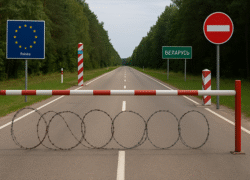
Warsaw’s decision in mid-September 2025 to shut all road and rail crossings with Belarus during the Russia-Belarus “Zapad-2025” drills has immediate security and economic implications. The Interior Ministry’s regulation, which took effect from September 12 with no fixed end date, suspends passenger and freight movement to mitigate risks from potential incidents and airspace violations linked to the exercises. 

The closure affects a critical section of the Eurasian land bridge. Poland is the dominant EU gateway for China–Europe rail freight, and the Małaszewicze reloading region at the Belarus border is the principal transshipment hub on this route. In 2024, Małaszewicze handled roughly 84.7% of westbound China–Europe rail cargo (around 280,200 TEUs), underscoring how disruptions here reverberate across European supply chains. Even before the current shutdown, operators reported periodic bottlenecks and queueing at this crossing. 

The stoppage is already producing practical consequences: thousands of vehicles were caught on the Belarusian side when the closure took effect, while Polish authorities advised hauliers to reroute. Prolonged suspension would likely push more Asia-Europe volumes to sea and air, raising transit times and costs for shippers that rely on time-sensitive rail. 

Diplomatically, Beijing has engaged. Chinese Foreign Minister Wang Yi met Polish Deputy PM and Foreign Minister Radosław Sikorski in Warsaw on September 15 during the Poland–China Intergovernmental Committee, a forum both sides used to signal the importance of stable trade corridors. For China—balancing ties with Moscow and commercial interests in Europe—predictable transit through Poland is strategically valuable. 

Broader trade politics add pressure. In parallel, U.S. President Donald Trump urged NATO states to impose 50–100% tariffs on Chinese goods to curb revenues linked to Russia; Washington has hinted at further measures depending on Europe’s response. Escalation on this front would raise the cost of Chinese exports, further elevating the value of efficient, low-risk logistics paths into the EU—again putting a premium on the reliability of the Polish corridor. 

Bottom line: Poland’s security-driven border closure is also a supply-chain event. Because so much China–EU rail freight funnels through Małaszewicze, even temporary suspensions ripple into lead-times and costs for European industries. With Beijing engaging Warsaw and tariff talk intensifying in Washington, the intersection of security and trade policy is unmistakable: restoring predictable operations at Poland’s eastern border is now a shared interest for the EU, China-based exporters, and multinational shippers.

Source: WEI (Warsaw Enterprise Institute)

The Polish-Belarusian Border: Why the Closure Matters for Trade Between China and Europe

Warsaw’s decision in mid-September 2025 to shut all road and rail crossings with Belarus during the Russia-Belarus “Zapad-2025” drills has immediate security and economic implications. The Interior Ministry’s regulation, which took effect from September 12 with no fixed end date, suspends passenger and freight movement to mitigate risks from potential incidents and airspace violations linked to the exercises. 

The closure affects a critical section of the Eurasian land bridge. Poland is the dominant EU gateway for China–Europe rail freight, and the Małaszewicze reloading region at the Belarus border is the principal transshipment hub on this route. In 2024, Małaszewicze handled roughly 84.7% of westbound China–Europe rail cargo (around 280,200 TEUs), underscoring how disruptions here reverberate across European supply chains. Even before the current shutdown, operators reported periodic bottlenecks and queueing at this crossing. 

The stoppage is already producing practical consequences: thousands of vehicles were caught on the Belarusian side when the closure took effect, while Polish authorities advised hauliers to reroute. Prolonged suspension would likely push more Asia-Europe volumes to sea and air, raising transit times and costs for shippers that rely on time-sensitive rail. 

Diplomatically, Beijing has engaged. Chinese Foreign Minister Wang Yi met Polish Deputy PM and Foreign Minister Radosław Sikorski in Warsaw on September 15 during the Poland–China Intergovernmental Committee, a forum both sides used to signal the importance of stable trade corridors. For China—balancing ties with Moscow and commercial interests in Europe—predictable transit through Poland is strategically valuable. 

Broader trade politics add pressure. In parallel, U.S. President Donald Trump urged NATO states to impose 50–100% tariffs on Chinese goods to curb revenues linked to Russia; Washington has hinted at further measures depending on Europe’s response. Escalation on this front would raise the cost of Chinese exports, further elevating the value of efficient, low-risk logistics paths into the EU—again putting a premium on the reliability of the Polish corridor. 

Bottom line: Poland’s security-driven border closure is also a supply-chain event. Because so much China–EU rail freight funnels through Małaszewicze, even temporary suspensions ripple into lead-times and costs for European industries. With Beijing engaging Warsaw and tariff talk intensifying in Washington, the intersection of security and trade policy is unmistakable: restoring predictable operations at Poland’s eastern border is now a shared interest for the EU, China-based exporters, and multinational shippers.

Source: WEI (Warsaw Enterprise Institute)

LIP Invest Begins Investment Phase for Fifth Logistics Real Estate Fund

LIP Invest has launched the investment phase of its latest vehicle, the “LIP Real Estate Investment Fund – Logistics Germany V,” with initial purchases already completed. The fund has invested €70 million in new logistics properties, and the first capital calls are expected soon. Several institutional investors have committed, while others are in the final review stage.

The fund, managed by IntReal Kapitalverwaltungsgesellschaft, follows a core strategy targeting newly built, third-party-usable logistics assets in established locations. The investment plan includes acquiring 10 to 15 properties with a total volume of at least €350 million. The first assets purchased have already received sustainability certification.

According to Managing Director David Zimmermann, the first closing demonstrates ongoing investor demand for specialized logistics funds. “With further commitments expected shortly, we anticipate reaching the planned volume quickly,” he said, noting that the fund remains open to additional institutional participants.

Germany’s logistics sector continues to be the focus. Sebastian Betz, Managing Partner at LIP Invest, emphasized the country’s position as Europe’s largest logistics market, valued at around €330 billion, supported by its infrastructure, central location, and industrial diversity.

The company points to long-term drivers of demand, including increased spare parts storage, online retail expansion, food delivery services, and structural changes in supply chains. These trends are expected to create steady requirements for modern logistics facilities, such as cold storage and distribution centers, aligning with the fund’s investment strategy.

LIP Invest’s team of over 20 professionals remains largely unchanged in key positions since previous fund cycles. To support further growth, the firm has strengthened its acquisition and finance functions. Maximilian Leeb has been appointed Head of Real Estate Acquisition, while Anna Niggl has been promoted to Head of Fund Finance, becoming the main contact for financing banks.

The new fund builds on LIP’s earlier logistics real estate vehicles, which have already established a track record in the German market.

Survey: One-Third of Hungarians Lack Reliable Professional Help in Home Emergencies

A representative survey by Europ Assistance shows that one in three Hungarians has no trusted professional to call in case of an emergency at home. The findings, also reported by Portfolio.hu and BBJ.hu, highlight concerns about high prices, long response times, and inconsistent quality of service as the main obstacles in the home repair sector .

According to the survey, 44 percent of respondents aged 18–69 said electrical failures and power outages are their greatest concerns in the event of an emergency. Roughly a third mentioned gas leaks, blocked sewage systems, or malfunctioning electronic equipment after the warranty period as major worries. Less common were door lock failures (25 percent) and solar panel damage (14 percent).

Insurance remains widely valued: 92 percent of respondents considered fire protection essential, followed by water damage and burst pipes (90 percent) and storm damage (88 percent). About 80 percent would insure against glass damage, while liability insurance was important for four out of five households. Coverage for blocked sewage systems was mentioned by 75 percent, but only 60 percent supported adding household appliance failures after warranty expiry.

The survey also revealed structural challenges. Only 20 percent of Hungarians have a trusted professional for all types of home problems, while 46 percent can reach out to someone in specific cases. A third have no fixed contacts and must search for help each time. Among those who have required assistance, half reported difficulties with high costs or emergency surcharges, and 47 percent said they struggled to find the right tradesperson. Nearly as many noted problems with poor workmanship and communication.

“Nearly 56 percent of the population considers it risky to live without home insurance, and 87 percent find assistance services useful, but only 22 percent currently have this type of protection,” said Gábor Szabolcs Timár, head of operations at Europ Assistance Hungary. He added that 24-hour helplines, fast dispatch of verified professionals, and emergency electrical repair were seen as the most attractive services.

The survey underscores both the strong perceived need for insurance and the significant gap in reliable professional services for household emergencies.

Survey: One-Third of Hungarians Lack Reliable Professional Help in Home Emergencies

A representative survey by Europ Assistance shows that one in three Hungarians has no trusted professional to call in case of an emergency at home. The findings, also reported by Portfolio.hu and BBJ.hu, highlight concerns about high prices, long response times, and inconsistent quality of service as the main obstacles in the home repair sector .

According to the survey, 44 percent of respondents aged 18–69 said electrical failures and power outages are their greatest concerns in the event of an emergency. Roughly a third mentioned gas leaks, blocked sewage systems, or malfunctioning electronic equipment after the warranty period as major worries. Less common were door lock failures (25 percent) and solar panel damage (14 percent).

Insurance remains widely valued: 92 percent of respondents considered fire protection essential, followed by water damage and burst pipes (90 percent) and storm damage (88 percent). About 80 percent would insure against glass damage, while liability insurance was important for four out of five households. Coverage for blocked sewage systems was mentioned by 75 percent, but only 60 percent supported adding household appliance failures after warranty expiry.

The survey also revealed structural challenges. Only 20 percent of Hungarians have a trusted professional for all types of home problems, while 46 percent can reach out to someone in specific cases. A third have no fixed contacts and must search for help each time. Among those who have required assistance, half reported difficulties with high costs or emergency surcharges, and 47 percent said they struggled to find the right tradesperson. Nearly as many noted problems with poor workmanship and communication.

“Nearly 56 percent of the population considers it risky to live without home insurance, and 87 percent find assistance services useful, but only 22 percent currently have this type of protection,” said Gábor Szabolcs Timár, head of operations at Europ Assistance Hungary. He added that 24-hour helplines, fast dispatch of verified professionals, and emergency electrical repair were seen as the most attractive services.

The survey underscores both the strong perceived need for insurance and the significant gap in reliable professional services for household emergencies.

BYD Expands Operations at CTPark Komárom

BYD Electric Bus & Truck Hungary Kft. has signed a lease agreement with CTP Hungary and taken possession of a newly developed 5,000-square-meter industrial hall at CTPark Komárom. The facility will support the company’s activities in electric bus and truck production.

The building was constructed to meet specialized technical requirements, including high-capacity power infrastructure, large drive-in gates, and an advanced electrical network. According to BYD, these features are necessary for the smooth operation of its production activities in Komárom.

Henry Zhang, Managing Director of BYD Electric Bus & Truck Hungary Kft., said that CTP provided a comprehensive solution by coordinating planning, construction, and licensing. He noted that this approach reduced administrative work and shortened timelines.

The Komárom site was selected in part due to its location, transport connections, and access to a skilled workforce. The facility also offers potential for future expansion.

The hall has been designed with sustainability goals in mind and is targeting a BREEAM “Excellent” certification. A rooftop solar installation is planned for completion by the fourth quarter of 2025.

Dr. Ferenc Gondi, Managing Director of CTP Hungary, said the project demonstrates how the company’s industrial properties can be adapted to the needs of high-tech tenants.

BYD’s expansion in Komárom is expected to support local employment and contribute to the growth of Hungary’s electromobility sector.

PPF Real Estate to Acquire Diplomat Hotel in Prague

PPF Real Estate Holding has reached an agreement with Rabbit Holdings Public Company Limited, a Thai real estate and financial services company, to acquire the Diplomat Hotel in Prague. The transaction is subject to standard regulatory approvals.

The acquisition expands PPF Real Estate’s international portfolio, which spans offices, residential properties, and hotels across Europe and North America. Located near PPF Group’s headquarters, the Diplomat Prague is operated by Wyndham Hotels & Resorts under the Vienna House Diplomat Prague brand. The property includes 400 rooms and extensive conference facilities catering to business clients.

Under the terms of a previously concluded agreement with PPF Real Estate, Tomáš Otruba, a member of PPF Group’s supervisory board, will acquire a 5 percent stake in the property.

“Real estate is an important investment pillar for PPF, providing predictable, long-term returns and global geographic diversification. The acquisition of the Diplomat Hotel in Prague reflects this strategic approach and PPF’s ongoing search for investment opportunities,” said Robert Ševela, Chairman and CEO of PPF Real Estate.

No further financial details of the transaction have been disclosed.

Michał Radomski Joins Scallier as Investment Director

Michał Radomski has joined Scallier in Poland as Investment Director. In his new role, he will be responsible for advising clients on the acquisition of retail real estate, overseeing asset sale processes on behalf of property owners and developers, and supporting both institutional and private investors in implementing investment strategies and building portfolios. He will also contribute to Scallier’s development and investment projects.

Radomski has more than a decade of experience in commercial real estate investment in Poland. His career has included advisory roles in acquisitions for international investment funds, as well as managing numerous property transactions on the domestic market. He played a role in bringing an Austrian investment fund into Poland and was involved in acquisitions for Centerscape Investments in both Poland and the Czech Republic. He has also advised on the development of retail parks in Poland and Slovakia.

“We are pleased to welcome Michał to our team. His experience and skills will support our company’s plans and provide clients with comprehensive advisory services,” said Bartosz Nowak, Managing Partner at Scallier.

Commenting on his new position, Radomski said: “Working at Scallier marks a new stage in my career. The company’s experience in Poland and Romania allows us to provide clients with broad support in investment projects, both in local and wider European markets.”

LATEST NEWS