Monday, 21 September 2026
The office sector’s growing focus on ESG commitments continues to reshape workplace strategies, with flexible office operator Mindspace outlining a broader sustainability framework across its international portfolio.
The company, which operates more than 50 locations globally, said it has been implementing environmental and social initiatives through its “Mindspace Impact” programme, covering operational efficiency, workplace design, employee development and community engagement.
“At Mindspace, we believe that sustainability is essential to our long-term success, which is why we operate in a way that benefits the environment, our employees and our community,” said Michał Kwinta.
According to the company, ESG initiatives are integrated across all locations and include efforts to reduce energy and resource consumption through operational systems such as automated air-conditioning controls, motion-sensor lighting and water-saving technologies. Mindspace said measures introduced across its portfolio contributed to an average reduction in carbon emissions of 21 percent, based on an internal report prepared in cooperation with KVS Consulting.
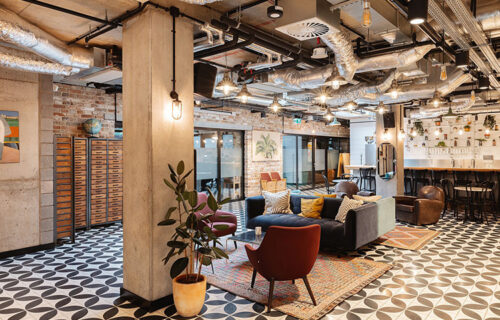
The operator has also incorporated sustainability measures into new office fit-outs, including the use of repurposed furniture and second-life materials sourced locally to reduce transport-related emissions. Furniture removed during refurbishment projects is either reused or sold, with proceeds directed to charitable causes, the company said.
Beyond environmental measures, Mindspace said its ESG framework also focuses on employee development and social impact initiatives. Teams across different markets participate in volunteer projects supporting local communities, while the company continues to invest in internal training programmes and leadership development.
The company stated that diversity and multiculturalism remain part of its organisational strategy, citing internal survey data indicating that 75 percent of employees rate workplace diversity as “very good” or “excellent”.
Flexible office operators have increasingly positioned workspace efficiency and hybrid working models as part of broader sustainability strategies. According to Mindspace, shared and scalable office infrastructure can help companies optimise space utilisation and reduce excess resource consumption compared with traditional office models.
The company also stated that hybrid workplace solutions may contribute to reducing commuting-related environmental impacts, based on its internal analyses.
As occupiers across Europe continue to review workplace footprints and ESG obligations, operators in the flexible office sector are placing greater emphasis on efficiency, adaptability and operational sustainability as part of their long-term growth strategies.