Tuesday, 22 September 2026
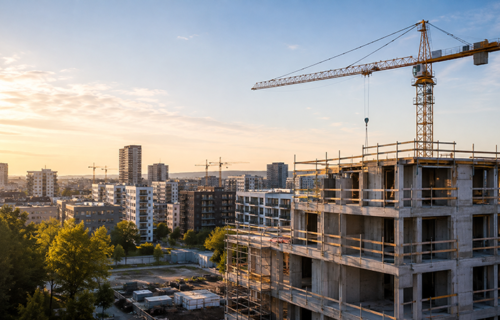
Building construction was the main driver of growth in the Czech construction sector during the first half of 2026, offsetting weaker civil engineering activity and supporting an increase in overall industry output, according to the latest market data.
Construction production increased by 4.2% year-on-year during the first six months of the year, while the value of new construction orders rose by almost 14% to CZK 102.1 billion. The improvement was primarily supported by demand for building projects, including residential developments, whereas civil engineering activity declined by 0.4% over the same period.
The figures underline the continuing importance of building construction to the Czech economy. In addition to supporting employment across construction and manufacturing supply chains, new development activity contributes to investment and public finances through tax revenues.
Despite the positive national results, Prague’s housing market continues to face significant supply challenges. During the first half of 2026, approximately 3,500 new apartments received planning approval in the capital. While this represents continued development activity, industry estimates suggest that Prague needs to approve and deliver around 10,000 new homes annually to keep pace with long-term demand.
Developers warn that the current pace of permitting remains insufficient to address the city’s housing shortage, which industry estimates place at close to 100,000 homes. Although these figures are widely cited within the property sector, they represent market estimates rather than official government targets.
The current increase in construction activity is also supported by projects that were delayed during the market slowdown in 2022 and 2023. As market conditions and buyer demand improved, many previously approved developments entered the construction phase, contributing to stronger production levels and higher order volumes in 2026.
However, the pipeline of deferred projects is finite, raising concerns about future activity if the pace of new project approvals does not accelerate.
Property industry representatives argue that improving the efficiency of the Czech permitting system remains one of the key priorities for sustaining long-term residential development. They also point to Prague’s new land-use plan as an important tool for enabling future housing growth, provided it can be implemented effectively.
While the construction sector has returned to growth, the latest figures suggest that maintaining momentum will depend not only on current project delivery but also on the speed at which new developments move through the planning and approval process. Without a stronger flow of new permits, the recent recovery in building activity could prove difficult to sustain over the longer term.