Tuesday, 29 September 2026
E.ON Drive Infrastructure Poland plans a rapid expansion of its electric vehicle charging network, with retail properties, restaurants and car parks forming an important part of its search for new locations. The company aims to have around 300 charging points operating across Poland by the end of 2027, compared with 22 points at seven locations currently. EDRI is also targeting more than 100 operational points by the end of 2026, although some installations awaiting final approvals could enter service in early 2027 instead.
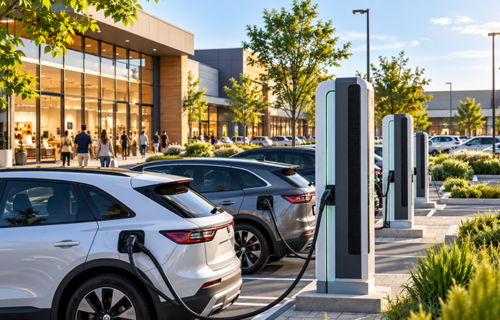
Commercial properties are expected to play a significant role in the rollout. EDRI is looking for locations where motorists can charge while shopping, eating or carrying out other activities, alongside sites positioned to serve longer-distance traffic. Shopping centres, restaurants and car parks are among the property types specifically identified by the company.
One example is EDRI’s cooperation with Polish furniture retailer Agata. The first location in Nowy Sącz provides six charging points with capacity of up to 400 kW. EDRI says it is Agata’s charging infrastructure partner and plans installations alongside the retailer’s existing and future large-format stores, a network approaching 40 locations.
The company is concentrating primarily on high-powered charging rather than slower AC infrastructure. EDRI generally intends to install equipment offering at least 200 kW and develop locations with a minimum of two charging units, while retaining the ability to add capacity as demand increases. This makes suitable electricity connections increasingly important when selecting commercial sites.
EDRI is expanding into a Polish market where charging infrastructure is growing alongside the electric vehicle fleet. Poland had 13,454 publicly accessible charging points at the end of July 2026, according to the Polish New Mobility Association, with 6,751, or just over half, providing DC fast charging. The number of registered battery-electric passenger and commercial vehicles had reached 158,365.
For commercial property owners, the growth of high-powered charging introduces another infrastructure consideration for retail and roadside assets, particularly at locations combining substantial parking capacity, strong electricity connections and regular vehicle traffic. Charging facilities can also make parking areas more useful to customers and broaden the range of services available at a property, although the direct financial benefit to landlords will depend on the commercial structure of individual agreements.
The expansion also illustrates how retail and other destination properties are becoming part of Poland’s developing transport-energy infrastructure. As charging speeds and electricity requirements increase, grid capacity could become a more important factor in the competitiveness of commercial sites, adding power availability to the traditional considerations of location, accessibility, parking and tenant mix.