Sunday, 4 October 2026
Cavare by Cavatina and Urban Partners are expanding their residential rental partnership in Gdańsk with a second forward funding transaction at the Palio complex, increasing the planned Lett portfolio at the former shipyard site to 646 apartments.
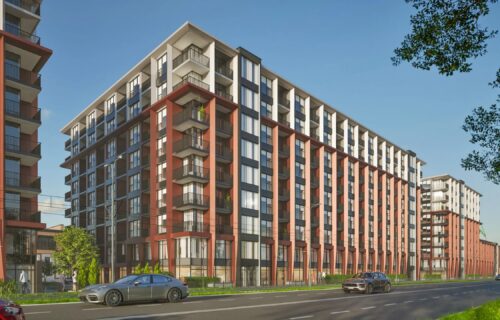
The latest agreement covers Palio D1, a 310-unit residential development on Jana z Kolna Street. Once completed, the scheme will operate as Lett Shipyard under Urban Partners’ institutional rental platform.
The transaction follows the agreement announced in February 2026 for Palio C, which comprises 336 rental units. Together, the two developments will create a 646-unit professionally managed rental portfolio within Palio, establishing the location as a significant new PRS cluster in the Tri-City market.
Palio D1 will contain 310 fully furnished apartments and 98 underground and surface parking spaces. Studios and smaller apartments will account for much of the accommodation, reflecting a target market that includes young professionals and people relocating to Gdańsk for employment.
The residential component will provide close to 10,000 sqm, complemented by approximately 390 sqm of service space. Development is expected to take 27 months following completion of the sale.
The project is being delivered through forward funding, under which institutional capital finances the development according to an agreed construction programme and specification. The structure provides Cavare with an institutional buyer while allowing Urban Partners to secure new rental stock before completion.
Bartłomiej Wentlandt, President of Cavare, said the second transaction demonstrates the potential to develop a repeatable investment model with institutional partners. Following Palio C, the company is now extending the relationship with Urban Partners while increasing the scale of its residential activity at the Gdańsk site.
For Urban Partners, the investment reflects a continued focus on Polish rental housing alongside logistics.
Maciej Piotrowicz, Head of Real Estate Poland at Urban Partners, said PRS and logistics remain the company’s two preferred areas for deploying capital in Poland. He pointed to demand from people seeking urban housing without committing to home ownership, combined with the limited availability of professionally managed rental accommodation.
The location adds another dimension to the investment. Palio forms part of the redevelopment of Gdańsk’s former shipyard district, where residential, office, cultural and leisure uses are gradually creating a new mixed-use extension of the city centre.
The wider Young City regeneration area covers more than 150 hectares of former industrial land. Palio D1 will therefore add residential accommodation within a district already attracting substantial commercial and cultural investment.
Cavare’s residential development is also being integrated with the developer’s existing office activity. Palio A and B are already occupied, with tenants including Fortum, Orange and the District Labour Inspectorate, while further commercial development is progressing within the complex.
This proximity between workplaces and rental housing is central to the investment proposition. Residents will have access to the Gdańsk Stocznia SKM station, tram services at Brama Oliwska and cycling infrastructure along Jana z Kolna Street. The historic city centre and European Solidarity Centre are also within walking distance.
The surrounding former shipyard district has meanwhile developed into one of Gdańsk’s better-known cultural and leisure destinations, including the 100cznia food and entertainment area.
Magdalena Terefenko, Vice President at Urban Partners Poland, said Gdańsk remains one of the company’s priority Polish markets, with Palio D1 combining access to employment, public transport, culture and residential uses within the same district.
The investment also reflects the growing importance of the Tri-City within Poland’s institutional rental market. Warsaw has historically dominated professionally managed rental housing, but Gdańsk, Gdynia and Sopot are increasingly attracting institutional capital alongside other major regional markets such as Wrocław and Kraków.
Employment is an important part of that demand. Pomerania has developed a substantial business-services sector employing more than 42,000 people, creating a population of professionals and relocated employees for whom flexible rental accommodation can be preferable to purchasing a home.
Gdańsk also has characteristics that distinguish it from some other Polish residential markets. Its combination of university demand, corporate employment and tourism creates competition between long-term residents and short-term visitors for privately owned rental apartments.
During the summer season, part of the conventional rental stock can migrate towards short-term accommodation. Professionally managed residential schemes can provide a more predictable year-round alternative for people requiring permanent accommodation.
For institutional investors, this creates an opportunity to compete not only on rental price but also on certainty, management standards, furnished accommodation and simplified leasing.
The scale of the Cavare and Urban Partners partnership is therefore important. Rather than acquiring individual completed properties, Urban Partners is securing a sizeable rental position through consecutive forward funding transactions within the same regeneration district.
For Cavare, the model provides greater visibility over the exit and financing of residential developments. For Urban Partners, it provides access to purpose-built rental stock designed from the outset for professional operation.
The Palio transactions also demonstrate how Poland’s PRS sector is becoming increasingly connected with large urban regeneration projects. Institutional rental housing can introduce permanent residential populations into former commercial or industrial districts while supporting restaurants, services, public transport and surrounding office uses.
The strategy could be particularly relevant in Gdańsk’s former shipyard area, where the long-term transformation depends on creating a functioning mixed-use district rather than a collection of individual developments.
CBRE and Pinsent Masons advised Cavare on the Palio D1 transaction. Urban Partners was advised by CMS Cameron McKenna, MDDP and Savills.
With Palio C and D1 together providing 646 rental apartments, the partnership is becoming a substantial component of the emerging residential market around the former Gdańsk Shipyard. The transaction also underlines the growing institutional investment case for the Tri-City, where employment growth, professional mobility, student demand and constrained long-term rental supply are creating conditions for further expansion of professionally managed housing.