Sunday, 20 September 2026
Wage growth continued across Slovakia in 2025, but significant differences in earnings between regions and industries remained, highlighting the country’s uneven economic development, according to the latest Regional Labour Statistics published by the Statistical Office of the Slovak Republic.
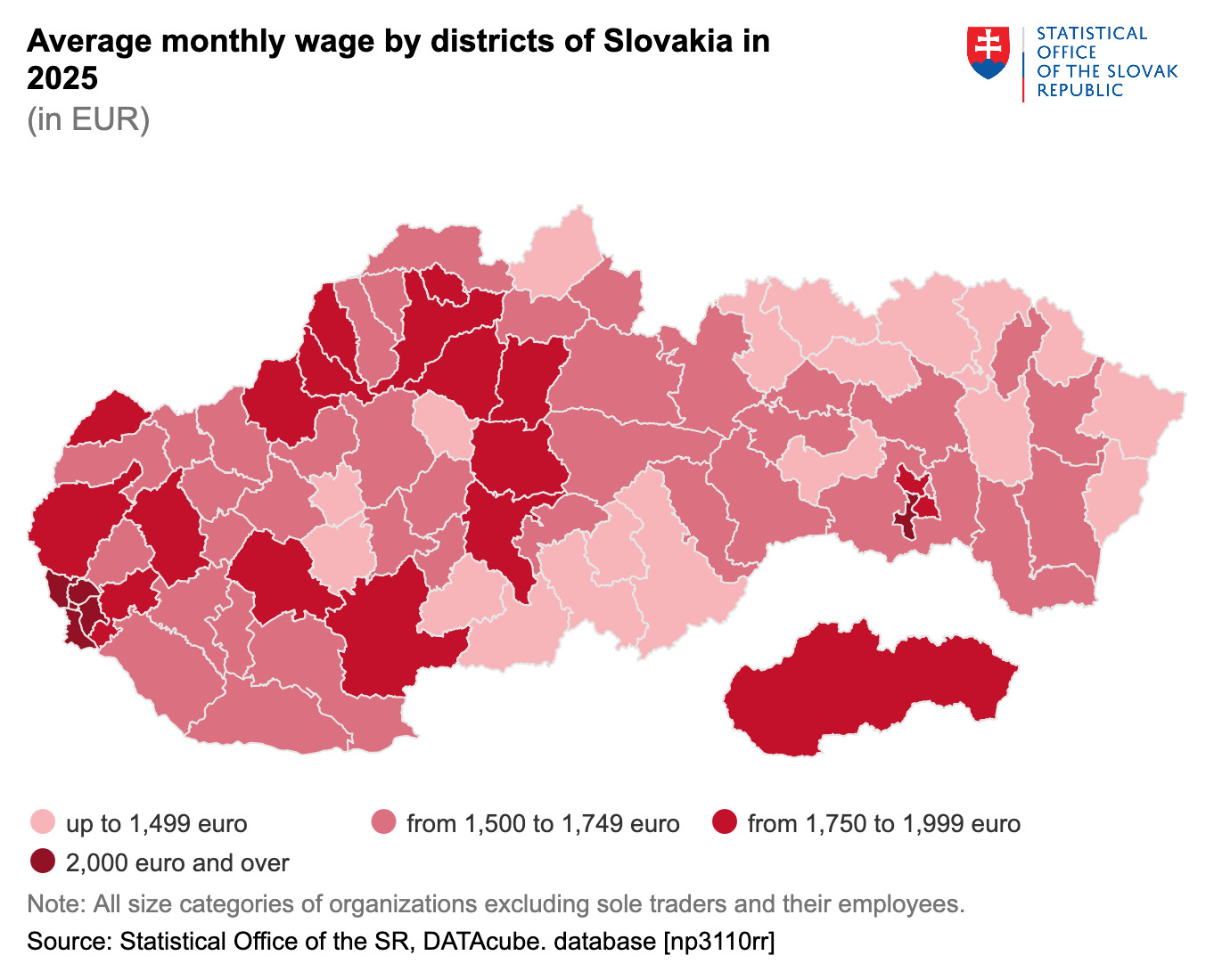
The average monthly wage, measured according to the workplace location of employees, reached €1,864 in 2025, an increase of 6.6% or €115 compared with the previous year. However, salaries continued to vary considerably between districts, with only 14 of Slovakia’s 79 districts recording wages above the national average.
The highest average monthly earnings were reported in Bratislava I, where employees earned €2,455 per month on average. At the opposite end of the ranking, Veľký Krtíš recorded an average wage of €1,294, creating a gap of more than €1,160 between the country’s highest and lowest-paying districts. Overall, six districts reported average monthly wages above €2,000, while 19 districts, primarily in southern and eastern Slovakia, remained below €1,500.
Outside the capital, above-average wages were concentrated in districts with strong industrial and commercial activity, including parts of Košice, Trnava, Púchov, Ružomberok and Žilina. Meanwhile, some of the country’s lowest wage levels were recorded in districts such as Poltár, Svidník, Medzilaborce, Sabinov, Rimavská Sobota and Kežmarok.
Despite these regional disparities, average wages increased in almost every district during 2025. The fastest annual growth was recorded in Košice II, Banská Štiavnica and Martin, while only Košice III registered a slight decline. Wage growth remained comparatively modest in Bratislava III, Kysucké Nové Mesto and Poltár.
Differences in earnings were equally pronounced across economic sectors. Average monthly pay ranged from €998 in food and beverage service activities to €3,173 in telecommunications, representing a difference of more than €2,180. Other high-paying sectors included information technology, petroleum manufacturing and financial support services, while clothing manufacturing, security services, building maintenance and certain social care activities continued to record some of the lowest average wages in the economy.
Employers paid a combined €36.7 billion in wages and wage compensation during 2025, an increase of 7% compared with the previous year. More than half of this amount was concentrated in nine economic sectors, led by public administration, education and healthcare. Retail trade, wholesale, computer programming, land transport and vehicle manufacturing also ranked among the country’s largest contributors to total wage payments.
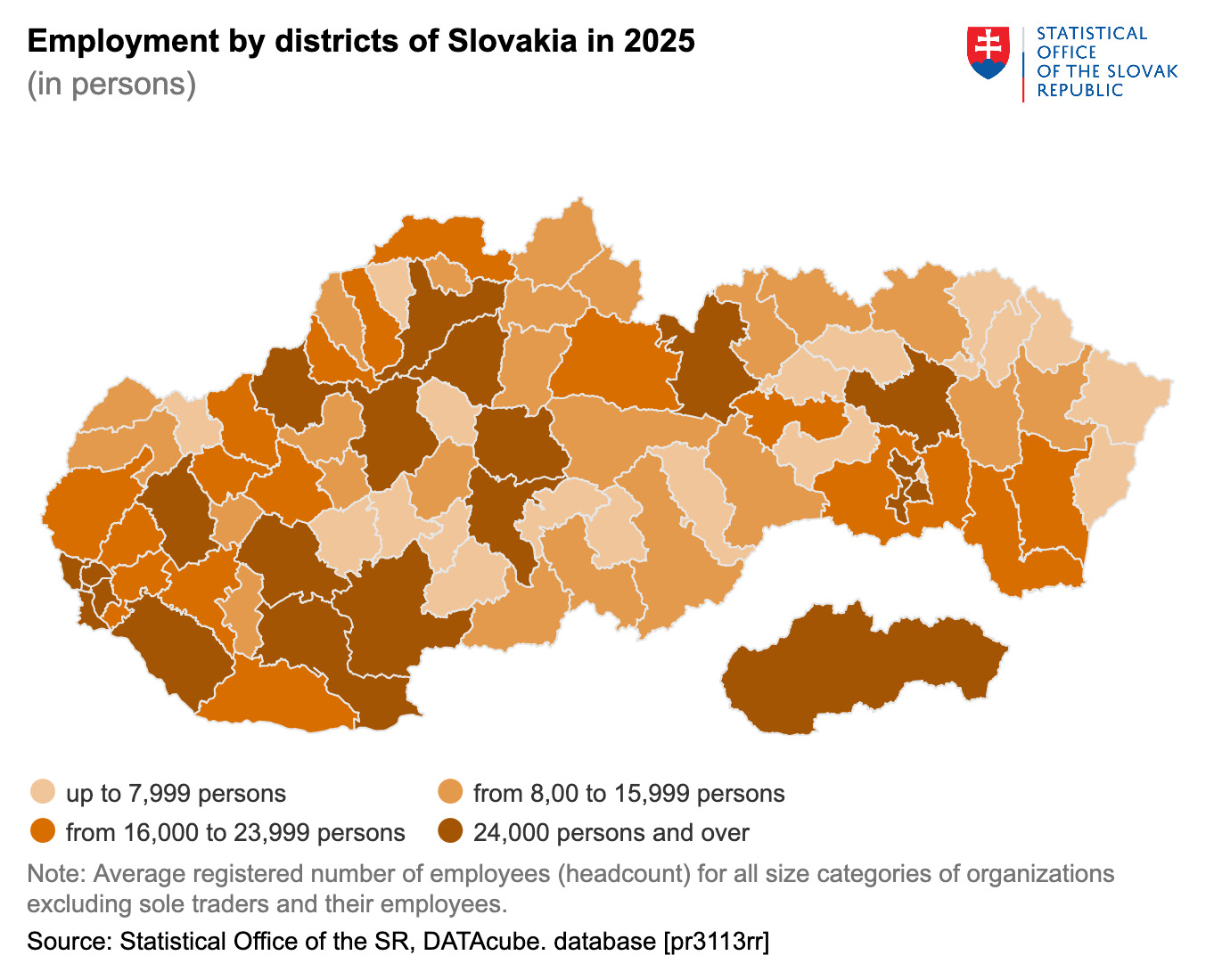
Employment levels remained broadly stable. The average number of employees covered by the workplace-based statistics reached 1.6 million, around 5,000 more than in 2024. The largest concentrations of employment were found in Bratislava I and Bratislava II, while Nitra, Žilina and Bratislava III also recorded sizeable labour markets.
Education remained Slovakia’s largest employer, followed by public administration, healthcare and retail trade. Manufacturing industries, particularly vehicle production, fabricated metal products and machinery manufacturing, continued to provide significant employment across several regions.
The latest figures underline the continued concentration of higher-paid employment in Slovakia’s main urban and industrial centres. While wage growth has been broadly shared across the country, the gap between the strongest-performing districts and less-developed regions remains substantial, reflecting differences in industrial structure, investment levels and the concentration of high-value economic activity.