Wednesday, 16 September 2026
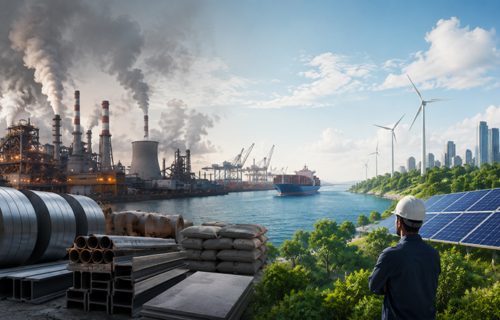
The European Union’s climate policies are beginning to reshape international trade, with Indian manufacturers among those facing new commercial realities. As Europe tightens environmental standards on imported goods, exporters selling carbon-intensive products into the EU will need to meet stricter reporting requirements while remaining competitive in one of their most important overseas markets.
The EU introduced its Carbon Border Adjustment Mechanism (CBAM) to ensure that imported products face a carbon cost comparable to goods produced within the bloc. The policy aims to discourage companies from shifting production to countries with less demanding environmental regulations while supporting Europe’s long-term objective of reducing greenhouse gas emissions.
The framework currently applies to sectors such as iron and steel, aluminium, cement, fertilisers, hydrogen and electricity. Following an initial reporting phase, the system is now moving towards full implementation, making emissions data an increasingly important part of international trade.
Steel Industry Faces the Greatest Challenge
Among India’s export industries, steel is expected to experience the largest impact. Many Indian steel plants continue to rely on production methods with relatively high carbon emissions, making exports more vulnerable to additional costs linked to Europe’s carbon pricing system.
Several economic studies suggest that Indian steel shipments to the European market could decline once the mechanism is fully reflected in trading costs. While estimates differ depending on the assumptions used, researchers generally agree that higher carbon-related costs will reduce the competitiveness of some Indian producers compared with manufacturers operating lower-emission facilities.
For companies that depend heavily on European customers, maintaining market share may increasingly depend on improving production efficiency and reducing the carbon footprint of manufacturing operations.
Aluminium Producers Also Under Pressure
The aluminium sector faces similar challenges. Producing primary aluminium requires large amounts of electricity, meaning the environmental impact varies significantly depending on the energy source used during production.
Facilities powered by cleaner energy sources are likely to be in a stronger competitive position than those relying on fossil fuel-generated electricity. As European buyers become more focused on embedded emissions, manufacturers with lower-carbon production processes could gain a commercial advantage.
Environmental Data Becomes a Business Requirement
The new rules place considerable emphasis on accurate emissions reporting. Exporters will need to provide detailed information about the carbon emissions associated with individual products rather than relying on broad sustainability commitments.
For many businesses, this means investing in emissions monitoring systems, independent verification and digital reporting processes. These additional requirements create new administrative and financial costs, particularly for companies that have not previously measured emissions at a detailed operational level.
European importers are also expected to place greater value on suppliers capable of providing reliable environmental data. As a result, transparency is becoming an important factor alongside price, quality and delivery performance when selecting manufacturing partners.
Smaller Businesses Could Feel a Greater Impact
Large industrial groups generally have greater financial resources to invest in emissions monitoring, specialised staff and cleaner production technologies. Smaller exporters, however, may find the transition more difficult.
Many small and medium-sized manufacturers already operate under pressure from higher financing costs, inflation and volatile raw material prices. Additional compliance expenses could further reduce profit margins and make participation in European supply chains more challenging.
This may encourage smaller businesses to collaborate with industry associations, technology providers and government-supported programmes to improve reporting capabilities while sharing compliance costs.
Limited National Impact but Significant Sectoral Effects
Although CBAM has attracted considerable attention, economists generally expect its effect on India’s overall economy to remain relatively modest because the mechanism covers only selected industries.
However, the impact is unlikely to be evenly distributed. Companies operating in sectors directly affected by the policy could experience higher production costs, tighter margins and increased competition, while businesses outside the covered industries may notice little immediate change.
For export-oriented manufacturers, the challenge is less about the national economy and more about protecting profitability within specific product categories where Europe remains an important customer.
Opportunity Through Modernisation
While the policy creates short-term challenges, it also provides an incentive for manufacturers to modernise operations. Investment in cleaner production technologies, renewable energy, improved energy efficiency and digital emissions monitoring can strengthen long-term competitiveness, not only in Europe but across global markets where sustainability requirements continue to increase.
Industrial companies that move quickly to improve environmental performance may find themselves better positioned to secure international contracts as buyers increasingly consider carbon intensity alongside traditional commercial factors.
As climate-related regulations become more closely linked with international trade, environmental performance is evolving from a compliance issue into a strategic business consideration. For Indian exporters, adapting to these new expectations may prove essential for maintaining access to one of the world’s largest and most valuable export markets.
Source: © CIJ.World India Research & Analysis Team