Thursday, 10 September 2026
High temperatures and prolonged dry conditions have reduced honey production at a family bee farm in western Czechia, providing another example of how the country’s unusually dry 2026 summer is affecting agricultural businesses.
The bee farm near Koloveč in the Domažlice region expects its honey harvest to be around 10% below a normal year. The business operates 80 hives and traces its beekeeping activity back 130 years.
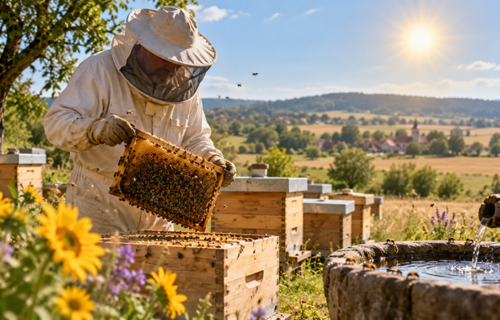
Beekeeper Karel Toupal said the hot weather changed the daily activity of the colonies. Bees spent more time searching for water, which they use to regulate temperatures inside their hives, leaving less opportunity to collect nectar and pollen. The difficult conditions have coincided with what Toupal describes as a progressively shorter productive season.
At the farm, this year’s main nectar-gathering period effectively finished when the linden flowering season ended during the first half of July. Toupal estimates that the active beekeeping season now lasts around two and a half months, compared with three months or longer in previous years. The observation relates specifically to his farm and should not be interpreted as evidence that the same reduction has occurred across the Czech beekeeping industry.
“The season is getting shorter,” Toupal said, describing how much earlier the farm now begins preparing its colonies for winter compared with previous years.
The business operates at approximately 500 metres above sea level. In stronger years, individual hives can produce around 30 to 40 kilograms of honey. Before winter, each colony requires at least 15 to 18 kilograms of supplementary sugar to maintain sufficient reserves, according to Toupal.
Weather conditions are not the only challenge facing the farm. Toupal also points to bee diseases and chemicals used in agriculture as factors complicating beekeeping, although these observations represent the producer’s assessment rather than a measurement of their contribution to this year’s lower harvest.
The wider weather context supports concerns about pressure on Czech agriculture. Drought remained widespread across parts of the country during the summer, with persistent shortages of water affecting vegetation and some agricultural production. The experience in Koloveč therefore sits within a broader discussion about how farms and other rural businesses adapt to hotter and less predictable growing conditions.
The Koloveč farm has meanwhile diversified beyond conventional honey production. Its activities now include jams and vegetable products as well as wooden apitherapy facilities where visitors can rest above active bee colonies.
For rural businesses, the experience demonstrates how weather can translate directly into operating conditions. At this particular farm, less favourable flowering conditions and the need for bees to devote more activity to finding water have reduced the productive potential of the season.
The implications extend beyond a single honey producer. Persistent periods of heat and drought are increasing the importance of water availability and resilience for agricultural businesses, potentially influencing future investment in water management, irrigation and other measures designed to protect production.
For the Koloveč beekeeper, however, the consequences are already tangible: a shorter productive season, additional feeding requirements and a honey harvest expected to finish below that of a normal year.
Source: CTK