Slovak Housing Market Pushes Higher as Sellers Test Limits

Apartment prices in Slovakia have climbed again, giving many homeowners the confidence to demand more for their properties—even when buyers may not share the same enthusiasm.

Fresh figures from the Real Estate Union show that the average price of a flat reached just over €3,200 per square meter at the end of August, up nearly five percent in only two months. Compared with last summer, values are roughly 15 percent higher. The rise reflects not only strong demand but also the limited supply of new housing and a recent boost in household incomes, which together have created a seller’s market.

But agents warn that not every listing will fetch top euro. Many owners set asking prices based on personal attachment or the cost of past renovations, rather than on actual market evidence. While this optimism is understandable in a rising market, brokers note that inflated expectations often leave apartments unsold for weeks, only to be reduced later at the expense of the seller.

Industry data suggests that the first two weeks after a property goes on the market are decisive: if viewings and inquiries are thin during that period, it is a sign that the price may be too high. Small adjustments at that stage usually preserve momentum, while big cuts made months later can erode confidence and prolong the process even further.

The fundamentals still support a high price environment. Wage growth has been outpacing inflation, giving households more purchasing power, while developers are struggling to deliver enough new units to keep up with demand. Analysts expect these forces to keep pushing values upward through the autumn.

Yet, as professionals point out, the best results still come from grounded expectations. Listings priced in line with recent comparable sales and neighborhood conditions tend to sell faster and with fewer concessions, while overreach risks missing the moment when buyers are most attentive.


Koruna Hits Strongest Level Against the Euro in More Than Two Years

The Czech koruna has climbed to its firmest level against the euro since September 2023, closing on Monday at around 24.25 CZK/EUR. Market data show that the koruna’s value has been steadily strengthening throughout 2025, supported by a mix of domestic monetary policy and favorable investor sentiment. Against the dollar, the currency also gained ground, trading near 20.6 CZK/USD.

Analysts say the koruna’s performance reflects the Czech National Bank’s decision to maintain higher interest rates than those in the euro area. With inflation in the Czech Republic proving more persistent than many expected, particularly in services and housing, the central bank has signaled little appetite for rate cuts in the near term. The resulting yield advantage continues to attract foreign investors, bolstering demand for the currency.

“Limited scope for further rate cuts is clear,” noted CNB board member Jakub Seidler, highlighting the stubborn nature of domestic price pressures. Goldman Sachs economists have also pointed out that the koruna is trading nearly two percent stronger than the CNB’s own forecasts, with its strength helping to ease imported inflation.

The Czech experience contrasts with developments in neighboring countries. The Polish złoty has held relatively stable against the euro at around 4.26 PLN, while the Hungarian forint, at about 389 HUF, has recently regained ground but remains far from multi-year highs. Both currencies have been constrained by political risks and weaker fiscal outlooks, leaving the koruna as the region’s standout performer.

Domestic equity markets echoed the positive tone. The Prague Stock Exchange’s PX index rose 0.42 percent on Monday to 2,303.59 points, boosted by gains in ČEZ and Moneta Money Bank. Trading volumes were subdued, but the benchmark remained above the 2,300-point threshold for the first time since August.

Economists caution, however, that the currency’s rapid appreciation could complicate exports by making Czech goods more expensive abroad. Still, officials in Prague have repeatedly stressed that a stronger koruna helps to keep inflation in check by reducing the cost of imported goods and energy.

“The koruna’s strength is a reflection of investor confidence and the central bank’s determination to keep inflation under control,” said Martin Gürtler of Komerční banka. “But it also adds to the challenge for exporters, who face thinner margins when selling into eurozone markets.”

With both the European Central Bank and the Czech National Bank signaling that monetary policy will remain restrictive, most analysts expect the koruna to stay near its current levels in the months ahead. Whether it can maintain its two-year highs will depend on how inflation develops — and how much longer the central bank keeps interest rates elevated.

Czech Parties Split Over Future of Tax Policy Ahead of Elections

With parliamentary elections only weeks away, the Czech political landscape is sharply divided on the future of taxation. Party programmes released ahead of the October vote reveal starkly different approaches, ranging from pledges of tax cuts to calls for new levies on banks and property.

The opposition movement ANO has positioned itself on the side of business incentives, promising to lower corporate income tax rates and to simplify VAT for food services. It has also floated a revival of electronic sales reporting in a lighter form, which it argues would support fair competition while reducing bureaucracy.

By contrast, smaller challengers such as Přísaha advocate a flat-rate system, calling for identical rates on personal, corporate and consumption taxes, combined with new credits for families and taxpayers. Their programme also includes accelerated write-offs for companies and a special levy on bank profits.

The Pirate Party is seeking to appeal to households, pledging that the vast majority of families would see higher disposable income under their plan. They back expanded tax relief for children and a lower VAT on basic goods, but also propose sharper taxation of property owned by citizens and companies from countries deemed hostile, with Russia singled out.

On the government side, the STAN movement has unveiled plans for targeted health and lifestyle taxes, including a charge on sweetened drinks modelled on Poland’s system. It also supports stronger investment incentives for retirement savings and local government finance. The broader centre-right coalition, Spolu, has signalled caution, vowing to avoid major tax overhauls more than once per parliamentary term while offering limited incentives for reinvested company profits.

At the opposite end of the spectrum, parties such as SPD and Motoristé sobě argue for tax stability and no new increases. SPD’s rhetoric centres on protecting households with children, while Motoristé sobě stresses a simplified system for entrepreneurs and resistance to new levies.

Meanwhile, parties further to the left, including Enough!, advocate sector-specific taxes on banks, energy and arms companies, as well as levies on unused housing and higher inheritance taxes for large estates.

The debate comes as Czechs continue to absorb the effects of the government’s recent consolidation package, which raised selected taxes and reshaped VAT bands. With public finances under pressure and economic growth slowing, the election is set to determine whether the next parliament pursues relief for households and businesses or seeks new sources of revenue from high-earning sectors.

Source: CTK

Czech Parties Split Over Future of Tax Policy Ahead of Elections

With parliamentary elections only weeks away, the Czech political landscape is sharply divided on the future of taxation. Party programmes released ahead of the October vote reveal starkly different approaches, ranging from pledges of tax cuts to calls for new levies on banks and property.

The opposition movement ANO has positioned itself on the side of business incentives, promising to lower corporate income tax rates and to simplify VAT for food services. It has also floated a revival of electronic sales reporting in a lighter form, which it argues would support fair competition while reducing bureaucracy.

By contrast, smaller challengers such as Přísaha advocate a flat-rate system, calling for identical rates on personal, corporate and consumption taxes, combined with new credits for families and taxpayers. Their programme also includes accelerated write-offs for companies and a special levy on bank profits.

The Pirate Party is seeking to appeal to households, pledging that the vast majority of families would see higher disposable income under their plan. They back expanded tax relief for children and a lower VAT on basic goods, but also propose sharper taxation of property owned by citizens and companies from countries deemed hostile, with Russia singled out.

On the government side, the STAN movement has unveiled plans for targeted health and lifestyle taxes, including a charge on sweetened drinks modelled on Poland’s system. It also supports stronger investment incentives for retirement savings and local government finance. The broader centre-right coalition, Spolu, has signalled caution, vowing to avoid major tax overhauls more than once per parliamentary term while offering limited incentives for reinvested company profits.

At the opposite end of the spectrum, parties such as SPD and Motoristé sobě argue for tax stability and no new increases. SPD’s rhetoric centres on protecting households with children, while Motoristé sobě stresses a simplified system for entrepreneurs and resistance to new levies.

Meanwhile, parties further to the left, including Enough!, advocate sector-specific taxes on banks, energy and arms companies, as well as levies on unused housing and higher inheritance taxes for large estates.

The debate comes as Czechs continue to absorb the effects of the government’s recent consolidation package, which raised selected taxes and reshaped VAT bands. With public finances under pressure and economic growth slowing, the election is set to determine whether the next parliament pursues relief for households and businesses or seeks new sources of revenue from high-earning sectors.

Source: CTK

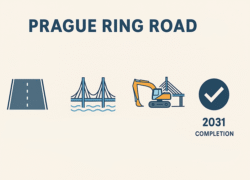
Prague Ring Road Targeted for Completion by 2031

The long-delayed Prague Ring Road (D0) is now officially slated for completion in 2031, according to the Road and Motorway Directorate (ŘSD). Once finished, the outer motorway will stretch about 83–84 kilometres, closing a gap in the Czech capital’s transport network that has been under development for decades.

The ring road currently has just under half of its sections in operation, including the southwest corridor that opened in 2010 to connect the D1 motorway to Brno with the D5 motorway to Plzeň. That section diverted a large share of transit traffic away from the Barrandov Bridge and southern approaches to the city, and included major engineering works such as the Lochkovský tunnel.

Work is already underway on the 12.6-kilometre stretch from Běchovice to D1, a six-lane section with multiple bridges and noise-reduction features, scheduled to open in 2027. Attention is also turning to the three remaining northern sections between Ruzyně and Satalice, which are progressing through environmental and engineering approvals. A new bridge over the Vltava River, planned between Suchdol and Březiněves, is expected to begin construction in 2027.

Officials emphasise that environmental measures have become a central part of the project design. Plans include low-noise road surfaces, kilometres of protective walls, and sections built in cuttings or tunnels to reduce the impact on neighbouring districts. Wildlife corridors are also planned in sensitive areas.

The final northern link is the most technically demanding, requiring relocation of high-voltage lines and coordination with multiple municipalities. Nevertheless, both the Ministry of Transport and ŘSD describe the project as a state priority. If the timeline holds, the full circuit should be in operation by 2031, more than fifty years after the earliest sections were conceived.

Transport experts say the completion will transform traffic flows across the capital and its hinterland. “The ring will take long-distance traffic out of the city, reduce congestion on major bridges, and improve connections between Prague and the Central Bohemian Region,” said ŘSD representatives.

Source: CTK

Housing Affordability Remains Uneven Across Czech Regions

The gap between wages and housing prices in the Czech Republic continues to widen, with Prague remaining the least affordable market while regions such as Ústí nad Labem and Moravian-Silesian still offer comparatively accessible housing.

According to RE/MAX’s mid-2025 affordability analysis, Ústí and Moravian-Silesian regions top the list for accessible housing, where average wages still allow buyers to purchase more than one square metre of an older apartment with a single month’s salary. Towns such as Litvínov, Most, and Karviná are among the cheapest markets. By contrast, in Prague, where demand is highest, an average wage does not even cover half a square metre of older apartment space.

Official data from the Czech Statistical Office confirms the income disparity. In the second quarter of 2025, the average gross monthly wage in the Ústí nad Labem Region was 45,024 CZK, while Prague posted 62,307 CZK, the highest in the country. Yet housing prices in the capital continue to climb faster than wages. Market trackers report that average listing prices for older apartments in Prague now exceed 120,000 CZK per square metre, with some sources noting levels close to 140,000 CZK, depending on district.

Nationally, older apartment prices rose by nearly 20% year-on-year in early 2025, according to listings data from Sreality.cz cited by Hypoindex. Broader transaction price indices compiled by the statistical office show real estate prices overall up about 10% year-on-year in the first quarter of 2025, underscoring a housing market still outpacing wage growth.

Industry observers point out that while regions such as Ústí nad Labem and Moravian-Silesian remain relatively affordable, they face challenges with employment and infrastructure that limit demand compared with Prague and Brno. Meanwhile, the Central Bohemian Region is emerging as an alternative growth area, with new projects in cities like Kladno, Brandýs nad Labem, and Beroun attracting buyers priced out of the capital.

Despite regional differences, analysts agree that affordability has deteriorated nationwide. Rising mortgage activity, even at average interest rates of around 4.5%, indicates that demand is strong, but the imbalance between property prices and real wages continues to weigh heavily on first-time buyers.

Sources: Czech Statistical Office, E15, Hypoindex, RE/MAX analysis.

Polish Economy Shows Mixed Signals in August and September 2025

Recent data from Statistics Poland offers a complex picture of the country’s economic performance, highlighting falling industrial prices, moderate retail growth, sectoral weakness in business sentiment, and steady increases in construction costs.

In industry, producer prices in August 2025 fell by 1.2% year-on-year and by 0.4% compared with July . Mining and quarrying recorded the sharpest declines, particularly coal and lignite, where prices dropped by 23% annually . Manufacturing also weakened, with notable falls in petroleum-related goods, though tobacco products saw a modest rise. This marks a continuation of a downward price trend seen since mid-2023.

The business climate survey for September 2025 indicated mixed confidence across sectors. Manufacturing (–6.5) and construction (–5.3) were the most pessimistic, both below their long-term averages. Retail trade also posted a negative reading (–2.4), while wholesale was nearly flat (–0.1). By contrast, transport (+1.0), accommodation and food services (+5.0), and information and communication (+9.9) showed resilience .

Retail trade in August delivered moderate gains. Sales at constant prices rose 3.1% year-on-year, though they dipped 0.4% compared with July. Strong increases were seen in textiles, clothing and footwear (+18.9%) and household appliances (+13.9%), while food, beverages and tobacco sales fell by 3.4% . Online sales rose by nearly 5% year-on-year, lifting e-commerce’s share of total retail to 8.1% .

Meanwhile, construction and assembly work costs continued to rise in July 2025. Price indices across building, civil engineering, and roadworks reflected steady increases, consistent with the inflationary trend in construction inputs over the past year .

Taken together, the indicators suggest Poland’s economy is under pressure from weakening industrial prices and subdued business sentiment in key sectors. However, retail activity and service industries remain comparatively robust, while construction continues to face cost-driven challenges.

Source of data: Statistics Poland (GUS)

Polish Economy Shows Mixed Signals in August and September 2025

Recent data from Statistics Poland offers a complex picture of the country’s economic performance, highlighting falling industrial prices, moderate retail growth, sectoral weakness in business sentiment, and steady increases in construction costs.

In industry, producer prices in August 2025 fell by 1.2% year-on-year and by 0.4% compared with July . Mining and quarrying recorded the sharpest declines, particularly coal and lignite, where prices dropped by 23% annually . Manufacturing also weakened, with notable falls in petroleum-related goods, though tobacco products saw a modest rise. This marks a continuation of a downward price trend seen since mid-2023.

The business climate survey for September 2025 indicated mixed confidence across sectors. Manufacturing (–6.5) and construction (–5.3) were the most pessimistic, both below their long-term averages. Retail trade also posted a negative reading (–2.4), while wholesale was nearly flat (–0.1). By contrast, transport (+1.0), accommodation and food services (+5.0), and information and communication (+9.9) showed resilience .

Retail trade in August delivered moderate gains. Sales at constant prices rose 3.1% year-on-year, though they dipped 0.4% compared with July. Strong increases were seen in textiles, clothing and footwear (+18.9%) and household appliances (+13.9%), while food, beverages and tobacco sales fell by 3.4% . Online sales rose by nearly 5% year-on-year, lifting e-commerce’s share of total retail to 8.1% .

Meanwhile, construction and assembly work costs continued to rise in July 2025. Price indices across building, civil engineering, and roadworks reflected steady increases, consistent with the inflationary trend in construction inputs over the past year .

Taken together, the indicators suggest Poland’s economy is under pressure from weakening industrial prices and subdued business sentiment in key sectors. However, retail activity and service industries remain comparatively robust, while construction continues to face cost-driven challenges.

Source of data: Statistics Poland (GUS)

Cordia Expands on the Costa del Sol with New ‘360° by Cordia’ Development

Cordia, a member of the Futureal Group, has launched the first phase of a new residential project on Spain’s Costa del Sol. Called 360° by Cordia, the scheme is located in the Cerrado del Águila area near Mijas Costa, a short drive from Fuengirola and Marbella.

The project’s initial phase will deliver 71 apartments across six low-rise buildings, offering layouts from one to four bedrooms, including penthouse options. Each unit has been designed with large terraces, floor-to-ceiling windows and, for ground-floor homes, private gardens. Positioned on an elevated hillside, the development provides sweeping views of the sea, the mountains and the nearby golf course. On clear days, vistas reportedly extend as far as the African coast.

Amenities are a major focus. Residents will have access to outdoor pools, a wellness area with spa and gym, landscaped gardens and co-working facilities. The development’s setting within the Cerrado del Águila community also brings direct access to golf, tennis and padel courts, as well as nearby walking and cycling trails.

The design, created by HCP Arquitectos, uses organic forms to blend with the natural landscape. Cordia says the buildings will be constructed to modern sustainability standards, with smart-home features and charging points for electric vehicles included in the specifications.

The developer, already known on the Costa del Sol for its award-winning Jade Tower in Fuengirola, is positioning the new scheme as a lifestyle destination for both local buyers and international clients. According to Cordia, the site’s location also allows for good connectivity to Málaga city and airport, both reachable in under half an hour.

While future phases of the project have been mentioned, the scope beyond the initial 71 homes has not yet been confirmed publicly. For now, the launch signals Cordia’s continued expansion in Spain and the growing pull of the Andalusian coast for residential investors.

AMS CityDocks Brings New Last-Mile Capacity to Amsterdam

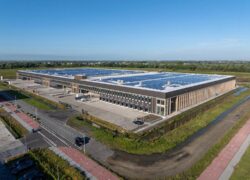
Amsterdam’s logistics market has gained a major new scheme with the completion of AMS CityDocks, a modern last-mile distribution complex on the western edge of the city. The development, by Proptimize and Built to Build Real Estate, delivers almost 36,000 square metres of space across two buildings and sits in a strategic location between Amsterdam, the Port and Schiphol Airport, with direct access to the A5 and A9 motorways.

One of the buildings, covering about 13,000 square metres, has already been leased to Medux, a healthcare distributor. The remainder of the space is designed for multi-tenant use, with flexible layouts intended to serve occupiers across e-commerce, healthcare and urban delivery.

The scheme was completed in September 2025 and has been designed to meet high sustainability standards. The developers are targeting a BREEAM “Excellent” certification, supported by features such as EV charging infrastructure, rooftop solar panels, and a robust electrical connection of 5MW supplemented by on-site generation.

AMS CityDocks is marketed as one of the few large last-mile opportunities in the Amsterdam area, where both land availability and power capacity for logistics have become scarce. With 2.3 million residents living within a 30-minute catchment, the complex is positioned to benefit from continuing demand for rapid fulfilment and healthcare logistics.

Proptimize and Built to Build say the project reflects growing occupier requirements for modern, sustainable and well-located facilities in the Dutch capital, where vacancy remains low and demand is outpacing supply.

LATEST NEWS