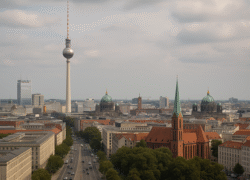
Joint Forecast: Fiscal Push Lifts German Economy, But Structural Strains Persist

Germany’s leading economic institutes expect the country to return to growth after a weak start to 2025, though they caution that structural weaknesses continue to weigh heavily on long-term prospects.

According to the Joint Economic Forecast released this week, gross domestic product is expected to expand by just 0.2 percent in 2025, following stagnation in the first half of the year. Growth is projected to accelerate to 1.3 percent in 2026 and 1.4 percent in 2027, largely due to government stimulus measures. The estimates are broadly unchanged from the spring forecast.

The forecast is prepared twice a year by a consortium of institutions, including the ifo Institute in Munich, the German Institute for Economic Research (DIW Berlin), the Kiel Institute for the World Economy, the Halle Institute for Economic Research (IWH), and RWI Essen, working with Austria’s WIFO and the Institute for Advanced Studies in Vienna.

The government’s looser borrowing rules have created room for higher spending on defense, infrastructure and climate-related investments. Analysts note that these measures will support demand, though the effect will be limited by slow disbursement of funds and lengthy planning processes. The institutes also warn that some of the new borrowing simply postpones fiscal consolidation, creating a sizeable adjustment need by 2027.

Despite the near-term boost, the report highlights persistent structural challenges. High energy costs, rising labor expenses, shortages of skilled workers, and weakening international competitiveness continue to erode Germany’s growth potential. Export demand is expected to remain subdued, reflecting both higher trade barriers and waning foreign appetite for German goods.

As a result, the recovery is projected to be driven mainly by domestic demand. Public services and consumer-oriented sectors should expand, supported by rising employment and real disposable incomes. Inflation is forecast to hover slightly above two percent over the period. Manufacturing, by contrast, is only expected to see modest gains.

Risks to the outlook remain considerable. The institutes point to the ongoing trade dispute between the European Union and the United States as a key source of uncertainty. They also stress that the eventual impact of expansionary fiscal policy depends on how effectively funds are channelled into projects.

The consortium concludes that Germany is at a turning point. While fiscal policy can lift output in the short run, the lack of structural reforms leaves the country vulnerable to slower potential growth in the longer term. The report calls for a coordinated reform agenda to strengthen competitiveness, improve labor market conditions, and restore confidence in the country’s economic model.

Source: DIW Berlin
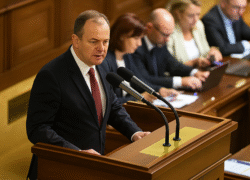
Slovakia Pushes Through Third Round of Fiscal Tightening

Slovakia’s parliament has given the green light to the government’s third effort in less than two years to rein in its public finances. The latest package is designed to add several billion euros to the state coffers and slow the country’s widening deficit, which remains among the largest in the European Union.

The measures will touch nearly every group of taxpayers. Employees and the self-employed face higher health payments from early 2026, while those on higher salaries will see additional income tax obligations. Entrepreneurs and sole traders will also feel the pinch, as the calculation of levies shifts upward, pushing up their operating costs.

The ruling coalition has also decided that Slovaks will spend more time at work. In 2026, three public holidays are to be suspended, with the government arguing that more working days will lead to stronger productivity and tax revenues. While ministers insist the change is temporary for two of the dates, it has already sparked strong criticism from opposition MPs and unions, who describe it as an attack on workers’ rights.

Some of the more controversial ideas floated in earlier drafts, such as raising VAT on basic food items, were ultimately dropped. Lawmakers did, however, approve a freeze on their own salaries and gave the cabinet more flexibility in setting gambling charges, which officials say will give the budget a modest additional boost.

This is not the first attempt at belt-tightening by the current government. Previous rounds included a tax on bank transactions and other measures intended to improve revenue flows. Together, the three packages are supposed to bring the deficit below four percent of GDP in 2026 and help Slovakia return to the EU’s fiscal rules in the coming years.

Critics, however, see risks in the government’s approach. Business groups warn that pushing up the tax wedge will reduce the country’s competitiveness and weigh on investment. They argue that a smaller working population is already carrying the financial burden for millions of dependents and that further levies could dampen long-term growth.

Public reaction has been sharp. Demonstrations against the consolidation plan were held in towns and cities across the country in mid-September, drawing thousands of participants. Despite the protests, the coalition pushed the package through parliament with a comfortable majority of 78 votes, brushing aside amendments put forward by the opposition.

For now, the government insists the new measures are unavoidable to protect financial stability and investor confidence. Yet for households, businesses and employers, the practical consequences—higher deductions, altered costs, and fewer days off—will be felt from next year. The debate over whether this represents a path to stability or a drag on future growth is far from over.

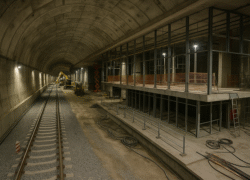
ÚOHS Confirms Exclusion of PVM from Prague Metro D Tender

The Office for the Protection of Competition (ÚOHS) has upheld the exclusion of the Porr–Vinci–Marti (PVM) consortium from the tender for the second phase of Prague’s Metro D line. The decision, announced on 23 September 2025, confirms a July ruling by the authority’s first instance and allows the city’s transport operator (DPP) to continue the selection process without PVM.

ÚOHS chairman Petr Mlsna rejected PVM’s appeal, concluding that the consortium’s bid contained scheduling shortcomings that conflicted with tender requirements. The ruling was supported by an expert opinion from the Klokner Institute at the Czech Technical University, which specialises in underground construction.

The decision follows earlier controversies in the procurement of Metro D’s southern extension. In 2023, DPP initially selected a Subterra-led consortium as contractor for the section from Olbrachtova to Nové Dvory. That award was contested by competitors Strabag and PVM. In March 2025, ÚOHS annulled the selection, requiring DPP to reassess the bids.

With the latest ruling, DPP must once again evaluate all remaining offers and choose a winner in compliance with the authority’s legal guidance before any contract can be signed. According to ÚOHS, the ruling is final.

The tender dispute has delayed progress on the project. Construction of Metro D began in 2022 with the first section between Pankrác and Olbrachtova. The following stages will extend the line to Nové Dvory and eventually to Depo Písnice. While the original completion date was 2029, local media report that the commissioning is now expected to slip to around 2031, though no new official deadline has been confirmed by DPP.

Metro D is one of Prague’s largest infrastructure projects in decades, designed to ease congestion in the southern districts and provide a modern backbone for the capital’s expanding transport system.

Source: CTK

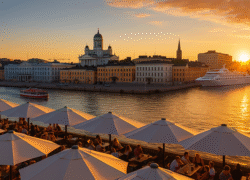
Nordic Hotel Market Surges in Summer 2025 as International Demand Flows Back

The summer of 2025 has proven exceptional for Nordic hotels, with operators and property owners benefiting from double-digit RevPAR growth, stronger ADR, and higher occupancy across Denmark, Norway, Sweden and Finland. A new CBRE Nordics Hotel Market Snapshot covering the period from May to August highlights the extent of the rebound, underlining both the resilience of demand and the renewed appetite among investors.

A key driver has been the sharp increase in international arrivals, particularly from the United States. CBRE reports that U.S. visitors spent 61 percent more hotel nights in the Nordics compared with 2019, making them the single most important long-haul market in the region. By contrast, Chinese demand was still down nearly 40 percent, while Russian demand in Finland has all but disappeared. The overall picture nevertheless shows strong growth from European feeder markets alongside the American surge, fuelling ADR gains and higher profitability for hoteliers.

Performance indicators confirm the positive trend. In Denmark, all major cities reported both occupancy and ADR growth, with Copenhagen leading the region in RevPAR despite a notable rise in supply. Odense and Aarhus also posted strong results compared with pre-pandemic levels. In Finland, Turku and Tampere surpassed their 2019 benchmarks, while Helsinki lagged due to an expanded hotel pipeline, though occupancy gains show demand is keeping pace. Norway recorded some of the strongest improvements: Oslo’s RevPAR was up more than 16 percent year-on-year, Bergen reached an all-time high of NOK 1,498, and Trondheim nearly doubled its RevPAR compared with 2019. Sweden’s cities added to the positive narrative, with Stockholm edging higher thanks to increased occupancy, Gothenburg benefiting from a full events calendar, and Uppsala showing the strongest growth compared with 2019.

The investment side of the market also experienced a sharp upswing. CBRE calculates that hotel transactions in the Nordics reached €1.49 billion between January and August 2025, a 368 percent increase compared with the same period in 2024. Much of this was driven by CapMan’s acquisition of the Midstar portfolio, but even without this deal, volumes were significantly higher than last year. Other notable transactions include a 50 percent stake in Scandic Tromsø’s new flagship hotel, the €43 million purchase of Støtvig Hotel in Norway, Singapore-based M&L Group’s acquisition of Hotel Maria in Helsinki, and Sport Impact of Belgium buying into Hamn i Senja. In Copenhagen, Slättö converted a vacant office building into a planned Bob W hotel, underlining the trend toward hybrid, tech-driven concepts.

For landlords, the Nordic model of leasing hotels to operators is proving advantageous, since lease payments are tied to revenue and benefit directly from higher occupancy and room rates. This has strengthened investor interest, with private equity and international buyers increasingly drawn to the combination of stable cash flows and operational exposure. Core investors are also returning, particularly in Denmark, where lower interest rates improve risk-adjusted returns.

CBRE expects momentum to continue, though not at the breakneck pace of the past year. With U.S. demand likely to remain strong and Asian travel still well below potential, there is scope for further growth once long-haul routes fully normalize. For now, the Nordics are one of Europe’s standout hotel regions, with a buoyant summer season behind them and a market that investors clearly regard as a safe bet.

Source: CBRE

Chinese Automakers Outpace Audi and Renault in August Registrations

Chinese automakers registered a sharp surge in sales across Europe in August, overtaking both Audi and Renault in monthly registrations. According to JATO Dynamics, Chinese brands sold more than 43,500 vehicles in the month, a 121 percent year-on-year increase, giving them a market share of 5.5 percent. That put them ahead of Audi at roughly 41,300 registrations and Renault at 37,800 for that month.

The figures mark a significant milestone but should be seen as a snapshot rather than a wholesale shift in Europe’s car market. Over the course of 2025 so far, legacy manufacturers such as Audi and Renault continue to sell larger volumes overall, supported by established dealer networks and decades of brand loyalty.

The August growth was particularly strong in plug-in hybrids, a segment where Chinese brands have gained a foothold. Forty different Chinese marques are now present in Europe, though most sales come from a handful of names. MG, BYD, Jaecoo, Omoda, and Leapmotor accounted for 84 percent of Chinese registrations. MG, the historic British marque now owned by SAIC Motor, outsold Tesla and Fiat in August. BYD surpassed Suzuki and Jeep, while Jaecoo and Omoda registered more vehicles than Alfa Romeo and Mitsubishi.

Analysts point to competitive pricing and fresh model lineups as reasons behind the surge. Felipe Muñoz of JATO Dynamics noted that European buyers appear increasingly receptive to Chinese offerings, as the stigma that once surrounded them fades.

Still, industry watchers caution that expansion may face hurdles. Much of the surge is concentrated in PHEVs, which depend on regulatory incentives and consumer use patterns for their long-term emissions profile. At the same time, the European Commission is continuing its investigation into subsidies and pricing for Chinese EVs — a process that could lead to tariffs or other trade measures.

Earlier this year, JATO reported that Chinese automakers had already doubled their share of the European market to nearly six percent in May compared with the same month in 2024. The August data confirm the trend: Chinese newcomers are no longer on the fringes, but credible competitors. The question now is whether they can sustain growth in a market where established European players still dominate in volume and infrastructure.

Source: CTK

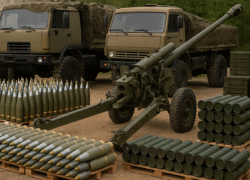
Czech Military Exports on Track to Reach CZK 100 Billion in 2025

Exports of military equipment from the Czech Republic could approach CZK 100 billion this year, according to Jiří Hynek, president and executive director of the Defence and Security Industry Association. Speaking at a defence and aerospace industry conference in Brno, Hynek noted that the sector’s growth, while strong, is unlikely to continue at the record pace seen in 2024.

Last year, Czech arms exports rose by 86 percent year-on-year to around CZK 91 billion, largely driven by demand for large-caliber artillery ammunition destined for Ukraine. Hynek estimated that between 70 and 75 percent of exports either directly or indirectly supported Ukraine’s defence efforts. He cautioned, however, that production capacity in this area has little room to expand further due to limits in the chemical industry.

“There is optimism and exports continue to grow, but the main segment – artillery ammunition – is close to its capacity ceiling. New opportunities may come from more advanced defence systems, but we cannot expect the same kind of rapid increase as last year,” Hynek said. He added that if exports were to exceed expectations, it would likely involve re-exports of equipment produced outside the Czech Republic rather than new domestic output.

According to the Ministry of Industry and Trade’s 2024 Annual Report on Foreign Trade in Military Material, Czech authorities issued 1,678 export licenses to 95 countries last year, covering goods worth more than CZK 105 billion. Actual deliveries amounted to CZK 91 billion.

Imports of military equipment also rose sharply, reaching CZK 26 billion in 2024 – an increase of nearly 130 percent compared to 2023. The Ministry granted 668 import licenses from 42 countries, covering goods worth CZK 110.4 billion.

While the Czech defence sector remains one of the fastest-growing in Europe, industry leaders expect export figures to stabilise this year rather than surge at the exceptional rates recorded during 2023–2024.

Source: CTK

Prague Roads Administration Ordered Not to Demolish Libeň Bridge

The Prague Roads Administration (TSK) has been barred from demolishing the historic Libeň Bridge and replacing it with a replica. The ruling was confirmed by the head of the Czech Antitrust Office (ÚOHS), Petr Mlsna, who upheld an earlier decision that prohibited TSK from continuing work on parts of the reconstruction that went beyond the scope of the original contract.

TSK selected Metrostav TBR in 2022 to carry out the reconstruction based on an approved study. Since then, the project underwent significant revisions, including plans to demolish the existing structure and build a replica, which the Antitrust Office concluded amounted to awarding a new contract without a tender. The latest ruling, which follows repeated reviews, is final.

TSK spokeswoman Barbora Lišková said the organisation has already issued an order to suspend the affected works and is reviewing its next steps. She noted that the ruling does not cancel the contract entirely, but only restricts work not included in the original tender. According to Lišková, TSK is preparing additional tenders to comply with the decision while aiming to limit the impact on the overall reconstruction schedule.

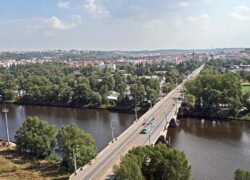
The Libeň Bridge, designed by architect Pavel Janák and opened in 1928, is a complex of six structures spanning the Vltava River. It has never undergone a full repair. Past city administrations debated demolishing the bridge, but later opted for reconstruction. In late 2023, TSK announced plans to build a replica on the original pillars, citing updated structural models and stricter European safety standards introduced after the Genoa bridge collapse in Italy.

Metrostav TBR is currently working on designs for the replica, but the latest ruling prevents any further steps beyond the original contract. The ban took effect immediately upon delivery of the decision to the parties involved.

Work on parts of the bridge complex has already begun. The so-called inundation bridge toward Palmovka was demolished last year, and construction of a replacement started this May. TSK has stated that further tenders will be launched for additional stages of the project, including any demolition and replacement of the main span.

Source: CTK
Photo: Libeň Bridge in Prague – Wikipedia

Mitzilinka – Bucharest Traffic: A Sitcom Without a Commercial Break

If Dante ever ventured through Piața Unirii at 5 pm, he would likely swear off brimstone and prefer to premiere a tragedy entitled Stationary Steel. Today, Bucharest ranks among Europe’s most gridlocked capitals, and its traffic is less about getting from A to B and more about acquiring a meditation habit in the driver’s seat.

The capital sits high on global congestion lists, stubbornly holding a spot among the world’s worst. Drivers can expect average speeds of barely 17 km/h during peak hours, and in some cases it can take more than half an hour to cover ten kilometres. It is a level of slowness that invites reflection, podcasts, and perhaps the writing of a novel — all while in neutral.

Infrastructure projects are meant to ease the pain, though progress is mixed. The long-awaited A0 southern half-ring finally opened this summer, linking motorways and promising to steer transit traffic around the city. Unfortunately, the northern segments remain under construction, which means the relief is only partial. The result: more breathing room in some places, but no miracle cure.

Up north, the city is digging deep for salvation. April saw the launch of tunnel works on Metro line M6, a new connection planned between the central train station and the airport. One day, it may spare travellers the ordeal of inching along DN1 to catch their flights. For now, however, construction itself adds to the snarl — a case of traffic solutions making traffic worse before they make it better.

At the city’s core, work continues on the fragile Unirii Platform. Engineers insist the rehabilitation is vital, but for drivers the diversions are maddening. Even official detours often lead to longer routes and dead ends, proving that in Bucharest, the shortest distance between two points is rarely a straight line.

The DN1 corridor to Otopeni remains a byword for gridlock. With metro works now squeezing the route further, commuters face an even trickier passage, particularly when lorries and cars funnel into the same bottlenecks.

Urban specialists point to several potential fixes. Smarter traffic lights could one day adapt to real-time conditions, while expanded bus and tram priority lanes might lure drivers out of their cars. But change comes slowly, and experiments have yet to catch up with the sheer volume of vehicles. In some cases, well-meaning plans backfire. The temporary closure of Tram 41 this year removed one of the few truly efficient transit options, sending thousands of passengers back into cars and undoing gains elsewhere.

For now, every trip through Bucharest is an endurance event. Five kilometres demand rations and bottled water. A supposedly quick airport run becomes a gamble best prepared for with spare clothes and a stoic farewell to loved ones. Traffic isn’t simply part of life in the capital — it defines it.

The choice facing the city is stark. Treat congestion as an inevitability, or recognise it as the central problem shaping daily existence. If the latter, then roads, metro, traffic signals and public transport will need to align in rare harmony. Only then might Bucharest drivers discover something extraordinary: the sensation of arriving on time.

Author: Mitzilinka (Turning grim reality into comic relief—without losing the truth)

Study: Distribution Narratives Fuel Climate Populism in Germany

Narratives about who bears the costs of climate policy play a significant role in shaping political attitudes, according to a new study by the German Institute for Economic Research (DIW Berlin). The research suggests that when climate policy is framed as unfairly burdening households, letting companies shirk responsibility, or weakening the German economy, it can amplify climate populist attitudes and reduce trust in democratic institutions.

The study, conducted by DIW Berlin’s Socio-Economic Panel (SOEP) in cooperation with the NGO FiscalFuture, involved a survey experiment with around 1,600 participants. Researchers tested three types of narratives: that climate policy disproportionately affects poorer households, that companies avoid paying their share, and that environmental measures undermine Germany’s economy. All three narratives increased climate populist sentiment, while the income-related framing had the added effect of lowering satisfaction with democracy.

“Political debates are not based solely on facts – simplistic narratives have great power, especially when they are striking and easy to remember,” said Lorenz Meister, a doctoral researcher at SOEP and co-author of the study. He noted that narratives focusing on distribution issues are particularly influential.

The survey found that responses varied across social and political groups. Low-income households, women, East German residents, and right-leaning voters were most sensitive to the income narrative. The corporate narrative resonated more strongly with men, left-leaning voters, and respondents in eastern regions. The economic narrative, which portrays climate action as harmful to growth, had its strongest impact on right-wing voters.

The authors define “climate populism” as rhetoric claiming that climate policy is a project of elites pursued at the expense of ordinary people. Populist parties in Germany and elsewhere have increasingly used this framing to mobilise support.

The study emphasises that the way climate policy is designed and communicated can counteract these effects. Policies seen as socially balanced—such as direct climate payments to households—help reduce the appeal of populist narratives. Transparent communication that openly addresses distributional conflicts is also crucial.

“Climate policy must be embedded in social policy and take concerns seriously. This is the only way to effectively counter climate populism,” said Matilda Gettins of FiscalFuture, who co-authored the study.

Source: DIW Berlin

CIJ Europe Launches First CIJ Awards Bosnia & Herzegovina

CIJ Europe has announced the launch of the inaugural CIJ Awards Bosnia & Herzegovina, the latest addition to its long-running series of property awards across Central and South-Eastern Europe. The new edition will shine a spotlight on the most successful developments, companies, and leaders in Bosnia & Herzegovina’s commercial real estate market. Winners from this national competition will also qualify for the prestigious Best of the Best Hall of Fame Awards in 2026, where they will compete against leading projects and firms from six other countries in the region.

The awards cover a wide spectrum of categories, ranging from residential, office, retail, warehouse and industrial projects to sustainability-focused developments, major investment transactions, agencies, and leadership achievements. Nominations are open until November 2025 for projects and initiatives completed between December 2024 and November 2025. Each company may submit up to five entries, with full documentation required to ensure eligibility.

Entries will be evaluated through a two-step process. First, an online digital jury composed of industry experts will assess submissions, followed by an in-person jury committee of up to 32 professionals. To ensure impartiality, members whose companies are nominated in a category will abstain from voting in that category. All results will be reviewed and confirmed by an independent audit firm, providing transparency and fairness to the process.

The winners will be unveiled at a gala ceremony in May 2026 at the Radisson Blu in Bucharest, Romania. The evening will include networking opportunities, a formal dinner, entertainment, the awards ceremony and post-event socialising. Recipients will be presented with an engraved trophy and diploma, along with the right to use the CIJ Awards branding as a mark of industry recognition. The results will also be published on the CIJ Europe website and in the print edition of CIJ Europe magazine.

Robert Fletcher, CEO & Editor-in-Chief of CIJ Europe, commented: “Bosnia & Herzegovina is an important and evolving market within the SEE region, with a growing number of projects that deserve recognition on both a local and international stage. By launching the CIJ Awards, we are giving developers, investors and agencies a new platform to showcase their achievements, while also connecting them to the wider Central and Eastern European property community. It’s a milestone for the market, and we are proud to be part of it.”

The introduction of CIJ Awards Bosnia & Herzegovina underscores CIJ Europe’s commitment to highlighting emerging markets within the SEE region. For developers, investors and service providers, the awards offer an opportunity to gain visibility, strengthen professional networks and benchmark against industry best practices. By providing a gateway to wider recognition at the Hall of Fame Awards, the new event is set to bring Bosnia & Herzegovina’s property sector into sharper focus on the regional stage.

LATEST NEWS