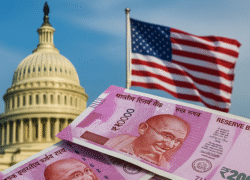
India Faces U.S. H-1B Visa Overhaul: What the $100,000 Fee Means for Skilled Workers and Tech Firms

The U.S. government has introduced a sweeping reform of its H-1B visa program, significantly raising the cost of bringing foreign professionals into the country. As of September 21, 2025, employers that file new H-1B petitions for workers residing abroad must also pay a one-time fee of $100,000 per application—a dramatic increase from previous charges. This change does not affect existing holders or those seeking renewals. The move is intended to reduce what officials describe as misuse of the visa system and prioritize the highest-skilled foreign applicants.

India is expected to be particularly affected by the change: Indian nationals have long been the dominant recipients of H-1B visas, accounting for roughly 70–75% of annual approvals and nearly three-quarters of new petitions. The new cost burden may discourage smaller firms from sponsoring foreign workers, especially those seeking entry-level or project-based roles. As a result, many Indian service companies are accelerating efforts to deliver more work from Indian locations, rather than rely on posting staff abroad.

U.S. universities and research institutions are already seeing the financial strain. Some predict the new fee could impose additional costs in the tens of millions of dollars yearly for institutions that depend heavily on foreign talent in teaching, research, or technical roles. Legal challenges to the policy have been filed, with several groups arguing that the fee is excessive, was enacted without full legislative review, and threatens to limit innovation and competitiveness.

Within India, industry bodies and government officials are pressing for exceptions, negotiated arrangements, or alternative visa mobility mechanisms. Some firms are weighing greater investment in domestic talent, while others may seek graduate-and-placement partnerships or relocation to visa-friendly jurisdictions. The strategic impact goes beyond immigration: it touches India’s trade in services, global talent flows, and the competitiveness of firms that have relied on cross-border staffing.

Ultimately, the long-term effects will depend on how employers adjust, how courts rule on the legality of the fee, and whether special exemptions or bilateral talent-mobility frameworks are negotiated. The new policy signals that U.S. visa entrants may come at a much higher price than before—and that India’s traditional advantages in supplying global professionals may now face important limits.


India and the EU Edge Closer to a Landmark Trade Agreement Amid Ongoing Disputes

India and the European Union are moving toward finalising one of their most ambitious trade and investment partnerships in decades, with negotiators aiming to seal the deal before the end of 2025. After years of slow progress and pauses, both sides have renewed efforts to bridge their remaining differences and create a framework that could reshape trade relations between Asia’s largest democracy and Europe’s single market.

The proposed agreement is intended to deepen economic cooperation far beyond traditional trade in goods. It would open new channels for investment, strengthen digital and services exchanges, and foster collaboration in green technology, infrastructure, and supply chains. With trade volumes between the two partners nearly doubling over the past decade, both governments see a need for a modernised framework that reflects current economic realities.

Despite this shared enthusiasm, several key disagreements continue to slow progress. European negotiators are pressing India to lower import duties on a range of industrial products, including automobiles and high-end manufacturing goods. New Delhi remains cautious, citing the need to protect domestic industries—particularly its vast agricultural and dairy sectors that employ tens of millions of workers.

Another sensitive point is the European Union’s new carbon border adjustment mechanism, which places additional costs on goods with high carbon emissions. Indian officials have warned that such measures could act as hidden trade barriers, especially in sectors such as steel and cement, where India is a major exporter. India is asking for flexibility as a developing economy and for assurances that environmental standards will not become a tool for protectionism.

In the services sector, the two sides are divided over issues of data protection and the movement of skilled workers. Europe wants India to provide greater regulatory openness in digital trade and professional services, while India seeks predictable visa access and reciprocal arrangements for its professionals working in the EU.

Still, the political and economic momentum behind the negotiations appears stronger than at any point in recent years. Both India and the EU face growing pressure to diversify their trade relationships amid shifting global supply chains and rising geopolitical uncertainty. A deal would give European firms easier access to India’s fast-growing consumer market while helping Indian exporters secure greater footholds in Europe.

Observers say that if the remaining obstacles are resolved, the agreement could serve as a model for cooperation between developed and emerging economies. Beyond tariff reductions, it could set standards for sustainable trade, digital governance, and cross-border investment that influence future global accords.

The coming months will be decisive. Negotiators are racing to reconcile competing priorities—balancing domestic sensitivities with global ambitions. If successful, the India-EU trade pact would mark a turning point in the economic relationship between the two regions, positioning them as stronger partners in a rapidly changing world economy.

India’s Jindal Steel Proposes Purchase of Thyssenkrupp’s European Steel Division

Jindal Steel International (JSI), part of the Indian industrial group led by Naveen Jindal, has made a non-binding proposal to acquire Thyssenkrupp Steel Europe (TKSE), the steel arm of German engineering and industrial conglomerate Thyssenkrupp. The offer, confirmed by Thyssenkrupp in mid-September 2025, reflects the German group’s long-running efforts to divest its steel business.

JSI says the plan would include finishing a key low-carbon iron facility in Duisburg and adding electric-arc furnace production. As part of the proposal, the Indian group is prepared to commit more than €2 billion to decarbonisation and modernisation of the steel operations in Germany. It has also expressed willingness to maintain production sites and preserve jobs.

Thyssenkrupp acknowledged the offer, saying it will assess the bid carefully, with particular attention to financial viability, continued transformation to lower emissions, and the employment implications for its German plants. No binding agreement has been reached to date, and the financial terms of any finalized deal remain undisclosed.

The steel unit targeted by JSI generates roughly €10.7 billion in annual revenues, making it one of the leading flat-steel producers in Europe. The division has faced headwinds of its own: rising energy costs, global competition, regulatory pressures on emissions, and legacy obligations such as pensions have complicated past attempts to sell or restructure it.

Observers note that this proposal could be a significant turning point for Europe’s steel sector, especially if it kicks off progress toward greener, more efficient production. Large industrial buyers from emerging markets are increasingly interested in European manufacturing assets, often bringing capital, global supply chains, and fresh momentum. At the same time, German worker unions and regulators will closely scrutinize any deal to ensure that jobs, industrial capacity, and environmental goals are safeguarded.

Overall, the Jindal-Thyssenkrupp proposal remains at a preliminary stage, but if it proceeds, it could reshape parts of the steel landscape in Europe, both in ownership and the path toward lower-carbon production.

Sub-Saharan Africa’s economy holds up despite global headwinds, but mass employment remains elusive

Economic activity in Sub-Saharan Africa is forecast to accelerate slightly this year, with regional output expected to rise to about 3.8 percent. That marks an improvement from the 3.5 percent growth recorded in 2024, supported by lower price inflation and a moderate rebound in investment flows. However, analysts warn that the region’s demographic dynamics and labour market structure threaten to erode the benefits of this expansion.

Inflation has come down significantly: the number of countries with annual price rises above 10 percent dropped sharply over the past two-and-a-half years. Still, the region remains vulnerable to shifts in global trade policy, volatile capital inflows, and high public borrowing costs. Debt burdens have increased markedly — the cost of servicing cross-border debt more than doubled over the last decade and reached levels equivalent to roughly 2 percent of regional GDP. Almost half of the countries in the region are now considered at high risk of debt distress, a near trebling from a decade ago.

Much of the population growth in Sub-Saharan Africa is set to occur among working-age individuals. In fact, the labour force is expected to expand by more than 600 million people over the next 25 years. Yet far too many new jobseekers remain confined to informal, low-paid, or family businesses. Only about one in four new labor-market entrants end up in formal wage employment, a weak link between economic growth and poverty reduction.

The challenge ahead is not just about creating more jobs, but improving the quality of work. Experts argue that scaling up medium-sized and larger enterprises is vital to generating stable, well-paid employment at scale. To achieve this, governments need to improve infrastructure (energy, transport, digital networks), reduce bureaucratic barriers, enhance workforce skills, and provide a more predictable and transparent regulatory environment. Sectors with particularly strong potential include agribusiness, housing and construction, health services, tourism, and value-added manufacturing.

The message is clear: despite recent resilience and modest gains, Sub-Saharan Africa still needs a more productive, inclusive growth model if it is to turn its demographic surge into a durable development dividend.

Rudolf Nemes: Innovation Driving Hungary’s Logistics Market

In a recent CIJ EUROPE Q&A, Rudolf Nemes, CEO of HelloParks, discusses the changing dynamics of Hungary’s logistics and industrial real estate market — from shifting tenant demand and ESG-driven development to new frontiers in digital design.

Q: How do you see the Hungarian logistics and industrial property market evolving over the next five years, especially with increasing competition from regional developers in Poland, Romania and Slovakia?

Rudolf Nemes: Hungary’s competitive advantage is not only about geography – success will depend on who can respond the fastest and most flexibly to tenants’ business needs. Key factors include the quality of the business offer, speed of reaction, transparency, and client experience. Naturally, building quality is also critical. More and more tenants integrate carbon footprint and ESG considerations into their reporting, so the sustainability performance of industrial properties has become a decisive element of competitiveness.

Q: Your tenants include global names like BYD, DHL and dm. What new categories of tenants or industries do you expect to drive demand in Hungary—tech, e-commerce, automotive or manufacturing?

Rudolf Nemes: Hungary increasingly serves as a gateway to Asia, and as a result, foreign direct investment from Asia has been flowing in strongly in recent years. This has brought not only OEMs but also tier 1–4 suppliers, who now represent a growing share of tenant demand. Since 2020, we have seen around 50% growth in this segment. Of course, global trade tensions and geopolitical shifts may influence the pace of this trend, but we believe Asia-linked investment will remain a defining driver in Hungary. At the same time, as domestic consumption grows, new players from outside China may also enter the market. E-commerce – including flows originating from China – is another important source of demand.

Q: The ERSTE acquisition was described as the largest individual industrial transaction in Hungary. How do you see investor appetite for green-certified logistics assets developing, and how does this affect HelloParks’ financing strategy?

Rudolf Nemes: Hungary’s investment market has not yet returned to pre-2019 levels, but there is strong and consistent demand for sustainable, well-located logistics properties. What makes the market special is that most competitors are portfolio builders, keeping their assets rather than selling them. We, on the other hand, are among the few classical developers that also dispose of assets, which sets us apart. Investor appetite clearly focuses on the highest-quality buildings that meet strict sustainability criteria. Properties that support tenants in achieving their ESG goals and that meet financing requirements are the ones attracting interest. For us, ensuring that our developments meet these standards has become a basic principle.

Q: So far your hubs are concentrated around Budapest. Do you plan to expand HelloParks’ footprint into secondary cities or regional logistics corridors within Hungary—or even beyond Hungary?

Rudolf Nemes: At this point we don’t plan to expand into secondary cities in Hungary, as those markets are strongly automotive-driven and would mean higher exposure in that sector. Our strategy is to remain focused on Budapest and its metropolitan area, which we see as offering long-term, balanced growth opportunities. At the same time, we are continuously monitoring international opportunities, and we hope to announce developments outside Hungary in the near future.

Q: You’ve implemented recycled steel, low-carbon concrete and other innovations. What’s next in your R&D pipeline, and how do you balance cutting-edge sustainability with cost-efficiency for tenants?

Rudolf Nemes: One of our main priorities now is the digitalization and automation of the design process. Using advanced software tools, we can significantly reduce time, costs and carbon footprint during development. Importantly, these innovations do not translate into higher rents for tenants. On the contrary, they can lower construction costs, which may result in more competitive rental levels. In addition, we are introducing on-site energy storage solutions so that the electricity generated by our solar panels can be stored and fully used by tenants, without losses. This further strengthens both sustainability and cost-efficiency.

As Hungary continues to attract large-scale industrial investment, HelloParks aims to combine digital innovation and sustainable construction to keep its developments at the forefront of the region’s logistics transformation.

© 2025 www.cijeurope.com

Reminder: EU’s Digital Resilience Law Now in Force for Banks and Insurers

From 17 January 2025, banks, insurers, investment firms, and other financial institutions across the European Union are required to comply with a sweeping new cybersecurity framework known as the Digital Operational Resilience Act (DORA). The regulation aims to strengthen how Europe’s financial system prepares for, withstands, and recovers from cyber incidents, digital failures, and technology disruptions.

Unlike earlier rules that left much to national interpretation, this regulation applies directly and uniformly to all 27 EU member states, making it one of the bloc’s most ambitious efforts to harmonise digital risk management. It introduces stricter expectations for how financial institutions protect customer data, manage outsourced technology providers, and respond to cyberattacks or system breakdowns.

Under the new framework, firms must ensure that all critical systems – from online banking platforms to payment networks and trading systems – remain operational even under severe stress. They are expected to test their defences regularly, report significant cyber incidents quickly, and adopt stronger authentication methods for employees and customers accessing sensitive systems. While the law does not prescribe a single technical solution, experts note that multi-factor authentication and secure access controls are becoming the standard response.

A key feature of the regulation is its focus on third-party risk, especially cloud computing and software providers that supply essential digital infrastructure to banks and insurers. Large technology companies that play a crucial role in these systems will now face direct scrutiny from EU supervisors. This approach reflects growing concerns in Brussels about over-reliance on non-European technology vendors and the systemic risks such dependence could pose.

For the financial industry, the changes represent both a compliance challenge and an opportunity to modernise. Major EU regulators – including the European Banking Authority, the European Insurance and Occupational Pensions Authority, and the European Securities and Markets Authority – are jointly overseeing its rollout. They argue that the regulation will bring consistency and transparency to an area that has often been fragmented, with some countries enforcing tougher standards than others.

The new framework arrives amid a surge in cyberattacks targeting financial institutions and payment infrastructure worldwide. Analysts point out that even brief service disruptions can have cascading effects across the economy. DORA, they say, marks the EU’s clearest statement yet that digital security is now inseparable from financial stability.

While compliance may be demanding for smaller institutions, many industry figures see the regulation as a necessary step toward a more resilient financial system. By setting uniform standards for digital risk, the EU hopes to create a more secure environment for consumers, investors, and the broader economy — one that can withstand the growing complexity of the digital age.

Gold Pushes Toward $4,000 as Investors Flock to Safety Amid U.S. Political Turmoil

The price of gold climbed to new record territory this week, nearing the symbolic $4,000 per ounce mark as political and economic uncertainty in the United States unsettled global markets. The metal briefly reached about $3,977 before easing slightly, driven by a combination of mounting fears over the ongoing U.S. government shutdown and growing belief that the Federal Reserve will soon cut interest rates.

The surge underscores how investors are seeking safety in tangible assets amid instability. Gold has risen roughly 50 percent since the start of the year, a rally rarely seen outside times of crisis. Analysts say the mix of fiscal gridlock in Washington, signs of a slowing economy, and a weakening dollar has strengthened gold’s appeal as an alternative to riskier holdings.

Market attention has focused on the political deadlock that has left parts of the U.S. government unfunded for more than a week. Thousands of federal employees have been temporarily furloughed, and services such as aviation control and data reporting have faced disruptions. The uncertainty has added another layer of stress to investors already preparing for potential interest rate cuts later this year. Lower rates generally make non-yielding assets like gold more attractive, as they reduce the opportunity cost of holding them.

Institutional analysts have raised their forecasts in light of recent gains. Major investment banks now expect gold to stay above current levels if the political standoff continues or if central banks begin easing monetary policy sooner than anticipated. Some projections for the next year even point toward the mid-$4,000 range, reflecting confidence that the conditions driving this rally — geopolitical unease, central bank demand, and volatile bond markets — are unlikely to fade quickly.

Traders are watching for further signs from the Federal Reserve, whose officials have remained cautious about the timing of any policy shift. If rates are cut in the final quarter of the year, the move could push the dollar down further and lift gold beyond the $4,000 threshold. However, a faster resolution to the budget crisis or stronger-than-expected U.S. economic data could temporarily halt the metal’s upward momentum as investors rotate back toward equities and bonds.

For now, gold’s ascent reflects a broad unease about the global outlook. With U.S. policymakers struggling to reach agreement and major economies adjusting to slower growth, many investors see precious metals as one of the few dependable shelters in a turbulent environment.

Czech Economy Shows Mixed Signals in August

The latest data from the Czech Statistical Office (ČSÚ) for August 2025 paint a picture of a national economy growing unevenly, with solid performance in construction offset by slowing industrial output and weaker international trade.

Czech exports fell by 5.7 percent compared with the same month a year earlier, while imports declined by 4.3 percent. Despite this contraction in both directions, the country maintained a modest trade surplus of CZK 5.6 billion. The drop in exports reflects softer demand across key European markets and persistent pressures on supply chains, while the fall in imports suggests slower business investment and consumer demand at home.

The industrial sector, which has been one of the main engines of Czech economic growth in recent years, also showed signs of losing momentum. August figures indicate slower production dynamics compared with the previous months, with weaker performance in several manufacturing branches. Analysts attribute this to global market uncertainty, elevated input costs, and reduced export orders from Germany and other major trade partners.

By contrast, construction continued to expand for the tenth consecutive month, with output rising by 17.1 percent year-on-year. Growth was driven mainly by civil engineering and infrastructure projects, supported by public investment and EU-funded programs. The strong performance of the construction industry helped offset the decline in manufacturing and trade, underlining its role as one of the current stabilizers of the Czech economy.

Economists note that the August data confirm a shift toward slower overall growth after a strong start to the year. Export-oriented sectors remain under pressure, while high costs and labour shortages continue to limit output in manufacturing. However, sustained activity in the construction market and ongoing investment in transport and housing infrastructure provide a degree of balance.

The mixed results suggest that the Czech economy is holding steady but faces structural challenges in competitiveness and productivity. Policymakers are expected to focus in the coming months on maintaining export momentum, easing administrative burdens on construction, and supporting industrial innovation to safeguard growth in the final quarter of 2025.

Source: ČSÚ

Poland’s Economy Expands in 2024, But Business Sentiment and Labour Dynamics Show Signs of Unease

Poland’s economy recorded stronger-than-expected growth in 2024, according to revised figures from Statistics Poland (GUS), though recent data on business sentiment and foreign employment suggest that momentum may be slowing as 2025 progresses.

Revised national accounts show that gross domestic product rose by 2.9 percent in real terms in 2024 compared with the previous year, marking a clear improvement from the near stagnation of 2023. Growth was supported primarily by household consumption and public investment, while exports acted as a drag amid a weaker European demand environment. In nominal terms, GDP reached PLN 3.64 trillion. The final quarter of 2024 registered 3.2 percent year-on-year growth, confirming that the economy entered 2025 with solid underlying strength. Economists credit this performance to the resilience of the domestic market and the gradual easing of inflation, which helped restore consumer purchasing power.

The labour market also remained robust, underpinned by a steady inflow of foreign workers. Experimental statistics from GUS show that as of March 2025, over 1.06 million foreigners were working in Poland — a 5.5 percent increase compared with the previous year. This represents a continuation of the upward trend seen since 2022, confirming Poland’s position as one of Central Europe’s most significant labour destinations. While updated figures for April have not yet been published, economists expect that the number has remained above one million. The reliance on foreign labour continues to play a stabilising role for sectors facing domestic labour shortages, particularly in manufacturing, logistics, construction, and services.

Despite the encouraging macroeconomic data, business sentiment weakened toward the end of the summer. The latest regional business tendency survey from Statistics Poland, covering September 2025, indicates that companies across Poland are growing more cautious. Firms in manufacturing and construction reported concerns over rising costs, regulatory uncertainty, and reduced order volumes. Although consumer sentiment showed modest improvement in September, business expectations for future demand remain restrained. Many companies have slowed hiring or delayed investment decisions while awaiting clearer economic signals from European markets.

The combination of solid past growth and emerging caution highlights the complex environment Poland faces entering 2026. Strong domestic consumption and public investment have offset weaker external demand, but export-oriented sectors remain vulnerable to the slowdown in the euro area. Dependence on foreign workers, while a strength in maintaining production, also exposes the economy to regional migration trends and labour policy shifts.

Overall, the data suggest that Poland remains one of the more resilient economies in Central Europe, but sustaining growth will depend on improving productivity, strengthening business confidence, and maintaining labour market flexibility. Further clarity is expected in coming months as new employment and sentiment figures are released, offering a clearer view of whether Poland’s growth trajectory will continue or begin to level off in the face of a cooling European economy.

Source: GUS

Czech Construction Expands, But Prague’s Housing Supply Still Stagnates

The Czech construction sector recorded strong growth in August, marking its tenth consecutive month of expansion, according to data released by the Czech Statistical Office (ČSÚ). Overall construction output rose by 17.1 percent year-on-year, driven mainly by civil engineering and infrastructure projects.

However, while the national trend shows clear recovery, the housing situation in Prague remains critical. Despite sustained demand, the number of newly permitted residential projects in the capital continues to lag far behind needs. Preliminary regional data and industry assessments suggest that Prague’s monthly housing approvals remain at a fraction of the level required to meet market demand — a pattern that continues to undermine affordability and availability.

Analysts note that Prague requires at least 10,000 new apartments annually to stabilise prices and reduce pressure on the rental market. In practice, however, only a few thousand are permitted each year, and administrative bottlenecks continue to delay many developments. Recent reports by the Initiative for Affordable Housing (IDB) warn that without systemic reform of the approval process, affordability will worsen further in coming years.

Industry experts emphasise that accelerating and simplifying building permits remains key. The implementation of a fully digitised, unified permitting system under the revised Building Act, combined with enforceable deadlines, could help replicate the progress seen in the Transport and Energy Construction Authority (DESÚ), which has significantly shortened approval times for infrastructure projects.

Advocates for reform, including the IDB, have proposed a comprehensive framework combining simplified permitting, improved spatial planning, and large-scale development of affordable public rental housing using modern Design–Build methods. They also point to successful local models — such as the new EIB-backed affordable housing initiative in Prague, which will finance over 700 units for public-sector workers — as evidence that targeted partnerships can deliver tangible results.

The ČSÚ’s August data confirm a national rise in building activity, with 2,757 new dwellings started and 3,033 completed across the country. Yet in the capital, where more than 1.4 million people now live, the pace of residential construction remains far too slow to meet population growth.

Without structural reform, Prague risks deepening its housing crisis even as the national construction sector shows signs of strength. Experts warn that continued stagnation in approvals could soon translate into even higher prices, reduced labour mobility, and broader social challenges.

LATEST NEWS