Cautious Optimism Returns to Global Real Estate

The global commercial property market is slowly finding its footing after several years of instability, according to Deloitte’s latest outlook for 2026. While investor sentiment is improving, the recovery remains uneven and closely tied to the cost of capital, regional economic health, and the industry’s ability to adapt to technology and sustainability demands. Deloitte’s research, based on a survey of hundreds of senior real estate executives worldwide, suggests that most expect modest revenue growth in the coming year but also higher operating costs. Confidence has strengthened from the low points of 2023–2024, yet the industry is still shaped by cautious optimism rather than exuberance.

Market stabilisation is most visible in North America and Western Europe, where investors are cautiously returning to high-quality assets with steady income streams. In contrast, parts of Central and Eastern Europe, along with Asia-Pacific, are seeing stronger rebounds driven by infrastructure spending and renewed cross-border capital flows. Across all regions, investment is becoming more selective, with performance increasingly dependent on asset quality and local demand fundamentals.

Financing remains one of the industry’s most complex challenges. Developers and owners are facing a wave of loan maturities originally priced under pre-inflation conditions. Many are being forced to refinance at significantly higher rates or turn to private credit and alternative lenders, which now represent a growing share of total market funding. This shift marks a broader transformation in how capital is sourced and deployed. Institutional investors continue to favour established, income-producing properties, while speculative and under-leased assets struggle to attract funding.

Technology-driven sectors are emerging as the most resilient areas of real estate. Data centres, logistics hubs, and digital infrastructure are expanding rapidly to meet the surging global demand for cloud storage, AI processing, and connectivity. Health-care-related properties and professionally managed rental housing are also gaining traction for their stable, long-term returns. The office sector remains divided. While some central business districts continue to experience sluggish leasing activity, high-specification and well-located buildings—especially those integrated with mixed-use amenities—are regaining appeal as employers refine hybrid-work strategies.

The report underscores that technology adoption is no longer optional. Companies are investing heavily in AI-driven analytics, digital leasing platforms, and predictive maintenance systems to improve operational efficiency. Deloitte notes that artificial intelligence is already reshaping valuation models, tenant engagement, and portfolio risk management. Operational priorities are also shifting inward. Cost discipline, workforce retention, and tenant experience are now seen as strategic pillars of value creation. At the same time, sustainability continues to move up the agenda, with developers investing in energy-efficient retrofits, low-carbon materials, and certifications that enhance long-term asset performance.

Deloitte concludes that 2026 will reward companies able to balance prudence with reinvention. Real estate leaders who diversify funding sources, embrace data-driven decision-making, and treat innovation as a core part of risk management will be best positioned to capture the next wave of growth. The sector has turned the corner from crisis to recalibration. Yet success will depend less on waiting for a global rebound and more on how effectively investors and operators adapt to a rapidly changing financial and technological environment.


Japan Faces Global Pressure as Matcha Craze Outpaces Supply

Japan’s signature green tea powder, matcha, has become a worldwide sensation — but the country that perfected it is now struggling to keep up. From the cafés of London and New York to wellness brands across Asia, demand for matcha-infused drinks, desserts, and cosmetics has exploded, pushing Japan’s small-scale producers into an unexpected supply crisis.

Over the past two years, exports of powdered green tea from Japan have surged to record levels, far outpacing the capacity of traditional tea-growing regions such as Uji, Nishio, and Kagoshima. Industry data shows shipments have nearly doubled since 2020, while domestic production of tencha — the shaded leaf used to make matcha — has not grown fast enough to match demand. The result has been soaring prices, long waiting lists, and increasing pressure on growers to expand output.

At the heart of the challenge lies Japan’s deep commitment to quality. Matcha production is labor-intensive and time-sensitive: tea bushes must be shaded for weeks before harvest to develop their distinctive flavour and colour, and the leaves are then carefully dried, ground, and stored under tightly controlled conditions. That process cannot be rushed. Many producers warn that scaling up too quickly risks undermining the very standards that made Japanese matcha globally desirable in the first place.

Climate change has compounded the problem. Severe heatwaves and unpredictable weather patterns have damaged tea bushes in key growing areas, cutting yields by as much as a quarter in some plantations. Farmers also face a generational challenge — the average age of tea growers is rising, and few young people are entering the industry. Even with modernisation subsidies and new processing technology, Japan’s tea regions are struggling to recruit and train successors fast enough to secure long-term stability.

Despite these constraints, Japan continues to dominate the global matcha market because of its reputation for purity and consistency. The country’s producers have little competition at the premium end, though rival growers in China, Vietnam, and even India are beginning to experiment with matcha cultivation. Japanese exporters insist the difference in flavour, colour, and ceremonial authenticity still gives them a strong edge.

Policymakers in Tokyo and local prefectures are encouraging selective expansion, including converting low-demand green tea fields into tencha production and supporting new mechanised methods that preserve quality. Yet many industry insiders admit that meaningful change will take years. New tea plants can take up to five years to mature before producing usable leaves, meaning that today’s shortages could persist well into the next decade.

For now, the scarcity is creating both frustration and opportunity. Established tea houses have been forced to ration supply and prioritise long-term partners, while export prices for premium grades continue to climb. At the same time, smaller artisanal producers are finding global buyers eager to pay top rates for guaranteed Japanese origin and craftsmanship.

The global matcha boom shows no sign of slowing — fuelled by social media, health trends, and the search for natural energy alternatives. The question is whether Japan can expand enough to meet the world’s growing appetite without diluting the soul of its centuries-old tradition.

As one Kyoto-based grower put it simply: “We can make more matcha, but it must still taste like Japan.”

Germany Signals Shift Toward EU-Wide Financial Oversight

Germany’s finance ministry has opened the door to a deeper level of European financial integration, marking what could be a turning point in the long-stalled effort to create a genuine capital markets union across the EU. Finance Minister Lars Klingbeil has indicated that Berlin is ready to consider transferring greater supervisory powers from national regulators to the European Securities and Markets Authority (ESMA) — a significant change in tone after years of resistance.

The move reflects growing recognition that fragmented regulation is holding back Europe’s financial competitiveness. Advocates argue that more consistent rules and oversight could help channel investment across borders, giving European companies broader access to funding and investors greater confidence in transparent markets. For Germany — whose economy remains heavily reliant on bank lending rather than equity or bond financing — this could represent both an opportunity and a challenge.

If Berlin follows through, it could revive long-running European efforts to unify capital markets and reduce the continent’s dependence on bank credit. Policymakers believe this would strengthen Europe’s ability to finance innovation, compete with U.S. markets, and support industrial transitions such as decarbonisation and digitalisation.

Yet the proposal also raises complex questions about sovereignty and regulation. Critics warn that centralising power in Brussels may dilute national flexibility and create a “one-rule-fits-all” regime that overlooks the specific structures of local markets. Smaller member states worry that such a shift could erode their competitive niches as financial hubs, while some German voices fear losing democratic control over market supervision.

Beyond the politics, there are practical challenges. Transferring authority from dozens of national regulators to a single European body would require legal changes, new data systems, and clear lines of accountability. Market participants also warn that poorly managed centralisation could slow decision-making or discourage innovation, particularly in fast-moving sectors such as fintech and digital assets.

Still, many analysts see Germany’s change in stance as a necessary step. Without Berlin’s support, progress toward a single European capital market has repeatedly stalled. Now, with the Franco-German axis once again aligned, officials in Brussels believe a breakthrough may finally be within reach.

If implemented carefully, stronger European supervision could make it easier for investors to move capital freely across borders, simplify compliance for international firms, and provide a foundation for a more resilient and competitive financial ecosystem. But success will depend on balance — ensuring that integration strengthens Europe’s collective position without erasing the diversity and adaptability of its individual markets.

For now, Germany’s shift marks more than a policy adjustment. It signals a recognition that the future of European finance will depend less on national boundaries and more on shared trust, unified standards, and a willingness to think — and regulate — at a continental scale.

Europe Begins Biometric Border Checks — Airports Prepare for a Slow Takeoff

Europe’s long-anticipated biometric border upgrade is finally being introduced this month, bringing a major shift in how travelers are processed when entering and leaving the Schengen zone. The new Entry/Exit System (EES) — which replaces passport stamps with fingerprint and facial scans — officially begins its rollout this weekend. The six-month transition will run until April 2026, during which time countries will gradually phase in the technology across airports, seaports, and land crossings.

The European Union views the change as a step toward a more secure and consistent border system, designed to record when non-EU visitors enter and leave the Schengen area. Supporters say it will reduce errors, curb overstays, and eventually make border crossings faster once the new system is established. For now, however, the priority is avoiding chaos as millions of travelers are registered for the first time.

Airports and operators are preparing for longer lines in the coming weeks, particularly at major international hubs and at UK-linked crossings such as Dover, Folkestone, and London St Pancras. The first registration will require each traveler to provide a set of fingerprints and a live facial image — a process that can take several minutes. Subsequent visits should move faster as stored data replaces manual checks.

To manage the impact, many EU countries are introducing the system in stages. Some will begin with select airports before extending it nationwide, while others will start with freight and coach traffic before moving to passenger vehicles. Traditional passport stamping will continue alongside the new technology until the transition is complete.

Travel industry groups have welcomed the modernization but caution that the first few months may be difficult. Extra staffing, new self-service kiosks, and redesigned terminal layouts are being used to ease congestion, yet bottlenecks are still expected during busy travel periods. The hope is that by the time Europe’s summer season begins in 2026, the process will have become largely automated.

Beyond the logistical issues, there is also a broader debate about data privacy and digital oversight. Civil-rights advocates have warned that large-scale biometric storage raises new questions about data protection and potential misuse. EU officials insist that the system complies with strict data-handling rules and that information will be held securely for limited periods.

For travelers, the change is significant but manageable: those from outside the EU — including UK nationals — should simply allow more time for border procedures on their first trip after the rollout begins. Once the biometric data is on record, future crossings should be quicker.

The EES forms part of a wider modernization of Europe’s borders, with the separate ETIAS electronic travel authorization expected to follow in late 2026. If this initial phase runs smoothly, the continent’s gateways could soon see shorter queues and a more predictable travel experience — though the coming months will test whether technology can truly streamline one of Europe’s most complex systems.

G20 Cross-Border Payments Roadmap: Policy Work Complete, Results Still Lag

The Financial Stability Board (FSB) has released its 2025 consolidated progress report on the G20 Roadmap for Enhancing Cross-Border Payments, showing only slight improvement in the speed of global transactions and little change in cost levels. Five years into the initiative, the report warns that the 2027 targets for faster, cheaper and more transparent payments are unlikely to be fully met on time.

Most of the policy and regulatory groundwork has now been completed, but its translation into measurable user benefits remains limited. “The technical foundations are largely in place,” the FSB notes, “yet implementation and interoperability continue to define the next stage of progress.”

Work led jointly by the Committee on Payments and Market Infrastructures (CPMI), the Bank for International Settlements (BIS), and the Financial Action Task Force (FATF) has focused on aligning regulatory and data standards. Key achievements include the global adoption of the ISO 20022 messaging model and revised FATF Recommendation 16, requiring structured sender and beneficiary data for transfers above €1,000 to strengthen anti-money-laundering and counter-terrorism controls. Full implementation is targeted for 2030, with detailed FATF guidance under development through 2026.

To coordinate data-sharing frameworks across payments, AML/CFT, sanctions and privacy, the Forum on Cross-Border Payments Data was launched in March 2025, with its inaugural meeting in May. In parallel, the OECD is conducting an in-depth review of transparency in remittance and retail transfer costs, due by Q3 2026.

Regionally, Europe and Central Asia continue to record the lowest retail payment costs, while North America maintains the fastest wholesale speeds. Europe–Eurozone posted the largest gain in one-hour wholesale credits, up 4.9 percentage points in 2025. Sub-Saharan Africa remains the global leader for remittance speed but still faces high costs due to limited competition and currency-exchange inefficiencies.

The FSB highlights progress in system interlinkages: India, Singapore, and Thailand have expanded real-time cross-border payment corridors, while the BIS has transferred Project Nexus to participating central banks under the newly created Nexus Global Payments framework, scheduled for launch in 2027. In Europe, the Eurosystem’s TARGET Instant Payment Settlement (TIPS) has grown into a multi-currency platform—currently supporting the euro, Swedish krona and Danish krone—with Norway expected to join in 2028.

Technological initiatives continue under CPMI coordination, including the harmonisation of pre-validation APIs (such as confirmation-of-payee services) to reduce transaction errors and fraud.

Despite these institutional gains, the FSB warns that average cross-border payment costs remain high, especially for small-value remittances, and that improvements in developing regions are uneven. The report attributes the gap to incomplete domestic adoption of global standards, infrastructure constraints, and inconsistent supervision of payment service providers.

The FSB’s conclusion is cautiously optimistic: the framework for a faster and more inclusive global payment network exists, but meaningful progress will depend on execution, cross-system trust, and sustained collaboration between public and private sectors.

If the next two years succeed in moving beyond policy design to full implementation, the G20’s vision of seamless global payments could still become reality—transforming one of the world’s most fragmented financial systems into a connected, transparent network.

Source: CMS

Europe and the UK Weigh Economic Impact of Israel–Hamas Ceasefire Progress

The initial phase of an agreement between Israel and Hamas, designed to halt the conflict and open the door to renewed peace efforts, has been met with cautious optimism across Europe. Both the European Union and the United Kingdom have underlined that any sustainable stability must lead back to a credible two-state framework. The development carries potential consequences for trade, investment, and economic confidence across the region.

In Brussels, Berlin, Paris, and London, political leaders welcomed the announcement as a necessary first step in calming one of the world’s most persistent flashpoints. Markets responded modestly but positively. Oil prices slipped slightly as traders reduced the geopolitical risk premiums that have inflated energy costs over the past year. For Europe, which remains sensitive to swings in oil and gas prices, the easing of tensions could help moderate inflation and stabilise industrial operating costs. Analysts, however, remain cautious, warning that energy markets will only normalise if the ceasefire holds and production routes remain secure.

In shipping and logistics, there is quiet hope that Red Sea trade routes could gradually reopen. Since late 2023, instability and maritime threats in the area have forced many shipping firms to divert cargo away from the Suez Canal, driving up delivery times and freight rates. A lasting reduction in hostilities would encourage insurers and carriers to review risk premiums and potentially return to traditional routes, improving supply chain efficiency. But major operators have said they will require months of consistent stability before restoring full passage, noting that risk models and maritime insurance assessments take time to adjust.

European policymakers are linking economic support and humanitarian aid in Gaza to renewed diplomatic momentum toward a two-state settlement. EU officials have signalled that reconstruction financing, infrastructure partnerships, and investment guarantees will be closely tied to governance standards and verifiable security progress. Several member states are also debating whether coordinated recognition of Palestinian statehood could reinforce the political framework for long-term peace. The UK government, while echoing the EU’s stance, is focusing on using diplomatic and economic channels to promote regional stability and ensure the protection of commercial interests.

For business and investors, the short-term economic implications are measured rather than dramatic. A period of calm could help lower energy and transport costs, providing relief for import-heavy industries across the continent. European construction, engineering, and consultancy firms are quietly preparing for potential contracts linked to reconstruction projects, though few expect tangible work before 2026. Tourism operators and airlines are also watching developments closely, anticipating that travel to the region could slowly rebound once security advisories are eased.

In the financial sector, reduced geopolitical tension tends to improve investor sentiment toward European equities and currencies. A durable ceasefire would help restore confidence in global trade routes and reinforce perceptions of stability around the Mediterranean basin. Still, central banks and regulators remain focused on broader challenges such as inflation, energy transition risks, and global monetary tightening.

The broader message from Brussels and London is one of cautious hope. European officials view the first phase of the ceasefire as an opportunity to re-engage diplomatically and to anchor the Middle East within a framework of reconstruction and economic cooperation. But they also acknowledge that the road ahead is uncertain, shaped by fragile domestic politics in Israel, the complex realities of Gaza’s governance, and the possibility of renewed violence.

For now, the ceasefire has provided Europe with a brief reprieve from geopolitical tension and a reminder that stability in the energy and trade systems depends not only on supply chains and markets but also on the persistence of diplomacy.

Czech National Bank Continues Gold-Buying Spree, Nears 67-Tonne Milestone

The Czech National Bank (CNB) has continued its steady accumulation of gold, bringing total holdings close to 67 tonnes by the end of the third quarter. The latest figures indicate a gain of nearly five tonnes since June, marking the highest level of reserves since the 1990s and underscoring the central bank’s long-term diversification strategy.

The CNB began rebuilding its bullion reserves in 2023 after years of minimal holdings, following a period in which gold represented a negligible share of national reserves. The renewed focus on the precious metal reflects an effort to strengthen financial resilience and reduce exposure to fluctuations in global bond and currency markets.

Governor Aleš Michl has previously said that the bank aims to reach 100 tonnes by 2028, describing gold as a stabilising element that balances the country’s reserve structure. While the CNB’s portfolio remains dominated by foreign bonds and other liquid assets, gold now represents nearly 5% of total reserves — a share that continues to rise each quarter.

Data from international market observers, including the World Gold Council, confirm that the Czech central bank has been one of Europe’s most consistent gold buyers in recent years. Monthly tallies show that the CNB added about two tonnes in July and a similar volume in September, consistent with its target pace of roughly five tonnes per quarter.

The value of the Czech gold reserve is estimated at over USD 8 billion (around CZK 172 billion), buoyed by both higher volumes and near-record gold prices. A significant share of the holdings is stored abroad, mainly in cooperation with foreign central banks, while part is lent to other institutions under secure agreements.

The CNB’s current position contrasts sharply with two decades ago, when national holdings had fallen to just eight tonnes. Following the split of Czechoslovakia, the Czech Republic inherited roughly 63 tonnes, most of which was later sold during the 1990s.

Analysts note that Prague’s gold accumulation mirrors a wider trend among central banks, many of which have been expanding their bullion reserves as a safeguard against market volatility and geopolitical uncertainty. For the CNB, the policy also aligns with its broader aim of building a more balanced, long-term portfolio that supports financial stability in a changing global economy.

With its holdings now approaching 67 tonnes, the Czech National Bank remains firmly on track to meet its 2028 target, signalling continued confidence in gold as a store of value and a hedge within its reserve mix.

Source: CTK

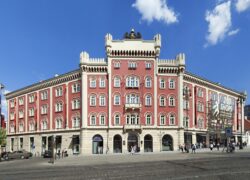
Erste’s Reico Fund to Acquire Prague’s Palladium Centre

The real estate arm of Austria’s Erste Group is expanding its footprint in the Czech market through the acquisition of Palladium Prague, one of the country’s best-known retail and office complexes. The purchase is being reviewed by the Czech Office for the Protection of Competition (ÚOHS), which is assessing the potential effects on the local leasing market before granting approval.

The deal is being conducted through Project Aurelia, a special-purpose company under Reico’s Erste Asset Management fund. While financial details have not been made public, industry sources suggest the transaction could rank among the largest retail property deals in Central Europe this year.

Palladium, located on Republic Square in the centre of Prague, has long been a landmark of the capital’s retail sector. Its total area of around 115,000 square metres houses over 150 shops, restaurants, cafés, and offices, as well as an underground car park. The centre was originally developed on the site of historic military barracks and opened to the public in 2007.

The property’s current owner, Union Investment, purchased it in 2015 for roughly €570 million. Earlier this year, market analysts indicated that the asset was being marketed for around €700 million, reflecting continued investor demand for prime retail properties in the Czech capital. In 2023, Palladium generated more than CZK 1 billion in revenue and recorded a profit of CZK 107 million, underscoring its resilience in a recovering retail environment.

Market observers note that the transaction highlights growing investor confidence in Prague’s commercial property sector. According to recent reports from CBRE and Cushman & Wakefield, both retail and mixed-use investments in Central Europe have seen renewed interest in 2025 as inflation moderates and consumer spending stabilises. Analysts point to Prague’s strong tourism flows and steady retail demand as key factors supporting capital values.

The deal also reinforces Reico’s position as one of the most active institutional investors in Czech real estate. The fund, which operates under the Erste Group, manages a portfolio of office, retail, and logistics assets across the country. If approved, Palladium will become one of its flagship holdings, strengthening its influence in the premium retail segment.

Market commentators caution, however, that the acquisition comes amid ongoing debates about long-term yields and sustainability upgrades in ageing shopping centres. Rising maintenance costs and evolving tenant expectations are prompting owners to re-evaluate building operations and energy efficiency strategies.

Pending the outcome of the competition authority’s review, the acquisition of Palladium marks a defining moment for Prague’s property investment market in 2025—reflecting both renewed optimism among institutional investors and continued international confidence in the Czech capital as a retail destination.

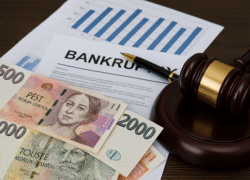
Corporate Bankruptcies in the Czech Republic Reach Highest Level Since 2017

The number of Czech companies unable to meet their financial obligations has risen sharply this year, reaching the highest level in almost a decade. Data compiled by the Czech Credit Bureau (CRIF) shows that 575 firms entered bankruptcy proceedings between January and September 2025, an increase of around 10% compared with the same period last year.

This marks the most insolvency cases recorded in the first three quarters of any year since 2017, pointing to continued financial strain in parts of the business sector. Courts also received roughly 830 new insolvency filings, suggesting that the upward trend is likely to continue into the final months of the year.

Analysts attribute the rise to a combination of tighter financing conditions, rising operational costs, and slower growth across several industries. “The latest figures bring the number of bankruptcies close to those seen in the aftermath of the last major market correction eight years ago,” said Věra Kameníčková, an analyst at CRIF. “Some regions are being hit harder than others, reflecting the uneven pace of recovery across the country.”

Regional and sectoral differences

The sharpest increases in company failures were seen in northern and western regions, with Ústí nad Labem and Plzeň both reporting steep year-on-year growth. By contrast, South Bohemia recorded a notable decline in bankruptcies, while levels in several central and eastern regions remained largely unchanged.

Among major industries, the construction sector recorded the fastest rise in insolvencies, up by roughly a quarter from last year. Retail and wholesale businesses also saw more closures, reflecting persistent consumer caution. In contrast, the real estate sector held steady, showing no significant year-on-year change.

Over the past 12 months, the highest number of company failures occurred in trade, manufacturing, and construction, with smaller clusters in property management and transport. Businesses involved in public services such as education and healthcare remained the most resilient, with very few cases reported.

Financial strain still visible

According to CRIF’s analysis, around a third of insolvency applications are dismissed because firms cannot cover the basic costs of bankruptcy proceedings. Meanwhile, data from the banking sector points to a modest rise in non-performing business loans, indicating that many firms continue to operate under tight liquidity conditions.

Despite regional variations, analysts see the overall increase as part of a broader correction following several years of artificially low insolvency numbers during the post-pandemic recovery. “The Czech corporate sector remains broadly stable, but we are observing more businesses facing structural challenges—especially smaller companies exposed to cost pressures and slower demand,” Kameníčková said.

With the year-end approaching, the trend suggests that 2025 could close with the highest number of corporate bankruptcies in nearly ten years, reflecting both cyclical headwinds and long-term shifts in how Czech companies manage financial resilience.

Source: CTK

Bratislava’s Office Market Adapts as Demand for Flexible Workspaces Accelerates

A new wave of flexible office concepts is transforming Bratislava’s business landscape, as developers respond to shifting work habits and growing tenant expectations for adaptability, convenience, and shorter lease commitments.

Alto Real Estate has introduced its Compact Offices model, a fresh addition to the capital’s office market designed to serve both small companies and independent professionals. Located in City Business Centre 3 and 5 and Digital Park, the spaces offer areas from 17 to 120 square metres and can be reconfigured according to tenant needs. Leases are available from just one year, with all costs included in a fixed rate. Shared amenities such as meeting rooms, kitchens, and underground parking are part of the package, reflecting a growing trend toward service-integrated office environments.

“We’re designing spaces that work for tenants of all sizes, allowing them to grow or downsize as needed,” said Christian Gálik, Leasing Manager at Alto Real Estate. “More businesses are seeking flexibility without compromising on comfort or quality, and we believe this approach meets that demand.”

Bratislava’s office market has evolved rapidly in recent years as global and local operators adopt flexible workspace models. HB Reavis, for example, has rolled out Qubes at Nivy Tower, combining traditional offices with short-term serviced space for growing teams. Similarly, myhive Vajnorská has developed mycowork, a hybrid solution for freelancers and companies that prefer smaller, ready-to-use offices.

International providers are also expanding. Regus continues to strengthen its presence with a network of fully equipped offices offering adaptable contracts, while Ingka Centres — known for Avion Shopping Park — launched Hej!Workstation, a coworking environment inside its retail complex aimed at professionals looking for accessible and informal work zones.

Market observers note that these initiatives reflect broader changes in workplace culture. As companies shift toward hybrid and project-based structures, traditional long-term office leases are giving way to smaller, more flexible formats. Developers are responding by rethinking layouts, introducing community-oriented amenities, and placing more emphasis on design and user comfort.

For Alto Real Estate, Compact Offices mark an evolution in how office space is offered — prioritising agility and user experience over rigid layouts. “We see satisfaction and loyalty from tenants who value spaces that adjust to their changing needs,” Gálik added.

With increasing competition and innovation among landlords, Bratislava is positioning itself as one of Central Europe’s most responsive markets for modern office solutions. The rise of flexible, service-driven workplaces signals a long-term shift toward more adaptive and tenant-focused real estate strategies.

LATEST NEWS