White Labelling in Finance: Europe’s Quiet Revolution Faces a Test of Trust

Europe’s financial system is in the midst of a quiet structural shift. Behind the familiar logos of banks, retailers, telecoms, and digital platforms, an intricate network of shared financial infrastructure is redefining how credit, payments, and insurance reach consumers. The so-called white labelling model — where licensed banks provide the backbone for financial services marketed under another brand — is expanding rapidly across the EU. Supporters see it as a new frontier for financial inclusion and innovation. Critics warn it could become the next regulatory blind spot.

In the European Banking Authority’s latest assessment, white labelling is described as one of the most transformative trends in the single market since open banking. It allows non-financial firms to offer products such as loans or cards using a partner bank’s licence, cutting development costs and speeding market entry. For fintechs and consumer brands, this model unlocks access to customers without the burden of full regulatory compliance. For banks, it opens a new line of business as back-end providers rather than customer-facing institutions.

But success has come with questions. Who is really responsible when something goes wrong — the brand the customer sees or the licensed institution behind it? Regulators across the EU are becoming increasingly concerned about accountability gaps, data protection, and potential abuse of cross-border structures. The European Banking Authority and national supervisors are now mapping the sector to establish clearer boundaries between marketing partners and licensed providers. Their focus is to ensure that consumers always know whose product they are using, and that every partner in the chain meets consistent standards of conduct and supervision.

The European Commission, too, is watching closely. As part of its digital finance and data strategy, Brussels wants to encourage innovation but also avoid a repeat of past financial scandals where intermediaries blurred lines of responsibility. The lessons are fresh: in the United Kingdom, the Financial Conduct Authority is overseeing an £11 billion compensation process after lenders and dealers mis-sold car loans through opaque commission models. In Spain, major banks have been fined for mis-selling complex products to small companies. Across Europe, regulators point to these episodes as warnings about what can happen when intermediaries act without full transparency or oversight.

The EBA’s review found that white-labelling arrangements can pose similar risks, especially in money-laundering prevention and consumer protection. The licensed entity remains legally responsible for compliance, yet often has limited control over how partners market or distribute financial products. In some cases, non-bank partners lack the expertise to detect suspicious transactions or ensure data security. That creates vulnerabilities not only for consumers but for the broader financial system.

Still, regulators acknowledge that white labelling has powerful advantages. It lowers costs for smaller market entrants, accelerates digital transformation, and helps reach groups that traditional banks have overlooked. In southern and eastern Europe in particular, partnerships between banks and retailers have introduced payment solutions and microcredit schemes to communities with limited access to financial services. Some analysts argue this trend may ultimately increase competition and efficiency in Europe’s financial markets.

Industry experts say the key to balancing these outcomes lies in transparency and clear supervision. Each product offered under a partner brand should clearly identify the licensed institution responsible for safeguarding customer funds and handling complaints. Both sides should also share accountability for anti-money-laundering checks and data protection standards. In its latest guidance, the EBA calls for a “chain of accountability” model, under which all partners in a financial product’s lifecycle must meet traceable compliance obligations.

Meanwhile, banks themselves are reconsidering their strategies. Many now see their future role not as traditional lenders, but as infrastructure providers enabling dozens of third-party brands to reach customers. Others, wary of losing direct relationships, are tightening their partner criteria or integrating fintech models under their own labels. The competitive landscape is shifting — and with it, the lines between finance, commerce, and technology.

Consumer confidence will be decisive. If the model delivers affordable, transparent, and safe products, it could strengthen trust in the broader digital economy. If it repeats the mis-selling and oversight failures of the past, it risks eroding that trust entirely.

For now, Europe’s regulators appear determined to stay ahead. With harmonised rules for third-party risk management and new disclosure requirements expected in 2026, the EU is moving to ensure that financial innovation remains a force for inclusion — not confusion.

Source: CMS

Europe’s Double Front: From Drone Walls to Rare Earths, Can the Continent Defend Itself?

Europe is racing to secure its future on two intertwined battlefields — one defined by missiles and drones, the other by minerals and supply chains. As tensions escalate along NATO’s eastern border and China tightens control over exports vital to modern warfare, the continent faces a blunt truth: it cannot defend itself if it cannot build the tools of defence.

Across European capitals, urgency is now the watchword. Finland’s defence minister, Antti Häkkänen, has become one of the most vocal advocates for rapid rearmament. Speaking at recent security forums, he warned that Europe is “in a race against time” to strengthen its air defences and build what has been dubbed the “drone wall” — a coordinated network of sensors, interceptors, and counter-drone technologies stretching from Finland to Poland. The initiative, backed by the European Commission, is designed to protect NATO’s eastern flank from the rising number of aerial incursions linked to Russia’s hybrid warfare strategy.

But while political determination is growing, practical readiness remains patchy. Member states disagree on how fast such a system can be built. Some, like Latvia, believe it could be operational within a year; others, such as Germany, caution that developing and integrating the technologies could take several more. The delay is not merely bureaucratic — it is structural. European armies depend on high-tech components and rare materials that are increasingly difficult to obtain.

That second front — the industrial one — is now emerging as just as critical as the military response itself. Beijing’s recent expansion of export restrictions on rare earth elements and other strategic resources has reignited alarm across Europe’s defence and aerospace sectors. These materials, from tungsten and magnesium to neodymium, are indispensable for radar systems, electric vehicles, guided missiles, and even jet turbines. The new rules, which prohibit exports tied to foreign militaries, could slow production lines and raise costs for Europe’s defence manufacturers, many of whom are already stretched by the demands of rearmament.

Industry associations representing companies like Airbus, BAE Systems, Saab, Thales and Rheinmetall have warned that Europe’s supply chains are fragile at precisely the moment they need to be most resilient. Larger corporations have the reserves and networks to adapt, but smaller firms — crucial to the continent’s munitions and drone supply base — could struggle to source critical inputs. Analysts say that without stable access to materials, Europe’s ambitious defence spending plans risk being delayed or derailed entirely.

In response, Brussels has accelerated efforts to rebuild the continent’s industrial backbone. The Critical Raw Materials Act, passed earlier this year, sets ambitious targets for 2030: at least 10% of the EU’s needs to be met through domestic mining, 40% through processing, and 25% through recycling. Several projects are already underway, including a major rare earth processing plant in France and a new magnet manufacturing facility in Estonia. Together, they mark Europe’s first serious attempt in decades to create a self-sufficient production chain for strategic materials.

Yet the process is slow and costly. Environmental and permitting challenges threaten to delay new mines and refineries for years, while the technical expertise needed to operate them has dwindled. The balancing act between strategic autonomy and green policy commitments has become a flashpoint in Brussels, where some argue that Europe’s security must temporarily take precedence over environmental constraints.

Meanwhile, defence leaders like Häkkänen insist that Europe can no longer afford hesitation. He argues that Russia interprets delay as weakness and will continue probing NATO’s defences until the alliance proves it can respond swiftly and decisively. His warning echoes through a Europe that is still grappling with energy dependence and economic fragility: the continent that once prided itself on soft power must now rediscover hard resilience.

The United States’ shifting focus toward the Indo-Pacific only heightens the urgency. Washington has signalled that Europe must shoulder more of its own defence burden, reinforcing the message that security begins at home. The NATO summit in The Hague earlier this year set a bold spending goal — up to 5% of GDP on defence and related sectors by 2035 — but the ability to spend that money effectively will depend on industrial capacity and access to materials.

For now, Europe’s two fronts — the military build-up and the industrial catch-up — are moving at different speeds. Political will is growing faster than manufacturing capability, and the gap between the two may determine how prepared the continent truly is when the next crisis comes.

What Europe faces is not only a geopolitical test but a supply chain reckoning. As one analyst put it, “You can’t defend your skies if you don’t control the mines.”

The next few years will show whether Europe can turn its promises of urgency into tangible defences — from the fields of eastern Poland to the furnaces of Estonia — before the window for action closes.

France’s Political Turmoil Deepens as Pension Reversal Highlights Weakening Authority

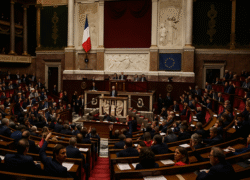
France is navigating one of its most turbulent political moments in recent years, with the reappointed Prime Minister Sébastien Lecornu attempting to restore stability to a government struggling under mounting economic, social and institutional pressures. His proposal to suspend the contentious pension reform law until after the 2027 presidential election has become the defining symbol of a fragile administration fighting for survival.

The pension reform, pushed through in 2023 despite widespread protests, raised the retirement age from 62 to 64 and triggered months of unrest across the country. Now, with inflation concerns, labour tensions and weak public support, Lecornu’s suspension plan is seen as an attempt to appease opposition lawmakers and avoid a no-confidence vote that could collapse the government.

The decision comes just days after Lecornu announced a new cabinet following his reappointment by President Emmanuel Macron. The reshuffle was meant to project continuity while calming political divisions, but critics argue that the government remains paralysed by the same fault lines that have eroded Macron’s authority. Many of the reappointed ministers are loyalists, signalling a lack of new political energy within the administration.

At the same time, France’s business community is growing anxious. The country’s influential technology sector — once hailed as Europe’s digital growth engine — has expressed concern over the deepening political uncertainty. Industry leaders warn that the ongoing crisis has slowed investment decisions, disrupted regulatory clarity and undermined France’s appeal as a hub for innovation. Several executives have described the atmosphere as one of “policy drift,” with no clear vision emerging from Paris.

The broader political landscape is even more fractured. Opposition parties on both the far right and far left are seizing on Macron’s weakening position, framing his government as out of touch and incapable of governing effectively. A wave of no-confidence motions looms as the government prepares to present its 2026 budget, already complicated by the potential cost of reversing or delaying the pension law.

Analysts at Reuters and Le Monde note that Macron’s political isolation has grown steadily since his centrist alliance lost its parliamentary majority in 2022. His decision to appoint Lecornu — considered pragmatic but politically cautious — reflects an effort to maintain control amid a rising tide of populist pressure. Yet, even within Macron’s camp, doubts are surfacing about whether the government can survive the remainder of the term without broader alliances or a strategic reset.

Despite these headwinds, Macron’s team insists that the institutional foundations remain intact. The Élysée continues to promote fiscal discipline and reform-driven governance as essential to maintaining France’s credibility within the European Union. However, the growing disconnect between policy ambition and political reality has turned what began as a parliamentary dispute into a deeper crisis of leadership.

As the government manoeuvres to prevent a collapse, France finds itself in a state of suspended motion — with economic actors anxious, opposition parties emboldened, and a presidency struggling to project authority. Lecornu’s suspension of the pension reform may buy temporary stability, but for many observers, it also underlines the fragility of a government that appears to be governing on borrowed time.

Source: Reuters and Le Monde

Saudi Arabia’s Logistics Sector Strengthens as New Parks and Infrastructure Projects Advance

Saudi Arabia’s logistics and warehouse market has maintained strong momentum through the third quarter of 2025, fuelled by sustained demand from e-commerce, manufacturing and distribution sectors, and a wave of new infrastructure projects across key trade hubs.

Industry data show that rental growth in prime industrial zones of Riyadh, Jeddah, and Dammam remains among the fastest in the region, supported by limited availability of modern space and rising requirements from retailers, 3PL providers, and manufacturers. The capital continues to attract new development, highlighted by LogiPoint’s decision to establish the Al Noor Logistics Park in Riyadh—its first major project outside Jeddah—signalling developer confidence in long-term occupier demand and the shift towards Grade-A warehouse facilities.

Infrastructure expansion has also gathered pace. A new logistics corridor is now under construction to connect Jeddah Islamic Port with the Al Khomrah logistics zone, a project that will increase port throughput and ease transport bottlenecks. The corridor forms part of a wider effort to strengthen Saudi Arabia’s position as a regional trade and distribution hub by integrating maritime, road, and air freight systems.

At the corporate level, logistics operators are actively expanding their networks. SAL Saudi Logistics Services has announced new initiatives to enhance cargo handling and domestic parcel operations, including partnerships with national postal and e-commerce platforms. Analysts note that such moves reflect growing competition in last-mile delivery and temperature-controlled logistics, segments expected to outperform in the coming years.

Despite global cost pressures and cautious capital deployment, the Saudi market continues to attract investors seeking stable returns and exposure to long-term supply chain growth. With new projects coming online and regulatory reforms improving transparency, industry observers expect steady performance into 2026. The combination of infrastructure investment, technology adoption, and policy support places Saudi Arabia’s logistics sector at the centre of the Kingdom’s economic diversification agenda.

Polish Ministry Refutes Online Claims About “Ukrainian Representation” in Parliament

Poland’s Ministry of Interior has denied online claims that Ukrainians living in the country will soon receive special representation in the Sejm, describing the reports as “false and misleading.” The ministry’s clarification follows a wave of social media outrage triggered by articles on Ukrainian websites that misinterpreted changes being considered in Poland’s citizenship law.

The misinformation, which appeared earlier this month, incorrectly suggested that Ukrainians naturalised as Polish citizens would be given dedicated seats in parliament. The story spread rapidly across social media and was shared by nationalist groups and politicians, fuelling anti-immigrant sentiment. Among those amplifying the rumour were members of far-right parties who accused the government of allowing “foreign influence” into domestic politics.

Independent fact-checkers later confirmed that no such legislation exists and that the government is not discussing any special political representation for Ukrainians. Officials explained that the only topic under review concerns adjustments to the length of residence required before foreigners can apply for Polish citizenship.

According to official data, more than 1.5 million Ukrainians are currently residing legally in Poland, most of them under temporary protection. Only a small percentage have been granted citizenship, and all newly naturalised citizens—regardless of origin—have the same rights and obligations as any other Polish nationals.

The ministry’s statement sought to defuse tensions and emphasised that citizenship policy remains consistent with Polish law and European standards. Analysts note that the speed with which the false reports spread underscores the growing challenge of disinformation in the region, particularly surrounding migration and cross-border relations since Russia’s invasion of Ukraine.

Experts warn that misinformation exploiting social divisions could resurface in the lead-up to Poland’s 2027 parliamentary elections, highlighting the need for better digital literacy and transparency in official communication.

Sources: Polish Ministry of Interior (MSWiA), Office for Foreigners, Demagog.pl, Euronews The Cube, AFP Polska, CIJ EUROPE research.

Czech Mortgage Market Sees Continued Momentum Despite Stable Interest Rates

The Czech mortgage market remained active in early autumn, with banks and building societies recording one of the strongest months of 2025. According to data from the Czech Banking Association’s Hypomonitor, lending volumes rose in September compared to the summer average, continuing the recovery trend that began in the second quarter.

The total value of new mortgage loans reached an estimated CZK 37 billion, driven by higher demand from homebuyers and refinancing clients. Compared with August, lending increased by around 14 percent, marking one of the highest monthly totals since 2021. Industry analysts note that buyers are taking advantage of stable interest rates and increased competition among lenders before potential rate adjustments later in the year.

Interest rates for new mortgages remained near an average of 4.5 percent, little changed from August, and roughly half a percentage point below last year’s level. Although swap rates — which influence long-term borrowing costs — have eased slightly, financial institutions say the broader cost of money in the interbank market remains elevated, limiting room for deeper rate cuts.

Economists suggest that steady rates, together with a mild improvement in purchasing power, have encouraged both buyers and banks to re-enter the market. “The mortgage sector has regained much of its dynamism,” said one Czech banking economist, pointing to stronger household confidence and the return of developers launching postponed projects.

The average new mortgage in September exceeded CZK 4 million for the first time, reflecting both rising property prices and borrowers’ ability to stretch loan amounts under current income limits. Refinancing activity also picked up, accounting for roughly one-fifth of all mortgage lending.

Despite the renewed momentum, experts caution that further growth will depend on how quickly the central bank begins reducing its main policy rate. If monetary policy remains tight and real estate prices stay high, the autumn revival may slow heading into 2026. For now, however, September confirmed that the Czech mortgage market is on steadier ground than at any point since the downturn of 2023.

Source: CTK

Poland’s Condo-Hotel Boom Faces Legal Scrutiny as Investor Protection Gaps Emerge

Once promoted as a safe investment combining holiday ownership with steady rental income, Poland’s condo-hotel market is now under intensifying legal and regulatory scrutiny. A growing number of investors have filed lawsuits claiming misleading contracts, withheld deposits, and disproportionate penalty fees — exposing the blurred legal lines between consumer protection and commercial risk in this booming yet loosely regulated sector.

At the height of Poland’s tourism-driven property surge, hundreds of condo-hotels were built in resort towns like Zakopane, Kołobrzeg, and Mielno. Buyers were promised guaranteed annual returns of 6–8 percent and hassle-free management. In practice, many have faced contract disputes, delayed projects, and penalty clauses demanding up to 50 percent of the property price if they withdrew after making deposits.

According to legal experts, such penalties are often illegal under Polish consumer law. “A 50 percent withdrawal fee is a red flag — courts increasingly classify these clauses as abusive if the buyer is a consumer,” said a Warsaw-based property lawyer familiar with multiple ongoing cases. Under Article 385¹ of the Civil Code, terms that significantly disadvantage consumers or fail to reflect real costs can be declared void.

The Office of Competition and Consumer Protection (UOKiK) has confirmed this stance, penalizing developers including the operator of Termy Uniejów, which was fined over PLN 200,000 in 2023 for misleading investors with profit guarantees and unfair withdrawal clauses. The decision, though not yet final, reflects a growing crackdown on aggressive marketing practices in resort-style property schemes.

Meanwhile, the long-running “4 Kolory” case in Władysławowo remains one of the largest collective actions in Poland’s real estate sector. More than 120 investors are seeking over PLN 80 million in damages after paying deposits for hotel apartments that were never completed. While earlier fines against intermediary firm Home Broker have been upheld on appeal, the broader compensation case continues in Warsaw.

Industry insiders say the problem lies in how these projects straddle the line between real estate and hospitality. Developers often encourage buyers to set up small companies or sole proprietorships to reclaim VAT — a move that strips them of consumer status and legal safeguards under the Developer Act. “Most buyers don’t realise that by signing as a company, they lose the right to challenge unfair clauses or demand deposit protection,” noted a legal analyst specialising in property law.

For those signing as private individuals, the legal landscape is shifting in their favour. Courts in Warsaw and Katowice have already struck down penalty clauses of 30–50 percent as disproportionate, ruling that developers failed to prove equivalent financial losses. In one case, a buyer who forfeited a 40 percent deposit was refunded nearly in full after the developer resold the unit within weeks.

Yet, despite rising litigation, interest in condo-hotel projects remains strong. Developers continue to market investment apartments in mountain and seaside resorts, adapting contracts to comply with new consumer standards. Still, UOKiK warns that many offers promising “guaranteed returns” remain high-risk, particularly those outside the scope of the Developer Act or traditional mortgage financing.

As Poland’s courts and regulators confront the fallout of a decade-long condo-hotel boom, the outcome of pending cases could reshape the country’s real estate investment landscape. Whether the model evolves into a transparent and regulated segment — or becomes a cautionary tale for retail investors — will depend on how strictly the law distinguishes between property ownership and speculative investment.

Source: UOKiK

Poland’s Trade Balance Turns Negative as Imports Rise Faster Than Exports

Poland recorded a trade deficit in the first eight months of 2025 after several years of maintaining a modest surplus, according to new data from the national statistics office. The shift reflects stronger import activity and a slowdown in export growth, largely tied to energy prices, manufacturing costs, and weaker external demand.

Between January and August, the value of goods sold abroad remained roughly stable compared with last year, while the cost of imported products increased noticeably. The result was a shortfall estimated at more than PLN 20 billion. Economists point to rising import volumes from Asia, particularly China and South Korea, and steady demand for industrial components and consumer electronics as key drivers of the change.

Trade with European Union partners continues to dominate Poland’s economic landscape, with Germany maintaining its place as the country’s largest customer and supplier. Exports to the German market were slightly lower than in the previous year, while imports edged higher, narrowing what has traditionally been one of Poland’s strongest bilateral surpluses. Other major destinations for Polish goods included France, the Netherlands, and the Czech Republic.

Energy-related trade remained a weak spot. Imports of fuels and related commodities stayed high, while exports in that category declined, reflecting both lower global prices and a reduction in refinery activity. In contrast, agricultural and food exports grew solidly, supported by continued demand across the EU.

Despite the shift into deficit, Poland’s overall trade activity remains strong, suggesting that domestic demand and industrial production are still supporting imports even as global growth cools. Economists note that while this year’s numbers signal a less favourable trade position, they also point to a resilient economy that continues to attract investment and sustain industrial output despite international headwinds.

The coming months are expected to determine whether this deficit marks a temporary fluctuation or the beginning of a longer-term trend linked to structural changes in Poland’s export competitiveness and supply chain dependencies.

Poland: Premium Apartments Remain in Demand as Developers Plan New High-End Projects

Demand for higher-standard apartments in Poland remains steady, driven by buyers seeking prime locations and modern amenities. Limited supply continues to support prices, which in major cities often exceed PLN 20,000 per square metre. Developers plan to launch new premium projects soon, reflecting confidence in this segment’s resilience and long-term appeal.

Agnieszka Majkusiak, Sales and Marketing Director at Atal

Sales of premium flats are also subject to market fluctuations, although the group of buyers interested in them often make cash purchases. It is therefore much less sensitive to variables such as availability and the cost of credit. We have a very interesting offer for these people, e.g. in the Tri-City investments Atal Zawiślańska Ville Miejskie or Przystań Sobieszewo Atal. These are very attractively located, high-standard projects with intelligent solutions such as smart home. Apartments in these projects are often purchased as so-called second homes or for temporary rental.

In the very centre of Katowice, a unique investment, among other things due to its location and style of construction, is the Atal Olimpijska project, dominated by a 36-storey skyscraper, the tallest building of its kind in the region. Residents of the skyscraper will be able to enjoy an observation deck available only to them, offering an impressive view of the entire region.

Prices in the premium projects mentioned above are approximately 30-40 per cent higher than in the popular segment. Their price differentiation is influenced by the location of a given flat, its floor, orientation towards the cardinal directions, etc. Prices range from around PLN 14,700/sq m to PLN 17,000/sq m in Gdańsk and from PLN 11,500/sq m to PLN 16,800/sq m in Katowice in a developer’s standard.

Tomasz Kaleta, Managing Director of Sales and Marketing at Develia

In addition to flats in the popular and higher standard segments, we are expanding our portfolio with premium investments that meet the needs of customers looking for prestigious projects in the best locations. An example is the Królowej Jadwigi 51 residential complex in the very centre of Poznań, which stands out for its high standard of finish, elegant architecture and abundance of greenery. The investment is very popular with customers. More than half of the flats in the first stage of the project have already found buyers. Prices start at PLN 14,399 per square metre.

In September this year, Develia’s next premium investment will start in Gdynia, complementing our offer in the Tri-City. We want to implement premium projects that not only stand out for their prestigious location, modern design and wide range of amenities, but also genuinely enrich the urban fabric with a resident-friendly, sustainable space.

Katarzyna Kwiatkowska, Sales Office Manager, Matexi Polska

Our offer focuses primarily on the medium and medium-high segments, but we are also consistently developing projects of a higher standard. We have noticed that flats in the higher and premium segments are very popular with customers, not only because of their comfort and attractive locations, but also because they are a proven and safe form of capital investment.

A good example is the Żelazna 54 investment in Warsaw. It is a modern tenement house in a classic, urban style, located in the dynamically developing business centre of Warsaw, near Grzybowska Street, in the vicinity of the Norblin Factory and Warsaw Breweries. We have an offer of approximately 90 premises ranging in size from 29 sq m to 124 sq m. The average price per square metre in this project is approximately £41,500. The handover of the finished premises to the owners is planned for the first quarter of 2026. The project stands out for its elegance, carefully refined architecture and high quality of workmanship. Residents will have access to a green roof terrace, a courtyard, an underground car park and a ground floor with commercial and service premises with representative glass windows. The façade, in light and dark shades of coral, refers to the aesthetics of pre-war Warsaw. The flats, with a height of 280-300 cm, offer the possibility of unusual arrangements, and the common areas will feature the highest quality materials.

With customers seeking comfort, high standards and an intimate, green location in mind, we are also implementing the Sady Żoliborz project, which is being built at the intersection of Anny German and Krasińskiego Streets. This investment stands out not only for its prestigious location in one of the greenest districts of Warsaw, but also for its refined architecture, functional apartment layouts and carefully designed common areas and spaces between buildings.

Our ambition is to provide our customers with a wide and diverse range of products, from mid-range flats to higher-end and premium projects, but always with an emphasis on quality, functionality and attractive locations.

Joanna Chojecka, Sales and Marketing Director for Warsaw and Wrocław at the Robyg Group

We are seeing interest in higher standard flats and premium segment properties. Customers are increasingly looking not only for functional floor space, but also for high-quality finishes, modern architecture, attractive surroundings and solutions that enhance the comfort of living, such as spacious terraces, large glazing, intelligent home management systems and green common areas.

For years, we have been developing our offer in the higher standard apartment segment, especially in attractive, well-connected locations in large cities. We carry out investments that combine modern technologies, such as standard Smart House equipment, with high-quality materials, ecological solutions and a well-thought-out spatial layout. Examples include selected stages of projects in Warsaw, Gdańsk and Wrocław, which meet the needs of more demanding customers.

The average price per square metre in higher standard developments varies depending on the location, but in the largest cities it currently ranges from PLN 16,000/sq m to PLN 20,000/sq m, and in strictly premium projects even above this value, especially in the most prestigious districts.

We plan to further develop our offer in this segment, both by introducing new stages of existing higher-standard developments and by analysing the possibility of implementing new premium projects. Customer needs are evolving, and we see great potential in creating flats that combine quality, aesthetics and a modern approach to city living.

We have introduced the Grand Selection premium offer, which includes top-class apartments in unique, prestigious locations in Warsaw in the Royal Residence development and in Gdańsk in the Nowa Wałowa, Nadmotławie and Wendy projects. We are already planning further proposals in this line in Poznań and other cities where we operate.

Robyg Grand Selection is the essence of a sophisticated lifestyle, rooted in values that define true quality and uniqueness. This prestigious line of Robyg residential developments has been created for those who appreciate not only high standards, but also authentic experiences – harmoniously combining luxury, aesthetics and everyday comfort. It is a combination of unique architecture inspired by local heritage, the highest quality finishes and carefully selected locations – close to nature, the centre of urban events and prestigious points on the city map.

Agnieszka Gajdzik-Wilgos, Sales Manager, Ronson Development

The segment of higher standard flats and premium properties is a part of the market where sales are always slightly slower. Customers usually make their purchasing decisions at a more advanced stage of the investment, and often only when the buildings are already completed and it is possible to realistically assess the quality of the finish, the standard of the common areas and the surrounding infrastructure. It is these elements – attention to detail, high comfort and the unique character of the project – that are key for buyers in this segment.

Our offer includes premium investments, such as Nova Królikarnia in Warsaw, where prices range from PLN 23,578/sq m to PLN 24,836/sq m, and Zielono Mi, where prices range from PLN 15,800/sq m to PLN 19,000/sq m. Both projects stand out not only for their high standard of workmanship, but also for their unique location, which makes them attractive propositions for the most demanding customers.

Damian Tomasik, President of the Management Board of Alter Investment

The premium real estate segment remains stable. It is clear that customers are looking for high-standard flats that are well located and have attractive architecture. In the Tri-City, seaside and mountain resorts, as well as in Warmia and Mazury, the demand for this type of project is particularly evident. Average prices per square metre in this segment are often in the range of PLN 18,000-25,000, depending on the location. Alter Investment is introducing plots of land and projects in the best destinations to its offer, which in subsequent stages can be developed as premium investments, which is a natural direction from our perspective. Examples from our portfolio include investments in Władysławowo, Lądek Zdrój and a unique plot of land by Lake Ławki in the municipality of Jeziorany.

Mariusz Gajżewski, Head of Sales, Marketing and Communication, BPI Real Estate Poland

The premium segment is much more stable than the popular market. Customers in this area are less influenced by short-term macroeconomic fluctuations and more focused on the uniqueness of the location, the standard of finish and long-term value. That is why sales in the premium segment continue to enjoy great interest. Our strategy is to focus on premium and high-end flats, where we provide added value to the customer – from the quality of the architecture and technological solutions to the prestigious location. This is a segment that we believe will see the most dynamic growth in the coming years.

Witold Kikolski, member of the management board of MS Waryński Development S.A.

Interest in premium segment flats remains stable despite the overall market challenges. The higher standard flat segment accounts for approximately 10 per cent of the Polish market, which shows the growing demand for this type of property among wealthier customers.

At the moment, we are focusing on the development of the Stacja Ligocka housing estate in Katowice, which is a popular standard that has been attracting buyers for years. However, observing market trends and growing customer expectations, we are planning to expand into the higher standard segment as early as next year.

Our strategic decision is to enter the Warsaw market with an investment in Mokotów, in a well-established location, ideal for higher standard flats. Entering this segment is a natural step in the development of our company, responding to the growing expectations of the market and allowing for diversification of our investment portfolio.

Renata Mc Cabe-Kudla, Country Manager at Grupo Lar Polska

The demand for higher standard flats is small but stable, representing a fraction of the total demand. Our company is focused on the mid-range market, offering good quality at reasonable prices.

Michał Witkowski, Sales Director at Lokum Deweloper

Customers looking for a new place to live pay attention not only to size, functionality and location. More and more often, they choose investments characterised by high quality workmanship and comfortable common areas. An important aspect is the aesthetics of the estate, the quantity and quality of greenery and additional amenities. That is why higher-standard and premium flats are steadily strengthening their position on the market and their value is growing. Properties in this category are not only an attractive place to live, but also a safe investment.

All the flats and apartments we offer are distinguished by their high standard. We create developments that are characterised by timeless architecture, high-quality materials and modern solutions. Their hallmark is carefully designed communal areas filled with rich vegetation and elegant small architecture. Pergolas, fountains and ponds are being built in green areas, creating unique places to relax. Residents of our housing estates also enjoy numerous amenities, including outdoor gyms, colourful playgrounds, convenient parking spaces, electric car charging stations, quiet lifts and video intercoms.

This autumn, we will expand our offer with unique premium apartments. As part of the Lokum Porto investment, located in Wrocław’s Old Town, a modern, prestigious apartment building is being constructed, distinguished by its original design, panoramic windows offering a beautiful view of the green areas along the Oder River, and an impressive green exterior wall of the building entirely covered with vegetation. It will include penthouses with areas of 231 sq m and 241 sq m, with living rooms as high as 646 cm, spacious terraces and winter gardens.

Andrzej Swoboda, Vice-President of the Management Board, CTE Group

The premium apartment segment continues to enjoy considerable interest, especially among those looking for both a unique place to live and a stable capital investment. Customers are increasingly opting for unique locations, high standards of finish and timeless architecture. Our company is currently implementing the Apartamenty Świeradowska investment in Wrocław, a premium project with flats priced between PLN 15,000 and 18,000 per square metre. It is distinguished by its classic architecture inspired by pre-war designs and its unique location, which makes it particularly attractive on the market. Given the continuing demand, we do not rule out further investments in the premium segment, because it is quality and unique character that determine the value of real estate today.

Barbara Klassek, Sales Director, Premium Segment at Archicom

Premium standard flats continue to enjoy high interest from buyers, who treat them both as comfortable places to live and a safe form of capital investment. Archicom is developing this segment through the Archicom Collection brand, under which it is implementing the Flare investment on Grzybowska Street and the Gutenberg and M7 Apartments in the Towarowa 22 super-quarter in Warsaw.

Flare, scheduled for completion in mid-2026, will offer 76 turnkey apartments in three styles to choose from. Apartamenty Gutenberga and M7 will provide 160 and 140 luxury units, respectively. The projects are distinguished by unique amenities, from SPA and business lounge areas, through a private swimming pool inspired by Roman baths, to the presence of works of art by world-class artists in the common areas.

Source: dompress.pl

Slovakia’s Wage Growth Outpaces Inflation in Most Sectors, Employment Stagnates

Wages continued to rise across most of Slovakia’s key industries in August 2025, with six out of ten major sectors recording real growth above the inflation rate, according to new data from the Statistical Office of the Slovak Republic. However, several parts of the economy — including wholesale, construction, and industry — saw little to no improvement in employment, underscoring a continued period of labour market stagnation.

Nominal wages increased year-on-year in every monitored sector, with growth ranging from just 0.5% in motor vehicle sales and repairs to as much as 9% in food and beverage services — the strongest-performing category. Moderate gains of around 5% were recorded in construction, retail, and transport.

When adjusted for inflation, wages rose in most industries, led again by hospitality and retail. Real earnings in food and beverage services climbed by nearly 5%, while retail and accommodation registered smaller gains. By contrast, workers in vehicle services, market services, and parts of the information and communication sector saw purchasing power decline slightly, with real wages falling between 0.8% and 3.6%.

Employment figures reflected a more subdued picture. Compared with August 2024, five of the ten observed sectors reported lower employment, led by a 4% drop in wholesale trade. Smaller decreases were seen in construction, manufacturing, transport, and selected services. In contrast, the number of people employed in accommodation, retail, and hospitality continued to edge up, reflecting stronger demand in the consumer-facing economy.

Across the first eight months of the year, wages increased in nominal terms in every sector and in real terms in all but one. Employment growth, however, remained concentrated in a few industries, particularly accommodation, which recorded a 2.4% rise.

The Statistical Office noted that these figures, drawn from monthly business surveys, provide preliminary insight into short-term wage and labour market developments. Broader quarterly data, covering 19 sectors including education and healthcare, will offer a fuller picture of wage dynamics across the Slovak economy later this year.

Source: SOSR

LATEST NEWS