Slovakia Approves Draft Budget Plan Targeting Deficit Reduction Below 3% by 2028

The Slovak government has approved its draft budgetary plan for 2026, reaffirming its goal to reduce the national deficit below 3 percent of GDP by 2028 and stabilize public debt, which currently stands at around 64 percent of GDP. The document outlines the government’s fiscal strategy for the next three years and will now be submitted to the European Commission for review.

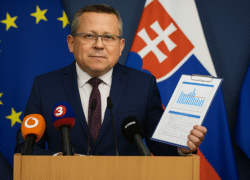
Finance Minister Ladislav Kamenický said the government remains committed to fiscal consolidation despite ongoing economic pressures. Without corrective measures, the deficit would continue to expand in 2026, he warned. The plan therefore aims to lower the shortfall from about 5 percent this year to 4.1 percent of GDP next year, while keeping public spending growth within limits set by EU rules.

According to the Ministry of Finance, achieving this trajectory will require additional savings and revenue measures worth roughly 1.5 percent of GDP by 2027. These steps are intended to preserve investor confidence and create fiscal room to manage long-term challenges such as demographic ageing.

Independent analysts from the Fiscal Responsibility Council (RRZ) have largely confirmed the government’s assessment, noting that the proposed consolidation path is necessary to prevent debt from exceeding 65 percent of GDP. However, the council also cautioned that implementation will require firm political discipline and faster progress on tax and expenditure reforms.

The draft plan includes several new initiatives aimed at strengthening state revenues. Among them is a digital services tax targeting large multinational technology companies, which the ministry intends to introduce in 2026. The government also plans to gradually transfer responsibility for subsidised mortgage aid to commercial banks.

If successful, the reforms could mark Slovakia’s return to compliance with EU fiscal limits, ending the excessive deficit procedure it has faced in recent years. But economists warn that reaching the 3 percent goal by 2028 will depend on steady economic growth and the government’s ability to deliver on its promised measures.

The draft plan will now undergo evaluation by the European Commission, which is expected to issue its opinion later this year as part of the bloc’s coordinated budget oversight process.

HMRC Tightens Oversight as Digital Reforms Reshape UK Tax Landscape

The latest UK Tax Disputes Digest outlines a period of rapid change and heightened scrutiny within the British tax system, as HM Revenue & Customs (HMRC) strengthens enforcement, embraces new technologies, and prepares for a series of legislative reforms that will expand its authority.

The report signals that HMRC is entering a more assertive phase, equipped with greater resources and digital tools to identify non-compliance earlier. Thousands of new compliance and debt management officers are being deployed following fresh funding from the Treasury, extending HMRC’s capacity to monitor corporate activity well into the next decade.

Among the most notable shifts is the tax authority’s use of data-driven analytics and artificial intelligence to detect anomalies in filings before they escalate into formal investigations. This approach reflects a broader move toward prevention rather than reaction, as HMRC seeks to resolve disputes at an earlier stage.

A series of recent court rulings has also reshaped the boundaries of corporate tax law. Decisions from the UK’s higher courts have reaffirmed HMRC’s ability to challenge transactions deemed primarily designed to gain tax advantages, particularly where loan structures or cross-border arrangements lack genuine commercial purpose. The message to companies is clear: documentation and transparency are now central to any successful defence.

At the same time, the government is advancing a raft of policy updates affecting areas such as crypto assets, pension schemes, and tax advisory regulation. From 2026, digital asset exchanges will be required to report transactions under a new global framework, while employers managing pension funds will benefit from clarified rules on VAT recovery.

The forthcoming Finance Bill will go further, introducing mandatory registration for tax advisers, new penalties for undisclosed avoidance schemes, and extended powers for HMRC to access data from connected entities. These steps reflect the government’s determination to modernise the UK’s tax framework and close long-standing loopholes.

Behavioural strategies also remain central to HMRC’s compliance strategy. The authority continues to send “nudge” letters encouraging taxpayers to voluntarily correct discrepancies in their returns. These letters, supported by increasingly sophisticated data-matching systems, are seen as a way to encourage self-disclosure before enforcement action begins.

Despite the tougher stance, the digest notes signs of stability across parts of the system. The backlog of pandemic-era disputes has eased, and settlement rates have improved as digital channels accelerate communication between HMRC and taxpayers.

Tax professionals, however, warn that the pace of reform may challenge smaller businesses and advisers. The shift to full digital correspondence by 2030 will demand significant adaptation, especially among firms less familiar with AI-assisted systems.

The picture that emerges is one of an evolving tax authority — more data-driven, more proactive, and less tolerant of grey areas. For corporations and advisers alike, the priority is shifting from retrospective defence to anticipatory compliance, as HMRC seeks to balance enforcement with efficiency in a fast-digitising economy.

Source: CMS

Polish Government Approves New Tax and Deregulation Proposals

The Polish Council of Ministers has adopted a package of legislative proposals aimed at reshaping parts of the country’s tax system and simplifying selected administrative processes. The measures cover excise duties, corporate income tax, inheritance and donation taxation, and a new round of deregulation intended to support small businesses and streamline procedures.

One of the key changes concerns excise duties on alcohol and tobacco products. The government plans a phased increase in rates on spirits, beer, wine, and other alcoholic beverages starting in 2026, alongside new taxation rules for emerging nicotine products such as pouches and vaporisers. Officials say the move is designed both to strengthen budget revenues and to reflect public health considerations.

The cabinet also endorsed amendments to the corporate income tax framework, with the most visible change affecting financial institutions. The proposed measures would temporarily raise tax obligations for banks before gradually reducing them over the next three years. At the same time, the separate levy on bank assets is expected to be slightly lowered. According to government estimates, the overall balance of these reforms could generate several billion złoty in additional budget revenue over the coming decade.

A further element of the legislative package focuses on support for small enterprises. The proposed “cash basis” taxation option would allow entrepreneurs with annual turnover up to two million złoty to settle tax obligations only after receiving payment, easing pressure on liquidity and improving predictability for smaller firms. The deregulation bill also includes changes intended to speed up administrative decisions, simplify medical leave procedures, and clarify certain fiscal responsibilities at the local government level.

Updates to the inheritance and donation tax rules are included as part of the same legislative group, aiming to modernise procedures and remove inconsistencies that have emerged over time.

The government describes the proposals as part of a broader effort to align Poland’s tax and regulatory systems with current economic realities — increasing fairness in taxation while reducing administrative burdens. The draft laws will now move to the Sejm for debate and potential amendments before being enacted.

Source: gov.pl

LIVING Completes Third Phase of Park West Residential Project in Budapest’s District 13

LIVING, the residential development brand of WING, has completed the third phase of its Park West project in Budapest’s District 13. The development, located on Szabolcs utca in the Ferdinánd Quarter, has received its final occupancy permit, marking the handover of 230 new apartments. A limited number of move-in-ready units remain available, with the site classified as a brownfield redevelopment, allowing buyers to reclaim the 5% VAT.

The Park West complex, launched in 2019, is being built in four stages. The first two phases—Park West 1 and 2—were completed in 2022 and 2023 respectively, while construction of the fourth phase, Park West Rise, began in mid-2025. Situated close to Dózsa György út and Lehel utca, the project benefits from strong public transport connections, including the M3 metro line and tram 14, as well as proximity to major city landmarks such as Westend shopping centre, City Park, and Széchenyi Baths.

The newly completed Park West 3 features A+ energy-rated buildings with a range of units—from compact studio apartments to larger five-room penthouses. Energy-efficient systems include heat pumps, surface heating and cooling, triple-glazed windows, and enhanced insulation, ensuring year-round comfort and reduced energy use.

“The completion of the third phase of the Park West project is another important milestone and contributes to the transformation of District 13,” said Tibor Tatár, Head of WING’s residential and office development businesses. “The Ferdinánd Quarter has evolved from an industrial area into a modern residential district with strong infrastructure and urban amenities. The brownfield status also allows buyers to benefit from VAT reclaim.”

Residents have access to several shared amenities designed to support contemporary urban living, including a community lounge, play area, home office corner, 24-hour parcel point, and shared tool shed. Each apartment includes smart home features as standard, with further upgrades available through LIVING’s SMART+ package.

LIVING also provides post-purchase support through LIVING Service, which assists owners with property handovers, furnishing, rental management, and resale. With the company’s mobile app, residents can manage smart home functions, book community spaces, and access on-site services conveniently.

When fully completed, the Park West project will include nearly 1,000 homes, further consolidating LIVING’s role in the ongoing renewal of Budapest’s District 13 and its focus on energy efficiency, digital living, and urban connectivity.

Luxury Real Estate in 2025: From Smart Wellness Homes to AI Concierges — The Future Arrives, But Not Evenly

The definition of luxury living in Europe is being redefined. Marble floors and infinity pools no longer set the standard; today’s high-end buyers expect intelligent systems that anticipate their needs, wellness spaces that promote health, and sustainable architecture that blends seamlessly with nature. Yet while artificial intelligence, wellness, and sustainability dominate the conversation, experts say much of this transformation remains in progress rather than fully realised.

According to Marshall Real Estate, led by Managing Partner Tomasz Kozioł, the pandemic permanently reshaped buyer priorities. Luxury now extends beyond size or location to include comfort, technology, and personal well-being. “Square metres and location still matter, but quality of life, health, and technology have become the real currency of luxury,” Kozioł explained.

Technology is at the centre of this shift. Across Europe, premium properties increasingly feature advanced smart home ecosystems capable of managing lighting, air conditioning, and security. Some go further, integrating AI “concierge” systems that learn residents’ habits, predict needs, and handle everyday tasks. While these innovations reflect a growing market, analysts note that most AI concierge systems remain semi-automated and supported by human management, not yet the self-learning assistants often described in marketing.

Wellness has also moved from luxury to necessity. The Global Wellness Institute reports that wellness real estate has grown into a $438 billion market, fuelled by demand for homes that promote health and longevity. Private spas, home gyms, and biophilic designs that incorporate sunlight, greenery, and natural materials are now standard expectations. Kozioł said that buyers increasingly want “homes that actively support their health, not just look beautiful,” a trend visible in Poland’s resort destinations.

Sustainability is equally integral to the modern definition of luxury. Photovoltaic systems, rainwater recovery, and intelligent energy management are now central features rather than optional extras. Developers are embracing ESG principles to attract environmentally conscious investors, aligning high-end housing with Europe’s broader climate goals.

Hybrid work has transformed living arrangements as well. Premium buyers favour adaptable interiors with movable partitions, convertible furniture, and multi-functional rooms that shift easily between office, gym, and entertainment space. Though still rare in traditional developments, this flexibility reflects a growing preference for homes that evolve with their owners’ lifestyles.

Personalisation remains the ultimate hallmark of luxury. Across Western Europe, technology allows for tailored environments — climate zones adjusted to individual comfort, smart mirrors displaying personal health data, and AI-linked systems that adapt to user routines. Yet these advanced integrations remain niche, limited to the uppermost tier of buyers. In markets like Poland, craftsmanship and bespoke service still define the premium experience.

Marshall Real Estate’s own data underscores this evolution. Since its founding in 2020, the firm has brokered over PLN 430 million in transactions, much of it concentrated in Poland’s resort regions. Kozioł sees a shift toward “smart wellness retreats” — properties that combine seclusion, sustainability, and digital convenience.

Industry analysts share cautious optimism. Reports from Markets & Markets suggest that Europe’s luxury housing sector is steadily adopting intelligent technology but remains years away from universal implementation. “Europe’s premium real estate is unquestionably evolving,” the firm notes, “but widespread adoption of fully self-managing homes will take time — not every buyer wants their property to think for them.”

For now, the future of the premium segment lies in harmony between timeless materials, high-quality locations, and intelligent systems that enhance daily life rather than replace it. As Kozioł concludes, “People no longer want to live surrounded by luxury — they want to live intelligently, sustainably, and well.”

Author: Tomasz Kozioł, managing partner at Marshall Real Estate

IMF Keeps Czech Growth Outlook Modest as Government Remains Slightly More Upbeat

The International Monetary Fund’s latest projections suggest that the Czech economy will continue to expand steadily but without major acceleration in 2025. According to the IMF’s most recent data, the country’s gross domestic product is expected to rise by around 1.6 percent next year, broadly in line with this year’s pace. This represents a moderate but consistent recovery following two years of subdued performance linked to inflationary pressures and weaker industrial output.

While the IMF’s assessment points to modest growth, the Czech Ministry of Finance remains somewhat more optimistic. In its latest forecast, released in August, the ministry expects GDP to increase by just over 2 percent in 2025, followed by slightly faster expansion in 2026. Both outlooks, however, acknowledge the same economic backdrop — stabilising prices, cautious consumer spending, and a slow rebound in investment after a difficult 2023.

Compared with its regional peers, the Czech Republic’s outlook sits roughly in the middle of the pack. The IMF sees slower momentum in Slovakia and Hungary, while Poland is projected to remain one of the stronger performers in Central Europe. Inflation in the Czech Republic is expected to stay close to the central bank’s 2 percent target, giving policymakers some breathing room but little reason for aggressive monetary easing.

Globally, the IMF’s autumn outlook anticipates moderate growth of about 3 percent this year and next, slightly above earlier expectations. The improvement reflects easing trade frictions and more stable financial conditions, though the Fund warns that uncertainty remains elevated.

In practical terms, the updated forecasts signal a cautiously positive year ahead for the Czech economy — steady, but without the robust upswing that many had hoped for at the start of 2025.

Source: CTK

CA Immo Completes German Property Management Restructuring, Outsources to IC Property Management

CA Immo has finalised the restructuring of its property management operations in Germany, transferring all related services to IC Property Management GmbH. The move marks the completion of the company’s broader strategy to outsource property management across all its core markets, following similar transitions in Austria and Central and Eastern Europe in 2022.

Until now, property management in Germany had been handled internally through DRG Immobilien, a subsidiary in which CA Immo held a 49% minority stake. As part of the reorganisation, all DRG employees responsible for CA Immo’s property management are joining IC Property Management, ensuring continuity and experience during the transition.

The outsourcing marks the end of what CA Immo described as a “non-value-adding joint venture” and forms part of the company’s ongoing effort to streamline operations and strengthen its focus on core business activities. The new structure, according to CA Immo, will simplify workflows, enhance transparency, and improve long-term asset performance and profitability.

Carsten Bachmann, Head of Asset Management Germany at CA Immo, said: “With the outsourcing of our German property management business we are advancing our strategic objectives to simplify our business model and focus operations on higher value add activities. Our tenants will continue to benefit from stable processes, transparency and a high level of service. At the same time, we at CA Immo are creating the conditions to manage our portfolio more efficiently, increase the performance of our properties in the long term and consistently focus our resources on value-creating asset management. In this way, we are combining stability in our operating business with clear strategic development.”

The company emphasised that tenants will experience no service disruption during the handover. IC Property Management, one of Germany’s leading operators of large-scale office properties, will continue to provide established processes and premium management standards.

By transferring its German operations, CA Immo has now achieved its objective of a fully outsourced property management model, enabling the company to concentrate on strategic asset management, development, and investment activities across its European portfolio.

Photo: Carsten Bachmann, Head of Asset Management Germany at CA Immo

CIJ World Launches Global Real Estate Intelligence Platform

CIJ World, previously known as CIJEUROPE.com, has officially launched as a digital platform providing global intelligence, data insights, and expert analysis for the commercial real estate industry. Designed for investors, developers, and professionals, the platform delivers timely coverage of market movements, investment trends, policy shifts, and technological innovation across Europe, North America, Asia, and beyond.

Still focused on commercial real estate, CIJ World also expands its editorial scope to include broader topics of public importance — from sustainability and economic policy to digital transformation and global current affairs — recognising that real estate does not operate in isolation but is shaped by the issues that concern us all.

The new platform combines daily reporting with in-depth research on logistics, office, residential, and mixed-use sectors, alongside special features on ESG, urban regeneration, and capital markets. “CIJ World brings together reliable foresight, global data, and independent journalism to guide decision-makers through today’s fast-changing real estate environment,” said Robert Fletcher, CEO/Editor-in-Chief of CIJ World. “This is the first step of a broader transformation we are building, which is expected to evolve into a data intelligence platform — creating the world’s first unified property insight ecosystem.”

CIJ World is now live at https://cij.world, offering open access to curated news and premium content for subscribers. The launch marks a new chapter for the CIJ brand — connecting industry leaders and shaping conversations that define the future of global real estate and the world around it.

Bomb Threats Disrupt Slovak Regional Hospitals Again

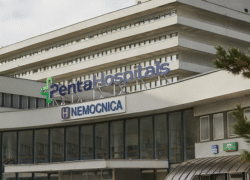
A fourth bomb threat in less than a month has struck the network of Penta Hospitals, this time targeting the regional facility in Trebišov on Tuesday morning. The incident led to temporary restrictions on hospital operations as police secured the site, though no evacuation of patients was required and no explosives were found.

The network’s spokesperson, Tomáš Kráľ, confirmed that the latest warning followed a similar pattern to previous threats received in Košice, Michalovce, and Galanta. Each incident forced hospitals to suspend care temporarily, delaying dozens of scheduled treatments and surgeries.

According to Kráľ, the repeated false alarms are taking a toll on both staff and patients, heightening anxiety and disrupting healthcare delivery across the network. Penta Hospitals has filed a criminal complaint against an unknown perpetrator and plans to issue a public statement addressing the situation.

Police investigators are examining whether the incidents are connected, as the latest threat was reportedly submitted through an online retailer’s platform rather than directly to the hospital’s website. Despite heightened security protocols, officials warn that such hoaxes strain emergency services and endanger lives by diverting attention from genuine medical and security needs.

Authorities continue to treat the threats as serious crimes while emphasizing that no devices have been discovered in any of the affected facilities to date.

Source: HNonline.sk

Wage Growth Slows as Employment Stagnates Across Key Sectors in Slovakia

Wages across most major sectors in Slovakia continued to grow in August 2025, but for many workers, rising prices erased much of the gain. According to new data from the Statistical Office of the Slovak Republic, while nominal wages rose in all ten sectors monitored monthly, four industries still saw real pay declines once inflation was taken into account. Employment levels remained largely unchanged, with several key branches of the economy continuing to shed staff.

The strongest wage growth was seen in the hospitality sector, where salaries in food and beverage services jumped by around nine percent compared with last year. Retail, construction, and transport and storage each recorded gains of roughly five percent, while pay in vehicle sales and repair increased by only half a percent. However, when adjusted for inflation, wages fell in the motor vehicle trade, selected market services, and slightly in manufacturing and the information and communication sectors.

Over the first eight months of 2025, real wages have risen in nine of the ten monitored industries, led again by hospitality with growth of 4.6 percent. Only market services recorded a year-on-year decline, dropping by 1.4 percent in real terms.

Employment trends show a more subdued picture. In August, job numbers were lower than a year earlier in five sectors, including wholesale trade, industry, and construction. Wholesale saw the steepest decline, losing about four percent of its workforce. Transport and storage also contracted modestly. On the other hand, small employment increases were noted in retail, food services, accommodation, and IT.

Between January and August, overall employment grew slightly in half of the monitored sectors, with accommodation showing the fastest year-on-year expansion at 2.4 percent. Yet, transport and wholesale continue to lag, each posting declines of up to two percent.

The data, based on monthly business surveys, offer a first look at wage and employment developments in Slovakia’s most influential sectors. Broader quarterly statistics — covering education, healthcare, and other industries — will provide a fuller picture of wage trends across the national economy later this year.

Source: SOSR

LATEST NEWS