Madrid’s Office Market in 2025: Steady Leasing, Ageing Stock, and a Shift Toward Quality

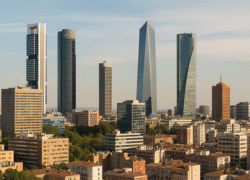
Madrid’s commercial office market in 2025 is showing signs of cautious stability, driven by selective leasing activity and an increasing focus on modern, energy-efficient buildings. While the city continues to attract long-term occupiers, much of its office stock faces structural challenges that demand significant reinvestment in the years ahead.

Data compiled from leading real estate consultancies indicate that leasing activity in the Spanish capital reached roughly 290,000 square metres in the first half of 2025—about 15 percent higher than a year earlier. This growth is largely concentrated in prime, refurbished assets located in the city’s central business district and well-connected suburban corridors. According to industry analysts, companies continue to consolidate into smaller, higher-quality spaces that meet environmental and technological standards, even as overall demand remains moderate.

At the same time, vacancy rates have stayed relatively stable, averaging around 9 percent in the Madrid metropolitan area. This reflects the dual effect of strong demand for new or upgraded offices and weak absorption of older stock. Real estate research firms warn that nearly half of Madrid and Barcelona’s existing office buildings risk becoming obsolete by 2030 unless extensive modernisation takes place—an investment estimated at roughly €14.5 billion.

Official statistics from Spain’s national statistical office (INE) and the Ministry of Housing confirm a slowdown in new construction permits across the non-residential segment in the Comunidad de Madrid, highlighting the gap between new supply and market demand. However, these figures capture only construction activity and do not reflect leasing trends directly.

Despite these constraints, prime office rents in Madrid have held firm, supported by limited availability of top-grade space and ongoing interest from international occupiers. Consultancy data also suggest a continued “flight to quality,” with tenants prioritising energy performance certifications, digital infrastructure, and workplace well-being features.

The broader picture remains one of transition. Developers are increasingly repositioning outdated assets into flexible, ESG-compliant offices, while investors are watching closely for opportunities amid shifting valuations. Madrid’s office sector enters the final quarter of 2025 with a cautiously optimistic outlook—supported by stable fundamentals, but shadowed by the growing urgency to modernise an ageing portfolio that underpins one of Europe’s key real estate markets.

Source: INE

EBRD Extends €5 Million to Erste Bank Montenegro to Support Green Investments and Women Entrepreneurs

The European Bank for Reconstruction and Development (EBRD) has signed a new €5 million financing package with Erste Bank AD Podgorica (Erste Bank Montenegro) to boost Montenegro’s green transition and promote women’s entrepreneurship. The agreement was finalized in Tivat on 14 October, during the Smart Growth, Green Future investment conference, held in cooperation with the European Union Delegation to Montenegro, the Government of Montenegro, and the Montenegrin Investment Agency.

The funds will be divided into two components: €3 million will be on-lent to households, housing associations, and construction firms for projects that improve energy efficiency, while €2 million will finance women-led businesses across the country.

Both credit lines form part of the EBRD’s long-term commitment to sustainability and inclusion. The initiative will be supported by EU-funded grants and guarantees as well as technical assistance provided by the European Union and the Government of Japan.

The €3 million component is part of the Green Economy Financing Facility (GEFF) for the Western Balkans, which helps homeowners and developers invest in energy-saving measures such as insulation, efficient heating, and renewable-energy technologies. Borrowers who complete eligible projects will receive grant incentives of up to 20 per cent of their investment cost, funded by the EU.

The €2 million credit line dedicated to women-led micro, small and medium-sized enterprises is part of the EBRD Women in Business programme. It includes a first-loss guarantee funded through the European Fund for Sustainable Development Plus (EFSD+), which reduces lending risk and encourages banks to extend credit to women entrepreneurs.

“Through this partnership, we aim to combine two of our key priorities — sustainability and inclusion,” said Charlotte Ruhe, EBRD Managing Director for Central and South-Eastern Europe. “By providing access to financing under the GEFF and Women in Business programmes, supported by EU-funded incentives and guarantees, we are helping households and women entrepreneurs play a direct role in Montenegro’s green and inclusive growth.”

Aleksa Lukić, Chairman of the Management Board at Erste Bank Montenegro, said the agreement reflects the bank’s strategy to promote responsible lending and empower individuals to invest in a sustainable future. “With this facility, citizens can join the green transition while benefiting from tangible financial advantages,” he said. “We are also proud to participate in the Women in Business initiative, which supports equality and economic opportunity for women across Montenegro.”

Johann Sattler, Ambassador of the European Union to Montenegro, added that the EU is proud to back this partnership. “Building a more inclusive economy is an essential part of Montenegro’s EU integration process. I hope this example inspires other banks to design products that empower women and promote sustainability,” he said.

The EBRD remains one of Montenegro’s leading institutional investors, with more than €1 billion invested across 100 projects, supporting infrastructure upgrades, private-sector competitiveness, and the country’s green transition.

Photo source: EBRD

Athens Office Market 2025: Stable Demand and Tight Supply Keep Prime Rents Firm

The Athens office market has entered 2025 on a steady footing, with strong demand for top-quality buildings keeping rents firm even as overall leasing activity softens from last year’s highs. Data from major consultancies indicate that office take-up slowed during the first quarter but remains concentrated in energy-efficient buildings in key areas such as Syntagma and along Kifissias Avenue, where supply remains limited.

Rents for premium offices in central Athens are holding close to €30 per square metre each month, underscoring the resilience of modern, well-connected properties. Occupancy remains high in recently completed or refurbished projects, while older offices in less central locations continue to face slower leasing and greater pressure to upgrade.

Developers are responding cautiously, with new construction staying moderate and much of the upcoming space already pre-let. The focus is firmly on projects that meet current environmental standards and can accommodate flexible work arrangements. Investment activity has been restrained but consistent, directed mainly toward modern buildings with reliable tenants and strong sustainability credentials.

Although the overall pace of leasing has eased, the Athens market continues to demonstrate stability supported by a limited supply of quality space and enduring interest from both occupiers and investors. By late 2025, analysts expect conditions to remain balanced—prime buildings maintaining their value, while older properties gradually adapt to meet evolving corporate and environmental expectations.

Government Approves Apartment Register to Map Czech Housing Stock

The Czech government has approved the creation of a national register of apartments, a database that will for the first time provide comprehensive information on how many flats exist in the country, where they are located, and how large they are. The register is being developed jointly by the Ministry for Regional Development (MMR) and the Ministry of Finance (MF), and its basic version is expected to be completed within two years of the approval of the amended Basic Registers Act. The system should be fully operational by the time of the 2031 national census.

According to Regional Development Minister Petr Kulhánek (STAN), the register will allow the government to better target housing-support measures. “With accurate data on apartment size, location, and occupancy, we will be able to direct our affordable-housing programmes more effectively — for example, distinguishing between homes suitable for individuals or families,” Kulhánek said following the cabinet meeting.

Currently, data on housing stock come from fragmented sources — the Land Registry, the Czech Statistical Office (ČSÚ), and census data. The latest comprehensive figures date from the 2021 census, which showed that roughly 200,000 apartments in multi-unit buildings were unoccupied, an increase of 40 percent since 2011. The MMR notes that many of these may be investment flats, short-term rentals, or properties in poor technical condition.

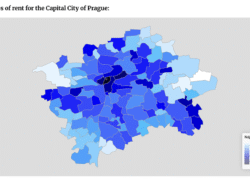
The new register is intended to complement the “Cenová mapa” developed by the Ministry of Finance, which tracks market rents and construction costs across cadastral areas. The map helps to identify regional price disparities — for example, higher rental and building costs in Prague, Brno, and coastal spa towns compared with smaller municipalities in the Ústí nad Labem, Karlovy Vary, or Vysočina regions.

According to the Ministry of Finance, the Cenová mapa is part of a broader digital-governance initiative to improve data transparency in public investment and urban planning. It provides a visual overview of average rental levels, land values, and construction costs per square metre, supporting both municipal planning and state housing policy. By integrating data from this price map into the new housing register, the state aims to link property quantity and quality with cost trends, allowing for more precise policy interventions and long-term planning.

Experts from both ministries believe that the combined use of the apartment register and the price map will help identify underused or vacant housing, inform social-housing strategies, and make public support schemes more efficient.

“The goal is not only to know how many flats we have,” Kulhánek said, “but also to understand how they are being used, where they are missing, and how their costs relate to local market conditions.”

Broadway Palace in Prague Sells for CZK 878 Million

The Office for Government Representation in Property Affairs (ÚZSVM) has completed the auction of Broadway Palace, a landmark functionalist building in central Prague, for CZK 878 million, marking the agency’s most profitable sale to date.

The auction concluded with a single valid bid submitted just 17 minutes before the deadline. Two parties were registered for the ninth round of the electronic sale, but only one entered a formal offer. According to ÚZSVM spokesperson Tereza Frančová, the winning bidder is a Prague-based legal entity, though its name has not been publicly disclosed.

Under existing agreements, the current tenant of Broadway Palace retains a pre-emptive right to purchase the property. The state office will therefore present the auction price to the tenant, who has three months to decide whether to match the offer. If the tenant declines, the sale will proceed to the auction winner.

ÚZSVM took control of Broadway Palace in 2016 after it was transferred from the Railway Infrastructure Administration (now the Railway Administration). The property has been on offer since 2021, as no state institutions expressed interest in using it. Previous auction rounds also attracted only single bidders, but none submitted offers at the starting price. The tenant was then repeatedly offered the property at the auction minimum but declined to buy.

Designed by architects Bohumír Kozák and Antonín Černý, the Broadway Palace was completed in the 1930s and stands between Na Příkopě and Celetná streets, near Republic Square. The building features three interconnected wings and is considered one of the largest examples of functionalist architecture in Prague’s historic centre. Originally built for Italian insurance companies, the complex included residential units and, since 1938, a cinema equipped with advanced projection and sound technology. It now houses the Broadway Theatre and various commercial tenants.

The CZK 878 million sale surpasses the office’s previous record from 2015, when ÚZSVM sold a former monastery complex at Republic Square for CZK 790 million. The second-highest sale was recorded in March 2025, with the U Hybernů House in Prague sold for CZK 447 million.

The successful completion of the Broadway Palace auction underscores the strong market demand for prime, centrally located historic properties in Prague, even amid tightening economic conditions.

Source: CTK

Brussels Office Market 2025: Rents Hold Steady as Vacancy Inches Up

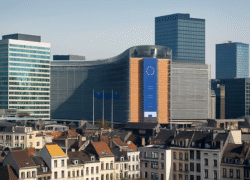
Brussels’ office market has entered the second half of 2025 in a phase of cautious stability, marked by strong demand in prime locations and a slight rise in vacancy across the wider city. Analysts say the balance between new supply and ongoing occupier consolidation is shaping a market that remains resilient despite slower economic momentum across Europe.

Figures from several leading property consultancies show that prime office rents in Brussels are holding at around €400 per square metre per year, with average rents across the city up roughly six percent compared to a year earlier. The vacancy rate has edged just above eight percent, reflecting a mix of newly completed buildings and selective relocations.

Leasing volumes have been moderate, with total take-up estimated at 130,000–140,000 square metres by mid-year. Activity continues to centre on the European Quarter and Leopold District, where occupiers prioritise energy-efficient buildings that comply with tightening ESG regulations. Older and less sustainable stock, however, is seeing longer void periods, prompting owners to consider refurbishment or conversion options.

“The market remains segmented,” one Brussels-based consultant said. “We see steady demand for green, well-connected offices, while older assets outside core districts face rising pressure to adapt.”

Construction levels remain controlled. Approximately 35,000 m² of new space has been delivered since January, with a further 60,000 m² expected by year-end. Development pipelines are largely pre-leased, limiting the risk of oversupply.

Investment activity has picked up modestly as financing conditions stabilise. Prime yields have hovered around 5.1 to 5.2 percent, supported by investor interest in sustainable refurbishment projects and long-term income assets.

Outlook for 2026 remains cautiously optimistic. Analysts expect demand to stay concentrated in high-performance buildings as tenants consolidate footprints and favour flexible, collaborative layouts. While economic headwinds could dampen activity in the short term, Brussels’ role as a European administrative hub continues to underpin steady occupational demand and investor confidence.

Most Czechs Give Up on Buying Homes Amid Soaring Costs

Generali Investments study shows shrinking housing affordability and growing pessimism among households

More than 60 percent of Czechs no longer plan to buy their own homes, as high energy prices, inflation, and steep interest rates continue to erode affordability, according to a new survey by Ipsos for Generali Investments. Another quarter of respondents say they are postponing any purchase plans indefinitely — a sharp reversal from the optimism seen just five years ago.

The study, based on interviews with 1,000 respondents conducted in early September, paints a bleak picture of the Czech housing market. In Prague, tenants are now renting apartments roughly 20 square metres smaller than they could afford in 2020 for the same price. A monthly rent of CZK 20,000 once secured a 65 m² flat (3+kk), but today only covers around 45 m² (2+kk), reflecting how sharply housing affordability has declined.

At the same time, the share of tenants willing or able to pay higher rents has increased dramatically. One in five Czechs now accepts monthly rents between CZK 20,000 and 25,000, compared with just five percent in 2020. “This fourfold rise suggests that tenants are reluctantly adapting to current market realities,” said Marek Bečička of Generali Investments CEE, noting that one in five people still cannot afford any rent increase at all.

Bečička added that public sentiment toward housing remains deeply negative. “The combination of high energy costs, inflation, and interest rates continues to undermine confidence. Over two-thirds of Czechs expect real estate prices to keep rising at their current pace. The level of pessimism is even higher than during the pandemic, when there was uncertainty about how housing prices might react,” he said.

According to data from the Czech Statistical Office and Deloitte, the deterioration in affordability has accelerated since 2020. Rising energy costs remain the main factor — cited by almost a third of respondents — followed by frustration over inflation, which now worries more than a quarter of Czechs, up from less than one-fifth last year. The share of people citing interest rates as their biggest financial obstacle has also risen sharply.

Generali Investments’ data show that more than one-third of households now pay at least 10 percent more for housing than a year ago, while another 30 percent have faced increases of between 10 and 25 percent. Bečička said this illustrates a clear trend: “Housing affordability in the Czech Republic continues to worsen, and many households are being pushed toward smaller or less comfortable living arrangements.”

Source: CTK

Real Estate Debt Gains Ground as Swiss Financing Landscape Shifts

Empira Group’s latest ResearchView report points to structural change in property lending and a growing role for institutional investors

Switzerland’s real estate financing model is entering a new era. According to a new analysis by the Empira Group titled “Real Estate Debt in Switzerland – Financing Beyond the Banking Sector,” the country is experiencing its most significant transformation in property lending in over two decades. The report outlines how stricter regulation, ongoing consolidation in the banking sector, and a looming wave of refinancing have created a funding gap estimated at up to CHF 25 billion per year — a gap increasingly being filled by private debt investors.

Empira’s study highlights how banks, constrained by the so-called “Swiss Finish” implementation of Basel III and additional FINMA capital requirements, are becoming more selective, particularly for loans exceeding 60 percent loan-to-value (LTV). The merger of UBS and Credit Suisse has also reduced competition in the domestic lending market, tightening access to development and transitional financing.

“The financing landscape in Switzerland is changing fundamentally. Traditional bank loans no longer cover the capital requirements of many real estate projects. Here, real estate debt offers investors stable returns and borrowers urgently needed financial security,” said Lahcen Knapp, founder and chairman of the Empira Group.

The research identifies three core trends driving this shift. First, heightened regulatory pressure and bank consolidation are constraining credit availability. Second, Switzerland faces a structural funding gap, as roughly CHF 200 billion in mortgages are refinanced each year, with declining LTV thresholds generating an additional need for up to CHF 8 billion annually — and potentially CHF 25 billion under adverse scenarios. Third, private lenders and debt funds are stepping in, providing whole-loan, stretched-senior, and mezzanine capital structures that comply with BVV2 regulations while offering higher yields.

These developments are opening new avenues for institutional investors, particularly pension funds, to expand their portfolios with secured, income-generating strategies. For borrowers, they provide alternative access to capital at a time when banks are retreating from non-core lending segments.

Industry observers note that Switzerland’s debt-financing market has lagged behind the US and UK, where non-bank lenders have long played a major role. However, as regulatory tightening and refinancing pressures persist, the Empira Group expects real estate debt to establish itself as an independent asset class in Switzerland.

“The coming years will mark the breakthrough of real estate debt in Switzerland,” said Knapp. “We anticipate it will become a permanent and integral part of property financing.”

Empira’s findings mirror broader European trends identified by analysts at BNP Paribas AM and Swiss investment managers such as Artemon, who report rising demand for private debt products amid stricter bank regulation. With an estimated CHF 200 billion refinancing volume each year, Switzerland’s property market appears poised for a lasting shift toward alternative capital — one that could redefine how projects are financed and portfolios structured in the decade ahead.

South Africa’s Office Market 2025: Cape Town Holds Firm as Johannesburg Regroups

South Africa’s two largest office markets are taking different paths through 2025. Cape Town continues to attract steady demand for premium office space, while Johannesburg’s recovery remains uneven, weighed down by older buildings and slower tenant expansion.

Recent market data show that national office vacancy has fallen to its lowest level since the pandemic, with roughly one in eight square metres now empty. The improvement is led by Cape Town, where prime business districts are nearly fully occupied and rents have held firm. Developers there report that new projects are being pre-let well ahead of completion, reflecting sustained demand from finance, professional services and creative industries that prioritise reliable infrastructure and energy stability.

Johannesburg tells a more complex story. Premium properties in Sandton and Rosebank are leasing steadily, but older central buildings continue to struggle. Many owners are repositioning assets through refurbishment or conversion to residential use. Despite these challenges, leasing volumes have picked up modestly in 2025, supported by gradual economic stabilisation and a focus on energy-efficient upgrades.

Across both cities, the preference for high-quality, decentralised offices remains clear. Prime-grade space now represents the healthiest segment of the market, with occupancy around mid-single-digit vacancy levels. Analysts note that investment yields have been broadly stable this year, sitting near the 9 percent range, suggesting that investors are regaining confidence in well-located assets.

The market outlook for 2026 points to slow but consistent improvement. As financing costs ease and more companies encourage regular office attendance, both Cape Town and Johannesburg could see firmer absorption. Yet while Cape Town benefits from a shortage of new supply, Johannesburg’s challenge is to adapt its large stock of secondary offices to new standards of efficiency and resilience.

Taken together, the South African office sector in 2025 is no longer in crisis, but in transition — defined by selective recovery, disciplined investment, and a clear divide between the country’s two commercial capitals.

German Logistics Rents Hold Steady Amid Industrial Headwinds

Germany’s warehouse and logistics property market remained broadly stable through the third quarter of 2025, with most regional rental rates unchanged despite economic uncertainty and slowing trade volumes. According to data from major consultancies including JLL and CBRE, prime rents across nearly all major logistics hubs either held firm or showed only marginal movement, underscoring the market’s resilience.

The exception appears to be the Dresden region, where rents edged slightly higher, driven by limited supply and sustained demand from the expanding semiconductor and technology manufacturing industries. Industry analysts say the concentration of new investment in Saxony’s “Silicon Valley” corridor is fuelling stronger demand for high-specification logistics and industrial space.

Across other regions — including Munich, Berlin, and Düsseldorf — prime rents stabilised after several years of strong increases. Top rates in these cities now range between €9 and €11 per square metre per month, among the highest in Europe. Meanwhile, smaller regional markets such as Magdeburg and Kassel have seen steady pricing as developers adopt a cautious stance toward speculative construction.

Market experts describe the sentiment as “optimistically realistic.” Inquiries for space have picked up again in the second half of the year, but both developers and occupiers remain careful amid inflationary pressures and geopolitical tension. Analysts note that while logistics continues to be one of the country’s most active commercial property sectors, activity is shaped by stricter financing conditions and rising construction costs.

Despite the macroeconomic challenges, the fundamentals of the sector remain strong. Persistent e-commerce demand, strategic manufacturing expansion and anticipated defence-related investments are expected to support leasing volumes in the months ahead. For now, Germany’s logistics market appears to have entered a period of consolidation — steady rather than spectacular — reflecting both its maturity and its vital role in Europe’s industrial backbone.

Source: JLL and CBRE

LATEST NEWS