Tensions and Transitions: Belarus’s Military Grip and Poland’s Balancing Act

Belarus remains one of the few European countries to uphold full military conscription, requiring men aged 18 to 27 to serve between 12 and 18 months, depending on education level. While Lithuania limits service to nine months and Russia recently raised its draft age to 30, Minsk continues to tighten exemptions and expand eligibility — a reflection of its deepening alignment with Moscow’s defence priorities. In contrast, neighbouring Poland and other NATO states rely on professional or volunteer forces, underscoring the stark divide between the region’s opposing security philosophies.

This divide has become increasingly visible in 2025 as Poland’s relationship with its eastern neighbour is tested by both humanitarian and security challenges. On one hand, the country has opened its economy to a growing Belarusian diaspora fleeing repression and economic stagnation. The number of Belarusians living legally in Poland has surged sixfold in five years — from around 25,000 in 2020 to nearly 150,000 by mid-2025. Many have found new beginnings in sectors such as technology, logistics, and manufacturing, with Warsaw, Kraków, and Białystok emerging as hubs of Belarusian life. Including those without residence permits, the total population of Belarusian origin in Poland may exceed 150,000.

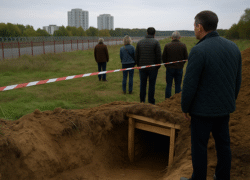
Yet even as people move westward seeking stability, tensions on the border have intensified. In late 2025, Polish authorities discovered two underground tunnels crossing from Belarus — one near Narewka, partly collapsed and about 40 metres long, and another near Kondratki, more sophisticated and extending up to 70 metres with timber supports, ventilation shafts, and a small trolley system. Officials suspect the tunnels were used for smuggling or clandestine crossings rather than heavy transport.

The discoveries have reignited concerns over security along one of the EU’s most sensitive frontiers. Warsaw accuses Minsk of weaponising migration to pressure the bloc, pointing to the timing of the tunnels’ discovery shortly after joint Belarusian-Russian military exercises. While no direct link to the Belarusian state has been confirmed, the sophistication of the tunnels suggests coordination beyond ordinary criminal activity. Poland has since strengthened surveillance, deploying radar and seismic detection systems across its eastern perimeter.

Together, these developments paint a portrait of a region caught between two opposing forces — repression and escape, militarisation and migration. Belarus’s rigid conscription system and growing dependence on Moscow reflect a state tightening its grip, while Poland faces the difficult task of guarding its borders without closing its doors to those fleeing that same control. The sealed tunnels may no longer pose a physical threat, but they remain a potent metaphor for the unseen currents of fear, movement, and ambition shaping Eastern Europe’s uncertain future.


Growthpoint Joins Cape Winelands Airport Project in Strategic Partnership

South Africa’s largest listed property company, Growthpoint Properties (JSE: GRT), has taken a key role in developing the Cape Winelands Airport, a privately owned aviation precinct near Cape Town that aims to become the Western Cape’s next major transport and logistics hub.

The company confirmed an initial investment and secured the right to co-invest and co-develop properties within the 450-hectare site, formerly known as Fisantekraal Airfield, under a long-term partnership with RSA Aero, the airport’s owner and operator.

According to a joint statement, Growthpoint will act as development and asset manager for the airport’s logistics, commercial, and hospitality precincts — excluding the terminal buildings — while holding a right of first refusal on future developments. The group’s responsibilities include ensuring project governance, environmental compliance, and sustainable construction standards.

“This partnership represents a step-change for Cape Winelands Airport,” said Nicholas Ferguson, Managing Director of RSA Aero. “Growthpoint’s institutional backing provides the foundation to deliver an airport precinct of global quality that will strengthen the region’s trade, tourism, and logistics capacity.”

The project will roll out in phases, beginning with runway and safety infrastructure, followed by terminal and cargo facilities. Pending environmental approvals, construction could begin as early as 2026, with the airport expected to be operational by 2028.

Growthpoint’s Group CEO, Norbert Sasse, described the partnership as a “long-term value creation opportunity” for both the Western Cape and South Africa’s broader economy. “The project aligns with Growthpoint’s focus on high-performing locations and sustainable developments that drive economic inclusion,” he said.

The airport’s initial investment is projected at around R8 billion, with plans for the site to sustain about 35,000 direct and indirect jobs during construction and more than 100,000 over its first 20 years. While these figures are based on forecasts, the developers say they reflect the project’s intended scale and regional impact.

The Cape Winelands Airport is positioned to relieve pressure on Cape Town International Airport, serving as a second major aviation gateway for the province. Once operational, it will handle an estimated five million passengers annually by 2050, and act as a catalyst for regional growth along the expanding Cape Winelands corridor.

A key feature of the project is its environmental ambition. The airport is designed to operate largely on renewable energy and incorporate water reuse and carbon reduction systems, with the goal of becoming one of the world’s most sustainable airports. Growthpoint’s ESG leadership — and its corporate goal of carbon neutrality by 2050 — will guide the project’s sustainability strategy.

“This development is about more than aviation,” added Werner van Antwerpen, Growthpoint’s Head of Corporate Advisory. “It’s about creating jobs, attracting investment, and influencing how tourism and logistics infrastructure can operate sustainably at scale.”

The partnership between Growthpoint and RSA Aero marks one of South Africa’s most significant private infrastructure collaborations in recent years. If successful, the Cape Winelands Airport could reshape the Western Cape’s economic geography — connecting industries, communities, and global markets in a single, integrated hub.

Source: Growthpoint Properties; RSA Aero; Engineering News; Bizcommunity; CIJ EUROPE analysis.

The Critical Role of Named Insured Wording in Real Estate Insurance

In real estate, where projects often involve joint ventures, layered ownership and multiple management entities, the exact wording of “named insured” clauses in insurance policies can be the difference between full protection and a costly coverage gap. While most liability and management-risk policies include broad endorsements, these often fail to reflect the realities of how modern property companies are structured — especially across Europe’s increasingly cross-border investment landscape.

The term “named insured” refers to the specific legal entities listed in a policy’s declarations or endorsements. Only those entities enjoy the full benefits of the policy, including the right to defence, indemnity and claim settlement. If a company involved in a deal or development is not expressly named or captured within the policy definition, it may fall outside the scope of coverage. That limitation is particularly important in real estate, where ownership and management are rarely housed within one corporate body. A project may be financed through a joint venture, held in a special purpose entity (SPE), or managed by a separate asset or fund management company — all of which face potential claims.

Real estate groups often employ joint ventures, trusts and SPEs to manage risk and financing. These structures serve important purposes — limiting liability, isolating assets, or accommodating investors — but they also introduce insurance challenges. When a company holds only a minority stake in a joint venture but retains responsibility for securing insurance, a generic endorsement may only cover its ownership percentage or exclude the JV entirely. Property managers, pension fund advisers or asset managers may have operational control over assets they do not own, yet if the policy only covers entities with 50 percent ownership or greater, those assets could be uninsured for management-related claims. Special purpose entities created for single assets often appear on contracts, leases or financing documents. Even if they are legally dormant, they can still be named in lawsuits, and if they are not listed in the policy schedule, claims may be denied.

Insurers typically underwrite based on declared ownership structures. Where companies operate with multiple parent entities or complex fund hierarchies, the only reliable solution is to map and document every entity connected to the business. Many insurers now support “list-on-file” or “as-owned or controlled” endorsements that allow updates during the policy period, but even these require careful review. According to risk specialists across the European market, a detailed schedule of all project-level entities, general partners and management companies should form part of every renewal discussion. Failure to do so can leave subsidiaries or affiliates without the intended coverage.

When coverage gaps occur, they often surface only after a claim. For example, a real estate company holding an Employment Practices Liability (EPL) policy might exclude entities with no direct employees. If tenants or contractors then sue a property-holding SPE for discrimination or contractual issues, that entity might not be covered. Such scenarios are not uncommon and can result in significant uninsured defence costs.

In 2025, new digital tools are helping insurers and brokers manage this complexity. AI-driven policy management systems and portfolio platforms are increasingly used to track insured entities automatically, flagging missing or newly created companies during the policy term. At the same time, the EU’s Retail Investment Strategy and revised AIFMD II framework have increased cross-border fund activity, creating even more intricate ownership layers in real estate structures. These developments make accurate and adaptable named insured wording more critical than ever.

Industry advisers recommend that policy language be customised to ensure endorsements capture entities that may be managed, controlled or contractually responsible, even without ownership. It is equally important to keep entity lists current and ensure that brokers and underwriters are aware of any new or dissolved project vehicles. Working with brokers experienced in real estate structures helps negotiate the right definitions and coverage extensions, while financial-institution policy forms can sometimes offer broader definitions for complex management or fund environments.

Precise named insured wording is not merely an administrative task — it is a cornerstone of real estate risk management. As ownership and funding models become more intricate across Europe, policies must evolve to match that complexity. For developers, fund managers and investors, reviewing this single clause could prevent major financial and legal exposure later. In a sector built on structure and detail, the fine print in the insurance policy deserves the same attention as the fine print in the lease.

Source: RENOMIA | Gallagher

China’s Rare-Earth Restrictions Signal a New Phase in Global Economic Strategy

China’s latest decision to tighten controls over exports of rare earths and battery materials is being widely viewed as a strategic move that reaches far beyond resource management. Analysts across Europe and the United States say the measures are designed to reinforce Beijing’s influence in high-tech supply chains, safeguard its industrial expertise, and remind the West of its continued dependence on Chinese materials.

The new controls, unveiled in early October, expand government oversight to cover both the export of raw materials and the transfer of the technologies used to produce and refine them. Some provisions will even apply to goods manufactured abroad if they contain Chinese-origin inputs or rely on Chinese processes, giving the rules global reach. They come into force between November and December 2025.

Balancing power through supply chains

Experts at several think tanks describe the move as part of a broader contest over economic power. With many countries restricting exports of semiconductors and advanced machinery to China, Beijing is now leveraging its dominance in critical minerals such as rare earths, lithium and graphite—materials essential to electric vehicles, electronics and defence industries.

“The message is clear: China still holds vital cards in global manufacturing,” one European analyst said. “This is economic diplomacy through supply chains.”

Protecting industrial know-how

The rules also cover technologies used in rare-earth mining and magnet production, reflecting a push to keep advanced know-how within China. Observers see this as an effort to move up the value chain by limiting what foreign companies can access, while encouraging domestic firms to produce higher-value finished goods rather than exporting raw materials.

A research fellow at a Berlin-based policy institute noted that “China is moving from being the world’s workshop to becoming the world’s gatekeeper.”

A calculated response to foreign pressure

The timing of the announcement, coming just ahead of renewed trade and security talks with Western partners, has drawn attention. Analysts believe Beijing is signalling that it can respond to foreign export bans—particularly those on chips and artificial intelligence systems—with restrictions of its own. Some describe the move as a way to gain leverage without direct confrontation.

Risks and global reaction

Industry groups warn that the controls could complicate supply chains for electric vehicles, aerospace and defence manufacturers worldwide. Businesses are expected to conduct detailed reviews of their sourcing and production processes to assess whether they fall under the new rules.

At the same time, several governments are accelerating efforts to develop alternative suppliers in Australia, Africa and North America, hoping to reduce long-term reliance on China.

A reminder of interdependence

Officially, Chinese authorities say the new framework is meant to prevent misuse of strategic resources and protect national security. Yet outside observers see a clear strategic layer: a demonstration that, even as the West seeks to “de-risk” from China, Beijing retains the power to shape the global economy through selective access to materials the world cannot easily replace.

For now, the move reinforces an uncomfortable truth for many countries — that clean-energy transition and technological progress still rely heavily on resources under Chinese control.

Central Europe’s Forest Debate: Between Industry, Ecology, and the Future of Wood

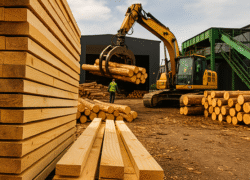
Forests stretch across much of Central Europe, shaping not only its landscapes but also its economies. In Poland and the Czech Republic, the timber industry remains an essential part of national growth, providing raw material for furniture, construction, and paper production. Yet behind this success lies a quieter argument — one about how much wood should be harvested, how forests are renewed, and who gets to decide.

Poland: Productive Forests, Divided Opinions

Poland’s forest management system is often presented as a model of efficiency. The state enterprise Lasy Państwowe oversees most of the country’s woodland, replanting hundreds of millions of trees each year and keeping forest cover on a slow upward trend. Timber output has supported one of Europe’s strongest wood-processing sectors, which now employs tens of thousands of people.

But within this success story, disagreements are growing. On one side, companies that depend on steady timber supplies fear that recent proposals to reduce harvest levels could weaken an industry built on long-term stability. For them, sustainable forestry should still include strong economic output and job protection.

On the other side, environmental specialists and conservationists question whether forest management has become too focused on production. They say that key decisions are made by state authorities with little room for local voices or public oversight. Some critics also point to conflicts in protected areas, arguing that biodiversity and climate priorities should take precedence over timber sales.

Behind these disputes is a larger question: can Poland continue to grow its wood-based economy while also aligning with European climate and conservation goals? The answer may depend on whether future policies can give equal weight to ecological and economic value.

Czech Republic: Rebuilding After a Forest Crisis

In the Czech Republic, years of emergency logging triggered by the bark beetle outbreak left visible scars on the landscape. Forests once dominated by spruce monocultures are now being replanted with a broader mix of species to make them more resilient to drought and disease. The recovery effort has become a turning point in how the country thinks about forestry.

Experts and forest managers now speak of renewal rather than production. There is growing emphasis on natural regeneration and the ecological functions that forests provide — from filtering water to moderating heatwaves. Many professionals believe that restoring balance between nature and economy is the key lesson from the crisis.

Still, not everyone agrees on how far this shift should go. Some industry representatives warn that the rapid expansion of broadleaf species could reduce the long-term supply of commercially valuable wood, while environmental advocates argue that the new diversity is essential to prevent another large-scale die-off.

Small forest owners and local cooperatives have also entered the debate. They see local management as a way to adapt forests more quickly to changing conditions, while large-scale state policies can be slow to respond. Across the country, the conversation has moved from how to harvest more to how to make forests more adaptable to future stress.

Two Paths, One Challenge

Despite their different experiences, Poland and the Czech Republic face a common dilemma: how to balance their reliance on wood-based industries with the ecological limits of their forests.

Both countries have made progress in replanting harvested areas and expanding forest cover. Yet they also face growing scrutiny over transparency, local participation, and the role of forests in climate policy. For many observers, the debate is no longer just about how much timber is cut each year, but about how societies define responsible use of natural resources.

In both Warsaw and Prague, officials insist that forest management remains sustainable. But as environmental pressures mount and public awareness deepens, the measure of success may shift — from production figures to the resilience of the forests themselves.

Source: CIJ EUROPE synthesis based on data and reports from Lasy Państwowe, Lesy ČR, Statistics Poland, Czech Statistical Office, UNECE, FAO, and national forestry studies (2023–2025).

Cordia Begins Construction on 360° by Cordia Residential Project on Spain’s Costa del Sol

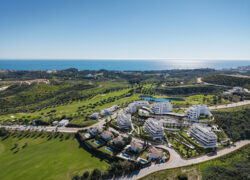
Cordia has officially begun construction on the first phase of 360° by Cordia, a new residential development on the Costa del Sol. The project, located near Mijas Costa, will eventually comprise more than 500 apartments built in several stages.

The development follows the company’s earlier success with the Jade Tower project in Fuengirola and marks another step in Cordia’s expansion in southern Spain. The first phase will include 71 apartments spread across six four-storey buildings, offering a range of one- to three-bedroom units and several four-bedroom penthouses.

Situated about five minutes from the coastline and within easy reach of Fuengirola, Marbella, and Málaga, the site benefits from convenient access to major roads and Málaga International Airport, which is roughly 20 minutes away. The location aims to appeal to both local and international buyers seeking permanent homes or long-term investment properties.

The development’s design integrates residential comfort with access to nearby amenities, including a nine-hole golf course, tennis and padel courts, and a clubhouse. Additional facilities in the area include a shopping centre, walking and cycling paths, and proximity to Andalusian villages known for their traditional architecture and local cuisine.

Within the community, Cordia plans to provide shared spaces for residents such as playgrounds, sports areas, a wellness centre, swimming pools, and recreational rooms.

According to Tibor Földi, Chairman of Cordia’s Board, the project reflects the company’s goal of combining modern living with the natural landscape of the Costa del Sol. He added that, as with Jade Tower, Cordia expects strong international interest and will work with partners throughout the sales process.

When completed, 360° by Cordia will form one of the largest residential projects by the company in Spain, expanding its presence in the country’s coastal housing market.

Family Offices in DACH Keep Real Estate at the Core of Their Portfolios

Real estate continues to play a central role in the investment strategies of family offices across Germany, Austria and Switzerland, according to the KINGSTONE Family Office Real Estate Report 2025. Based on a survey of 32 family offices conducted between late August and September, the study found that property holdings make up around 56% of total assets—by far the largest share of any asset class. Equities follow at roughly 19%, while cash, bonds and alternatives are less significant.

Family offices differ from institutional investors in how they structure their portfolios, the report notes. While pension funds or insurers tend to diversify more widely, family offices hold a larger proportion of their wealth in property and favour direct ownership. More than 80% of real estate exposure is through direct investments, with joint ventures and club deals also common. Only a small share of respondents said they invest through traditional funds.

The strongest focus remains on residential real estate, which accounts for nearly 38% of total property investments. Offices make up a quarter, followed by mixed-use buildings and retail. Despite growing interest in sustainability, renewable energy assets represent less than 2% of allocations—an area where the report’s authors expected more activity.

Geographically, portfolios are concentrated in Germany, which represents about 88% of total real estate holdings. Only around 6% is invested elsewhere in Europe and a similar share in North America. KINGSTONE Real Estate’s co-founder Philipp Schomberg observed that this high domestic weighting is largely the result of historical investment patterns, though it raises questions about diversification.

Looking ahead, most respondents intend to increase their real estate exposure further over the next year. Half plan small expansions of up to 10%, while about one in ten expects stronger growth. A quarter plan to maintain their current positions, and only a small group aims to reduce property exposure.

In terms of acquisition plans, German residential properties dominate near-term targets. Roughly 60% of surveyed family offices plan to buy existing residential buildings, while about 50% are considering new developments. A smaller portion—around one-third—also aims to invest in residential assets in the United States or other North American markets. Interest in office or retail space is considerably lower.

When assessing new opportunities, investors said that location, sector experience and asset stability are the most important criteria, outweighing considerations like design or brand reputation. Family offices, the study concludes, take a conservative and pragmatic approach, prioritising long-term preservation of value over short-term returns.

Expectations for cash-on-cash returns are moderate: about 40% of respondents anticipate annual net yields between 3.0% and 4.5%, and another 22% expect 4.5% to 6.0%. Only a quarter foresee higher returns above 6%.

The report highlights how, even amid broader market uncertainty, real estate remains the cornerstone of wealth management for family offices in the DACH region—anchoring portfolios in tangible assets while offering a measure of stability against market volatility.

Photo: Dr. Tim Schomberg, and Philipp Schomberg, KINGSTONE RE
Source: KINGSTONE Family Office Real Estate Report 2025


Automotive Real Estate Enters a New Era as Dealers Rethink Their Footprint

Europe’s automotive sector is undergoing structural change, and car dealerships are increasingly adapting their real estate strategies to keep pace. Driven by the rise of electric vehicles, new retail models, and growing competition from Chinese automakers, distributors and investors are reassessing how and where they operate.

The transformation is clearly visible in Poland, where Zdunek Premium, a BMW dealer, has announced plans to open a new showroom and service center on Jagiellońska Street in Warsaw, on the site of the former FSO factory, now redeveloped by OKAM as the F.S.O. Park. The new location will include sales areas, a service center, a paint shop, and parts facilities, covering more than 3,700 square meters of service area and 2,200 square meters of yard space, according to OKAM.

The project is seen as an example of how developers and automotive distributors are collaborating to secure modern, adaptable properties that combine visibility with strong transport access. Industry advisors, including Walter Herz, highlight that such partnerships are increasingly critical as dealerships look for sites that support efficient logistics and align with evolving brand standards.

At the same time, the role of traditional showrooms is changing across Europe. A growing number of automotive retailers are reducing their real estate footprint and reconfiguring their networks to meet shifting consumer expectations. Online car purchases, the growing popularity of direct manufacturer sales, and rising property and energy costs are prompting dealers to rethink large-scale, high-cost facilities.

In the United Kingdom, a Colliers report notes that many dealers are downsizing or repurposing showrooms, focusing instead on hybrid spaces that combine display, service, and delivery functions. In Poland, industry events such as the 2025 Dealer Kongres highlighted that dealers face thinner margins and tighter cost structures, making operational precision and location strategy key to survival.

Elsewhere in Europe, manufacturers themselves are revisiting their distribution models. Stellantis recently paused its plan to move to an agency sales model, which would have dramatically reduced the role and size of traditional dealerships, after pushback from dealers across the continent. Analysts at the Delors Centre say that these tensions underscore a broader structural shift, as carmakers and dealers compete to define how the future sales model will work in an era of electrification and direct-to-consumer platforms.

Competition from Chinese automakers adds another layer of urgency. Brands such as BYD, MG, and NIO are expanding across Europe, often with smaller, more flexible retail networks and aggressive pricing strategies. Their growth has prompted traditional European dealers to modernize showrooms, relocate to higher-traffic areas, or even convert old properties to new uses such as housing or mixed-use developments.

According to Emil Domeracki, Partner at Walter Herz, this trend extends beyond the automotive sector: “We are seeing more cases where dealerships are being repurposed or relocated to optimize value. It’s not just about cars anymore — it’s about unlocking capital and adapting to new consumer behavior.”

For Zdunek Premium and BMW, the new Warsaw facility symbolizes this broader shift — a move toward smarter, more sustainable operations designed to balance customer experience with operational efficiency. The combination of adaptable space, strong location, and flexible lease structures shows how real estate strategy is becoming a central part of the automotive industry’s transformation in Europe.

Photo: Emil Domeracki – Walter Herz

Czech Military Expands Cyber Defenses as Hybrid Threats Intensify

The Czech Republic is stepping up its defenses in cyberspace as the country faces a growing wave of digital threats linked to Russia and other hostile actors. The country’s armed forces and national cyber agency are now working more closely to protect both military and civilian systems, reflecting how cybersecurity has become a core element of national security policy.

The commander of the Czech military’s cyber and information forces, Brigadier General Radek Haratek, said that while conventional defense has centuries of history, the digital domain is still relatively new. Over the past six years, his units have built the foundation of what is now a key branch of the army. Their mission is to protect defense networks, support operations in the information space, and strengthen communication with the public in an era when influence and disinformation campaigns are part of the battlefield.

Officials describe the unit’s work as primarily defensive, though it also maintains the capacity to respond to digital aggression if required. The main focus remains prevention—protecting systems that range from battlefield technologies to administrative networks. The army has also begun using artificial intelligence tools to help identify cyber incidents faster, though senior officers insist that human oversight remains essential.

Czech authorities say Russia remains the most active and persistent threat in cyberspace, often combining cyberattacks with online disinformation. Security experts in Prague warn that such operations are rarely dramatic events but rather long-term efforts designed to probe networks, test reactions and gradually erode public confidence. “These attacks are subtle and continuous,” one defense official said. “They look for weak points over time rather than a single decisive breach.”

The heightened vigilance follows a string of incidents across Europe in recent months. Pro-Russian groups have been linked to disruptive denial-of-service attacks against government websites and news portals, while other intrusions have targeted ministries and communication systems. Earlier this year, the Czech government also accused a China-based hacking group of attempting to infiltrate the foreign ministry’s network, underlining that Prague’s cyber risks come from more than one direction.

In response, the government approved a new National Cyber Security Strategy that will come into force in 2026. It calls for deeper coordination between the military, civilian agencies and private operators that manage critical infrastructure. The plan also outlines a broader education campaign to raise awareness of online threats and to train specialists capable of defending the country’s digital frontier.

A new cybersecurity law due to take effect in November 2025 will extend the obligations of both state bodies and private companies, bringing Czech legislation in line with European standards. It sets stricter requirements for data management, supplier oversight and rapid reporting of cyber incidents.

Experts say these developments show a shift from short-term countermeasures to long-term capacity building. “What began as a reaction to attacks has evolved into a national strategy,” said a Prague-based analyst. “The goal now is to make sure the entire ecosystem—from defense to utilities and media—can withstand constant digital pressure.”

The Czech Republic’s experience mirrors that of many Central and Eastern European nations that have found themselves on the frontline of cyber and information warfare since Russia’s invasion of Ukraine. With a new national plan, updated legislation and growing cooperation with NATO partners, Prague is positioning itself not just to defend against the next attack, but to ensure that its institutions, infrastructure and citizens can operate safely in a world where conflict increasingly begins online.

Source: Czech Armed Forces, and supporting data from CTK, NÚKIB, Eurostat and ENISA.

Poland’s Commercial Property Market Holds Steady with €2.6 Billion in Deals Through Q3 2025

Poland’s commercial real estate investment market has maintained a solid footing through the first nine months of 2025, with total transaction volume reaching €2.6 billion, according to the latest Property Investment Market Report from Avison Young. The result is broadly in line with the €2.8 billion recorded during the same period last year, signaling that investor confidence in the Polish market remains resilient despite ongoing macroeconomic uncertainty.

The report shows that 105 transactions were completed by the end of the third quarter, up from 87 deals a year earlier, reflecting improved liquidity and a broader spread of activity across asset classes. Domestic capital continued to strengthen its position, accounting for over half of all office sector transactions.

“Polish investors are taking advantage of attractive pricing and showing increasing confidence in value-add and opportunistic assets,” said Marcin Purgal, Senior Director of Investment at Avison Young. “Core capital remains cautious, but we expect its return as the economy stabilizes and key transactions close in Warsaw and major regional cities.”

Offices and Warehouses Dominate

The office sector led the market both in volume and deal count, with 36 transactions totaling €899 million. The largest deal of the year so far was Mennica Polska’s acquisition of a 50% stake in Mennica Legacy Tower, a transaction exceeding €100 million. Other notable deals included Warsaw’s Vibe and Plac Zamkowy – Business with Heritage, as well as High5ive I & II in Kraków.

The industrial and logistics sector remained a cornerstone of the market, generating €873 million in transactions—around one-third of the total investment volume. Activity was shaped by major sale-and-leaseback deals, which accounted for nearly half of the sector’s total, including the landmark sale of two Eko-Okna properties to Realty Income, the largest transaction of its kind ever recorded in Central and Eastern Europe.

“The warehouse sector continues to attract long-term investors seeking stable income from strong tenants,” said Bartłomiej Krzyżak, Senior Director of Investment at Avison Young. “However, limited portfolio deals and ongoing price adjustments are still tempering overall liquidity.”

Retail and Residential Sectors Gain Momentum

Investor interest in retail property also held steady, with total volume of €453 million. Retail parks and convenience formats accounted for two-thirds of all transactions, underlining their popularity as resilient and low-risk investment products. Redevelopment projects—often converting underperforming retail assets into residential schemes—made up around 20% of activity.

One of the largest retail transactions was Czech investor My Park’s acquisition of a 10-asset A Centrum portfolio, which highlights cross-border confidence in Polish retail.

The private rented sector (PRS) continues to evolve as a key component of the residential investment market, with total volume of €223 million through Q3. Major acquisitions included deals by AFI Europe, Xior Student Housing, and NREP. Market attention is now focused on Vantage Development’s planned acquisition of 18 Resi4Rent assets, a record-breaking deal that would mark a milestone in Poland’s emerging PRS market.

Stable Fundamentals, Rising Domestic Capital

Avison Young’s analysis points to Poland’s stable economy and strong fundamentals as core reasons for continued investor interest. Domestic capital now represents 23% of total investment volume, up sharply from 10% a year earlier. While institutional “core” investors remain cautious, the firm expects renewed portfolio activity in 2026 as interest rates ease and international capital returns.

“Now is the moment for strategic investors to act,” the report concludes. “As financing conditions improve and yields compress, opportunities in Poland’s commercial real estate market will become increasingly competitive.”

With robust mid-cap activity, a growing role for Polish buyers, and a pipeline of major transactions on the horizon, Poland’s property market appears to be entering a period of renewed stability and selective optimism heading into 2026.

Source: Avison Young, “Property Investment Market in Poland Q3 2025”

LATEST NEWS