Mumbai’s Office Market Gains Strength as New Supply Meets Firm Demand

India’s commercial capital continues to hold its ground as one of the strongest office markets in Asia. Through 2025, Mumbai has balanced new development with steady demand, reinforcing its role as a magnet for financial, technology, and service-sector tenants.

The city’s business districts, from Bandra Kurla Complex to Navi Mumbai, remain the centre of India’s leasing activity. Despite a wave of fresh supply, vacancy levels have edged down this year — an indication that the appetite for quality, energy-efficient workplaces continues to deepen.

Developers have delivered a new phase of office projects, including large-scale buildings in BKC and Navi Mumbai, areas benefiting from improving transport links and access to housing. Several major corporations have expanded or renewed space commitments, highlighting confidence in Mumbai’s longer-term growth.

Rents have inched higher across the city, reflecting limited availability in prime zones and the growing preference for green-certified buildings. Office space in central business areas continues to command India’s highest prices, supported by consistent interest from global firms and domestic financial institutions.

Navi Mumbai, once viewed mainly as a back-office location, has emerged as a key driver of expansion. Its rising share of modern offices, better road networks, and upcoming infrastructure projects are gradually turning it into a preferred destination for technology companies and shared service centres.

Financial services remain a dominant force, but a newer mix of occupiers is reshaping the city’s office landscape. Global business centres, technology firms, and start-ups are increasingly drawn to Mumbai’s established ecosystem and connectivity.

Although costs and congestion remain ongoing challenges, continued investment in metro networks, expressways, and sustainable development is helping the city adapt. As more companies seek resilient, efficient workplaces, Mumbai appears set to retain its title as India’s business capital well into the next cycle.

India’s Urban Housing Crossroads: Rising Prices, Shrinking Affordability

India’s cities are expanding faster than ever, yet owning a home is becoming increasingly out of reach for many. In 2025, the country’s housing market has grown into one of the most active in Asia, but the boom has also exposed a widening gap between investment-driven growth and genuine affordability.

Across major cities such as Mumbai, Delhi, Bengaluru and Pune, residential sales continue to climb, particularly in the higher-end segment. Developers have shifted focus toward larger apartments and luxury projects, drawn by better margins and steady buyer interest. Meanwhile, homes intended for middle-income families are becoming harder to find, both because of rising costs and limited new supply.

For most households, the pressure lies in the mismatch between earnings and property prices. Even though borrowing costs have stabilized, everyday expenses — from food and fuel to transport — have eroded disposable income. Many would-be buyers are now looking beyond the city centres to suburban and semi-urban areas, where housing remains relatively affordable but infrastructure still lags behind.

At the same time, smaller cities once considered peripheral are turning into new growth hubs. Places like Indore, Coimbatore and Lucknow are attracting developers and buyers alike, supported by road expansions, metro systems and better public services. These new markets offer a sense of balance between affordability, accessibility and quality of life — something larger metros struggle to provide.

Yet, India’s housing system remains hindered by slow policy reform and uneven implementation. Laws intended to modernize rental markets and boost affordable housing have advanced only in select regions. The shortage of well-priced urban homes is compounded by complex land rules, weak legal protections for tenants and long delays in approving construction projects.

Government programmes designed to expand affordable and rental housing are helping, but they remain small compared with the scale of demand. Experts warn that without coordinated reforms, the country’s fast-growing cities risk deepening inequality between those who can buy and those who cannot.

Still, change is emerging. Demand for environmentally friendly and energy-efficient homes is rising, particularly among younger urban buyers. Developers are gradually incorporating sustainable materials, shared spaces and better designs to appeal to a new generation of professionals.

India’s housing challenge, then, is less about building more and more about building smart — ensuring that growth reaches beyond investors to those who need it most. The years ahead will test whether India can turn its property boom into a foundation for inclusive urban living rather than a symbol of widening economic divide.

Spanish Business Confidence Shows Signs of Cautious Optimism Heading Into Late 2025

Spanish businesses are approaching the final quarter of the year with a slightly brighter outlook, as recent surveys and sentiment readings point to a gradual return of confidence after months of mixed signals from both domestic and international markets.

The latest readings suggest that companies in Spain are feeling modestly more optimistic about the near-term business environment compared to the start of the year. Confidence among firms in manufacturing, construction and services has been improving since the summer, supported by steady domestic demand and an uptick in tourism activity. While uncertainty remains, especially around external demand and financing costs, the overall tone among business leaders has shifted from caution to cautious hope.

In the third quarter, business confidence strengthened for the second consecutive period, reversing part of the slowdown seen earlier in 2024. Some of this recovery stems from a better-than-expected performance in retail and logistics, along with steady hiring across the service sector. By September, sentiment readings showed the most positive outlook since late 2023, although still below the long-term average.

Across Europe, however, confidence levels remain subdued, with the eurozone’s overall business climate continuing to weaken as manufacturers contend with slow global trade and cost pressures. Spanish firms have so far shown greater resilience than many of their European counterparts, thanks to stronger domestic consumption and government investment in infrastructure and green transition projects.

Analysts note that Spanish businesses are still navigating a delicate balance between optimism and restraint. Many expect conditions to remain stable rather than expand rapidly through the end of the year. The ability of companies to sustain hiring and investment will depend on whether inflation stays under control and whether international demand stabilises in early 2026.

For now, the general sentiment in Spain’s boardrooms and factory floors is one of steady patience — a recognition that while growth may be limited, the country’s economy has weathered recent challenges with more strength than expected.

Source: INE

India’s Path to Power: The Economic, Demographic, and Strategic Forces Shaping Its Rise

India is approaching a historic inflection point. With the world’s major economies — from China to the United States — contending with aging populations and slowing growth, India is emerging as one of the few large nations where demographics, industrial momentum, and global positioning still align in its favor. Yet the country’s path to becoming a global power will depend on whether it can balance these opportunities with deep-rooted structural challenges.

Economic momentum and resilience

India’s economy continues to expand faster than any other major nation. According to the IMF’s October 2025 outlook, India’s GDP is expected to grow 6.6% in FY26, supported by domestic consumption and steady government investment. Nominal GDP is projected at $4.13 trillion, placing India just behind Japan, with analysts expecting it to overtake by 2027.

Key growth pillars include a renewed manufacturing push and an expanding export base. In the first quarter of FY26, electronics exports surged 47% year-on-year, driven by mobile device production under the government’s Production Linked Incentive (PLI) scheme. Officials aim to create a $500 billion electronics ecosystem by 2030. India also climbed to 38th place in the World Bank’s Logistics Performance Index, with the goal of cutting logistics costs below 10% of GDP, a step seen as critical to export competitiveness.

In the energy sector, India has reached roughly 50% non-fossil capacity in power generation, five years ahead of its Paris Agreement target. However, with 85% of crude oil still imported, the country remains vulnerable to energy shocks and volatile global prices — an imbalance policymakers are determined to address through renewables and biofuel expansion.

A youthful workforce and evolving demographics

Demographics remain India’s most powerful advantage — and its biggest test. With a median age of just 28.8 years, the country’s workforce continues to expand as others shrink. The female labour participation rate has risen to 41.7%, the highest in nearly a decade, according to the Periodic Labour Force Survey, yet women still make up less than half of the active workforce.

Urbanization is reshaping the country’s social and economic map. More than one in three Indians now lives in a city, and the urban share is expected to reach 50% by 2047, when India marks a century of independence. Sectors such as construction, digital services, and green infrastructure are likely to absorb much of this labour shift — if supported by sufficient investment in education, healthcare, and housing.

India’s global positioning

India’s external partnerships reflect a mix of economic diplomacy and digital influence. Its Unified Payments Interface (UPI) — now linked with Singapore, Mauritius, and Sri Lanka — has become a template for interoperable digital finance across developing economies. The government is also negotiating free trade agreements with the EU, the UK, and South American nations, while deepening strategic ties with Japan, France, and the U.S.

Discussions within BRICS have focused on greater use of local currencies in trade, though member states have ruled out the idea of a common BRICS currency for now. Meanwhile, defence exports reached a record $2.7 billion in FY2025, signalling international confidence in India’s growing defence manufacturing base.

The path forward

While optimism runs high, challenges remain. Bureaucratic hurdles, slow land reforms, and infrastructure bottlenecks continue to test investors’ patience. Economists also warn that sustained growth above 7% will require deeper reforms — including higher female workforce participation, a broader tax base, and more efficient governance.

Still, India’s trajectory remains stronger than most. The World Bank recently described the country as a “pillar of stability in a turbulent global economy,” while S&P Global forecasts consistent medium-term growth around 6.5%. With urban expansion, an emerging middle class, and accelerating industrial diversification, India is redefining what sustainable growth looks like in the 21st century.

If it can convert its demographic and economic promise into productivity and institutional strength, India will not just be the fastest-growing major economy — it will be a global power built on its own terms.


Disclaimer: This article draws on data from the IMF, World Bank, World Bank Logistics Index, India’s PLFS, and multiple government releases as of October 2025. Figures are approximate and subject to official revision.

Spain’s Service Sector Stays Resilient as Tourism and Domestic Demand Drive Growth

Spain’s service economy continued to show resilience in August, with steady growth supported by strong tourism and stable domestic spending, even as signs of cooling momentum began to emerge.

Official data point to a small increase in overall service activity compared with the same month last year. Businesses in transport, hospitality and professional services remained among the strongest performers, while sectors more sensitive to consumer confidence — such as retail and communications — saw slower gains.

Tourism continued to be a crucial engine of recovery. Spending by international visitors climbed compared with 2024, and major tourist destinations such as Catalonia, the Balearic Islands and Andalusia recorded robust summer results. Rising daily expenditure also helped offset the impact of higher operating costs for hotels and restaurants.

Private business surveys suggest that while service companies remain optimistic, many are taking a cautious approach. Firms reported that new orders and business activity were still growing but at a slower pace than earlier in the year. Higher borrowing costs and lingering uncertainty in export markets have prompted some companies to delay hiring or investment decisions.

Spain’s labour market, however, continues to show resilience. Although August brought the usual seasonal drop in employment, underlying figures indicate that job creation in services remains solid once temporary contracts are accounted for.

Economists note that Spain’s service sector has so far managed to balance steady tourism-driven growth with the challenges of slower European demand and cost pressures. The outlook for the coming months will depend largely on whether domestic consumption can remain strong enough to counter a more uncertain global environment.

Despite hints of moderation, the data for August underline one key point — Spain’s service sector continues to act as the main pillar of the country’s post-pandemic recovery, driven by its ability to adapt, attract visitors, and sustain confidence at home.

Source: INE

Spain’s Factories Regain Ground as Industrial Output Shows Modest Recovery

Spain’s industrial sector picked up pace in August, offering a rare moment of optimism amid a year marked by slow growth and fragile demand. The latest figures from the national statistics authority show that production rose slightly compared to the previous month, and output levels were higher than a year earlier, helped by stronger performance in manufacturing and consumer-related industries.

The improvement was led by a rebound in factory activity producing machinery and other investment goods, alongside steady demand for consumer products. By contrast, output in energy and intermediate materials — often used by other manufacturers — remained weak, a reminder that parts of the economy continue to struggle with cost pressures and subdued global trade.

Market analysts said the recent upturn, though modest, points to greater stability across Spanish industry. The sector has been navigating rising input costs and uncertainty around energy prices, while also contending with mixed signals from export markets across Europe.

Private business surveys supported the official data, showing a steady increase in new orders and production volumes in August — the fastest pace recorded in nearly a year. Many firms reported that falling input costs and easing supply chain constraints had improved confidence, although hiring intentions remain cautious.

Spain’s factories have endured several years of uneven recovery since the pandemic, with production repeatedly disrupted by inflation spikes and slower global demand. The latest results suggest that momentum may be returning, but economists caution that further progress will depend on energy stability, stronger investment, and steady demand from key trading partners in the months ahead.

While modest, August’s rebound hints at a more balanced footing for Spanish manufacturing — one that could help support broader economic growth heading into the final quarter of 2025.

Source: INE

Local Capital Takes the Lead: The CEE Investors Redefining Regional Real Estate in 2025

A quiet shift in financial power is reshaping Central and Eastern Europe’s real estate landscape. For the first time, domestic investors are driving the region’s property growth, supported by an equity base exceeding €35 billion. This marks a turning point where local capital is replacing the long-standing dominance of Western institutional investors.

Over the past year, markets in Poland, the Czech Republic, Slovakia, Hungary, Romania, and the Baltics have experienced a stabilizing wave of investment from home-grown funds. As higher interest rates and tighter lending slowed foreign inflows, locally regulated investment vehicles, pension funds, and public institutions stepped in to maintain market momentum. These regional investors are now focusing on income-producing assets, sustainable development, and long-term value creation rather than speculative short-term gains.

At the top of the regional hierarchy, CPI Property Group and NEPI Rockcastle remain the most influential, jointly managing more than €25 billion in assets. CPI has continued to adjust its portfolio toward logistics and residential sectors, while NEPI Rockcastle’s retail dominance in Romania, Poland, and Bulgaria is supported by strong consumer recovery and robust tenant demand.

Beneath these market leaders, a new class of domestic investors has taken shape. In the Czech Republic, REICO ČS Nemovitostní Fond and ZFP Realitní Fond now manage a combined €1.7 billion. Slovakia’s IAD Investments, through its Prvý Realitný Fond, has surpassed €575 million in assets, establishing itself as a key institutional player. Hungary’s open-ended funds — including Erste Ingatlan Alap, OTP Ingatlan Alap, Raiffeisen Ingatlan Alap, and Diófa AM — collectively manage more than €4 billion, providing steady capital inflows even during market slowdowns.

Further north, Baltic funds such as EfTEN Real Estate Fund AS and Lords LB Asset Management together control over €1.5 billion, marking an important step in the institutionalization of property investment across Estonia, Latvia, and Lithuania. Meanwhile, in Poland, PFR Nieruchomości, the state-backed housing investment platform, continues to expand its residential portfolio alongside private partners like Echo Investment and Griffin Capital Partners through their joint Resi4Rent platform.

A defining feature of this evolution is improved transparency and regulation. National financial authorities — from Prague’s CNB to Budapest’s BAMOSZ — have tightened oversight, aligning fund governance with EU standards. This has boosted investor confidence, encouraging both retail and institutional participation.

Across the region, investors are increasingly prioritizing ESG compliance and sustainability in their strategies. Major funds such as REICO and IAD are aligning with EU disclosure frameworks, while larger groups like CPI and NEPI have committed to carbon neutrality targets for 2030. The focus has shifted toward renovating existing portfolios, reducing emissions, and improving energy efficiency.

Transaction data across 2024 and 2025 shows a clear trend toward local ownership. Assets once held by Western investors are being acquired by domestic funds, often financed by domestic savings and pension schemes. In Prague and Warsaw, local buyers now outnumber international bidders in several high-value transactions — a development few anticipated a decade ago.

As 2026 approaches, the region’s investment climate appears more stable than it has been in years. With inflation easing and interest rates expected to decline, local investors enter the new year with stronger equity positions and reduced refinancing pressure. Analysts describe this as the emergence of the first truly independent institutional cycle in Central and Eastern Europe — driven not by imported capital, but by the region’s own economic strength and financial discipline.

In total, the top 20 CEE real estate investors now collectively manage over €35 billion in equity and assets, signalling a new era in which property ownership, development, and financing are increasingly defined within the region itself. The days when Central Europe’s property fortunes depended solely on London or Frankfurt may soon be history — replaced by a network of home-grown investors building the foundations of long-term, self-sustained growth.

Editor’s note:
Data verified from audited and regulatory filings for Q3 2025.
Combined equity and NAV values rounded to the nearest €0.1 billion.
Exchange rates based on the ECB average for Q3 2025.

Disclaimer: Figures and rankings are based on public data and estimates as of Q4 2025 and do not constitute verified financial statements or investment advice.

Central Europe’s Tourism Challenge: When Visitors Come Once and Don’t Return

Central Europe’s tourism industry is booming again, but behind the glossy growth figures, a quieter challenge is emerging. Visitors are returning — yet many come only once. For Slovakia, the Czech Republic, and Hungary, the task now is not to recover from the pandemic, but to convince travellers to stay longer, explore more, and come back.

Slovakia: Hidden Gem Still Hard to Reach

Slovakia’s tourism sector has rebounded in value, with record revenues and rising domestic travel. But the country’s greatest weakness may be visibility. Despite its alpine peaks, mineral springs, and medieval towns, Slovakia remains one of Europe’s least-known destinations. International travel agencies say the country “doesn’t market itself loudly enough,” relying heavily on word-of-mouth or spillover from Vienna and Kraków.

Infrastructure remains another hurdle. Train and road connections outside Bratislava or the High Tatras can be slow or unreliable, limiting weekend or short-stay tourism. Service quality is uneven, particularly in smaller resorts where language barriers and staff shortages persist. Rising prices have also dulled Slovakia’s “affordable” image — a shift that could push budget-conscious travellers elsewhere.

Still, industry observers see potential. Slovakia’s blend of mountain, spa, and eco-tourism aligns well with Europe’s growing appetite for slower, sustainable travel. But that will require better promotion abroad and year-round transport links — not just seasonal resorts.

Czech Republic: Too Much of a Good Thing in Prague

Prague remains one of Europe’s star destinations, but its success has come at a price. Overcrowding, noisy nightlife, and inflated prices in the city centre have changed the visitor experience. The Czech capital has long attracted low-cost party tourism, which brings volume but not necessarily value. Local businesses say that while visitor numbers are high, spending per tourist has fallen.

Meanwhile, regional destinations — from spa towns like Karlovy Vary to cultural sites in Moravia — still struggle for international attention. Transport links exist, but marketing focus remains almost entirely on Prague.

Authorities have taken small steps to rebalance tourism, including promoting “authentic local experiences” and encouraging visitors to stay longer outside the capital. But it’s an uphill task. As one Czech tourism official admitted recently, “Prague sells itself. The challenge is convincing people to discover the rest of the country.”

Hungary: Big Numbers, Mixed Perception

Hungary’s tourism statistics look strong. Visitor numbers are back near pre-pandemic highs, and hotel revenues are rising sharply. Yet for many travellers, perception issues linger. Some Western European markets still associate Hungary with political friction and uncertainty, despite its safety and infrastructure quality.

Budapest dominates to a similar degree as Prague — vibrant, photogenic, and crowded. Other destinations, from Lake Balaton to the Tokaj wine region, are improving but remain seasonal and less known internationally.

Costs are another factor. Inflation and high VAT on tourism services have made Hungary more expensive than visitors expect, especially compared to neighbouring countries. At the same time, a shortage of trained hospitality staff has led to inconsistent service standards outside top hotels.

Even so, Hungary is investing heavily in conference facilities, wellness centres, and cultural events to diversify tourism and extend stays beyond city weekends.

A Shared Regional Reality

Across Central Europe, the tourism recovery is impressive but uneven. The problem is not attracting visitors — it’s persuading them to explore beyond the familiar highlights. Slovakia has the nature, the Czech Republic has the culture, and Hungary has the infrastructure, but all three face structural weaknesses: labour shortages, overdependence on capital cities, and limited off-season appeal.

The OECD and Eurostat both note that Central European tourism has reached a crossroads. The next phase of growth will depend less on sheer volume and more on quality — from service skills to digital access and sustainability.

As one industry analyst put it in a recent panel discussion:

“The region doesn’t need more tourists. It needs repeat visitors — people who come back for different reasons. That’s the true test of maturity.”

Source: CIJ EUROPE analysis based on national statistics, OECD Tourism Trends 2024, Eurostat, KSH Hungary, Czech Statistical Office, and Slovak Statistical Office (Tourism Satellite Accounts 2023–2025).

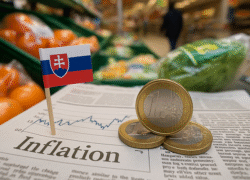
Slovakia’s Harmonised Inflation Accelerates to 4.6% in September

Consumer prices in Slovakia rose at a faster pace in September, with harmonised inflation reaching 4.6% year-on-year, according to new data from the Statistical Office of the Slovak Republic. The reading, which follows the European Union’s harmonised methodology (HICP), was slightly higher than the national index released earlier this week, which recorded 4.3%.

Month-on-month, prices grew by 0.2%, marking the third consecutive monthly increase. The acceleration was driven primarily by higher costs in education, restaurants and hotels, and miscellaneous goods and services, while food and non-alcoholic beverage prices eased by 0.3%, reflecting seasonal declines after the summer harvest.

Among key sectors, education showed the sharpest rise, up 3.7% compared to August and 9.8% higher year-on-year. The Statistical Office noted that price increases were recorded in eight of the twelve expenditure divisions tracked, with only food, transport, and communication seeing mild monthly decreases.

The average annual HICP inflation rate — measured across the period from October 2024 to September 2025 — stood at 4.1%, continuing a gradual cooling trend after double-digit levels seen in 2022 and 2023.

Although inflation remains above the Eurozone average of 2.8%, Slovakia’s position has improved compared to previous years, when surging energy costs and imported inflation heavily affected household budgets.

According to Eurostat’s comparative data, Slovakia’s September figure places it slightly above neighbouring Czechia (3.3%) and Poland (3.8%), but below Hungary (5.2%), reflecting a broadly stabilising pattern across Central Europe.

From a methodological standpoint, Slovakia continues to modernise its inflation reporting. Since early 2024, the Statistical Office has replaced traditional field surveys for food prices with scanner data from retail transactions, expanding the change to alcoholic beverages and tobacco from January 2025. The move aligns with Eurostat’s push to improve the precision and timeliness of consumer price statistics across the EU.

Economists say the latest figures suggest the composition of inflation in Slovakia is shifting. Energy and goods prices have largely stabilised, but services and education now account for much of the price pressure. “The pattern of inflation is becoming more domestic in nature,” said one Bratislava-based analyst. “It’s being driven by wage growth and the cost of services rather than external shocks.”

The Statistical Office will release a full breakdown of price contributions later this month, while Eurostat is set to publish EU-wide harmonised data today, offering a comparative view of inflation dynamics across member states.

Source: Statistical Office of the Slovak Republic, Eurostat, CIJ EUROPE analysis.

Europe’s Uneven Recovery: Central and Eastern EU Nations Narrow Poverty Gaps, But Regional Divides Deepen

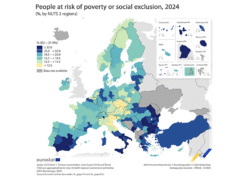
Across Central and Eastern Europe, poverty rates are falling — yet the divide between capital cities and rural regions is growing sharper. New Eurostat 2024 data reveal that while countries such as Czechia, Slovakia, Poland, Hungary, and Romania continue to make measurable progress in reducing the risk of poverty or social exclusion, economic opportunity remains concentrated in metropolitan centres, leaving large areas behind.

The EU’s average rate of people at risk of poverty or social exclusion stands at 21%, a figure that masks striking contrasts between and within member states. In 93 of the EU’s 243 regions, rates exceed this threshold, while in another 146, they remain below it. Within the Visegrád and Balkan nations, the picture is one of gradual convergence — but also deep internal inequality.

Czech Republic: A Model of Stability

Czechia continues to perform among the best in Europe, with six of its eight regions reporting poverty rates below 12.5%. The Jihozápad region recorded 8.8%, the third-lowest rate in the EU, while Prague also ranks among the continent’s most socially resilient cities.

Experts credit Czechia’s success to its low unemployment, strong industrial base, and balanced social welfare system. However, disparities persist between the prosperous western and central regions and the more industrial, less developed northeast. Analysts warn that the rising cost of living could challenge this balance if wages stagnate or housing affordability worsens.

Slovakia: Prosperity Clustered in Bratislava

Slovakia’s Bratislavský kraj is the EU’s second most resilient region, with only 8.6% of its population at risk of poverty or social exclusion. Yet other regions such as Banskobystrický and Prešovský continue to face poverty levels several times higher, illustrating Slovakia’s “two-speed economy.”

Despite strong wage growth and EU-backed infrastructure spending, inflation and rural job scarcity remain key concerns. Policymakers are focusing on attracting investment outside the capital, but economists say long-term solutions must include improving digital access, education, and youth employment in the country’s less developed east.

Poland: A Story of Contrasts

Poland’s overall poverty rate remains below the EU average, driven by steady economic expansion and strong employment. However, a stark east–west divide endures. The Warszawski stołeczny capital region ranks among the EU’s top performers, while eastern regions such as Lubelskie and Podkarpackie lag significantly behind.

Urban areas have benefited from foreign investment and manufacturing growth, while rural and agricultural regions face weaker infrastructure and fewer job opportunities. Analysts warn that without renewed regional investment, Poland risks a permanent social split despite its national-level success.

Hungary: Slow Gains Shadowed by Inequality

Hungary has made gradual progress in reducing social exclusion, though regional inequalities persist. The Közép-Dunántúl region in the northwest, home to automotive and technology industries, ranks among the EU’s strongest performers. But the eastern and northern regions — notably Észak-Alföld and Észak-Magyarország — remain among the poorest.

High inflation, which hit double digits in parts of 2024, has eroded real incomes, particularly for lower-income households. Analysts argue that Hungary’s poverty reduction efforts have been slowed by weak education and healthcare systems and a concentration of investment in Budapest and western industrial zones.

Romania: Urban Progress, Rural Struggle

Romania presents one of the EU’s most pronounced urban–rural divides. The Bucharest-Ilfov region, with a poverty rate below 12.5%, rivals Central Europe’s most prosperous areas. But the Nord-Est and Sud-Vest Oltenia regions continue to struggle, with over 30% of residents at risk of poverty or social exclusion.

Rising wages and EU-funded infrastructure projects have lifted millions out of poverty, yet rural poverty remains deeply rooted. Over 45% of Romanians still live in rural areas, many without access to quality education, healthcare, or housing. Inflation and energy costs have also weakened purchasing power, particularly for pensioners and low-income families.

A Common Challenge: Growth Without Inclusion

Across the region, the pattern is clear — economic success is concentrated in capital regions, while rural and post-industrial areas lag behind. Bratislava, Prague, Warsaw, Budapest, and Bucharest all report some of the lowest poverty risks in the EU, reflecting how national statistics often mask uneven development.

Analysts note that EU cohesion funds have helped narrow these gaps, but the pace has slowed amid inflationary pressures and administrative bottlenecks. As the bloc prepares for its next funding cycle, policymakers in Central and Eastern Europe face a critical task: ensuring that prosperity extends beyond their capitals.

For now, the story of the region is one of dual realities — strong economic resilience, yet persistent inequality — a paradox that defines Europe’s new frontier between growth and inclusion.

Source: Eurostat “At Risk of Poverty or Social Exclusion 2024” (datasets ilc_peps11n and ilc_peps01n); national statistics offices of Czechia, Slovakia, Poland, Hungary, and Romania; CIJ EUROPE analysis.


LATEST NEWS