Romania’s Property Agency Expands Digital Access with Nearly Two Million Documents Issued Online

Romania’s National Agency for Cadastre and Real Estate Advertising (ANCPI) is reporting another major step in its digital transformation, with close to two million property documents now being issued online this year. The shift marks growing public use of Romania’s e-government tools for property ownership and verification.

Between January and September 2025, the agency processed more than 1.9 million requests through its online portals, allowing citizens, businesses, and legal professionals to obtain official property records without visiting local offices. Owners can access their documents free of charge via the MyTerra platform, while other users—such as notaries, banks, and developers—can order certified digital versions through the ePay system for a modest fee.

The documents most frequently requested include ownership extracts and cadastral maps showing property boundaries. Most digital copies are available for download within minutes, while others are provided within two working days if still undergoing digital conversion.

In September alone, more than 130,000 online requests were registered, and thousands of new users signed up for the service. The growing adoption reflects Romania’s broader transition to paperless administration, with ANCPI confirming that over 26 million properties are now registered in its nationwide digital system.

The agency, which operates under the Ministry of Development, Public Works and Administration, notes that the online documents are legally recognised by government offices, banks, lawyers, and notaries, ensuring full validity without the need for physical signatures.

The continued expansion of ANCPI’s online services is part of a wider national effort to streamline access to public records, reduce administrative delays, and bring more transparency to the real estate sector.

Source: ANCPI

Foreign Investors Extend Buying Streak in GCC Markets as Saudi Arabia Leads with Strong Q3 Gains

Foreign investors maintained their positive momentum in Gulf Cooperation Council (GCC) stock markets for the seventh consecutive quarter, purchasing a net USD 4.8 billion in equities during Q3 2025, up from USD 4.2 billion in Q2, according to Kamco Invest’s GCC Trading Activity Quarterly Report – Q3 2025.

Cumulative net buying by foreigners reached USD 11.7 billion in the first nine months of 2025, a 35% increase year-on-year. Saudi Arabia remained the region’s primary destination for foreign capital, attracting USD 2.8 billion in Q3, followed by Abu Dhabi (USD 798.7 million), Dubai (USD 614.9 million), Kuwait (USD 283.3 million), and Qatar (USD 267.2 million). Bahrain recorded a modest inflow of USD 22.9 million, while Oman saw continued outflows with USD 38.7 million in net sales.

For the first nine months of 2025, the UAE led regional inflows, with foreign investors purchasing USD 5.9 billion in shares, ahead of Saudi Arabia (USD 4.5 billion) and Kuwait (USD 1.7 billion). Foreign investors were net sellers only in Oman, with cumulative sales of USD 527.5 million.

Kamco’s analysts said that Saudi Arabia’s recent decision to lift its foreign ownership cap beyond 49%, pending final approval, is expected to further boost investor appetite and potentially add USD 10 billion in new inflows once implemented.

The MSCI GCC Index advanced 4.6% in Q3, closing at 767.9 points—its strongest quarterly performance in nearly two years. Oman led the rally with a 15.1% rise, followed by Kuwait (4%), Saudi Arabia (3%), and Qatar (2.8%). Dubai, Abu Dhabi, and Bahrain posted smaller gains between 0.2% and 2.3%.

Saudi Arabia’s market dynamics were particularly active. Local investors turned net sellers, offloading SAR 10.5 billion worth of shares, while foreigners and GCC investors bought SAR 10.1 billion and SAR 456.9 million, respectively. September saw the highest monthly inflows, coinciding with a 5% one-day surge in the Saudi benchmark index following reports of eased foreign ownership limits.

Trading activity across GCC exchanges rose 15% quarter-on-quarter, with 108.9 billion shares traded in Q3. Kuwait led with a 38% increase in volumes, while Oman’s activity more than doubled. By contrast, Qatar, Abu Dhabi, and Dubai saw slight declines.

The aggregate value of traded shares remained stable at USD 151.3 billion, down marginally from Q2. The banking sector accounted for the largest share, with traded value rising 22.9% year-on-year to USD 35.9 billion. Al Rajhi Bank topped the list with USD 5.7 billion in trades, followed by Saudi National Bank and Alinma Bank.

Sector-wise, consumer services, real estate, and diversified financials showed positive contributions, while materials, capital goods, and F&B recorded sharp declines. Over the first nine months of 2025, total GCC trading value fell 10.4% year-on-year, reaching USD 478.9 billion, though real estate and banking posted respective gains of 61% and 18%.

Kamco Invest noted that consistent foreign inflows underscore sustained confidence in the GCC’s economic fundamentals, despite uneven performance among member states. The anticipated regulatory changes in Saudi Arabia and ongoing infrastructure investments across the region are expected to support further capital inflows into 2026.

Source: GCC

Lufthansa Technik AG to Open New Office in Wrocław’s Infinity Building

Lufthansa Technik AG, a global provider of maintenance, repair, and overhaul services for civil aviation, has leased more than 860 square metres of office space in the Infinity building on ul. Legnicka in central Wrocław. The company plans to move into its new headquarters in April 2026 under a seven-year lease agreement.

Lufthansa Technik AG, part of the Lufthansa Group, is among the world’s leading technical service providers for the aviation industry. The company employs over 22,000 people worldwide and operates across numerous international locations. Its portfolio includes the maintenance and modification of aircraft, engines, and components, as well as digital fleet support and cabin innovation.

The new Wrocław office will be located on the building’s fourth floor. “We are pleased to welcome Lufthansa Technik AG as a new tenant,” said Marta Kiernicka-Szarska, Wrocław Leasing Director at Avestus Real Estate. “This cooperation confirms the building’s quality and attractiveness for international companies seeking a modern and sustainable workspace.”

Maja Motylewska Siech, Office Manager at Lufthansa Technik AG, said the move marks an important step for the company’s Polish branch. “The new location in the city centre provides an excellent working environment and supports collaboration within our team. The long-term lease gives us stability and room to grow,” she noted.

The lease process was supported by Brookfield Partners and JLL, which represents Avestus Real Estate. The transaction also involved the law firm Clyde & Krasnodębski, Kulińska i Wspólnicy sp.k.

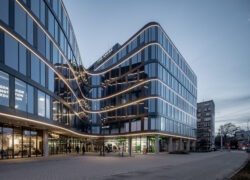
Infinity is a seven-storey Class A office building offering 18,700 square metres of office space and 1,500 square metres of retail and service areas. The property features a landscaped lobby, rooftop terraces, a digital building management platform by spaceOS, and a three-level underground car park with 311 spaces. Facilities for cyclists include 128 racks, locker rooms, and showers.

Developed by Avestus Real Estate in cooperation with Alchemy Properties, Infinity meets BREEAM Excellent and WELL Health-Safety certification standards, confirming its focus on sustainability, energy efficiency, and occupant wellbeing.

Other tenants at Infinity include Avenga, Divante, Dom Development Wrocław, FutureMeds, NATEK Poland, The Shire-Beyond Coworking, and SPCG. Retail and service occupiers include Medicover Stomatology, Enel-Med, Gorąco Polecam Smaki z Piekarni, a Żabka convenience store, and the UP Fitness Club.

The building was designed by AD Studio, with Eiffage Polska Budownictwo as the general contractor and JLL handling commercialization. Infinity is located at pl. Jana Pawła II at the intersection of Nabycińska, Legnicka, and Sokolnicza streets, offering easy access to Wrocław’s central business district.

Poland’s Housing Market Enters a New Phase of Maturity and Regulation

The Polish housing market is at a turning point. While the supply of new apartments remains high, the number of new projects entering development is steadily declining. This signals a maturing and consolidating market increasingly shaped by updated building codes and evolving regulatory frameworks. The coming period is expected to bring notable shifts in both construction activity and buyer behaviour as developers adapt to stricter standards and changing demand dynamics. What lies ahead for Poland’s residential sector will depend largely on how these emerging trends and policies interact to redefine the pace and character of housing development in the years to come.

Zbigniew Juroszek, President of the Management Board of Atal

Currently, the housing market in Poland is characterised by stability. The level of supply is high, but it may gradually decrease. Since spring, we have been observing an increase in customer activity on the primary market. Further interest rate cuts should contribute to the continuation of this trend. Investors may also return to the market, encouraged by the currently better purchase conditions and the declining attractiveness of other, relatively safe assets (record gold prices, lower interest rates on deposits and bonds).

However, significant price reductions will not be possible due to other important factors that have a strong impact on the housing market, including: stricter technical and environmental requirements, new regulations, e.g. concerning the construction of shelters, or the still lengthy permit process (against the backdrop of planning reform). Land prices also remain high, which has a strong impact on the price of new developments.

Tomasz Kaleta, Managing Director of Sales and Marketing at Develia

The housing market is stabilising after a period of earlier recovery. However, forecasts for the future are fraught with uncertainty, resulting, among other things, from the geopolitical situation, the regulatory environment, and demographic and migration changes.

The reduction in interest rates is a positive signal, which has improved the creditworthiness of households, but Poland still has one of the highest mortgage costs in Europe. Further interest rate cuts may stimulate demand.

In the 6-12 month perspective, the activity of developers in launching new projects will be of great importance, as it will translate into the level of supply and sales dynamics. According to the Central Statistical Office, from January to July this year, 3.9% fewer flats were completed than in the same period last year. The number of building permits issued and construction projects started also fell. In the longer term, this may lead to a reduction in supply and increased pressure on prices.

Due to high construction costs, land shortages and lengthy administrative procedures, we do not expect apartment prices to fall. A more likely scenario is stabilisation with a tendency towards gradual growth, especially in large cities and attractive locations. At this point, we forecast moderate increases, on average 1-2 per cent above inflation. A faster pace may occur when the relationship between supply and demand evens out.

The Polish property development market remains highly fragmented, which is why consolidation is a natural direction. At the same time, regionalisation is becoming increasingly apparent. Investment activity is concentrated around the largest urban centres, which further promotes consolidation in the industry.

In the coming years, it will also be important to improve the quality of both the product itself and the service. From Develia’s perspective, the priority remains to provide modern and functional flats that meet the changing requirements of buyers and new standards of living in cities.

Renata Mc Cabe-Kudla, Country Manager at Grupo Lar Polska

The supply of flats in Warsaw is significantly lower than in previous years, and annual demand is almost the same as annual supply. The housing market has changed in recent years and is becoming more professional. It is not an easy industry; it requires a very good understanding of customer needs, the law and municipal requirements. We assume that the professionalisation of the industry will continue.

Joanna Chojecka, Sales and Marketing Director for Warsaw and Wrocław at Grupa Robyg

The housing market in Poland is currently entering a new phase – one that is more mature, more balanced and more regulated. Although the supply of flats remains relatively high, the rate of growth of new investments is clearly slowing down. This is due to several overlapping factors, including rising construction costs, limited availability of land in the largest agglomerations, regulatory uncertainty and greater caution on the part of investors in an era of high interest rates and changing demographics.

The housing market in Poland will become more professional, mature, diverse and selective. It will be crucial for both developers and customers to adapt to the new conditions. Companies that are able to respond flexibly to changes and invest in quality and innovation will not only be able to survive this stage of transformation, but also use it as an opportunity for growth.

Piotr Dobrzyński, Head of Operations and Technical BPI Real Estate Poland – Builder

The residential market in Poland is entering a phase of maturity. We are seeing less dynamism in the number of new investments, but at the same time increasing professionalisation and a focus on quality. Consolidation in the sector means that developers with a stable position and experience, who are able to respond flexibly to changing regulations and customer expectations, are gaining an advantage. Factors related to sustainable development, energy efficiency and comfort of living will become increasingly important. I expect the premium segment to continue to grow in importance, which means that the market will be less mass-oriented, but more conscious and focused on long-term value.

Andrzej Gutowski, Sales Director, Ronson Development

The future of the housing market in Poland is moving towards gradual stabilisation and consolidation. We are currently observing a period of relative calm after earlier violent turmoil, which resulted, among other things, from confusion surrounding attempts to create government housing programmes and interest rate cuts. The market is maturing and becoming less susceptible to sudden price fluctuations. In addition, new regulations, such as the price transparency act, will have a stabilising effect on it.

In the near future, we can expect that some of the smaller developers, who grew mainly during the boom, will disappear from the market, leaving stronger, more stable entities that compete mainly on quality and service standards. High competition will mean that companies will focus on better apartment finishes, innovative solutions and comprehensive customer service, rather than competing solely on price.

Witold Kikolski, member of the management board of MS Waryński Development S.A.

The Polish housing market is currently entering a phase of maturation. Although the supply of flats is still relatively high, the rate of growth is clearly slowing down, due to both administrative restrictions and rising construction costs. In practice, this means that new supply will be more selective, with the best locations and projects that meet the real needs of buyers playing a key role.

Regulations are also of great importance – from the developer act, through energy regulations, to changes in parking standards. Each of these regulations affects the cost structure, investment standard and final price for the customer in different ways. On the one hand, this raises the bar in terms of quality, and on the other, it forces companies to be more flexible and professionalise their processes.

We expect demand to continue to evolve in the coming period. The institutional rental housing (PRS) segment will play an increasingly important role, the importance of sustainable construction and environmentally friendly solutions will grow, and technology will support the design and customer service processes. For companies such as Waryński SA, this is an opportunity to build a lasting competitive advantage and offer products that respond not only to current needs, but also to long-term development trends.

Damian Tomasik, President of the Management Board of Alter Investment

The housing market in Poland is maturing and a process of consolidation is visible. Companies that are able to operate in the long term, effectively raise capital and manage administrative processes are playing an increasingly important role. The supply of flats will remain relatively high, but its growth will be lower than during the boom years. The key factors will be the time it takes to obtain a building permit and the ability to refine land. In the coming years, we will see greater specialisation among developers and an increase in the importance of the PRS market, as well as further adaptation of the industry to environmental and energy efficiency requirements.

Anita Makowska, Senior Business Analyst at Archicom

Currently, we are seeing a large supply of flats in many cities. Warsaw and the Tri-City remain exceptions. Developers are therefore adjusting the pace of new investments to current demand. The market is thus naturally entering a phase of self-regulation, although the slowdown is so effective that a potential supply gap may appear as early as around 2027, assuming that no additional external factors such as new regulations, housing programmes or changes in credit policy arise. We expect lending to increase, especially in the context of interest rate cuts. However, it is not only financing that will be the main driver for the market, but also the conviction of buyers that prices have reached equilibrium and that purchasing a flat in the current conditions is a good decision.

Another interesting phenomenon is the ongoing consolidation of the sector, leading to the full professionalisation of the property market, which was lacking in Poland and which we have been working on as developers, agents, landlords and appraisers for at least two decades. All this makes buying property a safe choice, both for investors and those unfamiliar with the market. In Poland, real estate remains one of the main ways of investing financial surpluses, which will maintain stable demand in the coming years. At the same time, Poles are not abandoning their desire to own property. Today, there is room for them to realise their dreams in the right market conditions.

Andrzej Swoboda, Vice-President of the Management Board, CTE Group

The housing market in Poland is maturing and consolidating. The pace of new investment is slowing down, and stable, large developers are playing an increasingly important role. It is becoming more and more difficult for smaller companies to remain competitive, but companies with experience and competent management and supervisory staff are maintaining a strong and stable position in local markets.

Prices and construction standards are influenced by new regulations on energy efficiency and sustainable development, and alongside the traditional buyer market, the PRS segment, i.e. institutional rental, is becoming increasingly important. This model attracts investor capital and responds to the growing demand for rentals in large cities.

Source: dompress.pl

Photo: Moja Oszmianska, Grupo Lar Polska

Fortress Logistics Real Estate Establishes Warsaw Headquarters at Metropolitan Building

Fortress Logistics Real Estate, part of the global investment group Fortress Real Estate Investments Limited, has leased new office space in the Metropolitan Warsaw building on Plac Marszałka Józefa Piłsudskiego. The company has taken space on the third floor of the landmark office complex, joining several established names from Poland’s real estate sector.

Fortress Real Estate Investments Limited is a South African fund focused on logistics and commercial properties. The company manages and develops high-quality logistics assets across South Africa and Central and Eastern Europe, while also maintaining a commercial property portfolio that includes 48 shopping centres. Fortress is a shareholder in NEPI Rockcastle S.A., holding a 16.2% stake.

The Warsaw office will serve as Fortress’s base for its regional operations and expansion plans. “The decision to locate our headquarters in Metropolitan Warsaw was a natural step in Fortress’s development on the Polish market,” said Aleksander Kobyliński, Deputy Director of Leasing & Asset Management at Fortress. “This location combines prestige, quality, and ESG standards that align with our long-term strategy. We intend to continue growing our logistics portfolio in Poland through sustainable developments and acquisitions in key markets.”

The new office was completed in early September and fitted out by Space4u in just two months. The design process included the reuse of existing materials in line with a zero-waste approach, as well as the integration of modern technologies to improve functionality and energy efficiency.

Fortress was advised by Cushman & Wakefield during lease negotiations. The law firm Clyde & Krasnodębski, Kulińska i Wspólnicy sp.k. represented the landlord in the transaction.

According to Joanna Kowalska-Szymczak, founder and CEO of EBRU Capital, which manages the property, Metropolitan continues to attract companies that value “quality, innovation, sustainability, and a central location.” Other tenants in the building include Dom Development, 7R, LCP, Kajima Properties, Greenfields, and Rock Capital, reflecting the property’s strong reputation among leading real estate firms.

The Metropolitan Warsaw complex, located beside the Saxon Garden and the Royal Route, offers approximately 33,700 square metres of office space and 3,300 square metres of retail and service areas. Designed as three interconnected seven-storey buildings, it features an open courtyard, underground parking for 441 vehicles, electric vehicle charging stations, and cyclist facilities.

The building’s performance and design have been recognised with several certifications: BREEAM Excellent for sustainability, WELL Health-Safety for operational standards, and WiredScore Platinum for digital connectivity.

With Fortress joining its roster of tenants, Metropolitan Warsaw reinforces its position as one of the city’s premier office addresses, combining architectural quality with environmental and technological credentials.

VAH Jager Expands Operations at Garbe Industrial’s Oberkrämer Logistics Park

Fulfilment services provider VAH Jager is expanding its presence at Garbe Industrial’s logistics park in Oberkrämer, northwest of Berlin. The company, which already operates a 30,000-square-metre facility on-site, has leased an additional 10,000 square metres to meet growing demand from its e-commerce and publishing clients.

“With this new agreement, one of the two newly built logistics units—added during the park’s final expansion phase—is now fully leased,” said Adrian Zellner, Member of the Executive Board at Garbe Industrial. “Only one unit of around 10,000 square metres remains available, meaning the site is now close to full occupancy.”

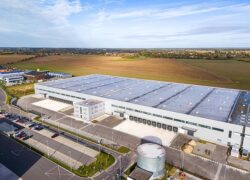
The Oberkrämer development, located in the Vehlefanz industrial estate, spans approximately 146,000 square metres. It includes 20 dock levellers and two ground-level loading gates designed for efficient truck handling. Garbe Industrial began the project in phases: the first building of 15,000 square metres was completed for a logistics service provider, followed by a 30,000-square-metre hall now operated by VAH Jager.

VAH Jager serves a wide range of mail-order and online retailers, handling warehousing, order processing, and distribution. The company’s expansion reflects rising fulfilment volumes in the German e-commerce sector. “Oberkrämer provides an optimal location for modern logistics and order processing,” said Ina Woryna, Managing Director of VAH Jager. “This additional capacity allows us to grow alongside our clients and secure our long-term development goals.”

The logistics park benefits from strong transport connectivity, located roughly 1.5 kilometres from the Oberkrämer junction of the A10 motorway and just 30 kilometres from central Berlin via the A111. The site also connects directly to Hamburg through the A24, to Hanover via the A2, and to Leipzig by way of the A9.

Sustainability remains central to Garbe Industrial’s development strategy. The new facility includes a photovoltaic system covering the roof to generate renewable energy, and energy-efficient LED lighting has been installed throughout the hall. The property has achieved Gold certification from the German Sustainable Building Council (DGNB), underscoring Garbe’s commitment to environmentally responsible construction and operations.

With the latest expansion, Garbe Industrial has nearly completed full leasing across the Oberkrämer logistics park—another sign of continued momentum in Germany’s logistics real estate sector, driven by sustained growth in online trade and regional distribution demand.

Poland’s Office Market Enters Its High Season as Year-End Activity Surges

The final quarter of the year has once again emerged as the busiest period for Poland’s office property market. According to market commentary and data reviewed by Colliers, nearly one-third of all annual office leasing transactions are typically completed between October and December. The trend reflects a combination of business cycles, budget deadlines, and the natural timing of decision-making in corporate real estate.

In Warsaw and across regional cities, deal-making momentum tends to build through the year as companies finalise their space strategies. Many negotiations launched in the spring and summer conclude in the final months, when tenants seek to secure premises ahead of the new fiscal year. “The fourth quarter is when the office market picks up speed. It’s a time to act decisively, to read market signals and plan effectively for the next cycle,” said Paweł Proński, Director of the Office Space Department at Colliers.

Data from Colliers’ Q1 2025 Office Market Report indicate that total leasing activity across Poland reached roughly 337,000 square metres in the first quarter, including 160,500 square metres in Warsaw, where vacancy stood at 10.5% at the end of March. While early-year volumes were steady, they typically rise in the latter half as companies accelerate relocation and renewal plans. The pattern has remained consistent for much of the past decade, according to both Colliers and Focus on Business analyses.

In contrast, the delivery of new office projects follows a different rhythm. Developers most often complete projects in the second quarter, when weather and construction conditions are favourable and regulatory processes are less congested. Historical data show that a majority of annual completions occur in the first half of the year, leaving fewer new projects entering the market toward year-end. “This schedule reflects the construction cycle,” noted Anna Laskowska, an analyst at Colliers. “The spring and summer months are optimal for finishing works and technical acceptance, while developers tend to avoid the holiday period at the end of the year.”

This seasonal imbalance between supply and demand creates practical implications for both tenants and landlords. When new buildings enter the market in the spring, tenants often have more choice and can negotiate favourable lease terms. Later in the year, when activity peaks and available space tightens, competition intensifies. As a result, developers are advised to plan pre-let strategies in anticipation of Q4, when tenant decision-making is at its most active.

Despite macroeconomic headwinds and a cautious investment climate, the underlying demand for modern, sustainable office space remains stable. Tenants continue to focus on high-quality, energy-efficient buildings that can attract and retain staff while supporting ESG targets. Analysts note that the fourth quarter of 2025 is expected to follow the established pattern: a strong close to the year as companies finalise leasing deals and prepare for an evolving office landscape in 2026.

Source: Colliers

IKONIX Expands into Real Estate and Energy with €130 Million Development Pipeline

IKONIX, a recently established company active in both property development and renewable energy, has entered the Czech market with a portfolio that combines residential construction and large-capacity battery storage projects. Founded by a management team with backgrounds at JRD, Skanska, Ekospol, and ORCO, the firm intends to become a significant mid-sized player in both sectors within the coming years.

In real estate, IKONIX is currently preparing nine projects with a total value exceeding CZK 3.2 billion, equivalent to roughly €130 million. The combined pipeline includes more than 400 apartments located in Prague and other regions. The Nová Cihelna Kladno development, consisting of 111 residential units, is already under construction, while additional schemes are progressing in Prague’s districts 8, 10, and 12, as well as in Velký Týnec near Olomouc and in Bedřichov in the Jizera Mountains. The company launched sales for the Konstanta Karlín project in autumn 2025 and expects to begin marketing Emotikon Čimice and V.L.N.Y. Modřany before the end of the year.

According to partner for sales and marketing Pavel Krumpár, IKONIX aims to introduce new investment opportunities each year with a minimum value of CZK 1.5 billion. While its main focus remains on Prague and the surrounding area, the firm is also preparing projects in the Olomouc and Liberec regions and is evaluating entry into Brno. The company’s residential developments are designed to meet sustainability standards and provide energy-efficient operation. IKONIX says it intends to create housing that supports comfort and well-being over the long term, integrating modern ventilation, lighting and energy systems alongside accessible layouts that allow residents to remain in their homes into later life.

Beyond the residential portfolio, IKONIX maintains partnerships with organisations active in wellness and social care. The firm provides design and project management for Next.Move, a network of premium fitness clubs, and works with Diakonie ČCE, the charitable arm of the Evangelical Church of Czech Brethren, on the development of new facilities for people living with Alzheimer’s disease and other forms of dementia, including a centre in Krabčice. Partner for project management Roman Havlíček said that this cooperation reflects the company’s commitment to socially useful investment and its interest in the growing field of assisted living.

Architectural design plays a central role in the company’s approach. IKONIX plans to collaborate with established Czech studios to produce projects that combine durable, elegant design with distinctive features such as colour-changing façades or landscaped roof areas intended for community use. The firm says its objective is to enhance the architectural quality of the neighbourhoods in which it operates while maintaining long-term visual relevance.

Parallel to its real estate activities, IKONIX has established an Energy division focused on large-capacity battery storage. The company is currently developing five projects across the Czech Republic with a combined output of around 60 megawatts. These initiatives are timed to take advantage of changes to the Energy Act, known as Lex OZE 3, which will permit stand-alone battery systems to connect directly to the national grid from October 2025. Partner for energy development Jan Machač said that each project will be handled from site acquisition and network-capacity assessment through to construction and operational management. He described battery storage as a key component of the national transition toward more stable and flexible energy supply.

IKONIX cooperates with several technology partners including Tesla Energy Group, Siemens, and Orgrez. Tesla Energy Group’s director Jan Švinger confirmed the partnership and noted that it will combine Tesla’s expertise in industrial energy storage with IKONIX’s experience in real estate development. He said the joint projects are intended to accelerate the deployment of advanced battery systems and set higher standards for safety and quality in the Czech energy market.

Catella European Residential III Expands Portfolio with Student Housing Acquisition in Dublin’s Liberties District

Catella Investment Management (CIM), in partnership with Catella APAM Property Ltd, has acquired a modern student residential complex in Dublin’s historic Liberties district. The acquisition was made on behalf of the Article 9 fund Catella European Residential III (CER III), which now holds nearly €1.1 billion in assets across approximately 4,000 residential units in ten European countries.

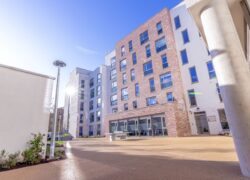
Completed in 2019, the purpose-built property offers around 6,200 square metres of gross lettable area, including 207 student bedrooms arranged across three to six floors. The building includes shared kitchens, lounges, study areas, and a variety of communal amenities such as a gym, cinema room, gaming lounge, laundry facilities, parcel room, and a roof terrace. A café occupies part of the ground floor, complementing the social spaces and landscaped courtyard.

“Since Brexit, Ireland has become increasingly attractive to international students,” said Michael Keune, Managing Director of CIM. “Demand for dedicated student housing continues to outpace supply in Dublin, with roughly 4.5 students competing for every available bed. This shortage, combined with rising private rental prices, underlines the need for new, well-managed student accommodation.”

Conor O’Gallagher, Director and Head of Ireland at Catella APAM Property Ltd, added: “Student housing plays a vital role in maintaining accessibility to education in high-cost urban markets. By expanding this segment, we are supporting both academic mobility and urban development in a sustainable way.”

Located within walking distance of several major universities and colleges that together host more than 80,000 students, the property benefits from excellent transport links, including tram and bus connections and proximity to Heuston Station. The Liberties area itself has seen substantial regeneration in recent years, becoming a mixed-use urban district combining housing, retail, and hospitality developments.

Launched in 2019, Catella European Residential III invests in energy-efficient, affordable housing assets across Europe, with a focus on urban growth regions. The fund’s portfolio includes a mix of traditional residential, student housing, senior living, and serviced apartments, reflecting Catella’s strategy of diversification and long-term value creation in Europe’s residential markets.

Westbridge Advisory Strengthens Polish Operations with Appointment of Anna Nienałtowska as Head of Sales

The Westbridge Group, a European advisory firm specialising in energy and sustainability solutions for institutional real estate clients, has appointed Anna Nienałtowska as Head of Sales for Poland. Effective October 15, she will oversee business development, client relations, and the execution of Westbridge’s sales strategy in the Polish market. Nienałtowska reports directly to Rosanna Woods, Managing Director and Head of Commercial Sales for Europe.

With nearly three decades of experience in commercial real estate, Nienałtowska brings extensive expertise from both Polish and international markets. Before joining Westbridge, she served as Director of Partnership Development at International Workplace Group (IWG), where she built strategic relationships with institutional developers and property funds.

A member of the Royal Institution of Chartered Surveyors (MRICS), she has also been a lecturer at Kozminski University in Warsaw since 2023, where she contributes to a postgraduate programme in commercial real estate. Earlier in her career, she spent over 27 years at Cushman & Wakefield, where she held senior roles including Partner and Head of Leasing Services in Warsaw, managing approximately 300,000 m² of office space for major institutional clients.

“Anna brings deep market knowledge and an exceptional network within Poland’s real estate sector,” said Rosanna Woods. “Her appointment strengthens our ability to support clients in achieving their energy and sustainability goals across the region.”

Commenting on her new role, Anna Nienałtowska said: “I am excited to contribute to Westbridge’s growth in Poland. The transformation of real estate depends on sustainability, energy efficiency and transparency—areas where Westbridge provides innovative and practical solutions.”

The appointment marks another step in Westbridge’s strategy to expand its operations across Central and Eastern Europe. The firm plans to enhance its support for institutional investors, developers, and funds seeking to decarbonise their property portfolios through ESG-driven strategies, energy optimisation, and digital efficiency tools.

LATEST NEWS