Reckitt to Become Anchor Tenant at New Hall in GARBE Park Klášterec nad Ohří II

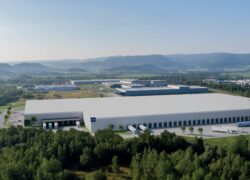
GARBE has begun construction of a new 55,000 sqm hall at GARBE Park Klášterec nad Ohří II. Reckitt, the multinational producer of health, hygiene and home care products, will become the anchor tenant. The company has signed a ten-year lease for 35,000 sqm and is expected to take occupancy in the second quarter of 2026.

“This strategic move is a milestone for our supply chain efficiency and increasing customer demand for reliable and fast deliveries. We choose strong partner in our preferred location without compromising on anything. I am looking forward to our cooperation with Garbe and successful completion of the project,” said Mark Alderson, Global Procurement Director at Reckitt.

GARBE reports that interest in the site extends beyond the anchor tenant. “We are very pleased that Reckitt, a major international player in brands focused on health and hygiene, has become the new tenant. The location is also attracting interest from other companies. Currently, around 13,000 sqm of space is still available, suitable for storage, logistics, or light manufacturing. This follows the successful first phase, in which we developed and fully leased nearly 20,000 sqm of industrial space,” said Veronika Zacha, Head of Business Development CZ at GARBE.

The new hall is designed to meet current technical standards, including a 12-meter clear height, loading docks and direct access points. The location offers direct links to regional and national road networks, including connections to the D7, D8, D6 and D5 motorways, providing access to Germany, particularly Bavaria and Saxony.

GARBE Park Klášterec nad Ohří II targets companies operating in logistics, warehousing, light manufacturing and e-commerce. The scheme includes Class A industrial space, LED lighting, EV charging stations, a green façade and rainwater reuse systems. The project is being developed in line with ESG requirements, EU Taxonomy and BREEAM certification standards.

Reckitt, headquartered in Slough, operates in more than 60 countries and manages a network of manufacturing and distribution facilities worldwide. Its portfolio includes brands such as Dettol, Lysol, Vanish, Harpic, Finish, Veet, Durex, Strepsils, Gaviscon, Nurofen and Mucinex.
HELIX alpha Appoints Four Experts to Its Interdisciplinary Advisory Board for Life Science Real Estate

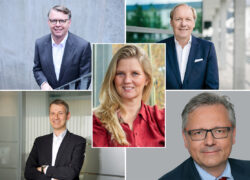
HELIX alpha, an investment manager focused on life science real assets, has appointed four new members to its advisory board, strengthening the company’s strategic competence across science, real estate and investment management. The newly formed body brings together international and interdisciplinary expertise to support decision-making in a sector that is both technical and highly specialized.

The advisory board will be chaired by Prof. Dr. Thomas Glatte, CEO of Familienheim Rhein-Neckar and Professor of Real Estate Management. He previously spent nearly two decades as Director Global Real Estate at BASF, giving him extensive insight into life-science user requirements. His work with the BASF pension fund also provides experience with institutional investor perspectives.

Dr. Inez de Greef, Managing Partner at 3D-PharmXchange and CEO of biotechnology company Treeway, joins the board with a background in research, drug development and science-driven innovation, expertise considered essential for evaluating the long-term suitability of locations and tenants in the life science sector.

Dr. Thomas Diefenthal, Managing Director of BioPark Regensburg and former Vice President of the Federal Association of German Innovation, Technology, and Start-up Centers, adds knowledge of European life science parks and cluster development, as well as broader sector dynamics.

Prof. Dr. Andreas Pfnür, Head of the Real Estate and Construction Management Department at TU Darmstadt, contributes economic and academic expertise, with a focus on corporate real estate and life science real estate. His connections to major pharmaceutical companies further complement the board’s profile.

The members will not serve solely in an advisory role. They have been integrated directly into the firm’s governance framework as voting members of the “Investment & Risk Committee”. As part of this committee, they will participate in shaping investment policy and reviewing key investment decisions, including acquisitions and portfolio assessments. HELIX alpha states that this approach is designed to ensure that its strategies address the technical, scientific, regulatory and strategic complexities of the life science real estate asset class.

“We are not investing in buildings – we are investing in complex ecosystems,” said Martin Eberhardt FRICS, Founder and CEO of HELIX alpha. “This requires a deep understanding of the life science sector, its user needs, and the requirements of locations and regulation. This is precisely the expertise the advisory board adds—and it is crucial for sustainable performance in this young and complex asset class.”

HELIX alpha aims to develop a diversified portfolio across major European life science clusters, including Barcelona, Copenhagen, Vienna and Cambridge, with properties spanning laboratory, production and logistics facilities.

Residential property prices in Slovakia rise at fastest rate in over two years

Residential real-estate prices in Slovakia accelerated markedly in the third quarter of 2025, according to data from the Statistical Office. On average, sale prices for dwellings increased by 4.9 % compared with the prior quarter – a clear rise after slower growth during earlier quarters this year. 

On an annual basis, prices for homes and apartments were up by 13.4 % compared with the same period in 2024 – the highest year-on-year increase recorded in the last 12 quarters. 

A closer look at the composition of the market shows that both newly built and existing dwellings contributed to price growth. Existing properties rose in value by 13.7 % year-on-year, while newer units saw an increase of about 11.8 %. 

Regionally, all eight regions tracked by the Statistical Office observed rising prices. The steepest annual increases were recorded in the Nitriansky and Banskobystrický regions, where prices climbed by more than 20 %. 

Longer-term data highlight how sharply the market has changed over the past 15 years. Compared to 2010, the average sale price of dwellings in 2025 has more than doubled – new homes are nearly 80 % more expensive, while older dwellings have increased by over 130 %. 

At the same time, construction activity shows signs of cooling. At the end of June 2025, about 77,000 housing units were under construction nationwide – a 2.8 % drop compared with the same point in 2024.  The number of units completed in the first half of 2025 also fell sharply, contracting by around 19 % year-on-year.  Meanwhile, the number of newly started dwellings dropped by approximately 14.5 % compared with a year earlier and remains well below the long-term average. 

These trends – rapidly rising sale prices alongside reduced production of new housing — could intensify pressure on supply in the months ahead.

In practical terms, the surge in prices appears to be driven predominantly by existing dwellings, which are changing hands at a faster rate of price growth than new builds. That suggests demand remains strong even as supply dynamics shift.

Overall, the latest data confirm that Slovakia’s residential real-estate market remains in motion, with rising prices and tightening supply reinforcing upward pressure on housing costs. For buyers and developers alike, the current environment calls for close attention to both market timing and availability of units.

CTP Completes Czech Republic’s Largest Continuous Vertical Garden as Part of Heat-Island Research Project

CTP has installed what it describes as the largest continuous vertical garden in the Czech Republic at CTPark Prague North, as part of a research project conducted in cooperation with the Czech University of Life Sciences (CZU) and vertical-garden specialist Němec.

The installation covers roughly 1,300 sqm and includes more than 45,000 plants selected by CZU researchers. According to initial measurements, the green façade can reach surface temperatures up to 15°C lower on summer days compared with a standard exterior wall. The project examines whether such systems can reduce heat accumulation at industrial sites and contribute to improving microclimatic conditions.

The research forms part of an EU-supported program under OP TAK, which granted funding to Němec for the development of its vertical-garden system. The collaboration aims to assess how plant species behave under real operating conditions and whether they can provide long-term functional benefits. The Cascade Garden® system used for the installation is designed to moderate temperatures on and around the building.

“Our goal is not to create an aesthetic decoration for the building, but a functional living system. We are monitoring how different plant species react to changes in the weather. Additionally, we are interested in which species are able to survive in the long term without intensive care and how their vitality changes throughout the seasons. A crucial stage of research is coming now, when the plants will have to cope with frost and snow without help,” said Oldřich Vacek of CZU’s Department of Garden and Landscape Architecture.

The façade incorporates an irrigation system intended to minimise water use and distribute moisture evenly. The research team is studying how the plants respond to high heat, drought, wind and winter conditions. No protective measures are used during colder seasons in order to evaluate natural resilience.

“We are very pleased that we have managed to create the continuous vertical garden in Czechia. This project was not only a technical challenge for us, but also an opportunity to show how natural solutions can work in an industrial environment. I believe that the successful implementation of this wall can serve as inspiration for the future construction of similar ecological solutions around the world,” said Josef Němec, owner of Němec s.r.o.

Jakub Kodr, Managing Director of CTP in the Czech Republic, noted the potential implications for industrial real estate. “Vertical gardens are usually applied to office or public buildings in Czechia, but at CTP we believe that their potential can be much broader. This project is one of the first of its kind to test the functionality of a vertical garden on an industrial building in operation. Our goal is to find out whether similar solutions can not only improve the microclimate at our parks but also help reduce energy consumption and heat load. If this system proves to work, it could be a breakthrough that paves the way for the integration of vertical gardens as a standard part of industrial development, not only in our country, but also on a global scale.”

The research will continue through 2026, with findings expected to contribute to future architectural and sustainability applications and inform the potential wider use of vertical gardens in industrial settings.

Only a Few Firms Reap Big Gains — But AI Is Starting to Deliver Real Business Value

A new report from PwC shows that while widespread, dramatic transformation driven by generative AI remains rare, a growing number of companies are beginning to realize tangible, measurable returns — and the potential for broader change is rising. 

From Experiments to Operating Levers

The report, titled 2026 AI Business Predictions, highlights a shift: organisations are moving beyond pilots and experimentation toward disciplined deployment. Leaders are increasingly choosing a limited number of high-impact use cases — where data, talent and strategic priorities intersect — rather than scattering investments broadly. 

As PwC puts it: “only a few companies are realizing extraordinary value from AI today… many others are also experiencing measurable ROI, but their outcomes are often modest — some efficiency gains here, some capacity growth there.” 

But even modest gains are accumulating, allowing companies to build internal benchmarks, track performance, and refine their AI strategies to squeeze more value — especially in finance, tax, operations, and other back-office functions. 

Emerging Patterns: Agents, AI-Generalists, and Responsible AI

PwC outlines several key trends expected to shape the next wave of AI-driven transformation:

  • The rise of the “AI generalist” — i.e., employees who combine domain knowledge with AI-based tools. Instead of replacing entire teams, AI augments human workers, enabling broader access to specialist-level output. 

  • Growing adoption of AI agents and “agentic AI,” with companies accumulating enough experience to generate proof points and real-world benchmarks for performance. 

  • A shift from rhetorical commitment to concrete action around ethics and governance: “responsible AI” is becoming a business imperative, not just a compliance tick-box. Ethical guardrails, transparency and governance will play a bigger role as AI scales across functions. 

  • A recognition that AI can contribute to sustainability goals: as firms optimise operations with AI, they may offset some of AI’s environmental costs — though PwC notes this requires discipline and measurement. 

What’s Next: Strategic Focus Over Hype

PwC argues that the next stage of AI-led business transformation will be defined less by flashy new tools and more by strategic focus, discipline and orchestration. Companies ready to succeed will pick carefully — align AI initiatives with business priorities, create internal metrics, and build human–AI workflows that capture real value. 

In short, AI is no longer just a shiny experiment: for a growing subset of companies, it has become a lever for operational improvement, new workforce models, and even sustainable growth.

Czech Industrial Property Market Strengthens in Q3 2025 as Construction and Demand Rise

The Czech industrial real estate market continued its recovery in the third quarter of 2025, recording its strongest quarterly performance in three years. According to data from Colliers, 130,800 m² of new industrial space was completed in Q3, bringing total new space for the year to 475,400 m² and increasing the overall market size to nearly 12.9 million m². This represents year-on-year growth of 5%.

Colliers notes that construction activity remains elevated, with almost 1.8 million m² currently under development. Prague and Central Bohemia account for 25.3% of space under construction, followed by the Moravian-Silesian Region (17.2%) and the Karlovy Vary Region (17.1%). In Karlovy Vary, the high share is primarily due to a single automated warehouse project in Cheb exceeding 200,000 m².

Beyond ongoing construction, the pipeline of future projects is substantial. “In addition to spaces under construction, there are also a significant number of projects in various stages of approval, as well as spaces for which zoning decisions and building permits have been issued. Nearly 2.8 million m² have been approved and are ready for construction. Another 2.6 million m² are awaiting zoning or building permits. The total volume of potential projects is therefore approximately 5.4 million m², with what is under construction exceeding 7 million m²,” says Miroslav Kotek, head of the industrial real estate department at Colliers.

Vacancy and availability

Vacancy in existing warehouses remained just below 4% in Q3, totalling around 512,500 m²—up 94 basis points year on year. Despite the low headline vacancy rate, availability is improving due to speculative development.

“Despite this low vacancy rate, there is sufficient space available on the Czech market, as more than 50% of all properties under construction are vacant. They represent 887,200 m² of modern industrial space available in the near future,” explains Kotek. Speculative construction is concentrated in Prague and Central Bohemia (235,200 m²), the Ústí Region (176,000 m²), and the Moravian-Silesian Region (160,300 m²).

Demand picks up

Gross take-up reached 608,900 m² in Q3, 29% above the five-year average, while net take-up totalled 470,400 m²—56% above the five-year average. Both metrics were the highest since Q2 2022.

Total gross demand in the first three quarters of 2025 amounted to 1.43 million m², slightly above the five-year average and only 20,000 m² short of matching the full-year 2024 result. Net demand reached 829,900 m², in line with the five-year average and around 50,000 m² below last year’s total.

Rents and incentives

Prime rents remained unchanged for the fifth consecutive quarter, standing at EUR 7.00–7.50/m²/month. Office mezzanine rents range between EUR 9.50 and 12.50/m²/month, with service charges typically between EUR 0.75–1.00/m²/month.

“The highest achievable rent has remained at the same level for five quarters. However, we are increasingly seeing tenants in a stronger negotiating position, which is reflected in more generous incentives offered by landlords in all regions,” notes Kotek. He adds that in markets that have expanded quickly—such as the Moravian-Silesian Region—rents are experiencing gradual downward adjustments due to mild oversupply.

Investment market

Industrial real estate remains a key target for capital, accounting for 31% of all investment transactions in 2025 to date.

Source: Colliers

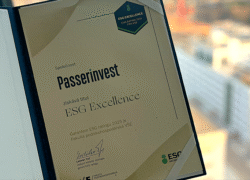
Passerinvest Group recognised among the top five companies in Czech ESG rating

Passerinvest Group has been ranked among the top five companies in the Czech Republic in the Basic category of the ESG Excellence 2025 assessment. The nationwide rating, managed by the Faculty of Business Administration at the University of Economics in Prague, evaluates how companies address environmental, social and governance matters. The Basic category includes firms with up to 1,000 employees.

The assessment is based on the VSME reporting framework, a voluntary European standard intended for non-listed small and medium-sized companies and expected to become a foundation for future non-financial reporting requirements. Participating firms answer a comprehensive questionnaire that examines their approach to sustainability and responsible business practices, after which their results are compared within both their category and industry group.

Passerinvest has taken part in this evaluation for four consecutive years and views the process as an opportunity for an independent review of its internal policies and their practical outcomes. According to the company, the rating offers structured feedback on its progress, highlights areas for further development, and helps prepare for upcoming EU reporting obligations focused on transparency in non-financial disclosures.

The recognition places the company among the better-rated organisations in its category. Passerinvest states that its projects aim to reflect a responsible approach to long-term development and engagement with local communities, and that its internal conduct is guided by principles rooted in its corporate values.

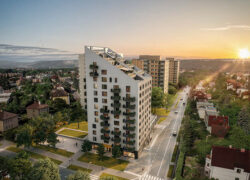
FETTERS Starts Core Construction of Panorama Braník

FETTERS management has started the main construction phase of its Panorama Braník residential development in Prague 4, marked by a formal foundation-stone ceremony. The 14-storey mixed-use building will be located on the edge of established housing and adjacent green areas. The project includes 77 apartments of various sizes and seven ground-floor commercial units. Qarta Architektura designed the initial concept and zoning documentation, while Domy Architects prepared the building-permit documents. The final technical design and implementation plans were completed by Atelier Smitka. BAK stavební společnost, a.s. is serving as general contractor. According to the developer, 60 percent of the apartments have already been sold, with completion planned for December 2026.

“We designed Panorama Braník to stand the test of time. The project meets the high demands of contemporary living, with each apartment designed with an emphasis on quality, detail, comfort, and maximum use of space. The practical layouts range from 1+kk apartments to atypical duplexes on the upper floors. Many of them offer unique views of Prague,” says Tomáš Fetters, CEO of FETTERS management. He adds: “We have many years of experience in project management of large buildings throughout the country. This is reflected in every detail of our own development projects, from the technical solutions to the way we think about the comfort of future residents. I am convinced that this is clearly visible in the project, as evidenced by the interest of buyers.”

The scheme offers units from approximately 30 m² studios to larger apartments of around 120 m². All apartments will have cellar storage, and most will include a balcony or terrace. Duplex units on the upper floors will feature larger outdoor spaces with views toward the city. Large window openings are incorporated across the building to maximise daylight, and the design allows for external blinds. Interior materials are selected to provide durable, neutral finishes, extending also to communal areas. The building will include 87 parking spaces, with the option for two spaces for selected larger units.

The design integrates landscaping into both the building and its immediate surroundings. A green roof above the retail units will help regulate indoor temperatures and will be visible from higher floors. A retention tank will collect rainwater for irrigation. Planters are incorporated into each balcony and terrace, enabling planted greenery to extend up the building and contribute to the microclimate. These features are intended to enhance an underused plot and bring it into everyday neighbourhood use.

The developer also plans improvements to the surrounding public realm. Ground-floor services will open the building to the street, while upgrades to the nearby intersection are being coordinated with the district authority and Prague’s transport agency. “We are convinced that honest architecture should benefit the wider community. We support projects that develop and open up places that have been unused for a long time. At Panorama Braník, we are naturally also addressing the public space, from services on the ground floor to the modification of the adjacent intersection in cooperation with the municipal district and TSK Praha. A new bus bay, better-lit crossings, and a generally clearer traffic situation will improve the functioning of the entire area,” says Luboš Králíček, commercial director of FETTERS management.

Panorama Braník is situated within an established residential district of Prague 4, characterised by villa architecture, mature greenery, and full community services. Schools, shops, public transport stops, local restaurants, sports areas, and the Braník biotope are all within walking distance. The developer highlights the location as one with an active local community and complete amenities.

EPP Reports Major Cuts in Carbon Output, Nearing Its 2030 Climate Goals

EPP, the country’s largest manager of shopping centres, has sharply reduced the emissions produced by its real-estate portfolio, bringing the company close to the climate goals it pledged to meet by 2030. Recent sustainability disclosures indicate that emissions from its own operations have fallen by almost half since 2019, while emissions linked to parts of its supply chain have dropped by roughly one-third. These reductions align with the company’s near-term targets validated by an international climate-science body last year.

Company representatives say the progress reflects several years of upgrades across the portfolio. These include improvements to building systems, replacing older lighting with more efficient alternatives, and widening the use of electricity backed by renewable-energy certificates. Office properties already run entirely on electricity matched with green-energy guarantees, and the company aims to steadily expand this approach in its retail assets.

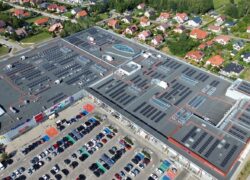
Energy-saving projects have also been carried out at the property level. One example is the shopping centre in Poznań, where a broad renovation programme resulted in lower energy use in shared spaces and moved the building into a higher efficiency category. The firm is also developing rooftop solar installations, with plans to add more than a dozen systems over the next two financial years. Several centres have already been equipped with new panels, which will help reduce dependence on the grid.

Alongside these measures, EPP is introducing digital tools designed to improve how waste is monitored and sorted across tenant units. The system captures data in real time and is being phased in across the assets under management.

The company continues to seek external verification of its buildings based on environmental performance. All of its office properties hold high ratings under international assessment schemes, and its shopping centres meet or exceed mid-level certification standards. The firm is also expanding the number of lease agreements that include sustainability clauses. Nearly half of its contracts now contain provisions aimed at reducing the environmental footprint of day-to-day operations.

EPP has also increased its focus on community engagement. Over the past year, its centres hosted hundreds of initiatives aimed at local groups, with employees contributing thousands of volunteer hours. These activities ranged from portfolio-wide campaigns to locally driven projects supported through small grants.

Although the company has already come close to achieving its 2030 climate targets, it maintains that further work lies ahead. Its long-term ambition is to balance all emissions across its portfolio by mid-century, a goal that will require continued investment and collaboration with tenants, contractors and suppliers.

Poland’s Housing Market Steadies as Borrowing Conditions Improve

The Polish residential market is moving through a period of relative calm after several years of rapid growth. In 2025, prices in the largest cities stopped rising at the pace seen earlier in the decade, with some markets even recording slight reductions in achieved sale values. This cooling followed a period of weaker demand, influenced mainly by the high cost of credit that limited buying power.

Although prices remain high by historical standards, the slowdown marks a notable shift from the double-digit annual increases observed in recent years. Negotiations between buyers and sellers have become more effective, especially in major metropolitan areas, where final sale prices in places such as Warsaw, Wrocław and Kraków registered mild year-on-year declines. The secondary market reflected similar behaviour, with modest decreases in several cities.

Economic conditions, however, suggest this phase may not last long. Poland’s economy regained momentum in the second half of 2025, recording its strongest GDP growth in three years. Inflation eased back toward the central bank’s preferred range, allowing policymakers to gradually reduce interest rates. Over the course of the year, the benchmark rate was cut by 150 basis points, and analysts expect room for additional reductions in 2026 if consumer prices remain under control.

Lower borrowing costs have already revived interest in home loans. Banks issued nearly 65,000 new mortgages in the third quarter of 2025—more than 40 percent above the level a year earlier—with the total value of new lending also increasing. The average loan size continued to climb, reflecting both higher prices and renewed confidence among households. With lenders easing some of their criteria, the flow of new applications has risen steadily since mid-year.

On the supply side, developers are still cautious. Permits issued for new housing projects fell compared with 2024, especially for multifamily developments, which could limit future availability. At the same time, the cost of construction is gradually increasing, adding pressure to project budgets. Any legislative changes affecting development—planned for the coming years—may further influence the economics of new projects.

Despite the uncertainty, long-term demand remains supported by several structural factors. Poland continues to experience one of the highest rates of household overcrowding in the European Union, and the preference for owning rather than renting remains strong. Large cities continue to attract both internal and international migrants, concentrating demand in metropolitan areas. These conditions—combined with the current slowdown in new supply—may contribute to firmer prices once borrowing becomes more accessible.

The rental sector, especially professionally managed schemes, is also growing quickly. High purchase prices and lifestyle preferences among younger residents are driving more interest toward long-term renting, encouraging institutional investors to expand their portfolios in Poland’s biggest cities.

Overall, the current period of stabilisation may prove temporary. If borrowing continues to become cheaper and the economy maintains its pace, demand for apartments is likely to strengthen in 2026. Market analysts expect price growth to reappear from the second quarter of next year, although at a more moderate speed than during the previous boom.

Sources: Colliers, NBP and CIJ EUROPE Analysis Team

LATEST NEWS