Poland’s Labour Market Stable in Q2 2025 as Wage Growth Slows Slightly

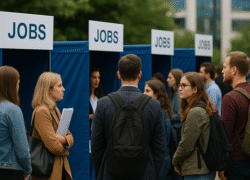
Poland’s labour market continued to display resilience in the second quarter of 2025, with steady employment and only a marginal shift in activity levels. However, the latest data from the national statistics office show that while wages remain considerably higher than a year ago, the pace of growth is beginning to ease.

The share of people either working or actively looking for work in Q2 2025 edged up slightly compared with the first quarter, maintaining one of the highest participation rates in the region. Employment levels remain stable, underlining the strength of Poland’s labour market despite weaker demand in some manufacturing and export-oriented sectors.

Average monthly earnings in the enterprise sector stood at just over PLN 8,900, a modest dip from the previous quarter but nearly 11% higher than the same period in 2024. The figures suggest that while wage growth has cooled since the rapid increases seen last year, real incomes continue to rise as inflation pressures ease.

The small quarterly decline in nominal pay points to a gradual normalisation of wage dynamics after two years of rapid increases driven by labour shortages and price volatility. Analysts note that the market is moving toward greater balance, with slower wage growth potentially helping employers manage costs without significant job losses.

For the property and business sectors, the data present a mixed picture. Strong year-on-year income growth supports household purchasing power, benefiting residential and retail segments, while the levelling off of wage momentum may reduce upward pressure on operating expenses for logistics, industrial, and service employers.

Overall, Poland’s workforce remains one of the most active in Central Europe, with stable employment and rising real earnings supporting domestic demand. The coming quarters will reveal whether this moderation in wage growth marks the beginning of a more sustainable phase for the Polish economy or a sign of broader cooling in the labour market.

Moldova Sees Fewer Building Permits Despite Growth in Construction Output

The number of new building permits issued in Moldova fell in the first nine months of 2025, even as the total value of construction works continued to rise. Data from the National Bureau of Statistics (NBS) show that authorities granted 2,187 building permits between January and September, representing a 7.8% decline compared with the same period a year earlier.

The drop was most pronounced in the non-residential sector, where permits fell by over 22% year-on-year, suggesting weaker investment appetite among commercial and institutional developers. By contrast, residential permits showed only a marginal decrease of 1.4%, indicating that demand for housing remains comparatively stable.

The decline in new permits contrasts with the strong growth recorded in construction output earlier this year. In the first half of 2025, the total value of construction works carried out in the country rose by more than 35% compared with the same period in 2024, according to the NBS. Economists attribute this divergence to the completion of ongoing projects and a rise in renovation and repair activity, rather than new developments breaking ground.

Despite the slowdown in permit issuance, the construction industry continues to play a crucial role in Moldova’s modest economic expansion, contributing to the 1.1% GDP growth recorded in the second quarter of 2025. The sector remains an important source of employment and public investment, particularly in infrastructure and residential renewal.

However, industry observers warn that if the fall in new permits persists, it could lead to a slowdown in building activity in 2026 as the current project pipeline thins. Rising financing costs and cautious investor sentiment, particularly in commercial real estate, are also cited as potential headwinds for new development.

While housing demand remains relatively resilient, developers face ongoing challenges linked to construction material costs, workforce shortages, and slower approvals. For now, Moldova’s construction sector continues to expand on the strength of projects already underway—but the latest figures signal that fewer new ones may be entering the pipeline.

Slovak Business Confidence Falls as Industry Weakens in October

Business sentiment in Slovakia declined in October, as industrial producers reported falling orders and weaker expectations for the months ahead. According to new data from the national statistics office, confidence among manufacturers dropped noticeably, offsetting modest gains in construction and steady conditions in retail.

The survey shows that industrial companies faced a slowdown in both domestic and export demand, particularly in machinery, chemicals, and automotive production. Many firms cited a lack of new contracts and a shortage of qualified labour as the biggest challenges. Several also noted that tighter financing conditions and cost pressures were limiting their ability to expand.

In contrast, the construction sector showed some resilience. Builders reported slightly stronger activity and better hiring prospects, though many continue to struggle with financial constraints and delays in public-sector investment. Retail and trade activity remained broadly stable, with companies maintaining cautious optimism heading into the winter season.

The service sector, which includes finance, transport, and professional activities, became more cautious, reflecting lower demand in certain segments and growing concern about the general economic outlook.

On the consumer side, sentiment remained subdued. Slovak households are still worried about rising living costs and job security, although attitudes toward savings have improved somewhat since the summer.

Overall, the October figures suggest that Slovakia’s economy is losing momentum, with weaker output expectations and lingering uncertainty over future tax and spending policies. While construction and retail continue to hold steady, the slowdown in industry — traditionally the country’s growth engine — points to a more challenging final quarter of the year.

Online Bookings for Tourist Accommodation in Poland Rise Sharply in Early 2025

Poland’s short-term rental market saw a marked increase in activity during the first quarter of 2025, as data from Statistics Poland (GUS) show that tourists made 1.1 million online bookings through major digital platforms — a 17% rise compared with the same period last year.

The number of overnight stays reached 7.2 million, up 11.2% year-on-year, underscoring the continued popularity of short-stay accommodation offered via platforms such as Airbnb, Booking.com, and Expedia. The data, collected in cooperation with the European Commission, reflect only rentals listed through these providers and do not represent the entire Polish accommodation market.

Domestic demand drives growth

Polish tourists were the key growth driver in early 2025. Domestic bookings accounted for nearly three-quarters (73.8%) of all stays, rising 24.6% from last year to 0.8 million. By contrast, bookings by foreign visitors fell marginally — down 0.1% year-on-year to 0.3 million.

Among the country’s 16 regions, Małopolskie Voivodship (which includes Kraków and Zakopane) recorded the highest number of bookings — 222,000, followed by Mazowieckie (Warsaw region) with 203,000, and Dolnośląskie (Wrocław region) with 155,000. Together, these three regions accounted for over half of all overnight stays made via booking platforms.

The Opolskie region, while the smallest market, recorded the fastest growth rate — up 37% year-on-year, albeit from a low base.

Foreign travellers’ profile

Foreign visitors accounted for 26.2% of bookings and spent 2.4 million nights in total. The largest groups came from Ukraine (15%), Germany (14.4%), the United Kingdom (5.2%), the Czech Republic (4.8%), and Spain (4.2%). More than half of all foreign tourists (55%) originated from EU countries.

Major city and resort performance

When combining platform data with traditional accommodation statistics, Warsaw led the market with 2.8 million overnight stays, including 1.8 million by Polish tourists and 1 million by foreign visitors. Kraków followed with 2.2 million, while the Tatra County, home to Zakopane, ranked third with 1.9 million overnight stays.

For 2024 as a whole, GUS recorded 134.4 million overnight stays across all tourist accommodation in Poland, up 8.6% from 2023. Warsaw, Kraków, and the seaside Kołobrzeg County were the top-performing destinations.

Broader context

The data reinforce the continued expansion of Poland’s short-term rental market and the rising role of digital booking platforms in shaping tourism demand. Domestic travel remains the main growth engine, supported by a robust economy, improved mobility, and diversified tourism infrastructure.

At the same time, the slight dip in foreign bookings suggests that while inbound tourism remains stable, competition across Central Europe is intensifying. The next GUS update, due in mid-2026, will shed further light on how these early-year trends translate into the peak travel season.

Source: Statistics Poland (GUS), Rental of Tourist Accommodation Establishments in Poland via Booking Platforms in the First Quarter of 2025, published 31 October 2025.

EU Tax Revenues Stable in 2024, Official Data Yet to Confirm Reported Increase

Reports suggesting that tax revenues across the European Union and the euro area rose in 2024 have not yet been confirmed by official data. According to the latest verified information from Eurostat, the most recent figures available cover the year 2023, when the overall tax-to-GDP ratio declined slightly after several years of steady growth.

In 2023, taxes and social contributions accounted for around 40% of the EU’s gross domestic product, with the euro area recording a similar figure. This represented a modest drop from 2022, when the ratio was above 40.5% for both groups. The decline reflected slower economic growth and targeted tax relief measures introduced in several member states in response to high inflation and energy costs.

No new data for 2024 have yet been released through Eurostat’s official channels. While some national finance ministries have issued their own projections, these are not harmonised across countries and have not been validated by the EU’s statistical office. As a result, any reported increase in the tax-to-GDP ratio remains unverified.

The ratio, which measures the share of taxes and social contributions in the economy, tends to move gradually rather than sharply from year to year. Structural differences across the bloc remain significant: Northern and Western European countries such as Denmark, France, and Belgium maintain the highest revenue shares, while Ireland, Romania, and Malta sit at the lower end.

Eurostat’s next comprehensive update on EU tax revenue is expected in autumn 2025. Until then, the 2023 data remain the benchmark for comparing fiscal capacity and government funding trends across the European Union.

Source: Eurostat

Czech Labour Market Remains Tight as Employment Holds Steady in September

The Czech labour market remained resilient in September, with only minor changes in key indicators suggesting a stable yet competitive employment environment. According to new data from the national statistics office, the number of people in work stayed high while overall participation in the labour force continued to increase.

The share of working-age Czechs who were employed showed a modest rise compared with last year, with men still more active in the job market than women. Joblessness remained low, hovering close to the levels recorded during the summer. The data confirm that despite weaker economic growth in several industrial sectors, the country continues to maintain one of the lowest unemployment rates in Europe.

Employment among women increased slightly, helping to offset a small decline among men in some regions linked to manufacturing and construction. Economists noted that this pattern reflects ongoing adjustments in the labour market as companies respond to slower external demand and a gradual shift toward service-oriented industries.

At the same time, more people are either working or looking for work than a year ago, indicating that the Czech workforce remains broadly engaged. This combination of high activity and low joblessness suggests that labour shortages are likely to persist in key sectors, especially logistics, healthcare, and information technology.

While businesses continue to face challenges recruiting skilled staff, analysts believe that the recent rise in economic participation could help ease some of the pressure over the coming months. The next update on employment trends is expected at the beginning of December and will offer a clearer picture of how seasonal demand and industrial performance are shaping the end of the year.

Poles Tighten Their Budgets, Saving for Safety Rather Than Pleasure

Polish households are growing increasingly cautious with their money, choosing to save not for holidays or new purchases, but to protect themselves from financial shocks. A recent national study shows that for most people, saving is no longer about planning for the future but about surviving the present.

The vast majority of Poles now view their savings as a form of protection. Three out of four respondents said they put money aside mainly to cover emergencies such as unexpected expenses or the risk of losing their job. Experts note that this has been the dominant saving pattern since 2022, reflecting years of economic uncertainty, high inflation, and rising living costs.

What’s more, a large share of people are no longer able to keep their savings untouched. Nearly one in three adults admitted that in the past six months they had to dip into their own reserves simply to cover basic needs. Food, rent, and electricity bills are the main reasons households have been forced to draw from funds that were originally meant to provide financial security.

Financial analysts see this as a worrying sign. While Poles remain disciplined savers by European standards, inflation continues to erode their purchasing power. The result is a form of “forced saving,” where money set aside for peace of mind is increasingly used to fill the gaps in monthly budgets. Many families describe their savings not as a cushion for future goals, but as a temporary shield against current pressures.

Still, some goals remain intact. Around one in six Poles continue to save for retirement, while another small share sets money aside for health-related costs or leisure activities. But the ability to save for pleasure is becoming more fragile. Spending on holidays, for instance, has turned into a luxury that many are quick to postpone when finances tighten. The average household trip budget this year hovered around 4,400 złoty—an amount that, for many, requires months of planning and sacrifice.

According to researchers, these changing patterns show both prudence and strain. On one hand, Polish households have developed a culture of financial responsibility and a strong instinct to prepare for uncertainty. On the other, the continued pressure of everyday costs means that even this responsibility has limits. When food and rent consume most of the income, savings become a tool of necessity rather than long-term planning.

Experts warn that unless real wages begin to rise faster than prices, many families will struggle to rebuild their financial buffers. For now, saving in Poland has become less about comfort or growth, and more about resilience — a strategy for coping with an economy where every unexpected bill can upend a fragile balance.

Source: BIK

Fitch Maintains Luxembourg’s Top Credit Rating Amid Modest Growth Outlook

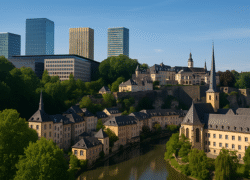
Luxembourg has once again secured its position among the world’s most creditworthy nations. Fitch Ratings reaffirmed the country’s top-tier ‘AAA’ sovereign rating with a stable outlook, citing strong public finances, prudent governance, and resilient financial institutions as key pillars of stability.

According to Fitch, the Grand Duchy continues to benefit from one of the highest income levels in Europe and a solid fiscal position underpinned by low government debt and significant financial reserves. These strengths, the agency noted, offset challenges linked to the small size of the economy and its sensitivity to broader global and regional shifts.

Economic activity, however, has cooled more sharply than previously expected. Growth in 2025 is projected at around 1.2 percent, down from earlier estimates, as weaker eurozone demand and soft labour market dynamics weigh on performance. A gradual recovery is anticipated from 2026 onwards, supported by easing monetary conditions, automatic wage adjustments, and planned government spending.

The country’s public debt ratio remains exceptionally low, standing near 26 percent of GDP, one of the lowest among advanced economies. Even with modest fiscal deficits expected over the next few years, Fitch foresees the debt burden staying below 30 percent of GDP before declining again toward the end of the decade.

Luxembourg’s pension system—a frequent topic in fiscal discussions—has undergone reform aimed at shoring up long-term sustainability. Adjustments to contribution rates and retirement eligibility are expected to extend the life of existing reserves, which currently amount to about one-third of the national economy’s output.

The financial sector, which plays an outsized role in Luxembourg’s economy, remains on firm ground despite recent volatility in real estate and global markets. Banks retain strong capital and liquidity buffers, and profitability continues to exceed pre-pandemic levels. The investment fund industry, one of the largest in Europe, has also proven resilient amid changing interest rate and market conditions.

Governance and institutional quality continue to rank among the highest globally, contributing to the country’s reputation for political stability, rule of law, and effective public administration—factors that reinforce investor confidence and underpin its enduring top credit rating.

Fitch cautioned that Luxembourg’s outlook could face pressure in the event of a severe international downturn or a major shock to its financial system, but such risks are considered limited. With solid fiscal management and a healthy economic framework, Luxembourg remains firmly positioned within the small circle of nations holding the highest possible credit standing.

Source: Fitch Ratings

Crestyl completes Semerínka residential project in Prague

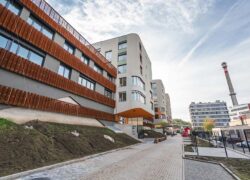
Crestyl successfully completed the Semerínka residential project in Prague ahead of schedule. The project, located in Prague’s Radlice district, comprises four blocks of varying heights, offering 185 apartments with views of Prague and greenery. The development features a community garden, family-friendly facilities, and easy access to public transport and nature. The total investment in the project reached CZK 1.5 billion.

Viktor Peška, Commercial Director of Crestyl Group, highlighted the completion of the project as a significant milestone for future residents. The project was built all at once to minimize disruptions, creating a peaceful living environment with proximity to the city center and nature. Only a third of the apartments remain available due to high demand.

Designed by David Chmelař’s architectural studio, Semerínka’s apartments feature high-quality materials, functional design, and modern technologies. The development includes well-designed facilities and courtyards to enhance community life. Residents can enjoy amenities such as a community room, reception desk, and ample parking in underground garages.

The project is conveniently located near metro stations and the Semmering railway stop, providing easy access to the city center. The surrounding area offers a mix of natural landscapes, including meadows, trees, and pastures, for residents to explore and enjoy outdoor activities. Additional amenities in the area, such as schools, swimming pools, sports facilities, and tennis courts, complement the residential offerings at Semerínka.

Building Certainty in an Uncertain Market: CIJ EUROPE Interviews David Evans, Managing Director of OPTIM Project Management

From crisis-era beginnings to a 100-plus-strong multidisciplinary team, OPTIM Project Management has evolved into one of Southeast Europe’s most respected independent consultancies. Managing Director David Evans speaks with CIJ EUROPE about early-stage risk, sustainable design, digital adoption, and the lessons learned from delivering complex projects across Romania and the wider SEE region.

OPTIM Project Management was founded in 2009, at the height of the global financial crisis. Evans had been leading the construction of the now-iconic Euro Tower on Bucharest’s Barbu Văcărescu Boulevard when the project’s original management withdrew. “I did a deal, kept the team together, and that’s how OPTIM was born,” he recalls. The company’s early portfolio revolved around retail schemes for NEPI and hypermarket operator Cora. A request from Cora in 2013 to handle both design and construction pushed OPTIM to establish its own architectural and MEP design arms. Today the Romanian office houses about 85 specialists spanning design, cost management, and project management, supported by associated operations in Bulgaria, Serbia, and Croatia. Across the region, the firm  has been involved in high-profile projects such as the Marriott hotel within Sofia’s I Tower, factories for Continental Automotive, and a major Epic Games campus in Novi Sad. In Croatia, OPTIM is currently completing a new Google head office, secured through repeat collaboration with the client’s Romanian division.

Managing Risk by Strengthening the Start

David identifies one consistent cause of cost and schedule overruns: poor front-end definition. “Too many projects are pushed forward on incomplete designs and underestimated permitting constraints. Once shaky assumptions get locked into contracts, every decision becomes reactive.” In the SEE market, the rush for early permitting to secure financing often forces design coordination to run in parallel—or start only after the building permit is issued. The result, he says, is predictable: rework, change orders, and cost drift. OPTIM’s approach is to slow down at the start, front-loading feasibility, utility checks, and stakeholder alignment before tender. “Strong beginnings are the best risk management. If you de-risk the start, you can move faster later,” David Evans insists. Studies show that more than 70 percent of project overruns originate from deficiencies in early planning rather than execution.

Many investors still view advisory services as optional, but David disagrees. “Project management isn’t an overhead—it’s a framework that secures performance and governance.” OPTIM translates technical foresight into measurable metrics such as cost-deviation reduction, fewer variation orders, and greater schedule certainty. “The question isn’t what does it cost to engage advisors, but what is the cost of not having them?” he says. Early engagement, he argues, routinely saves months and millions by identifying risks that might otherwise crystallize mid-construction.

Sustainability and Digitalisation Redefining Value

Sustainability has shifted from compliance to competitiveness. With nZEB standards now mandatory in Romania, even mid-range developments must integrate energy-efficient systems. “Among international developers, BREEAM, LEED, WELL, and strong digital connectivity are now baked into financing and leasing strategies,” says David. He points to OPTIM’s design for Hospice Casa Speranței in southern Bucharest, a palliative-care NGO facility that will use photovoltaics and ground-loop heating and cooling. “We’re targeting a 75 percent reduction in monthly utilities. For a non-profit relying on donations, that’s transformational.” Still, he notes that some local projects remain driven by short-term budgets. “Our job is to show that sustainability isn’t a cost but a value driver. A WELL-ready office leases faster and retains tenants longer; a BREEAM-certified logistics park gets better financing.”

Digital tools are also changing how OPTIM delivers. The company designs to BIM Level 300–400, uses AI-assisted concept modelling, and manages construction through cloud-based platforms such as DALUX, enabling real-time control of quality, cost, and programme. “Every drawing revision, RFI, and material change sits in one place. By completion we can generate accurate as-builts automatically,” says David. The main bottleneck now, he believes, is not technology but integration. “Information still lives in silos between design, construction, and operations. Many owners don’t yet use BIM data for maintenance or life-cycle management. Larger institutional clients do—but the rest of the market is catching up.”

OPTIM’s hotel portfolio continues to expand, yet David highlights: “Developers often underestimate what it costs to meet a brand’s technical and operational standards. Operators like Marriott or IHG guide you, but they don’t fund you.” His solution is early joint workshops with both operator and developer. “For a small fee, we test-fit the land, assess key counts, lay out facilities, and give a concept-level budget. It avoids sticker shock later.” Increasingly, banks require LEED or BREEAM certification as a loan condition—another push toward higher-quality delivery.

Climate volatility is now influencing engineering decisions. “Codes tell you to design for certain rainfall intensities, but storms now exceed them. We’ve seen three months of rain in four hours,” says David. Over-designing doubles cost; under-designing risks flooding. “It’s a constant balance between resilience and affordability.” Rising temperatures also drive up cooling loads, reinforcing the importance of envelope and systems design.

Adapting to a Changing Market

Working across four countries means navigating four sets of bureaucracy. “The laws aren’t the issue—it’s how they’re interpreted,” David explains. “A permit can take three months in one place and nine in another.” OPTIM mitigates this through flexible scheduling, dependency mapping, and a standardised tender and evaluation framework. Labour shortages, he adds, are a regional reality. “Workers from Asia often stay six months then move on to Western Europe. We pre-qualify contractors on labour strength and build conservative schedules.”

Looking ahead, OPTIM is expanding carefully into select public-works projects such as municipal offices and fire stations, while avoiding heavy infrastructure. The firm also performs general contracting on smaller assignments and continues to strengthen its in-house design and construction-management capabilities. “We’re not chasing airports or megahospitals,” David says. “Our strength lies in integrated design and delivery across Southeast Europe—staying close to clients, getting in early, and finishing with certainty.”

After sixteen years and hundreds of projects, David Evans’s philosophy remains straightforward: “If we’re in the room at the start—testing assumptions, aligning stakeholders, setting a data-driven plan—projects finish faster, cleaner, and with fewer surprises.” In an industry still defined by volatility, OPTIM Project Management’s steady focus on clarity, sustainability, and disciplined execution continues to make it one of the most reliable names in SEE construction management.

© 2025 cij.world

LATEST NEWS