Dubai’s Housing Boom Enters a New Phase as Foreign Sellers Retain Full Freedom to Repatriate Funds

Dubai’s property market is entering a more balanced phase after several years of rapid expansion. Analysts expect growth to remain solid through 2027, even as new supply begins to catch up with the city’s strong population growth and investor appetite. For many European buyers — including those from Poland, the Czech Republic, and Slovakia — this new stage of maturity also brings greater clarity and confidence when it comes to selling and repatriating investment capital abroad.

Sales of newly launched developments continue to drive Dubai’s housing sector in 2025. Off-plan transactions have climbed sharply, while demand for completed properties has steadied. Prices for new projects are still rising, but more slowly than in previous years, suggesting that Dubai’s residential cycle is shifting from a surge to a sustainable rhythm. Population growth remains one of the city’s most powerful market engines. Dubai’s resident base expanded by nearly 6 percent in 2024, and the government’s investor-friendly visa programs continue to draw professionals, entrepreneurs, and high-net-worth individuals. Initiatives such as the first-home buyer program are also steering the market toward genuine end-user ownership rather than speculative trading.

Developers are now delivering a large pipeline of apartments and villas through 2027. While this may cap price acceleration, most analysts expect the new units to be absorbed steadily, with the villa segment still under-supplied due to high demand for family and lifestyle-oriented housing. The luxury and branded residence segment continues to lead in value and global visibility. International hotel and fashion brands have deepened their partnerships with Dubai’s major developers, helping to solidify the city’s reputation as a preferred global address for wealthy investors and second-home buyers.

Policy innovation remains a major strength of Dubai’s real estate ecosystem. The ten-year “golden” residency visa tied to property investment continues to attract long-term investors, while the digital Real Estate Tokenization Project opens opportunities for smaller investors to participate through fractional ownership. Together, these measures broaden access, deepen liquidity, and enhance transparency. Developers are also adapting to the changing environment by offering flexible payment plans and more compact, affordable units tailored to young professionals. Despite heavy construction, most large firms, including Emaar, Damac, and Omniyat, maintain strong balance sheets and high levels of pre-sales, underscoring their financial resilience.

A persistent misconception among some foreign investors is that money from a Dubai property sale cannot be taken out of the UAE. This is false. The UAE has no capital-transfer or foreign-exchange restrictions on foreign investors, and funds can be freely remitted abroad once the correct process is followed. The key procedural update in 2025 concerns how funds are received. Under new Dubai Land Department (DLD) regulations, sale proceeds must be paid into a UAE bank account held in the seller’s own name. Third-party payments and Power of Attorney transfers are no longer permitted. After the proceeds are credited, sellers can transfer the money internationally via standard banking channels to any foreign account. The change is part of broader anti–money-laundering safeguards, not a limitation on capital movement. With proper documentation — such as the sale contract, title deed, and DLD transfer receipt — the process is straightforward and compliant with international standards.

For Central European sellers, the process of repatriating funds remains practical and transparent. Polish residents can freely receive proceeds from the UAE, as Poland imposes no currency or transfer restrictions. Gains from property held for five full calendar years after purchase are exempt from capital gains tax, while shorter holdings are taxable and must be declared on the PIT-38 form. Czech residents can also transfer proceeds home without limitation. Property owned for more than five years, or occupied as a main residence for at least two years, qualifies for tax exemption, while shorter ownerships are taxed at 15 or 23 percent depending on income. Slovak owners enjoy similar treatment. Property gains are exempt after five years of ownership; if sold earlier, gains are taxed at 19 or 25 percent, plus a small health levy. In all three countries, banks may request documentation confirming the legitimacy of the sale, such as the title deed, sale receipt, and SWIFT confirmation, as part of standard anti–money-laundering checks.

In practical terms, sellers should ensure that they maintain a UAE bank account in their name before the sale, collect all DLD-issued documents including the title deed and transfer receipt, and request a “purpose of transfer” note from their bank specifying that the funds are property-sale proceeds. Declaring the transaction in the home-country tax return, even when exempt, is also recommended. Keeping records such as SWIFT confirmations and currency-conversion slips provides transparency and simplifies later verification by local authorities.

Dubai’s approach to property regulation — balancing open investment with responsible oversight — has helped it become one of the most transparent and globally connected real estate markets in the world. Investors from across Europe continue to view the emirate as both a safe haven and a profitable long-term destination. Looking ahead, Dubai’s housing sector appears poised for steady growth rather than speculative spikes. Population expansion, innovative ownership models, and investor-friendly policies should sustain demand through the next decade.

For Central European owners, the message is reassuring: selling property in Dubai and repatriating the proceeds abroad remains fully permitted, practical, and protected. There are no legal barriers to moving funds out of the UAE, only procedural checks to ensure compliance. Once completed, the proceeds can be safely transferred to Poland, the Czech Republic, or Slovakia, where only local capital-gains tax rules may apply.

In short, Dubai’s housing market is maturing into a phase of sustainable growth, supported by strong fundamentals and transparent rules. For investors from Central Europe, it remains one of the few global destinations offering both high real estate returns and full freedom to repatriate gains securely.

Sources: S&P Global, UAE Central Bank, OECD/EU and CIJ.World analysis.

EU Households Still Under Pressure as Energy Prices Ease but Living Costs Stay High

Across the European Union, the start of 2025 has brought mixed signals for household budgets. New Eurostat figures show that while gas and electricity prices have edged down from last year’s peaks, many families continue to struggle with overall living costs.

In the first half of 2025, gas prices for households fell by just over eight percent compared to late 2024, marking the sharpest decline since the energy crisis began to subside. Electricity bills also dipped slightly, but only marginally, and taxes now make up a larger share of final prices than before. That means the benefits of lower wholesale costs are not always reaching consumers in full.

The differences between member states remain striking. Sweden continues to record the highest household gas prices, while Hungary enjoys the lowest. For electricity, German consumers pay among the most in Europe, whereas households in Malta and Bulgaria face some of the lowest rates.

For non-residential users such as factories and offices, electricity and gas prices have stabilised, bringing modest relief to business energy costs after several turbulent years. Yet rising tax components and the gradual withdrawal of government subsidies could limit these gains.

At the same time, the broader financial picture for European households remains fragile. Survey data for 2024 show that more than four in ten EU households still found it difficult to make ends meet. Although this is a slight improvement from the year before, it underscores that many families have yet to recover fully from the combined impact of inflation, high rents, and elevated energy bills.

In countries across Central and Eastern Europe — including Poland, Romania, Hungary, and Czechia — household energy costs remain a major concern, particularly in lower-income regions where purchasing power lags the EU average. Even as governments scale back crisis-era subsidies, households in these areas remain highly sensitive to small changes in energy tariffs or taxes.

For policymakers, the latest figures highlight the fine balance between fiscal restraint and social protection. Energy costs may be cooling, but the persistent strain on household budgets shows that the broader cost-of-living challenge across Europe is far from over.

Source: Eurostat

Several EU Capitals Compete to Host New European Union Customs Authority

The race to host the headquarters of the new European Union Customs Authority (EUCA) has officially begun, with five countries — Poland, France, Spain, Portugal, and the Netherlands — declaring their interest in housing the agency. The EUCA is set to become a key institution in the bloc’s ongoing reform of the customs union, coordinating digital data systems and managing customs risk across all Member States.

According to the European Council, applications to host the agency opened in October 2025, with final submissions expected in early 2026 and a decision anticipated by mid-year. The EUCA will be responsible for operating the EU Customs Data Centre, overseeing cross-border customs cooperation, and supporting the protection of the single market. The authority is expected to begin operations between 2026 and 2028, employing roughly 250 staff.

Warsaw enters the race

Poland formally launched its candidacy on 31 October 2025, with Finance and Economy Minister Andrzej Domański announcing Warsaw’s bid during a press conference at the Ministry of Finance. The Polish government argues that Warsaw’s position on the EU’s external border, existing infrastructure, and experience hosting Frontex make it an ideal location for the new agency. Deputy Minister Marcin Łoboda, Head of the National Tax Administration (KAS), emphasised Poland’s strong record in customs digitisation and integrated border management.

Competing cities across Europe

France has nominated Lille, citing its proximity to Brussels and established logistics infrastructure. Spain entered the competition in September 2025 with Málaga, positioning the southern port city as a growing European logistics and innovation hub. Portugal has proposed Porto, pointing to its maritime economy and modern technology base, while the Netherlands — likely proposing either The Hague or Rotterdam — has expressed interest, leveraging its trade expertise and existing EU agency presence.

Evaluation criteria and selection timeline

The European Council and Commission will assess candidate cities based on accessibility to Brussels, quality of office facilities, security standards, data-centre capacity, housing and schooling options for staff, and synergies with other EU institutions. Shortlisted bids are expected to be announced in spring 2026, followed by a ministerial vote before mid-year.

Regional balance a key factor

Observers note that the decision may balance regional representation across the EU. With most EU agencies currently based in Western Europe, a successful Polish bid could reinforce the EU’s commitment to greater geographic diversity. Warsaw’s proposal to host EUCA alongside Frontex — both agencies focused on border and customs security — highlights its ambition to position Poland as a regional centre for EU operational institutions.

Regardless of the outcome, the establishment of the EUCA marks a milestone in the modernisation of the customs union — an initiative aimed at strengthening trade oversight, combating smuggling and counterfeit goods, and improving the resilience of the EU’s single market.

Source: European Council; Ministry of Finance of the Republic of Poland; French Ministry of Economy and Finance; Sur in English; Lusa News; Xinhua; CIJ EUROPE analysis.

Poland’s Mortgage and Consumer Lending Surge in September 2025

Poland’s credit market recorded strong growth in September 2025, driven by a surge in mortgage and cash loans, according to the latest data from Biuro Informacji Kredytowej (BIK). The increase comes amid improving creditworthiness, lower interest rates, and steady household income growth.

Compared with September 2024, banks and credit unions issued 52.4% more housing loans and 18.8% more cash loans, while installment lending and credit card issuance both declined slightly. In value terms, the market saw an even sharper rise — housing loan volumes climbed 62.8%, cash loans 21.3%, and credit cards 5.1%. Installment loans were the only category to show a modest contraction of 0.6% year-on-year.

Housing loans set a new record

The value of new housing loans reached PLN 10.67 billion in September, setting a historic monthly record and surpassing the previous peak from January 2024, during the “Safe Credit 2%” programme. The average mortgage size rose 6.8% year-on-year to PLN 448,900, reflecting higher property values and increased borrower capacity.

According to Prof. Waldemar Rogowski, BIK’s chief analyst, the record results reflect the impact of lower interest rates and rising real wages on household creditworthiness. “These favourable conditions could continue to stimulate demand, although a rise in uncertainty or global volatility could weaken momentum,” he said.

Strong growth in cash loans

The number and value of cash loans continued to expand sharply, supported by larger loan sizes and greater consumer confidence. The average cash loan amounted to PLN 26,379, up 2.1% from a year earlier. Prof. Rogowski noted that borrowers are increasingly opting for higher-value loans above PLN 50,000, helped by extended repayment periods and reduced borrowing costs. Between January and September, the total value of cash loans exceeded PLN 90 billion, raising expectations for a record annual total.

Weakness in installment lending

Installment loans, however, showed persistent weakness. BIK reported an 8.9% year-on-year drop in the number of such loans in September and a 7.1% decline in their total value for the first nine months of the year. Rogowski attributed this to a contraction in low-value retail financing and the transfer of some deferred payment (BNPL) liabilities from non-bank firms into bank portfolios.

Credit quality remains stable

Despite a slight month-to-month weakening in repayment indicators, BIK’s Quality Indexes remained at safe levels across all loan types, with improvements year-on-year for housing and cash loans. “Credit risk remains low, and further interest rate reductions and rising wages are likely to support stability,” Rogowski said.

The September results highlight the contrast between a rapidly expanding mortgage and consumer credit sector and a more subdued retail-finance market. Analysts suggest that if macroeconomic conditions remain stable, Poland could close 2025 with one of its strongest lending performances in recent years.

Source: Biuro Informacji Kredytowej (BIK) – Newsletter kredytowy Wrzesień 2025, published 29 October 2025.

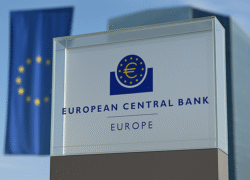
ECB Holds Rates Steady as Economists Urge Clearer Guidance on Future Cuts

The European Central Bank (ECB) opted to keep interest rates unchanged at its latest meeting, maintaining a cautious stance amid growing signs of economic weakness across the eurozone. The decision leaves borrowing costs at their current level, with the deposit rate remaining at 2 percent, as policymakers continue to weigh slow growth against easing inflation.

While the ECB described its approach as data-driven, some economists argue that the bank missed an opportunity to reassure investors and businesses about its readiness to act should conditions worsen. Marcel Fratzscher, President of the German Institute for Economic Research (DIW Berlin), said the central bank should have sent a clearer message that it stands ready to cut rates if necessary to support the economy.

“The ECB continues to act very cautiously,” Fratzscher noted, adding that multiple risks — from trade tensions and the ongoing war in Ukraine to political instability in parts of Europe — could weigh heavily on output and confidence. He warned that tighter financing conditions are beginning to affect businesses and households, suggesting that the current policy stance may be overly restrictive.

Economic data from across the euro area point to a weaker recovery than expected earlier in the year. Business investment remains subdued, and credit surveys show only limited lending appetite despite moderating inflation. Analysts say that while the ECB’s decision to hold rates steady reflects prudence, stronger forward guidance could have eased uncertainty in financial markets and improved access to financing.

For now, the ECB insists that future moves will depend on incoming data, keeping its options open for either prolonged stability or potential easing in 2026. But with growth forecasts being revised downward, pressure is likely to build on the central bank to act sooner rather than later if the slowdown deepens.

Source: DIW Berlin

High Court London Upholds Key Leasehold Reforms, Rejects Landlords’ Human Rights Challenge

The High Court in London has dismissed all six judicial review claims brought by major landlord and investment groups challenging core provisions of the Leasehold and Freehold Reform Act 2024 (LAFRA). The decision confirms the Government’s right to overhaul leasehold valuation rules and rejects arguments that the reforms breach property rights under the European Convention on Human Rights (ECHR).

The case — R (ARC Time Freehold Income Authorised Fund & Others) v Secretary of State for Housing, Communities and Local Government [2025] EWHC 2751 (Admin) — was heard by Lord Justice Holgate and Mr Justice Foxton. Their joint judgment, handed down on 24 October 2025, represents a major victory for the Government’s leasehold reform programme.

At issue were three controversial elements of LAFRA: the 0.1% ground-rent cap, the abolition of marriage and hope value, and the change requiring each party to bear its own non-litigation costs in enfranchisement and lease-extension cases.

Ground-rent cap upheld

Landlords argued that the 0.1% cap on ground rent used in enfranchisement valuations was arbitrary, retrospective and unfairly stripped them of contractual income. The Court disagreed, finding that Parliament acted within its “wide margin of appreciation” on social and economic policy. The judges said the figure had a reasonable evidential basis in the Law Commission’s work, CMA analysis, and the Government’s impact assessment.

Marriage and hope value removed

The claimants also attacked the abolition of marriage value — a long-standing valuation concept that gave freeholders 50% of the uplift when leases under 80 years were extended. The Court said the change was a legitimate policy choice designed to correct an inherent unfairness in the leasehold system, which forces leaseholders to pay again for an asset that naturally declines in term. Concentration of the impact in London did not make the measure disproportionate, the judges ruled.

Cost recovery reform justified

On costs, the Court upheld Parliament’s decision to end automatic recovery of landlords’ non-litigation expenses, noting that in normal market transactions each party bears its own professional fees. The reform was found to make the process simpler and fairer while retaining limited exceptions for small-value cases.

No breach of property rights

In a significant passage, the Court confirmed that Article 1 of Protocol 1 to the ECHR — which protects property rights — does not entitle landlords to “full market value” compensation, only to compensation “reasonably related to value.” The judges said the reforms strike a “fair balance” between public interest and private rights.

Next steps

Landlord groups have 21 days from 24 October to seek permission to appeal. The judgment leaves the Government’s leasehold reform agenda intact, though officials have yet to publish the promised 2025 consultation on remaining valuation components.

Legal commentators say the ruling cements LAFRA’s position as the most far-reaching shake-up of leasehold law in a generation — and signals the courts’ willingness to defer to Parliament on broad questions of housing fairness and market regulation.

Source: CMS

EU Rail Travel Reaches Record High in 2024, Led by Germany, France, and Italy

Passenger travel by rail across the European Union reached its highest level on record in 2024, with strong demand in nearly every member state. According to the latest EU data, rail operators carried the equivalent of 443 billion passenger-kilometres last year, marking a 5.8% increase from 2023 and surpassing pre-pandemic levels for the first time.

Germany remained the continent’s largest rail market, recording 2.9 billion passenger journeys, followed by France (1.32 billion) and Italy (843 million). These three countries accounted for nearly two-thirds of all rail trips within the EU. The recovery was particularly pronounced in Western Europe, where the expansion of high-speed and regional networks helped attract more travellers back to trains.

Central and Eastern Europe also saw notable growth. Hungary led the bloc with an exceptional 60% rise in passenger numbers, reflecting a rebound in domestic travel and improved services on key intercity lines. Latvia (+13.9%) and Ireland (+10%) also recorded double-digit increases. In contrast, Romania (-4.9%) and Bulgaria (-3.1%) reported declines due to ongoing infrastructure issues and limited service capacity.

When measured against population, Luxembourg emerged as the EU’s most frequent user of rail, averaging nearly 33 train journeys per person in 2024. Denmark and Germany followed closely, both exceeding 30 trips per capita. At the opposite end, Greece and Lithuania registered the lowest usage, with only around one to two train journeys per person during the year.

Analysts note that the upturn in passenger rail transport reflects broader efforts to improve connectivity, digital ticketing, and cross-border services under the EU’s Green Deal transport strategy. The growing preference for train travel is being driven by sustainability targets, higher fuel costs, and renewed investment in inter-city and regional rail links.

Freight transport by rail, however, showed a slight decline of 0.8%, as weak industrial output and logistics bottlenecks weighed on cargo movement.

Overall, 2024 reaffirmed rail’s role as one of the most resilient and sustainable transport modes in Europe — with more passengers on board than ever before and steady progress toward a cleaner, interconnected mobility system.

Rail passenger transport in the EU, 2024

(Main undertakings; million passengers and % change vs 2023)

Rank

Country

Passengers

 (million)

Change 2024

 vs 2023 (%)

Passengers per capita

1

🇩🇪 Germany

2 904

+5.0

30.0

2

🇫🇷 France

1 320

+6.2

19.3

3

🇮🇹 Italy

843

+7.5

14.2

4

🇪🇸 Spain

708

+8.0

14.9

5

🇵🇱 Poland

392

+3.1

10.1

6

🇳🇱 Netherlands

364

+4.7

20.3

7

🇸🇪 Sweden

272

+5.5

25.7

8

🇦🇹 Austria

267

+4.3

29.4

9

🇨🇿 Czechia

258

+5.8

24.0

10

🇧🇪 Belgium

250

+3.6

21.2

11

🇭🇺 Hungary

219

+60.0

22.0

12

🇩🇰 Denmark

196

+6.1

31.0

13

🇫🇮 Finland

184

+5.9

26.5

14

🇷🇴 Romania

162

−4.9

3.6

15

🇬🇷 Greece

14

−2.5

1.5

16

🇱🇹 Lithuania

5

−3.0

1.5

17

🇱🇻 Latvia

18

+13.9

9.3

18

🇪🇪 Estonia

8

+7.0

6.0

19

🇧🇬 Bulgaria

25

−3.1

3.6

20

🇱🇺 Luxembourg

21

+5.3

**32.8 **

21

🇮🇪 Ireland

55

+10.0

10.8

22

🇸🇮 Slovenia

24

+8.5

11.4

23

🇭🇷 Croatia

33

+5.1

8.2

24

🇸🇰 Slovakia

44

+4.8

8.0

25

🇵🇹 Portugal

106

+6.6

10.4

Source: Eurostat dataset rail_pa_typepas, update 21 Oct 2025; Eurostat news release “Rail passenger transport increased by 5.8 % in 2024” (31 Oct 2025).

Czech Coalition Plans Housing Reforms and New Approach to Building Law

The incoming Czech government, formed by ANO, SPD, and Motorists, has set out plans to overhaul the country’s building legislation and housing policy. According to the coalition’s draft programme, housing would be formally recognised as a matter of public interest, opening the way for faster approval of large residential developments and new financial support measures for young families.

The draft document, sent to the president for review at the end of October, outlines a broad reform agenda combining housing affordability with deregulation in the construction sector. The coalition intends to amend the Building Act, returning to key features of the 2021 version that centralised planning under a national authority. It also pledges to simplify the approval process by improving the digital building-permit system, which has faced technical difficulties since its launch. The new administration wants a modular, phased approach to digitisation and promises thorough testing before rollout.

A central pillar of the programme is the creation of preferential loans for young families purchasing their first homes, alongside partial state support for mortgage interest. Families with small children and workers in key professions would qualify for additional benefits. The coalition also proposes a bonus for newborn children and a new framework for tax depreciation on corporate and service housing built for employees.

The State Investment Support Fund is expected to take on a larger role in housing advice and coordination. Planned amendments to the housing support law would strengthen cooperation with municipalities and promote cooperative and affordable rental housing through state guarantees and targeted investment incentives. The private sector would be encouraged to participate in new housing and student-dormitory construction.

At the same time, the government plans to scale back what it calls non-functional or overly strict environmental and energy standards that have increased the cost of construction. The coalition also confirmed its opposition to the extension of the EU’s ETS2 emissions trading system, arguing that it could further raise housing costs.

If adopted, the proposals would mark a significant shift in Czech housing policy—combining state-backed financing and cooperative models with lighter regulation and centralised planning. The coalition is expected to publish its full programme and sign the official agreement in early November.

CTP Signs 34,450 sqm Lease with Global Logistics Company in Sulechów

CTP, Europe’s largest listed industrial and logistics property developer by gross lettable area, has signed a lease agreement with an international logistics service provider for 34,450 sqm at CTPark Sulechów in western Poland.

The tenant will occupy 33,376 sqm of warehouse space and 1,074 sqm of offices, representing nearly half of the park’s developed area. The facility is expected to be operational later this year.

CTPark Sulechów is located less than 70 km from the German border, offering direct access to major transport routes serving both the Polish and German markets. Alongside the new tenant, Domator24, a Polish producer of gaming chairs and metal furniture, also operates within the park.

CTP has completed 74,995 sqm of space at Sulechów to date and plans to add a second warehouse of 12,837 sqm. The park is CTP’s second investment in Poland’s Lubuskie Province, complementing CTPark Iłowa, where two buildings with a combined area of 99,148 sqm are already in operation along the A18 motorway.

According to Piotr Flugel, Managing Director of CTP Poland, the development reflects the continued expansion of contract logistics and e-commerce operations in the region:

“Warehouses today are a key element of modern logistics chains, supporting efficient goods flow and scalable processes. Global companies are increasingly choosing Poland for its quality infrastructure and strategic location, which enables distribution across Western and Central Europe.”

CTP’s growing portfolio in western Poland aligns with broader trends in the Central and Eastern European logistics market, where nearshoring, manufacturing growth, and e-commerce continue to drive demand for modern, flexible warehouse space.

Central Europe Intensifies Crackdown on Unfair Trading Practices in the Food Supply Chain

Regulators across Central Europe are stepping up oversight of large retailers amid growing concerns about the balance of power between supermarket chains and their suppliers. The latest example came from Romania, where the Competition Council (RCC) launched unannounced inspections at six major retail groups suspected of unfair practices in the dairy sector.

The dawn raids targeted retailers active across supermarket, hypermarket and cash-and-carry formats. According to the RCC, the inspections form part of an ongoing inquiry into compliance with Law No. 81/2022, which transposes EU Directive 2019/633 on unfair trading practices in the agricultural and food supply chain. The legislation aims to prevent abuses of bargaining power by larger buyers and to protect smaller producers from exploitative contract terms.

The RCC said evidence gathered during its market study on milk and dairy products had revealed potential irregularities, including delayed payments for perishable goods, excessive cumulative discounts, and delisting threats linked to shelf-access fees. The authority underlined that the inspections do not imply guilt but are intended to verify whether contractual relationships between retailers and suppliers comply with the law. If infringements are confirmed, fines could reach RON 600,000 or 1 % of annual turnover, and companies may be ordered to cease the conduct.

Although the Competition Council did not name the firms involved, Romanian media identified the chains as Metro, Selgros, Auchan, Carrefour, Kaufland, and Mega Image. The case forms part of a broader sector-wide review of the dairy and wider agri-food market and reflects Romania’s commitment to aligning national enforcement with EU policy objectives.

Regional trend toward stricter enforcement

Romania’s action is not isolated. Other Central European authorities have also strengthened scrutiny of buyer-supplier relationships in recent years.

In Poland, the Competition and Consumer Protection Office (UOKiK) has pursued several investigations into retailer conduct and continues to highlight agri-food supply chains as a priority area. Enforcement has focused on payment terms, rebate structures, and supplier contracts.

The Czech Competition Authority (ÚOHS) applies its national “significant market power” rules to the food sector and has issued fines where larger chains used contractual leverage against smaller producers.

In Austria, the Federal Competition Authority (AFCA) completed a sector inquiry into the food industry, identifying systemic issues such as payment-term pressures and limited transparency in commercial negotiations. The findings have led to plans for enhanced monitoring throughout 2025.

Other countries, including Slovakia, Hungary, Slovenia, Croatia, and Bulgaria, have reinforced their frameworks through national laws implementing the same EU directive. Croatia’s law extends its reach to contracts governed by foreign law when domestic effects are felt, while Slovenia combines competition enforcement with an ombudsman dedicated to supplier complaints.

A common European direction

Across the region, authorities are aligning around the same goal: ensuring fair dealing in the food chain and curbing practices that disadvantage primary producers. Inflation, supply-chain cost pressures, and market concentration have sharpened the focus on retailer behaviour.

The Romanian raids mark one of the most visible enforcement steps so far and underline a coordinated Central European shift toward active policing of unfair trading practices in food retail. More investigations—particularly in sensitive sectors such as dairy, meat, and fresh produce—are expected as national regulators follow through on EU-wide commitments to protect smaller suppliers and restore fair competition in the agricultural supply chain.

LATEST NEWS