Panattoni Starts Construction of 32,000 sqm Logistics Park in Białystok as Pre-leasing Reaches 75%

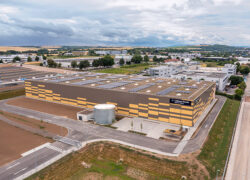
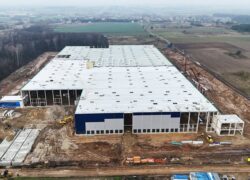
Panattoni has begun work on Panattoni Park Białystok III, a new 32,000 sqm logistics development scheduled for completion in the first quarter of 2026. The project adds to the developer’s existing footprint in the Podlaskie region, where it has previously delivered more than 77,000 sqm of space across two sites.

Białystok is attracting increased attention from logistics and production companies, supported by a growing labour pool and ongoing transport upgrades. A key factor is the continued development of the Via Carpatia corridor, which is expected to strengthen north–south connections and improve access to international supply chains.

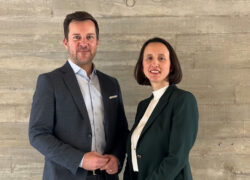
According to Dorota Jagodzińska-Sasson, Managing Director at Panattoni, the company views the region as a strengthening logistics hub. “Białystok is becoming an increasingly important point on the country’s economic map – both for local companies and for businesses seeking access to markets beyond the northern and eastern borders,” she said.

The new park, located in Choroszcz near the Białystok-Zachód junction on the S8, is currently the only Class A facility available to tenants in the Podlaskie Province. Four companies have already committed to the scheme and will move in once construction finishes: a courier operator, a logistics firm, and two retailers specialising in audio-video equipment and cosmetics. Their leased spaces range from 3,000 to 8,500 sqm, and the park is expected to employ more than 300 people.

“With four lease agreements covering 75% of the building, demand clearly reflects the current needs of the Podlaskie market,” said Joanna Pilich, Senior Leasing Manager at Panattoni.

The project is being developed to BREEAM Excellent standards and will include measures to reduce energy and water consumption, as well as charging stations for electric vehicles.

Emerald Advisory Secures Credit Management Mandate for Marshall Bridge Fund

Emerald Advisory GmbH, a Frankfurt-based consultancy specialising in real estate debt, has been appointed to oversee the German support and operational management of selected credit commitments for the Luxembourg-domiciled Marshall Bridge Fund. The fund focuses on short-term bridge financing in Germany and the United Kingdom.

Under the mandate, Emerald Advisory will act as a full-service partner for loan administration and workout processes in Germany. This includes managing and settling credit transactions, coordinating structured workouts for non-performing loans, and handling insolvency and enforcement procedures. The firm will also negotiate with borrowers, insolvency and enforcement administrators, as well as potential purchasers.

The agreement further covers the marketing of real assets and property-backed loans, developing viable concepts for properties and operations, and liaising with public authorities. The mandate also extends to managing assets acquired through distressed-debt proceedings, where Emerald Advisory will support the identification of financially sustainable solutions within an institutional lending framework.

“I’m very glad about the servicing mandate for the Marshall Bridge Fund. The mandate represents a sign of confidence in our experience and competence. We are optimally networked in Germany as far as the field of mortgage loan management goes. This enables us to respond quickly and to achieve optimal outcomes for our clients. Our position in professional servicing is further strengthened by this collaboration,” said Dr. Norman Scherer, Managing Director at Emerald Advisory.

The mandate is overseen on behalf of the Marshall Bridge Fund by Xavier Deu, Managing Partner and Head of Compliance, and Paul Hunt, Chairman of the Investment Committee.

Central Group Delays All New Projects by One Year

Central Group, the largest residential developer in the Czech Republic, will postpone the start of all new construction projects that are not yet on sale by one year. Founder and CEO Dušan Kunovský said the decision reflects what he describes as an overheated construction market and disproportionate increases in the prices of construction work and materials.

“This hysterical increase in the prices of construction work and materials has recently significantly increased the prices of new apartments for buyers. But we don’t want that. It is an overheating of the entire construction market, which needs to be cooled down with a ‘wet rag on the head’ and brought back to normal. That is why we are now postponing the start of all our new construction projects that are not yet on sale by one year,” Kunovský said in a statement reported by Seznam Zprávy.

The company’s ongoing construction projects will continue as planned. Central Group currently has around 3,200 apartments under construction across Prague, the highest volume in its history, with a total value of approximately CZK 25 billion. The company has previously said it finances major activities primarily from its own resources rather than bank loans, though this cannot be independently verified across all of its development work.

Central Group links its decision to broader conditions in the construction sector. According to the company, the market has remained unstable since the pandemic, with added strain from the energy crisis and the economic effects of the war in Ukraine. The firm argues that labour shortages, supply-chain disruptions and fluctuating material prices have created an environment in which beginning new projects is currently uneconomical.

The company made a similar move in 2022 when it postponed the launch of two large projects due to rising construction costs. It says other developers followed months later, although this cannot be independently confirmed.

The Czech National Bank has recently taken steps aimed at reducing risks in the housing market. It has issued a recommendation tightening lending conditions for investment mortgages by lowering the maximum loan-to-value ratio and limiting borrowers’ debt-to-income levels. These measures take effect in April 2026. The DSTI ratio remains inactive.

Central Group will review tenders already underway and expects to decide within three months whether these projects will also be delayed. The company reports that it has completed more than 18,000 homes over its history and holds a substantial land portfolio in Prague for future residential development.

HIH Invest Acquires New Logistics Property in Alzey

HIH Invest has purchased a newly completed logistics building in Alzey, Rhineland-Palatinate, from the TIMBRA Group for its HIH Deutschland+ Core Logistik Invest fund. The building, located at Otto-Lilienthal-Straße 15, was finished in February 2025 and has a total rental area of 10,164 sqm. It includes 9,287 sqm of logistics space, 777 sqm of office space and 100 sqm designated for hazardous materials. Lufthansa Technik Aero Alzey is the main tenant under a long-term lease.

The building was developed to meet DGNB Gold criteria and includes a heat pump, underfloor heating, photovoltaic panels, electric charging stations and a green roof. It has a clear height of 12 meters, a floor load capacity of 5 tons per sqm and a layout intended to support broad third-party usability.

The property is situated in an expanding industrial area in Alzey, a location positioned between several major cities in the region, including Frankfurt, Mainz, Wiesbaden, Mannheim and Kaiserslautern. The site connects to the A61 motorway within a short distance, and Frankfurt Airport can be reached by car in about an hour.

“Due to the limited availability of space and high land prices in Frankfurt am Main, logistics developers are increasingly focusing on surrounding communities with good transport links,” said Maximilian Tappert, Head of Transaction Management Logistics at HIH Invest. “Alzey has developed strongly as an industrial and logistics location in recent years. Further planned settlements, such as that of the international pharmaceutical company Eli Lilly, will lead to an additional upgrade of the location.”

Andreas Strey, Co-Head of Fund Management and Head of Logistics at HIH Invest, stated: “With the purchase of the logistics property in Alzey, we can further diversify our fund. The strategically favorable location, high sustainability requirements, and good third-party usability make the properties an ideal asset for our fund. We also have a tenant with a high level of loyalty to the location, which ensures stable cash flow in the long term.”

Representing the seller, Martin Gerkhardt of the TIMBRA Group commented: “By expanding the Lufthansa Technik Aero Alzey site, we have contributed to the economic development of the region. We are delighted to have gained HIH Invest as an experienced partner who will accompany the property’s life cycle in the long term.”

Following this acquisition, the HIH Deutschland+ Core Logistik Invest fund now holds nine properties valued at around €140 million. The fund targets a volume of €300 million and focuses primarily on logistics assets in Germany, with up to 30 percent invested in nearby countries including the Netherlands, France and Austria. The fund is classified under Article 8 of the EU Disclosure Regulation and targets institutional investors and financial institutions.

Legal and tax due diligence was carried out by Baker Tilly (Frankfurt), while Stane (Frankfurt) handled the technical and ESG assessments. CBRE acted as the broker for the transaction.

Skanska Sells Port7 Office Complex in Prague for Approximately €130 Million (≈ SEK 1.42 billion)

Skanska has agreed to divest the Port7 office complex in Prague to AFI through its subsidiaries for approximately €130 million (≈ SEK 1.42 billion, using today’s EUR/SEK rate of ~10.96). The transaction will be recorded by Skanska Commercial Development Europe in the fourth quarter of 2025, with the transfer of the properties planned for the first half of 2026.

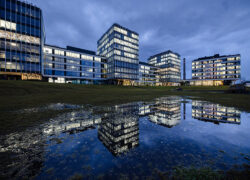
Port7 is located on the left bank of the Vltava River in Prague’s Holešovice district and consists of three office buildings developed in two phases, offering a total of about 36,000 sqm of leasable space. The deal also includes adjacent plots designated for future development. The office and retail areas are fully leased to tenants operating in sectors such as IT, publishing, flexible workspace, insurance, consulting and engineering.

Completed in April 2023, Port7 was developed on a former brownfield site and incorporates office buildings together with public areas and ground-floor amenities including a restaurant, café and fitness centre. The project features several circular and resource-efficient measures, such as the reuse of materials from a demolished Skanska property and water-saving systems that reduce consumption by more than 40 percent compared with the LEED baseline.

The complex reports zero Scope 2 emissions for electricity, achieved through the use of renewable electricity guarantees of origin during construction and operation, as well as on-site photovoltaic installation. Port7 meets the Nearly Zero Energy Building standard.

All three buildings hold LEED Platinum certification. Two buildings have achieved WELL Platinum certification, while the third is expected to obtain it in the coming months. The development has also received Access4You certification for accessibility.

Cushman & Wakefield Echinox Named Exclusive Advisor for Sale of Former Electroputere Craiova Industrial Platform

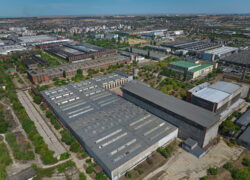
Cushman & Wakefield Echinox has been appointed exclusive advisor for the sale of a 37-hectare land parcel forming part of the former Electroputere industrial platform in the central-eastern area of Craiova. The site offers potential for a range of development options, including residential, retail, logistics or light industrial uses.

The wider Electroputere platform originally covered around 60 hectares. More than 20 hectares have already undergone redevelopment, including a shopping centre, office buildings and a recently completed aparthotel. The remaining 37 hectares continue to host industrial functions and represent the next phase of potential regeneration in the area.

“Electroputere Craiova represents an exceptional opportunity to revitalize an iconic area of the city into a urban hub that addresses the needs of both the community and investors. Given its strategic location, significant size, and excellent infrastructure, the site is ideally positioned to become a flagship project for the entire region. Across Romania, we have seen that former industrial platforms in central locations have become successful real estate developments,” said Ștefan Oprea, Consultant in the Land Agency department at Cushman & Wakefield Echinox.

Former industrial sites in major Romanian cities have attracted steady interest from investors, particularly for mixed-use redevelopment. Recent transactions in Bucharest, Cluj-Napoca, Timișoara and Iași show continued demand for large land parcels, often over 20–30 hectares, with values influenced by location, infrastructure and future development capacity.

Local developers have also been active in acquisitions of similar sites, viewing their transformation as a way to modernize urban areas and support long-term economic activity. Such projects typically require detailed due diligence, planning analysis and alignment with current market requirements.

Craiova’s tourism profile adds to the site’s potential. The city’s cultural and architectural landmarks, public spaces, museums and regular events draw increasing numbers of visitors. The proximity of the Electroputere platform to key attractions and leisure areas provides an opportunity for mixed-use schemes that could serve both residents and tourists.

Slovakia’s average wage rises 5.7% in Q3 2025, real growth slows to 1.3%

Average wages in Slovakia continued to grow in the third quarter of 2025, but the pace of real wage growth eased as inflation picked up. According to data from the Statistical Office, the average nominal monthly wage reached EUR 1,569, which is 5.7% higher than a year earlier. In real terms, after adjusting for inflation, wages increased by 1.3%, the second weakest growth rate in the last two years. Seasonally adjusted wages were unchanged compared with the second quarter.

Nominal wage growth was recorded across all 19 monitored sectors, with increases ranging from just under 2% in professional, scientific and technical activities to more than 12% in the real estate sector. However, not all sectors kept pace with inflation. Three areas experienced real wage declines: professional, scientific and technical activities (-2.4%), arts and recreation (-1.4%), and administrative services (-1%).

Real wages rose in 16 sectors, with the strongest gains—above 5%—in real estate activities, mining and quarrying, and healthcare. Wage increases in healthcare reflected the financial adjustments applied to selected medical professions in 2025.

The two largest employers in the country, industry and trade, also saw slower nominal wage growth in Q3. Industry wages grew by 5.7% year-on-year, in line with the national average, bringing the sector’s average wage to EUR 1,672. In trade, wages rose by 5.3% to EUR 1,487, resulting in real wage growth of 1%.

Employees in information and communication, financial and insurance services, and energy utilities continued to earn the highest wages, all exceeding EUR 2,500 on average. At the opposite end of the scale, accommodation and food services remained the lowest-paid sector, though the average wage there passed EUR 1,000 for the first time. All sectors now report an average wage above this threshold.

Regionally, Bratislavský kraj remained the only region with wages above the national average, reaching EUR 1,866. Other regions ranged from EUR 1,252 in Prešovský kraj to EUR 1,495 in Trnavský kraj. Nominal wages increased in all regions, with the highest annual rise in Nitriansky kraj (8.4%). After inflation adjustment, all regions recorded real wage growth, with Nitriansky kraj again leading (3.9%) and Bratislavský kraj recording the smallest increase (0.3%).

For the period from January to September 2025, the average monthly wage reached EUR 1,580, up 6.5% year-on-year. Real wages over the first three quarters rose by 2.3%. Eighteen sectors reported real wage gains in this period, while only one—electricity, gas and steam supply—registered a real decline.

Blue Assets to Manage Fidurock’s Retail Parks in the Czech Republic

Blue Assets, the property manager overseeing the largest commercial real estate portfolio in the Czech Republic, is expanding into the retail property segment. The company has secured a mandate to manage retail parks owned by the Fidurock real estate investment group.

Effective January 2026, Blue Assets will provide full property management services for seven Fidurock retail parks. The company has already taken over management of Arkáda Prostějov as of 28 November 2025. With these additions, the total area managed by Blue Assets will increase by approximately 82,000 sqm, bringing its overall managed portfolio to more than 1.6 million sqm. Blue Assets, part of the Panattoni Group, has been active on the Czech market since 2023.

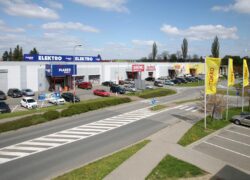
The tender included eight retail parks located in Staré Město u Uherského Hradiště, Choceň, Milevsko, Liberec, Mladá Boleslav, Tábor, Trutnov and Prostějov. The combined GLA exceeds 82,000 sqm, and tenants include Mountfield, Sportisimo, Penny, Pepco, Kik, dm, and Rossmann.

“We leverage synergies within the managed real estate portfolio for the benefit of our clients, for example, in optimizing energy management. We preserve the real estate asset value and we are responsible for its efficient operation and optimal use. We believe that effective property management is the base of successful real estate business. We are delighted to welcome Fidurock among our clients,” said Denisa Gelatková, Director of Blue Assets CZ.

Blue Assets currently manages more than 60 assets with a total leasable area exceeding 1.6 million sqm and more than 170 tenants across logistics, automotive, manufacturing, pharmaceutical and other sectors. The portfolio includes Panattoni Park Kojetín, used as a distribution centre for Amazon.

Fidurock’s real estate holdings comprise more than 35 properties with a total value above CZK 10 billion. Its portfolio focuses on apartment buildings and retail parks, alongside ongoing development activities. The group owns assets in Prague, Brno, Plzeň and Liberec, as well as multiple locations in Slovakia.

“Blue Assets met all our tender criteria and confirmed high level of its expertise. We see it as a strong player in the property management. Its strengths include a wide range of services, including energy management, community energy frameworks and use of state-of-the-art technologies. From the management perspective, a stable team of qualified people is key for us,” said Petr Vondrášek, Asset Management Director.

Art-Invest Real Estate Announces Leadership Change at Its Berlin Branch

Art-Invest Real Estate has announced a leadership transition at its Berlin branch. Mathias Groß will join the company’s management board in the first quarter of 2026 and assume responsibility for the Berlin office, succeeding Lena Brühne, who is stepping down after 13 years with the firm to pursue new opportunities in the real estate sector.

Groß will oversee a portfolio of projects in Berlin totalling around 300,000 m² and valued at more than EUR 2 billion. He joins Art-Invest Real Estate from BAUWERT Aktiengesellschaft, where he served as Head of Acquisitions, Project Development and Sales. Prior to that, he spent nine years as Branch Manager at Pandion Real Estate GmbH in Berlin. He is also an honorary board member of Transiträume Berlin e.V. and holds a degree in business administration from the Berlin School of Economics and Law. With more than 25 years of industry experience, he will take over management of one of Art-Invest Real Estate’s key regional operations.

Brühne leaves the company at her own request. Having joined Art-Invest Real Estate in 2012, she initially held roles in North Rhine-Westphalia and Berlin before establishing and leading the Berlin branch from 2016 onwards. Under her management, the location grew into an important part of the organisation, now employing 35 people. Among the projects carried out under her leadership were the Deutsche Bank Campus on Otto-Suhr-Allee, Macherei Berlin-Kreuzberg, and in the eastern region, Listhaus and Dresdner Hof in Leipzig.

“I am very much looking forward to the tasks ahead at Art-Invest Real Estate in Berlin. The current market phase in particular is opening up numerous exciting opportunities. At the same time, our goal is to further develop the existing portfolio in the best possible way. Together with the dynamic Berlin team at Art-Invest Real Estate, I would like to take on this challenge and contribute to the realization of further architecturally outstanding and innovative real estate projects,” said Mathias Groß.

Reflecting on her departure, Brühne stated: “The past 13 years have been characterized by entrepreneurial responsibility and a passion for creating lasting value. From establishing the Berlin office to large-scale projects, we have proven together that strategy and success arise from dialogue with the right people. I would like to thank the entire team for this formative time. As I now turn my attention to new perspectives, I would like to express my special thanks to the shareholders for their trust. I remain on friendly terms with Art-Invest Real Estate.“

Art-Invest Real Estate’s leadership expressed appreciation for her contribution and support for the incoming head of the Berlin office. “We would like to express our sincere thanks to Lena Brühne for her many years of trustful cooperation and wish her all the best for her future. At the same time, we are delighted to welcome Mathias Groß, an expert in the Berlin real estate market, as her successor at the Art-Invest Real Estate Berlin branch and wish him every success in his upcoming tasks,” said Dr. Markus Wiedenmann, CEO, and Dr. Ferdinand Spies, COO of Art-Invest Real Estate Management.

DIW Heat Monitor 2024: Heating Demand Stable, District Heating Prices Increase Markedly

Heating energy demand in German households remained largely unchanged in 2024 compared with the previous year, while overall heating prices rose more slowly. District heating, however, recorded a significantly sharper increase. These findings come from the latest Heat Monitor published by the German Institute for Economic Research (DIW Berlin), based on data from real estate service provider ista SE.

According to the report, temperature-adjusted heating energy consumption remained nearly constant in 2024 and was still around seven percent lower than in 2021, before the energy crisis. Emissions from residential heating also declined slightly. “The DIW Heat Monitor shows that many households are still heating more economically today than before the energy crisis,” said study author Sophie M. Behr from DIW Berlin’s Climate Policy Department.

Heating energy prices increased by an average of around six percent in 2024, compared with a rise of roughly 20 percent the previous year. District heating, however, became considerably more expensive following the expiration of national price caps, with prices rising by 27 percent. “The sharp increase in district heating prices is largely driven by catch-up effects. Prices for heating oil and gas had already risen more sharply in the previous year,” said study author Till Köveker. “Since the beginning of the energy crisis, district heating has nevertheless become less expensive overall than gas or heating oil.” Overall, heating energy prices have risen by 77 percent since 2021, while district heating prices have increased by 67 percent.

The report notes continued regional differences. Temperature-adjusted heating requirements in eastern Germany were nearly 15 percent lower than in western states, reflecting higher renovation rates and greater use of district heating. Households in the eastern states paid about 11 percent more for heating in 2024, compared with a nationwide average cost increase of 3.5 percent.

Behr warned that the uneven price developments could affect public support for the heating transition. “The extremely different price developments in 2024 between district heating and other energy sources could jeopardize the acceptance of the heat transition—unjustifiably, because it does not reflect long-term price developments,” she said. Köveker added that “pricing and price trends for district heating must become more transparent. We also need a reliable regulatory framework so as not to jeopardize investment security for the expansion of district heating and thus for the heat transition.”

Source: DIW Berlin

LATEST NEWS