A Night to Remember at the CIJ Awards Slovakia 2024

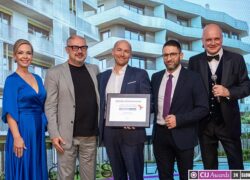
The CIJ Awards Slovakia 2024 lit up the night with glamour, celebration, and recognition of the best in the Slovak real estate industry. Held at Radisson BLU Carlton Hotel in Bratislava, the prestigious event brought together leading developers, investors, architects, and industry professionals for an unforgettable evening of networking and celebration.

The ceremony honored outstanding achievements across various categories, from innovative residential developments to groundbreaking commercial projects. The atmosphere was electric as winners were announced, showcasing the exceptional talent and vision driving the Slovak real estate market.

The evening wasn’t just about awards; it was a celebration of the industry’s resilience, creativity, and growth. Attendees enjoyed fine dining, engaging conversations, and an elegant setting that added to the night’s charm.

This year’s Winners:
Best Standard Residential Development of the Year – Čerešne Lake by ITB Development
Best Premium Residential Development of the Year – EUROVEA II by JTRE
Best Retail Shopping Development of the Year – Spektrum Ružomberok – Mayflower Group
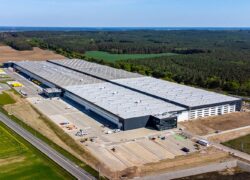
Best Warehouse Development of the Year – Panattoni Park North (Lear Corporation) by Panattoni
Best Residential Upcoming Development of the Year – PARQ Zátišie by Atrios
Best Retail Shopping Upcoming Development of the Year – Point Liptovský Mikuláš by OPC Group
Best Warehouse Upcoming Development of the Year – ARETE Park Danajska Streda by ARETE
Best Commercial Property Investment Transaction of the Year – Retail park portfolio sold to Patria Investiční Společnost (KLM Real Estate/CBRE)
Best Warehouse Lease Transaction of the Year – Slovenske Elektrarne (JTRE/Colliers)
Best Asset Management Company of the Year – 365.invest
Best Real Estate Property Fund Management of the Year – IAD Investments
Best Performing Real Estate Property Fund of the Year – Wood & Company
Best Real Estate Bank of the Year – Slovenská sporiteľňa
Best Real Estate Law Firm of the Year – Kinstellar
Best Tax & Finance Advisor of the Year – TPA
Best Local Residential Real Estate Agency of the Year – HERRYS
Best Local Commercial Real Estate Agency of the Year – HOLLAND AND COMPANY
Best International Real Estate Agency of the Year – CBRE
Real Estate Leadership of the Year – Andrej Mardiak and Lukáš Šarközi – Mayflower Group
Best Overall Developer of the Year – JTRE

As the CIJ Awards Slovakia 2024 came to a close, it left attendees inspired and motivated for the year ahead, reinforcing its position as one of the most anticipated events in the real estate calendar.

The winners of the competition were selected in a three-stage voting jury committee process. These being a selected jury committee of 100+ recognised experts from the real estate, investment, architectural and construction industries.

The winners of each individual categories also advance as nominations for the Best of the Best CIJ HOF (Hall of Fame) Awards in 2025. The Hall of Fame Awards is the climax to the CIJ Awards series, pitting the winning projects and companies from around Central & Eastern Europe against each other to determine who the Best of the Best really are.

About CIJ EUROPE:
For almost 30 years, CIJ EUROPE has been reporting on new projects, properties, transactions and development initiatives, while also providing commentaries and detailed analyses of the market, statistics and information on the latest trends in Northern, Central and Eastern Europe and in the international real estate development community. It presents interviews with the people who shape the industry, influential politicians, and key officials who decide on planning and public tenders. It is an important and reliable source of information about the development, property and construction industry in CEE and Europe.

Union Investment welcomes Starbucks to Kettwiger Tor in Essen

Union Investment has announced a long-term lease agreement with AmRest Coffee Deutschland Sp. z o.o. & Co. KG, bringing a Starbucks Coffee House to the prominent Kettwiger Tor property in Essen. The new tenant, Starbucks, will replace the Hallhuber fashion store and is set to open its doors in spring 2025 after extensive renovation work.

Starbucks, one of the world’s largest coffee roasters and suppliers of specialty coffee, will occupy three floors of the building. The addition of the global coffee giant is expected to enhance the appeal of the property for both existing office and retail tenants and the surrounding area.

“We are delighted to welcome Starbucks as a successor to Hallhuber. This partnership will significantly benefit the property’s tenants and the wider community,” said Sven Lintl, Head of Asset Management Germany at Union Investment.

The Kettwiger Tor property is situated on a central street in Essen’s bustling city center, just 400 meters from the main railway station. Its strategic location ensures easy accessibility for commuters and shoppers alike.

Part of the UniInstitutional German Real Estate portfolio since 2014, the building has become a key asset for the institutional fund. Starbucks’ arrival marks a new chapter in the property’s history, further solidifying its position as a central hub for retail and office spaces in Essen.

Renovations for the new Starbucks Coffee House are set to begin shortly, with completion targeted for spring 2025.

LIP Invest reports continued growth in Germany’s logistics real estate market

LIP Invest, a leading provider of special real estate funds for logistics properties in Germany, has published its latest quarterly market report, LIP UP TO DATE – Logistikimmobilien Deutschland, for the third quarter of 2024. The report highlights ongoing growth in the logistics real estate sector, with a notable increase in investment activity and emerging trends that could shape the market’s future.

The report provides an in-depth analysis of transaction volumes, space take-up, new construction activity, and yield trends. It also offers an outlook for the fourth quarter, including the potential impact of political developments in Germany and the United States on market dynamics.

Market Overview: Steady Growth Amid Challenges

Germany’s logistics real estate market continued its upward trajectory in the third quarter, with transaction volumes exceeding the subdued levels of the previous year. While the market has yet to reach the record-breaking heights of 2021 and 2022, investor interest remains strong.

“The increasing availability of logistics properties is driving market activity, and we anticipate further growth in investment volumes,” said Sebastian Betz, Partner and Managing Director at LIP Invest. “Investors are expanding their focus beyond traditional logistics hubs, while falling interest rates are making value-add properties more attractive.”

Gross initial yields for prime properties showed signs of decline, standing at 4.80% to 5.05% in the third quarter. However, further developments will depend on external factors, including inflation trends and interest rate decisions in the EU and the US. A more significant recovery is expected in early 2025, potentially bolstered by anticipated political shifts in both countries.

Investment Market: Portfolio Deals Dominate

In Q3 2024, logistics property transactions in Germany reached €1.4 billion, bringing the total for the first nine months to €4.3 billion—a 12% increase compared to the same period in 2023. Around half of the transaction volume was driven by portfolio deals, including P3’s acquisition of 12 logistics properties in southern Germany, totaling 269,000 square meters of rental space.

Despite the steady activity, properties from earlier quarters that remain unsold were excluded from the potential investment volume, which reached €700 million in Q3. New offerings include production warehouses, indicating a diverse range of investment opportunities.

Stable Take-Up of Space

Logistics property take-up remained steady in Q3 2024 at 1.35 million square meters. The majority of leases were for spaces between 5,000 and 30,000 square meters, reflecting cautious expansion in light of economic conditions. Larger rental agreements were rare, though notable deals included Duvenbeck Logistics leasing 11,500 square meters in Mühldorf am Inn.

In the first three quarters of 2024, total take-up reached 3.85 million square meters, while 850,000 square meters of new logistics properties were completed in Q3. This brought the year’s total new construction volume to 2.95 million square meters, with further projects expected in Q4.

Sustainability Trends: Timber Construction in Logistics Properties

The use of timber in logistics property construction is gaining traction as developers prioritize sustainability. Modern timber structures can support large spans and provide CO2 emission reductions compared to traditional reinforced concrete. Timber buildings also offer advantages in the circular economy, as they can be dismantled and reused, extending their lifecycle beyond that of conventional materials.

Outlook for Q4 and Beyond

The German logistics real estate market is poised for continued growth, with political developments in early 2025 potentially spurring further optimism. Falling interest rates and an increase in high-quality investment opportunities are expected to attract additional capital to the market.

LIP Invest’s quarterly report, available for free download on their website, underscores the resilience of the logistics real estate sector and its capacity to adapt to shifting economic and environmental priorities. With €4.3 billion in transactions already completed and innovative trends such as timber construction gaining momentum, the sector is set to remain a cornerstone of Germany’s real estate market.

NEPI Rockcastle reports strong NOI growth and tenant sales, driven by resilient CEE consumers

NEPI Rockcastle has announced a 12.3% increase in net operating income (NOI) to €411 million for the first nine months of 2024 (9M 2024) compared to the same period in 2023. On a like-for-like basis, NOI rose 8.4%, fueled by higher rents, short-term income, and disciplined cost management. The company’s momentum reflects the resilience of Central and Eastern European (CEE) consumers and strong tenant performance, which also contributed to a drop in the EPRA vacancy rate to 2.3%, down from 2.7% in June 2024.

“We continue to see solid growth across our markets, driven by strong tenant performance and active asset management,” said Rüdiger Dany, CEO of NEPI Rockcastle. “Our properties are becoming increasingly attractive to consumers and retailers, which has helped reduce vacancy rates and deliver healthy NOI growth.”

Key Operational Highlights

• Tenant Sales and Footfall: Tenant sales increased by 9% (like-for-like, excluding hypermarkets), with Q3 2024 recording a 9.2% year-on-year increase. Footfall rose by 1.4% over 9M 2024, while the average basket size grew by 8.3%.
• Vacancy and Rent Collection: The EPRA vacancy rate fell to 2.3%, and rent collection for 9M 2024 was 99%.
• Leasing Activity: In Q3 2024, NEPI Rockcastle signed 345 new leases and renewals, covering over 71,200 sqm. International tenants accounted for 61% of newly leased space.

Strategic Investments and Major Deals

NEPI Rockcastle made significant strides in its investment strategy during Q3 2024:
• Green Bond Issuance: In September 2024, the company issued €500 million in green bonds maturing in 2032. The issue was six times oversubscribed, offering a fixed coupon of 4.25%.
• Acquisitions and Disposals: On 1 October, NEPI Rockcastle acquired the 100,000 sqm Magnolia Park shopping center in Wroclaw, Poland, for €353 million. Days later, it sold its last remaining Serbian asset, Promenada Novi Sad, for €177 million.
• Equity Raise: The company successfully raised €300 million through a new share issue in October.

With these moves, NEPI Rockcastle lowered its loan-to-value (LTV) ratio to 29.2% at the end of October 2024 and positioned itself for further acquisitions and developments.

Development Pipeline

NEPI Rockcastle’s development pipeline, valued at €788 million, includes major projects such as:
• Promenada Plovdiv: A 60,500 sqm retail development in Bulgaria, set for completion in late 2026.
• Galati Retail Park: A mixed-use scheme in Romania with 40,900 sqm of retail and 21,500 sqm of residential space, expected to open in Q4 2026.
• Green Energy Expansion: Phase two of its photovoltaic energy project, including 24 new locations outside Romania, is underway.

Sustainability Milestones

NEPI Rockcastle has made significant progress in ESG performance:
• Received a 5-star GRESB rating, up from 3 stars in 2023.
• Awarded EPRA Gold for Sustainability Best Practices Recommendations (sBPR).
• Completed phase one of its green energy project, generating €7.3 million in income during 9M 2024.

Positive Outlook for 2024

The company expects distributable earnings per share for 2024 to grow by approximately 5.5% compared to 2023, maintaining a 90% dividend payout ratio. Despite potential geopolitical and macroeconomic risks, NEPI Rockcastle remains confident in its ability to leverage market opportunities and deliver long-term sustainable growth.

With a robust portfolio valued at €7.4 billion and continued investments in sustainability and new developments, NEPI Rockcastle is well-positioned to capitalize on the growing resilience of the CEE consumer market.

Poland: Starting prices for affordable triplex units in new developments

What are the prices of the cheapest three-roomed flats in new housing projects? What is the square meterage? In which investments can we buy them? Can you count on a discount when paying in advance?

Tomasz Kaleta, managing director of sales and marketing at Develia
Currently, the cheapest three-room flats can be purchased in Gdańsk projects such as Szmaragdowy Park or Południe Vita. Their price starts at around PLN 500,000 and the metric area varies from 50 sqm to 64 sqm. These are projects under construction and further payments are made according to the progress of the construction work.

Agnieszka Majkusiak, sales director at Atal
In the Źródlana Residence project in Piotrków Trybunalski, we have a three-room flat of 48 sq m on sale for PLN 364,396. In Reda, in the Niebieski Bursztyn project, a three-room flat of 53 sq m is available at PLN 462,162. In Poznań’s Naramowice Odnova development, a three-room unit measuring 47 sq m can be purchased for PLN 491,000. A three-room flat in Panorama Reden in Chorzów is on offer for PLN 491,689. In the Nowe Miasto Polesie project in Łódź, a unit of 57 sq m is on offer for PLN 502,276.

Compared to the market, we maintain an attractive ratio of the quality and location of the offered flats to their price per square metre, which is confirmed by customer feedback. Our discount policy is quite conservative and takes into account current cost factors, such as increases in wages and rates for land and contractors. The promotional tools we use are mainly flexible payment schedules, tailored to the customer’s needs and non-residential benefits. In the case of a development under construction, payments follow the schedule. The developer does not dispose of the funds from the early payments; they are blocked in the escrow accounts until the relevant construction phase is reached in the project.

Agata Zambrzycka, sales and marketing director at Aurec Home
We design estates with the diverse needs of our customers in mind, offering a wide range of flats to suit different preferences and requirements. We carry out our investments in the green districts of Warsaw, such as Włochy, Ursus and Białołęka, where units of various sizes are available, including spacious and functional three-room flats.

The prices of ‘threes’ depend on the location and the specific investment. In Miasteczko Jutrzenki – Dzielnica Lavendy they start at PLN 13,750 per square metre, while in Fabrica Ursus they start at PLN 13,367. It is also worth noting the location of the flat in the building, which affects the view from the windows, the amount of natural light and the noise level. Flats on the ground floor, above garage entrances or close to staircase entrances are usually cheaper. Customers who decide to purchase a unit with cash can expect a discount.

Magdalena Gosk, Sales Leader BPI Real Estate Poland
The three-room flats in our offer are very popular with customers, especially in the already completed projects: Bernadovo, Czysta4 and Panoramiqa, in which flats are ready for collection. This type of premises is currently available in the offer of the Bernadovo investment in Gdynia, Czysta4 in Wrocław, Cavallia and Panoramiqa in Poznań. The prices and area of these flats vary depending on the project. They range from approximately PLN 10 500/sq m in the Panoramiqa project to PLN 20 300/sq m in the Bernadovo investment. The average square metre is around 68 sq m. For our customers, irrespective of the form they choose, we provide for various special offers and discounts.

Agnieszka Gajdzik-Wilgos, sales manager at Ronson Development
In our investments, the smallest three-room flats are available at prices starting from PLN 436,000, for a flat of 46 sqm in the Nowa Północ investment in Szczecin. In Nowe Warzymice in Poznań, you can buy a 67 sq m flat for PLN 710 thousand.

In the Grunwald Między Drzewami II investment, a flat of 52 sqm costs PLN 612 thousand. In Wrocław, in the Viva III project, one has to pay PLN 639 thousand for a 50-sqm unit.

In Warsaw, in Miasto Moim 58 sq m costs PLN 781 thousand. In Ursus Centralny, a 56-square-metre flat costs PLN 835 thousand, and in the Zielono Mi investment a 62-square-metre flat is priced at PLN 1.055 million.
In accordance with current regulations, we cannot accept a payment from customers that is greater than the amount corresponding to the advancement of construction work. The payment schedule is set depending on the progress of the project, and the method of financing, whether by credit or cash, does not affect the possibility of obtaining a discount.

Joanna Chojecka, sales and marketing director for Warsaw and Wrocław at Robyg Group
We have interesting offers of three-room flats in most of our investments in Warsaw, for example in the Jutrzenki 92 estate. In Gdańsk, in the Rosa Residence and Przystanek Tarnogaj projects, and in Poznań – Początek Piątkowo and Stacja Jeżyce. There is often a garage included in the price or other attractive bargains. Prices range from PLN 620,000 to PLN 800,000, depending on the location.

Michał Witkowski, sales director at Lokum Deweloper
Three-room flats are most often the choice of families with children or those planning to expand their family. Currently, we offer such properties in Sobótka and three developments in Wrocław. At the Lokum Porto estate, which combines the advantages of living in the city centre with the opportunity to relax in the natural surroundings, we have three-room flats ranging from 52.58 sq m to 72.03 sq m, with prices starting from PLN 799,000.

At our green estate-garden Lokum Verde, located in the tranquil Zakrzów district, we offer three-room flats from 49.68 to 66.16 sq m, which can be purchased at prices starting from PLN 639,000. Another option for those looking for such a property is the offer of the modern Lokum la Vida housing estate, located in Wrocław’s Sołtysowice, with convenient access to extensive urban infrastructure and green areas. Here, our offer includes three-room flats from 48.76 to 64.71 sqm. A unit in this segment can be purchased for PLN 714,000. We also have a proposal for those who want to live in an exceptional location – at the intimate Lokum Monte housing estate with a private wellness zone, situated in the picturesque surroundings of the Ślężański Landscape Park. Here, the cheapest three-room flat – a two-level of 70.44 sqm, with a spacious mezzanine (20.53 sqm) – costs PLN 889,000. It is worth adding that this price includes the finishing service in our Lokum turnkey programme.

Zuzanna Należyta, Commercial Director at Eco Classic
At the moment we have a promotion in two investments. In the Moja Północna project in Warsaw’s Tarchomin, the lowest price per sqm. – PLN 12,400 is offered for a four-room flat with an area of 91 sqm. In the Wolne Miasto project in Gdańsk, at the lowest price per sq m. – PLN 10 300 you can buy a four-room flat of 83 sq m.

Marek Starzyński, sales director at Okam Capital
We have three-room flats on offer in our current investments. In the NOW project in Łódź, a three-room flat with an area of 78 square metres costs PLN 10,000 per square metre. In the Warsaw Cityflow project, a 54-sq.m flat can be purchased for PLN 19 350 per sq.m., and in the Katowice Inspire project, a 60-sq.m flat costs – more than PLN 12,000 per square metre. Customers can take advantage of a special offer to purchase units in the NOW development – flats priced from PLN 350,000.

Piotr Rojek, Megapolis Customer Service Manager
The prices of our flats depend on many different factors, including: the location in relation to the world’s directions, the layout of the flats and the location of the investment itself. Our portfolio includes flats in various areas of cities, both near and far from their centres, which is why prices per square metre vary greatly. We have flats in our portfolio in various areas of cities, both closer and further from their centres, which is why prices per square metre vary considerably.

Triplexes are usually flats ranging from 49 sqm to 53 sqm. Our current investments include: the largest, located in the north of Krakow, Osiedle OZON, in Banacha Street, and the smaller LINK Bunscha estate in Krakow’s Ruczaj district, in Bunscha Street. Of the investments we are planning in the near future, it is worth mentioning the housing estate on Lindego Street, in the area of Bronowice in Krakow.

We are always open to discussion and we establish with each customer individually the commercial conditions for the purchase of a flat. We provide a comprehensive service, both the credit process related to the purchase of a flat and a guarantee of price invariability. Therefore, if a customer plans to take a loan, they can be sure that the price from the reservation contract will not increase. In turn, customers who have the cash they need to buy a flat can also count on preferential contract terms.

Damian Tomasik, CEO of Alter Investment
As a land developer, we do not offer to sell flats. In the projects we are preparing, such as Madalińskiego in Gdańsk, we plan three-room flats with optimal space for future residents. In September we sold the land with a building permit on the same street and we can expect to introduce flats for sale in the coming weeks, where three-room flats were also in the structure.

Source: dompress.pl
Photo: Centralna Vita Develia

Renegotiations now account for nearly 40% of industrial real estate leases in the Czech Republic

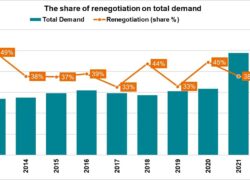
Lease renegotiations, the extension of existing lease agreements, have become a dominant force in the Czech Republic’s industrial real estate market, according to the latest analysis by Savills. Over the past decade, renegotiations have consistently accounted for at least 30% of total leasing activity, with some years seeing this figure rise above 45%. In the third quarter of 2024 alone, renegotiations represented 38% of total leasing activity, with 20 lease renewals totaling 129,100 sq m.

“The data confirms a strong trend in lease prolongations,” said Lenka Pechová, Senior Research Analyst at Savills. “For the first three quarters of 2024, renegotiations accounted for roughly one-third of gross demand, reflecting the preference of businesses to stay put and avoid the costs and complexities of relocating.”

Companies often choose to renew leases to maintain continuity in their operations, especially when there are no compelling reasons to relocate. This decision helps businesses avoid the significant expenses associated with moving and adapting new spaces to meet specific operational requirements.

“Relocating even a short distance, such as 10 kilometers, can lead to the loss of up to 40% of a company’s workforce,” explained Ondřej Míček, Head of Industrial at Savills. “A move of 20 kilometers could result in losing as much as 80% of employees, making lease renegotiation a logical choice for well-established businesses in the area.”

Savills experts recommend that businesses planning to renew leases begin discussions at least 18 months before the original lease term ends. This early engagement ensures tenants have sufficient time to evaluate alternatives, including relocation or new developments, and negotiate favorable terms.

“Renegotiation is also worth considering when entering a new lease agreement, as it allows tenants to secure an extension option in advance. However, timely planning is crucial to keep all options open,” added Míček.

The rise of renegotiations parallels the growth and evolution of the Czech industrial property market. In the late 1990s and early 2000s, renegotiations were rare, reflecting the nascent stage of modern warehouse development. As the market matured and transparency improved, lease renewals became a natural outcome of increasing leasing activity. Over the last 15 years, renegotiations have grown into a vital component of the industrial leasing landscape, often involving modifications to existing agreements, such as adjusting the size of leased spaces.

With renegotiations accounting for nearly 40% of leasing activity, they now represent a cornerstone of the industrial real estate market in the Czech Republic. As businesses continue to value stability and proximity to their workforce, this trend is expected to remain strong, further cementing the importance of strategic lease planning in a competitive market.

Source: Savills

Panattoni secures €75 million financing from Citibank for Sulechów Logistics Park expansion

Panattoni has been granted a €75 million loan by Citibank’s London Branch to fund the development of Panattoni Park Sulechów III, one of the largest logistics centers in Poland’s Lubusz region. The project, tailored to meet the needs of a leading e-commerce operator, is a key milestone in Panattoni’s efforts to support the region’s growing demand for modern logistics infrastructure.

“Thanks to the confidence of our partner, Citibank, we were able to secure financing for this significant logistics hub. The facility offers an outstanding base for an international company to enhance its European operations, particularly in e-commerce. This project will undoubtedly strengthen our client’s market position,” said Emilia Taczewska-Trojańska, Head of Debt Finance Poland at Panattoni.

A Key Regional Hub with Expanded Capabilities

Initially planned as a 90,000 sqm facility, Panattoni Park Sulechów III has been expanded by an additional 46,000 sqm following the client’s decision to scale up the project. The center now spans 136,000 sqm, showcasing the significant potential and strategic importance of this development.

The facility is designed to the highest standards, accommodating specific client needs. One section of the building was elevated to house multi-level warehouse pick-towers, optimizing the available space for e-commerce operations. The expansion reflects the project’s adaptability and the increasing demand for advanced logistics solutions in the region.

Green and Employee-Centric Design

Panattoni Park Sulechów III has been certified with a BREEAM rating of “Excellent,” highlighting its environmentally conscious design. Key features include:
• Sustainability Innovations: Installation-ready roof for solar panels, intelligent lighting systems, and advanced Building Management Systems (BMS) for efficient energy use.
• Employee Comfort: Natural light access in offices and an outdoor relaxation area designed to enhance working conditions.

These features underline Panattoni’s commitment to combining operational efficiency with environmental and social responsibility.

Boosting the Region’s E-Commerce Potential

The completion of Panattoni Park Sulechów III positions the Lubusz region as a strategic logistics hub for European e-commerce operations. The facility offers cutting-edge infrastructure to support the client’s expanding activities and reinforces the region’s attractiveness for further investment in logistics and supply chain solutions.

With the backing of Citibank, Panattoni continues to lead in the development of high-quality logistics facilities, meeting the evolving needs of global e-commerce players while contributing to sustainable economic growth in Poland.

Q3 2024: Czech investors dominate real estate market as total volume reaches €188 million

The Czech real estate market in the third quarter of 2024 was marked by a striking feature: 100% of all investment capital originated from domestic investors. Approximately €188 million was transacted across the country’s key real estate sectors during the quarter, one of the lowest volumes in recent years, according to the latest report by Colliers.

Despite the muted quarter, total investment volume for the first three quarters of the year exceeded €1 billion, spread across 34 transactions. Notably, nearly half of all deals involved properties outside Prague, signaling a growing confidence among domestic investors in regional markets.

Sector Breakdown and Key Transactions

The investment activity in Q3 2024 was evenly distributed across asset classes: retail (31%), industrial (30%), residential (27%), and smaller office transactions (12%). One of the standout deals of the quarter was REICO’s forward purchase of the G1 building in the Nový Opatov project, marking its entry into the build-to-rent (BTR) residential sector.

“The third quarter confirmed a clear trend: domestic investors are driving the market while international capital remains on the sidelines,” commented Josef Stanko, Director of Market Research at Colliers. “This dynamic has persisted throughout 2024, with Czech buyers showing a willingness to explore opportunities beyond the capital city.”

Retail Gains Momentum, Offices Await Recovery

The retail sector has shown signs of resurgence, benefiting from renewed investor interest, while the residential BTR segment continues to attract steady capital flows. However, the office market remains sluggish, reflecting the lingering challenges since the pandemic. With €235 million invested in offices year-to-date, the segment is performing at just 50% of its three-year average for the same period.

“The office market is still waiting for new opportunities,” added Stanko, noting that negotiations are underway for several major office properties, which could improve the sector’s outlook by year-end.

Prime Yields and Market Trends

Prime yields have remained stable throughout 2024, with office properties at 5.50%, industrial assets at 5.25%, and retail yields varying by submarket: 4.50% for high-street retail, 6.00% for shopping centers, and 6.25% for prime retail parks.

While pricing corrections appear to have bottomed out in many European markets, the Czech Republic is still catching up. The narrowing gap between supply and sale prices, combined with the European Central Bank’s recent interest rate cut to 3.25%, could boost transaction activity in Q4 2024.

“The potential for improved borrowing conditions may encourage investors to wait for better terms, but it also indicates an opportunity for more deals in the coming months,” noted Stanko.

Outlook for 2024

Economic and geopolitical uncertainties, including the impact of the recent U.S. presidential election, continue to influence investor sentiment. However, the Czech market has demonstrated resilience, buoyed by a strong base of domestic investors.

“The market remains active, particularly for smaller transactions,” said Stanko. “We anticipate the total annual investment volume to reach around €1.5 billion, which, given the challenges of the year, is a solid outcome.”

With sustained domestic investor interest and improving macroeconomic conditions, the Czech real estate market looks poised for a stronger finish to 2024.

Source: Colliers

INVESTIKA Real Estate Fund surpasses CZK 20 billion under management

INVESTIKA Real Estate Fund, an open-ended real estate mutual fund, has achieved a major milestone, managing over CZK 20 billion in assets by the end of 2024. After nine years of steady growth, the fund now boasts more than 80,000 retail investors from the Czech Republic and Slovakia, solidifying its position as the leading non-bank real estate fund in both countries and the second-largest open-ended real estate fund for retail investors in the Czech Republic.

Petr Čížek, Chairman of the Board of Directors at INVESTIKA, reflected on the fund’s remarkable progress: “We founded INVESTIKA Real Estate Fund in 2015 with a vision to make investing accessible to everyone, enabling them to grow their wealth through secure, passive investment in commercial real estate. Today, with over 80,000 investors and CZK 20 billion in managed assets, that vision has become a reality. Our conservative approach, offering annual returns of 4-6%, combined with a low entry threshold of CZK 100, makes this fund accessible to all.”

Diverse Portfolio Spanning Four Countries

INVESTIKA’s success is built on a robust and diverse real estate portfolio, comprising 50 properties across the Czech Republic, Poland, Croatia, and Spain. These properties, leased to around 350 tenants from various economic sectors, generate consistent rental income that underpins the fund’s long-term annual return target of 4-6%.

Key assets include:
• Poland: Office and logistics complexes in Warsaw and regional cities.
• Czech Republic: Office buildings such as Avenir E and Karla Englis 4 in Prague, the Bohemia Business Centre in Pilsen, and the Galerie Butovice shopping mall in Prague.
• Croatia and Spain: Luxury residential properties with high development potential.

Poland currently represents the largest portion of the portfolio, reflecting INVESTIKA’s strategic focus on high-demand office and logistics assets in Central Europe.

Commitment to Sustainability and ESG Standards

INVESTIKA Real Estate Fund is also at the forefront of sustainability initiatives, aiming to enhance the environmental performance of its portfolio. Since 2022, the fund has voluntarily monitored the sustainability of its properties, investing over CZK 100 million in 2024 to implement energy-saving measures and reduce carbon footprints.

This year, nearly all of the fund’s properties in the Czech Republic and Poland are expected to achieve BREEAM environmental certification. These efforts align with the fund’s newly adopted ESG strategy, approved by the Board of Directors in October 2024, which sets a clear roadmap for ongoing sustainability improvements.

Looking Ahead

With a geographically diversified portfolio, a strong commitment to ESG principles, and a growing base of retail investors, INVESTIKA Real Estate Fund continues to lead the way in providing accessible and sustainable investment opportunities in commercial real estate. As the fund celebrates its milestone, it looks poised to maintain its trajectory of steady growth and robust returns.

Germany: Outlook for the property investment market in 2025

The gradual return of institutional investors is driving the market, while family offices are very active
More funds will be launched in 2025, mostly in the form of individual mandates and club deals
Cologne/Berlin, 20 November 2024 – The property transaction market has bottomed out. After three difficult years for the real estate industry, conditions will improve in 2025. This is mainly due to the significant drop in inflation and lower interest rates as a result of the ECB’s key interest rate cuts this year. However, a further boom phase in the property market is not to be expected for the time being. The asset classes in particular demand among investors are residential and logistics. By contrast, the office sector needs to be considered in a very differentiated way. These are the key findings of the online press conference ‘Outlook 2025: Interest rates down, inflation down – Is everything going to be okay again in the real estate investment market?’ with Michael R. Baumann, Head of Capital Markets at real estate consultancy Colliers in Germany , Jan Philipp Daun, Managing Director at GARBE Industrial Real Estate, Carsten Demmler, Managing Director at HIH Invest Real Estate, Camille Dufieux, Managing Director at INTREAL, and Gerhard Lehner, Head of Germany at Savills Investment Management.

Institutional investors remain cautious

All participants agree that the first signs of an increase in transaction activity are already visible, but that a significant increase is still a long time coming due to the wait-and-see attitude of many industry participants.

Carsten Demmler, Managing Director of HIH Invest Real Estate, commented: ‘The transaction market will pick up again in 2025, because there are selectively favourable purchase opportunities. Nevertheless, the year is likely to continue to be characterised by portfolio adjustments in terms of investment strategies. The real estate ratios in the portfolios will remain stable, but investors will implement greater sectoral diversification within the real estate allocation.’

‘There is a bit more movement in the market than there was six months ago,’ said Camille Dufieux, Managing Director of INTREAL. ’We are receiving more requests for new products. Our fund partners are dealing with transactions more intensively than they were doing as recently as mid-year. I see this as a sign that the transaction market is slowly recovering.’

Even though the fall in prices is currently creating some new opportunities, none of the participants expect a boom phase to follow.

Gerhard Lehner, Head of Germany at Savills Investment Management, comments: ‘Institutional investors are still too cautious for that. In the last two years, German institutional investors have primarily focused on managing their existing portfolios. By contrast, family offices are currently very active on the investment side. They are taking advantage of the market correction, identifying opportunities and investing mainly in smaller properties in an anti-cyclical manner. We are also seeing larger investments by this group of investors in the triple-digit millions.’

Jan Philipp Daun, Managing Director at GARBE Industrial Real Estate, adds: ‘Institutional investors pursuing core strategies have practically not invested at all in the past two years. This is slowly changing. We have had some interesting discussions with German investors in recent weeks and are optimistic that the investment market has bottomed out.’

Michael R. Baumann, Head of Capital Markets at real estate consultancy Colliers in Germany, adds: ‘There are increasing signs that the odd opportunistic player who hasn’t been seen on the market in the last ten to 15 years is returning.’

Investors have very different focuses: residential and logistics are “everybody’s darling”, office properties face challenges

The mood on the transaction market is brightening overall compared to the last three years, but the slightly positive forecasts do not apply to all asset classes. Experts expect rising investor demand in the residential and logistics asset classes. Office properties, on the other hand, need to be considered on a case-by-case basis.

Michael R. Baumann explains: ‘Residential will remain attractive for investors in the long term due to factors such as demographic change, a continued high rate of immigration and the low quality of new construction. The same applies to logistics. Contrary to many assumptions, office properties in top locations and with good tenant structures continue to be attractive. On the other hand, there are non-ESG-compliant properties in locations where pricing is not yet established. These properties will continue to struggle in the coming year.’

Carsten Demmler adds: ‘We are seeing a very clear “flight to quality”. The office asset class is far from dead. In fact, under the right conditions, it is offering very attractive entry opportunities, especially to anti-cyclical investors.’

Markets with economic growth are particularly attractive for investments

The participants see the best investment opportunities in Germany as being office properties in the top 7 locations. However, both the macro and micro-location must be right. By contrast, the residential asset class also works in the metropolitan regions a little further away from the larger cities.

Outside Germany, Jan Philipp Daun sees the greatest opportunities in growth regions: ‘Capital markets hardly differ from one another. The tenant market is often more challenging. That is why we are concentrating primarily on countries and regions with high economic growth in the logistics sector, especially northern Italy and the Czech Republic. Germany is still attractive, but it takes much longer to sign a lease here.’

Gerhard Lehner adds: ‘Ultimately, the fundamental data and the different speeds of market corrections across countries are crucial. Outside Germany, we have recently identified attractive investment opportunities for our investors in the residential sector in Scandinavia, Spain and the Netherlands, for example.’
2025 will see the launch of a number of new funds – individual mandates and club deals are leading the way

All participants agree that significantly more funds will be launched in the coming year. According to Jan Philipp Daun, these will come primarily from large platforms: ‘Smaller fund boutiques that are less specialised and have little track record will have a hard time.’

In this context, Gerhard Lehner also emphasises the importance of existing funds: ‘When investing in established funds, investors benefit from investing in an already broadly diversified and return-generating portfolio. This process can take a few years from the time of subscription for a newly launched fund. In addition, the fund manager of an existing fund already has an extensive track record.’

According to Camille Dufieux, individual mandates and club deals will dominate: ‘In the current year, pool funds and blind pools have not worked. Investors are busy cleaning up their own portfolios, and that is of course much more difficult when they are dependent on co-investors. In 2024, we saw significantly more individual mandates and club deals – at least among those investors large enough to launch their own special fund. This trend will continue in the coming year. One product that some market participants had high hopes for is the ELTIF 2.0. However, it currently plays a minor role in the real estate sector.’

Outlook for 2025: light at the end of the tunnel

Now that the real estate transaction market has picked up speed again in recent months, the majority of participants expect a further upturn in 2025. However, everyone agrees that the industry will not return to the figures seen during the low-interest phase for the time being and that another real estate boom is not on the cards.

Carsten Demmler is somewhat more cautious in his assessment of the coming year: ‘For us, 2025 will be another year of transition. We have to completely disassociate ourselves from the expectations of the years 2018 to 2021. We won’t see these figures again for a long time. The industry needs to recalibrate and find a new normal that will tend to be more in line with the level between 2012 and 2016.’

According to Gerhard Lehner, asset management will play a major role in the coming years: ‘Investors rightly expect us to now realise the promised returns on real estate investments. In this context, it is all the more important to maintain and systematically improve the sustainability and ESG compliance of existing properties.’

Camille Dufieux also sees a positive side to the developments of recent years: ‘A market shakeout has taken place. The wheat has been separated from the chaff – we will certainly see fewer transactions in the coming years than before 2021, but they will be of higher quality. We may still be in the tunnel, but at least we can see the light at the end.’

LATEST NEWS