HIH Invest Real Estate secures new tenant for 2,900 sqm of office space in Mainz

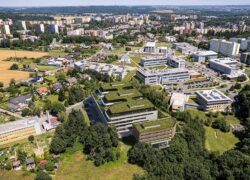
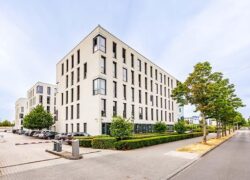
HIH Invest Real Estate (HIH Invest) has successfully leased 2,900 square metres of office space at Isaac-Fulda-Allee 6 in Mainz to HDI AG, which will occupy the premises on a long-term basis starting summer 2025.

The property, constructed in 2011, offers five upper floors and a total area of 14,000 square metres. Previously leased by Aareon AG, the building is undergoing repositioning as a multi-tenant property following Aareon’s planned relocation to its new headquarters nearby in summer 2025.

HIH Invest had already secured a new tenant for 3,500 square metres of the building in spring 2024, with Targobank moving in its factoring unit a few weeks ago. Following this latest agreement, approximately 4,500 square metres of office space remain available.

“We successfully re-let two-thirds of the property well ahead of the previous tenant’s departure, and there is significant interest in the remaining space. The building’s flexibility, location, and high-quality specifications were key factors. Its design, with three separable sections, enables both large-scale and smaller-scale lettings, offering excellent adaptability,” said Markus Leuchte, Head of Letting Management Frankfurt at HIH Real Estate.

The building offers additional advantages, including a staffed reception, an on-site canteen, and ample parking spaces in both an underground car park and outdoor areas.

Carolin Brandt, Managing Director of Asset Management at HIH Real Estate, emphasized the strategic approach to repositioning: “Our asset management team conducted an early feasibility study to align the space with tenant requirements. Using our technical expertise, we converted the property from single-tenant use into versatile, future-proof multi-tenant office space.”

The office property is strategically located near the Saarstraße motorway junction and benefits from excellent public transport connections via tram and bus lines. Mainz Central Station is just minutes away, and Frankfurt Airport can be reached by car in under 30 minutes.

The location is further enhanced by its proximity to:
• Johannes Gutenberg University and several colleges
• The upcoming biotechnology district at Innovationspark Mainz in the Hartenberg-Münchfeld district

This leasing success underscores HIH Invest’s ability to reposition properties effectively, delivering modern, flexible office solutions that align with evolving tenant demands.


KPMG Report: Polish banks prioritize real estate financing as most strategic in CEE region

Poland continues to lead the Central and Eastern European (CEE) real estate investment market, with banks in the country viewing real estate financing as a key strategic priority, according to KPMG’s latest Property Lending Barometer 2024 report. The findings highlight Poland’s strong position despite ongoing challenges in European investment activity, driven by improving investor sentiment and a growing demand for commercial real estate.

Polish banks stand out in the region, showing a clear focus on real estate financing. While 60% of surveyed banks across the CEE reported no change in their approach to commercial real estate financing over the past year, 25% increased their interest in the sector. Poland’s performance has been particularly robust, underpinned by cautious but strategic lending decisions.

“Polish banks consider real estate financing a top strategic priority, setting them apart in the region. Improved investor sentiment and strong demand for commercial properties indicate a brighter outlook for Poland,” said Katarzyna Nosal, Partner at KPMG Poland and leader for the construction and real estate sector.

The report forecasts that 2025 will bring a rebound in investment activity, driven by expected interest rate cuts by the European Central Bank (ECB) and the U.S. Federal Reserve. Lower financing costs are anticipated to further stimulate the market.

Compared to previous years, rising financing costs—once a dominant concern—have receded as inflation stabilizes and interest rates across Europe begin to decline. However, banks are now navigating a shifting regulatory landscape, which places a greater emphasis on ESG (Environmental, Social, and Governance) standards.

The report reveals that:
• 75% of banks surveyed have adopted ESG strategies and incorporated sustainability criteria into their credit approval processes.
• Banks are increasingly offering green financing options, such as reduced-margin loans for energy-efficient projects and participation in green bond issuance.

However, a significant gap remains in financing solutions for modernizing older properties. Only 11% of banks currently offer products targeting this need, despite a clear market demand for upgrades to meet sustainability standards.

“Stricter ESG compliance measures are becoming integral to credit policies across the region. In Poland, the Czech Republic, and Hungary, banks are increasingly rejecting financing for projects that fail to meet ESG expectations,” said Monika Dębska-Pastakia, Head of the Real Estate Team at KPMG Poland.

While digital transformation continues to shape other financial sectors, the real estate financing market in the CEE region remains slow to adopt new technologies.
• Only 7% of banks have partially digitized their credit processes, with 8% in the process of doing so.
• Traditional due diligence methods still dominate, with 56% of banks relying on conventional techniques for assessing investment opportunities.

The Property Lending Barometer 2024 report draws on responses from 43 banks across nine CEE countries: Bulgaria, Croatia, the Czech Republic, Poland, Romania, Serbia, Slovakia, Slovenia, and Hungary. Conducted in November 2024, the research combined online surveys with in-depth interviews, providing a comprehensive overview of the real estate financing landscape in the region.

Poland’s leadership in real estate financing is a reflection of its stable market fundamentals, growing investor confidence, and increasing compliance with sustainability requirements. The strategic importance placed on the sector by Polish banks positions the country as a standout market within the CEE region, offering significant opportunities for both domestic and international investors.

With evolving ESG standards, expected interest rate cuts, and rising demand for sustainable real estate projects, Poland is well-positioned to maintain its role as a leader in CEE real estate investment in the years ahead.

Source: KPMG and ISBnews

Matexi Polska prepares over 3,000 apartments for development

Matexi Polska currently has over 3,000 apartments in preparation, Mirosław Bednarek, President of Matexi Polska, informed ISBnews. In 2024, the company will have signed development contracts totaling nearly PLN 400 million. Looking ahead, Matexi expects a significant increase in sales revenues in 2025 due to an accumulation of unit completions.

“Our priority is to continue securing building permits for key locations we acquired in recent years. Multi-stage projects remain particularly important for us, and with over 3,000 apartments in preparation, we rank among the market’s leading players. At the same time, we plan further land acquisitions in our target markets. Lower interest rates will create new opportunities in the institutional rental market (PRS),” Bednarek stated.

The company anticipates a steady recovery in primary market demand in 2025, driven by expected interest rate cuts.

“For Matexi, 2025 will not only mark a time of growth and strengthened market presence in Poland but also the celebration of our 15th anniversary of operations here. With the upcoming release of numerous units, we foresee a substantial boost in sales revenues,” Bednarek added.

Reflecting on 2024, Bednarek noted it as a year of stabilization for Poland’s real estate market following years of rapid changes.

“In our key cities—Warsaw, Kraków, Wrocław, and the Tri-City—the market achieved balance, with stable demand and supply driving price increases in line with inflation. This year, we launched five projects, including three in Warsaw (Wellot Wola, Żelazna 54, and XYZ Place) and two in Kraków (Port Departments and Takt Lirks), delivering a total of 587 apartments,” he said.

Despite challenging market conditions, including high inflation, elevated mortgage costs, and a lack of government programs supporting new home purchases, Matexi’s performance remains robust.

“In 2024, we signed development agreements worth almost PLN 400 million, only 10% lower than the previous year—a testament to our stability and the trust our customers place in us. Additionally, we invested nearly PLN 200 million in new plots, including premium locations such as Mokotów and Wola in Warsaw and Podgórze Duchackie in Kraków,” Bednarek concluded.

Matexi Polska is part of Matexi Group, Belgium’s largest residential developer with a portfolio exceeding 35,000 completed projects. Operating in Poland since 2010, Matexi continues to be a significant player in the country’s residential real estate market, prioritizing high-quality developments and long-term growth.

Source: Matexi Polska and ISBnews
Photo: Grzybowska 37, Matexi Polska

Analysis: Achieving German-level wages requires boosting Czech labor productivity

Closing the wage gap between the Czech Republic and Germany will require a significant acceleration in labor productivity growth, according to a new analysis by UniCredit Bank. The analysis highlights that the Czech economy continues to lag behind Germany, primarily due to a lower share of workers in high-value expert positions. Prime Minister Petr Fiala (ODS) recently suggested that Czech wages could match German levels within the next electoral term, a claim criticized as unrealistic by both the opposition and most economists.

In 2023, the value generated per hour of work by a Czech employee was approximately 30.5 euros (CZK 763)—just 49% of the 62.3 euros (CZK 1589) generated by their German counterparts. At the same time, average labor costs per employee in the Czech Republic, which include wages and social contributions, were only 41.8% of German levels. Adjusted for purchasing power, Czechs reached 55.4% of Germany’s wage level.

The analysis identifies labor productivity as the primary factor behind wage disparities. While the difference is not driven by sectoral structure, it is strongly influenced by the share of employees in expert positions. In 2023, only 19.4% of Czech workers were employed in roles classified as “professional,” compared to 22.8% in Germany. Similarly, only 16.3% of Czech workers held “technician” positions, while the share in Germany stood at 19.8%. Closing this gap could raise Czech labor productivity to 77.7% of the German level, an increase of 28.7 percentage points.

The analysis also points to the role of brand perception in the wage gap. “Labor productivity is not solely about the physical output of production but also about intangible value. For example, attaching parts to a BMW vehicle in a German factory generates more perceived value than performing the same task on a Škoda vehicle in the Czech Republic, even though the production process is identical,” the report explains.

Interestingly, in professions tied to information technology, Czech wages (adjusted for purchasing power) are approaching German levels. Roles such as software engineers, network administrators, and IT consultants are particularly competitive. The analysis attributes this to the flexibility of the IT labor market, where remote work allows skilled professionals to collaborate with employers in higher-wage economies while living in countries with lower living costs.

Prime Minister Petr Fiala’s claim in November that Czech wages could equal German earnings within four years has sparked considerable debate. Economists widely view the statement as unrealistic, given the Czech Republic’s current economic growth trajectory. Deputy Speaker of the Chamber of Deputies, Jan Skopeček (ODS), later acknowledged that reaching German wage levels in such a short timeframe is unfeasible. However, he emphasized the importance of continuing to narrow the wage gap over time.

The opposition, particularly the ANO party, criticized Fiala’s statement, with party leader Andrej Babiš dismissing it as “nonsensical.” During a parliamentary session, Babiš even proposed a discussion on the prime minister’s mental state in response to the comment.

The analysis underscores that achieving German wage levels will require targeted efforts to boost labor productivity, particularly by increasing the share of expert positions in the workforce. The report calls for structural reforms and investment in education, innovation, and high-value industries to accelerate this transformation. Without significant changes, the wage disparity between the Czech Republic and its western neighbor is unlikely to close in the foreseeable future.

Source: CTK

British government approves sale of Royal Mail to Křetínský’s EP Group

The British government has approved the sale of International Distribution Services (IDS), the parent company of Royal Mail, to Czech billionaire Daniel Křetínský’s EP Group. The transaction is valued at approximately £3.6 billion, or £5.3 billion including debt, and marks a significant acquisition for EP Group.

The government will retain a “golden share” in the company, ensuring that any major changes, such as relocating headquarters or altering ownership structures, will require its consent. The new owner is also bound to uphold the universal service obligation, which mandates the delivery of letters six days a week and parcels from Monday to Friday.

Křetínský has provided additional guarantees to secure government approval. These include commitments to job protection, with no forced layoffs, and a provision ensuring employees receive 10% of dividends. Furthermore, a dedicated employee group will meet monthly with Royal Mail’s leadership, providing workers a stronger voice in the company’s management.

IDS accepted the takeover bid from EP Group in May, after an improved offer of 370 pence per share—an increase over the initial bid rejected in April. Křetínský already held a 27.5% stake in the company prior to this deal.

British Secretary of State for Business and Trade Jonathan Reynolds welcomed the agreement, stating that the government had received legally binding commitments from Křetínský to ensure Royal Mail’s long-term sustainability while safeguarding essential services for millions of customers. “I thank EP Group and Mr. Křetínský for their constructive approach to negotiations,” Reynolds said.

Křetínský emphasized EP Group’s commitment to revitalizing Royal Mail: “EP Group is a long-term and dedicated investor, aiming to transform Royal Mail into a modern, efficient postal operator delivering high-quality services and products to customers.”

Founded in 1516, Royal Mail employs over 150,000 people. In recent years, it has faced financial struggles due to declining demand for traditional mail, delivery delays, and ongoing strikes over wages. Adding to its challenges, the UK’s telecommunications regulator recently fined the company £10.5 million for failing to meet delivery standards.

In addition to Royal Mail, IDS owns the profitable GLS parcel network, a key international logistics operator.

Analysts view the acquisition as part of EP Group’s broader strategy of investing in undervalued sectors undergoing systemic change. “EP Group continues to target sectors facing structural challenges, acquiring assets at prices significantly below book value,” said analyst Radim Dohnal. He added that while privatization efforts in rail infrastructure have been met with skepticism, the government’s approval of this deal highlights EP Group’s positioning as a credible partner.

The acquisition solidifies Daniel Křetínský’s growing footprint in the UK market. Through his Energetický a průmyslový holding (EPH), Křetínský has recently expanded into the British energy sector, purchasing a 50% stake in West Burton Energy, which operates a 1.3 GW gas power plant and a 49 MW battery storage facility.

EPH’s acquisition, executed through its UK subsidiary EP UK Investments (EPUKI), reflects a strategic partnership with TotalEnergies, which retains the other 50% share. Jan Špringl, EPH board member, highlighted the collaboration: “Our partnership with TotalEnergies, a leader in renewables and flexible energy solutions, will help further develop the facility and support its employees.”

Daniel Křetínský, one of the richest Czechs with an estimated fortune of CZK 290 billion according to Forbes, leads the EP Group, which spans energy, media, and logistics. The group comprises over 70 companies across Europe, including EP Infrastructure and EP Power Europe. Křetínský also owns stakes in major European assets and operates under the parent entity EPCG, where he holds 89.3% of shares.

The Royal Mail deal marks a pivotal moment in EP Group’s expansion, combining historic legacy with a vision for modernization and long-term sustainability.

Source: CTK

Fiala: Czech Republic to push for delay and adjustment of EU emission allowance system

The Czech Republic will advocate for postponing the implementation of the ETS 2 emission allowance system in the European Union until at least 2028, Prime Minister Petr Fiala (ODS) announced at a press conference today. Under current EU plans, the system, which would extend emission trading to sectors like road transport and heating of buildings, is set to take effect in 2027. The Czech government intends to use this delay to modify the system to better protect against sharp increases in energy prices.

At the same time, the Czech government rejects the European Commission’s new proposal to reduce emissions by 90% by 2040 compared to 1990 levels, calling for a broader revision of the EU’s environmental policies. “We need to set realistic environmental goals that do not harm the economy,” Fiala emphasized.

The Czech Republic’s key proposal focuses on delaying the ETS 2 system to 2028, during which time additional safeguards would be implemented to protect households, businesses, and industries from energy cost surges. “We will work to persuade our EU partners to join us in postponing the ETS 2 system,” Fiala stated. “If this does not happen, rising costs could severely impact households and the economy, which we cannot allow.”

Fiala stressed that while the Czech Republic would prefer a longer delay—until European energy prices become competitive—the government remains pragmatic, aiming to achieve a broad consensus. Environment Minister Petr Hladík (KDU-ČSL) added that an informal document (non-paper) detailing the proposal has already been approved by the government and shared with counterparts across the EU. “We have received informal support from several Central European and key Western European countries,” Hladík said, refraining from naming specific states. A formal coalition of supporting countries is expected to emerge in the coming weeks.

Hladík also stressed the need for clarity in the trading system. “It is essential to specify how allowances will be traded, calculated, and priced to avoid uncertainty,” he added. According to Fiala, an amendment to existing EU legislation on emission allowances would be the optimal solution.

In addition to advocating for changes to ETS 2, the Czech Republic will push for adjustments to the EU’s broader environmental objectives. The government firmly rejects the European Commission’s proposal to cut emissions by 90% by 2040. Fiala also reiterated the Czech Republic’s efforts to revise the EU’s automotive industry targets, recalling the joint initiative with Italy—backed by other states—to ease upcoming sanctions on automakers failing to meet environmental goals starting next year.

Currently, emission allowances must be purchased by power plants and industrial facilities emitting greenhouse gases such as carbon dioxide. One allowance permits the release of one tonne of CO₂ or its equivalent. Revenues from the allowance system are intended to support climate protection measures across the EU. In the Czech Republic, proceeds from allowances are projected to reach approximately CZK 40 billion this year.

Fiala’s announcement underscores the Czech Republic’s commitment to balancing environmental policy with economic stability, ensuring affordability and competitiveness as key components of future EU climate measures.

Source: CTK

Prague to acquire Žižkov Freight Station for CZK 1.43 billion from ČD

Prague city councillors have approved the purchase of the historic Žižkov Freight Station building and adjacent land from České dráhy (ČD) for approximately CZK 1.43 billion (including VAT). The city plans to transform the large listed structure into a multifunctional center featuring cultural facilities, a school campus, apartments, and offices. The transaction also includes land required for the construction of a tram line to improve connectivity for the emerging residential district around the station.

The freight station and surrounding land are currently owned by ČD, which had previously partnered with the Sekyra Group development company in a joint venture. Sekyra Group holds the right of first refusal for the southern portion of the land, where it intends to construct residential units. Following negotiations, Sekyra Group waived its right to purchase the station itself, securing assurances from the city that its planned housing development would not be hindered.

The redevelopment aligns with plans for a new district expected to house up to 15,000 residents. Developers such as Central Group, Penta, Finep, and Sekyra Group have already initiated or announced projects in the area. The renovated station building will provide key public amenities, including a school, while also offering commercial leasing opportunities to generate revenue for the city.

Zdeněk Kovářík (ODS), Prague’s finance councillor, emphasized the importance of balancing public use with profitability, ensuring that the project generates sustainable income. Adam Zábranský (Pirates), the city’s property councillor, added that while previous studies explored various uses for the building—including potential interest from the National Film Archive—a solid economic framework remains crucial. To this end, the municipal property department, in collaboration with Trade Centre Praha, will prepare a comprehensive business model for the station’s future operations by March next year.

A two-kilometre tram line will be constructed through the new district, connecting Jana Želivského Street to Jarov Street. Utilizing portions of the existing railway track, the line will improve accessibility and ease traffic in the surrounding area. Prague’s transport company aims to begin construction next year, with part of the purchased land facilitating the project. Additionally, the new Jarovská Street will link the district to the planned inner ring road, alleviating congestion on Jana Želivského Street.

The Žižkov Freight Station, a Functionalist masterpiece built between 1934 and 1937 by architects Karel Caivas and Vladimír Weiss, was listed as a cultural monument in 2013 following prolonged public opposition to its demolition. Once a bustling transshipment hub, the station ceased operations in 2002, with the railway line officially closed in 2016. Today, the largely vacant building hosts a few businesses and artist studios, awaiting its revitalization as a vibrant focal point for the new district.

With this acquisition, Prague takes a significant step toward preserving a historical landmark while addressing modern urban development needs through a mix of housing, infrastructure, and public services.

Source: CTK

NEINVER outlet centres achieve milestone in accessibility standards

NEINVER has raised the bar for accessibility across its portfolio, with 66% of its centres achieving higher ratings in the latest certification cycle conducted in 2024. Currently, 70% of NEINVER’s outlets boast AIS certifications of 4 stars or higher, showcasing the company’s commitment to inclusivity and universal accessibility.

The AIS (Accessibility Indicator System) certification, issued by the Accessibility and Social Responsibility Foundation (ARS), is an international benchmark for assessing the physical, functional, and virtual accessibility of buildings. With a maximum rating of 5 stars, it evaluates spaces on their ability to accommodate all users, including those with disabilities.

NEINVER has made significant strides in both Poland and Spain, implementing advanced accessibility solutions that exceed legal requirements:
• Poland: FACTORY centres in Warsaw (Annopol and Ursus), Poznań, and Gliwice achieved 4-star AIS ratings. These improvements included installing alarm systems in accessible toilets, evacuation panels, and induction loops at information points. Notably, FACTORY Ursus and FACTORY Poznań saw their ratings jump from 2 to 4 stars after extensive upgrades.
• Spain: The Style Outlets in Getafe, Las Rozas, and Coruña increased their AIS certifications from 3 to 4 stars, with Viladecans The Style Outlets maintaining the highest rating of 5 stars. Enhancements included upgraded accessible toilets, new pedestrian signage, improved lifts, and escape panels. At Coruña The Style Outlets, uneven parking surfaces were smoothed out, and easy-access grab bars were added.

NEINVER’s dedication to accessibility is deeply embedded in its sustainable development strategy. Since adopting AIS standards in 2017, the company has focused on removing architectural barriers and improving the shopping experience for people with limited mobility, sensory disabilities, or other special needs. By 2022, all NEINVER centres across Europe were AIS-certified, establishing the Spanish multinational as a benchmark for accessibility in the retail sector.

“We are proud of this achievement because it reflects our commitment to inclusivity and accessibility,” said Alberto Vilches, Sustainability Manager at NEINVER. “Many of our facilities have been on the market for years, and achieving 4-star AIS certification demonstrates our efforts to modernize and offer the highest standards of accessibility.”

In 2024, NEINVER was recognized by the ARS Foundation on the 10th anniversary of the AIS certification program for its unwavering commitment to accessibility. The company’s proactive approach ensures that its centres not only comply with but exceed accessibility standards, providing safe, comfortable environments for all visitors.

NEINVER’s ongoing investments in accessibility reinforce its leadership in creating inclusive, user-friendly shopping environments, setting a new standard for the outlet centre industry across Europe.

CONTERA enters new era as Blackstone acquires CT Real Estate portfolio for €470 million

Czech real estate development and investment group CONTERA has announced a landmark deal as Blackstone, the world’s largest alternative asset manager, acquires the CT Real Estate portfolio for approximately €470 million. The portfolio, comprising 10 logistics parks in the Czech Republic and Slovakia, was previously owned by TPG Real Estate, CONTERA’s long-term partner since 2019.

As part of the transaction, Blackstone will also acquire a portion of CONTERA’s stake, establishing majority ownership of the industrial portfolio. CONTERA will retain a minority stake and continue as the property manager and developer, marking a new chapter in the company’s growth.

“This acquisition reflects the strength of our vision and the quality of our projects,” said Dušan Kastl, CEO of CONTERA. “Collaborating with Blackstone enables us to accelerate our strategic goals and drive the company forward. We are deeply grateful to TPG Real Estate, whose partnership has helped us expand the CT Real Estate network significantly over the past five years.”

The CT Real Estate portfolio has grown fourfold under TPG and CONTERA’s stewardship, now spanning approximately 500,000 sqm across ten high-quality logistics parks. “With over a decade of pan-European industrial investment experience, we identified CONTERA as an exceptional partner to expand and enhance a world-class logistics network in the Czech Republic and Slovakia. This acquisition is a testament to our collective success,” said Michiel Celis, Partner at TPG Real Estate.

For CONTERA, Blackstone’s entry represents an unparalleled opportunity for growth. “This partnership allows us to deliver ambitious new projects that will further expand our industrial portfolio in the Czech Republic and Slovakia,” added Kastl. “In 15 years, we’ve built a strong company with deep expertise, capable of delivering outstanding results in the industrial real estate market.”

Blackstone’s Head of European Real Estate, James Seppala, emphasized the strategic importance of the acquisition: “Logistics is experiencing strong demand driven by e-commerce and investor interest. These high-quality properties complement our pan-European portfolio and position us to capitalize on further growth opportunities in the sector.”

CONTERA’s logistics network, branded as CONTERA Parks, serves global and domestic leaders in logistics, e-commerce, and manufacturing. Each park features cutting-edge, energy-efficient buildings designed to meet diverse operational needs. The company also focuses on revitalizing brownfield sites, with such projects comprising over 85% of its €500 million portfolio.

In addition to its logistics portfolio, CONTERA has diversified into office and retail developments. Notable projects include the ORGANICA intelligent office building in Ostrava and the CITYSITE concept, offering flexible small business units for offices, showrooms, and even research spaces. The company is also exploring opportunities in residential development, further broadening its market presence.

The €470 million acquisition signals Blackstone’s confidence in CONTERA’s capabilities and reinforces Central Europe’s position as a hub for industrial and logistics investment. “This deal represents a significant influx of capital that will drive further economic development in the region,” said Kastl.

Negotiations for the transaction, facilitated by Cushman & Wakefield, were completed at a rapid pace, highlighting the shared vision and strong alignment between CONTERA and Blackstone.

“This marks a transformative moment for CONTERA,” said Tomáš Jirků, Partner at CONTERA. “With Blackstone’s backing, we are entering a new era of growth and innovation, and we are confident in the success we will achieve together.”

As CONTERA embarks on this next chapter, the partnership with Blackstone positions the company to continue delivering cutting-edge industrial projects while driving sustainable growth across Central Europe.

CTP expands Ostrava’s T-Park with EUR 50 million multifunctional building

CTP has announced a significant new project within its T-Park technology campus in Ostrava, Czech Republic. The EUR 50 million investment will bring the T6 multifunctional building to life, covering approximately 30,000 sqm and designed to bridge the gap between science, technology, and business. The project is expected to be completed by the end of 2027.

T-Park, managed by the Moravian-Silesian Innovation Centre Ostrava (MSIC), is already a hub for technological research and development, hosting companies like Porsche Engineering and Invent Medical. The T6 building aims to amplify this success, offering a comprehensive mix of state-of-the-art offices, development labs, coworking zones, CTBoxes, and prototype workshops across five floors. Additional features include a café on the ground floor to promote community engagement, rental apartments, and two underground parking levels spanning 9,000 sqm for tenants and visitors.

“The T6 project aligns with our mission to create spaces that encourage collaboration between companies, researchers, and talent. Ostrava’s strong innovation potential and proximity to the VŠB-TUO campus make it a strategic region for us. This development is not just about infrastructure but about fostering an ecosystem where ideas become tangible solutions,” said Jakub Kodr, Head of Business Development, CTP Czech Republic.

The T6 building integrates harmoniously with the surrounding urban environment. Its design transitions from a terraced structure near residential areas to a full-height façade adjacent to the VŠB-TUO campus, maximizing functionality. The ground floor will feature social and community spaces, including a restaurant, café, nursery, and coworking zones, while upper floors will house advanced laboratories and office spaces. This thoughtful design supports collaboration between businesses, researchers, and students, enhancing T-Park’s role as a hub for innovation.

“This facility is critical for VŠB-TUO, supporting technology transfer and providing opportunities for our talent just steps away from the university. It strengthens both our institution and Ostrava’s reputation as a technological leader,” noted Prof. Ing. Igor Ivan, Ph.D., Vice-Rector for Strategy and Cooperation at VŠB-TUO.

Adéla Hradilová, Chairwoman of the MSIC Board of Directors, added, “Our collaboration with CTP aims to create a dynamic space where research and business intersect. Beyond fostering innovation, the T6 project emphasizes sustainable development, boosting the region’s economic, social, and educational landscape.”

The T6 building is designed to meet the highest standards of sustainability, with features including green roofs, rainwater harvesting systems, solar panels, and optimized energy-efficient interiors. The project will be certified to BREEAM’s highest standards. CTP is also contributing to infrastructure improvements, such as building a surface road and preserving open parkland near Poruba Forest Park.

This ambitious development exemplifies the synergy between city governance, universities, and private investment, further solidifying Ostrava’s position as a major European centre for research, development, and innovation. CTP already owns nearly one million sqm of leasable space in Ostrava and continues to expand its presence in this high-potential region.

LATEST NEWS