Asseco and Kron Real sell Galvaniho Business Centrum 5 to ERSTE Fund

Asseco Central Europe, Kron Real, and other shareholders have announced the successful sale of Galvaniho Business Centrum 5 (GBC 5) in Bratislava to the ERSTE Realitná Renta real estate fund, managed by Erste Asset Management. The transaction was facilitated by the international real estate consultancy firm CBRE.

Galvaniho Business Centrum 5 is a state-of-the-art A+ category office building offering over 21,000 m² of premium office space and high-quality services for its distinguished tenants. Operational since 2021, the property is known for its innovative design and strong focus on sustainability.

The building features solar panels, contributing to reduced operating costs and enhanced energy efficiency. GBC 5 is also in the process of obtaining the prestigious BREEAM Excellent certification, further solidifying its commitment to ecological solutions and sustainability.

Recognized for its exceptional architecture, GBC 5 received the CEZAAR architecture award in 2022. The project’s core principles of architecture, functionality, and sustainability align with modern investor expectations and tenant demands.

“The theme of environmental and social sustainability is central to our investment strategy at ERSTE Asset Management. The acquisition of Galvaniho Business Center 5 reflects this commitment and reinforces the trend we have established with the ERSTE Realitná Renta fund,” said Pavol Vejmelka, Director of Erste Asset Management’s branch in Slovakia.

The successful sale highlights the growing appeal of high-quality office properties among institutional investors.

“We are very pleased to have managed this significant transaction. It confirms that premium office assets remain highly attractive for institutional investors,” commented Marian Mlynárik, Senior Director of CBRE’s Investment Properties Department.

For Asseco Central Europe, the transaction marks a strategic shift in focus.

“Galvaniho Business Center 5 perfectly embodies our values of flexibility, creativity, and sustainability. However, asset management is not our core business. With the funds obtained from this sale, we can now reinvest in strategic areas such as acquisitions or research and development (R&D),” said Jozef Klein, CEO of Asseco Central Europe.

Kron Real, a key player in the Galvaniho campus development, celebrated the success of the project: “For over 20 years, we have contributed to the development, management, and operation of the Galvaniho Campus, which now spans approximately 90,000 m² of office space. We are proud to have been part of the GBC 5 story from its inception and look forward to continuing our involvement in its future,” added Ján Krajčík, CEO of Kron Real.

The sale of Galvaniho Business Centrum 5 represents a significant milestone in Slovakia’s real estate market, reflecting investor confidence in premium, sustainable office assets. GBC 5’s modern infrastructure, environmental focus, and award-winning design make it a standout addition to ERSTE Realitná Renta’s growing portfolio.

OECD report: Adult literacy and numeracy skills decline in most countries, inequalities widen

Literacy and numeracy skills among adults have either stagnated or declined over the past decade in most OECD countries, according to the latest OECD Survey of Adult Skills. The decline has been particularly significant among low-educated adults, highlighting growing disparities in foundational skills.

The Survey assessed the skills of around 160,000 adults aged 16-65 across 31 countries, 27 of which participated in the first survey in 2013. It measured literacy, numeracy, and problem-solving skills, while also examining how these skills are applied in the workplace. The findings aim to shed light on how skill development impacts employment, quality of life, and economic growth.

Key Findings
• Stagnation and Decline: While countries like Finland and Denmark have shown improvements in literacy, most have not, and declines are particularly stark among the lowest-performing 10% of adults.
• Numeracy Gains: Eight countries, including Finland and Singapore, recorded improvements in numeracy, though similar disparities exist.
• Growing Inequalities: The performance gap between the top 10% and the bottom 10% has widened in many countries. Singapore and the United States reported the largest literacy and numeracy inequalities in 2023.
• Persistent Social Disparities: Skills are closely linked to social background, with foreign-born adults typically scoring lower than native-born adults. In some countries, the rising share of foreign-born populations contributed to declining literacy scores.

Finland, Japan, the Netherlands, Norway, and Sweden emerged as the best-performing countries across all skill domains. Conversely, eleven countries, including Italy, Poland, and Spain, consistently scored below the OECD average.

Gender and Skill Gaps
• Literacy skills have declined more among men, narrowing the gender gap.
• Men continue to outperform women in numeracy and problem-solving.

“Adults with higher numeracy skills are more likely to secure employment, earn higher wages, and report better health and life satisfaction,” said OECD Secretary-General Mathias Cormann.

The report highlights an urgent need for governments to rethink how foundational skills are supported. As technological advancements transform workplaces, these skills are essential for future resilience and prosperity.

By investing in education and adult training systems, countries can build a more inclusive and skilled workforce to address these widening inequalities and sustain long-term growth.

*160 000 adults aged 16 to 65 were surveyed in 31 countries and economies: Austria, Belgium (Flemish Region), Canada, Chile, Croatia, Czechia, Denmark, England (UK), Estonia, Finland, France, Germany, Hungary, Ireland, Israel, Italy, Japan, Korea, Latvia, Lithuania, the Netherlands, New Zealand, Poland, Portugal, Singapore, the Slovak Republic, Spain, Sweden and the United States.

Download the report on the link below:

Construction begins on key section of Prague ring road between Běchovice and D1 motorway

The construction of a critical 12.6-kilometer section of the Prague Ring Road between Běchovice and the D1 motorway has officially begun. The CZK 9.8 billion project, excluding VAT, is expected to be completed by the end of 2027, according to Radek Mátl, Director General of the Road and Motorway Directorate (ŘSD). The project aims to ease traffic congestion in Prague and improve transportation connectivity for the entire Czech Republic.

The section will link the D1 and D11 motorways, significantly reducing truck traffic through areas such as Spořilov and the Štěrboholská radiál. It will also ease congestion on Prague’s Southern Link and nearby city districts, such as Běchovice, Úvaly, and Hostivař.

Construction is being undertaken by a consortium comprising Eurovia CZ, Bridge Construction, Porr, and Porr Bau. The ŘSD awarded the contract in mid-November.

Prime Minister Petr Fiala emphasized the project’s importance: “This section of the Prague Ring Road is crucial for both Prague and the entire country.” He highlighted the government’s commitment to infrastructure, with CZK 150 billion invested in transport projects this year and CZK 160 billion planned for 2025.

Transport Minister Martin Kupka called the project vital for Central Europe, particularly alongside the D35 motorway. He praised cooperation with local municipalities and the Central Bohemian Region, noting the absence of appeals against the building permit—a rarity in such large projects.

The project, part of a pan-European road network, is likely to receive significant funding from the European Union. Monika Landmanová, head of the European Commission’s representation in the Czech Republic, expects the Operational Programme Transport to cover up to 85% of eligible costs.

While the new motorway promises long-term benefits, residents near the construction area may face temporary inconveniences, including increased noise, freight traffic, and restrictions on public transport. Officials have asked for patience during the construction process.

The Prague Ring Road, originally planned as an 83-kilometer loop, is divided into 11 sections. Seven sections are currently operational, with the first opening in 1983 and the most recent in 2010, connecting the D1 and D5 motorways. The new segment between Běchovice and D1 is one of four remaining sections yet to be completed, including three northern sections linking Satalice, Březiněves, and Ruzyně.

The Czech Republic’s motorway network spans 1,388 kilometers as of early 2024. This year, the ŘSD opened a record 111 kilometers of new motorways, with an additional 80 kilometers planned for next year, including the final segment of the D1 motorway.

With the Běchovice-D1 section now underway, the Prague Ring Road takes another step toward completion, promising a transformative impact on the region’s transport infrastructure and traffic flow.

Source: CTK

Analysis: Rent costs consume 60% of wages in Prague and Brno, half in Ostrava

In Prague and Brno, renting a 60-square-meter apartment requires close to 60% of the average net monthly wage, while in Ostrava, the same type of apartment consumes just under 50% of earnings, according to an analysis by the real estate platform UlovDomov.cz. Despite wage increases in the Czech Republic last year, rent prices have risen even faster, intensifying the financial strain on tenants.

While rents are high, the analysis reveals that renting is still more affordable than paying a mortgage. In Prague and Brno, monthly mortgage payments for a comparable apartment would exceed 90% of the average net wage, whereas in Ostrava, mortgage costs are nearing parity with rent expenses.

Regional Comparisons
• Prague: Renting a 2+1 apartment (60 m²) costs an average of CZK 22,000, plus CZK 3,500 for utilities, bringing the total to CZK 25,500. With an average net wage of CZK 43,770, housing accounts for 58.3% of monthly income.
• Brno: A similar 2+kk apartment costs CZK 18,000, with CZK 2,500 for utilities, totaling CZK 20,500. With an average net wage of CZK 35,249 in the South Moravian Region, housing expenses consume 58.2% of income.
• Ostrava: Rent for the same apartment costs CZK 12,600, plus CZK 2,500 for utilities, totaling CZK 15,100. With an average net wage of CZK 32,723 in the Moravian-Silesian Region, housing accounts for 46.1% of income.

Households spending over 30% of their net income on housing can apply for a housing allowance, which reduces rent costs by 6-8% on average. According to the Czech Statistical Office, CZK 17.9 billion was paid out in housing allowances last year, double the amount from the previous year.

The Prosperity and Financial Health Index by the Czech Savings Bank and Europe Portal ranks housing availability and quality in the Czech Republic as the fifth worst in the EU. Buying an average apartment now requires 13 annual wages, a slight improvement from 15 last year, but still a significant burden. The relative affordability of renting compared to buying has diminished, with the Czech Republic dropping from third most affordable for renters in the EU last year to 13th this year.

The growing gap between wages and rent underscores the increasing difficulty for Czech residents to secure affordable housing. This trend highlights the urgent need for structural reforms to address housing costs and improve accessibility.

Source: CTK

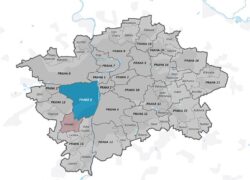
Prague 5 elects new city district council, Mayor yet to be appointed

Prague 5 representatives elected a new leadership for the city district yesterday, though the mayor’s position remains unfilled. The newly elected vice-mayors are Lukáš Herold (ODS) and Petr Lachnit (ANO), joined on the council by Zdeněk Doležal (ODS), Martin Damašek (TOP 09), David Dušek (STAN), and Lubomír Brož (ANO), an MP who was also appointed as an unreleased councillor. All six have prior experience serving on the city council.

This leadership change follows the dismissal of the previous council, which was formed by Prague 5 Sobě, Pirates, and SEN 21. The previous coalition, holding a slim majority of 21 out of 41 representatives, collapsed after Štěpán Rattay (formerly of Pirates) resigned from the council on Monday. Rattay now serves as an unaffiliated representative and supported the new council’s formation.

Herold emphasized the temporary nature of the six-member council, explaining the decision to delay appointing the remaining three members to allow broader coalition negotiations. “We aim to collaborate with all political parties to establish a stronger coalition,” he stated.

The city district’s 2024 budget discussion, initially scheduled for today, was withdrawn by Jolana Dočekalová (Prague 5 Sobě), the outgoing councillor for finance. She argued that the emerging coalition should draft its own budget, stating: “I don’t want to bind the new leadership with my proposal.”

Herold criticized the decision, blaming the previous coalition for the impending provisional budget. He assured that the new council would prioritize preparing a budget. Under provisional management, the district can only spend one-twelfth of the previous year’s budget per month and is restricted from initiating new investments.

Outgoing councillor Jaroslav Pašmik (Prague 5 Sobě) suggested electing only three members to ensure minimal operations, arguing that appointing additional members without clear responsibilities was unnecessary. Herold countered that at least five members are needed for a quorum, making the six-member appointment essential.

New councillor Martin Damašek (TOP 09) emphasized the temporary nature of the current composition: “This council is a provisional solution, and we are committed to ensuring stable leadership for the district until the next elections.”

The newly formed council will convene on Wednesday to delegate responsibilities among members and begin work on the district’s budget. Prague 5, home to approximately 86,000 residents and encompassing areas like Smíchov, Košíře, and Jinonice, now faces the challenge of navigating governance amid a transitional phase.

Source: CTK

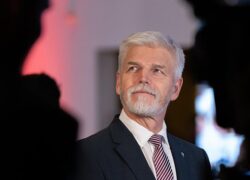
President Petr Pavel signs 2024 budget with CZK 241 billion deficit despite reservations

President Petr Pavel has signed the state budget for 2024, which projects a CZK 241 billion deficit, after careful consideration and discussions with Prime Minister Petr Fiala and Finance Minister Zbyněk Stanjura. The president acknowledged his reservations about the budget, citing concerns over the realism of some projected revenues and expenditures. However, he emphasized that his decision was in the best interest of the country and its citizens.

“I did not make this decision lightly. While I had serious reservations, the guarantees provided by the government to maintain the deficit at the planned level and adhere to the Budget Responsibility Act were key to my decision,” Pavel said in a social media address. He added that the government now bears both political and moral responsibility for fulfilling these commitments.

Key Budget Figures and Priorities

The 2024 budget reflects a CZK 41 billion reduction in the deficit compared to this year’s adjusted budget. It anticipates:
• Revenue increase of CZK 146 billion compared to 2023,
• Expenditure increase of CZK 105 billion,
• The deficit primarily funded through a CZK 248 billion rise in national debt.

The government’s priorities include:
1. Consolidating public finances,
2. Strengthening investments,
3. Addressing the aftermath of recent floods,
4. Maintaining social stability.

Finance Minister Zbyněk Stanjura described the budget as “realistic and socially stabilizing,” while Prime Minister Petr Fiala called it “a reasonable compromise.”

Economic advisors to the president, including economist David Marek, expressed skepticism about the budget, referencing concerns raised by the National Budget Council (NRR). Among these were potentially overestimated revenues, particularly from the sale of emission allowances.

Despite these reservations, Pavel acknowledged the government’s commitment to fiscal consolidation and appreciated the inclusion of significant investments and adherence to defense commitments. “The government has made an effort to avoid wasteful spending, even in an election year,” he noted.

The NRR has repeatedly called for continued budget reforms to meet fiscal targets under the Budget Responsibility Act. While current measures are projected to suffice until 2026, further structural reforms will be needed in subsequent years.

During parliamentary discussions, CZK 3 billion was reallocated within the budget, with key adjustments including:
• CZK 700 million for water management infrastructure,
• CZK 1 billion for police and fire brigade salaries,
• Over CZK 500 million for judiciary employee salaries,
• CZK 60 million for investments in Prague Castle’s infrastructure and security, which includes facilities used by the president.

While Pavel has signed the budget, he stressed the need for ongoing reforms to ensure long-term fiscal stability. “The measures taken so far are a start, but they will not suffice in the future. Continued efforts and reforms will be necessary to achieve sustainable public finances,” he said.

The 2024 budget represents a significant step in balancing the need for fiscal responsibility with investment and social priorities, but it also highlights the challenges and complexities of managing public finances in a period of economic uncertainty.

Source: CTK

Prologis begins construction of logistics center for Dell Technologies in Łódź

Prologis has commenced the construction of a state-of-the-art logistics center for Dell Technologies’ factory in Łódź, designed to support operations across the EMEA region. Spanning 41,535 m², the facility is set to become operational in the second half of 2025, according to Kamila Pruk-Piotrowska, Prologis Director of Capital Deployment.

“We are thrilled to collaborate with Dell Technologies and logistics operator DP World. This facility is not only a milestone for our partnership but also a catalyst for future investments in the region. Prologis currently operates five parks in Łódź with a total of 10 buildings and 262,000 m² of space, with potential for a further 40,000 m² expansion,” said Pruk-Piotrowska at the project’s inauguration.

Developed by Bremer and managed by DP World, the facility will be the third build-to-suit (BTS) project tailored to a client’s specific requirements within Prologis Park Łódź.

Dell Technologies has long established Łódź as a hub for sales, marketing, and technological innovation. Since its inception, the company’s Polish factory has produced 57 million devices and contributed PLN 1.5 billion to the country’s GDP in 2023.

“The new logistics center will ensure timely delivery of critical systems across 25 EMEA countries, enhancing efficiency and meeting the demand for infrastructure support,” said Wiesław Gorzelak, Dell Technologies VP for EMEA Operations.

The 41,535 m² facility will serve as a cutting-edge distribution hub, providing comprehensive logistics services to countries including Poland, Germany, Turkey, Sweden, Denmark, and the Baltic States. Designed with sustainability in mind, the warehouse incorporates advanced environmental solutions, aligning with Prologis’ commitment to setting new green standards in the logistics industry.

Source: Prologis and IBSnews

New write-downs for CHF loan legal risks may reach PLN 10-15 billion

The National Bank of Poland (NBP) estimates that additional write-downs needed to cover the legal risks of active Swiss franc (CHF) loans could total PLN 10-15 billion. The central bank also highlights potential legal risks for borrowers who took loans in other currencies, particularly euros, or those who have already repaid their loans.

According to NBP’s “Report on the Stability of the Financial System”, the current jurisprudence on CHF-denominated loans continues to burden the banking sector. Despite this, the NBP believes that, in an environment of strong interest income, the sector can absorb the estimated PLN 10-15 billion write-downs even in the short term.

“Additional reserves may also be needed to address lawsuits filed by borrowers who took loans in other currencies, primarily euros, or those who have already repaid their debt. These costs could potentially double the burden caused by Swiss franc loans,” the report states. The central bank notes that banks have started to proactively increase reserves for repaid loans and euro-denominated mortgages, amounting to approximately PLN 8 billion in total.

The NBP acknowledges that legal risks surrounding foreign currency housing loans remain significant, but their overall scale will gradually decrease over time. “Mass borrower challenges to loan agreements under consumer protection laws have resulted in exceptionally high costs for banks,” the NBP points out. However, the substantial reserves already created put banks in a better position to handle this risk compared to previous years.

By June 2024, the total value of reserves for legal risks amounted to approximately PLN 80-85 billion, with PLN 25 billion already utilized to cover costs from court rulings and settlements. Although the growth rate of reserves has slowed since late 2023, banks continue to incur costs from creating new write-downs.

The NBP expects a gradual increase in the usage of reserves in the coming years, particularly as final court rulings are issued and settlements are reached with more borrowers.

The NBP highlights the ongoing interest among borrowers in contesting CHF loan agreements. Currently, Polish courts are handling around 165,000 cases involving foreign currency housing loans. While most cases remain in the first instance stage, approximately 25,000 cases have been resolved through final judgments or settlements.

An increasing number of borrowers are also challenging agreements for loans that have already been repaid. At the same time, the number of settlements between banks and borrowers continues to rise. By mid-2024, approximately 110,000 settlements had been reached, providing faster and more predictable outcomes compared to lengthy court proceedings.

The NBP estimates that 80,000 borrowers with CHF loans have yet to take any steps to reduce their debt through settlements or court actions. These loans represent roughly one-third of the total outstanding value of CHF-denominated mortgages.

Given the high costs already absorbed by banks, the NBP expects the process of creating new reserves to slow down in the near future. However, the central bank underscores that legal challenges, particularly in the context of euro-denominated loans and repaid mortgages, remain a critical area for banks to monitor.

The report concludes that while the banking sector is better prepared for legal risks than in previous years, it must remain vigilant as legal disputes continue to evolve.

Source: NBP and ISBnews

Kram Investment to begin construction of first retail parks in H1 2025

Kram Investment has announced plans to begin construction of its first ecological retail parks in the first half of 2025, with completion expected within 18 months. The company aims to deliver several small-scale retail parks annually, each spanning 4,000–6,000 m².

“We have very ambitious plans. Our ultimate goal is to introduce eco-friendly retail parks to the Polish market, inspired by solutions used in Western Europe,” said Jerzy Maliszewski, President of Kram Investment.

The company’s ecological retail parks will feature wooden-steel prefabricated structures, photovoltaic installations, mini wind turbines, and water retention systems, making them environmentally sustainable.

“Given the scale of the project, this is a long-term plan. For now, we are focusing on several projects utilizing traditional construction technologies, most of which already have tenant contracts in place,” Maliszewski added.

Kram Investment is currently searching for suitable land plots in cities with populations of around 10,000 inhabitants. Additionally, the company plans to differentiate itself in the market by developing large, zero-emission retail parks exceeding 10,000 m² in the future.

The company anticipates that falling costs of modern technologies and ESG-aligned preferential financing conditions will make such investments more cost-effective while enhancing their economic viability.

Preliminary discussions with international investment funds have revealed strong interest in eco-friendly retail park projects. “The market clearly recognizes the value of sustainable retail spaces, and this positions us well to meet investor and tenant demand,” the company stated.

Source: Kram Investment and ISBnews
Photo: Kram Investment

A quarter of Poles go into debt to fund lavish Christmas celebrations

One in four Poles takes on debt to organize an extravagant Christmas, with 6% repeatedly resorting to borrowing, according to a study conducted by IMAS International on behalf of the National Debt Register (KRD). For three-quarters of respondents, gifts exceeding 500 PLN per person are considered a luxury expense.

The study, titled “Luxury for the Holidays”, shows that Poles often rely on family assistance (11%), bank loans (9%), or defer payment of their current bills (5%) to afford festive celebrations.

“Luxury means different things to different families. For some, it’s about simple traditions and small gifts, while for others, it means lavish meals, expensive decorations, or luxury gifts. If done within one’s budget, there’s no problem. The real issue arises when borrowing leads to long-term debt and austerity measures in the following months,” said Adam Łącki, President of the National Debt Register. “Our data shows that 2 million Poles collectively owe PLN 43.4 billion. Falling into a debt spiral can harm not only finances but also mental well-being.”

The study identifies three consumer spending patterns during the holidays:
1. Frugal Approach – 39% stick strictly to their budgets.
2. Moderate Spending – 45% aim for elegant celebrations while controlling expenses.
3. High Spending – Nearly 10% are willing to overspend to make the holidays extraordinary.

For 75% of respondents, a gift worth more than 500 PLN per person is seen as “luxurious.” Other high-cost holiday expenditures include:
• Christmas trips abroad (56%),
• Home decorations costing several hundred zlotys (44%),
• Exquisite holiday dinners (33%).

For two-thirds of Poles, gifts represent the biggest holiday expense. Preparing meals (50%) and holiday trips (20%) also strain budgets, while 10% cite decorations as the most significant drain.

The study highlights that borrowing to finance Christmas celebrations is relatively common:
• 11% turn to family or friends for financial support,
• 9% take out bank loans,
• 5% delay paying current bills to fund holiday spending.

Among those who borrow, 6% have done so repeatedly, underscoring a concerning trend.

For most Poles, holiday expenses have a moderate impact on their finances in the following months, with 44% reporting manageable strain. However, 5% admit that holiday costs significantly burden their finances, a sentiment more prevalent among those who overspend.

The “Luxury for the Holidays” study was conducted by IMAS International in November 2024 using the CAMA method. The survey included a representative sample of 1,011 Poles aged 18–74.

As the data shows, while many Poles aim to strike a balance between celebration and financial prudence, a significant number still resort to borrowing to fund their festive dreams, risking long-term financial instability in the process.

Source: IMAS/KRD and ISBnews

LATEST NEWS