Czech flat-rate tax advances for sole traders to increase in 2025

Monthly flat-rate tax advances for sole traders in the first income band will rise by CZK 1,218 to CZK 8,716 starting next year, the Financial Administration announced today. Advances for the second and third bands will remain unchanged at CZK 16,745 and CZK 27,139, respectively. Sole traders wishing to join, exit, or switch their tax band must submit their applications by January 10.

The increase in the first-band advance is attributed to higher contributions for health and pension insurance. Health insurance premiums will increase by CZK 175 to CZK 3,143 per month, while pension insurance premiums will rise by CZK 1,043 to CZK 5,473. The income tax component of the flat-rate payment remains unchanged at CZK 100. Advances must be paid by the 20th day of each month.

The flat-rate tax system, introduced to simplify tax payments for sole traders, allows non-VAT payers with annual business incomes of up to CZK 2 million to combine income tax, health insurance, and social insurance into a single payment. According to the Ministry of Finance, this system reduces bureaucratic burdens and minimizes the likelihood of tax inspections. As of January 2023, approximately 125,000 entrepreneurs were registered under this regime.

In 2023, the flat-rate tax system introduced income bands to accommodate variations in earnings among small entrepreneurs. Tradespeople in certain professions, such as IT, photography, law, or tax advisory, can move into higher bands if their annual income exceeds CZK 1 million or CZK 1.5 million.

Entrepreneurs looking to enter or adjust their flat-rate tax arrangements for 2024 must submit their requests by January 10. Changes may include switching tax bands if their actual income aligns better with a different category. Notifications must be submitted electronically by those required by law to use a data box. Others may file their notifications by post or in person at a tax office branch.

Entrepreneurs already enrolled in the flat-rate tax regime will be automatically re-enrolled for the coming year, ensuring a seamless transition.

Source: CTK

Czech Chamber approves two-year delay for State digitization amid opposition criticism

The Czech Chamber of Deputies has approved a proposal to postpone the full implementation of state digitization by two years, pushing the deadline to 2027. The government coalition’s motion, citing the need for more preparation time for authorities, has sparked criticism from opposition parties. The delay pertains to the Act on the Right of Citizens to Digital Services—the so-called Digital Constitution—originally scheduled to take effect in February 2025. The proposal will now head to the Senate for consideration before requiring the president’s signature.

Opposition parties, including ANO and the Pirates, have strongly opposed the delay. The Pirates, who were part of the government coalition until the fall, advocated for a one-year postponement instead. Meanwhile, ANO leaders labeled the delay as evidence of government inefficiency in delivering a project deemed critical.

ANO and SPD representatives have also raised concerns about the government’s approach, criticizing its decision to bundle the delay into amendments to the Electronic Communications Act, which was initially focused on telemarketing regulations. They argue that this legislative strategy undermines transparency. Both parties have indicated they may challenge the delay in the Constitutional Court.

Deputy Prime Minister Marian Jurečka (KDU-ČSL) defended the two-year postponement, citing risks of legal disputes if the original deadline was maintained. The proposal also includes a provision allowing authorities to opt out of specific digital tasks deemed inefficient or wasteful. According to Jurečka, some digital services listed in the catalog are rarely used, with certain agendas not utilized even once per year.

The Chamber also addressed other significant amendments tied to the Electronic Communications Act. These include:
• Telecommunications Disputes: The Czech Telecommunication Office will now handle all client disputes related to operator payments, previously split between the courts and the office.
• Telemarketing Regulations: The government initially sought a blanket ban on marketing via voice communication unless explicitly agreed upon by the recipient. However, this provision was removed following discussions in the Economic Committee.
• Signal Infrastructure: Amendments to the Nature and Landscape Protection Act aim to facilitate the construction of mobile signal antenna masts, particularly in remote or protected areas. Disputes remain over the environmental impact, with the Ministry of the Environment opposing the proposal due to potential harm to sensitive regions like plateaus and peat bogs.

In addition to the digitization delay, the Chamber approved measures to enhance protections for bank clients against fraud. ODS MP Jiří Havránek successfully introduced a proposal to improve cooperation between mobile network operators and financial institutions. The initiative aims to share information on fraudulent activities, minimizing financial losses and improving customer security.

The delays and legislative changes underscore the challenges of balancing public interest, technological advancements, and environmental concerns. While Industry Minister Lukáš Vlček (STAN) emphasized the importance of closing “white spots” in rural data coverage to combat depopulation, critics argue that environmental protection and timely digitization efforts should not be sidelined.

As the Senate deliberates the proposals, these measures will likely continue to be a point of contention in Czech politics.

Source: CTK
Photo: Deputy Prime Minister Marian Jurečka (KDU-ČSL)

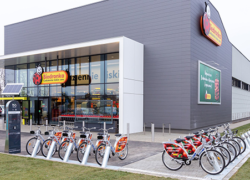
Biedronka opens 24 new stores and modernizes 23 ahead of Christmas

As part of its pre-Christmas preparations, Biedronka has expanded its network with 24 new stores and completed the modernization of 23 existing outlets across Poland, the company announced.

Many of the new and revamped locations are situated outside major urban centers, reflecting Biedronka’s strategy to bring its services closer to local communities. Notable first-time store openings include locations in Pierzchnica and Zawoja in the Małopolska province, Żyrzyn in Lublin, and Oleszna in Silesia. Meanwhile, residents of cities such as Warsaw, Zielona Góra, and Chorzów can now shop in modernized facilities.

The newly opened stores feature an average sales area of 748 m², with modern layouts that include three traditional and four self-service checkout stations. Both the new and upgraded outlets incorporate energy-efficient technologies, such as LED lighting and eco-friendly refrigeration systems, in line with the company’s commitment to sustainability.

In addition to these developments, Biedronka has extended the opening hours of over 3,100 stores during the holiday rush. From December 20 to 23, these locations will remain open until 11:30 PM to accommodate increased customer demand.

At the end of the third quarter of 2024, Biedronka operated 3,659 outlets, up from 3,473 a year earlier, highlighting its steady growth in the Polish retail market.

Source: Biedronka and ISBnews

Marvipol Development secures Warsaw land for PLN 42 million for residential project

Marvipol Development has signed a contract with an unrelated third party for the acquisition of a 4,400 sqm plot of land in the Bielany district of Warsaw. The transaction, valued at PLN 42 million net, aligns with the company’s plans to develop a residential project on the site, the company announced.

Marvipol Development, a prominent Polish developer, operates primarily through special-purpose vehicles in two key segments: residential and warehouse construction. The company specializes in multi-family housing and warehouse projects, managing their construction, commercialization, and eventual sale.

This acquisition further reinforces Marvipol Development’s strategic focus on expanding its residential portfolio in prime urban locations. The company, established in 1996 as part of Marvipol S.A., assumed its independent development activities following a corporate division on December 1, 2017.

Source: Marvipol Development and ISBnews

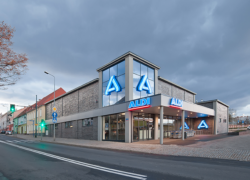
Aldi Polska opens 60 stores in 2024 and plans distribution center for 2025

Aldi Polska has continued its dynamic growth in 2024, opening nearly 60 new stores and bringing its total to 362 outlets nationwide, the company announced. Looking ahead, Aldi plans to maintain its aggressive expansion pace, aiming for 500 stores in the coming years. A new distribution center in the Mazowieckie Voivodeship is also slated to open in 2025 to support its growing operations.

In a single week this December, Aldi opened eight new stores across Poland in locations such as Bochnia, Międzyrzecz, Warsaw, Olsztyn, and Mysłowice. This milestone marks a continuation of Aldi’s consistent growth, which saw the opening of 57 branches in 2023 and 50 in 2022.

“Opening eight stores in just one week demonstrates our commitment to providing high-quality products at affordable prices to customers across Poland,” said Kinga Abramik, Aldi’s Sales Manager in Poland. “Reaching over 360 locations is a significant milestone, and we are determined to continue expanding into both large cities and smaller towns to better serve our customers.”

The company’s largest presence is currently in the Silesian and Lower Silesian voivodeships, but its expansion plans extend to all regions of Poland. In 2025, new stores are expected to open in Strzelce Opolskie, Poznań, Kraków, Rembelszczyzna, Wrocław, and Warsaw, with additional locations to be announced.

Aldi’s upcoming distribution center in Mazowieckie Voivodeship will enhance its logistics network, enabling faster and more efficient deliveries to its expanding store base.

Aldi Polska is part of the Aldi Nord Group of Enterprises, one of the largest international retail chains. With its ambitious expansion strategy, the company continues to solidify its position as a key player in Poland’s competitive retail market.

Source: Aldi Polska and ISBnews

Redkom Development to Build Largest Retail Park in Karkonosze County

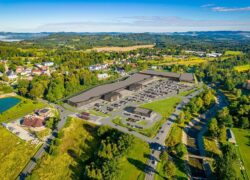
Redkom Development has announced the construction of Przystanek Karkonosze, a 16,000 sqm retail park set to become the largest of its kind in Karkonosze County. Situated in Miłków, a suburb of Karpacz, the facility will occupy a prime location on Karpacka Street at the crossroads connecting Karpacz, Kowary, Szklarska Poręba, and Jelenia Góra. This strategic positioning ensures that Przystanek Karkonosze will be one of the most attractive retail and leisure destinations in the district. The grand opening is planned for the second or third quarter of 2025.

The project, spearheaded by Redkom Development, is being realized in collaboration with Trasko Invest Sp. z o.o. as the general contractor. Gleeds Polska has been tasked with overseeing the project, cost, construction, and tenant coordination, as well as achieving BREEAM certification for sustainable construction. Mallson Polska is working alongside Redkom Development to commercialize the facility and attract a diverse range of tenants.

Przystanek Karkonosze is part of Redkom Development’s growing portfolio of retail parks. The company has successfully launched Park Glinianka in Łubna, now known as BIG Łubna, in March 2023. This was followed by Ozimska Park in Opole, which opened in November 2023, and Comfy Park Bielik in Bielsko-Biała, which welcomed its first visitors in December 2024.

More than just a shopping center, Przystanek Karkonosze aims to be a vibrant hub for both the local community and the region’s many tourists. The facility’s commercial offering has been carefully designed to reflect the region’s unique character and recreational appeal. As a result, the retail park will feature a mix of tenants tailored to the area, including an extensive selection of sports-focused retailers such as 4F and Martes Sport.

In addition to its sports offerings, Przystanek Karkonosze will host a variety of fashion, footwear, and drugstore retailers, including a mix of international chains and Polish brands. One of the key attractions will be a large-format HalfPrice store, a renowned off-price retailer known for offering high-end brands at discounted prices, catering to shoppers seeking great deals.

Przystanek Karkonosze is expected to significantly enhance the commercial landscape of the region, offering a modern, accessible, and engaging shopping experience. With its strategic location, diverse tenant mix, and focus on sustainability, the project is poised to become a transformative addition to Karkonosze County, drawing both local visitors and tourists to its doors.

Czech Republic’s foreign debt rises to CZK 5.075 trillion in Q3

The Czech Republic’s foreign debt increased by CZK 176.2 billion in the third quarter of 2024, reaching a total of CZK 5.075 trillion at the end of September, according to preliminary data from the Czech National Bank (ČNB). This marks a year-on-year increase of CZK 479 billion, with foreign debt now accounting for 64.2% of the country’s GDP.

Approximately 75% of the foreign debt is attributed to the private sector, while the remaining 25% consists of public sector liabilities. These include commitments by governmental institutions, private entities backed by state guarantees, and state-majority-owned entities.

Foreign indebtedness increased across all economic sectors during the quarter. Key highlights include:
• Government Institutions: Foreign debt in this category grew significantly, largely due to the purchase of government bonds by foreign investors. Government-related debt now accounts for 17.2% of the total foreign debt.
• Banking Sector: Including the ČNB, the banking sector’s share of foreign debt stood at 37.6%, influenced by higher demand for bank bonds from foreign investors.
• Other Sectors: The remaining 45.2% of foreign debt is attributed to other economic sectors, primarily driven by domestic companies securing trade loans from abroad and increased foreign investment in bonds.

Deposits and loans from affiliated companies remained the most prevalent forms of foreign debt financing, accounting for 53.6% of the total foreign liabilities.

The rise in foreign debt was primarily driven by:
1. Increased foreign purchases of government bonds.
2. Growing demand for bank bonds by non-residents.
3. Domestic companies drawing trade loans from abroad.

This upward trend in foreign debt highlights the growing reliance of various Czech sectors on international financing, underpinned by strong foreign investor interest in Czech financial instruments.

Source: CTK

Deka Immobilien acquires premium office property in Paris for €89 million

Deka Immobilien has purchased a high-quality office property with retail space in Paris for €89 million. The seller, AG Real Estate France, is a subsidiary of the Belgian real estate group AG Real Estate. The property will be integrated into the open-ended real estate fund Deka-ImmobilienMetropolen (DIM).

The newly built property, completed in March 2024, offers 7,750 sqm of leasable space, including a rooftop terrace. It is fully leased under long-term agreements. The main tenant, Citeo, focuses on sustainable waste management and resource optimization, while the retail space is occupied by discount retailer Aldi.

Located at Place de la Nation in Paris’s 11th arrondissement, the property sits in a dynamic and increasingly desirable office market. The area, supported by excellent infrastructure, is attracting innovative companies and young professionals, particularly from the technology sector.

“My Little Nation” boasts top sustainability credentials, holding both BREEAM ‘Excellent’ and HQE ‘Excellent’ certifications. It was also recognized with the Coup de Coeur Award in the office building category at the 2024 Salon de l’Immobilier d’Entreprise (SIMI).

This acquisition aligns with Deka-ImmobilienMetropolen’s strategy of investing in high-quality properties in Europe’s key metropolitan areas. By securing a premium asset outside the traditional Central Business District, the fund management taps into the growth potential of Paris’s eastern sub-market, enhancing long-term rental income prospects.

The transaction was completed under favorable terms, reinforcing Deka-ImmobilienMetropolen’s position in one of Europe’s most sought-after real estate markets.

Savills: Poland’s retail property sector thrives in 2024

The Polish retail property sector experienced significant growth in 2024, outperforming much of Europe, according to Savills. Investment transactions in the first three quarters totaled nearly €2.5 billion, a 51% year-on-year increase and 20% above the full-year 2023 total. Approximately 25% of these funds were directed toward retail properties, making Poland a hotspot for global investors.

Eastern Europe Outpaces European Averages

While Europe’s retail property market grew modestly, with transaction values rising 6% year-on-year to €19 billion, Eastern Europe showed exceptional dynamism. Poland and Hungary led this trend, with Poland focusing on ESG principles and modernizing its retail spaces.

Key Transactions and Sector Performance

Poland’s retail market accounted for 25% of all commercial real estate investments, surpassing 2023’s total by 43%. Major transactions included:
• Magnolia Park (Wrocław) and Silesia City Center (Katowice) acquired by NEPI Rockcastle for nearly €780 million.
• Retail parks in Myszków and Włocławek purchased by BIG Poland for over €56 million.
• Other notable deals included Galeria Wisła (Płock) and Galeria Szperk (Gdańsk).

The robust activity positions 2024 as the retail sector’s best year since 2019, driven by stable economic fundamentals and the growing popularity of retail parks.

The Rise of Retail Parks and Omnichannel Strategies

Retail parks, particularly in smaller towns, are gaining traction as they cater to local community needs. At the same time, omnichannel strategies integrating physical and online retail are becoming increasingly prominent, aligning with broader European trends.

European Context and Modernization

Poland’s growth outpaced Europe’s 6% average, with other strong performers including Ireland (+107%), Italy (+83%), and Hungary (+34%). Across Europe, retail parks (28%), shopping malls (26%), and shopping streets (18%) remain the top investment segments.

Modernization is key for further growth, with investors focusing on upgrading older properties to enhance value and sustainability.

Positive Outlook for 2025

Savills forecasts increased investor activity in 2025, with investment volumes expected to exceed 2024 levels. Poland remains a standout market in the region, offering stability, growth potential, and opportunities for modernization and innovation in the retail property sector.

Českomoravská Nemovitostní completes landmark aquisition worth CZK 5 Billion

Českomoravská Nemovitostní (ČMN), the third-largest office landlord in the Czech Republic, together with the NEMO Fund, has finalized its largest acquisition to date—a real estate portfolio valued at approximately CZK 5 billion. The transaction, completed with NOVA Real Estate Fund, encompasses five premium office buildings with a leasable area exceeding 37,000 m² and 11 retail parks spanning 72,000 m², marking ČMN’s entry into the retail property segment.

The acquisition includes notable Prague office properties such as Smíchov Gate, Anděl 17, Idea Office Building, Victoria Vyšehrad, and Panorama Business Centre near the National Museum. These modern and strategically located buildings boast excellent accessibility and offer tenants high-quality, representative spaces. Tenants include prominent international and local companies like Google, Hochtief, Cemex, and Mercedes-Benz.

In addition to office properties, the portfolio features retail parks anchored by well-known tenants, including Ahold, Penny Market, OBI, and Tesco. This diversification aligns with ČMN’s strategy to broaden its asset base with profitable properties that generate stable, long-term returns.

“We are thrilled to announce the largest acquisition in our history and one of the most significant transactions on the Czech market this year,” said Radek Stacha, Chairman of the Board at ČMN. “This deal reflects our commitment to strategic growth. While the market has been challenging in recent years, this acquisition was worth the wait, enabling us to diversify our portfolio with high-quality assets that align with our long-term investment goals.”

The acquisition was financed by Germany’s Helaba Landesbank Hessen-Thüringen. “The Czech investment market remains one of the most attractive in Europe. We are proud to provide financing for this milestone transaction with our long-standing client ČMN,” said Jürgen Schleimer, Director of Real Estate Finance CEE at Helaba.

The sale was conducted by REDSIDE, the investment company managing NOVA Real Estate Fund, as part of its strategy to liquidate the fund’s portfolio following investor decisions. The process was completed within six months.

“We congratulate ČMN on this landmark acquisition and extend our thanks to all advisors for ensuring a smooth transaction. Completing such a large deal on schedule was a challenging yet successful endeavor,” said Rudolf Vřešt’ál, Founder and Chairman of REDSIDE.

Savills, acting as the advisor for REDSIDE, highlighted the competitive tender process that led to the sale. “ČMN’s offer stood out due to its strong commercial terms and deep understanding of the portfolio,” noted Stuart Jordan, CEO of Savills.

The acquisition significantly strengthens ČMN’s position in the Czech commercial real estate market. Known for its focus on properties with stable cash flow and long-term value growth, the company continues to expand its portfolio underpinned by a strong financial foundation and a team of seasoned professionals.

The transaction is subject to final approval by the Competition Authority. Once integrated, the newly acquired assets are expected to bolster ČMN’s reputation as a leading player in both the office and retail property segments.

LATEST NEWS