Czech post-Christmas sales begin, retailers anticipate higher revenues

The post-Christmas sales season officially kicks off today, offering Czech shoppers discounts on electronics, clothing, cosmetics, and more in brick-and-mortar stores and online. The sales will run until the end of January, with many retailers expecting higher revenues than last year. The period will also see a surge in customer returns of unsuitable Christmas gifts.

According to Shoptet, a provider of e-commerce solutions, 85% of e-shops are participating in post-Christmas sales this year, up from 80% last year. Discounts are expected to average 45%, slightly higher than in previous seasons. “Retailers could see up to 25% more sales this year compared to last year. The duration of the sales will depend on how quickly they manage to sell out their stock,” said Shoptet CEO Samuel Huba.

Major retailers such as Alza, Globus, and Tesco have already launched their sales. Alza anticipates strong post-Christmas demand, building on robust pre-Christmas sales. “We expect a year-on-year increase in sales, particularly in categories like sports equipment, driven by New Year’s resolutions,” said spokeswoman Eliška Čeřovská. Tesco plans a second wave of sales starting January 6, expanding discounts to include toys and household items.

Some retailers began their sales earlier, with e-shop Ovečkárna offering discounts since Monday and expecting double-digit growth compared to last year. Alpine Pro, which started its winter range discounts on December 19, is more cautious, citing weather conditions as a factor influencing demand. “We are adapting to trends with collections focused on active lifestyles,” said company representative Barbora Vacková.

Retailers are also preparing for an influx of returns, with most unsuitable gifts being exchanged before the end of the year. Returns typically account for about 1% of total sales, according to Huba.

The Czech Trade Inspection Authority has been monitoring compliance with discount regulations under an amendment to consumer protection laws introduced last year. In the second quarter, inspectors found violations in 41% of 259 inspections. The law requires retailers to base discounts on the lowest price offered in the 30 days preceding the sale, ensuring transparency for consumers.

Retail sales in the Czech Republic have been on the rise, with October marking the 11th consecutive month of year-on-year growth. Sales increased by 5.5% in October, following a revised 4.8% growth in September. E-commerce has been a key driver, maintaining double-digit growth rates throughout the year.

With increased participation in post-Christmas sales and strong consumer demand, retailers are optimistic about closing the year on a high note and setting the stage for continued growth in 2025.

Source: CTK

Czech economy expected to accelerate in 2025 amid stable inflation

The Czech economy is projected to grow by 2% in 2025, driven primarily by household consumption, while inflation is expected to remain at levels similar to this year. Real household incomes are anticipated to rise as nominal wage growth outpaces consumer price increases. Unemployment is expected to inch up but will remain among the lowest in the European Union, according to a survey by the Ministry of Finance and analyses from 13 domestic expert institutions.

Cyrrus Chief Economist Vít Hradil predicts GDP growth will accelerate to 1.9% in 2025, up from approximately 1% this year. “The Czech economy will be driven by domestic factors, particularly household consumption, which is set to rebound after several weaker years,” Hradil said. He also noted that cheaper credit and improved sales prospects should boost corporate investment. However, the economy may face challenges from weak foreign demand, particularly in the industrial sector.

Pavel Peterka, Chief Economist at XTB, expects GDP growth of 2%, attributing it to increased household consumption fueled by a gradual release of savings accumulated during recent years of economic uncertainty. The Ministry of Finance is even more optimistic, forecasting GDP growth of 2.5%, while the Czech National Bank (CNB) predicts 2.4%.

Experts project inflation to hover around this year’s average of 2.5%. Peterka highlighted that food price dynamics, while elevated, should decelerate in the latter half of the year. Meanwhile, growth in service prices is expected to normalize after running at around 5% throughout 2024. Fuel prices are anticipated to exert a deflationary effect.

The CNB has identified service price inflation as a key risk for overall inflation in 2025. However, experts believe the situation will stabilize, keeping inflation under control.

Nominal wages are expected to grow by 5.5% to 6%, leading to real-term wage increases. However, household purchasing power is likely to recover only gradually. Martin Gürtler, an analyst at Komerční banka, estimates that real wages will not return to pre-pandemic levels until mid-2026, with household consumption following a similar trajectory.

Unemployment is forecast to rise slightly to 4% in 2025, primarily due to challenges in the industrial sector, which has been affected by weak demand from Germany. “I don’t expect massive layoffs, as the rest of the economy is well-positioned to absorb potential redundancies,” said Hradil.

Martin Jánský, CEO of Randstad CR, anticipates unemployment to peak in the first quarter of 2025. “Companies are likely to exercise caution in hiring and will focus on maximizing the efficiency of their existing teams,” Jánský noted.

Despite external pressures, the Czech economy is poised for moderate growth in 2025, supported by strong domestic consumption and stable inflation. While challenges in the industrial sector and cautious labor market dynamics may pose hurdles, the overall economic trajectory remains positive, with gradual recovery in household purchasing power and sustained low unemployment.

Source: CTK

Survey: Over 40% of companies pay 13th salaries in the Czech Republic this year

This year, 42% of employers in the Czech Republic provided their employees with a 13th salary, according to a survey conducted by the Chamber of Commerce. This marks a modest increase from the past two years, where approximately 38% of companies offered this benefit. However, the figure remains below the pre-pandemic level of 2019, when nearly 59% of firms paid the extra salary. The results of the survey were shared by Chamber of Commerce spokesman Jan Sotona.

Nearly a third of surveyed companies reported offering 13th salaries annually. Additionally, over 12% of firms introduced the benefit this year specifically to retain employees in a competitive labor market. “Meanwhile, 58.2% of companies do not pay the 13th salary but have opted to increase employees’ regular monthly wages instead,” Sotona said.

The survey revealed that large companies are the most likely to provide 13th salaries, with more than 53% paying them annually. An additional 25% offered this benefit in 2024 to prevent employee turnover. Altogether, nearly 80% of large firms reward employees with year-end bonuses. In contrast, small and micro businesses are less likely to provide 13th salaries, primarily due to financial constraints.

In terms of industries, manufacturing and construction lead in paying 13th salaries, while personal services firms are the least likely to offer such rewards.

The Chamber of Commerce noted that the prevalence of 13th salaries fluctuates with the economic climate. During crises, such as the COVID-19 pandemic in 2020 or the energy crisis that began in 2022, companies significantly reduced or eliminated these payments. “This year’s share of 41.8% represents only a slight increase compared to previous years and remains below the level of 2019. If economic stabilization continues, we can expect further growth in this benefit,” said Lenka Janáková, director of the Chamber’s Department of Legislation, Law, and Analysis.

Ensuring competitiveness in the labor market remains a priority for companies. Alongside 13th salaries, many firms are adopting other measures to attract and retain employees, such as subsidized meals and flexible working arrangements. However, rising wage expectations and demands for extra benefits present significant financial challenges, particularly for small and medium-sized businesses.

The Chamber of Commerce anticipates modest economic recovery in 2025, with real GDP growth projected at 2.8% year-on-year. Consumer prices are expected to rise by 2.3%, and wages are forecast to grow at a solid pace, even when adjusted for inflation.

Source: CTK

CPK receives PLN 3.5 billion capital injection for major infrastructure projects

The Centralny Port Komunikacyjny (CPK) company has increased its share capital by PLN 3.5 billion, following Prime Minister Donald Tusk’s decision to allocate additional funds. This significant investment aims to advance the construction of Poland’s new airport and high-speed railway network.

Deputy Minister of Infrastructure Maciej Lasek highlighted the project’s importance, emphasizing the focus on realistic planning and alignment with the country’s economic needs and local community considerations. “We are working on rational assumptions regarding the scale of investment and analyzing the project’s impact on the State Treasury and local communities,” he stated.

Key Areas of Investment

The recapitalization will enable the continuation of critical projects across three primary areas: the airport, railways, and real estate development. The funding will support:
• Completion of design work for the terminal, railway station, and public transport hub.
• Development of airport zones (Airside and Landside) and associated infrastructure.
• Acquisition of land and preparatory work for the construction of the CPK airport.
• Road investments, including access roads to the airport.
• Planning and design of Airport City and Cargo City, essential for the airport’s operations.

Rail Investments

A significant portion of the funding will focus on integrating CPK with Poland’s national transport network, particularly through high-speed rail projects. Key initiatives include:
• Land acquisition, design, and preparatory work for the Warsaw–Łódź “Y line.”
• Design work and construction of the CPK railway junction and a high-speed rail tunnel in Łódź.
• Real estate acquisition and project development for the Łódź–Wrocław section.
• Design and preparatory work for the Sieradz–Poznań railway line.

This additional capital injection underscores the Polish government’s commitment to CPK as a transformative infrastructure project. By advancing airport and railway connectivity, the initiative aims to bolster Poland’s economic development, enhance regional integration, and improve transportation efficiency for citizens and businesses alike.

Source: Centralny Port Komunikacyjny (CPK)

Czech real estate demand and prices set to rise in 2025

The demand for Czech real estate is expected to grow in 2025, driving up property prices. Experts cite an improving economic outlook and gradually declining mortgage rates as key factors behind this trend. Older flats are likely to see price increases of about 1%, reflecting ongoing low levels of new housing construction and limited market supply. Rents are also projected to rise at a similar rate, while investment in commercial real estate is expected to rebound significantly, according to real estate specialists.

“We anticipate continued moderate appreciation in property values next year due to falling mortgage rates and economic recovery. Housing has become more expensive, and family homes are increasingly out of reach for many, even with a mortgage,” said Michal Macek, owner of a real estate group.

Lumír Kunz, managing director of a real estate platform, predicts a similar market dynamic for older properties in 2025. “With a shortage of new housing projects, buyers will likely turn to older properties in good condition. Lower mortgage rates, combined with limited supply, will allow sellers to raise prices further,” he explained.

One consultancy estimates that prices for both owner-occupied and rental housing could rise by 5-10% next year. Lower homeownership affordability is expected to fuel demand for rental housing, while investment in logistics and rental-focused apartments will remain attractive. Multifunctional centers, hotels, and offices are also gaining interest as the office market recovers, with more people returning to workplaces post-pandemic.

The commercial real estate sector is poised for growth, with investment activity likely to surpass CZK 50 billion (EUR 2 billion) in 2025, a significant increase from this year’s CZK 38 billion (EUR 1.5 billion). The first quarter of 2025 is expected to see strong activity, driven by several major transactions nearing completion. While domestic entities will lead investments, foreign investor interest is anticipated to rebound as well.

“Industrial production and the automotive sector face challenges, but we foresee a slight recovery next year. Multifunctional centers and hotels are attracting growing interest from investors,” one consultancy noted.

The overall market trajectory reflects cautious optimism, with increasing demand and rising prices across residential, rental, and commercial real estate. The combination of improving economic conditions and reduced borrowing costs is set to shape a dynamic year for the Czech real estate sector.

Source: CTK

PepsiCo launches largest photovoltaic farm in Poland near Wroclaw

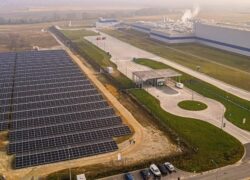
In Święte near Wroclaw, PepsiCo has inaugurated its largest photovoltaic farm in Poland, boasting a capacity of 3.5 MWp. This initiative is part of the company’s PLN 22 million investment in renewable energy sources this year, marking a significant step in its sustainability efforts.

The photovoltaic farm spans approximately two hectares and features over 6,000 advanced photovoltaic modules equipped with dual-sided, high-efficiency cells. According to PepsiCo, this first phase of the project includes the installation of 2 kilometers of medium-voltage power lines, underscoring the scale of the investment.

“This facility will generate 24% of the energy needs of our plant in Święte, which consumes 11.7 GWh of electricity annually. All energy produced by the photovoltaic farm will be used exclusively to power the factory,” said Tomasz Bronny, Director of PepsiCo’s Święte plant.

PepsiCo’s Święte facility, opened in May 2023, represents a €1 billion investment and has created hundreds of jobs in the Wroclaw region. Located in the Środa Śląska municipality along the Wrocław–Środa Śląska road, it is the company’s most advanced factory in the European Union.

The plant produces some of PepsiCo’s most recognizable snack brands, with the photovoltaic farm directly supporting these operations. On sunny days, the solar farm is expected to supply 100% of the energy required for the eRBS electric oven, which is essential for baking crisps. Additionally, the installation will meet the energy demands of a new production line scheduled for completion by mid-2025.

This photovoltaic project is a cornerstone of PepsiCo’s global PepsiCo Positive (pep+) strategy, aimed at transforming its operations to benefit both people and the planet. “Investing in renewable energy sources is a strategic priority for us, and we plan to expand such initiatives across Poland in the coming years,” stated Ugur Bulduk, Vice President of Supply Chain.

Since entering the Polish market in 1991, PepsiCo has grown to employ over 3,000 people across the country. Its operations include production facilities in Michrów, Żnin, Grodzisk Mazowiecki, and Tomaszów Mazowiecki, in addition to the Święte plant. The company continues to invest in local communities and sustainable practices, reinforcing its commitment to Poland’s economic and environmental progress.

Source: PepsiCo and Wroclaw.pl

EBRD invests €21.7 million in Greek real estate redevelopment consortium

The European Bank for Reconstruction and Development (EBRD) has announced a €21.7 million equity investment in the P&E Investments Axiopoiisis & Anaptyxis Akiniton consortium in Greece. The consortium, which includes longtime EBRD partner Dimand and Premia Properties, will grant the EBRD a 20% stake in its capital.

The funds from this investment will be allocated toward acquiring shares in Skyline, a newly established special purpose vehicle (SPV). Skyline’s portfolio consists of approximately 460 commercial and residential properties identified for redevelopment, repositioning, or trade sale. The consortium will acquire a 65% stake in Skyline, which Dimand will oversee, while the remaining 35% will be retained by the seller, Alpha Bank.

The project is designed to redevelop prime assets, aiming to meet top-tier specifications or unlock value through strategic repositioning. Additionally, granular assets will be redirected to the market, enhancing the functionality of Greece’s primary and secondary cities while providing retail investors with opportunities to invest in existing building stock.

A key focus of the project is on sustainability, emphasizing the efficient use of resources and tenant engagement through green leases. Redeveloped assets in the portfolio will target compliance with high green building standards, such as LEED Gold or BREEAM Very Good certifications.

The initiative will also strengthen climate governance practices by adopting GRESB reporting standards, a globally recognized benchmark for environmental, social, and governance (ESG) performance in real estate.

The EBRD has been operating in Greece since 2015, contributing to the country’s economic recovery through investments across corporate, financial, energy, and infrastructure sectors. To date, the Bank has invested over €8 billion in 116 projects, reaffirming its commitment to fostering sustainable growth in Greece.

This latest investment not only advances urban redevelopment but also aligns with the EBRD’s broader objectives of promoting sustainability, innovation, and resilience in the real estate sector.

Source: EBRD
Photo: EBRD

Slovak government consolidation package to impact growth, wages, and housing

The Slovak government’s recently introduced consolidation package, centered on tax increases such as a higher VAT rate and a transaction tax, is expected to weigh heavily on the economy. Rising prices will erode real wages, and an anticipated increase in housing costs will further diminish affordability. Compounding these challenges is Slovakia’s recent credit rating downgrade by Moody’s, which may slow the decline in mortgage interest rates, adding uncertainty to the real estate market and the availability of loans for prospective buyers.

Economists broadly criticize the consolidation measures, particularly the VAT hike and transaction tax. While these steps aim to stabilize public finances, their adverse effects on economic growth and consumer purchasing power raise significant concerns. Questions also linger about whether the government can realistically achieve its target of generating €2.7 billion in additional revenues by 2025.

Moody’s decision to downgrade Slovakia’s credit rating, the second downgrade since the current government took office in October 2023, underscores these concerns. Fitch Ratings had already lowered Slovakia’s rating in December 2023, citing slowing economic growth. Moody’s further highlighted uncertainties around the government’s fiscal consolidation efforts and potential economic risks in its assessment.

“The downgrade by Moody’s signals that, despite fiscal consolidation efforts, Slovakia’s economic trajectory remains uncertain, necessitating caution from investors. Being downgraded to levels not seen since before EU accession in 2003 is a significant setback,” noted Marián Búlik, an analyst at OVB Allfinanz Slovensko.

The downgrade has immediate and long-term repercussions. Higher risk premiums on Slovak bonds are anticipated, which will raise borrowing costs for the government. This increase in debt servicing expenses will strain the state budget, potentially necessitating additional fiscal measures to maintain financial stability.

“The state will likely face higher interest rates for upcoming bond issuances compared to just a few weeks ago,” Búlik warned. This scenario could exacerbate budget deficits and undermine the government’s ability to meet its fiscal targets for 2026, potentially leading to further tax hikes or public spending cuts. Both outcomes could have additional negative implications for the broader economy.

Rising inflation, coupled with higher borrowing costs stemming from the rating downgrade, will dampen affordability in the housing market. Prospective buyers may find it increasingly difficult to secure loans or navigate the fluctuating real estate landscape. Furthermore, a slower-than-expected decline in mortgage interest rates will likely deter homebuyers and stall market activity.

The consolidation package’s focus on revenue generation without sufficient consideration of its economic ramifications could lead to a prolonged period of stagnation. Reduced consumer spending power and uncertainty in key sectors such as real estate may undermine the government’s fiscal objectives.

The challenges ahead underscore the need for balanced policymaking that addresses fiscal consolidation while safeguarding economic growth and household welfare. Without such measures, Slovakia risks further economic instability and a loss of investor confidence.

Source: OVB Allfinanz Slovensko and Trend

Survey: Financial situation of Czech households improves for the third consecutive year

The financial situation of Czech households has shown consistent improvement for the third year in a row, according to a December survey by Provident Financial. This year, 32% of respondents described their financial year as successful, up from 25% in 2022. Additionally, the proportion of people who had to reduce spending dropped to 20%, compared to 25% last year.

The survey, which gathered responses from over a thousand participants, revealed that fewer households are limiting spending on daily necessities, entertainment, sports, and vacations. The proportion of those curbing leisure-related expenses fell to 36%, down from 42% in 2023 and 47% in 2022.

Looking ahead, 50% of respondents expect their financial situation to remain the same or improve in 2025, an increase of 10 percentage points compared to last year.

Nearly 12% of participants considered 2024 a financially successful year, with many investing excess funds. This marks an increase of 5 percentage points from 2023 and 7 points from 2022. Furthermore, the survey found that 20% of households were able to build savings this year, while only 21% had to draw on their reserves—a significant improvement from the 30% who reported the same in 2022.

“While the financial outlook is improving, Czechs remain cautious. People are thinking carefully about their expenses, focusing on savings and sensible investments rather than unnecessary borrowing,” said Petr Javůrek, chief analyst at Provident Financial.

Energy bills and summer holidays were the most significant drains on family budgets this year, along with home renovations and household equipment purchases. Energy costs were a particular concern for older adults aged 54–65, with 54% in this group identifying these as a major financial burden. For younger Czechs aged 18–26 and middle-aged individuals between 45–53, summer holidays represented the largest expense.

The survey also highlighted a positive trend: more than a quarter of respondents now regularly set aside money for unexpected expenses. “This demonstrates a responsible approach to personal finance. Households with savings are better prepared for sudden costs, like a broken appliance or unforeseen bills,” Javůrek noted.

Fewer Czechs are concerned about their financial prospects for the coming year. In 2022, 32% of respondents expressed worry about their financial situation, dropping to 25% in 2023 and 21% this year.

“The economic challenges of recent years have taught people to be more mindful of their finances. Even as the economy improves, many households continue to spend cautiously, which has resulted in better overall financial stability,” Javůrek concluded.

As Czechs look to 2025, the trend of prudent financial management and improved household finances offers a promising outlook for continued stability and growth.

Source: Provident Financial and CTK

Rzeszów and Chełm railway station modernizations lead Eastern Poland’s FEPW projects

The modernization of railway stations in Rzeszów and Chełm will be the first projects under the European Funds for Eastern Poland (FEPW) program, receiving PLN 56.4 million in EU co-financing. These investments fall under the Second Regional Railway Infrastructure Action, the Ministry of Funds and Regional Policy (MFiPR) announced. Applications for the action are open until 18 December 2025, with a total program budget of EUR 690 million.

“These modernized railway stations in Rzeszów and Chełm will offer improved functionality and be better adapted to the needs of travelers. A total of PLN 82.1 million has been allocated for these projects, with PLN 56.4 million coming from EU co-financing,” the ministry stated.

The European Funds for Eastern Poland program continues to support development in the country’s eastern voivodships, including Warmińsko-Mazurskie, Podlaskie, Lubelskie, Świętokrzyskie, Podkarpackie, and parts of Mazowieckie (excluding Warsaw and nine surrounding districts). The program focuses on investments in small and medium-sized enterprises, climate adaptation projects, zero-emission urban mobility, biodiversity protection, intelligent energy networks, enhanced rail and road accessibility, and sustainable tourism.

With a budget of EUR 2.65 billion for the years 2021–2027, the FEPW program aims to advance infrastructure and socio-economic development in Eastern Poland, fostering innovation and connectivity across the region.

Source: FEPW and ISBnews
Photos: MFiPR

LATEST NEWS