Clifford Chance advises on EUR 268 million financing for Centrum Černý Most expansion

Clifford Chance has successfully advised a consortium of banks, including ING Bank, Erste Group Bank (alongside its Czech subsidiary Česká Spořitelna), and Komerční Banka, on a significant EUR 268 million financing agreement. The funding will support the entrance of a new joint venture partner and the expansion of Unibail-Rodamco-Westfield’s Centrum Černý Most, one of Prague’s premier shopping destinations. Dentons reportedly advised Unibail-Rodamco-Westfield on the transaction.

Centrum Černý Most, an iconic indoor shopping center in Prague, is set to undergo a transformative upgrade. According to Clifford Chance, the financing aims to bolster Unibail-Rodamco-Westfield’s investment in modernizing and expanding the center’s facilities, ensuring it remains a top-tier retail and leisure destination in the region.

The expansion project is poised to introduce cutting-edge design, enhanced retail experiences, and improved leisure amenities. It aligns with the broader industry trend of transforming shopping centers into multi-functional hubs that cater to a diverse range of consumer needs, including shopping, dining, and entertainment.

The financing agreement marks a strategic milestone for the participating banks, as well as for Unibail-Rodamco-Westfield, Europe’s leading commercial real estate developer and operator. The consortium’s commitment reflects strong confidence in the long-term viability of Centrum Černý Most as a key player in Prague’s retail landscape.

Clifford Chance’s legal team brought its expertise to the complex transaction, providing comprehensive counsel on banking, finance, and real estate matters. The team included Counsel Milan Rakošník, Senior Associate Tereza Boguská Rehořová, Associate Jan Christelbauer, and Junior Lawyer Šimon Pavlas.

The funding agreement underscores the evolving role of shopping centers in Europe. No longer just retail hubs, these spaces are adapting to changing consumer behavior by incorporating experiential elements and sustainability measures. The modernized Centrum Černý Most is expected to feature innovative green solutions, energy-efficient technologies, and enhanced public spaces, further cementing its role as a community and commercial landmark.

Unibail-Rodamco-Westfield has long been recognized for its forward-thinking approach to retail and mixed-use development. This latest expansion builds on the company’s track record of delivering state-of-the-art shopping centers that cater to evolving market demands.

The new joint venture partner’s entry into the project signals increased investor confidence in Prague’s commercial real estate market. With robust financial backing, the expansion is expected to drive economic growth, generate jobs, and elevate the overall shopping experience for residents and visitors alike.

As Prague continues to grow as a key economic and cultural hub in Central Europe, investments like this highlight the city’s importance on the international retail and real estate stage. Clifford Chance’s involvement in this high-profile transaction reaffirms its standing as a leading advisor in major real estate and financing deals across the region.

The expansion of Centrum Černý Most is anticipated to commence in the coming months, with phased openings expected over the next few years, transforming the center into a beacon of modern retail and leisure in Prague.

Poland to invest billions in Eastern border security, says Interior Minister Duszczyk

Poland will allocate billions of euros to fortify its eastern border, with approximately 80% of the cost for constructing a barrier along the border with Belarus already funded by Poland. Speaking at the closed Polish-Belarus border crossing in Polowce-Piešcak on Thursday, Polish Interior Minister Maciej Duszczyk emphasized the country’s commitment to border security and detailed the investments being made.

Duszczyk stated that while the EU does not fund border barriers directly, Warsaw has utilized European funds for technical enhancements and road infrastructure improvements in the border zone. From a military perspective, completing the network of technical and natural barriers along Poland’s eastern border is estimated to cost €2.3 billion, according to the minister.

The statement was made during a visit by European journalists invited by Poland under its Presidency of the Council of the EU. The group was given an overview of the border fence’s construction, the management of asylum access, and the Shield East program, which focuses on protecting NATO’s eastern flank.

The project to secure Poland’s border began in late summer 2021 with the construction of a 5.5-meter-high, 187-kilometer-long steel fence topped with barbed wire. The barrier, completed in June 2022, cost more than €375 million. An electronic surveillance system was later added, covering 206 kilometers and equipped with 3,000 night-vision cameras and motion sensors at a cost of €71.8 million.

The fence aims to stop illegal migrants, whom Duszczyk alleged arrive on flights using Russian student visas. Poland has borne most of the costs for the project, covering 80% of the expenses. EU funds have been used to install advanced night-vision cameras and improve mobility for border guards by constructing road infrastructure near the barrier.

Last year, the European Commission allocated €170 million to support border security for member states bordering Russia and Belarus, of which Poland received €52 million. These funds are being used for road improvements near the border to facilitate quicker border guard responses to potential breaches.

The border crossing at Polowce-Piešcak is also strategically important for NATO and the EU. It serves as a potential military barrier against any hostile advance from Brest. Military officials highlighted the defensive measures in place, including interconnected stone hedgehogs, areas prepared for quick deployment of landmines, and dense forests that act as natural obstacles to military equipment.

Poland faces the challenge of protecting its 800-kilometer-long eastern border, which includes critical sections near Kaliningrad and Belarus. In 2023, Poland spent 4.14% of its GDP on defense, with plans to increase that to 4.7% in 2024. By 2028, Poland aims to complete its border security initiatives, integrating natural barriers such as wetlands and tree lines, alongside technical solutions, as part of the €2.3 billion investment.

Duszczyk’s remarks underline Poland’s growing focus on strengthening its role as a key player in NATO’s defense strategy, as well as ensuring the integrity of the EU’s external borders.

Photo: Maciej Duszczyk, Polish Interior Minister

Czech trends in producer price indices for Q4 and the Year 2024

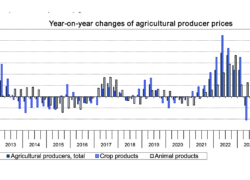
In the fourth quarter of 2024, producer prices across multiple sectors in the Czech Republic experienced notable trends compared to the previous quarter and the same period in 2023. Agricultural producer prices rose by 6.8% quarter-on-quarter (q-o-q) and by 5.0% year-on-year (y-o-y). Key contributors to the increase included higher prices for eggs (+26.5%), milk (+8.1%), and oilseeds (+7.5%), while declines were seen in fruit (-4.6%) and slaughter pigs (-3.9%). Over the entire year, agricultural producer prices dropped by 5.9%, with significant declines in crop production (-9.1%) and animal production (-1.5%).

Industrial producer prices increased slightly by 0.3% q-o-q in Q4 2024, driven by higher prices in electricity, gas, steam, and air conditioning (+1.9%), and paper and electronic products (+1.5%). However, prices for crude petroleum and natural gas fell significantly (-3.3%). On a y-o-y basis, industrial producer prices rose by 1.8% in Q4, with notable increases in water treatment services (+9.2%) and electricity (+6.7%). Across 2024, the annual rise in industrial producer prices averaged 0.8%, marking a decline from the 5.0% increase seen in 2023.

Construction work prices grew by 0.7% q-o-q in Q4 2024 and by 2.4% y-o-y, reflecting moderate activity in the sector. For the full year, construction prices increased by 2.1%, a deceleration from the 5.9% growth in 2023. Input prices for construction materials dropped by 0.5%, reversing the upward trend of the previous year.

Service producer prices in the business sector rose by 1.5% q-o-q in Q4 2024 and by 3.7% y-o-y. Significant contributors to the increase included advertising and market research services (+18.3%) and programming and broadcasting services (+19.6%). Excluding advertising services, prices rose by 0.3% q-o-q and 3.1% y-o-y. For the entire year, service producer prices grew by 3.8%, with advertising, employment, and real estate services among the largest contributors.

These trends highlight a varied landscape, with inflationary pressures easing in some areas, such as industrial production and construction inputs, while services and specific agricultural products continued to see price increases. The detailed data underline the ongoing adjustments across sectors in response to market dynamics and broader economic conditions.

Source: Czech Statistical Office

Bank Pekao allocates PLN 370 million for CHF loan risks in Q4 2024 results

Bank Pekao has announced the allocation of PLN 370 million as a provision for legal risks related to foreign currency mortgage loans in Swiss francs (CHF) in its consolidated financial results for the fourth quarter of 2024. This provision reflects the anticipated impact on both gross and net financial outcomes, stemming primarily from a forecasted increase in borrower lawsuits.

Additionally, the bank included a deferred income tax asset of PLN 103 million, linked to expected cancellations associated with CHF-denominated mortgage loans.

Bank Pekao also introduced a change in how accrued interest is presented in its consolidated financial statements. Previously, the group recognized gross contractual interest on the balance sheet, factoring accrued interest into expected credit loss calculations. Under the new approach, accrued interest will be adjusted for the initial assessment of credit risk at the time of the loan’s origination. This change reduces the non-performing loan (NPL) portfolio by approximately PLN 0.8 billion, without affecting the group’s consolidated capital or financial results.

The bank’s consolidated financial report for 2024 is scheduled for release on 27 February 2025.

Bank Pekao, a key member of the PZU Group, is among the largest financial institutions in Central and Eastern Europe. Listed on the Warsaw Stock Exchange since 1998, the bank reported total assets of PLN 305.27 billion at the end of 2023.

Source: Bank Pekao and ISBnews

InPost to boost UK investment to GBP 1 billion by 2029

InPost Group plans to invest an additional GBP 600 million in the UK by the end of 2029, bringing its total investment in the country to GBP 1 billion, the company announced. The expansion includes installing 5,000 new parcel lockers in 2025 and enhancing logistics infrastructure, which will create 12,000 new jobs.

In 2024, InPost doubled its package deliveries in the UK, reaching 93.2 million parcels, highlighting the growing demand for its services. The company’s UK network, currently operating at more than 100% capacity, demonstrates significant potential for expansion. By the end of 2024, InPost had over 13,000 out-of-home (OOH) points in the UK, with its automated parcel machine (APM) network expanding by nearly 3,000 devices, totaling 9,200 units.

“Our investments will revolutionize e-commerce for both buyers and sellers in the UK. This is already our fastest-growing market, and we are meeting the increasing expectations of consumers by creating state-of-the-art and user-friendly delivery solutions,” said Rafał Brzoska, founder and CEO of InPost. “In 2025 alone, we will increase the number of parcel lockers by 50%.”

As of 2024, InPost’s total UK investment reached GBP 426 million. Last year, the company solidified its market position by acquiring the remaining 70% stake in Menzies Distribution Limited, enabling full control of its logistics processes and investment plans. InPost currently employs 2,519 people in the UK, with plans for significant workforce expansion in the coming years.

Founded in 1999 by Rafał Brzoska in Poland, InPost provides e-commerce delivery solutions, including a network of parcel lockers in Poland, the UK, and Italy. It also offers courier and fulfillment services for e-commerce sellers in Poland. The company acquired the French logistics firm Mondial Relay in July 2021 and debuted on Euronext Amsterdam in January 2021.

Source: InPost and ISBnews

Nowy Styl eyes further acquisitions, including opportunities in Scandinavia

Nowy Styl is exploring opportunities for further development in Western Europe, particularly in Scandinavian markets, as part of its growth strategy through acquisitions. The company is also open to potential acquisitions in Poland, focusing more on enriching its product portfolio than expanding production capacity, according to President Adam Krzanowski.

“We are continuously monitoring potential opportunities to acquire companies abroad, particularly in markets where our presence is not yet strong,” said Krzanowski.

He noted that Scandinavia is a key area of interest due to its distinctive and localized market characteristics, which make it challenging for non-Scandinavian companies to penetrate. “The product requirements there are very specific, and local certifications play a significant role,” he explained.

Potential acquisitions may not be limited to furniture manufacturers. Krzanowski mentioned the possibility of acquiring a distributor or a local brand with strong market appeal. In Poland, the company is also open to acquiring firms with innovative products.

Nowy Styl’s strongest markets include Germany, Switzerland, France, and Poland, with Poland accounting for approximately 15% of the company’s sales. The company sees further opportunities for organic growth in these regions.

For now, Krzanowski stated that the group’s production capacity is well secured through its existing facilities, including two major plants focused on manufacturing chairs, armchairs, and office furniture. Instead of expanding production, the company aims to strengthen its partnerships and explore technological collaborations over the next few years.

“I would prefer not to invest heavily in production capacity but rather focus on finding the right partners,” he added, emphasizing the importance of investing in showrooms to enhance customer engagement.

Currently, Nowy Styl operates 28 showrooms worldwide, including prominent locations in London, Paris, Berlin, Prague, and Dubai. The company has already completed three acquisitions in Germany, securing businesses with a combined turnover of €30 million.

As a comprehensive provider of furniture solutions for office spaces and public places, Nowy Styl owns five brands: Nowy Styl, Kusch+Co, SOHOS by Nowy Styl, Sitag by Nowy Styl, and Forum by Nowy Styl. The company collaborates with renowned designers, including Karim Rashid, who created the iconic Bound armchair.

Source: Nowy Styl and ISBnews

Ransomware attacks on Poland surge by 37% in second half of 2024

Ransomware attacks targeting Poland increased by 37% in the second half of 2024 compared to the first half, according to a Threat Report by ESET analysts. This surge elevated Poland’s global ranking as a target for ransomware attacks to 7th place, up from 13th earlier in the year.

The report identified the United States (9.2% of global attacks), Russia (7.8%), and China (7.4%) as the top three countries targeted by ransomware, with Poland accounting for 4% of worldwide attacks in the second half of 2024. This is up from 2.3% in the first half. Analysts noted that Poland’s strategic role as part of NATO’s eastern flank amid regional tensions, particularly concerning Ukraine, makes it a prime target.

ESET analyst Kamil Sadkowski explained the ransomware process, stating, “Cybercriminals scan the internet daily for vulnerable systems. They target those with the highest likelihood of yielding a ransom, infiltrating networks, stealing and encrypting data, and then demanding payment from companies and institutions.” He emphasized that attacks often begin subtly, such as through infected email attachments or fake websites mimicking legitimate ones.

The lack of cybersecurity training among employees exacerbates the problem. Sadkowski noted that 52% of employees have not participated in any cybersecurity training in the past five years, leaving organizations exposed to threats.

Data from the report “Cyberportrait of Polish Business: Digital Security Through the Eyes of Experts and Employees,” cited by ESET, revealed that 88% of companies surveyed experienced a cyberattack or data leak in the past five years. Ransomware accounted for 18% of these threats, ranking just behind phishing (34%) and attacks on Wi-Fi networks (22%).

The lack of awareness among employees about ransomware is particularly concerning. Only 19% of Polish employees are familiar with the term, leaving over 80% potentially unable to recognize or respond to such threats. According to Paweł Jurek, Business Development Director at DAGMA IT Security, this lack of awareness benefits cybercriminals. “Ransomware attacks are a win-win for criminals. If the victim pays the ransom to resolve the issue quickly and avoid reputational damage, the criminals profit. If the organization refuses to pay, the stolen data is often sold on the darknet, ensuring another source of profit.”

The rising frequency and impact of ransomware attacks highlight the urgent need for increased cybersecurity measures and training to protect organizations and individuals in Poland.

Source: ESET and ISBnews

CTP expands presence in Serbia with land acquisition in Kragujevac

CTP has solidified its position in Serbia with the acquisition of a substantial parcel of land in Kragujevac, paving the way for the development of 50,000 sqm of new lettable industrial space.

This acquisition aligns with CTP’s strategic plan to expand its footprint in emerging industrial hubs and attract investors to Serbia’s growing market. The site, located within the region’s Free Trade Zone, an established automotive industrial area, will complement CTP’s existing facilities in Kragujevac, reinforcing the company’s growth trajectory in Serbia.

CTP is already a significant player in the Serbian market, known for delivering Grade A industrial facilities, including 90,000 sqm of production space for Yanfeng, a Chinese automotive supplier. The company’s Serbian portfolio currently spans 600,000 sqm, with an additional 200,000 sqm planned for completion in 2025.

Kragujevac, Serbia’s fourth-largest city, boasts a strong heritage in automotive and defense industries. Its strategic advantages include a skilled and affordable labor force, a central location in the Balkans, and proximity to major OEMs and suppliers, making it an attractive destination for industrial investment.

Petar Kolognat, Business Development Director at CTP Serbia, highlighted the city’s appeal: “CTP’s commitment to Kragujevac underscores the city’s growing reputation as a prime destination for industrial and logistics investments. This expansion will strengthen the local economy, create new job opportunities, and enhance connectivity to key markets. It will also provide businesses with modern facilities and strategic advantages in Southeast Europe.”

The new development is set to further position Kragujevac as a key industrial hub, reinforcing CTP’s role as a leader in Serbia’s dynamic real estate market.

European REITs show signs of recovery amid stabilizing conditions

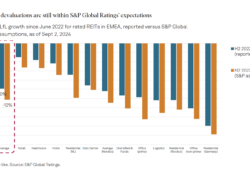
The European real estate investment trust (REIT) sector has seen a significant shift in 2024, with improving funding conditions and stabilizing valuations across most asset classes. While 20 European real estate companies have been downgraded since 2022, the percentage of rated REITs with negative outlooks or on CreditWatch dropped to 27% in early 2024, compared to 33% the previous year. Bond issuances by rated European REITs rose to €19.3 billion in 2024, a substantial increase from €5.3 billion in 2023, signaling a resurgence in investor confidence.

Rental income is expected to continue growing in 2025, supported by improved consumption levels and rising GDP growth. Inflationary pressures are projected to ease, with Eurozone CPI inflation expected to decline to 2.1% in 2025 from 2.4% in 2024. The growth in rental income will be more moderate but bolstered by strong demand in residential segments, particularly in Germany and Sweden, where housing shortages persist. Retail landlords are also poised to benefit from rising disposable incomes as inflation subsides, following a successful period of rent adjustments linked to inflation.

Valuations across most asset classes have stabilized, except for nonprime offices, which continue to face challenges due to rising vacancies and obsolescence. Since mid-2022, European REIT asset valuations have declined by an average of 10%, with nonprime offices experiencing the steepest devaluations. The European Central Bank (ECB) is expected to reduce its deposit rate to 2.5% by mid-2025, which should support stable long-term rates and limit further impact on property yields.

Transaction volumes are predicted to increase in 2025 as funding conditions improve and repricing reduces the price gap between buyers and sellers. Although transactional activity in 2024 remained 41% below the five-year average, large institutional investors are likely to re-enter the market, reversing the low levels of activity seen in 2023. Improved liquidity and reduced risk of distressed sales are expected to further support market recovery.

Despite challenges, credit metrics for European REITs show resilience. Interest coverage ratios (ICRs) are expected to stabilize around 3.3x by the end of 2025, reflecting hedged debt profiles and declining borrowing costs. Debt-to-EBITDA ratios are also projected to improve as rental income grows and debt-funded investments remain limited. However, risks remain, including the possibility of opportunistic acquisitions and dividend increases delaying deleveraging.

Environmental requirements pose additional challenges, as European REITs work toward ambitious decarbonization goals. The EU’s revised Energy Performance of Buildings Directive, effective since May 2024, mandates significant renovations to align with the bloc’s 2050 decarbonization target. These requirements could weigh on REITs’ balance sheets, necessitating substantial investments in the coming years.

While geopolitical and economic uncertainties persist, the sector is poised for continued recovery in 2025, driven by stabilizing valuations, improving credit conditions, and strong rental income performance across most segments.

Source: S&P Global Ratings

Poland: MPC warns of prolonged inflation above target due to energy price unfreezing

The unfreezing of energy prices in the second half of 2025 may extend the period during which inflation remains above the National Bank of Poland’s (NBP) inflation target, according to a statement from the Monetary Policy Council (MPC) following its latest meeting.

The MPC emphasized that inflation is expected to stay significantly above the NBP target in the coming quarters, driven by the effects of prior energy price increases, higher excise tax rates, and rising prices for administered services. Core inflation is also projected to remain elevated, primarily due to high wage dynamics, including public sector salary increases, and persistently strong service price growth.

The Council highlighted uncertainties related to the impact of heightened inflation on inflation expectations and wage pressures, especially given the anticipated economic recovery and Poland’s low unemployment levels. While the current level of interest rates is deemed conducive to achieving the inflation target over the medium term, the MPC noted that further fiscal and regulatory actions would also influence inflation trends.

Looking ahead, the Council expects inflation to return to the NBP target as wage dynamics gradually decline. The NBP reaffirmed its commitment to taking necessary measures to ensure macroeconomic and financial stability, including interventions in the currency market if required, to support the medium-term return of inflation to the target.

Assessing the economic situation in late 2024, the MPC observed an increase in GDP growth during the fourth quarter. Retail sales growth accelerated in November, although industrial and construction output showed negative annual dynamics. Employment in the enterprise sector fell slightly compared to the previous year, but unemployment remained low, and working hours were high. Wage growth continued at a robust pace.

The MPC decided to keep the NBP interest rates unchanged, with the basic reference rate remaining at 5.75%. Future decisions will depend on updated information regarding inflation and economic activity trends.

A press conference featuring Adam Glapiński, President of the NBP and the MPC, is scheduled for Friday, 17 January, at 3:00 PM.

Source: MPC and ISBnews

LATEST NEWS