Nearshoring and Reshoring: The future of the Polish labour market?

The global trend of nearshoring and reshoring is rapidly transforming the manufacturing and logistics sectors. By 2026, up to 85% of companies plan to manufacture and sell most of their products within the same region, up from the current 43%. These shifts aim to create more resilient supply chains while addressing the challenges of labour market access and rising costs. Poland’s strategic position and outsourcing capabilities place it at the forefront of this transition.

According to Accenture’s 2023 report “Resiliency in the Making,” supply chain disruptions have resulted in global losses of up to USD 1.6 trillion in recent years. Factors such as geopolitical changes, extreme weather events, and material and talent shortages have forced businesses to reconsider their supply chain strategies. Nearshoring and reshoring have emerged as key responses, with companies prioritizing regional production and sourcing to enhance stability and reduce risks.

The report highlights that regional sourcing is expected to nearly double by 2026, reaching 65% compared to 38% in 2023. In the United States, 91% of companies plan to produce and sell within the same region, a significant increase from 52% in 2023. This shift has already spurred investments of approximately USD 1 billion in 2023, with projections indicating that this figure will rise to at least USD 2.5 billion by 2026. Companies embracing nearshoring and reshoring strategies have reported revenue gains of 4% above their peers, driven by advancements in digitalization and employee retraining in fields such as data processing and artificial intelligence.

Opportunities and Challenges in Nearshoring

As companies prepare for a wave of manufacturing and supply chain realignments, the role of process outsourcing agencies is becoming critical. These agencies, like Poland-based Opteamic, specialize in adapting to shifting business conditions by providing a ready pool of skilled workers and managing the recruitment process.

“New challenges open new opportunities, particularly for process outsourcing agencies that ensure the consistent availability of qualified employees,” said Jakub Kizielewicz, CEO of Opteamic Group. “This is crucial for companies relocating production lines or warehouses quickly without the burden of lengthy recruitment processes.”

Poland’s industrial and logistics real estate market, with over 33 million square meters of space, continues to attract investors. The country’s modern infrastructure, stable economy, and access to renewable energy sources have positioned it as a top destination for relocation. The growth in state-of-the-art industrial and warehouse facilities is further boosting Poland’s appeal by enabling investors to optimize operational costs.

Outsourcing as a Strategic Advantage

For companies navigating this transformation, process outsourcing has become an indispensable tool. Outsourcing firms provide not only recruitment and training services but also comprehensive support in talent and process management.

“Nearshoring isn’t just a strategic decision; it’s a development direction for companies seeking operational stability,” Kizielewicz noted. “With flexible cooperation models, outsourcing is essential for reducing costs and enabling companies to adapt quickly to market changes.”

Poland’s outsourcing sector is well-positioned to meet these demands. By offering a blend of flexibility, cost efficiency, and expertise, outsourcing agencies are supporting businesses in reshaping their supply chains and workforce strategies.

As nearshoring and reshoring gain momentum, Poland is poised to strengthen its position as a regional leader in outsourcing services. The country’s well-developed infrastructure, favorable business environment, and focus on talent development create a solid foundation for growth.

“Poland has a unique opportunity to lead the new division of the labour market,” Kizielewicz emphasized. “With strategic investments in infrastructure and workforce development, the country can become a key player in shaping the future of supply chains and logistics.”

Nearshoring and reshoring represent not only a response to global economic uncertainties but also a transformative opportunity for businesses and countries alike. For Poland, the challenge lies in harnessing these trends to secure its role as a pivotal hub in the evolving global labour market.

Photo: Jakub Kizielewicz, CEO of Opteamic Group

Czech industrial market sees supply drop amid delays and stable rents

The Czech Republic’s industrial real estate market faced significant changes in the fourth quarter of 2024, with new supply dropping below the five-year average due to construction delays and developers postponing completion when pre-lease agreements were not secured. The Industrial Research Forum reported these findings while highlighting other key metrics that indicate a market undergoing transformation.

The total stock of modern industrial space reached nearly 12.3 million square meters in Q4 2024, with 106,700 square meters of new space delivered across four industrial parks. However, this represented a 63% year-on-year decrease and a 35% quarter-on-quarter drop in new supply. Notably, 100% of these projects were pre-leased before completion, underlining strong demand for ready-to-occupy spaces.

Speculative construction decreased for the first time since the start of 2024. Of the 978,300 square meters under construction at the end of the quarter, only 31% was being developed speculatively, a marked reduction compared to previous quarters. Developers also began fewer new projects, with just 69,200 square meters of industrial space initiated in Q4 2024—the lowest volume in three years. Of the new developments, 42% were speculative.

Gross take-up, including lease renegotiations, totaled 434,200 square meters in Q4 2024, marking a 30% increase quarter-on-quarter but a 9% decline year-on-year. Net take-up, excluding lease renewals, stood at 217,700 square meters, up 7% from the previous quarter but down 30% compared to the same period in 2023. Pre-leases accounted for 26% of gross take-up during the quarter.

The largest transaction was a 52,000-square-meter pre-lease by electronics manufacturer Hitachi Energy in CTPark Brno. Renegotiations also played a significant role, with two major renewals—each for 21,300 square meters—secured by a 3PL company at Prologis Park Prague D1 East and a manufacturing company at Prologis Park Pilsen II.

For the full year, gross take-up reached 1.435 million square meters, reflecting a 12% decline from 2023 and a 35% drop from 2022. Pre-leases were the dominant driver, accounting for 41% of total take-up, followed by renegotiations at 38%.

Manufacturing companies, particularly in the automotive sector, drove 60% of net demand, while 3PL providers accounted for 21%. The largest transaction of 2024 was BMW’s pre-lease of three halls totaling 127,700 square meters in Mošnov. Despite a 40% year-on-year decline in net take-up, the sector showed resilience, particularly as automotive companies regained momentum in driving demand.

The national vacancy rate edged up to 3.13% by the end of Q4 2024, an increase of just three basis points quarter-on-quarter but a significant 139 basis points higher than the same period in 2023. This represents the highest volume of vacant space—384,700 square meters—seen in five years. In Prague and Central Bohemia, however, the vacancy rate remained below the national average at 2.6%.

Headline rents for prime locations in the Czech Republic remained stable at €7.00 to €7.50 per square meter per month. Prime rents in regions outside Prague ranged from €5.70 to €6.60 per square meter, while rents for office space within industrial properties stood at €9.50 to €12.50 per square meter. Service charges remained consistent at €0.75 to €1.00 per square meter per month.

“Despite expectations, automotive companies emerged as the primary drivers of demand in 2024,” said Jan Hrivnacky, Head of Industrial Agency at CBRE. “We are also observing a revival in the e-commerce sector, which may not yet translate into transactions but is a positive signal for the market.”

Looking ahead, industry experts predict that new supply will pick up as delayed projects come online and pre-leases continue to drive demand. However, challenges such as rising vacancy rates and limited speculative development could temper growth in the short term.

Source: Industrial Research Forum

Poland: Migration policy must adapt to attract specialists

Poland’s migration policy must evolve to effectively attract highly skilled specialists amid growing global competition in technology and innovation, according to Personnel Service. The company highlights that Poland could take inspiration from Germany, which has successfully attracted a significant number of highly qualified professionals to bolster its workforce.

“There are currently an estimated 2.3 to 2.5 million foreign workers in Poland, underscoring their vital role in the country’s economy. While these workers, predominantly Ukrainians, are filling critical labor gaps, the focus has largely been on low-skilled positions. This approach, however, is temporary and insufficient for long-term economic growth,” said Personnel Service founder and labor market expert, Krzysztof Inglot. “Poland needs a forward-looking migration policy. With the rapid transformation of the labor market driven by technology and innovation, the need for highly skilled workers has never been greater.”

Poland ranks as the second-largest issuer of EU Blue Cards, which facilitate the employment of highly qualified workers from outside the European Union. However, the country lags far behind Germany, which dominates the category. In 2023, a total of approximately 89,000 highly skilled workers received Blue Cards across the EU. Of these, 78% were issued by Germany, while Poland accounted for just 7%, issuing 6,200 permits—62,000 fewer than its western neighbor.

Personnel Service emphasizes that while Poland leads the EU in issuing temporary work permits, it must focus on retaining and better utilizing the talents of highly educated foreign workers. In 2023, EU member states issued over 3.7 million work permits, a 5% increase compared to the previous year. Poland was responsible for 17% of these permits, the highest share in the EU, followed by Germany at 16% (586,000 permits) and Spain at 15% (549,000 permits).

“In many cases, even when we attract educated foreigners, we fail to fully utilize their skills and competencies. Retaining such talent requires creating better working conditions and providing opportunities for professional development,” Inglot added. “This is particularly relevant for Ukrainian workers, who face stiff competition in their home country and other labor markets.”

Personnel Service asserts that Poland must align its migration policies with the demands of a modern, innovation-driven economy. As technological advancements reshape industries, the ability to attract and retain top talent will be critical to maintaining competitiveness on the global stage.

Source: Personnel Service and ISBnews

FroGum secures 10,000 sqm at MLP Pruszków II logistics center

FroGum, a Polish distributor of car accessories, has joined the roster of tenants at the MLP Pruszków II logistics center. The company has signed a long-term lease for 10,000 square meters of modern warehouse space, including 150 square meters allocated for social and office purposes. The transaction was facilitated by Knight Frank.

FroGum, a family-owned business with nearly four decades of experience in the automotive market, specializes in manufacturing car mats and trunk liners. Operating out of a state-of-the-art production facility in Grodzisk Mazowiecki, the company supplies its products to nearly every country in Europe, as well as markets in North America, South America, and Africa. In 2022, FroGum expanded its reach by launching the FroGum Premium Moto Shop online store, catering directly to individual customers.

MLP Pruszków II, situated in Brwinów near Warsaw, is the largest logistics hub of its kind in the region, offering a planned total lease area exceeding 424,000 square meters. Located just five kilometers from Pruszków and strategically positioned between local road No. 760 and the A2 motorway, the park provides excellent connectivity to central Warsaw and major transport routes. The proximity to international railway lines further enhances the center’s capabilities for domestic and international distribution. On-site amenities include a bus stop and a Nextbike self-service bike rental station.

The logistics park prioritizes sustainability, with all buildings adhering to BREEAM certification standards. MLP Group is also installing photovoltaic systems on the roofs, aligning with its ESG strategy.

“We are thrilled to welcome FroGum to MLP Pruszków II,” said Tomasz Pietrzak, Leasing Director Poland at MLP Group S.A. “Our logistics park continues to attract tenants with its prime location, modern facilities, and eco-friendly infrastructure. Developing part of the space on a speculative basis allows us to swiftly meet the needs of businesses seeking immediate availability.”

FroGum’s Management Board Member, Bartosz Frontczak, praised the center’s features and the leasing process: “The proximity to key infrastructure, combined with the sustainability measures implemented at MLP Pruszków II, made this an ideal choice for our expansion. The financial terms and efficiency of MLP Group were critical in finalizing our decision.”

Knight Frank’s negotiator, Karolina Gałązka, highlighted the seamless collaboration: “This project required speed and adaptability. The professional and flexible approach demonstrated by all parties, coupled with the advantages of MLP Pruszków II, ensured that FroGum found the perfect logistics solution.”

P3 launches sustainable logistics center between Cologne and Frankfurt

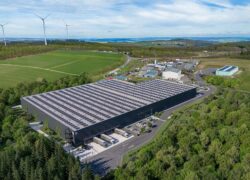
P3 has announced the commencement of construction for a cutting-edge logistics center in Pfalzfeld. Spanning approximately 23,000 square meters, the facility is strategically located midway between Cologne and Frankfurt, offering a prime logistical advantage for businesses operating in these key markets.

The site’s location, just 900 meters from the motorway, ensures seamless connectivity to the region’s extensive transport network, placing both Cologne and Frankfurt within an hour’s drive. Designed with efficiency in mind, the new facility features a clear height of 12 meters, enabling optimal space utilization. The warehouse’s floor boasts a load capacity of 7 tons per square meter (UDL) and 10 tons per shelf support, making it ideal for storing heavy goods.

“With this project, we are once again focusing on future-oriented logistics development,” said Sönke Kewitz, Managing Director of P3 Germany. “The property’s strategic location and modern facilities offer companies the ideal conditions for their logistics activities. We are delighted to contribute to strengthening the regional economy with this project.”

The development also underscores P3’s commitment to sustainability. The building will feature a heat pump powered by renewable energy, eliminating the need for fossil fuels. A photovoltaic system installed on the roof will further support the facility’s energy needs, while a green façade will improve the local microclimate.

Beyond energy efficiency, P3 has incorporated extensive measures to protect and support local wildlife. A dedicated habitat for wall and forest lizards will be created ahead of construction, complete with artificial hiding spots to facilitate the careful relocation of these species. Additional provisions include the installation of bird, bat, and dormouse nesting boxes, produced by a workshop for individuals with disabilities.

The project aims to secure BREEAM ‘Excellent’ certification, reinforcing its sustainability credentials. “Our efforts go beyond building a functional logistics center,” Kewitz noted. “We’re committed to creating a development that aligns with environmental best practices while supporting the needs of the community and local ecosystem.”

With this project, P3 continues to set new standards in sustainable logistics real estate, combining state-of-the-art facilities with a strong focus on environmental stewardship and economic growth in the region.

AI chatbot ‘SafeRBot’ to revolutionize US emergency call centers

The University of Illinois Urbana-Champaign has unveiled its groundbreaking AI chatbot, ‘SafeRBot,’ designed to assist emergency call centers across the United States. Developed by a team led by Professor Yun Huang, the chatbot is poised to enhance how emergency calls are handled, providing empathetic and structured communication while gathering critical details about incidents.

SafeRBot’s primary function is to process emergency calls by asking essential questions about the location, nature of the incident, the individuals involved, and other key details. What sets it apart is its ability to automatically ask follow-up questions until all necessary information is gathered, ensuring that no critical detail is overlooked. This system not only improves accuracy but also streamlines the reporting process.

Using a cutting-edge large language model (LLM), the chatbot is capable of turning unstructured conversations into structured data for incident reports. It supports both English and non-English speakers, seamlessly switching between languages based on the caller’s input. For instance, if the initial response is in Spanish, the chatbot immediately adapts, conducting the entire conversation in Spanish to ensure effective communication.

Professor Huang emphasized the practical benefits of SafeRBot, highlighting its potential to reduce the workload of emergency dispatchers. “By automating the process of gathering information, SafeRBot minimizes the time needed to document incidents and significantly enhances the quality of reports,” she explained. The system is designed to alleviate the pressure on human operators, reducing the risk of burnout among emergency call center staff.

The chatbot operates through an intuitive interface. Users input incident details on their computer or smartphone, while the chatbot’s questions appear on one side of the screen. As answers are provided, they are automatically organized into the appropriate fields on the incident report form displayed on the other side. This method ensures a streamlined and user-friendly reporting process.

Beyond its technical capabilities, SafeRBot is also programmed to offer varying levels of emotional support based on the needs of the individual reporting the incident. Professor Huang noted that users often have different emotional requirements when describing distressing situations. “SafeRBot allows reporters to personalize their experience, offering empathetic support where needed,” she said. Research has shown that empathetic engagement increases users’ willingness to provide detailed answers, making the chatbot not only a tool for efficiency but also for human-centered interaction.

The SafeRBot initiative represents a significant step forward in leveraging artificial intelligence to improve public safety infrastructure. By offering a multilingual, empathetic, and efficient solution, it has the potential to transform emergency call handling, ensuring faster response times, better data accuracy, and reduced strain on human dispatchers.

Photo: Dr. Yun Huang, Associate Professor, iSchool @ UIUC

Kamco Invest acquires majority stake in European logistics real estate company EGLS

Kamco Invest, an investment company in the Middle East and North Africa (MENA) region, has acquired a majority stake in European Green Logistics Space (EGLS), a specialist developer, investor, and manager of logistics assets across Europe. EGLS, co-founded by logistics veteran Ian Worboys, operates through offices in Prague, London, Paris, and Frankfurt, and aims to deliver modern, sustainable logistics facilities across key European markets.

EGLS is led by an expert team with decades of experience in the logistics and real estate sectors. CEO Ian Worboys brings over 40 years of industry expertise, including leadership roles at Gazeley, Panattoni, P3 Logistic Parks, and Trammell Crow Company. Joining him are Chief Investment Officer Amos Chia, formerly head of acquisitions at Crossbay, and Chief Financial Officer Glen Lonie, previously head of asset management for Central and Eastern Europe at Cushman & Wakefield. Together, the trio spearheads EGLS’s mission to transform the logistics landscape with a strong emphasis on sustainability and innovation.

With a robust network across the MENA region and a strong base of high-net-worth clients and institutional investors, Kamco Invest will support EGLS in expanding its offerings and reaching new investors. The partnership aligns with Kamco Invest’s strategy to create sustainable, ESG-focused investment opportunities for its clients while enhancing its alternative investment portfolio.

EGLS plans to deliver both modern big-box and urban logistics facilities through a dual strategy. The company will acquire outdated assets for retrofitting and modernization into sustainable facilities while also pursuing ground-up developments. In both cases, EGLS will collaborate with investors and occupiers to meet stringent environmental, social, and governance (ESG) standards.

“We believe there is a great ‘brown-to-green’ opportunity,” said CEO Ian Worboys. “By converting outdated units into modern, sustainable facilities and carrying out new developments that meet ESG requirements, we aim to meet the growing demand for sustainable logistics solutions amid a supply shortage.”

EGLS’s initial focus will be on the UK, France, Germany, and the Czech Republic, with plans to expand into Spain, the Netherlands, and Italy.

EGLS has already secured a robust pipeline of sites and standing assets, positioning itself to capitalize on the growing demand for sustainable logistics facilities. The partnership with Kamco Invest will be complemented by collaborations with other major investors on a separate account basis, enabling the company to pursue diverse investment strategies across multiple markets.

“The European logistics market presents a significant opportunity at this stage of the real estate cycle,” Worboys explained. “With demand for modern facilities remaining strong and supply constrained, this is an ideal time to invest in long-term value creation.”

To execute its ambitious plans, Worboys has assembled a team of 18 seasoned professionals with more than 300 years of collective experience in logistics and real estate. Key appointments include Simon Stacey as Head of Asset Management for Europe, Phil Sutton as Head of the UK, Mario Sander as Head of Germany, Austria, and Poland, Patrick Rebel as Head of France, and Dominika Surovcová as Head of the Czech Republic and Slovakia.

Commenting on the partnership, Mohammad F. Al Othman, Senior Executive Director of Alternative Investments at Kamco Invest, said, “This venture reinforces our commitment to responsible investing while creating value for our regional clients. Our collaboration with EGLS emphasizes sustainability and positions Kamco Invest as a key player in ESG-focused opportunities in the logistics sector.”

As e-commerce continues to expand and companies prioritize securing robust supply chains, the logistics real estate market has emerged as a critical sector. With its strategic locations, sustainable initiatives, and experienced leadership, EGLS is poised to capture significant market share and meet the evolving needs of modern logistics users.

Through this partnership, Kamco Invest and EGLS are set to redefine the European logistics market, creating innovative and sustainable solutions that align with global investment trends and environmental priorities.

Photo: Glen Lonie, Ian Worboys and Amos Chia (EGLS)

Deloitte Report: 68% of life sciences companies eye revenue growth through new technologies

A majority of companies in the health and biotechnology sector (life sciences) see new technologies as a significant driver of revenue growth, according to Deloitte’s latest 2025 Life Sciences Outlook report. The report reveals that 68% of life sciences firms expect advancements in technology to bolster revenue, while 57% anticipate a positive impact on profit margins. Additionally, 40% of industry leaders plan to focus on research and development (R&D) as a strategy to mitigate declining revenues.

The report underscores the transformative potential of digital technologies in redefining the life sciences industry. Artificial intelligence (AI), in particular, is highlighted as a game-changer for medical technology companies, with the potential to save up to 12% of total revenue over the next two to three years.

“AI in medicine represents a cornerstone of healthcare transformation, offering the potential to significantly enhance both operational efficiency and diagnostic accuracy,” said Władysław Mizia, Deloitte’s healthcare consulting leader. He noted the growing interest in AI within the sector, citing nearly 200 medical facilities participating in Poland’s Hospital AI Challenge. The winning project showcased the application of AI in optimizing public procurement procedures, illustrating the broad utility of AI—from clinical care to administrative processes. “AI allows hospitals to optimize resources and improve patient care quality,” Mizia added.

The report also highlights the pressing challenges facing the biopharmaceutical industry, particularly the looming expiration of high-value patents. By 2030, expiring patents for highly profitable medications could put over $300 billion in sales at risk. To counteract this, companies are increasingly prioritizing R&D, with 40% of executives identifying it as a key area to slow revenue declines.

Beyond R&D, the industry is also turning to mergers and acquisitions (M&A) to address revenue pressures. According to the report, 77% of surveyed executives anticipate an increase in M&A activity in 2025. This strategic shift is driven by the need to expand product and service portfolios quickly to offset the financial impact of patent expirations and rising cost pressures.

“R&D remains the backbone of innovation in life sciences, but M&A offers companies a faster path to diversification and growth,” the report’s authors noted. Companies are leveraging acquisitions to broaden their offerings and maintain competitiveness in a rapidly evolving market.

The findings are based on a survey conducted by the Deloitte US Center for Health Solutions between August and September 2024. The survey included 150 executives from pharmaceutical, biotechnology, and medical device manufacturers across the United States, Europe, and Asia. The report paints a picture of an industry leveraging technological and strategic advancements to navigate challenges while positioning itself for future growth.

Source: Deloitte and ISBnews

Schoenherr and Wolf Theiss advise on Erste Group’s EUR 1 billion mortgage Pfandbriefe issuance

Law firms Schoenherr and Wolf Theiss have provided legal counsel on Erste Group Bank’s successful issuance of EUR 1 billion in 3% mortgage Pfandbriefe, due in 2032. Schoenherr represented the banking consortium involved, while Wolf Theiss advised Erste Group Bank directly on the transaction.

The issuance, completed on January 20, 2025, forms part of Erste Group’s covered bonds program and was targeted at professional clients and eligible counterparties. The notes, which hold an Aaa rating from Moody’s, are listed on the Official Market of the Vienna Stock Exchange. With a denomination of EUR 100,000 each, the notes are set to mature in April 2032.

The banking consortium that facilitated the transaction included major financial institutions such as BayernLB, BMO Capital Markets, DekaBank, DZ Bank, Erste Group, Landesbank Baden-Wuerttemberg, and UniCredit, which acted as joint lead managers, as well as La Banque Postale, which participated as a co-lead manager.

Schoenherr’s legal team for the issuance was led by Partner Christoph Moser, with support from Attorneys at Law Angelika Fischer and Christian Cacic, and Paralegal Clemens Stockhammer. Wolf Theiss fielded a team comprising Partner Claus Schneider, Counsel Eva Stadler, Senior Associate Sebastian Prakljacic, Associates Rainer Holweg and Magdalena Bertsch, and Legal Trainee Negar Hashemi.

The transaction highlights Erste Group’s robust position in the European financial market and its continued focus on providing secure, high-quality investment products through its covered bonds program.

Mapletree expands European logistics presence with acquisitions in the UK and Spain

Mapletree Investments has solidified its focus on logistics as a core sector with two significant acquisitions in Europe: its first logistics property in the United Kingdom and a portfolio of ten logistics assets in Spain. The total value of these acquisitions is approximately €315.1 million (£266.4 million). These strategic moves mark a significant milestone for the Singapore-based real estate group as it continues to expand its global logistics footprint.

The acquisitions align with Mapletree’s strategy of leveraging logistics as a high-demand asset class driven by the e-commerce boom and the need for robust supply chain infrastructure. According to Ralph van der Beek, Chief Executive Officer for Commercial and Logistics in Europe, logistics remains a highly attractive sector, drawing strong interest from both occupiers and investors. “E-commerce continues to thrive, and companies are securing and expanding their supply chains. These institutional-quality assets will deliver stable and recurring returns over the long run,” van der Beek said.

UK Entry with Derby Commercial Park Logistics Hub

Mapletree’s maiden logistics acquisition in the UK is a hub located in Derby Commercial Park. Strategically situated near major arterial routes, including the M1, A50, and A6, and close to East Midlands Airport and Derby’s city center, the hub offers unparalleled connectivity. The facility’s importance to its tenant was reinforced by a recent long-term lease renewal, highlighting the site’s integral role in the tenant’s operations.

Strategic Expansion in Spain

In Spain, Mapletree acquired a portfolio of ten logistics properties concentrated in key logistics hubs surrounding Barcelona, Valencia, and Madrid. These assets are positioned within core areas offering immediate access to city centers, making them ideal for last-mile delivery operations. The properties cater to the strong demand for modern logistics facilities, which are in short supply in these regions. With a net lettable area of approximately 256,000 square meters, the portfolio serves tenants ranging from leading third-party logistics providers to manufacturers committed to the sites due to proximity to production hubs and advanced automation facilities.

The portfolio benefits from robust sustainability credentials, reflecting Mapletree’s commitment to integrating sustainability into its investment and operational decisions. These assets are positioned to meet modern logistical demands while adhering to environmental standards.

Since entering the European logistics market in 2018, Mapletree has grown its portfolio to include 80 assets across eight countries. Sixty-two of these properties are held under the Mapletree US & EU Logistics Private Trust (MUSEL), a private fund established in 2019 that has consistently delivered strong returns. MUSEL’s diversified portfolio spans strategically located logistics properties in both Europe and the Americas.

The newly acquired assets in the UK and Spain will serve as seed investments for Mapletree’s second European logistics-focused fund, which the group plans to launch after achieving sufficient scale. This fund is part of Mapletree’s broader strategy to expand its presence in core European markets while leveraging its private funds platform.

In addition to logistics, Mapletree has a diversified real estate portfolio in Europe and the UK, including office, mixed-use, and student housing properties. As of 31 March 2024, the group managed over €4.3 billion (£3.6 billion) in assets in these markets. Moving forward, Mapletree aims to enhance its onshore development capabilities and acquire well-positioned logistics assets to meet the growing demand for high-quality facilities.

The acquisitions underscore Mapletree’s commitment to delivering high-value logistics solutions and capitalizing on the e-commerce-driven demand for advanced supply chain infrastructure. With these strategic investments, the group strengthens its position as a key player in Europe’s dynamic logistics market.

Photo: Derby DC1, logistics hub in Derby Commercial Park, UK

LATEST NEWS