Periskop Development expands investment team to drive growth in real estate sector

Periskop Development GmbH, a subsidiary of Periskop Partners, is strengthening its investment and transactions team with the appointment of Marlene Auerbacher and Sebastian Mogos-Lindemann. The move aligns with the company’s strategy to accelerate acquisitions and sales while expanding its footprint in real estate investments. The latest additions reinforce Periskop Development’s long-term commitment to the German real estate market.

As Senior Investment Manager, Marlene Auerbacher will play a key role in shaping the strategic direction of land development transactions. She brings extensive industry expertise, having previously served as Head of Transaction at CR Investment Management and held positions at KPMG Germany and REWE Group. Auerbacher holds a Master of Science in Real Estate Management from IREBS Immobilienakademie and a Bachelor’s degree in Real Estate Management from the Duale Hochschule Sachsen.

Sebastian Mogos-Lindemann joins as Director Investment, tasked with expanding and managing transactions in the Land Development division. With over 20 years of experience in international real estate and a track record of 65 successful transactions totaling €1.25 billion, he is well-positioned to drive the company’s investment strategy. Mogos-Lindemann studied architecture at UDK Berlin and real estate investment banking at the European Business School, Oestrich Winkel. He is also a certified real estate M&A advisor.

Dr. Simon Kempf, Managing Director of Periskop Development, emphasized the strategic importance of these appointments, stating: “We are deliberately strengthening our investment team to pursue our growth targets in an evolving real estate market. Marlene Auerbacher and Sebastian Mogos-Lindemann bring exceptional expertise that will enhance our ability to efficiently execute transactions and investments, ultimately supporting forward-thinking project developments that contribute to housing creation.”

Periskop Development is committed to long-term engagement in the land development sector, maintaining a strategy that balances sustainability with value creation for investors. The Periskop Partners group currently manages eight investment funds, including five land development funds. Two of these funds focus on Berlin-Brandenburg, another two on Germany’s top regions, while one fund targets high-potential locations in Poland. Additional funds are planned for 2025, reinforcing the company’s growth-oriented investment approach.


Polish regulators crack down on payment delays as businesses face growing challenges

The Office of Competition and Consumer Protection (UOKiK) has intensified efforts to combat payment bottlenecks, launching eight new proceedings against companies accused of delaying payments to contractors. The agency also issued 21 soft interventions urging businesses to improve their payment practices, signaling a heightened focus on ensuring financial discipline in commercial transactions.

According to UOKiK President Tomasz Chróstny, the agency’s primary tool in tackling late payments is anti-congestion proceedings, which allow for administrative fines against entities failing to settle payments on time. In 2024 alone, UOKiK initiated 31 such proceedings, targeting companies including Gemini Apps, Colian Logistic, Nivea Polska, Stellantis Gliwice, Coty Eastern Europe, SPX Flow Technology Poland, Moto-Truck, and Meliorex.

Beyond formal investigations, UOKiK employs soft interventions, issuing written warnings to businesses whose payment practices raise concerns. These warnings serve as a preventative measure, encouraging companies to rectify their behavior before facing legal proceedings. Since the beginning of 2024, 79 companies have received such notices, with the latest round of interventions issued to 21 additional firms at the end of the year.

The regulator actively monitors the market through independent analyses and notifications from businesses that suspect they have been affected by delayed payments. Last year, UOKiK reviewed 28 such complaints, using them as the basis for investigating potential violations of financial obligations.

The Cost of Payment Delays

Payment bottlenecks pose a significant risk to businesses, causing cascading financial strain across supply chains. When companies fail to receive timely payments, the resulting liquidity shortages affect multiple stakeholders, threatening financial stability within entire industries.

Under Polish law, an entity is considered excessively delayed in payments if, over three consecutive months, it fails to meet financial obligations totaling at least PLN 2 million. Companies found guilty of such violations face administrative fines, calculated based on the total overdue amount and the length of delays.

Penalties are determined in a two-stage process. Initially, a maximum fine is set based on formulas outlined in anti-congestion laws. The second stage allows UOKiK to adjust the penalty depending on mitigating factors, such as the company’s efforts to correct the issue, its level of cooperation with authorities, and the broader impact of the delay.

As regulatory scrutiny increases, businesses across Poland are under mounting pressure to improve payment discipline and comply with timely settlement obligations. UOKiK’s proactive approach underscores its commitment to maintaining financial stability and fair competition in the market.

Source: UOKiK
Photo: Tomasz Chróstny, President of the Office of Competition and Consumer Protection (UOKiK)

Colliers named exclusive leasing advisor for Warsaw’s Platinium Business Park

Colliers has been appointed as the exclusive advisor responsible for the commercialization of Platinium Business Park, one of Warsaw’s largest office complexes. Situated in the Mokotów district, the 55,000-square-meter A-class office complex is a key destination for businesses seeking modern, flexible office space.

The five-building complex, spanning 54,880 square meters, offers adaptable office layouts that can be customized to meet the specific needs of tenants. Designed for comfort and efficiency, the buildings feature high ceilings (2.7m), openable window panels, and an advanced Building Management System (BMS). Planned modernization efforts will further enhance the interior spaces and green recreational areas, creating a more dynamic and sustainable work environment.

One of Platinium Business Park’s key strengths is its prime location at the intersection of Domaniewska and Wołoska streets. Just 15 minutes from the city center and 10 minutes from Chopin Airport, the complex enjoys excellent connectivity, with numerous tram and bus stops nearby. Additionally, its proximity to Galeria Westfield Mokotów and a broad range of services, including medical centers, restaurants, fitness clubs, and retail stores, makes it a sought-after business destination. Tenants also benefit from an on-site conference center, restaurants, cafés, and essential retail outlets such as Green Coffee Nero, Nowakowski Gorąco Polecam, and Żabka.

The sustainability and modernization strategy for Platinium Business Park aligns with ESG principles, with all buildings certified LEED Gold or Platinum. Upcoming upgrades will introduce electric vehicle charging stations, energy-efficient chillers, LED lighting in lobbies, and solar control films. The complex currently runs on certified green energy, and plans are underway to assess the feasibility of installing photovoltaic panels. Enhancements to cycling infrastructure and green spaces, including new vegetation, small-scale infrastructure, and a dedicated yoga area, are also in development.

“Platinium Business Park is an exemplary integration of modern office spaces with recreational and urban infrastructure,” said Iza Kapil, Director of the Landlord Representation Division in Colliers’ Office Space Department. “Its state-of-the-art technology and flexible office layouts accommodate various work models, while planned renovations will further elevate its value and attractiveness for current and prospective tenants.”

Colliers also plans to enhance tenant engagement through a series of community-driven initiatives. “We are committed to strengthening relationships with tenants, fostering loyalty, and ensuring lease extensions,” said Przemysław Błaszkiewicz, Director in the Office Space Department at Colliers. He added that the retail and service offerings will expand, with a new minimarket, medical center, and fitness operator set to join the complex. Events such as blood drives and outdoor picnics are also planned to create a more engaging workplace environment.

CEVA Logistics navigates the challenges of E-Commerce contract logistics

As the contract logistics market continues to grow at a rapid pace, e-commerce remains a key driver of its expansion. Factors such as cross-border trade, personalization, and sustainability are shaping the future of logistics, placing increasing demands on operators. CEVA Logistics, a global leader in third-party logistics (3PL) with over 800 fulfillment and multi-user warehouses worldwide, including 35 in Poland, is adapting to these trends by leveraging automation, artificial intelligence, and sustainable practices.

According to Statista, revenues in the European e-commerce market are expected to reach USD 721.3 billion in 2025, with a compound annual growth rate (CAGR) of 7.89%, projected to hit USD 977.4 billion by 2029. The number of online users is also rising, with 446.1 million people expected to shop online this year. Meanwhile, the Cushman & Wakefield report “Quo Vadis E-Commerce” highlights Central and Eastern Europe (CEE) as a leading e-commerce hub, with Poland generating more than half of the region’s e-commerce revenue. This rapid expansion is creating both opportunities and challenges for contract logistics providers, requiring them to enhance efficiency, cost management, and delivery speed.

Automation and AI Transform Logistics Operations

With increasing consumer expectations for faster deliveries and seamless order fulfillment, logistics providers are turning to robotics, automation, and artificial intelligence (AI) to optimize operations. AI-powered tools enhance warehouse efficiency, improve supply chain visibility, and enable precise demand forecasting, reducing inventory waste and streamlining logistics processes.

CEVA Logistics emphasizes the role of real-time data analysis, machine learning, and computer vision in boosting operational efficiency. AI-based supply chain management, according to a McKinsey report, can lead to a 15% reduction in costs, a 35% decrease in inventory levels, and a 65% improvement in service quality. Meanwhile, Meticulous Research forecasts that demand for AI-driven supply chain solutions will grow at an annual rate of 40% from 2024 to 2031, reaching nearly USD 60 billion.

Sustainability and the Rise of Green E-Commerce

With growing environmental awareness among consumers and stricter ESG reporting regulations, decarbonizing supply chains has become a major priority. CEVA Logistics has committed to ensuring that by 2026, all of its warehouses and contract logistics services will operate on low-carbon electricity. This initiative includes sourcing renewable and nuclear energy, tripling solar panel installations, and equipping all warehouses with LED lighting to minimize energy consumption.

Additionally, sustainable practices extend to packaging and reverse logistics. CEVA is investing in reusable packaging and efficient return systems to reduce waste and emissions associated with packaging production and transportation. These efforts align with the broader push for low-carbon logistics, helping businesses meet stringent environmental targets while optimizing operational costs.

Investing in Workforce Development

As logistics evolves, developing a skilled workforce is becoming a critical success factor. CEVA Logistics is prioritizing employee training and professional development to ensure its teams can adapt to new technologies and drive innovation. One key initiative is the company’s global training program, Contract Logistics Learning Week, which last year attracted 25,000 employees and managers from over 100 branches worldwide, including Poland.

The program focuses on innovation, collaboration, and technical skill development, equipping employees with the expertise needed to manage modern logistics operations. As the demand for engineering and technology specialists grows, CEVA Logistics continues to invest in building a workforce ready to lead in the digital and sustainable logistics era.

With a strong focus on automation, sustainability, and workforce development, CEVA Logistics is positioning itself at the forefront of the evolving e-commerce contract logistics market. By integrating cutting-edge technology and eco-friendly practices, the company is ensuring its ability to meet the demands of the fast-growing and increasingly complex e-commerce industry.

LPP expands in the Balkans with Sinsay’s debut in Kosovo

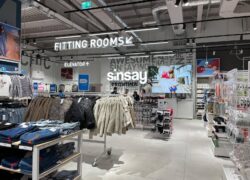
Polish fashion group LPP has taken a significant step in its largest-ever expansion plan with the launch of Sinsay in Kosovo. This marks the first of LPP’s brands to enter the country, reinforcing the company’s growing presence in the Balkan region.

At the beginning of February, Sinsay opened its first store in Pristina’s Central Park shopping center, located just minutes from the city center. The company plans to open a total of three stores this month, including two in the nation’s capital. In addition to its physical presence, LPP is preparing to launch an online store in Kosovo by the second quarter of 2025, aligning with its omnichannel retail strategy.

LPP’s entry into Kosovo is part of an ambitious plan to expand its global footprint. By the end of 2025, the Gdańsk-based fashion giant aims to open 1,500 Sinsay stores alongside approximately 100 new locations for its other brands. The company is targeting a doubling of sales within two years compared to 2023, leveraging both brick-and-mortar retail and e-commerce growth.

The Kosovo expansion includes a full Sinsay product range, featuring women’s, men’s, and children’s fashion, accessories, underwear, and home décor. The brand is particularly known for affordable pricing, licensed children’s collections, and a diverse assortment, making it highly competitive in emerging markets.

“We have been working intensively to strengthen our brands in the Balkans, and Kosovo is a natural next step,” said Tomasz Koczara, International Business Director at LPP. “The country’s economic growth and strong consumer sentiment make it an attractive destination for international brands. With available retail space and limited competition, we see significant potential for expansion across multiple locations.”

Kosovo: A Key Market for Growth

Sinsay’s first store in Pristina spans 940 square meters, offering a comprehensive shopping experience in one of the capital’s most prominent retail and entertainment hubs. LPP’s strategy aims to establish a double-digit number of stores in Kosovo within the first year, ensuring widespread accessibility to customers across shopping centers, retail parks, and high-street locations.

“Kosovo represents a promising market for our brand,” added Koczara. “While our initial focus is on Sinsay, we do not rule out introducing other LPP brands in the future.”

Kosovo is now the 41st market where LPP operates, as part of a record-breaking expansion strategy for 2025. The company plans to invest PLN 2.3 billion in growing its sales network, with the goal of reaching 4,400 stores worldwide.

Modernization becomes key for office buildings in Poland’s regional cities

As Poland’s real estate market continues to evolve, a clear divide is emerging between Warsaw and the country’s regional cities. While the capital is set to see a surge in newly commissioned office space, developer activity in cities such as Wrocław and Gdańsk remains subdued. This shift is placing increasing emphasis on the modernization of existing office buildings as a critical solution to meet growing tenant demands and evolving regulatory requirements.

A recent Colliers report on the Central and Eastern European real estate market highlights that 230,000 square meters of new office space is expected to be delivered in Warsaw by 2026. In contrast, development activity in regional cities is significantly lower, pushing modernization to the forefront of industry discussions. Marcin Kosieniak, co-owner of the PM Projekt design office, emphasizes the urgency of this shift. “The need for modernization stems from the necessity to adapt older office buildings to contemporary standards, aligning with ESG requirements and evolving tenant expectations,” he explains.

With aging buildings accounting for 38% of Poland’s total CO2 emissions, modernization is becoming an essential strategy in meeting the country’s ambitious climate targets. Kosieniak notes that beyond repurposing spaces—an ongoing trend for several years—upgrading existing structures is now a priority across various sectors. Stricter EU regulations, investor demands, and legal frameworks are accelerating the push for more energy-efficient and environmentally sustainable real estate.

The modernization process is not only a regulatory necessity but also a business imperative. CO2 reduction efforts are increasingly being implemented through renovations and refurbishments, with a focus on enhancing energy efficiency and improving employee comfort. Kosieniak highlights the impact of modernization in diverse settings, including industrial facilities, where optimized heating and cooling solutions can significantly improve working conditions. “Retrofitting allows us to reduce energy consumption while increasing comfort levels—not just in office spaces, but also in production plants, where temperature regulation can be adjusted through carefully planned solutions,” he adds.

Despite the clear benefits, modernization presents financial challenges. Upgrading existing buildings requires significant investment, but experts warn that failure to do so could result in tenant migration to properties that meet ESG standards. Kosieniak argues that with new office developments stagnating in regional cities, modernization offers a practical and economically viable solution. “If demand for office space continues to grow in cities like Gdańsk or Wrocław, while new supply remains limited, modernizing older offices becomes the natural choice. It aligns with tenant needs and ESG regulations while ultimately offering long-term financial benefits through energy savings,” he explains.

The introduction of the EU’s Corporate Sustainability Reporting Directive (CSRD) is further reinforcing the need for modernization. Starting in 2024, large corporations must provide non-financial reports assessing their compliance with ESG principles. By 2025, the requirement will extend to other large companies, and in subsequent years, small and medium-sized listed businesses will also need to comply. As these regulations take effect, landlords and developers will face increasing pressure to invest in modernization to maintain property value, attract tenants, and ensure compliance with evolving sustainability standards.

With energy efficiency, sustainability, and tenant preferences shaping the future of office spaces, modernization is no longer just an option—it is a necessity for the long-term viability of Poland’s regional office markets.

Source: Marcin Kosieniak, co-owner of the PM Projekt

CA Immo reorganizes facility management in Germany to enhance efficiency and sustainability

CA Immo has undertaken a strategic reorganization of its facility management (FM) operations across its €3 billion German property portfolio, marking a significant step towards efficiency, cost stability, and sustainability. The new framework aims to standardize services, reduce complexity, and leverage economies of scale, ensuring consistent building management across its assets in major German cities.

As part of the restructuring, Apleona has been appointed to manage properties in Berlin, while STRABAG Property and Facility Services will oversee buildings in Munich, Frankfurt, Düsseldorf, and Cologne. These long-term partnerships were established following a nationwide bidding process, with the goal of optimizing facility management and securing predictable costs for the coming years.

Carsten Bachmann, Head of Asset Management and Managing Director of CA Immo Germany, highlighted the benefits of the reorganization, emphasizing its role in simplifying building management, stabilizing ancillary costs for tenants, and improving service quality. He noted that fully digitalized reporting and standardized services would enhance operational transparency while supporting CA Immo’s broader sustainability objectives.

The restructuring process, initiated in 2023, aimed to reduce the number of service providers and establish a key account structure for more streamlined operations. The new framework ensures uniform standards across all properties, centralized communication channels, and improved performance monitoring. Additionally, expanded service offerings will contribute to higher-quality building management while enabling more precise benchmarking and performance evaluation.

Sustainability remains a core priority for CA Immo, with ongoing initiatives including the installation of smart meters, a transition to 100% renewable electricity, and the implementation of green leases that commit both the company and tenants to environmentally responsible building operations. The newly structured FM contracts will further support resource-efficient and cost-effective property management, while digitalized reporting will enhance transparency and ESG compliance at the Group level.

With this comprehensive facility management overhaul, CA Immo is reinforcing its commitment to operational excellence and sustainability, setting a new benchmark for property management in the German real estate market.

Photo: Anna Lindh Haus, Berlin

R.Power secures PPA agreement with McDonald’s Poland for over 200 GWh of renewable energy

R.Power Group has finalized a conditional Power Purchase Agreement (PPA) with McDonald’s Poland for the supply of over 200 GWh of renewable electricity. The agreement, covering electricity sales and guarantees of origin from solar farms owned by R.Power’s subsidiaries, will also extend to 95 members of McDonald’s purchasing group, including franchisees and suppliers.

Under the terms of the agreement, electricity deliveries will begin on 1 February 2025 and continue through 31 December 2034. The total value of the PPA package could exceed 10% of R.Power’s equity, marking a significant milestone in the company’s renewable energy expansion.

R.Power is one of Poland’s leading solar energy producers, with a growing presence in Romania, Italy, Portugal, Spain, and Germany. The company specializes in photovoltaic power plant development, construction, and operation, as well as the production of renewable energy. It is currently managing a 26 GWp portfolio of photovoltaic (PV) and battery energy storage system (BESS) assets, offering energy sales through long-term PPA contracts.

Photon Energy to manage 101 MWp of solar assets for EDP renewables in Hungary

Photon Energy N.V. has signed an asset management agreement with EDP Renováveis (EDPR) for two solar power plants in Hungary with a combined capacity of 101 MWp. The agreement, managed through Photon Energy Operations HU Kft, the Group’s Hungarian subsidiary, marks a significant step in Photon Energy’s expansion in the renewable energy sector.

Photon Energy will oversee technical, commercial, and financial management of the solar assets, ensuring optimal performance and profitability for EDPR. CEO Georg Hotar emphasized the strategic importance of the partnership, highlighting the company’s role in supporting EDPR’s ongoing transition efforts and its expertise in managing large-scale renewable energy assets.

In addition to managing the existing plants, Photon Energy will also support the future integration of another solar asset currently under construction. Once commissioned, the new plant will be added to Photon Energy’s asset management portfolio, further strengthening its presence in Hungary’s growing renewable energy market.

EU enforces groundbreaking AI regulations: New rules take effect 2nd February 2025

In August 2024, the European Union enacted the Artificial Intelligence Act (AI Act), establishing the world’s first comprehensive legal framework for artificial intelligence. This legislation aims to ensure that AI systems developed and deployed within the EU adhere to fundamental rights, safety, and ethical standards.

The AI Act introduces a risk-based classification system for AI applications:
• Unacceptable Risk: AI systems that pose a significant threat to fundamental rights are prohibited. This includes applications designed for behavioral manipulation, social scoring by public authorities, and real-time remote biometric identification in public spaces without proper authorization.
• High Risk: AI applications in sectors such as healthcare, education, recruitment, critical infrastructure, law enforcement, and justice are subject to stringent requirements. These include rigorous testing, documentation, and human oversight to ensure safety and compliance.
• Limited Risk: AI systems with limited risk are subject to transparency obligations, ensuring users are informed that they are interacting with an AI system and allowing them to make informed choices. 
• Minimal Risk: This category includes most AI applications, such as spam filters or AI used in video games, which are not subject to additional legal requirements.

Starting February 2, 2025, the AI Act’s prohibitions on certain high-risk AI systems will come into effect. Companies are required to eliminate AI systems that violate European principles, including those that compromise privacy, health, or citizen safety. Non-compliance could result in fines up to EUR 35 million or 7% of annual turnover.

The AI Act also establishes governance structures to oversee its implementation. The European Artificial Intelligence Board will advise and assist the European Commission and Member States to facilitate consistent and effective application of the AI Act. Additionally, the AI Office will coordinate the implementation of the AI Act across Member States and oversee the compliance of general-purpose AI providers.

While full enforcement of the AI Act is scheduled for August 2026, these initial provisions mark a significant step in the EU’s commitment to fostering trustworthy AI. By implementing these regulations, the EU aims to balance innovation with the protection of fundamental rights, setting a global standard for AI governance.

LATEST NEWS