A new generation of wealthy seniors emerges in the Czech Republic

The Czech Republic is witnessing a new phenomenon in retirement living, as a generation of financially independent seniors enters retirement with accumulated wealth, allowing them to live active and fulfilling lives. According to experts from Fichtner Wealth Managers, this trend, already common in Western countries, the U.S., and Asia, is now becoming a reality in Czech society.

Financial Security Through Strategic Investments

Unlike previous generations, these new retirees have spent decades strategically growing and protecting their family wealth. Many own their homes mortgage-free, while others hold multiple properties generating passive income. This financial independence minimizes their monthly expenses and provides the flexibility to focus on personal interests, travel, and philanthropy.

“Many of these seniors are financially secure because they invested wisely over time,” explains Josef Podlipný, Partner and Head of Sales at Fichtner Wealth Managers. “They are able to enjoy life without financial stress while also supporting their families and engaging in meaningful activities.”

Aging Actively: Philanthropy and Family Support

This generation of wealthy retirees is not just living comfortably but also actively contributing to society. Many engage in charitable initiatives, community projects, and family support, leveraging their financial stability to make a lasting impact.

Planning for Financial Freedom in Retirement

The key to achieving financial freedom in retirement, experts say, lies in early and disciplined investment. High-earning professionals and business owners who regularly save and invest in financial assets or real estate from an early age often reach a point where they work by choice, not necessity, by their 50s.

“We have clients who have built multi-million-crown fortunes simply by investing consistently over 15-20 years,” says Podlipný. “One successful manager we recently worked with has a property portfolio exceeding CZK 100 million, thanks in part to a strategic investment approach.”

Wealth Management and Inheritance Challenges

For many successful entrepreneurs, retirement brings a shift in focus from business growth to family wealth management. One of the biggest concerns they face is how to pass on their wealth without diminishing their children’s financial responsibility.

“Responsible wealth holders understand that while they want to support their children, they also want to instill financial independence and discipline,” Podlipný adds.

Seniors as a Valuable Asset to Society

The emergence of financially independent retirees is transforming the perception of aging in the Czech Republic. Rather than being associated with financial struggles or inactivity, retirement is increasingly seen as a time of opportunity, engagement, and personal growth.

“This shift benefits not only retirees but society as a whole,” says Podlipný. “By planning ahead, people can ensure a fulfilling and financially secure retirement while contributing positively to their communities.”

As this new generation of seniors reshapes expectations for retirement in the Czech Republic, long-term financial planning and strategic wealth management are proving to be key factors in achieving financial freedom and leaving a meaningful legacy.

Author: Josef Podlipný, Partner and Head of Sales at Fichtner Wealth Managers

Bratislava’s older flats become more expensive as rents continue to rise

The prices of older flats in Bratislava increased by 8.8% in 2024, while rents have been rising for the third consecutive year, according to a report by Bencont Investments. The average unit price for second-hand apartments climbed to €3,821.67 per square meter, while the average rent, including utilities, rose by 9% to €17.02 per square meter.

Analysts highlight that Bratislava’s property prices are nearing their all-time high recorded in Q3 2022, when the average price reached €3,876.52 per square meter. Given the current upward trend, prices are expected to surpass this threshold in the coming months.

According to chief analyst Rudolf Bruchánik, prices increased across all districts except Staré Mesto, where a slight 0.8% price correction was recorded. While most segments saw price growth, new-build apartments experienced a 1.2% price decline. However, the overall average property price increased by 9.7% year-on-year, reaching €253,242 by the end of 2024.

Rental prices in Bratislava remained on an upward trajectory in the third quarter, with the average total rent, including utilities, reaching €1,051 per month by the end of 2024. The increase in rental prices was partly influenced by a reduction in the average size of rental properties, which shrank by 4% to 65 square meters.

Looking ahead, further price increases are expected, especially for second-hand apartments, which remain more affordable than new-builds. Higher VAT rates on new developments are also contributing to their structural price rise. Meanwhile, rents are set to climb further, as renting continues to be a key alternative for those unable to buy.

“We anticipate that prices of older flats will continue to rise, benefiting from their competitive advantage over new developments. Similarly, rental prices will likely follow an upward trend as they remain a crucial option for those seeking housing,” concluded Rudolf Bruchánik.

Source: Trend,sk

Slovak retail trade sees strong growth in 2024, achieves record December performance

Retail trade in Slovakia flourished in 2024, with turnover increasing consistently throughout the year. The growth rate accelerated significantly in the last quarter, reaching an impressive 10.1% year-on-year increase in December, marking the best monthly result of 2024.

For the full year, retail turnover rose by 4.5%, one of the strongest performances since 2013. The growth was driven by large hyper- and supermarkets, as well as e-commerce, which saw significant expansion.

The December surge was fueled by a 42% increase in online sales and a 6.6% rise in turnover at hypermarkets and supermarkets. Specialized stores also performed well, contributing to the sector’s overall growth.

However, not all segments benefited from the retail surge. Sales of fuels and cultural/recreational goods (such as books, sporting goods, and toys) declined year-on-year. Meanwhile, accommodation services (+14.6%), motor vehicle sales and repairs (+15.8%), and wholesale (+2.8%) also saw positive results in December.

On a month-on-month basis, seasonally adjusted turnover in retail trade rose by 8.2% compared to November, while accommodation services increased by 7.8%. However, wholesale trade (-1.7%) and motor vehicle sales and repairs (-1.5%) recorded slight declines.

Retail Performance in 2024: Strongest Growth in Over a Decade

Throughout 2024, six out of nine monitored retail segments recorded positive growth. The most significant contributors included:
• Hypermarkets and supermarkets: +4%, achieving the third-best result in 12 years
• E-commerce (mail-order sales): +25%, supported by an expansion in the number of online retailers
• Specialized stores for household goods, textiles, shoes, drugstores, and pharmacies: +4-6%
• Food, beverage, and tobacco retailers: +16.5%, marking a highly successful year

Challenges for Fuel, IT, and Cultural Goods Retailers

While most sectors performed well, fuel sales, IT and communication equipment stores, and bookstores, sporting goods, and toy retailers faced year-on-year declines.

Among other trade-related sectors, motor vehicle sales and repairs grew by 3%, and accommodation services saw a 4.5% annual increase. However, food and beverage service activities (-2.1%) and wholesale trade (-1.5%) recorded declines.

The strong performance of the retail sector in 2024, particularly in the second half of the year, signals a resilient consumer market. Continued growth in e-commerce and large-format retail stores is expected to shape trends in 2025, while challenges remain for specialized sectors affected by shifting consumer behavior.

Source: Statistical Office of the SR

Da Grasso moves headquarters to Green Horizon in Łódź

Da Grasso, Poland’s largest pizza franchise chain, has announced the relocation of its headquarters to the Green Horizon office complex in Łódź, marking a new chapter in the company’s expansion. The move to a 1,200 sqm office space aligns with Da Grasso’s commitment to modernization, innovation, and fostering a dynamic work environment.

The relocation reflects Da Grasso’s continued growth and strategic vision, as the company seeks a workspace that supports creativity and collaboration. Magdalena Piróg, President of the Management Board of Da Grasso, emphasized that the decision was driven by the need for a modern and functional office that meets the evolving challenges of the team. She noted that Green Horizon offers an inspiring environment, including plans for a dedicated “kitchen of inspiration” for employees, where new culinary ideas can be developed.

Located at Solidarity Roundabout and Pomorska Street, Green Horizon is one of Łódź’s most modern office buildings, offering 35,500 sqm of office space across six stories. The strategic location provides excellent public transport connections and proximity to Łódź Fabryczna station and major highways. Employees benefit from on-site amenities such as restaurants, a grocery store, a medical center, and child care facilities. The office complex also includes extensive parking and cycling facilities, ensuring easy accessibility.

Marcin Dondalski, Asset Management & Leasing Manager at Globalworth Poland, welcomed Da Grasso to the tenant community at Green Horizon, highlighting the building’s modern infrastructure, functional workspace, and state-of-the-art service facilities. He emphasized that the workspace design aligns with Globalworth’s mission to create comfortable and safe office environments that promote business growth.

Green Horizon is designed with sustainability in mind, featuring energy-efficient lighting, advanced air conditioning systems utilizing outside air cooling, and EV charging stations. The building holds prestigious LEED Gold, BREEAM In-Use v6 (Excellent level), and WELL Health & Safety 2022 certifications, ensuring high environmental and health standards. Additionally, it has been recognized as an accessible and inclusive workplace with the “Certificate of Object No Barriers”.

Anna Szurek, Senior Negotiator at Cushman & Wakefield, who facilitated the transaction, emphasized that Da Grasso’s move to Green Horizon underscores the office building’s quality and functionality. She noted that after years in its previous headquarters, the company’s relocation reflects its strategic growth plan and commitment to employee well-being.

With this move, Da Grasso continues to strengthen its position as a leader in the Polish food service industry, embracing a workspace that fosters innovation, collaboration, and long-term business success.

Czech industrial production drops 3.0% year-on-year in December, auto sector hit hardest

Industrial production in the Czech Republic fell by 3.0% year-on-year in December 2024, primarily due to a decline in automobile manufacturing and electrical equipment production, according to the Czech Statistical Office (CZSO). However, in a month-on-month comparison, industrial output increased by 1.6%, signaling short-term recovery trends.

Radek Matějka, Director of the Agricultural and Forestry, Industrial, Construction, and Energy Statistics Department at CZSO, attributed the annual decline to the high comparison base from 2023, particularly in the manufacture of motor vehicles, trailers, and semi-trailers. A slowdown in the manufacture of electrical components for the automotive industry further contributed to the negative trend. Meanwhile, the food and beverage sector continued its modest growth, and certain industries, such as repair and installation of machinery and production of non-metallic mineral products, benefited from fluctuations in output and end-of-year invoicing adjustments.

The value of new industrial orders remained flat in December 2024 compared to the previous year, with non-domestic orders rising by 0.5% while domestic orders declined by 1.0%. Month-on-month, the total value of new orders dropped slightly by 0.2%.

According to Veronika Doležalová, Head of the Industrial Statistics Unit at CZSO, the most significant year-on-year decline in new orders was observed in the automotive and electrical equipment manufacturing sectors. However, there was growth in orders for computer, electronic, and optical products, and partial long-term contracts were concluded in machinery and equipment manufacturing.

The average number of registered employees in the industrial sector decreased by 2.0% year-on-year, reflecting broader economic pressures on the manufacturing workforce.

According to Eurostat, industrial production across the EU27 decreased by 1.7% year-on-year in November 2024, with the largest declines recorded in Croatia (-6.6%) and Ireland (-5.6%). The Czech industrial sector contracted by 2.7% in November, while Germany saw a 3.3% decline. The hardest-hit industry across the EU27 was leather and related products (-12.9%), while other manufacturing recorded the highest growth at 7.8%.

Eurostat is set to release December 2024 industrial production data on February 13, 2025, providing further insights into regional manufacturing trends.

Source: Czech Statistical Office

Migration takes center stage in German election campaign amid economic and labor market concerns

Migration has emerged as a pivotal issue in Germany’s Bundestag election campaign, with far-reaching implications for the country’s economic future and labor market stability. The next federal government will need to balance integration policies while ensuring that Germany remains an attractive destination for foreign skilled workers to sustain its economy.

Germany faces a critical labor shortage, with businesses struggling to fill positions across various sectors. Experts argue that without an influx of at least 1.6 million foreign workers over the next four years, the country risks economic stagnation, business closures, and a failure to complete necessary industrial transformations. The challenge, therefore, is not only about preserving an open society but also about successfully integrating migrants and foreign specialists into the workforce.

Shifting Policies and Political Divisions

Over the past two years, Germany’s traffic-light coalition government has taken a fluctuating approach to migration and integration policies. While it has allocated additional funds for integration costs in 2022 and 2023, it has also proposed tighter immigration restrictions, increased deportations, and cuts to migration counseling and psychosocial support services.

On January 29, 2025, the Bundestag approved a migration policy tightening proposal known as the “Five-Point Plan,” backed by the CDU/CSU opposition and supported by the far-right AfD. The plan aims to further reduce illegal migration and strengthen internal security, despite data showing a decline in illegal entries. Critics argue that crime rates are more closely linked to socio-economic factors, such as poverty and lack of social inclusion, rather than migration status.

Political Stances on Migration and Integration

The debate over migration has taken a more extreme turn with the AfD calling for “remigration” policies, which would not only halt immigration but also force some residents to leave Germany—regardless of citizenship status. Meanwhile, CDU chancellor candidate Friedrich Merz has proposed revoking German citizenship in certain cases and rolling back the government’s recent citizenship reform, which accelerated naturalization and eased dual citizenship restrictions.

Despite these political shifts, economic data underscores the crucial role of migrants in Germany’s workforce. Without ongoing immigration, Germany’s working-age population would have already begun shrinking years ago. Over the past five years, more than 80% of employment growth has been driven by foreign workers, many of whom are entrepreneurs contributing to economic innovation. Since 2023, social security-contributing employment growth has been entirely sustained by foreign workers.

The Economic Reality: Migration as a Necessity

Germany’s record employment level of 46.1 million workers would not have been possible without inward migration from within and outside Europe. Many essential services, particularly in healthcare and elder care, rely on foreign labor, making migration a cornerstone of Germany’s economic sustainability.

As the Bundestag elections approach, migration policy will remain a defining issue, shaping Germany’s economic future, social cohesion, and international competitiveness. The debate now centers on whether Germany will embrace migration as an economic opportunity or adopt a more restrictive approach that could impact its long-term growth prospects.

Source:

SES achieves ISO 14001 certification for environmental management system

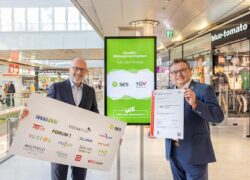
SES Spar European Shopping Centers has taken a major step forward in sustainable management, successfully introducing a comprehensive environmental management system and obtaining ISO 14001 certification from TÜV AUSTRIA. The certification applies to both the SES headquarters and 15 SES shopping malls in Austria, reinforcing the company’s commitment to environmental protection and resource efficiency.

SES, a leading developer and operator of 31 shopping malls across Austria, Slovenia, Italy, Croatia, Hungary, and Czechia, has long prioritized energy efficiency and previously implemented a certified energy management system. Now, the company has expanded its sustainability strategy by integrating procurement, waste management, and resource conservation into a broader environmental management framework.

Key Sustainability Principles of SES

The newly certified environmental management system is built on three core principles:
• Prevention of Environmental Pollution – SES is committed to minimizing emissions and waste across its operations.
• Resource Protection – Sustainable materials and efficient processes are prioritized in construction and procurement.
• Continuous Improvement – The company is dedicated to ongoing environmental performance analysis and enhancements.

Long-Term Sustainability Goals

As part of its environmental strategy, SES is focusing on sustainable procurement, ensuring that purchases are made only when necessary, favoring regional and Group suppliers, promoting product recyclability, and maximizing the efficiency and longevity of goods and services. SES has also set ambitious long-term goals, including:
• Reducing residual waste by 10%
• Sourcing 100% of its energy from renewable sources
• Installing photovoltaic systems on 50% of available roof space

Commitment to Future Generations

Christoph Andexlinger, CEO of SES, highlighted the importance of this achievement, stating: “The introduction of the environmental management system is the next milestone in our sustainable development. This initiative ensures that our shopping malls operate in a way that is both future-proof and environmentally responsible, protecting resources for generations to come.”

With ISO 14001 certification, SES continues to set new sustainability benchmarks in the retail real estate sector, demonstrating leadership in responsible and environmentally conscious shopping center operations.

Panattoni secures EUR 9.1 million financing for logistics park near Poznań

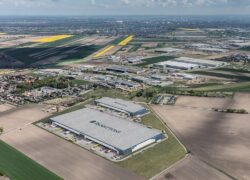
Panattoni has secured €9.1 million in financing from Santander Bank Polska for the first phase of Panattoni Park Poznań XIV, a major logistics project in Głuchowo, near Poznań.

The Greater Poland region, one of Poland’s key logistics hubs, remains a strategic market for Panattoni, where the developer has already delivered over 1.9 million square meters of industrial space. According to Emilia Taczewska-Trojańska, Head of Debt Finance Poland at Panattoni, the funding from Santander Bank Polska will support the company’s continued expansion in the area. She emphasized that Panattoni Park Poznań XIV will be a modern, sustainable facility, further strengthening Western Poland’s logistics sector.

Strategically located near the A2 motorway and express roads S11 and S5, Panattoni Park Poznań XIV aims to meet the rising demand for high-quality logistics space in the region. The 63,000 sqm complex will consist of two buildings, with the first phase already under construction. The initial 14,000 sqm warehouse will welcome its first tenants, Gasa Group and Markat Plus, in early 2025.

The entire development is set to achieve BREEAM Excellent certification, integrating eco-friendly solutions that promote energy and water efficiency, while enhancing workplace comfort for tenants. With this latest investment, Panattoni continues to expand its presence in Greater Poland, reinforcing its commitment to sustainable industrial development.

Schengen Accession: Romania saves EUR 53 million and cuts 95,000 tons of CO2 annually

Romania’s accession to the Schengen Area with land borders marks a historic milestone, bringing significant economic and environmental benefits. The elimination of border controls for freight transport has led to major cost savings, improved logistics efficiency, and a substantial reduction in CO₂ emissions.

According to a study by the National Union of Road Transporters in Romania (UNTRR), trucks previously experienced 23.5 million hours of delays at border crossings annually. Data from Carbon Tool, a platform specializing in carbon footprint reduction, highlights the impact these delays had before Romania’s Schengen accession:
• 35 million liters of diesel were wasted each year, equivalent to fueling 700,000 cars for a month.
• 95,000 tons of CO₂ emissions were generated, an amount that would require 1.5 million trees to absorb.
• EUR 53 million in annual savings, equivalent to the fuel needed for 100,000 round trips between Bucharest and Timișoara or offsetting the weekly emissions of a city the size of Cluj.

Razvan Nica, CEO of Carbon Tool, emphasized the dual economic and environmental benefits of Schengen accession, stating: “This is not just a political achievement but a victory for sustainability and economic efficiency. Reducing unnecessary fuel consumption and emissions marks real progress toward a greener, more efficient transport industry.”

Key Benefits of Schengen Accession

With the removal of border controls, Romania now enjoys several tangible advantages:
• Lower operational costs – Hauliers save fuel costs equivalent to the annual budget of a small town.
• Improved logistics efficiency – Faster delivery times ease supply chain pressures and strengthen Romania’s position in international trade.
• Sustainability gains – Reduced CO₂ emissions and optimized fuel use contribute to a greener logistics system.

As a result of Schengen accession, Romania is set to become a more competitive and environmentally responsible player in European transport and trade.

Union Investment extends KPMG lease at One Snowhill in Birmingham

Union Investment has extended its lease agreement with KPMG at One Snowhill, securing the consulting firm’s presence in the Birmingham office building for an additional five years. The new deal extends KPMG’s commitment until 2034, reinforcing its status as the anchor tenant of the 74,000 sq ft space.

One Snowhill has been part of Union Investment’s UniImmo: Europa real estate fund since 2014 and remains a key asset in Birmingham’s Colmore Business District, the city’s prime commercial hub. With its futuristic glass façade and strategic location near Snow Hill tram stop, the building offers exceptional connectivity and modern office space.

As part of a broader effort to enhance sustainability and efficiency, Union Investment recently modernized the building’s reception area and is currently electrifying the property by removing gas as a heating source. These upgrades will ensure lower operating costs for tenants and improve the building’s Energy Performance Certificate (EPC) rating to B, according to Christiane Bührsch, Head of Asset Management Europe 1 at Union Investment.

Peter McNamara, Director UK & Ireland at Union Investment, emphasized that the lease extension with KPMG reflects a mutually beneficial agreement and recognizes the investment and upgrades that have transformed One Snowhill into a best-in-class property.

In addition to KPMG’s renewed commitment, Union Investment recently secured a 17,000 sq ft lease agreement at One Snowhill with law firm Trowers & Hamlins, further solidifying the building’s appeal as a prime office destination in Birmingham.

LATEST NEWS