Czech labour market cooling contributes to rising unemployment in January

The increase in Czech unemployment to 4.3% in January was not only driven by the usual seasonal decline in temporary jobs but also reflects a broader cooling of the labour market, according to analysts surveyed by the Czech News Agency.

“January typically sees an uptick in unemployment, which was confirmed again this year,” said Martin Jánský, CEO of Randstad Czech Republic. Employers traditionally terminate seasonal contracts and short-term agreements at the start of the year, temporarily increasing the number of job seekers. However, this year, announced layoffs across various sectors have also contributed to the rising jobless rate. Given the current economic conditions in the Czech Republic and Germany, Jánský expects unemployment to continue rising slightly in the coming months.

Companies Reducing Workforce Expansion

Surveys indicate that while many companies do not plan to significantly reduce staff, they are also hesitant to replace departing employees. “This points to workforce and cost optimization,” Jánský noted.

Trinity Bank’s chief economist Lukáš Kovanda highlighted that, aside from the pandemic period, the Czech unemployment rate is now at its highest level since 2017. “The last time we saw 4.3% unemployment was in early 2021, largely due to the Covid crisis,” he said. Kovanda predicts that unemployment may fall to 4% by mid-year, before rising again slightly during the summer holiday period. Despite this, the Czech Republic still maintains one of the lowest unemployment rates in the EU, although signs of labour market cooling persist.

Industrial Slowdown Adding Pressure

According to Kovanda, the Czech labour market has been overheated for years and is now experiencing a correction due to declining industrial performance. “Manufacturers are struggling with high energy costs and weak demand, particularly in Germany. The threat of global trade wars and potential tariffs is adding uncertainty, discouraging new investments and negatively impacting Czech industry and employment,” he explained.

Normalization, Not Panic

ČSOB analyst Dominik Rusinko pointed to weak economic growth and a two-year decline in industrial production as key reasons for the labour market slowdown. However, he reassured that the Czech Republic remains among Europe’s leaders in low unemployment. “The current increase is more of a normalization, not a cause for alarm,” he stated.

That said, Rusinko warned that accumulating risks, such as industrial uncertainty and potential tariff hikes, pose challenges for the coming months. Instead of falling as in previous years, unemployment may remain around current levels for some time.

As economic conditions continue to fluctuate, analysts and businesses alike will be closely monitoring developments in the Czech labour market in the months ahead.

Source: CTK

Czech government plans pension fund investments in housing by year-end

The Czech government aims to enable pension funds to invest in housing by the end of the year, with funds prepared to inject tens of billions of crowns into the market, according to Finance Minister Zbyněk Stanjura (ODS). Speaking on Czech Television’s Questions of Václav Moravec (OVM), Stanjura emphasized the need for legal changes to facilitate these investments.

However, Alena Schillerová (ANO), Shadow Finance Minister, dismissed the announcement as pre-election rhetoric, while Deputy Governor of the Czech National Bank Eva Zamrazilová pointed to bureaucratic hurdles as the primary barrier to large-scale housing development.

The Czech Republic ranks among the five worst EU countries in housing availability and affordability, slipping to 23rd place in the 2024 Prosperity and Financial Health Index compiled by Česká spořitelna and the Europe in Data portal. The high cost of housing and slow construction rates are key contributors to this decline.

To address the crisis, Stanjura stated that legal amendments will be introduced within existing legislative discussions in the Chamber of Deputies. The government also plans tax law adjustments to equalize tax benefits between cooperative housing and traditional mortgages or housing loans.

The administration hopes to launch most of its housing support measures this year, with a long-term goal of constructing “high thousands” of apartments annually. Stanjura believes that 10,000 new apartments per year is a realistic target.

Schillerová, Vice Chair of ANO, dismissed the initiative as a last-minute election promise, stating: “A promise does not cause sorrow.” She claimed that ANO is actively working on housing policies and has pre-prepared legislation that would be ready for implementation if they return to power.

Zamrazilová warned that 10,000 apartments per year would still represent only a quarter of what has been built in past years. She blamed the lengthy and bureaucratic construction approval process, arguing that delays caused by passive-aggressive officials must be addressed to ensure housing projects move forward efficiently.

Prime Minister Petr Fiala (ODS) recently announced that 92 projects have applied for financial aid for affordable rental housing, amounting to 5.1 billion crowns. This includes 3.2 billion CZK in preferential loans and 1.9 billion CZK in grants, funding nearly 1,500 rental apartments.

The State Investment Support Fund will finance new housing projects, renovations, and extensions, aiming to alleviate the country’s housing shortage. However, critics argue that without streamlining regulations and expediting approval processes, even large-scale investments may not be enough to meet the growing demand for affordable housing in the Czech Republic.

Source: CTK

Arcona Property Fund acquires prime development site in Kyiv

Arcona Property Fund (APF), a Euronext-listed real estate investment fund operating across Central and Eastern Europe, has finalized the acquisition of a prime development site in central Kyiv. The seller, AIM London-listed Secure Property Investment and Development PLC (SPDI), has transferred ownership, marking what is believed to be the first real estate acquisition by a Western private fund in Ukraine since the Russian invasion of 2022.

The 0.54-hectare site, located on Kyianovski Lane in the Shevchenkivskyi district, is just 500 meters from Lvivska Square and is well-positioned for high-end residential development. The transaction, valued at USD 2 million, was completed through a combination of cash and APF shares. This acquisition finalizes APF’s purchase program from SPDI, originally agreed upon in 2020, which included six assets across Bulgaria, Romania, and Ukraine.

Commenting on the transaction, Guy Barker, Director of APF’s Managing Board, emphasized the fund’s confidence in Ukraine’s long-term prospects.

“Although the purchase was part of a package deal agreed in 2020, certain sale conditions remained unfulfilled when the Russian invasion began in February 2022. This prompted a reassessment of both the acquisition and pricing,” Barker explained.

He further noted that APF has closely monitored military, political, and economic developments in Ukraine and now believes the time is right to proceed with the deal. The acquisition reflects APF’s optimism about Ukraine’s future recovery and investment climate.

Barker also acknowledged the professionalism of the Kyiv-based advisors involved in the transaction, including law firms Vasil Kisil (representing APF) and WTS (representing SPDI), as well as valuation experts at Nexia DK.

APF intends to determine the best future use of the site before working on planning and permitting approvals. The fund is considering either selling the property to a developer or entering a joint venture with a local partner to develop the site.

Echoing historical investment wisdom, Barker referenced Nathan Rothschild’s reputed advice from 1810: “Buy when the cannons are firing, and sell at the sound of trumpets.”

The acquisition signals a pioneering move by Western investors into the Ukrainian real estate market and underscores Kyiv’s resilience as an attractive investment destination despite ongoing geopolitical challenges.

Impact of Polish mortgage rate cuts: Assessing the revival of the housing market

How has the decline in mortgage rates in the final months of 2024 impacted housing sales? Have buyers shown a renewed interest in the market? What overall sentiment can be observed in the real estate sector?

Tomasz Kaleta, managing director of sales and marketing at Develia
As analysts point out, the drop in mortgage prices at the end of 2024 could be related to the financial mechanisms affecting the home loan market, but it did not have an impact on the clear recovery among buyers. A significant boost to demand will come from the interest rate cut expected this year, which according to some forecasts could happen as early as March. We are currently seeing a gradual recovery in buyer interest, as evidenced by the increasing number of enquiries and appointments at our sales offices. The mood in the property market is indicating stabilisation.

Agnieszka Majkusiak, sales director of Atal
Unfortunately, as January’s figures show, the mortgage offer has deteriorated and banks have raised interest rates on loans with periodic fixed rates. Past bank ‘promotions’ have certainly increased traffic in sales offices and, combined with the bonuses offered by developers, contributed to the improvement of contracting results in the fourth quarter.

A change in the banks’ policy and their return to periodically lower margins could give a renewed sales boost. However, a much better effect would come from a gradual reduction in interest rates, which, when margins are added, currently result in the most expensive mortgage market in Europe. This is largely deterring customers, especially those targeting the mid-price segment, from making a purchase decision. The very start of a cycle of rate cuts, would create a more realistic prospect of a reduction in repayment instalments and thus could act as a pro-buyer.

Zuzanna Należyta, commercial director at Eco Classic
The interest rate cuts have been symbolic and have not boosted sales. We still have some of the most expensive mortgages in Europe and there are still many customers who cannot afford a loan.

Andrzej Gutowski, Sales Director of Ronson Development
Mortgage interest rates fell in the last quarter of last year, but this was not the result of interest rate decisions, which remained unchanged. The drop in WIBOR should be interpreted as a reaction anticipating potential changes in the market and reflecting expectations of further reductions in the future. It is a signal that the market is in a wait-and-see phase, but that the scale of the interest rate adjustment so far has been insufficient to trigger a marked change in buying activity.

We are therefore not seeing a significant recovery in the market. Both housing sales and prices remain stable, continuing the trend of late 2024.

The current mood can be described as wait-and-see. How the market will behave depends on the decision of the Monetary Policy Council and the further development of interest rates. If they are cut in the second half of the year, the creditworthiness of buyers may improve, which will create the conditions for a market recovery.

Tomasz Łapiński, President of the Management Board and Managing Director of Residential Investments at Cordia Polska
Even if banks cut mortgage interest rates, changes in the housing market will only be visible in a few months. An important element here will also be the already mentioned government programme, which many potential buyers of flats are waiting for.

What we have observed over the past year is a slowdown in demand for new flats. They were mainly bought by people who had cash. A deterioration in customer sentiment was also noticeable. We hope that this year will bring more positive developments, both for developers and unit buyers.

Lukasz Šedovič, Sales Director Trust Investment S.A.
The reductions in mortgage interest rates in the last quarter of last year are slowly starting to have a positive impact on flat sales. We can see a gradual improvement in sentiment and a revival among buyers who are returning to the market after a period of uncertainty. There has been increased interest in both units for own use and properties for investment. In particular, greater interest can be seen in the popular and mid-range housing segment, which is most often financed with bank loans. Although the situation still calls for a cautious approach, the current macroeconomic conditions give hope for further sales growth and stabilisation of the housing market in 2025.

Katarzyna Mirota, Sales & Marketing Manager, Matexi Polska
In recent months, there has been little change in the cost of debt financing and this has been due more to temporary promotions offered by banks when granting mortgages than to a reduction in interest rates. The current value of interest rates at around 5.75 per cent is still high and many people still have problems with their creditworthiness. However, interest rate reductions are announced with a view to future periods.

Currently, supply has levelled off with demand. There is greater availability of housing on the market and the limited demand means that expert statements predicting falls in property prices are becoming more frequent. This is a good time for buyers who have the necessary financial means. Buyers are keen to compare offers, negotiate and look for buying opportunities, but we see that their decision-making process has lengthened.

Damian Tomasik, CEO of Alter Investment
The recent reductions in mortgage interest rates were too small to significantly affect the market recovery. Currently, Poland still has some of the highest interest rates in Europe, which limits access to cheap housing finance for many customers.

As a result, market sentiment is cautious, with potential buyers waiting for more significant reductions that could have a real impact on their creditworthiness. We believe that a faster reduction in interest rates is necessary to restore stability and enable more people to realise their housing plans.

We are keeping a close eye on the situation, adjusting our offerings in line with current market conditions, while preparing for a potential recovery in the event of more significant changes in financial policy.

Cezary Grabowski, Sales and Marketing Director of Bouygues Immobilier Polska
We have not felt a clear translation of the drop in mortgage interest rates into sales. However, it is worth emphasising that both developers and customers are closely observing developments and waiting for impulses that could improve the mood and stimulate the market.

Mariusz Gajżewski, Head of Sales, Marketing and Communication BPI Real Estate Poland
The drop in mortgage interest rates in the last quarter of 2024 and the expected further reductions have a definite impact on the real estate market. We are already seeing an increase in interest in buying flats, especially among people who were holding back their purchase decision due to high interest rates on loans. With the beginning of 2025, we are seeing a return of optimism among our customers, accompanied by an increase in the availability of mortgages that is conducive to a general recovery in the market. This, in turn, is positively reflected in sales performance, which we expect to see this year.

Marcin Michalec, Managing Director, Okam Capital
During this period we have noticed a greater reserve of buyers, it has taken longer to make a purchase decision and we have experienced cancellations of previously made bookings. At the same time, the number of sales contracts signed was not significantly different from a year ago.

The mood on the property market is moderately optimistic. Experts predict that 2025 will bring price stabilisation, greater availability of mortgages and a growing interest in sustainable construction. However, banking analysts point out that interest rate cuts have already been factored into mortgage valuations, so a surge in demand for property is not expected. Further developments will depend on the balance between demand and supply and the banks’ lending policies.

Michał Witkowski, sales director of Lokum Deweloper
The market is seeing an increase in interest in the purchase of real estate among customers who want to finalise their purchase with a mortgage. However, these are subtle differences from last year as a whole, due to the very small share of credit customers in our 2024 sales result. We expect margin reductions and expectations of falling interest rates in Q2/3 of 2025 to increase the share of credit customers in sales. The mood among buyers is not good. Unfortunately, those in power seem to have overlooked that one of the most negative phenomena in the economy is uncertainty, including that regarding the borrower support programme, or lack thereof.

Source: dompress
Photo: Haffnera Residence, Cordia

Germany’s tax reform debate: Proposed relief plans could widen deficit

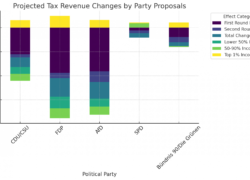
As Germany’s federal election campaign gains momentum, tax policy has emerged as a central issue, with major political parties proposing reforms that could significantly impact public finances. Proposals from the CDU, FDP, and AfD advocate for extensive tax relief, primarily benefiting high earners and businesses. However, these measures could increase the national deficit by up to four percentage points of GDP. In contrast, the SPD and Greens aim to ease the tax burden on lower and middle-income groups while increasing levies on high earners and wealth.

Tax Relief vs. Fiscal Sustainability

Germany’s tax system has remained largely unchanged since the major reforms of the 1990s and 2000s. The country has one of the highest tax burdens on earned income among OECD nations, second only to Belgium. Rising social security contributions—particularly for healthcare and pensions—further strain household incomes, while corporate tax rates remain high compared to international competitors.

Although Germany is considered a low-tax country for investment income and wealth, the structure of the tax burden remains a subject of debate. Some experts argue that tax reductions should prioritize earned income and businesses to stimulate economic growth, while moderate tax hikes on high incomes and wealth could contribute to fiscal sustainability.

The VAT Factor

One of the key but often overlooked aspects of tax reform is value-added tax (VAT). While VAT and excise duties in Germany are relatively low compared to other European nations, adjustments in this area could help balance revenue losses from income and corporate tax cuts.

Estimating the Economic Impact

A recent study assessing the revenue and distribution effects of these proposed tax policies for 2025 highlights significant economic trade-offs. While tax cuts could boost growth, their positive impact on revenue would be limited. The study, based on micro-simulation models and economic forecasts, also considers secondary effects such as changes in working hours, consumption, savings, and investment behaviors. However, these projections remain uncertain and serve only as a broad guideline for policymakers.

With fiscal constraints and major policy challenges, including defense spending and investment in infrastructure, the scope for large-scale tax cuts remains limited. Whether Germany moves toward business-friendly tax reductions or progressive taxation will be a defining issue in the upcoming elections.

Source: DIW Berlin
Charts: Source: Simulation analyses by DIW Berlin based on the election programmes of the respective parties.

P3 leases 230,000 sqm in Czech industrial parks in 2024

P3 Logistic Parks, a European industrial real estate owner and developer, secured lease agreements for 230,006 sqm across its Czech properties in 2024. Over a third of the leased space went to major logistics firms such as DB Schenker, DHL, and ViT logistic, while manufacturing companies and e-commerce businesses also contributed significantly. The results highlight P3’s strategic focus on prime locations and long-term tenant partnerships.

The P3 Czech leasing team finalized 59 agreements last year, with most being renewals or expansions. “This demonstrates the strength of our strategic locations, where tenants are thriving and growing their operations with us,” said Jan Andrus, Head of Leasing and Business Development at P3 Logistic Parks.

Key successes included retaining major logistics clients like DB Schenker, DHL, and ViT logistic, which accounted for 36% of the newly leased space. Additionally, P3 reacquired a facility at P3 Prague D8, home to American VF Corporation, a global fashion and footwear brand. Other long-term tenants renewing their leases included machinery firms Tomax Manufacturing and Gühring, facade manufacturer Wieden, and PNS, all operating in P3 Prague Horní Počernice.

The expansion of bakery BreadWay showcased the flexibility of P3’s leasing strategy. With high occupancy in Prague’s parks, securing additional space required creative solutions. Flooring retailer Kratochvíl Profi Parket vacated part of a hall to accommodate BreadWay’s growth, while both companies collaborated on a new concept in another facility at P3 Prague Horní Počernice, aligning with evolving market trends.

New tenants represented 36% of the leased space, including e-commerce businesses like perfume retailer Brasty.cz in Olomouc and bed retailer Bezvapostele.cz in Ostrava. The latter set up its central warehouse for the Czech and Slovak markets in a BREEAM Excellent-certified facility, allowing for both distribution and in-person customer pickups.

Of the total leased area, nearly 90% was designated for production and warehousing, with the remaining space used for offices and other business operations. The strong leasing activity underscores P3’s role in supporting business growth in the Czech Republic’s industrial and logistics sector.

Sonar Development completes sustainable office revitalization in Berlin

Sonar Development has successfully completed the revitalization of Chausseestrasse 23 in Berlin-Mitte, transforming the office property into a modern, sustainable workplace. The building, part of an international real estate fund managed by Credit Suisse Asset Management, has been handed over to its new tenant—a public sector institution that has signed a long-term lease.

Ideally located near the ‘Naturkundemuseum’ underground station, the property benefits from excellent public transport connections, including tram and bus lines, and is in close proximity to Berlin’s central railway station, ensuring easy long-distance travel.

Originally built in 1998, the property has been under Sonar Development’s management since 2016. Following the departure of the previous tenant, Vattenfall, in 2021, the company implemented a long-term value-enhancement strategy, focusing on sustainability, modernization, and expansion. The building comprises two interconnected wings—a seven-story west wing and a six-story east wing—linked by a four-story structure that creates two newly designed courtyards.

As part of the refurbishment, Sonar Development completely upgraded the building’s technical systems, modernized all interior spaces, and enhanced the foyer. A key feature of the project was the addition of an extra floor, increasing the total leasable area by approximately 1,500 square meters. The underground car park was also redesigned with a focus on sustainability, incorporating charging stations for electric vehicles and bicycles.

“Our role as a local partner in asset management and transaction advisory for the previous Anglo-Saxon owners highlights the depth of value we create and the trust investors place in us,” said Nick Puschkasch, Managing Partner of Sonar Development.

With the successful completion and handover of Chausseestrasse 23, Sonar Development reaffirms its commitment to revitalizing existing properties through innovative strategies that create long-term sustainable value. The company remains focused on transforming outdated buildings into future-ready assets, ensuring their relevance and efficiency in a rapidly evolving real estate market.

Data4 secures EUR 3.3 billion in funding and appoints new Chief Investment Officer

Data4, a European data center operator and investor, has raised EUR 3.3 billion in funding to accelerate its expansion across Europe and strengthen its market position. The company has also appointed Alexander Oyaert as its new Chief Investment Officer (CIO).

Oyaert, who previously served as a strategic advisor to the Data4 Group’s management board, will now oversee all M&A and financing activities. He played a key role in securing the new financing, which includes EUR 1.1 billion allocated for greenfield investments and acquisitions. His appointment marks a crucial step in Data4’s strategic growth, particularly as it expands into new markets, including Poland, where it is developing a data center campus in Jawczyce, near Warsaw.

The newly secured capital will fuel Data4’s rapid expansion, allowing the company to scale operations across its core European markets. The Polish data center market is expected to triple in capacity and surpass 500 MW by 2030, with nearly half of that capacity dedicated to artificial intelligence services.

“We are already seeing the first results of Alexander’s work – securing this key funding to drive our expansion is a major achievement. The data center sector in Europe, including Poland, is growing dynamically, and this financing will allow us to expand our Warsaw campus and invest in future projects,” said Adam Ponichtera, Director of Data4 Poland.

With a finance degree from the University of St. Gallen and an engineering background from the Free University of Brussels, Oyaert brings a wealth of experience from leading financial firms, including Morgan Stanley and Brookfield Asset Management, where he served as Vice President in the Infrastructure Department.

“I am excited to support Data4 in continuing its success and strengthening its leadership position in the European data center market. With €3.3 billion in funding, we are well-positioned to drive growth in one of the fastest-growing sectors of real estate and critical infrastructure,” said Oyaert.

Beyond his business expertise, Oyaert also co-founded a non-profit organization focused on improving the quality of paramedic services in Belgium.

“We are delighted to welcome Alexander as our new CIO. His solid experience in the banking sector will help accelerate our expansion and develop innovative fundraising strategies,” added Olivier Micheli, CEO of Data4 Group.

Data4’s first Polish campus, located in Jawczyce near Warsaw, spans four hectares and will ultimately consist of four facilities with a total power allocation of 60 MW. The first data center, delivering 8 MW of power and covering 2,200 sqm, was commissioned in 2023.

With its latest round of financing, Data4 is set to reinforce its position as a key player in Europe’s data center sector, leveraging its strong financial backing and experienced leadership to drive future growth.

Castlelake and Niam Credit launch EUR 1 billion Nordic real estate Financing venture

Castlelake L.P., a global alternative investment manager specializing in asset-based private credit, and Niam Credit, a leading credit provider in Northern Europe, have announced a strategic partnership to deploy €1 billion in real estate financing across Sweden, Norway, Finland, and Denmark.

The initiative aims to address growing demand for flexible, tailored financing solutions as traditional bank lending declines due to regulatory constraints. The partnership will provide capital for acquisitions and refinancings across various real estate asset classes, offering an alternative to conventional loan structures.

As its inaugural deal, Castlelake and Niam Credit have successfully closed a NOK 1.9 billion (€165 million) financing transaction for a portfolio of more than 30 prime properties in central Oslo. The portfolio includes residential, commercial, and medium-stay assets.

Pontus Sundin, CEO of Niam Credit, highlighted the significance of the collaboration: “This partnership marks Niam Credit’s first joint venture, combining our deep regional expertise with Castlelake’s global investment capabilities. Our first project in Oslo underscores our ability to support leading sponsors with substantial capital and bespoke financing solutions, particularly in Norway’s challenging lending market.”

Eduardo D’Alessandro, Partner at Castlelake, emphasized the strategic importance of the venture: “Our collaboration with Niam Credit is designed to deliver critical financing solutions tailored to the Nordic market. This venture aligns with our long-term commitment to providing investors with access to high-quality real estate opportunities across Europe.”

Castlelake has been active in European asset-based opportunities since 2006, investing over €7.2 billion and financing or acquiring more than 8,000 assets across 18 countries.

Photo: Eduardo D’Alessandro, Partner at Castlelake and Pontus Sundin, CEO of Niam Credit

Romania expands as regional logistics hub with major investments

Romania’s industrial and logistics real estate market continued to expand in 2024, with new deliveries totaling approximately 400,000 square meters, bringing the country’s total stock to 7.4 million square meters, according to Colliers’ annual report. Increased interest from international and local investors, alongside major transactions such as the expansion of retailers LPP and Deichmann, reinforces Romania’s status as a strategic distribution hub for Southeastern Europe. While the long-term outlook remains strong due to a competitive labor force and ongoing infrastructure modernization, short-term economic and political uncertainties could slow the pace of expansion.

Lease agreements covered around 620,000 square meters in 2024, marking a 20% decline from the near-record levels of the previous year. However, according to Victor Coșconel, Partner, Head of Leasing, Office & Industrial Agencies at Colliers noted that this figure does not fully capture the market’s dynamics, as a substantial portion of leasing activity—including contract renewals and direct deals—remains unreported. Despite this decrease, the leasing volume still surpasses pre-pandemic levels when annual activity remained below 500,000 square meters. CTP and WDP continue to dominate the market, controlling two-thirds of the total stock, but other developers have become increasingly active. The entry of renowned German and American developers, such as Garbe and Hillwood, as well as growing investments from local players, signal a positive long-term market trajectory.

The share of leased spaces allocated to production increased significantly, representing one-third of all transactions for the second consecutive year. This marks a shift from the 10-15% recorded in previous years. However, many manufacturing companies still prefer to own their operational spaces rather than lease them, shaping the long-term structure of the market.

While Bucharest and its surrounding areas accounted for more than half of all industrial and logistics space leases in 2024, this share is lower than the decade-long average. Regional centers are becoming increasingly attractive for industrial and logistics operations, and in the long run, Bucharest’s dominance is expected to decline as other cities in Romania capture more investor interest.

Despite a national vacancy rate of around 5%, which limits tenants’ negotiating power, rents have stabilized. A built-to-suit (BTS) warehouse in a prime location now leases for €4.5–5 per square meter, up from under €4 per square meter before 2021, reflecting a significant market shift.

The largest transaction of the year was the expansion of fashion retailer LPP, which leased 42,000 square meters of warehouse space in northern Bucharest, bringing its total footprint to over 130,000 square meters and making it one of the largest tenants in Romania. Additionally, footwear retailer Deichmann pre-leased a 20,000-square-meter warehouse in Bucharest, which will be transformed into a regional distribution center. Auto parts manufacturer Federal Mogul signed a sale and leaseback agreement with WDP for its 19,000-square-meter factory in Ploiești, while an important FMCG distributor inaugurated its first temporary warehouse covering 10,000 square meters in MLP Bucharest West. Meanwhile, GXO completed the first phase of its project at the end of the year for retailer Trendyol, aiming at 50,000 square meters. Both transactions were facilitated by Colliers.

These transactions reflect the ongoing evolution of the Romanian logistics market and reinforce its role as a regional distribution hub for Southeastern Europe and, in some cases, for the entire Central and Eastern European region. The rapid improvement of infrastructure and full accession to the Schengen Area in 2025 further enhances Romania’s attractiveness for logistics investments. The country continues to benefit from its competitive labor costs, which remain the lowest in the EU relative to productivity in sectors such as transport and warehousing. Even after wage increases over the past decade, Romania remains competitive on both a European and global scale, drawing an increasing number of companies looking to expand their regional footprint.

Infrastructure modernization remains a key driver of economic growth and industrial development. Following a record-breaking 2024, which saw 1,200 kilometers of express roads completed, Romania aims to reach 2,000 kilometers by 2030. Over 600 kilometers of highways and express roads are currently under construction, with another 700 kilometers in the planning phase. The completion of major projects such as the Sibiu-Pitești and Iași-Târgu Mureș highways will significantly enhance connectivity and attract new investments.

Romania’s long-term potential remains strong due to its competitive workforce, strategic location, and ongoing infrastructure investments. However, its current stock of industrial and logistics spaces, expected to reach 8 million square meters by the end of 2025, still lags behind countries like Poland, which has four times the volume. Expanding to 11-12 million square meters by the end of the decade is a realistic target. In the short term, economic and political uncertainties could slow the pace of expansion, but large-scale transactions and strategic investments could drive positive market surprises, ensuring continued momentum for Romania’s logistics and industrial real estate sector.

Source: Colliers Romania
Photo: WDP Bucharest and Victor Coșconel, Partner, Head of Leasing, Office & Industrial Agencies at Colliers

LATEST NEWS