Radisson Collection Hotel reopens in Berlin with stunning new lobby and gastronomy concept

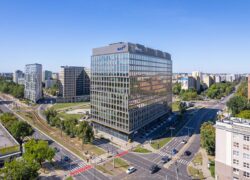
After a two-year closure following the AquaDome accident in December 2022, the Radisson Collection Hotel, Berlin has reopened its doors, unveiling a fully renovated interior and a new luxury hospitality experience. Located in the heart of the city, directly opposite Berlin Cathedral, the hotel introduces the ‘Living Tree’ lobby concept and a modern Greek restaurant, San Éna, setting new standards for upscale accommodation in the capital.

The centerpiece of the hotel’s transformation is the Living Tree, a 24-meter-high, 20-meter-wide vertical garden adorned with nearly 2,000 plants. Located in the 1,000-square-meter lobby, the lush installation provides an immersive natural ambiance, enhancing the indoor climate through an integrated irrigation system. A smart lighting concept allows the Living Tree to change its appearance throughout the day, creating a dynamic and welcoming atmosphere for guests.

Beyond the spectacular lobby, the hotel boasts 15 modern meeting rooms, fully redesigned to provide an elegant setting for events in Berlin-Mitte. Spanning 2,740 square meters across three floors, the event spaces include the DomLounge, a glass-roofed venue offering panoramic views over Berlin—ideal for conferences, meetings, and private celebrations.

The hotel’s culinary offering has also been reimagined, with the launch of San Éna, a restaurant specializing in modern Greek cuisine. During warmer months, the terrace on the banks of the Spree River is expected to become a vibrant social hub. Meanwhile, the hotel’s new spa and wellness area includes an indoor pool, a Finnish sauna, and a 24-hour fitness studio equipped with state-of-the-art training equipment.

The Radisson Collection Hotel, Berlin offers 427 luxurious rooms and suites, including Collection Premium rooms with stunning views of Berlin Cathedral, Junior Corner Suites, and the spacious Nikolai Suite, which spans over 100 square meters and features furnished balconies.

Marco Eichhorn, General Manager of the Radisson Collection Hotel, Berlin, expressed enthusiasm for the relaunch, stating: “We have created a unique hotel experience with passion, staying true to our motto: ‘Welcome to the Exceptional.’ The impressive Living Tree in our lobby and our new San Éna restaurant are just two of the many highlights that make our hotel truly special. A heartfelt thank you to our property owner, Union Investment, for their trust and commitment in bringing this exciting project to life.”

Martin Schaller, Head of Asset Management Intercontinental at Union Investment, also praised the relaunch, noting: “We congratulate the Radisson Hotel Group on reopening at this iconic Berlin location. We are delighted to have played a key role in shaping the hotel’s exciting new lobby and restaurant concept.”

With its bold redesign, innovative hospitality concepts, and prime city-center location, the Radisson Collection Hotel, Berlin is set to redefine luxury stays in the German capital, offering a one-of-a-kind experience for both business and leisure travelers.
Slovak construction sector ends 2024 with a 5% decline despite year-end growth

The Slovak construction industry saw a year-on-year production increase in December 2024, yet the overall annual performance ended with a 5% decline. The sector struggled throughout the year, with all components of domestic construction output recording a downturn, particularly in engineering projects, which saw a double-digit decrease. New construction and repair works also slowed, and despite modest improvements in the final months, the sector failed to recover from the broader downturn.

In December 2024, construction production reached EUR 752.7 million, marking a 4.3% year-on-year increase. However, after seasonal adjustments, production was down 1.2% compared to November. Domestic construction production posted positive results in only three months of 2024, with December being the second-best performing month.

The largest component, new domestic construction, grew by over 12%, marking its best performance of the year. However, domestic repair and maintenance works fell by nearly 15%, continuing to weigh on the sector. Domestic construction accounted for over 90% of total industry performance, with building construction rising for the second consecutive month, up 7.7% in December. Meanwhile, engineering construction, including highway projects, remained weak, with a 2.4% year-on-year drop.

International construction activity saw a 2.9% increase in December, although its share in total sector production fell below 10%.

Full-Year 2024 Construction Performance

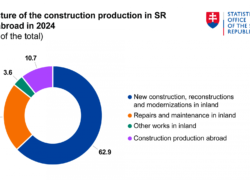
For the entire year, Slovak construction output totaled nearly EUR 7.5 billion. While the sector produced higher values in current prices, its real performance declined by 5% when adjusted for inflation. This marked the second consecutive year of contraction, following a 0.2% decline in 2023.

The downturn affected all areas of domestic production, particularly new construction, renovations, and expansions, which declined by over 6%, while repair and maintenance works dropped by nearly 5%. By construction type, building construction fell by more than 2%, while engineering projects saw a sharp 12% drop.

Despite domestic challenges, construction activity abroad improved slightly, recording a 0.9% year-on-year increase. However, this segment still accounted for less than 11% of total Slovak construction output.

While the sector ended the year on a stronger note, sustained declines in domestic infrastructure projects and maintenance work remain key concerns for the industry heading into 2025.

Source: Statistical Office of the SR

Poland positions itself as a leader in deregulation amid economic shifts

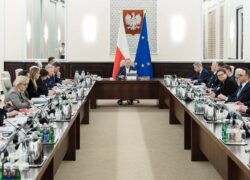
Poland is taking decisive steps to accelerate deregulation efforts, aiming to become a leader in regulatory reform within Europe. Prime Minister Donald Tusk, speaking at the “Poland: A Year of Breakthrough” event, emphasized the government’s commitment to reducing bureaucratic barriers and fostering economic growth. Ahead of a Council of Ministers meeting, Tusk announced further steps in the deregulation process, including consultations with business leaders, entrepreneurs, and scientists.

A key part of this initiative is the establishment of a new cooperation model between the government and business representatives, spearheaded by entrepreneur Rafał Brzoska. Tusk confirmed that he will meet Brzoska and his team of managers and entrepreneurs on Friday to outline a structured deregulation framework. Ministers have also been tasked with reviewing existing regulatory barriers in their respective sectors to accelerate comprehensive reforms.

Tusk expressed confidence that Poland’s proactive approach could serve as an example for the rest of Europe. “If we want Europe to deregulate effectively, we must start with ourselves. The whole continent is watching us, and I am convinced that Poland’s upcoming EU Presidency will be remembered for driving real deregulation,” he said.

In parallel, the government is assessing the impact of new U.S. tariffs on steel and aluminum from the EU, a move that could disrupt European trade relations. Minister of Development and Technology Krzysztof Paszyk and Minister of Industry Marzena Czarnecka have prepared preliminary impact assessments, analyzing potential repercussions for Poland and the broader EU.

Tusk reassured that Poland’s direct exposure to the tariffs is limited, with only 411 tons of aluminum exported to the U.S. compared to 264,000 tons sent to other markets. However, he stressed the need for strategic preparation to counter price fluctuations and market shifts in Europe.

As Poland aligns its position within the European Union, Tusk emphasized the importance of a cohesive European response, warning against escalating trade tensions with the U.S. “We must respond as Poland and as the EU in a balanced way, avoiding unnecessary trade conflicts, especially with our allies,” he stated.

The Polish stance on deregulation and trade policies will be formally presented during upcoming EU trade minister discussions, ensuring that Poland plays a central role in shaping Europe’s economic policies in the coming months.

Source: Chancellery of the Prime Minister

GARBE Industrial and SFO Capital expand partnership with new Milan logistics project

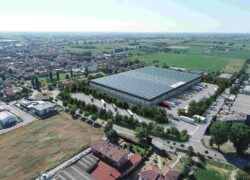
GARBE Industrial Real Estate GmbH, has announced its third joint venture with SFO Capital Partners, a London-based global real estate investor. The collaboration will focus on the development of MilEast Logistics Park, a 22,000-square-metre Grade A logistics facility in the Milan metropolitan area, Italy.

The MilEast Logistics Park project is being developed on a brownfield site in Covo, Bergamo, acquired in October 2024. GARBE Industrial will oversee the property’s development and management, ensuring that it meets high environmental and sustainability standards, including LEED Platinum certification. The state-of-the-art facility will feature 18 loading bays, a 12-metre clear height, and 118 parking spaces, designed for flexible single- or multi-tenant use.

According to Dr. Peter Bartholomäus, Head of Fund Management & Capital Markets and Member of the Executive Board at GARBE Industrial, the new development underscores the joint venture’s commitment to sustainable and innovative real estate solutions. He emphasized that GARBE’s collaboration with SFO Capital Partners has consistently delivered high-quality, future-proof logistics properties, benefiting both tenants and investors.

The first phase of the project involved site redevelopment and decontamination, including the planting of local tree species to promote biodiversity. The facility will incorporate sustainable insulation technology, rainwater harvesting, photovoltaic systems, and recycling solutions. Additionally, green spaces and recreational areas for employees will enhance the property’s environmental and social impact.

The Milan metropolitan area remains one of Italy’s most attractive logistics markets, characterized by low vacancy rates and steady rental growth. The region serves as a key hub for leading third-party logistics providers (3PLs) and major retail distributors, further strengthening the investment rationale behind this project.

This new joint venture builds upon the successful track record of GARBE Industrial and SFO Capital Partners. Their second joint project, a 83,000-square-metre Grade A logistics facility near Silvano Pietra, Lombardy, reached practical completion in December 2023. Developed on a brownfield site, the facility achieved LEED Platinum certification, aligning with the highest environmental and technical standards.

The first collaboration between the two firms dates back to 2022, when they jointly developed a 10,600-square-metre logistics hub in Venlo, Netherlands. The property was long-term leased upon completion and upgraded to meet top-tier ESG standards, reflecting strong demand for modern logistics spaces in the region.

Dr. Bartholomäus highlighted that the long-term collaboration between GARBE Industrial and SFO Capital Partners continues to prove its success. With an investment strategy focused on developing sustainable, high-end properties in key European logistics hubs, both companies remain confident in expanding their joint portfolio with future projects.

INVESTIKA Real Estate Fund’s Czech portfolio achieves BREEAM environmental certification

INVESTIKA Real Estate Fund has successfully obtained BREEAM international environmental certification for ten modern commercial properties in its Czech portfolio, reinforcing its commitment to sustainability. In January 2025, seven of these buildings achieved a BREEAM In-Use rating of Excellent, while three properties received a Very Good rating, underscoring their adherence to global sustainability standards.

BREEAM, one of the world’s most widely recognized sustainability certification systems, plays a key role in INVESTIKA’s ESG strategy. With twelve additional properties in the fund’s Polish portfolio also holding international environmental certification, the company has now fully met its strategic ESG objectives.

To prepare for BREEAM certification, INVESTIKA implemented targeted sustainability investments aimed at improving the environmental profile of its Czech properties. These enhancements focused on reducing electricity and water consumption, advancing electromobility, and optimizing building operations and management. Petr Jágr, asset manager of INVESTIKA’s Czech portfolio, highlighted that these efforts align with the fund’s broader commitment to long-term environmental responsibility.

Board member Jaroslav Kysela emphasized that securing international certifications like BREEAM and LEED allows INVESTIKA to evaluate the sustainability of its portfolio based on globally recognized benchmarks. Moving forward, the company will continue enhancing energy management and reducing its operational carbon footprint. These sustainability initiatives not only increase the market value of the properties but also contribute to the fund’s target annual return of 4% to 6% for investors.

P180 in Warsaw Recognized as INVESTIKA’s Most Sustainable Building

Among INVESTIKA’s international holdings, the P180 office building in Warsaw, completed in 2022, stands out as its most sustainable property. The building has earned multiple top-tier sustainability certifications, including LEED Platinum, WELL Gold Core & Shell, WELL Health-Safety Rating, and Building Without Barriers. Recognized by the Polish Green Building Council, P180 was awarded the lowest carbon footprint in the Green Building Awards 2024.

According to Rafał Proczek, Director of INVESTIKA Polska Services, these achievements further solidify INVESTIKA’s commitment to environmentally responsible real estate investment across its portfolio. The company remains focused on expanding its sustainability initiatives and enhancing green building practices in both the Czech and Polish markets.

Catella strengthens market position amidst stabilization in 2024, eyes growth in 2025

Catella has reinforced its standing as a leading pan-European real estate investment company, successfully navigating a challenging market in 2024 despite ongoing weakness in the real estate sector. The company reported stable assets under management (AUM), strong liquidity, and a solid operating profit, even as variable income saw a significant decline. With a strong balance sheet and a recovering transaction market, Catella remains well-positioned to capitalize on emerging opportunities in 2025.

The fourth quarter marked a turning point, benefiting from an improving market environment and operational efficiency measures. Total income for the quarter reached SEK 1,045 million, significantly higher than the previous year, and operating profit increased to SEK 69 million. For the full year, total income stood at SEK 2,307 million, while AUM climbed to SEK 155 billion, an increase of SEK 3 billion year-over-year. The company also maintained a proposed dividend of SEK 0.90 per share for the financial year.

CEO Knut Pedersen emphasized that the European real estate market showed cautious signs of recovery, with transaction volumes rising 22% year-over-year in Q4. As interest rates declined and financing conditions improved, the market started to price in a lower cost of capital, suggesting that the downward trend in property values may have reached its lowest point. With buyer and seller expectations aligning, real estate acquisitions are becoming more attractive as part of diversified investment portfolios.

Investment Management: Resilience and Growth

Catella’s Investment Management division successfully balanced capital flows in 2024, maintaining positive AUM growth despite market uncertainty. Residential property funds were the strongest-performing segment, with increased transaction activity. A key highlight was the Article 9 Catella European Residential III Fund, which completed its first acquisition in Spain—a newly constructed 235-unit residential complex in Madrid, adding nearly SEK 700 million to its portfolio and bringing total fund assets to SEK 9 billion.

Following the year-end, Catella merged its two fund management companies, Catella Residential Investment Management (CRIM) and Catella Real Estate AG (CREAG), to form Catella Investment Management GmbH (CIM). This strategic move is designed to increase operational efficiency and expand fund management capacity, consolidating SEK 115 billion in assets across 25 funds and 420 properties in 15 European countries under a unified structure.

Further investment activity included SEK 6 billion in Catella Logistic Deutschland Plus, alongside the launch of Catella APAM Strategic Equities in the UK, backed by SEK 1.4 billion from an institutional investor. Meanwhile, Catella Aquila, which acquired a majority stake in 2023, took over the management of Catella’s French fund assets, previously handled externally.

Principal Investments: Focused Value Creation

Catella’s Principal Investments segment continued its focus on developing and divesting strategic projects. A major milestone in Q4 was the sale of the Polaxis development project in France, freeing up capital and strengthening liquidity for new investments.

The company is also preparing for the potential sale of Kaktus Towers in central Copenhagen, a landmark project with a high capital value. While no immediate rush is anticipated, Catella is prioritizing securing an attractive deal given the asset’s significance. Looking ahead, the firm plans to diversify its investment strategy, leveraging capital for seed investments in new funds, co-investments with external partners, and development projects with majority-owning capital investors.

Corporate Finance: Market Recovery Driving Growth

The Corporate Finance division saw an uptick in transaction activity, advising on a growing number of deals in Q4. Market sentiment improved as transaction volumes increased, and Catella took the opportunity to strengthen its organization and optimize operations during the slowdown. With market conditions gradually improving, the company is well-positioned to capitalize on renewed investor confidence and higher deal flow in 2025.

Outlook for 2025 and Beyond

Catella has refined its long-term strategy, focusing on three key priorities:
1. Diversifying and sharpening investment strategies in Principal Investments to grow AUM and establish long-term revenue streams. By shifting capital toward new funds and strategic development projects, the company aims to enhance stability and shareholder value.
2. Enhancing profitability and harmonizing Corporate Finance services to leverage strengthened platforms and create greater value for clients as transaction volumes recover.
3. Accelerating AUM growth in Investment Management by expanding existing funds and launching new investment strategies, ensuring a stable and value-driven cash flow for the company.

With an improved financial position, a growing investment pipeline, and a recovering real estate market, Catella is confident in its ability to drive sustainable and profitable growth in 2025. By continuously assessing promising investment opportunities and optimizing its capital structure, the company remains committed to enhancing shareholder value and strengthening its position as a pan-European real estate leader.

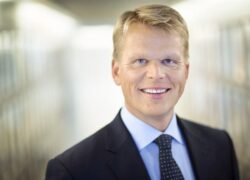
Photo: Knut Pedersen, CEO, Catella

HIH Invest acquires Bonn headquarters of General Customs Directorate

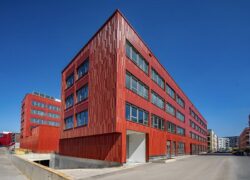
HIH Invest Real Estate (HIH Invest) has acquired the WEST.SIDE – EMBER office building at Václav-Havel-Platz 6 in Bonn on behalf of a separate account mandate for an institutional investor. The property, completed in early 2024, was sold by a Swiss real estate investor.

The newly constructed building offers 11,241 square meters of rental space, including 9,383 square meters of office space, 1,443 square meters for storage and server facilities, and 415 square meters for bicycle parking. It also includes 65 underground parking spaces, with an additional 60 spaces available in a nearby parking garage. Designed in a G-shape, the structure encloses a landscaped courtyard, creating a modern and sustainable workspace.

The sole tenant of the property is the German Federal Agency for Real Estate (BImA), which has signed a 15-year lease with renewal options extending up to 20 years. The building accommodates approximately half of the 850 Bonn-based employees of the General Customs Directorate.

Built to KfW-55 energy efficiency standards, the office features district heating for warmth and concrete core activation for cooling. The roof is extensively greened, with provisions for a future photovoltaic system. A red-glazed ceramic façade enhances the architectural character while integrating nesting sites for local bird species. The property is targeting a Gold certification from the German Sustainable Building Council (DGNB).

Located in the WEST.SIDE district development in Endenich, western Bonn, the office building is part of a broader revitalization project of a 60,000-square-meter former industrial site, which has been transforming into a mixed-use commercial and residential hub since 2014. The area is home to government agencies, research institutions, and administrative offices, making it an attractive location for tenants.

According to Daniel Asmus, Head of Transaction Management Office Germany, Bonn’s office market saw its strongest performance in recent years in 2024, largely due to significant public sector leases. He noted that rental prices are on the rise, while vacancy rates are decreasing. The location offers excellent connectivity to public transport and major highways, with direct access to S-Bahn and U-Bahn trains, multiple bus lines, and key road networks.

David Sanders, Head of Fund Management/Multi-Manager Business, emphasized the strategic value of the acquisition, describing the property as a high-quality new development with a long-term, stable tenant, cutting-edge building technology, and a prime location. He highlighted that counter-cyclical investment strategies remain advantageous, as market adjustments have created opportunities to secure premium assets before all buyers fully return to the market.

The legal and tax due diligence for the acquisition was handled by Norton Rose Fulbright, while Drees & Sommer conducted the technical and ESG due diligence. The property was brokered by CBRE.

Central Group donates CZK 1 Million to Children’s Health Foundation

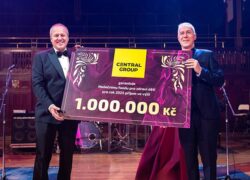
Central Group, the largest Czech residential developer, has once again demonstrated its commitment to philanthropy by donating CZK 1 million to the Children’s Health Foundation, supporting the Institute for Mother and Child Care (IMCD) in Podolí, Prague. The donation was presented at a charity gala held at the Municipal House in Prague, where Dušan Kunovský, Chairman of the Board of Directors of Central Group, handed over the check to Zbyněk Straňák, head of the neonatal ward at the Podolsk Maternity Hospital.

Since 2007, Central Group has been the main sponsor of the foundation, contributing more than CZK 23 million over 18 years. These funds have supported over 220 medical programs, including the purchase of state-of-the-art medical equipment, as well as advancements in research and medical education. Jana Martínková, Business Director at Central Group, emphasized the company’s long-term commitment, stating that in nearly two decades of cooperation, they have helped finance a wide range of medical initiatives, ensuring better healthcare for mothers and newborns.

Beyond its long-standing support for children’s healthcare, Central Group allocates tens of millions of crowns annually to various charitable causes. One of its largest ongoing initiatives is focused on helping Prague manage the refugee crisis, with assistance programs exceeding CZK 63 million in value. This aid includes the establishment of a relief center offering comprehensive support for refugees, educational assistance programs to help integrate children into the school system, and medical care support to ensure access to essential healthcare services. As part of these efforts, Central Group has provided the public administration with a commercial complex in Vysočany free of charge. This site houses the Regional Assistance Centre for Ukraine, the largest refugee support center in the Czech Republic, as well as a Refugee Aftercare Centre, which operates in collaboration with UNICEF.

Central Group’s commitment to urban development and community welfare extends beyond charity. In areas where the company is building residential projects, it invests hundreds of millions of crowns into public infrastructure and municipal improvements. These contributions include funding for new public schools, including the construction of several kindergartens across major project locations, as well as investment in public transport and technical infrastructure, enhancing connectivity and services in newly developed districts. Additionally, the company has made significant contributions to urban greenery, planting over a quarter of a million trees and shrubs in Prague over the last five years. It continues to invest nearly CZK 20 million annually in public landscaping efforts.

Sustainability remains a key priority for Central Group. By investing in green spaces and community projects, the company actively contributes to the fight against climate change while improving the quality of life in Prague. With a long-standing commitment to philanthropy, urban development, and environmental sustainability, Central Group continues to play a crucial role in shaping Prague’s future, both through real estate investment and extensive social responsibility initiatives.

Develia sets 2025 target at 3,100-3,300 flat sales, expects record handovers

Develia has announced its ambitious targets for 2025, aiming to sell between 3,100 and 3,300 residential units, maintaining a performance level comparable to the previous year. The company also plans to hand over 2,900 to 3,100 flats, surpassing its record-breaking 2,865 handovers in 2024.

The developer currently has over 3,000 units available for sale and intends to introduce another 3,100-3,300 apartments to the market this year. Construction activity will be aligned with market demand, ensuring flexibility in response to buyer preferences. As of the end of 2024, Develia’s land bank had the potential for 13,500 residential units, with preliminary agreements secured for land accommodating an additional 3,200 flats.

“For the second consecutive year, we have achieved record sales, securing buyers for 3,197 flats in 2024—20% more than the previous year and exceeding our target,” said Andrzej Oślizło, President of Develia. “We expect market stabilization in 2025 and aim to sustain or slightly exceed this level. Our strategy includes launching the construction of at least 3,100 residential units. We continuously monitor demand trends and adjust our projects accordingly, ensuring that our diverse land bank gives us the flexibility to deliver what buyers seek. A prime example is our latest investment at Królowej Jadwigi 51 in Poznań, catering to customers looking for a prestigious city-center project.”

Expansion into the Living Segment and Commercial Divestment

In addition to its residential targets, Develia is set to launch at least two projects in the living segment this year. In January 2024, the company acquired a prime plot in central Wrocław, where it plans to develop a student residence featuring 600 rooms and two commercial units.

Another key focus for 2025 is the finalization of the Arkady Wrocławskie sale. Develia signed a preliminary agreement with Vastint Poland in December 2023 for the sale of the multi-purpose Arkady Wrocławskie complex, at a net price of €42.9 million. The company has secured a legally binding demolition permit, a critical step toward completing the transaction, with the demolition process set to begin in mid-February.

“Finalizing the Arkady Wrocławskie sale marks the completion of our commercial property divestment strategy,” said Paweł Ruszczak, Vice-President of Develia. “We enter 2025 with a strong financial position and the ability to seize new investment opportunities, despite a challenging market environment.”

With record-breaking performance in 2024, an expanding portfolio, and a clear investment strategy, Develia is poised to further strengthen its position in the Polish real estate market in 2025.

Czech industrial real estate market sees record construction activity

The Czech industrial and logistics market is experiencing unprecedented growth, with a record 1.5 million square meters of industrial space currently under construction or completed to a shell & core finish, according to the latest Savills European Industrial and Logistics Occupier Markets report. This surge in development activity is being driven by economic growth, technological advancements, and increased demand for ESG-compliant facilities.

The Karlovy Vary, Plzeň, and Moravian-Silesian regions have emerged as the most active areas, collectively accounting for 763,000 sqm of ongoing construction at the end of 2024. Leading developers in these regions include Panattoni and CTP Invest, both of whom are heavily investing in new industrial projects.

ESG and Automation Shaping Market Trends

As the market stabilizes, there is a growing emphasis on sustainable features such as solar panels, heat pumps, and electric vehicle charging stations. These ESG-friendly upgrades are becoming a top priority for tenants seeking modern industrial spaces.

“We anticipate a stabilization of demand and a gradual absorption of speculative warehouse developments completed in the past year,” said Ondřej Míček, Head of Industrial Agency at Savills. “With ESG becoming more important, tenants are increasingly prioritizing properties with green energy solutions. Additionally, we expect heightened activity in the Ústí nad Labem region by 2025 and 2026, given its proximity to the future TSMC gigafactory in Dresden, set to begin production in 2027.”

Prime Locations for Industrial Expansion

With large-scale projects underway, companies looking for new warehouse or production facilities in 2025 will find the most availability in the Moravian-Silesian and Plzeň regions, as well as on the northern and western outskirts of Prague.
• Moravian-Silesian Region:
• 172,900 sqm of available space within projects under construction.
• Over 700,000 sqm of land ready for further development, with handover possible within 10-15 months of signing a lease agreement.
• Plzeň Region:
• 126,700 sqm of available industrial space.
• Includes the largest vacant unit in the Czech Republic – a 50,000 sqm facility that could be occupied within 4-6 months.
• An additional 320,000 sqm has received construction permits for future development.
• Ústí nad Labem Region:
• Strategically positioned for supply chain integration with Dresden’s upcoming gigafactory.
• 79,000 sqm of ongoing construction space available.
• 456,000 sqm available for built-to-suit projects, with additional sites open for custom-built facilities.

“Companies now have a unique opportunity to secure modern warehouse or production spaces that align with the latest ESG and technological standards,” adds Míček. “These properties are not only available in a short timeframe but can also be tailored to meet tenants’ specific needs.”

Technology Driving Demand for Industrial Space

In addition to sustainability concerns, automation and digitalization are reshaping the industrial market. Warehouse automation is gaining momentum due to rising labor costs and workforce shortages, making technology-driven efficiency a top priority.

Advancements in artificial intelligence and robotics are expected to accelerate in 2025, aided by monetary policy easing and lower financing costs. However, as these technologies require significant energy consumption, companies are also focusing on securing reliable energy sources and transitioning to clean energy solutions.

At the end of 2024, 48% of industrial space under construction in the Czech Republic was still available for lease, reflecting strong market potential for businesses seeking modern logistics hubs. With sustained demand, ongoing infrastructure investments, and a rising focus on automation and sustainability, the Czech industrial market is poised for further expansion in the coming years.

Source: Savills
Photo: Urbanity Campus Tachov

LATEST NEWS