Omnisense Research: Parking a key factor in shopping mall choice for Polish consumers

A new study by Omnisense, conducted on behalf of the Association of Polish Trade and Services Employers (ZPPHiU) and the Polish Association of Retail Tenants (PSNPH), has revealed that parking accessibility plays a crucial role in determining where Polish consumers choose to shop. According to the research, 73% of respondents consider the quality and availability of parking a key factor when selecting a shopping mall.

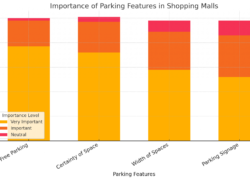
Among the most important parking features, 97% of consumers expect a free parking period of at least two hours, while 96% want assurance that they will find an available space. Other significant factors include the width of parking spaces (89%) and clear parking signage (85%). The study highlights growing consumer frustration over increasing parking fees and shrinking free parking periods, with some shopping centers, such as CH Sadyba Best Mall and Avenida Poznań, reducing free parking time to just one hour.

These findings come at a time when shopping center foot traffic is declining, making it even more crucial for malls to ensure a stress-free shopping experience. Customers need ample time to browse and make purchasing decisions, benefiting both retailers and mall landlords.

Retail Tenants Bear the Burden of Parking Costs

A key issue raised by the research is that parking expenses are already covered by tenants as part of common costs, yet revenues from parking fees are not accounted for within these expenses. Instead, they represent an additional revenue stream for mall owners.

Zofia Morbiato, Director General of ZPPHiU, emphasized the importance of maintaining free parking for at least two hours, stating: “Accessibility of the parking lot and the absence of short-term fees are essential in a shopping mall’s appeal. Tenants expect parking conditions to meet customer needs and uphold the mall’s basic standards. Despite tenants covering all parking costs through common charges, they never receive reductions when additional fees are introduced. Furthermore, these funds are rarely reinvested into improving parking conditions, such as better lighting and signage.”

Morbiato also pointed out recent cases where poor parking management caused significant disruption. She cited Galeria Młociny, where inadequate traffic flow led to long parking delays, forcing some shoppers to leave their cars overnight and return home on foot. She stressed that shopping center managers must take responsibility for ensuring a smooth and comfortable parking experience.

Beyond Parking: Other Key Customer Expectations

The Omnisense study also examined broader customer preferences in shopping malls, revealing that clean and free restrooms rank highest among consumer priorities. Key findings include:
• 91% of respondents value clean toilets, and 89% oppose restroom fees.
• 85% emphasize easy restroom access.
• 89% consider a strong retail mix important.
• 79% highlight thermal comfort as a factor in their shopping experience.
• 74% appreciate clear mall navigation and signage.
• 73% stress the importance of well-managed parking.
• 74% prioritize easy car access to the mall.

Less significant factors included floor materials, electricity sources, ceiling designs, and the type of glass used in storefronts.

Online Shopping Habits Drive Mall Visits

The research also confirmed that online shopping behaviors strongly influence foot traffic in shopping centers. 52% of shoppers visit malls after finding a product online, and another 52% visit to inspect an item they researched on the internet. Among younger consumers, this trend is even more pronounced:
• 72% of 18-24-year-olds visit malls after discovering a product online.
• 65% of 25-34-year-olds do the same.
• 58% of 35-44-year-olds also follow this pattern.
• 28% of all respondents visit shopping centers after seeing a product on social media, a figure that jumps to 54% among 18-24-year-olds.

Shopping Malls Face Declining Foot Traffic

Despite the online-to-offline shopping connection, mall traffic has been steadily declining. According to Proxi.cloud data for 2024, visitor numbers in shopping centers fell by nearly 3.5% compared to 2023, while the number of unique customers dropped by 3.1% year-on-year.

The decline is further reflected in retail sales figures, particularly in sectors most associated with shopping malls. Data from GUS (Poland’s Central Statistical Office) indicates that sales in categories such as textiles, clothing, footwear, furniture, electronics, and household appliances have been shrinking for over a year. While overall retail sales have seen slight increases, the shopping mall segment continues to struggle.

Industry Leaders Discuss Risks and Solutions at ZPPHiU and PSNPH Congress

These challenges were extensively discussed at the 3rd ZPPHiU and PSNPH Congress, where industry experts explored ways to protect tenants from rising operational costs. One key focus was the role of “green lease agreements”, which could help tenants manage investment expenses through strategic contract negotiations and cost control measures.

Additionally, the congress introduced new research on customer expectations and presented a tool designed to measure customer experience within shopping centers and individual retail spaces.

With foot traffic declining and parking fees deterring customers, the retail sector faces mounting pressure to enhance the shopping experience, streamline access, and leverage digital engagement to attract visitors. Whether shopping centers and landlords adapt to these evolving demands will play a crucial role in determining their future viability in an increasingly competitive retail landscape.

Source: ZPPHiU

Bain & Company: Strategic M&A activity in Poland plummets by 49% to $5 Billion in 2024

The total value of mergers and acquisitions (M&A) by strategic investors in Poland dropped by 49% year-on-year to approximately $5 billion in 2024, according to Bain & Company’s latest Global M&A Report 2025. The number of large transactions (above $30 million) also declined sharply, down 44% year-on-year, reflecting the impact of ongoing geopolitical and macroeconomic instability.

The report highlights that technology, energy, and natural resources were the hardest-hit sectors, with transaction values shrinking by 80% and the number of large deals dropping by 30-40%. Cross-border transactions dominated Poland’s M&A landscape, with 14 of the 20 largest deals involving foreign investors acquiring Polish assets.

The production and services sector was the only market segment that remained stable, particularly in the acquisition of real estate portfolios, which accounted for the most valuable transactions. No other sector demonstrated enough resilience to counterbalance the dramatic downturn in technology and energy-related deals.

While Poland’s M&A activity weakened significantly, the global market showed signs of recovery. In 2024, the total value of global M&A transactions reached $3.6 trillion, marking a 13% year-on-year increase, with the number of deals rising by 9%.

The Europe, Middle East, and Africa (EMEA) region saw moderate growth, with transaction values increasing by 11% to $595 billion and the number of deals up 8% year-on-year. Experts predict that 2025 could bring the long-awaited revival of the M&A market, as high interest rates and regulatory challenges—major barriers to dealmaking—are expected to ease.

“In Poland, M&A activity remained significantly weaker than global trends. While international markets are slowly recovering, Poland experienced a steep decline in deal values, primarily due to geopolitical uncertainty linked to the war in Ukraine, concerns over the U.S. elections, and instability in parts of Europe,” explained Paweł Szreder, partner at Bain & Company.

Szreder also pointed out that local factors contributed to the slowdown, including reduced activity from state-owned enterprises, whose new management teams are still formulating long-term strategies. Additionally, expectations for interest rate cuts in Poland remain lower than in Western Europe, further dampening transaction momentum.

The most striking trend was the near halving of large transactions, while smaller deals declined by 5-20% depending on the data source.

A major shift in M&A strategy involves the growing adoption of artificial intelligence. Bain & Company’s study, which surveyed over 300 M&A professionals, found that 21% now use generative AI in dealmaking—a 5-percentage-point increase from last year. Moreover, one-third of respondents expect to implement AI tools by the end of 2025, with even higher adoption levels among leading corporations and private equity firms.

“Generative AI is transforming M&A transactions. Early adopters gain a significant advantage through faster access to high-quality data, while those who lag behind risk overpaying for assets or getting stuck in drawn-out negotiations for less favorable deals,” Szreder noted. “The good news is that it’s not too late to embrace these technologies.”

Despite the current slowdown, Bain & Company highlights that demand for M&A activity remains strong, as companies seek growth opportunities and profit expansion while mitigating risks in uncertain economic conditions. Key factors driving dealmaking include changing economic forecasts, supply chain disruptions, and ongoing geopolitical tensions.

Investment funds, particularly private equity and venture capital, are ready to deploy capital as soon as favorable market conditions emerge. The number of available transactions is steadily increasing, as large companies restructure their strategies and funds look for ways to maintain financial liquidity. Many firms already have assets prepared for sale, waiting for a market recovery and higher valuations.

With global M&A showing signs of a rebound, Poland’s transactional market is expected to recover gradually, depending on improvements in macroeconomic conditions, regulatory stability, and investor confidence.

Source: ISBnews

HD Cosmetics relocates to new headquarters in MLP Zgorzelec Logistics Park

HD Cosmetics, a rapidly growing distributor of clothing, cosmetics, and hygiene products, has secured new warehouse and office space within the modern MLP Zgorzelec logistics center. The company will occupy approximately 1,400 square meters, enhancing its operational efficiency and customer service capabilities. The lease agreement was facilitated with the support of Paweł Towiański from Towiano, who advised the tenant throughout the negotiations.

MLP Group, the developer behind the expanding MLP Zgorzelec logistics complex, finalized a long-term lease agreement with HD Cosmetics, further strengthening the park’s tenant portfolio. The company will take possession of 1,300 square meters of warehouse space in May, with an additional 100 square meters of office and staff amenities set for completion by early Q3 2025.

HD Cosmetics specializes in a diverse product range, including everyday and sportswear, skincare and fragrance cosmetics, and hygiene essentials. The company prioritizes quality, safety, and customer satisfaction, ensuring that all products meet high industry standards.

According to Agnieszka Góźdź, Management Board Member and Chief Development Officer at MLP Group S.A., the strategic location of MLP Zgorzelec near the German and Czech borders continues to attract high-profile tenants. She emphasized MLP Group’s commitment to sustainability, with all facilities undergoing BREEAM certification to meet stringent environmental standards. By investing in green construction, MLP Group is actively working to reduce its carbon footprint while offering state-of-the-art logistics solutions.

Paweł Towiański, CEO of Towiano, highlighted the growing appeal of the Zgorzelec region as a business hub, with its proximity to Germany and access to international markets making it a prime logistics destination. He praised MLP Group’s flexibility in accommodating tenant needs, ensuring that HD Cosmetics will benefit from a long-term, efficient logistics solution at the site.

MLP Zgorzelec is a newly developed logistics park spanning 11.86 hectares, offering a total of 50,600 square meters of modern warehouse space. Situated 8 km from the German border, 6 km from the A4 motorway, and 4 km from Zgorzelec’s city center, the park provides seamless connectivity to international markets. All facilities will be BREEAM Excellent-certified, ensuring high environmental efficiency and superior building quality.

Following its build & hold strategy, MLP Group retains and manages its logistics parks post-completion, providing built-to-suit solutions and ongoing tenant support. The addition of HD Cosmetics to MLP Zgorzelec further reinforces the park’s status as a key logistics hub, supporting the expansion of businesses across Central and Eastern Europe.

GCC Inflation Report 2024: Stability amid global economic shifts

The GCC Inflation Report 2024 by Kamco Invest highlights a year of moderate inflation across the Gulf Cooperation Council (GCC) nations. While global inflation continued to ease, the GCC maintained lower inflation levels compared to other emerging markets, thanks to government policies such as energy price caps, subsidies, and currency pegs. However, inflation in the housing sector remained a challenge in several GCC countries.

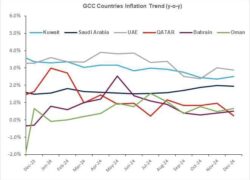
The World Bank estimated the region’s inflation rate at 2.1% in 2024, significantly lower than in other global markets. Government interventions helped contain price increases, with some countries seeing inflation decline. Dubai recorded an annual inflation rate of 3.3%, remaining stable compared to 2023. Kuwait’s inflation dropped from 3.4% to 2.5%, while Saudi Arabia saw a slight increase from 1.5% to 1.9%.

On a global scale, inflation trends showed improvement. The International Monetary Fund projected global inflation to decline to 4.2% in 2025 and 3.5% in 2026. The United States saw inflation fall to 2.9%, while the Eurozone experienced a drop from 2.9% to 2.4%. The primary factor behind these trends was the stabilization of energy prices and the easing of supply chain disruptions. However, potential trade tensions and tariffs introduced by the U.S. administration could reverse these gains and drive inflation higher in 2025.

Food prices saw moderate growth, though they remained significantly lower than their 2022 peak. The FAO Food Price Index increased by 6.7% year-on-year, with vegetable oil prices rising by 9.4% due to supply shortages. Meat and dairy prices also showed moderate gains, influenced by high global demand and production limitations.

Energy prices played a crucial role in keeping GCC inflation under control. Unlike the United States, where energy prices declined by 0.5%, GCC nations maintained artificially low energy costs through subsidies and price regulations, ensuring stability in inflation levels.

With global inflation slowing, central banks worldwide paused interest rate hikes, and some introduced rate cuts. The U.S. Federal Reserve implemented three rate cuts in 2024, bringing its key rate down to 4.25%-4.5%. The European Central Bank also cut rates four times, reducing the Deposit Facility Rate to 2.75% by the end of the year. Given that most GCC currencies are pegged to the U.S. dollar, regional central banks followed suit, with the UAE Central Bank cutting its base rate to 4.4% and Saudi Arabia’s Central Bank (SAMA) lowering its repo rate to 5%. However, Kuwait maintained its discount rate without making any reductions.

Country-specific inflation trends revealed variations across the GCC. In Kuwait, inflation fell to 2.5% in 2024, driven by a 5.0% increase in food and beverage prices and a 5.1% rise in clothing costs, while transportation prices dropped by 1.5%. In Saudi Arabia, inflation rose slightly to 1.9%, with the housing sector experiencing an 8.9% increase, largely due to a 10.6% rise in rental prices. The food and beverage sector saw a modest 0.8% increase, while personal goods and services rose by 2.2%.

Dubai’s inflation remained at 3.3%, with housing costs rising by 6.7%. The food and beverage sector increased by 2.4%, a slower rate than the previous year, while transportation costs declined by 2.2%. In Qatar, inflation saw only a marginal 0.2% increase, with food prices declining by 2.2% and housing and utility costs dropping by 4.2%. However, communication services experienced the highest price increase at 4.4%.

Bahrain maintained one of the lowest inflation rates in the GCC at 0.5%, with housing, water, and electricity prices falling by 9.5%, offsetting increases in other sectors. Oman recorded a slight inflation rise of 0.7%, mainly due to a 1.7% increase in food and beverage prices. Vegetable prices surged by 7.6%, while fish and seafood prices declined by 6.3%.

Looking ahead to 2025, inflation in the GCC is expected to remain moderate, supported by stable energy prices and government subsidies. However, rising housing costs in Dubai and Saudi Arabia could sustain inflationary pressures in these sectors. Trade tensions between the U.S. and major economies pose a potential risk, as tariffs on goods could drive prices higher. Nevertheless, with global inflation projected to decline further, GCC nations are expected to maintain their relatively low inflation environment through monetary policy coordination and continued government support.

The GCC region successfully managed inflation in 2024 through targeted policies, ensuring price stability despite fluctuations in housing and food prices. The overall economic outlook remains positive for 2025, with inflation levels expected to stay well below global averages.

ARM Processors relocates to Millennium Gardens in Budapest with 3,400 sqm of Premium Office Space

ARM Processors, a global leader in semiconductor and computing solutions, has chosen Millennium Gardens as its new office in Budapest, leasing over 3,400 square meters of premium office space in one of the city’s most prestigious business hubs.

Developed by TriGranit and owned by Revetas Capital, Millennium Gardens continues to attract top-tier international tenants, reinforcing its position as a premier office destination. Bence Rohr, Principal at Revetas Capital, welcomed ARM Processors, highlighting that the company will benefit from a state-of-the-art workspace, exceptional facilities, and stunning views of the Danube.

Károly Dömötör Makk, Leasing Director at TriGranit, emphasized the significance of the lease agreement, stating that it underscores the continued demand for high-quality office spaces among tech firms with strong growth potential. He noted that Millennium Gardens offers a modern, sustainable, and future-ready environment, making it an ideal choice for industry leaders.

The lease transaction was facilitated by CBRE, representing the landlord, and iO Partners, which represented ARM Processors. Tamás Pál, Senior Business Development Director at iO Partners, expressed satisfaction with the deal, highlighting the comprehensive tenant representation and project management support provided to ARM Processors, ensuring an efficient and timely transition into their new office.

Millennium Gardens remains a flagship property in Revetas Capital’s portfolio, attracting businesses looking to establish a strong presence in Budapest. With cutting-edge facilities, sustainability features, and a prime location along the Danube, the office development continues to solidify its reputation as one of the city’s most sought-after business destinations.

Silverton expands advisory services for institutional investors and strengthens NPL market presence

Silverton Group, a specialist in investment and asset management for commercial real estate and real estate-backed loans, has reported significant expansion in its advisory services for institutional investors. The firm saw a strong 2024, with a focus on supporting insurers, debt funds, and banks in restructuring real estate financing, leading to an advisory volume exceeding €1 billion by year-end.

This milestone underscores Silverton’s growing reputation for navigating complex financial structures, with notable mandates including advisory on a high-profile office development in Munich and a debt-to-equity swap for an insolvent project in Bavaria. The firm’s approach combines in-depth asset valuation, loan management, and restructuring expertise, ensuring transparency and tailored strategies for every mandate.

Comprehensive Advisory and Restructuring Solutions

Silverton assists both traditional and alternative lenders—including insurers, pension funds, and banks—by offering a modular restructuring framework that supports asset valuation, operational execution of restructurings, and asset management when required. The firm specializes in developing alternative business plans and scenario analyses to anticipate future developments and explore new uses for distressed assets.

Managing Partner Stefan Dölker emphasized the importance of establishing realistic asset valuations to determine optimal strategies, including residual value calculations for developments and a comprehensive review of loan documentation. He noted that Silverton’s structured framework provides creditors with transparency and certainty, ensuring informed decision-making in an evolving market.

In cases of insolvency, Silverton offers specialist legal and operational support, collaborating with legal experts to handle disputes and restructuring agreements. When liquidation is unavoidable, the firm ensures it is conducted in the best interest of creditors, managing negotiations and executing structured asset disposals.

Strengthening Market Position in NPL and Distressed Assets

The non-performing loan (NPL) market saw increased activity in 2024, and Silverton capitalized on this trend by securing three NPL transactions with a combined nominal loan volume of €215 million, two of which are in exclusive due diligence. The firm anticipates further expansion in this sector in 2025, driven by persistently high interest rates, tighter lending criteria, and regulatory changes under the Capital Requirements Directive VI (CRD VI) and Capital Requirements Regulation III (CRR III). These reforms are making real estate loan refinancing more difficult, leading to higher loan-to-value ratios and increased financial pressure on developments.

With its deep industry expertise and regulatory readiness, Silverton remains strategically positioned to provide expert guidance to investors navigating the distressed asset market.

New BaFin Servicing Licence Enhances Competitive Advantage

A major milestone for Silverton in 2024 was obtaining a servicing licence under the German Credit Secondary Market Act (KrZwMG) from BaFin, aligning the firm with new European standards for NPL trading and management. This regulatory approval strengthens Silverton’s market position by ensuring greater transparency and security in the handling of distressed real estate loans.

As the NPL market continues to evolve, Silverton’s BaFin servicing licence gives it a distinct competitive advantage, offering easier access to distressed asset opportunities while ensuring compliance with the latest industry regulations.

Looking ahead, Silverton is well-positioned to expand its footprint in 2025, providing institutional investors with expert advisory services, tailored restructuring solutions, and strategic asset management in an increasingly complex real estate financing landscape.

Photos: Jascha Hofferbert, Managing Partner, Silverton Group and Stefan Dölker, Managing Partner, Silverton Group

Slovak tourism sees growth in 2024 but still below pre-pandemic levels

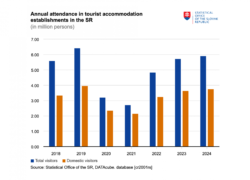
Slovakia’s tourism sector continued its gradual recovery in 2024, recording 5.9 million visitors to accommodation establishments, a 3% increase year-on-year. However, the total number of guests remained 516,000 below pre-pandemic levels, with the industry still struggling to return to its record-breaking 2019 figures, when 6.4 million tourists visited Slovakia.

December 2024: Strong End to the Year

The final month of the year saw 409,000 guests stay in hotels and guesthouses across Slovakia, marking a nearly 10% increase compared to December 2023. Despite this growth, visitor numbers remained 6% below December 2019, with around 26,000 fewer guests. Visitors spent over 925,000 nights in accommodation establishments, with an average stay of 2.3 nights.

Domestic tourists accounted for almost two-thirds of December visitors, reaching 256,000—a 7% increase year-on-year. The number of foreign visitors grew by 14%, with 153,000 international guests choosing Slovakia as their destination.

Regional Tourism Trends in December 2024

Six out of Slovakia’s eight regions saw a year-on-year rise in visitors, with increases ranging from 3.3% to 23.5%. The Banskobystrický and Košický regions experienced the most significant growth, both exceeding 23% compared to the previous year. Žilinský and Prešovský regions not only saw growth but also surpassed their December 2019 visitor levels. However, Trnavský and Trenčiansky regions recorded a decline of up to 5%.

The most visited region in December was Bratislavský kraj, which hosted 118,000 guests, nearly half of all foreign visitors. It was followed by Žilinský (90,000 visitors), Prešovský (76,000 guests), and Banskobystrický kraj (45,000 visitors).

Full-Year 2024 Tourism Performance

Across 2024, Slovak hotels and guesthouses hosted 5.9 million tourists, the second-highest number in history, but still 8% below the record 6.4 million visitors in 2019. While domestic tourism showed resilience, foreign visitor numbers remained significantly lower than pre-pandemic levels.

Domestic travelers made up 3.8 million of the total visitors, while foreign tourists accounted for 2.2 million guests. While both figures showed slight year-on-year growth, Slovakia still saw 310,000 fewer foreign visitors than in 2019, marking a 13% decline in international tourism compared to pre-pandemic levels.

On a regional level, tourism increased in all eight Slovak regions, with growth rates of up to 8% year-on-year, setting new post-pandemic records for both domestic and foreign visitors. Žilinský kraj stood out, achieving its highest-ever foreign visitor numbers, even surpassing 2019 levels. However, it was the only region where domestic tourism declined.

The Bratislavský and Žilinský regions remained Slovakia’s most visited destinations, collectively welcoming over 2.7 million guests in 2024. Prešovský kraj also exceeded the one-million visitor mark. Despite the growth, several regions—including Bratislavský, Trenčiansky, Nitriansky, and Banskobystrický kraj—remained more than 10% below their pre-pandemic visitor levels. In contrast, Žilinský and Prešovský regions came the closest to full recovery, missing just 4% of their 2019 visitor numbers.

While the Slovak tourism sector made notable gains in 2024, it has yet to fully recover from the effects of the pandemic. The industry remains on a steady upward trajectory, with domestic tourism continuing to drive growth and international arrivals gradually improving.

Source: Statistical Office of the SR

Fitch warns Trump’s actions could threaten World Bank’s AAA credit rating

The World Bank and other international financial institutions could face a credit rating downgrade if U.S. President Donald Trump follows through on plans to cut funding, global ratings agency Fitch warned on Tuesday. The statement comes just a day after Moody’s raised similar concerns, highlighting growing uncertainty about the future of these institutions.

Trump recently signed an executive order mandating a review of U.S. funding for all international organizations in which the country is a member. The review, which is set to last six months, will determine whether the U.S. withdraws, reduces, or demands reforms in its financial commitments to these institutions.

According to Fitch, any indication that the U.S. could pull its support would create negative pressure on credit ratings for affected organizations. The agency emphasized that a loss of U.S. backing would severely impact the financial stability of these institutions, as the United States is a major shareholder in many global development banks.

The U.S. holds a 16.4% stake in the International Bank for Reconstruction and Development (IBRD) and a 19% share in the International Development Association (IDA), both part of the World Bank Group. It also controls 15.6% of the Asian Development Bank (ADB), 10% of the European Bank for Reconstruction and Development (EBRD), and 30% of the Inter-American Development Bank (IADB), making it the largest shareholder in these institutions.

While Fitch and Moody’s both acknowledged that a full U.S. withdrawal remains unlikely, they cautioned that such a move would have far-reaching consequences. A loss of U.S. financial backing could lead to a massive funding gap, forcing other member countries to reconsider their commitments. The ripple effect could ultimately damage the credibility and effectiveness of these institutions in financing global development projects.

If the U.S. decides to reduce or halt contributions, Fitch warned that the affected institutions would be placed on the Rating Watch Negative list, signaling that a downgrade is under consideration. The final decision on whether the World Bank and others will lose their AAA rating will depend on how the U.S. exit is structured and how other shareholders respond.

With growing uncertainty in global financial markets, the prospect of a weakened World Bank and reduced multilateral cooperation could have significant economic and geopolitical consequences, Fitch noted.

Slovak house prices surge in late 2024, major cities reach record highs

The Slovak property market experienced a significant upswing at the end of 2024, with apartment prices soaring to record highs, particularly in Bratislava, Košice, and Žilina. Data from the Market Reports application of real estate portal Real Estate.sk confirms that prices in many cities surpassed pre-crisis levels, driven by stabilizing mortgage conditions and strong demand.

The mortgage market has adjusted to higher interest rates, with rates gradually declining and buyers becoming accustomed to the new borrowing environment. Meanwhile, real estate prices have been influenced by new developments in some areas, while in others, a lack of available apartments has driven prices higher.

The trend of rising apartment prices was visible across all regions and property segments, with most cities recording year-on-year increases of over 10%. Smaller apartments saw the sharpest growth, particularly in Košice I (+18.06%), Košice II (+16.54%), Košice III (+20%), Banská Bystrica (+15.79%), and Žilina (+14.79%).

According to Michal Pružinský, an analyst at Nehnuteľnosti.sk, the Košice boroughs experienced rapid price growth due to limited housing supply and subdued new construction. With fewer new apartments entering the market, buyers are forced to compete for existing listings, driving up prices.

In contrast, Žilina’s price growth has been fueled by an active new construction market, where developers are bringing modern apartments to the market, pushing overall price levels higher. Smaller apartments in Žilina increased nearly 15% year-on-year, while three-bedroom apartments surged by almost 22%.

Bratislava and Košice Lead in Large Apartment Price Growth

Among larger apartments, three-bedroom units saw the most surprising price jumps at the end of 2024. Bratislava’s Old Town led the way, with a quarterly increase of 11.11%, fueled by the completion of luxury developments. Prices in the city center remain among the highest in Slovakia, reflecting ongoing demand for prime properties.

Other significant year-on-year gains were recorded in Košice I (+28.82%) and Žilina (+21.69%), marking the strongest growth rates in the country. Double-digit increases were also observed across other districts of Bratislava and Košice, reinforcing the trend of rising demand.

Tax Hike Spurs Last-Minute Buying Rush

The strong end-of-year demand for new development projects was largely driven by the January 2025 VAT increase from 20% to 23%. Buyers rushed to secure pre-tax hike prices, fearing that developers would pass on the higher tax burden in future pricing.

“The increased interest in development projects at the end of 2024 confirmed our forecasts. Many buyers acted quickly to purchase apartments before VAT changes took effect,” explained Pružinský.

As 2025 begins, the Slovak real estate market is entering the new year with strong momentum, with record-high property values in major cities and continued demand across key urban centers.

Source: SITA

Slovak construction chamber criticizes new building law, citing risks and industry impact

Construction Chamber of the Slovak Republic has raised serious concerns about the new building law, warning that instead of streamlining construction processes, it could introduce new complications and risks. According to Chamber President Ivan Pauer, the law was not developed as initially promised by its key creators and may ultimately harm small and medium-sized businesses in the construction sector.

The new Building Act, which has been in preparation for over a year, aims to accelerate construction proceedings and facilitate rental housing development. However, its passage has been met with controversy, with lawmakers admitting that while they misjudged the preparation time, rejecting the law would have led to a crisis in the sector. According to Minister Jozef Ráž, without its approval, authorities would not have been able to issue building permits or collect necessary fees.

Despite these assurances, Ivan Pauer argues that the law poses a serious threat to smaller construction firms and sole traders. He highlights a particularly problematic provision introducing “Dedicated Buildings”, which he claims will disrupt the traditional classification of buildings and put smaller firms out of business. As a result, many workers could be forced into unemployment and state support.

Pauer believes that if the government wanted to classify certain buildings differently, it should have introduced “Special Buildings” designated for state security. He explained that globally, such buildings fall under strict security regulations for designers and contractors but remain separate from standard construction laws. Alternatively, he suggested that these projects should be developed by state-owned companies, ensuring better oversight and efficiency.

The Chamber also criticizes the new law’s reliance on fully electronic communication between stakeholders, citing costly failures in similar projects abroad. Pauer pointed to hundreds of millions in losses in the Czech Republic, arguing that Slovakia is now following the same risky path. He believes that an electronic application for “Construction Consent” would be sufficient, rather than the ambiguous term “Construction Permit” introduced in the new law.

The biggest concern, according to Pauer, is the introduction of a provision that automatically approves construction if the building authority fails to respond within 30 days. He warns that this rule is highly exploitable by investors, regardless of the reasons for the authorities’ silence. Pauer argues that lobbying by large construction companies influenced the law, sidelining traditional experts and lawmakers who have failed to draft a stable and functional building law since 2006.

Looking ahead, Pauer predicts that the law will require multiple amendments before full implementation. Without accompanying regulations, he believes the law will eventually be scrapped and rewritten entirely, this time with real industry experts involved in its drafting. According to Pauer, Slovak citizens and the state have once again lost the opportunity to introduce an effective, long-term system for managing construction and urban development.

Source: SITA

LATEST NEWS