Form Factory extends lease in Supersam Katowice for five more years

Globalworth, the owner and manager of Supersam Katowice, has extended its lease agreement with Benefit Systems S.A., Poland’s largest fitness industry player, for an additional five years. The agreement covers Fabryka Formy, a fitness club occupying approximately 1,830 square meters within the mixed-use facility.

Benefit Systems S.A. is one of several large tenants choosing to remain in Supersam, highlighting the strong partnership with Globalworth and the strategic advantages of the location. The renewal also reaffirms the success of Supersam’s mixed-use model, which combines retail, services, and office space in a highly accessible urban setting.

Located in the heart of Katowice, Supersam has become a key destination for residents, workers, and visitors. The facility integrates commercial, service, and office spaces, providing convenient access to shopping, fitness, and business activities. Its central location, excellent public transport links, and diverse tenant mix make it an attractive hub for both consumers and businesses.

Barbara Wójcik, Asset Management and Leasing Director at Globalworth Poland, emphasized the significance of the lease renewal: “The decision of Benefit Systems S.A. to extend its lease and refresh its concept benefits both parties and, most importantly, Supersam customers. This renewal reflects our model cooperation, shared values, and commitment to high standards. Supersam continues to evolve as a dynamic urban space that meets the growing demand for well-integrated commercial and lifestyle offerings.”

At the start of 2025, the Fabryka Formy fitness club underwent modernization, reinforcing the commitment of both Globalworth and Benefit Systems to delivering top-quality facilities. The fitness club, part of Benefit Systems’ Fabryka Formy network, offers a variety of training programs, group classes, and wellness services, enhanced by technological solutions such as ZdrowAppka, which provides personalized training plans.

Paweł Jędrak, Director of Operational Vertical Management at Benefit Systems Fitness Branch, commented on the long-standing partnership:
“Supersam is an exceptional location where we have built a strong and engaged fitness community. We are pleased to continue offering top-tier services in a comfortable and accessible space. Partnering with a reputable company like Globalworth allows us to grow sustainably, providing high-quality fitness solutions that support the health and well-being of our customers.”

The renewed lease at Supersam Katowice is part of a broader collaboration between Benefit Systems S.A. and Globalworth, which includes long-term agreements in Wrocław’s Renoma and Podium Park in Kraków. Through this partnership, Globalworth strengthens its leadership in commercial real estate and sets a benchmark for high-quality, multifunctional properties in Poland.

Supersam is a modern multifunctional complex in central Katowice, offering 23,000 square meters of commercial space, including retail, service, fitness, and office areas. The top floors house a 400-space parking facility. The building holds a BREEAM “Excellent” certification, reflecting its commitment to sustainable development and top-tier management standards.

Globalworth remains dedicated to long-term tenant relationships, ensuring that Supersam continues to serve as a thriving urban destination that seamlessly blends commerce, wellness, and community engagement.

RTV Euro AGD expands to Mrągowo, reaching 344 stores in Poland

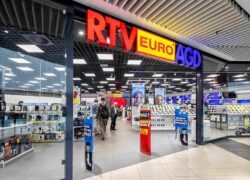
RTV Euro AGD is set to open its first store in Mrągowo on February 14, marking a significant expansion of its nationwide retail network to 344 locations across Poland. The new showroom will cover 450 square meters and will offer a selection of over 24,000 products, both available in-store and on request.

As Poland’s largest specialized retail chain for consumer electronics and home appliances, RTV Euro AGD provides a wide range of audio and video equipment, household appliances, laptops, computer accessories, telecommunications devices, and photography gear. Beyond retail, the company offers comprehensive services, including home deliveries, installment plans, credit and equipment insurance, and installation support.

With the latest addition in Mrągowo, RTV Euro AGD now operates 344 stores across 231 cities, allowing customers to shop not only in physical locations but also via telephone and through its online store. The company continues to strengthen its position as a leader in Poland’s electronics retail sector, emphasizing accessibility and a wide product range for consumers nationwide.

Source: RTV Euro AGD and ISBnews

Romania’s Schengen accession boosts Hotel Cismigiu’s occupancy rate

Romania’s full accession to the Schengen Area has already had a tangible impact on the country’s tourism sector, with Hotel Cismigiu, in Bucharest reporting a 10% increase in bookings in the first month and a half of 2025.

The hotel experienced a surge in demand between September and December 2024, coinciding with Romania’s entry into the Schengen Area for air and sea travel. This positive trend has accelerated in early 2025, fueled by increased foreign visitor confidence in Romanian destinations.

“We anticipate that our full Schengen accession, including land borders, will further enhance Romania’s appeal to international tourists,” said Mirela Cojocaru, General Manager of Hotel Cismigiu. “The impact is already visible in our bookings: in January, we recorded a 65% occupancy rate, up 10% compared to the same period in 2024. The trend continued into February, with a 70% occupancy rate in the first week alone. Looking ahead, we already have 25% of our rooms booked for March, compared to just 14% at this time last year,” she added.

Hotel Cismigiu, part of the Hercesa Romania portfolio since 2004, recorded strong financial performance in 2024. The hotel’s revenue grew by 2%, with an annual occupancy rate of 76%, maintaining the same level as in 2023. Additionally, the Average Daily Rate (ADR) increased by 5%, and the double occupancy rate rose from 1.4 in 2023 to 1.52 in 2024.

International travelers continue to dominate Hotel Cismigiu’s guest profile. In 2024, 85% of its visitors came from abroad, with the largest groups arriving from Israel (23%), the United Kingdom (10%), Italy (9%), the United States (8%), Germany (7%), and 4% each from Spain, France, and Greece.

Romania’s Schengen integration is expected to further drive inbound tourism, solidifying Bucharest’s position as a key European travel destination.

Photo: Mirela Cojocaru, Director General, Hotel Cismigiu Bucharest

Becken Group expands in 2024, shifts focus to property and asset management in 2025

The Becken Group, a leading real estate and investment company, achieved significant growth in 2024 and is set to strengthen its property and asset management divisions in 2025. The Group’s total real estate assets under management increased to approximately €6.3 billion by the end of 2024, reflecting its robust market performance.

INDUSTRIA, Becken’s investment arm specializing in residential rental real estate in Germany, recorded a 15% increase in assets under management, growing from €4.9 billion to €5.6 billion. Becken also successfully delivered two office developments in Munich and Düsseldorf, handing them over to tenants.

In response to evolving market trends, Becken expanded its real estate services division, securing seven new mandates in 2024. These services, covering co-investments, service developments, project supervision, project management, manage-to-green initiatives, asset and investment management, as well as sales and marketing, are expected to see further growth in 2025.

Looking ahead, Becken Group will prioritize the expansion of property and asset management in the coming year. “Our objective for INDUSTRIA is to increase its assets under management by €500 million in 2025,” said Markus Reinert FRICS, COO of Becken Holding GmbH. “Additionally, we will pursue strategic acquisitions to drive inorganic growth.”

By the end of 2024, the Becken Group employed 230 professionals across its member companies.

Rising Demand for Service Developments

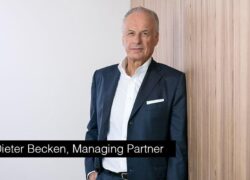
A key trend in 2024 was the growing demand for Becken’s real estate service expertise. The company took on advisory roles for various third-party property development and construction projects across office and residential sectors. “We are witnessing increased demand for service developments, particularly from international investors entering the German market,” said Dieter Becken, Managing Partner of Becken Holding GmbH. “These investors seek experienced partners with deep market knowledge and a proven track record in project execution.”

INDUSTRIA Sees Growth in Institutional Investor Base

INDUSTRIA experienced a significant shift in investor composition, with the number of institutional investors rising from 50 in 2023 to approximately 80 in 2024. While historically working primarily with German investors, INDUSTRIA is now expanding its reach to international capital providers. “Since mid-2024, we have seen a notable increase in cross-border investor interest, with many placing their first mandates in Germany,” said Thomas Wirtz FRICS, Managing Director of INDUSTRIA.

Progress in In-House Property Developments

Beyond third-party services, Becken continued to advance its in-house property development projects. In 2024, the company completed and handed over office developments in Munich (FABRIK) and Düsseldorf (CURVE), with occupancy rates nearing 80%. Additionally, 184 out of 185 residential units at the HOCH DER ISAR project were successfully delivered to buyers. Becken’s property development pipeline now includes 13 projects across major cities such as Frankfurt, Berlin, Munich, and Hamburg, with a total volume of approximately €2.2 billion.

With strong financial performance and increasing investor interest, Becken Group is poised for another year of strategic growth and expansion in 2025.

Germany: Brownfield developments dominate new logistics construction in 2024

The trend toward brownfield developments in logistics real estate continues its strong upward trajectory, with over 40 percent of new logistics projects in 2024 taking place on repurposed sites. According to an analysis by logistics real estate consultant Logivest, this accounts for approximately 1.9 million square meters of new-build logistics space, highlighting a significant shift in industry preference since 2022.

The German government’s land consumption targets, aiming for less than 30 hectares per day by 2030 and net zero by 2050, are driving the growing reliance on brownfield projects. In 2022, greenfield developments outpaced brownfield projects by a ratio of 2:1. By 2023, brownfield developments had risen to 30 percent of new builds, and in 2024, they reached 40 percent. Notably, in five of the top 24 logistics regions, over 80 percent of new logistics properties were developed on brownfield sites.

Major Brownfield Projects Transforming Industrial Landscapes

One of the largest logistics developments in 2024 is the Mercedes-Benz logistics center, spanning approximately 130,000 square meters, which Panattoni is constructing in Bischweier on a former chipboard factory site. The Duisburg/Niederrhein region leads the brownfield transformation, with 90 percent of its new logistics projects being developed on repurposed industrial sites. This shift supports structural economic change while optimizing logistics infrastructure and workforce availability.

‘In regions with a strong industrial tradition, brownfield sites are increasingly dominating new logistics construction,’ said Kuno Neumeier, CEO of Logivest Group. ‘These locations not only offer prime infrastructure but also access to a skilled workforce.’

Future Outlook: Brownfield Developments to Shape Logistics Real Estate

Projections for 2025 and 2026 reinforce the critical role of brownfield developments in logistics real estate. An estimated 5.4 million square meters of new logistics space could be developed on brownfield sites, maintaining their 40 percent share of total new-build volume. Among the largest planned projects is a 160,000-square-meter business park by developer CTP in Mülheim an der Ruhr, repurposing a former rolling mill site. Additionally, Frasers Group aims to build a 100,000-square-meter distribution center on the former Bitburg Airport site.

‘Space constraints, efficient land use, economic transformation, and sustainability are all key drivers of the brownfield redevelopment trend,’ Neumeier concluded. With the logistics industry facing increasing demand for sustainable and strategically located facilities, brownfield developments are set to play an even greater role in the sector’s future.

LIP Invest publishes Q4 2024 Market Report: Logistics Real Estate Trends

LIP Invest, a provider of special real estate funds in German logistics real estate, has released its latest quarterly market report, “LIP UP TO DATE – Logistikimmobilien Deutschland.” The report provides a comprehensive analysis of the logistics real estate sector for Q4 2024, along with projections for early 2025, covering transaction volumes, space take-up, new construction trends, and market yields.

Market Overview

The German logistics real estate market closed 2024 on a stable note, with transaction volumes aligning with the 10-year average. However, space take-up slightly lagged behind the previous year’s figures.

“The rental market’s future depends on the next German government’s policies. The industry seeks greater stability post-elections to facilitate expansion decisions, particularly for contract logistics firms. We anticipate a catch-up effect in the second half of 2025,” stated Natalie Weber, Head of Fund Management at LIP Invest.

Q4 transaction activity was dominated by international investors and a growing supply of new-build properties. However, some developers postponed their typical end-of-year sale offerings, shifting investment activity into early 2025.

Investment Market

The logistics real estate investment market recorded a total transaction volume of EUR 7.0 billion for 2024, with Q4 contributing EUR 2.7 billion. Large-volume deals and portfolio transactions, such as Branicks’ sale of four properties to EQT Exeter, were key drivers.

Prime yields for new-builds remained stable at 4.80-5.00%. Deals exceeding a 20x price factor were rare. The ECB’s interest rate cuts had minimal impact on the 10-year SWAP rate, with modest yield declines expected in mid-2025 as interest rates adjust.

LIP Invest continues to monitor the German logistics market closely, analyzing supply and investment trends. In Q4 2024, properties worth EUR 0.5 billion were offered to LIP, but overall volume remained low due to postponed transactions by developers.

Space Take-Up and New Construction

The German logistics property market saw total space take-up of 5.1 million square meters in 2024. Despite ongoing economic and geopolitical uncertainties, e-commerce-driven demand picked up toward year-end. Q4 recorded 1.25 million square meters in take-up.

New construction activity reached 1.1 million square meters in Q4, surpassing 2023 levels. A total of 4.05 million square meters of logistics space was built in 2024, reflecting a 5% annual increase. Speculative developments by project developers and owner-occupier expansions, such as Pfenning Group’s 20,000-square-meter logistics center in Ladbergen, contributed to this growth.

Alternative Trade Routes: Panama Canal Competitor?

Efficient trade routes are crucial for global logistics. Nicaragua’s government has revived plans for a 445-kilometer waterway to connect the Pacific and Atlantic Oceans, challenging the Panama Canal’s dominance. With a proposed width of 290 meters and depth of 27 meters—significantly larger than the Panama Canal—this ambitious project aims to enhance global shipping. However, despite a groundbreaking ceremony in 2014, its completion remains uncertain.

LIP’s full market report is available for free download at:

Czech consumer price growth slows in January 2025

Consumer prices in the Czech Republic rose by 1.3% on a month-on-month basis in January, driven primarily by increases in food, non-alcoholic beverages, and alcoholic beverages. The year-on-year inflation rate stood at 2.8%, marking a 0.2 percentage point decline from December’s figures.

Month-on-Month Inflation Trends

January saw a notable price increase in food and beverages, with vegetables rising by 7.1%, fruit by 6.5%, and non-alcoholic beverages by 4.1%. Dairy products such as cheese and curd also saw a 4.1% rise, while poultry prices increased by 5.7%. In the alcoholic beverages category, wine prices surged by 13%, spirits by 10.8%, beer by 3.5%, and tobacco products by 0.4%.

The cost of package holidays under the ‘recreation and culture’ sector rose by 5.7%. However, the overall price level was tempered by a decline in clothing and footwear prices, with garments dropping by 1.9% and footwear by 2.7%. Egg prices also fell by 6.6%. In total, goods prices rose by 1.5% while services saw a 1% increase.

Year-on-Year Inflation Analysis

Head of the Consumer Price Statistics Unit at the Czech Statistical Office (CZSO), Pavla Sediva, highlighted the key drivers of inflation: “Year-on-year price development in January was significantly influenced by food and housing costs. Food prices continued to rise, increasing by nearly 5% compared to last January, while housing price growth slowed to 1.3%.”

The annual inflation rate of 2.8% in January was mainly impacted by housing costs, utilities, and fuel prices. The cost of water supply increased by 4.2%, sewage collection by 3.7%, and heat and hot water by 4.7%. However, electricity prices shifted from an 8% increase in December to a 4.7% decline in January. Natural gas prices also fell by 7.7%.

Food and beverage prices played a major role in inflation acceleration. Prices of milk, cheese, and eggs rose by 8%, fruit by 7.4%, while vegetable prices saw a smaller annual decline of 0.7%, compared to the 5.1% drop in December. Sugar prices declined by 21.6%, a significant improvement from December’s 30.4% drop. Meat prices rebounded, rising by 3.5% after experiencing a decline in December.

Egg prices saw a sharp year-on-year increase of 24.7%, butter surged by 40.5%, and chocolate products became 27.8% more expensive. Meanwhile, alcoholic beverages and tobacco also contributed to inflation, with spirits prices up by 3.6%, beer by 1.8%, and tobacco products by 7.4%. In the services sector, catering services rose by 5.2%, while accommodation services surged by 8.7%.

Conversely, price decreases were noted in the clothing and footwear sector, with garments becoming 1.2% cheaper and footwear declining by 4.3%.

Housing and Owner-Occupied Costs

Owner-occupied housing costs (imputed rentals) increased by 2.9% in January, up from December’s 1.7% rise, largely due to an increase in new real estate prices. The overall consumer price index, excluding owner-occupied housing costs, was recorded at 102.8% year-on-year.

The consumer price base index, benchmarked to 2015 averages, stood at 154.0% in January, up from 152.0% in December. The 12-month average inflation rate reached 2.5%, a slight increase from December’s 2.4%.

Harmonized Index of Consumer Prices (HICP)

Preliminary calculations indicate that the Harmonized Index of Consumer Prices (HICP) in the Czech Republic increased by 1.4% month-on-month and 2.9% year-on-year, down from 3.3% in December.

Eurostat’s flash estimates showed the Monetary Union Index of Consumer Prices (MUICP) at 2.5% year-on-year in January, slightly up from 2.4% in December. In Germany, inflation was recorded at 2.8%, while Slovakia reported a 4.1% increase. Croatia had the highest inflation rate at 5.0%, while Ireland reported the lowest at 1.5%.

In the EU-27, the average HICP increase in December was 2.7%, marking a 0.2 percentage point rise from November. The highest inflation rate was recorded in Romania (5.5%), while Ireland had the lowest (1.0%).

Despite a continued rise in consumer prices, inflation in the Czech Republic showed signs of slowing in January, particularly in the housing and utilities sector. However, food, beverages, and services remained key inflationary drivers. The coming months will determine whether this trend continues or if external factors push inflation higher again.

Source: Czech Statistical Office

Slovak wages outpaced inflation across sectors in 2024, employment rose in key industries

Early data confirms that wages in the Czech economy grew faster than inflation across all ten monitored sectors in 2024, providing real income gains for workers. The retail trade and transport and storage sectors saw the highest year-on-year improvements in earnings. Employment increased in six out of ten sectors, with selected market services experiencing the most growth, while industry faced the steepest decline.

December 2024 Wage and Employment Trends

The average nominal monthly wage in December 2024 was higher across all monitored sectors compared to the previous year. However, the rate of wage growth slowed in most industries compared to the prior month. The most significant wage increases, including double-digit growth, were recorded in the sale and repair of motor vehicles. Wages in industry and retail, both sectors with a large workforce, also rose significantly, exceeding 7%.

After adjusting for inflation, real wages increased in eight out of ten sectors. The strongest real wage growth was in sales and vehicle repair, with an 8% increase, followed by retail, where real earnings rose by more than 5%. The only exceptions to this upward trend were wholesale and selected market services, where employees experienced a real wage decline of up to 0.9% year-on-year.

Employment trends in December mirrored the mixed results seen in wages. In a year-on-year comparison, five out of ten sectors recorded an increase in employment. The number of employees grew by 5% in selected market services and by 2–3% in retail, information and communication, construction, and accommodation. However, industry employment fell by 1.6%, and declines were also observed in wholesale, food and beverage service activities, and motor vehicle sales and repairs.

Full-Year 2024 Wage and Employment Developments

For the entirety of 2024, nominal and real wages increased across all ten monitored sectors. Retail and transport and storage saw the fastest nominal wage growth, both exceeding 9%. Average monthly wages reached EUR 1,245 in retail and EUR 1,399 in transport and storage. Industry wages rose by more than 8% to EUR 1,641, while earnings in motor vehicle sales and repairs climbed to EUR 1,522. Food and beverage service workers also saw significant wage growth, with average earnings rising to EUR 758.

Real wages, adjusted for inflation, grew in all sectors, ranging from a 1.3% increase in selected market services to a substantial 6.5% jump in retail. The strongest real wage increases, above 5%, were observed in transportation and storage, industry, vehicle sales and repairs, and food and beverage service activities.

Employment patterns in 2024 showed positive growth in six of the ten monitored sectors. The fastest expansion was recorded in selected market services, where employment rose by 4.8%. Accommodation, information and communication, and construction also posted growth of at least 2% year-on-year. However, industry suffered the largest employment decline, down 2.2%, followed by wholesale (-1%), transport and storage (-0.6%), and food and beverage service activities (-0.2%).

Economic Outlook and Sectoral Trends

The data, derived from preliminary monthly enterprise surveys, indicates a positive trajectory for wage growth in the Czech economy, as most sectors managed to outpace inflation in 2024. The resilience of employment in key service sectors and construction contrasts with the struggles faced by industry and wholesale trade.

Despite some areas of decline, the overall employment and wage growth patterns suggest a strengthening labor market, with workers in retail, transportation, and industrial sectors experiencing the most substantial financial gains. Whether this trend continues into 2025 will depend on macroeconomic conditions and inflationary pressures in the coming months.

Source: Statistical Office of the Slovakia

Fico: Cadastre hacking attack was not accidental, linked to efforts to overwhelm government

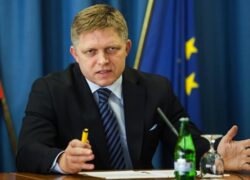
Slovak Prime Minister Robert Fico has claimed that the recent cyberattack on the country’s land register system was not incidental but was instead linked to broader attempts to destabilize the government. In a video statement shared on social media on Wednesday, Fico said the January 5 hacking attack against the central cadastral system and district office departments was exploited by anti-government media and the opposition to spread alarm and create societal unrest.

According to Fico, the attack coincided with the publication of plans to occupy government buildings and disrupt the administration’s operations. “They continue to spread alarmist messages about the cadastre, suggesting that people may lose their properties,” he said.

Fico emphasized that authorities are actively working on two fronts—first, to prevent similar cyberattacks in the future, and second, to gradually restore public access to cadastral information and services. However, he acknowledged that the process takes time.

By February 12, a total of 74 cadastral offices across Slovakia had resumed operations, with one department still functioning in a limited capacity. Due to the ongoing forensic analysis of the system by law enforcement agencies, citizens currently need to visit cadastral offices in person to access services. The prime minister noted that a key component of the cadastral information system—previously accessible remotely—remains under investigation.

To mitigate the impact, the government launched a backup system called CICA on January 22, which provides basic information on title deeds. “In the first few hours of operation, this system recorded more than four million requests. It has now stabilized,” Fico said.

Authorities expect full online access to current title deeds to be restored by the end of February. Further, Fico announced that by mid-March, cadastral services for banks and notaries will be fully operational, followed by services for cities and municipalities, enabling tax return verifications.

The government continues to investigate the hacking incident and implement measures to enhance cybersecurity, while working to restore normal cadastral operations for the public and key institutions.

Source: SITA
Photo: Wikipedia

Bratislava’s Nové Mesto outlines plans for Poliklinika Tehelná and local office building

Bratislava’s Nové Mesto district has clarified its plans for two key buildings within its territory—the Poliklinika Tehelná and the local office building on Junácka Street. Mayor Matúš Čupka shared the district’s intentions in an interview with the SITA news agency, addressing recent public concerns and speculation regarding these properties.

A public discussion was held this week regarding proposed changes to the spatial plan for the Tehelná zone, where the well-known Poliklinika Tehelná is located. Following the discussion, former mayor Rudolf Kusý claimed that the district had agreed to demolish the polyclinic and replace it with residential apartments. However, Mayor Čupka firmly denied this, stating: “Poliklinika Tehelná will not be demolished. Its shape or appearance will only change if its owner decides to replace it with a different medical facility in the future. The provision of healthcare services will remain unchanged.”

The Ministry of Economy, which owns the Polyclinic Tehelná, has previously considered both reconstruction and a possible sale of the building. However, a planned sale was ultimately canceled. The ministry estimates that urgent remediation alone would require approximately one million euros, highlighting the need for significant investment in the building’s reconstruction.

Another major property in question is the local office building on Junácka Street, which has served as the district’s municipal headquarters for nearly 40 years. Mayor Čupka previously announced in December 2023 that employees would be relocating to a new office on Vajnorská 98, as the current building is in poor technical condition and requires a complete renovation.

When asked about the future of the Junácka Street building, Čupka confirmed that its fate will be determined through a public tender or a competition of proposals, ensuring that any redevelopment meets the district’s strict requirements.

While the final decisions on both buildings remain subject to further planning and financial considerations, the Nové Mesto district aims to ensure that healthcare services remain available at Tehelná while exploring a long-term solution for the outdated municipal office building.

Source: SITA
Photo: Poliklinika Tehelná

LATEST NEWS