Polands government’s “Key for Housing” program focuses on secondary market and public housing

The Polish government’s new housing initiative, “Key for Housing,” will be based on three main pillars: municipal housing, social housing, and homeownership through the “First Keys” program, according to Minister of Development and Technology Krzysztof Paszyk. Notably, the ownership component will be limited exclusively to the secondary market, covering both apartments and single-family houses, including those built through individual economic methods.

As part of the program, the government has allocated at least PLN 2.5 billion in 2025 for municipal and social housing projects. The goal for this year is to develop at least 8,000 municipal apartments and 6,500 social housing units. Minister Paszyk emphasized that no funding from this program will be directed to developers, reinforcing the initiative’s focus on public and community-driven housing solutions.

The “First Keys” program, which forms the homeownership segment of the initiative, is specifically designed for buyers in the secondary market. It introduces price caps of PLN 10,000 per square meter (or PLN 11,000 per sqm in Poland’s five largest cities) unless a different limit is set by local municipalities. The program also includes safeguards to prevent speculative real estate flipping, requiring that properties must have been owned for at least five years before being sold.

Additionally, individuals receiving assistance through the program will not be allowed to own other residential properties, ensuring that support is directed toward those in genuine need of housing.

Minister Paszyk noted that while these measures form the foundation of the program, further refinements are still being considered. The initiative is expected to address Poland’s housing challenges by expanding affordable rental options while promoting accessible homeownership in the secondary market.

Source: MRiT and ISBnews

Potential U.S. tariffs on automotive sector more impactful for Poland than steel and aluminum duties

The Polish Economic Institute (PIE) has highlighted that potential U.S. tariffs on the automotive sector would have a significantly greater impact on Poland than the tariffs already imposed on steel and aluminum. While exports of steel and aluminum account for about 5% of Poland’s exports to the EU, the new U.S. duties on these products are unlikely to have an immediate effect on Polish exports, though they will not support growth either, according to PIE.

For Poland, European supply chains remain crucial, with 83% of Polish steel and aluminum exports directed to EU markets. The latest U.S. tariffs may not immediately disrupt Poland’s trade flows, but they could add long-term pressure on European markets if other affected countries, such as Mexico, Canada, Brazil, or South Korea, increase their steel and aluminum exports to the EU.

According to PIE’s analysis, Polish exports of steel and aluminum products to the U.S. amounted to €207 million in 2023, a figure that remained similar in 2024. These exports represented less than 2% of Poland’s total exports to the U.S. and just 0.07% of the country’s overall exports. Despite previous tariffs imposed by the Trump administration, Poland’s exports to the U.S. continued to grow and doubled in 2023 compared to 2018, when the first tariffs were introduced. This growth accelerated further after President Joe Biden lifted some of these duties.

Looking ahead, PIE warns that new U.S. tariffs targeting the automotive sector could have far greater consequences for Poland’s economy than those on steel and aluminum. The automotive industry is one of Poland’s key export sectors, and any disruptions in trade with the U.S. or the EU could create significant challenges for Polish manufacturers and suppliers integrated into global production chains.

Source: PIE and ISBnews

Poland’s retail market sees highest developer activity in a decade

The Polish retail market reached a historic level of activity in 2024, marking its strongest performance since 2015, according to the latest report At a Glance: The Modern Retail Market in Poland by BNP Paribas Real Estate Poland. Key drivers of this growth include the expansion of retail parks, the rise of the luxury goods market, and technological advancements such as AI in retail.

A Record Year for Retail Development

In 2024, developers delivered approximately 545,000 square meters of modern retail space across Poland, the highest volume since 2015, when 620,000 square meters were completed. The fourth quarter alone saw the addition of 200,000 square meters, bringing Poland’s total modern retail stock to 16.5 million square meters.

At the end of 2024, around 330,000 square meters of modern retail space was still under construction, including redevelopments and changes in retail formats. Retail parks accounted for 74% of this pipeline, further underscoring their growing dominance in the sector, while traditional shopping centers represented just 10% of ongoing development. This trend reflects consumer preferences for convenience-focused retail formats, which have become increasingly popular in response to evolving shopping habits since the pandemic.

Retail Parks Undergo Transformation

The retail park sector in Poland is undergoing a major transformation. Before 2010, Polish retail parks spanned up to 100,000 square meters and offered a limited selection of retail categories. Today, these developments are smaller in scale, averaging less than 10,000 square meters, and are located in smaller cities, including those with populations below 50,000 residents.

Fabrice Paumelle, Director of the Retail Department at BNP Paribas Real Estate Poland, noted the shift in tenant composition, stating that discount chains such as Pepco, Action, TEDI, and Dealz now occupy around one-third of rental space in retail parks, while food discounters make up another 15%. In major urban areas, retail parks are increasingly incorporating restaurants, entertainment zones, and DIY stores, as well as showrooms and pickup points for e-commerce, reinforcing their role in omnichannel retail strategies.

Among the major openings in Q4 2024 was Vendo Park Szczecin, developed by Trei Real Estate, adding 22,000 square meters to the market. Another significant project was the redevelopment of the former Sukcesja shopping center in Łódź, now rebranded as Nowa Sukcesja, which features one of Europe’s largest entertainment zones, covering over 46,000 square meters.

Luxury Goods Market Strengthens Amid Economic Growth

Another emerging trend in Poland’s retail sector is the rapid growth of the luxury goods market, fueled by rising consumer purchasing power and increasing demand for high-end products and services.

According to KPMG, the Polish luxury market reached PLN 55.6 billion at the end of 2024, representing a 24.6% increase compared to 2023. The largest segment was premium and luxury cars, accounting for 65% of the market, with an estimated value of PLN 36 billion. The luxury hotel and spa industry followed, valued at PLN 7.8 billion, making up 14% of the segment.

Klaudia Okoń, Senior Consultant at BNP Paribas Real Estate Poland, highlighted that while Poland’s luxury market is still in its early development phase, the growing awareness and purchasing power of Polish consumers are driving significant expansion. This trend mirrors broader economic and social shifts, with affluent shoppers increasingly seeking exclusive products and experiences.

Artificial Intelligence and the Future of Retail

The retail sector is also seeing a technological revolution, with AI-driven solutions reshaping the shopping experience. Consumers increasingly expect seamless online shopping, with complicated payment processes often cited as a reason for abandoning purchases. In response, retailers are implementing one-click payment systems like Apple Pay to enhance checkout efficiency and security.

Additionally, cross-border e-commerce sales are expected to grow at twice the rate of domestic transactions, as Polish consumers become more comfortable ordering goods from international retailers.

Looking ahead to 2025, retailers are set to expand AI-powered shopping tools, including virtual fitting rooms, interactive furniture visualizations, digital showrooms, and AI shopping assistants. These innovations aim to create more engaging and personalized shopping experiences, further blurring the lines between online and offline retail.

A Retail Market in Transformation

Poland’s retail sector is experiencing its most dynamic growth in a decade, driven by the rise of retail parks, luxury goods, and AI integration. As developers continue to focus on convenience-driven retail formats, and consumers embrace digital shopping advancements, the market is poised for further transformation in 2025 and beyond.

Source: BNP Paribas Real Estate Poland

Brno and Ostrava Office Market in H2 2024: Stability Amidst Limited Development

The Regional Research Forum, composed of CBRE, Colliers, Cushman & Wakefield, iO Partners, Knight Frank, and Savills, has released its latest findings on the Brno and Ostrava office markets for the second half of 2024. The report highlights stable vacancy rates, rising rental prices in Brno, and a lack of new office developments in Ostrava, underscoring the evolving challenges and opportunities in both cities.

Brno Office Market: Rising Demand and Limited Supply

Brno continues to see strong demand for office space, particularly from the manufacturing and technology sectors. At the end of 2024, the total modern office stock in Brno reached 699,300 sqm, with Class A buildings accounting for 73% of the total supply.

Only one office project was completed in the second half of the year—Vlněna I, a development by CTP located in the former Vlněna factory complex. Despite the limited new supply, office demand remained robust, with companies actively seeking high-quality workspaces. The largest transaction in H2 2024 was a pre-lease by manufacturing company Garrett, securing 5,900 sqm at CTPark Brno A 3.2 EF. Additionally, Garrett signed a new lease for 5,800 sqm at the Honeywell Office Campus, while AT&T renegotiated its lease for 4,000 sqm at Campus Science Park A.

Vacancy rates in Brno remained stable at 12.7%, with 88,500 sqm of vacant office space at the end of the year. Meanwhile, prime headline rents saw a slight increase, now ranging between EUR 16.75 and 17.00 per sqm per month, reflecting continued demand for premium office locations.

Future Developments in Brno

Brno has an active development pipeline, with eight office projects currently under construction, totaling 78,000 sqm of new office space. Key projects include Ponávka A4 (16,800 sqm), Nová Zbrojovka D2+D3 (12,500 sqm), and Nová Zbrojovka D4 (12,000 sqm). In 2025, an additional 21,700 sqm of office space is expected to be completed, contributing to the city’s continued growth.

Pavel Novák, Head of Office Agency at Savills, emphasized the importance of ongoing development in regional cities: “Companies are facing increasing challenges in finding quality office space. Active development in Brno is helping maintain market balance, but other regional cities, such as Plzeň, Olomouc, Hradec Králové, and Pardubice, are beginning to feel the effects of long-term underdevelopment in the office sector.”

Ostrava Office Market: No New Supply but Vacancy Declining

Unlike Brno, no new office buildings were completed in Ostrava in H2 2024, and there are currently no projects under construction. The total modern office stock in Ostrava stands at 250,300 sqm, with 70% of the city’s office buildings being over a decade old.

Despite the lack of new supply, Ostrava saw a notable improvement in vacancy rates, which declined by 4.3 percentage points year-on-year to 11.6%. This reduction suggests gradual absorption of existing office stock as businesses secure available spaces in the city. However, the report did not identify any significant lease agreements in H2 2024, highlighting the relatively stagnant activity in the market.

Prime headline rents in Ostrava remained stable, ranging from EUR 14.00 to 14.50 per sqm per month.

Challenges and Opportunities in the Czech Regional Office Market

While Brno remains a key player in regional office development, Ostrava’s stagnation raises concerns about the long-term sustainability of its office sector. A shortage of modern office space is also becoming evident in mid-sized cities like Liberec, where availability is increasingly limited. This imbalance between supply and demand is putting upward pressure on rental prices, even in secondary markets.

Looking ahead, developers and investors will need to address the growing demand for quality office space across Czech regional cities. With Brno continuing to attract new tenants and maintain stable growth, and Ostrava seeing improvements in vacancy rates, the next phase of market evolution will depend on the willingness of developers to invest in new projects and adapt to changing tenant needs.

Construction begins on MLP Business Park Schalke, revitalizing former industrial site

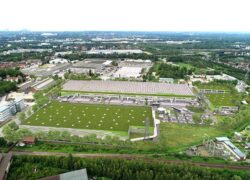
MLP Group has officially commenced construction on MLP Business Park Schalke, a modern and sustainable multi-user business park spanning over 72,000 square meters of rental space. The project, designed to meet the needs of small and medium-sized enterprises (SMEs), is being developed on the site of the former Thyssen wire works in Schalke-Nord, Gelsenkirchen.

MLP Group, a leading developer, owner, and manager of industrial, logistics, and commercial parks, is working in close cooperation with the City of Gelsenkirchen to transform this previously underutilized industrial site into a state-of-the-art business hub. The construction, led by Bremer as the general contractor, marks a significant step in the area’s urban renewal.

The MLP Business Park Schalke aligns with the city’s Integrated Development Concept Schalke-Nord, contributing to the economic and urban revitalization of the district. Covering approximately 120,000 square meters, the business park will feature flexibly divisible rental spaces, modern office facilities, and green areas designed for relaxation and social interaction. Built with sustainability in mind, the project prioritizes resource-efficient construction, ensuring an environmentally friendly and future-oriented industrial space.

Florian Röhrs, Head of Acquisition/Calculation at Bremer, highlighted the project’s significance, stating:
“With MLP Business Park Schalke, we are once again demonstrating our expertise in revitalization projects. This development is not only ecologically sustainable but also promotes social sustainability, integrating well with the surrounding environment. We appreciate MLP Group’s trust and look forward to bringing this project to life.”

The Mayor of Gelsenkirchen, Karin Welge, emphasized the importance of the business park for the city’s economic future. “MLP Business Park Schalke is a transformative project that will significantly impact the economic and urban development of our district. By revitalizing an underutilized industrial site, MLP Group is creating much-needed industrial space and new opportunities for the northern Schalke region. The new business park will strengthen trade and industry in Gelsenkirchen and ensure the long-term sustainability of the area.”

With construction now underway, MLP Group marks a crucial milestone in its mission to revitalize the former industrial site into a modern business hub.

Martin Birkert, Chief Country Officer Germany at MLP Group, expressed his enthusiasm for the development, stating: “Starting construction is a key milestone for MLP Business Park Schalke. We are grateful for the successful collaboration with all partners involved and look forward to progressing the project. This business park will provide SMEs with a future-oriented workspace while contributing to the regional economy in a sustainable way.”

The first warehouse unit, offering approximately 30,000 square meters of rental space, is expected to be completed and operational by the fourth quarter of 2025. As construction progresses, MLP Business Park Schalke is set to become a key industrial and business hub in North Rhine-Westphalia, providing modern, flexible, and sustainable workspaces for the next generation of enterprises.

AFI Europe reaches full occupancy in Prague rental portfolio and expands with new developments

AFI Europe has reached full occupancy across its portfolio of rental apartments in Prague, operating under the AFI Home brand. The company now manages nearly 900 fully leased apartments across three key residential locations: Třebešín, Karlín, and Vysočany. Despite this milestone, AFI Europe is continuing its expansion in the rental housing market, actively constructing and planning new projects to meet the city’s growing demand for quality rental homes.

New Developments Underway

The company is currently developing four new apartment buildings as part of the AFI Home Nová Elektra project, which will add 291 rental flats to its portfolio. Additionally, AFI Europe is making significant progress in the AFI Home V Koryty development, where the first phase will introduce 252 new rental units. Alongside these, further rental housing projects are in the pipeline, reinforcing AFI Europe’s long-term commitment to expanding Prague’s modern rental housing sector.

Meeting Strong Demand for Quality Rental Housing

According to Elena Pisotchi, Rental Housing Manager at AFI Europe, the company’s high occupancy rate, ranging from 94% to 98%, reflects strong demand for high-quality rental homes in Prague. Pisotchi noted that tenants frequently relocate within AFI Home’s portfolio based on life changes such as job relocations or family transitions, emphasizing the flexibility and appeal of professionally managed rental housing. To further enhance adaptability, a small number of apartments are intentionally kept available for short-term rentals, ensuring responsiveness to fluctuating market demand.

Overview of AFI Home’s Existing Portfolio

AFI Home currently operates four rental residences, each designed to provide a high level of comfort, convenience, and accessibility.
• AFI Home Kolbenova in Vysočany is the largest project, comprising 640 apartments across two phases. Located within the emerging AFI City district, the residence offers excellent transport links, including proximity to the Kolbenova metro station, as well as on-site amenities such as an urban park, grocery store, and co-working center.
• AFI Home Karlín, near Křižíkova metro station, is a 171-apartment complex that blends historic architecture with modern extensions, offering easy access to Prague’s city center and a vibrant local scene with shops, services, and cultural activities.
• AFI Home Třebešín, a smaller development in Prague’s Strašnice district, consists of 61 rental units and offers a tranquil residential setting near two city parks, while still maintaining convenient city center access.

Premium Living Standards Across All AFI Home Residences

AFI Europe ensures that all its rental residences meet high-quality standards, featuring modern design, furnished interiors, and thoughtful amenities. Each apartment includes a fully furnished living room, bedroom, and kitchenette, with most units also featuring balconies or loggias. Residents benefit from ample parking, 24-hour reception services, and dedicated property management, ensuring regular maintenance and seamless tenant support.

With Prague’s rental market showing continued demand for well-managed, high-quality living spaces, AFI Europe is positioned as a key player in the city’s expanding rental sector. The company’s ongoing investments in new developments are set to further enrich Prague’s modern rental housing market, solidifying its reputation as a leading provider of premium rental accommodations.

Bratislava’s Office Market: Limited Supply, High Demand, and a Shifting Landscape

Bratislava’s office market entered 2025 with a dynamic yet challenging environment, shaped by limited new supply and sustained demand for high-quality office spaces. Industry reports indicate that the city is experiencing one of its lowest levels of new office supply in years, a trend that began in 2024 and is expected to continue through 2025. Developers remain cautious in launching new projects, largely due to economic uncertainties, changing workplace trends, and regulatory hurdles. As a result, businesses seeking premium office space in Bratislava face tightening availability and rising rents, while older and secondary office spaces struggle to attract tenants.

The slowdown in new office developments has been driven by a combination of economic and market factors. Rising construction costs, stricter environmental regulations, and shifts in corporate workspace preferences have made developers more selective in their projects. While several high-profile office developments were completed in recent years, the pipeline for new projects in 2025 remains thin, contributing to a supply-demand imbalance in the market.

According to property analysts, the current lack of speculative office construction could exacerbate competition for prime office space, especially in the city center and well-connected business districts. Some developers are taking a wait-and-see approach, focusing on pre-leased projects rather than speculative developments, to mitigate financial risks.

Despite limited new supply, demand for premium office spaces remains strong, particularly in A+ grade buildings. Large multinational corporations, financial institutions, and IT firms are driving this demand, prioritizing modern, energy-efficient buildings with top-tier amenities and strong sustainability credentials.

The emphasis on high-quality office space has resulted in lower vacancy rates in premium office buildings, while older office stock, particularly in less central locations, is seeing higher vacancies and downward pressure on rental prices. Companies are willing to pay premium rents for modern workspaces that align with sustainability standards, flexible office layouts, and employee well-being features.

This shift in corporate real estate preferences reflects broader trends in workplace strategies, where businesses seek offices that support hybrid working models, provide collaborative spaces, and enhance employee retention. Demand for green-certified buildings with advanced air filtration, natural lighting, and wellness-oriented designs has increased, as companies place greater emphasis on ESG (Environmental, Social, and Governance) considerations in their leasing decisions.

Looking ahead, Bratislava’s office market is expected to undergo significant transformations as developers and investors adjust to new market realities. With strong corporate demand for premium spaces but limited supply, the market could see an uptick in refurbishment projects aimed at upgrading older office buildings to meet modern workplace standards.

In the absence of major new developments, landlords of secondary office spaces may need to invest in renovations to stay competitive. Office buildings that fail to adapt to evolving tenant expectations risk higher vacancy rates and longer lease negotiation periods.

Market analysts suggest that the office sector in Bratislava remains resilient, but strategic investments and targeted developments will be necessary to maintain growth. With ESG standards becoming increasingly important, future office projects will likely focus on energy efficiency, flexible workspaces, and enhanced digital infrastructure.

As of January 2025, Bratislava’s office market is characterized by limited new supply and strong demand for high-quality office spaces. While this has resulted in higher rents and lower vacancies in premium office buildings, the oversupply of older, secondary office spaces remains a challenge.

Moving forward, the office sector in Bratislava will continue to evolve, with a greater focus on sustainable developments, modern workspace solutions, and adaptive reuse of older buildings. Investors, landlords, and tenants will need to navigate these shifting dynamics, ensuring that Bratislava remains a competitive and attractive business destination in the years ahead.

Downtown Yards: JTRE’s landmark development reshaping Bratislava’s urban landscape

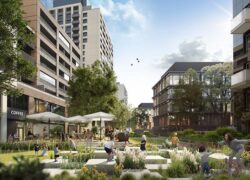
J&T Real Estate’s (JTRE) ambitious Downtown Yards project in Bratislava is progressing steadily, with significant developments since its inception. Located between Košická, Prístavná, Plátenícka, and Mlynské nivy streets, this mixed-use development aims to blend contemporary urban living with sustainable design, drawing inspiration from London’s architectural elegance.

Downtown Yards is set to transform a former industrial brownfield into a vibrant urban district. The project encompasses residential towers ranging from 8 to 27 floors along Košická Street, complemented by lower multi-functional buildings facing the quieter Plátenícka Street. The development will feature 656 residences, diverse office spaces totaling approximately 38,000 square meters, and around 37,000 square meters dedicated to retail and services. A notable highlight is the planned 35-floor office building at the intersection of Košická and Prístavná Streets, which, upon completion, will stand as one of Bratislava’s tallest structures.

Emphasizing sustainability, Downtown Yards will offer over 6,100 square meters of green areas, including revitalized tree avenues and new plantings along major streets. The design incorporates energy-efficient features such as air recuperation systems and rainwater collection, aiming for A0 technical energy certification. In the initial phase, more than 2,000 square meters of green roofs will aid in water retention and reduce solar reflection.

The development is designed to foster a sense of community, featuring open courtyards with both sunny and shaded areas, abundant greenery, and water features. Residents will have access to a Community Hub, offering amenities like a library, screening cinema, and activity areas for various events. Additional facilities include a gym, yoga studio, and a passive-build timber kindergarten, catering to families and individuals seeking a balanced urban lifestyle.

Following extensive site preparation, including the demolition of old structures and land remediation, construction is well underway. The first phase is on track for completion between 2026 and 2027, with residents anticipated to receive their keys within this timeframe. The project’s phased approach ensures that each component integrates seamlessly into Bratislava’s evolving cityscape.

The market has responded positively to Downtown Yards. By May 2024, 20% of the residences were sold during the pre-sale phase, indicating strong demand for high-quality urban living spaces in Bratislava. This enthusiasm reflects the project’s alignment with contemporary housing trends and the city’s growth trajectory. 

In summary, Downtown Yards represents a significant addition to Bratislava’s urban development, offering a harmonious blend of residential, commercial, and recreational spaces. With its focus on sustainability, community, and modern design, the project is poised to become a landmark destination in the city’s expanding downtown area.

Rise in warehouse and production robotisation: A solution to labour shortages?

The increasing robotisation of warehouses and production facilities is transforming the logistics and manufacturing sectors, raising the question of whether automation can solve the ongoing labour shortage crisis. According to the latest World Robotics 2024 report, compiled by the International Federation of Robotics, sales of service robots grew by 30% globally. Forecasts indicate that by the end of 2025, the robotics industry will be worth $239.23 billion worldwide, while in Poland, the market is expected to grow at an annual rate of 5.52% from 2023 to 2027.

A key finding of the report is that 71% of mobile robots are now used in intralogistics, primarily in factories and warehouses, where labour shortages remain a persistent challenge. As automation continues to advance, questions arise over whether robots will soon replace human workers or if they will reshape employment rather than eliminate it.

Automation Reshaping, Not Replacing, Human Jobs

According to Opteamic Group, a provider of process outsourcing and temporary employment services, automation in logistics and production is primarily focused on eliminating physically demanding and repetitive tasks such as order picking, loading, and internal transport. While this could lead to some job reductions, automation is also creating new roles in supervision, support, and process optimisation.

Rather than leading to mass job displacement, robotisation is shifting employment structures, increasing demand for workers skilled in monitoring, managing automated systems, and handling quality control. During seasonal peaks in production and logistics, human labour remains essential in areas where adaptability, decision-making, and rapid responses are crucial.

Jakub Kizielewicz, President of Opteamic Group, highlights the changing employment landscape, stating: “There is an increasing demand for flexible employment. Robots enhance efficiency, but they still require human support, particularly in cases of breakdowns, process reorganisations, or adapting to new market demands. Temporary employment and outsourcing agencies will play a key role in providing personnel to meet the shifting needs of companies.”

The Balance Between Humans and Machines

As automation takes over simpler tasks, the demand for workers capable of overseeing and managing these systems continues to grow. Employees are increasingly expected to be proficient in operating machine interfaces, managing automated transport systems, and ensuring the seamless operation of robotic processes.

Poland, like many European countries, faces declining demographics and growing labour shortages. Automation offers businesses the opportunity to maintain high productivity despite a shrinking workforce. However, flexible employment solutions—such as temporary staffing and outsourcing partnerships—are becoming increasingly important in adapting to new market realities.

Evolution, Not Revolution

While robots can take over repetitive and standardised tasks, the human workforce remains irreplaceable when it comes to ensuring efficiency, flexibility, and problem-solving. Supply chains and production facilities still rely on people to manage unpredictable challenges, respond to market shifts, and support evolving technological processes.

Rather than marking the end of human work, automation represents its evolution. Companies that successfully integrate robotisation alongside a skilled and adaptable workforce will gain a competitive edge in productivity and efficiency. Process outsourcing firms will remain essential partners for manufacturers and logistics operators, ensuring that businesses have access to a skilled workforce tailored to the new era of automation.

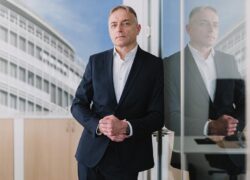
Photo: Jakub Kizielewicz, President of Opteamic Group

Catella APAM secures record rent with major letting at Leeds Valley Park

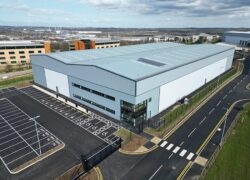
Catella APAM, acting as Asset Manager on behalf of the Greater Manchester Pension Fund (GMPF), has successfully completed the letting of 56,000 square feet at Leeds Valley Park, securing a record-setting rent for the West Yorkshire industrial market. The deal underscores the strong demand for high-quality, well-located logistics space in the region.

Strategically positioned near Junction 7 of the M621 and Junction 44 of the M1, Leeds Valley Park continues to attract leading occupiers looking for modern, high-specification warehouse and manufacturing facilities. The latest lease agreement further cements the estate’s reputation as one of West Yorkshire’s premier industrial hubs.

Adam Handley, Asset Manager at Catella APAM, emphasized the significance of the deal, stating: “Setting a new rental benchmark in West Yorkshire is a testament to the strength of Leeds Valley Park and the wider industrial market. The demand for high-quality, well-located logistics space remains strong, and we are delighted to welcome our latest occupier to the estate.”

The transaction was facilitated by joint agents Carter Towler, Avison Young, and CBRE.

Josh Holmes, Director at Carter Towler, highlighted the growing market demand, saying: “We are delighted to finalize the letting of Unit 1 to a fantastic occupier. Since the start of the new year, we’ve seen a marked increase in enquiries for mid-box space, and with supply being so constrained in the region, it is unlikely that the final two units will remain available for long.”

With this latest deal, only two units remain available at Leeds Valley Park: Unit 3 (43,836 sq ft) and Unit 5 (60,949 sq ft). Both offer well-specified industrial space in a prime West Yorkshire location, reinforcing the estate’s strong appeal to occupiers seeking top-tier logistics and manufacturing facilities.

LATEST NEWS