Second phase of Chalupkova Offices moves forward with permitting process

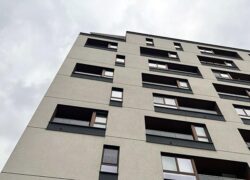
The development of the Chalupkova Offices is progressing as Penta Real Estate has officially entered the permitting process for the second phase of the project. Following the launch of construction for the first phase in late 2023, the company has submitted an Environmental Impact Assessment (EIA) for the next stage to the relevant authorities. Preparatory work on the site is set to commence in the second half of 2025.

Situated at the junction of Chalupkova and Mlynské Nivy streets, the second phase of Chalupkova Offices will maintain the architectural integrity of the first phase. The planned building will stand 11 stories high and connect to its predecessor through a shared “protector” level spanning the third to sixth floors. The expansion will add 15,200 square meters of office space, 700 square meters designated for commercial use, and 240 underground parking spaces. Completion of the second phase is projected for the second quarter of 2028.

Upon full completion, the Chalupkova Offices development will contribute a total of 33,600 square meters of high-end office space, 2,200 square meters of retail and service areas, and more than 650 parking spots to Bratislava’s commercial real estate market.

In line with global sustainability trends, the second phase of Chalupkova Offices is designed to achieve LEED Platinum certification, the highest standard in environmentally conscious building design. The project aims to meet LEED Net Zero criteria, ensuring carbon neutrality in its operations.

“Sustainability, energy efficiency, and reducing carbon footprints are priorities for us, as well as our future tenants. We are committed to offering a high-quality work environment with modern technologies, including real-time carbon dioxide monitoring in office spaces,” said Michal Hranai, Business Development Manager at Penta Real Estate.

The project integrates green areas that will complement existing structures from the first phase and surrounding residential developments, ultimately creating a green intra-block park. A key feature is the inclusion of extensive green terraces, providing private outdoor spaces on the 7th and 8th floors. Additionally, all tenants will have access to a landscaped rooftop with seating areas and barbecue facilities.

“Integrating greenery into the project delivers not only ecological benefits, such as mitigating urban heat islands and enhancing biodiversity, but also improves workplace well-being. Green spaces help reduce noise pollution, filter airborne particles, and provide tenants with relaxing outdoor spaces for informal meetings and scenic views of Bratislava,” Hranai added.

Construction of the first phase of Chalupkova Offices is already in full swing, with excavation completed in autumn 2023 and the foundation slab finalized in early February. The next phase of construction will focus on the three underground floors, designated for parking.

With a total investment of €140 million across both phases, the Chalupkova Offices project is set to revitalize a long-underutilized section of Bratislava’s Old Town, establishing itself as a major hub for modern business and commerce.

Source: TREND

Poland’s Inheritance Boom: How a Generational Wealth Transfer Will Reshape the Real Estate Market

Poland is poised to experience a significant transfer of wealth through inheritance in the coming years, with hundreds of thousands of individuals set to inherit assets, including real estate. This demographic shift is anticipated to influence the country’s property market, potentially affecting housing prices and market dynamics.

The aging Polish population is leading to an increasing number of property inheritances, primarily from individuals who acquired homes in the 1990s and early 2000s. Many of these properties are now being passed down to younger generations, who may choose to sell, rent, or retain them. The decisions made by these inheritors could significantly impact housing supply and demand.

If a substantial number of inherited properties are sold, the market could see an increase in housing availability, especially in urban areas where demand has been high. This influx could lead to a stabilization or even a slight decrease in housing prices in certain regions. Conversely, if inheritors opt to rent out these properties, the rental market may experience increased supply, potentially leading to more competitive rental rates.

However, several factors could mitigate these impacts. The inheritance process in Poland can be prolonged due to legal and bureaucratic procedures, delaying the entry of properties into the market. Additionally, while close relatives are often exempt from inheritance tax, other beneficiaries may face financial obligations that influence their decisions regarding the inherited property. Economic conditions and housing market trends will also play a role, as some inheritors may choose to hold onto properties as a financial safety net rather than selling them immediately.

In summary, while the large-scale transfer of inherited properties is unlikely to cause a dramatic shift in housing prices, it is expected to increase supply, stabilize price growth, and influence buyer and renter behaviors. The Polish real estate market is entering a period of transformation, where generational wealth transfers will play an increasingly important role in shaping future housing trends.

Poland’s Wealthiest Individuals in 2024: Michał Sołowow Tops the List

Poland’s billionaire ranks remain strong in 2024, with Michał Sołowow leading as the country’s wealthiest individual. The owner of Synthos, Barlinek, and Cersanit amassed a fortune exceeding 27.2 billion zloty, solidifying his position at the top of Poland’s financial elite.

Sołowow, a former rally driver turned business mogul, has built his empire primarily in the chemical, wood, and ceramic industries. His company, Synthos, is a global leader in synthetic rubber and chemical production, while Barlinek specializes in engineered wood flooring. Meanwhile, Cersanit, a household name in Poland, remains one of the largest manufacturers of bathroom furnishings in Europe.

Poland’s Business Landscape in 2024

Poland continues to be an attractive environment for entrepreneurship and foreign investment, offering a variety of legal forms for business operations. These include individual business activities (self-employment), civil partnerships, and commercial companies, which are further divided into capital and partnerships. Additionally, foreign entities can establish a branch or a representative office within the country.

As of 2021, foreign ownership in Poland had been confirmed in 1,900 enterprises, though the total number of foreign-operated businesses exceeded 4,000. The Polish business environment has proven resilient, with the number of new enterprises growing steadily each year. By the end of 2021, the country had over 2.61 million active enterprises.

Among the biggest players in the Polish market, Dino Polska, a rapidly expanding retail chain, was the country’s largest company in 2023 in terms of value.

Economic Challenges and Growth

Despite the economic resilience, Polish businesses faced disruptions in recent years, particularly due to the COVID-19 pandemic, which had lasting effects on various industries. In 2020, the country saw 106 business entities declare bankruptcy, with the commercial and industrial sectors experiencing the highest impact. However, the market rebounded in subsequent years, with steady growth in new business formations.

Minimum Wage and Salary Trends in 2024

In 2024, the minimum wage in Poland was set at 4,242 zloty, with an increase to 4,300 zloty scheduled for July. The minimum wage, determined annually by the state, guarantees that legally employed individuals cannot earn below this threshold.

However, average real wages have faced challenges. In 2022, real remuneration dropped by 2.1% compared to the previous year, bringing the average gross salary to 6,346.15 zloty. Inflationary pressures, rising costs of living, and external economic factors have influenced wage dynamics, despite continuous efforts to adjust salaries to economic realities.

A Transforming Wealth and Business Landscape

With figures like Michał Sołowow at the helm, Poland’s economic elite continues to expand, even amid broader challenges in wage growth and enterprise stability. The country’s business landscape remains dynamic and increasingly attractive to investors, both domestic and international. As Poland continues to navigate post-pandemic recovery and economic shifts, the wealth distribution and corporate dominance of major players will remain a key topic in shaping the nation’s financial future.

In 2024, Michał Sołowow maintained his position as the wealthiest individual in Poland, with a net worth of approximately 27.2 billion zloty. His diversified investments span several key industries, including chemicals, ceramics, and wood flooring.

Following Sołowow, Tomasz Biernacki, the founder of the Dino supermarket chain, secured the second spot among Poland’s richest, with assets totaling around 23.62 billion zloty. His significant wealth is attributed to the rapid expansion of the Dino retail network across the country.

In third place is Jerzy Starak, a prominent figure in the pharmaceutical sector, with a fortune estimated at 19.47 billion zloty. Starak’s wealth primarily stems from his ownership of Polpharma, one of Poland’s leading pharmaceutical companies.

The Forbes 2024 list of the 100 richest Poles highlights the dynamic nature of Poland’s economy, showcasing significant growth in sectors such as retail, pharmaceuticals, and manufacturing. This trend underscores the country’s robust economic development and the increasing prominence of Polish entrepreneurs on the global stage.

It’s noteworthy that the combined wealth of Poland’s top billionaires has seen substantial growth, reflecting the nation’s economic resilience and the successful ventures of its leading business figures.

Oil market faces uncertainty amid policy shifts and supply risks

The global oil market remains volatile as crude oil prices continue to fluctuate due to uncertainty in U.S. policies, shifting trade dynamics, and ongoing geopolitical tensions. According to the latest Oil Market Monthly Report, crude oil prices saw consecutive declines in early 2025 but stabilized in recent weeks, trading at levels similar to those seen before the announcement of Russian sanctions.

The report highlights key factors influencing crude oil prices. Market uncertainty stems from potential U.S. tariff policies and discussions of a peace deal between Russia and Ukraine, which could lead to a resumption of Russian crude oil exports. Additionally, higher U.S. inventories, increased Russian crude purchases by Asian buyers before sanctions took effect, and a strong U.S. dollar have contributed to price movements.

Conversely, oil prices received some support from potential new sanctions on Iran and recent attacks on oil facilities in Russia and Ukraine. Global demand is also being affected by trade tensions, as tariff-led trade wars could reduce world GDP by around 1%, according to estimates. However, rising natural gas prices in Europe have reignited discussions about increasing oil use for electricity generation, which could provide some demand support.

The impact of sanctions on Russian and Iranian crude has resulted in a significant increase in the amount of crude oil stored on sanctioned tanker ships. This has escalated costs for refiners, with transportation expenses rising between USD 2 to USD 3 per barrel, while non-sanctioned tanker rates have nearly tripled compared to pre-sanction levels. Reports from Kpler indicate that floating Iranian oil storage reached its highest level in over a year, surpassing 25 million barrels, while Russian crude stored on ships hit a two-month high of 88 million barrels by the end of January 2025.

Changing Trade Patterns: Asia’s Growing Role

Buyers in the crude oil market are adjusting their strategies to comply with sanctions, leading to structural shifts in trade flows. China is expected to increase purchases of U.S. crude oil and LNG to address trade imbalances, while India may compensate for tariff-driven declines elsewhere. Additionally, Asian imports of crude from Angola and Brazil are projected to rise sharply in February 2025.

Oil Price Trends and Forecasts

Crude oil prices reached their lowest levels since the start of the year, hovering around USD 74 per barrel. Bloomberg data showed that the Brent crude prompt spread narrowed to its weakest since November 2024, signaling a weakening market. However, monthly price trends show that crude prices made gains in January 2025, with Brent crude rising 7.5% to USD 79.3 per barrel, marking its biggest monthly growth in 16 months. Similarly, the OPEC reference basket price saw an 8.6% increase, its highest monthly gain in nearly three years.

Looking ahead, forecasts for Brent crude oil prices over the next six quarters suggest a moderate upward revision. Analysts expect prices to stabilize around USD 75 per barrel in Q1 2025, with modest declines to USD 73 per barrel by Q4 2025.

Global Oil Demand and Supply Outlook

The OPEC forecast for 2025 maintains global oil demand growth at 1.4 million barrels per day (mb/d), with total demand expected to average 105.2 mb/d for the year. While OECD Americas demand forecasts were slightly revised downward, stronger-than-expected consumption in OECD Europe and Asia-Pacific helped balance the outlook. In contrast, China’s demand growth projection was lowered, partially offset by higher demand expectations in India and other Asian markets.

On the supply side, global oil supply declined by nearly 1 mb/d in January 2025 due to seasonal factors, production disruptions in Nigeria and Libya, and refinery maintenance in the U.S. The IEA projects global oil supply to rise by 1.6 mb/d in 2025, with non-OPEC countries driving most of the growth. Meanwhile, Russia’s oil output is expected to drop below 9 mb/d, particularly if tanker shortages and refining disruptions persist.

OPEC Production and Market Adjustments

OPEC crude oil production declined for the second consecutive month, averaging 27 mb/d in January 2025. A key factor was the 0.3 mb/d drop in Iraq’s output following a fire at the Rumaila oilfield, one of the country’s largest production sites. Despite the incident being controlled, output restoration remains uncertain. Meanwhile, the OPEC+ alliance reaffirmed its commitment to increasing production in April 2025, though compliance with output cuts remains a challenge for some member states.

A Market in Transition

The oil market remains at a crossroads, influenced by a mix of policy shifts, geopolitical tensions, and supply-demand rebalancing. While prices are stabilizing after early 2025 declines, market participants continue to monitor U.S. policy developments, China’s demand trajectory, and the evolving impact of sanctions on global crude flows. As OPEC+ prepares to adjust production quotas in the coming months, the oil sector faces an uncertain but dynamic year ahead.

Source: Kamco Investment

Slovaks continue to invest in real estate: 23% plan to buy property within five years

Despite changing economic conditions, Slovaks continue to prioritize real estate purchases, with nearly 23% of the population planning to buy an apartment or house within the next five years, according to a survey by IPSOS. Currently, nearly 94% of Slovaks live in their own property, underscoring the nation’s strong homeownership culture.

An analysis by Wood & Company analyst Eva Sadovská highlights key trends in the housing market. The most sought-after properties are apartments, preferred by 10.1% of prospective buyers, followed closely by houses at 9%. Additionally, 2.3% of respondents plan to build their own house, while 1.2% intend to purchase a recreational cottage or holiday home.

The data reveals that more men (24.8%) than women (20.7%) are planning new housing purchases. While both genders show interest in apartments and houses, women exhibit a higher inclination towards new-build properties and house construction.

Interest in purchasing new housing decreases with age. Among young adults aged 18-24, 52.2% intend to buy a property, primarily apartments. A strong demand is also observed in the 25-34 age group, where 48.2% plan to invest in housing, with houses being the preferred choice. Meanwhile, respondents aged 35-44 reported above-average interest, with 27.4% expressing intent to acquire new housing.

Regionally, the highest demand for new properties over the next five years is recorded in Bratislava (39.5%), Banská Bystrica (25.9%), and Trenčín (22%). In Bratislava and Trenčín, apartments are more in demand than houses, while in Banská Bystrica, the preference shifts toward houses.

The survey also examined the primary factors influencing housing decisions. Price remains the most critical criterion, cited by 47.4% of respondents, followed by location (33.3%). Other significant considerations include the amount of personal savings (12.7%), energy efficiency (11.7%), privacy, and access to services (10.3%).

Women placed greater importance on price and location compared to men, while men prioritized parking facilities. Among younger buyers under 24, location was a more influential factor than price, with transport accessibility ranking as a key consideration. For respondents over 66, energy efficiency emerged as the top priority.

The continued high demand for housing, particularly among younger and high-income individuals, suggests a stable real estate market. Those in leadership positions or with higher earnings report increased interest in property investment. These trends indicate a sustained confidence in real estate as a long-term asset, despite broader economic uncertainties.

As the Slovak real estate market evolves, factors such as affordability, regional preferences, and generational shifts will shape future housing trends. Policymakers and developers will need to consider these dynamics to meet the evolving needs of homebuyers.

Source: SITA

Deka’s open-ended real estate funds see strong growth amid market challenges

Saving bank clients continued to invest heavily in Deka’s open-ended real estate funds throughout 2024, resulting in net sales of EUR 350 million. This positive momentum has carried over into the new year, with the first four weeks of 2025 already generating EUR 262 million in net sales, driven largely by reinvestments following distributions. Investors were drawn to the funds’ stability and consistent returns, which ranged between two and three percent, surpassing the industry average.

According to Dr. Matthias Danne, Deka Board of Management member responsible for asset management, investors in 2024 benefited from the conservative management approach, which ensured steady returns. The fund strategy focused on real estate in prime locations while avoiding project development risks, ensuring a high-quality portfolio. Danne expressed confidence that 2025 will see similar strong performance, driven by systematic cash flow management and selective investments.

Deka Immobilien recorded a total transaction volume of EUR 1.7 billion in 2024, with EUR 820 million spent on nine acquisitions and EUR 860 million generated from 22 property sales. Among the key acquisitions, two office properties in Vancouver and Sydney strengthened the fund’s international presence. These purchases reflected Deka’s ability to seize opportunities in core global markets, capitalizing on favorable purchase conditions that contribute to long-term fund stability.

Sales were not liquidity-driven but instead focused on portfolio optimization, with properties that no longer aligned with Deka’s strategy being offloaded. Danne emphasized that the firm will continue to make strategic purchases in 2025, adapting to different market conditions while maintaining strong portfolio performance.

Despite challenging economic conditions, Deka’s real estate assets increased to EUR 51 billion by the end of 2024. Retail funds recorded net sales of EUR 350 million, reinforcing the confidence of private investors. Meanwhile, institutional business saw a net sales decline of EUR 330 million, highlighting a divergence in market sentiment between retail and institutional investors. Total asset management volume for Deka Immobilien reached EUR 55.2 billion by the year’s end.

Deka expects its large, open-ended real estate funds targeting private investors to continue delivering returns between two and three percent in 2025, further strengthening its market position.

Leasing activities remained strong in 2024, with lease agreements generating a net annual rental volume of EUR 400 million. By year-end, the portfolio’s occupancy rate stood at nearly 94 percent, reflecting the resilience of the assets under management. The high occupancy rate has been a key factor in maintaining the stable performance of Deka’s funds, providing investors with consistent returns.

With solid investor demand, strategic acquisitions, and high occupancy levels, Deka Immobilien remains confident in its growth trajectory for 2025. The firm’s focus on quality assets in prime locations, combined with a disciplined investment strategy, positions it well for continued success in an evolving real estate market.

Slovak economy grows by 1.8% in Q4 2024, driven by domestic demand

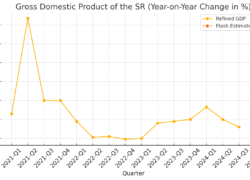
Slovakia’s economy continued its growth trajectory in the final quarter of 2024, recording a 1.8% year-on-year increase in gross domestic product (GDP) at constant prices, according to a flash estimate by the Statistical Office of the Slovak Republic. The growth rate was higher than in the previous quarter, signaling continued economic resilience.

After seasonal adjustments, GDP increased by 1.7% year-on-year and 0.5% compared to Q3 2024. The nominal GDP at current prices reached EUR 33.9 billion, while GDP at constant prices stood at EUR 26.9 billion, reflecting an annual growth of EUR 468.5 million.

For the entire year 2024, Slovakia’s economy expanded by 2% year-on-year.

The primary driver of GDP growth in Q4 2024 was domestic demand, particularly household and public sector consumption. However, economic expansion was partially offset by a decline in investment activity, which slowed the overall performance.

Total employment in Slovakia reached 2.439 million people, marking a 0.2% year-on-year decline. Seasonally adjusted employment figures remained unchanged compared to Q3 2024 but reflected the same 0.2% year-on-year drop.

The Statistical Office of the SR noted that past economic data for 2024, as well as historical GDP figures since 1995, were revised as part of a major benchmark revision conducted on October 18, 2024. The updated figures confirm stronger economic performance than previously reported.

This flash estimate provides an early indication of economic trends, with detailed GDP data for Q4 2024 expected in the upcoming official release.

Source: Statistical Office of the Slovakia

MIPIM 2012 – What are you explcting from MIPIM this year?

Patrick O’Gorman MRICS | Director
CB Richard Ellis EMEA | CEE Capital Markets

MIPIM is the world’s largest business platform for real estate professionals to network, buy, sell, finance and learn.

Whether you are a property developer, consultant, business broker or real estate company, MIPIM and attendance of more than 19,000 real estate professionals from 90 countries including 4,200 investors and representing 6,000+ companies.

Conference discussions on your mobile

Did you miss a conference or need to review the information that was presented? Encompassme will be posting audio files from numerous conference sessions this year on encompassme.com. This includes the discussion panels for Ced-Invest CR, CEDEP, CEDER and CEDEM. Also, our PLP lectures will be made available in audio format. You can download the audio files (and accompanying slide presentations) directly to your digital device that are able to access encompassme. Watch for the notifications.

Conference discussions available in Audio

Did you miss a conference or need to review the information that was presented? Encompassme will be posting audio files from numerous conference sessions this year on encompassme.com. This includes the discussion panels for Ced-Invest CR, CEDEP, CEDER and CEDEM. Also, our PLP lectures will be made available in audio format. You can download the audio files (and accompanying slide presentations) directly to your digital devices that are able to access encompassme. Watch for the notifications.

LATEST NEWS