Germany’s industrial competitiveness under pressure: A call for strategic industrial policy

Germany’s industrial sector is facing mounting pressure due to high production costs, structural inefficiencies, and shifting global economic dynamics. While political parties acknowledge the urgency of the situation, their proposed solutions—ranging from tax relief and investment incentives to electricity cost reductions—fail to address the core challenge: the technological investment trap. To restore competitiveness, Germany must adopt a pan-European, strategic industrial policy that fosters innovation, sustainability, and resilience.

German Industry at a Crossroads

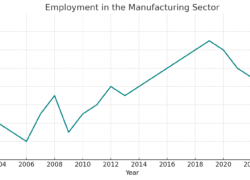
Recent economic indicators paint a grim picture for German industry. Production output has declined, order backlogs are shrinking, and major corporations—including Volkswagen, Miele, BASF, and ZF Friedrichshafen—have announced significant job cuts. Despite these warning signs, official statistics do not yet indicate full-scale deindustrialization. Industrial employment remains above 2010s averages, but below 2019 peak levels.

The current political discourse surrounding industrial policy is focused on short-term cost reductions, particularly in energy prices. Germany’s electricity costs remain 30% higher than pre-Ukraine war levels, leading policymakers to propose grid fee coverage and electricity tax reductions. While such measures may provide temporary relief, they do not address the deeper structural issues preventing long-term industrial growth.

Energy Costs vs. Structural Competitiveness

Energy costs, while significant, are not the primary burden for most German industrial sectors. 87% of manufacturing output comes from industries where energy costs represent only 5% or less of total expenses. By contrast, labor costs account for around 21%, with even higher impacts in some sectors. This suggests that focusing solely on energy cost reductions is insufficient to restore Germany’s competitiveness.

To truly revitalize the industrial sector, Germany needs a forward-thinking, investment-driven strategy. Current policies fail to stimulate breakthrough innovation in areas such as electromobility, hydrogen technology, and semiconductor production. These sectors require systemic investment coordination to overcome market failures and unlock long-term economic potential.

The Role of a European Industrial Strategy

The challenges facing German industry are not just national but global. Decarbonization, supply chain disruptions, and geopolitical shifts necessitate a pan-European response. Germany alone lacks the financial and production capacity to pioneer climate-neutral technologies at scale. A coordinated EU-wide industrial policy is essential to secure the country’s long-term economic resilience.

The U.S. and China have already embraced interventionist industrial policies—the U.S. through tax incentives under the Inflation Reduction Act (IRA), and China through direct subsidies and state-owned enterprises. Europe, however, faces legal and financial constraints that prevent a similar unilateral approach.

One existing European mechanism, Important Projects of Common European Interest (IPCEI), has supported microelectronics, battery cell production, and hydrogen technology. However, for IPCEI initiatives to fully realize their potential, they must be expanded, better funded, and implemented with greater efficiency and transparency.

A Strategic Shift in Industrial Policy

Germany’s industrial policy must go beyond short-term tax relief and cost-cutting measures. A comprehensive, long-term approach should focus on:
• Promoting key technologies such as semiconductors, digital infrastructure, and climate-friendly solutions.
• Enhancing supply chain resilience through diversification, regional production, and strategic stockpiling.
• Encouraging coordinated investment across European partners to avoid market fragmentation.
• Targeting public funding toward innovation-driven projects rather than subsidizing operational costs.

Conclusion: Germany’s Path to a Competitive Future

Germany’s industrial sector is at a critical juncture. While deindustrialization is not yet a reality, failing to implement a strategic, competitive industrial policy could accelerate decline. The current focus on tax breaks and energy cost reductions does little to address structural weaknesses. Instead, Germany must embrace an investment-driven, pan-European approach to remain an industrial leader in the decades ahead.

A stronger, more efficient IPCEI framework, increased EU-wide coordination, and targeted support for breakthrough technologies will be essential to ensure that Germany and Europe stay competitive on the global stage.

Source: DIW Berlin
Crestyl unveils BOKA Pankrác: A modern mixed-use development in Prague

Crestyl has announced BOKA Pankrác, a state-of-the-art mixed-use project set to transform the Pankrác district. The development will integrate premium office space with retail units and a supermarket, replacing two outdated buildings near the Kotorská tram stop, between the Pankrác and Pražského povstání metro stations. Construction is set to begin in Q3 2025, with completion scheduled in two years, representing a CZK 1.5 billion investment.

Crestyl, known for its expertise in multifunctional developments, sees BOKA Pankrác as a project with strong potential despite its relatively compact scale. “This project has all the attributes to serve as a headquarters for a major corporation, offering customized space for over 1,000 employees while also allowing for smaller, adaptable office units, which is uncommon in new developments,” said Lenka Preslová, Commercial Director for Commercial Real Estate at Crestyl. “The shopping arcade will not only enhance the experience for office tenants but also serve the local community with a variety of retail and service options.”

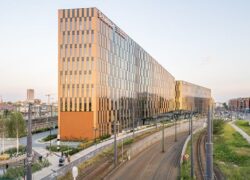
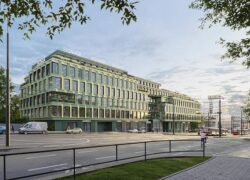
The building’s elongated structure will create two distinct facades. The residential-facing side will feature cascading terraces totaling 1,100 square meters, offering a quiet retreat, while the street-facing side along Na Pankráci will boast an active retail frontage. The ground floor and basement level will house a supermarket and retail units, covering a total area of 3,700 square meters.

BOKA Pankrác will also provide 11,000 square meters of premium office space, featuring a two-story reception foyer with a café designed for collaborative work. Underground parking for cars and bicycles, including fast EV chargers, will ensure convenient access for employees and visitors.

Crestyl is targeting Leed Platinum certification, the highest global standard for sustainable buildings. “The project will use eco-friendly materials, heat recovery systems, and rainwater harvesting, reducing its environmental footprint and lowering operational costs,” said Jaromír Krb, Crestyl’s Development Director. The retention tank will supply water for irrigation and flushing, while alternative energy sources and photovoltaic panels will contribute to efficient heating and cooling.

BOKA Pankrác’s architectural identity is inspired by light and shadow interplay, creating a dynamic façade that changes throughout the day. “The design harmonizes with Na Pankráci Street’s urban character, seamlessly integrating into the neighborhood while maintaining a modern and distinctive identity,” said Jan Juráš, Lead Architect at Perspektiv Studio. The façade will incorporate abundant greenery, improving the microclimate on the terraces and enhancing the building’s overall aesthetic.

The project’s name, BOKA, draws inspiration from Boka Kotorska, a picturesque Adriatic bay known for its historical role as a trade gateway. Similarly, BOKA Pankrác is envisioned as a strategic hub for business, offering diverse workspaces and vibrant retail amenities while ensuring seamless connectivity to Prague’s transportation network.

With its innovative design, sustainability focus, and prime location, BOKA Pankrác is set to become a landmark development in Prague’s evolving commercial real estate market.

Garbe secures long-term lease with vehicle manufacturer in Ludwigsfelde

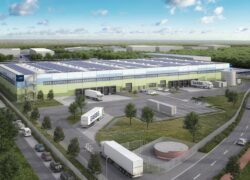
Garbe Industrial Real Estate GmbH has signed a long-term lease with a renowned German vehicle manufacturer for a 12,400-square-meter logistics facility currently under construction in Ludwigsfelde, near Berlin. The site will be used for storing components for production, reinforcing the strategic importance of logistical connectivity in the region.

“We are proud to have secured such a prestigious tenant for our new facility before completion,” said Adrian Zellner, Member of the Executive Board at Garbe Industrial Real Estate. “This successful lease confirms that high-quality logistics properties in prime locations remain in demand, even in a challenging market environment.” The vehicle manufacturer will be the sole tenant of the building.

The new logistics facility, located in Industriepark Ost in Ludwigsfelde (Teltow-Fläming district, Brandenburg), is part of a joint venture portfolio between Garbe Industrial Real Estate and Brookfield, through its real estate solutions strategy. The 24,000-square-meter site sits 10 kilometers south of Berlin, with direct access to the A10 motorway (Berliner Ring) via B101, and is two kilometers from the Birkengrund regional train station, ensuring excellent transport connections.

Constructed by general contractor Fabrikon, the facility includes a 10,500-square-meter warehouse, along with 2,000 square meters of office and social space. Designed for efficient logistics operations, the building features twelve dock levellers, including two jumbo docks, and two ground-level sectional doors for truck loading and unloading. The outdoor area provides parking for ten cars and six trucks.

Committed to sustainable development, Garbe Industrial Real Estate has pre-equipped the facility’s roof for a one-megawatt peak photovoltaic system, contributing to renewable energy generation. The company is targeting Gold Standard certification from the German Sustainable Building Council (DGNB), reinforcing its dedication to environmentally responsible logistics solutions.

The lease was brokered by BNP Paribas Real Estate, while Hamburg-based law firm Trûon Rechtsanwälte provided legal counsel to Garbe Industrial Real Estate.

With this latest lease, Garbe strengthens its position as a key player in the German logistics real estate market, providing high-quality, strategically located facilities that meet the needs of leading industrial and manufacturing tenants.

Czech Housing Fund expands rental portfolio with acquisition in Příbor

The Český Bydlení SICAV Fund, an investor in residential rental housing, has expanded its portfolio with the acquisition of an apartment building in Příbor, located in the Ostrava region. The newly acquired property adds 64 apartments with a total area of approximately 4,500 square meters to the Fund’s holdings. The transaction, valued in the lower hundreds of millions of crowns, has increased the Fund’s total assets to CZK 1.1 billion.

The property was purchased from Heimstaden Czech s.r.o., with Glatzová & Co. serving as the transaction advisor and Bytecheck, s.r.o. providing technical due diligence.

“This year, we are focused on expanding our portfolio. Following recent acquisitions in Beroun and Chomutov, the apartment building in Příbor marks our third investment in the last quarter,” said Jakub Kořínek, co-founder of the Czech Housing Fund. “We see many opportunities in the market and expect to continue strengthening our portfolio.”

Investment in Regional Rental Housing Yields Strong Returns

The Czech Housing Fund has seen strong performance in the regional rental housing sector, achieving an annual appreciation of 11.31% as of November 2024.

The Ostrava region remains a key focus for the Fund due to its stability and attractive yields. “We already own several well-performing properties in the Ostrava region, which is why we continue to prioritize it in our investment strategy,” explained Kořínek. The newly acquired Příbor residential building offers spacious apartments averaging 70 square meters and benefits from its proximity to Ostrava, ensuring excellent access to employment opportunities.

“The region continues to show growing demand, and in a national comparison, it offers attractive rental yields. The property is already 99% occupied by long-term tenants, and we plan gradual modernization to enhance its value further,” Kořínek added.

With this latest acquisition, the Czech Housing Fund reaffirms its commitment to expanding its presence in the Czech rental market, leveraging strategic investments in high-demand regional locations.

Empira Research: Property Markets Show First Signs of Recovery Amid Rising Rental Demand

The Empira Group has released its latest research report, “Economy & Real Estate – Quarterly View 2025 / Q1”, analyzing economic trends and real estate market developments across the DACH region. Despite continued economic uncertainty, property markets are showing early signs of stabilization, with excess demand driving rental growth in key urban areas.

Property Market Stabilization and Rising Rents

While the broader economy remains under pressure, Germany’s residential property market is displaying mixed trends. Frankfurt am Main recorded a 3.2% increase in residential property prices, whereas Düsseldorf saw a 2.9% decline in Q3 2024 compared to the previous year. However, rental prices continue to climb, particularly in Frankfurt (+7.9%), fueled by strong demand and a persistent shortage of new construction.

Investment in residential portfolios has also rebounded, reaching €9.3 billion in 2024, marking a 78% increase from 2023, though still below the long-term average. “The market is adapting. Rising rents and stabilizing prices are opening new opportunities for investors, yet new construction remains a challenge. Growing demand against limited supply will drive rental growth in the coming years,” said Lahcen Knapp, Chairman of the Board of Directors at Empira Group.

Declining Construction Activity Worsens Supply Shortage

Despite the increasing need for housing, new construction activity remains at historically low levels. Germany saw a 22% drop in building permits in 2024, while Austria expects only 24,300 residential completions in 2025, a significant drop from 43,410 in 2023. In Switzerland, vacancy rates have continued to fall, and construction approvals have hit an all-time low.

This supply shortage is intensifying rental market pressures, particularly in high-demand metropolitan areas, where rising rental costs are expected to persist.

Interest Rate Cuts Could Revive Investment Activity

A turnaround in interest rates could serve as a catalyst for renewed market activity. The European Central Bank (ECB) initiated its first rate cuts in late 2024, lowering the key interest rate to 2.75%, with further reductions expected in 2025. The U.S. Federal Reserve also lowered its rate to 4.5%, though future cuts remain uncertain due to new government policies. Meanwhile, Switzerland’s key interest rate now stands at 0.5%, with a stable Swiss franc supporting exports.

Falling financing costs could reignite investor interest in the real estate sector, encouraging institutional capital to re-enter the market.

Investment Outlook: New Opportunities Amid Market Adjustments

Despite ongoing economic volatility, rental markets with high excess demand and real estate debt investments are emerging as attractive opportunities. Investors who adopt a selective investment strategy stand to benefit from the current market adjustment, balancing risk with the potential for strong returns.

“Investors benefit from a market correction that presents both opportunities and challenges. A carefully chosen investment strategy remains crucial to optimizing positioning in this evolving landscape,” Knapp concluded.

With rising rents, low construction levels, and falling interest rates, the property market is poised for a gradual recovery, creating renewed opportunities for institutional investors looking to capitalize on the evolving landscape.

You can download the full study “Empira Group Research: Economy & Real Estate – Quarterly View 2025 / Q1” on the below link:

Zavadilka Wellness Hotel reopens after extensive reconstruction

After two years of intensive work, the construction group HSF System, part of the PURPOSIA Group, has completed the final stage of the reconstruction of the historic Wellness Hotel Zavadilka in Prostřední Bečva. Once a legendary landmark left unused for years, the hotel has now been transformed into a modern wellness retreat with a capacity of 80 beds, offering guests a combination of relaxation, comfort, and high-quality services. The total cost of the reconstruction amounted to approximately CZK 79 million.

The final phase of the extensive renovation began in 2022 and lasted two years. The project involved a complete refurbishment and extension of the existing structure, with only the load-bearing elements of the original building retained. As part of the redevelopment, the hotel now features a wellness centre, a restaurant, and additional infrastructure, including a new boiler room and a wood chip heating system, ensuring an eco-friendly approach to energy consumption.

“Zavadilka has a rich history and a unique character. It was a great honour for us to be part of this project, restoring life and energy to a place cherished by the local community,” said Ilya Nikolov, resort manager at HSF System. “We hope visitors and tourists alike will enjoy their stay at the newly revitalized Zavadilka.”

Preserving History While Embracing Modern Comforts

The original Zavadilka Hotel, built in the early 20th century, was a popular venue for social and cultural events. After being nationalized in 1951, it was repurposed under the socialist economy. Following the 1989 revolution, the property was returned to the family of its original owners. Determined to restore its former glory, the family embarked on an ambitious redevelopment project.

“Zavadilka is a matter of the heart for our family,” said Robert Malina, great-grandson of the hotel’s founder and its new operator. “We have continued the legacy of our ancestors, and we hope that the hotel will become a welcoming and popular destination for relaxation and social events, drawing visitors from across the Czech Republic.”

A Modern Retreat with Premium Amenities

The main building, which once housed a restaurant, hotel accommodations, and a ballroom, has been extensively renovated. The upper floors now offer comfortable rooms and suites, while the ground floor features a modern training and relaxation room, a fully equipped kitchen, and a restaurant serving breakfast. Guests also have access to a dedicated ski and bicycle storage area.

A key addition to the complex is the state-of-the-art wellness area, designed to provide an unparalleled relaxation experience. The facility includes three saunas, changing rooms, relaxation areas with loungers and seating, a cooling pool, and a whirlpool, offering visitors a perfect escape into comfort and tranquillity.

Having officially reopened to the public in mid-February 2025, the Zavadilka Wellness Hotel enters a new era, blending modern luxury with a deep respect for its historical heritage. With its upgraded amenities and renewed charm, the hotel is poised to once again become a favourite retreat for guests seeking relaxation in the heart of the Beskydy Mountains.

Galeria Veneda in Łomża, fully leased as it expands retail and dining offerings

Galeria Veneda in Łomża, managed by EPP, has reached full commercialisation following a series of strategic tenant expansions and renovations. Over the past year, the shopping centre has strengthened its retail mix with the addition of popular brands such as Hebe, Pitbull, and Crazy Bubble. Simultaneously, existing tenants, including HalfPrice and Douglas, have extended their leases, further reinforcing the centre’s position as a key shopping destination in the region. In total, new and renewed lease agreements cover more than 4,000 square metres of retail space.

“As part of our leasing strategy, we focus on collaborating with brands that resonate with our customers while also addressing the business needs of our tenants,” said Adam Kłos, Asset Manager at EPP. “An example of this approach is the expansion of the HalfPrice store, which now occupies nearly 1,900 square metres.”

The centre continues to attract shoppers seeking a diverse retail experience. Hebe, a drugstore known for its extensive selection of professional, Korean, natural, and dermo-cosmetics, has enhanced the beauty and wellness offerings at Galeria Veneda. The newly opened Pitbull store caters to martial arts enthusiasts with a range of clothing and accessories, while Crazy Bubble introduces Taiwanese bubble tea to the shopping centre’s visitors.

Several longstanding tenants have reaffirmed their commitment to the centre. HalfPrice and CCC, both leading brands of the CCC Group, continue to provide a wide selection of fashion, footwear, accessories, and home décor. Douglas and Rossmann remain strong anchors in the beauty and personal care segment, while other tenants such as Grycan café, Plus and Polsat Box, and the Perfection hairdressing salon ensure a well-rounded retail experience for visitors.

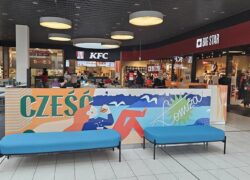
The shopping centre’s food court has also undergone a transformation, adopting a more modern and inviting aesthetic. The redesigned space features new colourful benches, high chairs, and energy-efficient LED lighting, creating a brighter and more contemporary atmosphere. Artist Ola Banaś, known for her work on the FOOD street zone in the Echo Shopping Centre in Kielce, contributed original graphics that now enhance the refreshed interiors.

KFC has also introduced an innovative open-space concept, allowing diners to observe the food preparation process. Interactive kiosks for ordering have been added, improving convenience and streamlining customer service.

With a fully leased retail mix, an upgraded food court, and ongoing enhancements to customer experience, Galeria Veneda continues to solidify its status as a premier shopping destination in Łomża.

Cornerstone extends lease at Cracow’s High5ive complex

Cornerstone OnDemand Inc., has announced its decision to extend its lease at the High5ive office complex in Cracow. The company will continue occupying over 1,500 square meters of space, reinforcing its commitment to maintaining a high-quality work environment for its employees. The lease renegotiation process was facilitated by Walter Herz, which provided comprehensive advisory support.

“We decided to extend our lease because High5ive offers a high standard in every aspect and ensures a comfortable work environment, which is crucial for attracting and motivating our employees,” said Anna Krasińska, Senior Regional Facilities Manager at Cornerstone. “The complex is environmentally friendly and supports user well-being, fostering collaboration and strengthening team connections. Additionally, its central location in Cracow allows for easy commuting and access to a wide range of services.”

Walter Herz played a key role in optimizing the lease terms to align with Cornerstone’s evolving workplace strategy. “Our role was to support Cornerstone in renegotiating the business terms of the contract, including space optimization,” said Kamil Kowalewski, Associate Director at Walter Herz. “Following a market analysis and negotiations with the landlord, we successfully reached an agreement on lease duration and terms. With the shift to a hybrid work model, the company’s space requirements changed, leading to a more efficient use of space and a reduction to a single floor in the building.”

Developed by Skanska, High5ive is a centrally located office complex consisting of five eco-friendly buildings that collectively offer approximately 70,000 square meters of workspace. The complex stands out for its modern architectural design, sustainability features, and a range of amenities tailored to support tenants’ well-being.

Situated near Cracow’s main attractions, High5ive provides tenants with concierge services, green spaces, a public basketball court, and convenient access to shops and restaurants. It also boasts extensive infrastructure for cyclists, including bike racks, charging stations, showers, lockers, and repair stations.

The project’s proximity to prestigious universities and Cracow’s Old Town Market Square offers tenants a rich cultural and recreational experience. Efficient transport connections ensure easy access to other parts of the city, while Kraków Airport in Balice is just a 25-minute drive away.

With this lease extension, Cornerstone reaffirms its commitment to providing a high-quality, sustainable workspace for its employees while benefiting from the advantages of one of Cracow’s premier office locations.

Crime prevention through education, employment, and social policy

While crime rates have been on a long-term decline, regional disparities persist, and the risk of victimization remains unevenly distributed. Crime prevention remains crucial, both for addressing short-term fluctuations in crime and for establishing long-term strategies to reduce criminal behavior. A key aspect of this approach is preventing individuals—especially young people—from entering the criminal justice system in the first place.

The Crime-Age Curve highlights that criminal behavior is most prevalent during adolescence and declines with age. This pattern underscores the importance of policies targeting young people, the group most at risk of offending. Education, labor market conditions, and social policies play a fundamental role in shaping behavior and reducing criminal activity.

Education as a Crime Prevention Tool

Education influences crime prevention through multiple channels. Schools provide structured engagement, keeping young people occupied and reducing idle time that could lead to delinquency. Additionally, higher educational attainment improves job prospects, increasing the opportunity cost of engaging in criminal activities. When individuals perceive that education leads to stable employment and financial security, they are less likely to resort to crime.

Extensive research confirms the protective effect of education. Both the quantity (years spent in school, level of qualification) and quality of education (class sizes, infrastructure investment, teaching staff, and curriculum improvements) significantly reduce the likelihood of criminal behavior. However, educational disparities—particularly those tied to socioeconomic background—can entrench inequalities in crime rates, both for offenders and victims. A policy focus on equal opportunities in education is therefore essential for effective long-term crime prevention. The cooperation of federal and state governments will be necessary in the coming years to prioritize investments in education that foster social mobility and economic stability.

The Role of the Labor Market

Employment opportunities are another key determinant of crime rates. A well-functioning labor market not only raises the opportunity cost of crime but also provides financial security, reducing incentives for illegal activities. Research indicates a direct link between youth unemployment and crime, with poor labor market conditions leading to higher criminal activity. Furthermore, individuals who enter the workforce during economic downturns face long-term employment instability, which can contribute to elevated crime rates even years later.

Ensuring strong labor market prospects for young people should be a policy priority. A mismatch between employer needs and available skills remains a challenge, highlighting the need for targeted interventions. Internationally successful programs, such as Summer Jobs Programs, have demonstrated the benefits of providing structured employment opportunities to disadvantaged youth, improving their economic prospects and reducing criminal tendencies.

Labor market integration also plays a role in migration and crime. Studies show that migration itself has little to no causal effect on crime rates; however, lack of access to employment can increase the risk of criminal activity. Successful labor market integration mitigates these risks, reinforcing the importance of policies that prioritize workforce participation over restrictive immigration measures.

Social Policies and Crime Prevention

Social policies can also be a powerful tool in crime prevention, particularly when they alleviate financial pressure while encouraging workforce participation. The structure of social benefits—beyond just their existence or amount—has been shown to influence crime rates. For example, studies suggest that distributing social assistance in smaller, more frequent payments rather than one-off monthly transfers can reduce crime by improving financial stability throughout the month.

Active labor market policies that combine social assistance with employment incentives have been effective in reducing youth crime in certain countries, though results vary. As the government considers reforms to social welfare programs, such as citizen benefits, it should integrate findings from international research to ensure that policies not only provide financial support but also promote long-term economic independence and crime prevention.

A Comprehensive Approach to Crime Prevention

Addressing crime effectively requires a holistic approach that extends beyond law enforcement. Education, employment opportunities, and social policies shape the structural conditions that influence criminal behavior. A federal strategy that prioritizes investments in education, facilitates youth employment, and designs social benefits to support economic stability will be key to reducing crime in a sustainable manner. By focusing on these long-term preventive measures, policymakers can create safer communities while fostering social and economic inclusion.

Source: DIW Berlin

Czech industrial real estate market set for significant growth in 2025

The Czech industrial and logistics real estate market is poised for substantial growth in 2025, with nearly 900,000 square metres of new space expected to be completed. This marks a notable shift following a sluggish 2024, when supply remained constrained and demand showed gradual recovery.

According to the latest quarterly survey from Colliers, the fourth quarter of 2024 saw limited new project completions, with only 106,700 square metres of new space delivered—the lowest figure in three years. For the full year, total new supply reached 517,900 square metres, representing a 45% decline compared to 2023. Despite this slowdown, total industrial space on the Czech market grew by 4.6% year-on-year, reaching 12.28 million square metres.

Looking ahead, 2025 presents a much more positive outlook, with 870,300 square metres of new space scheduled for completion. Additionally, a further 384,700 square metres are in the shell & core stage, potentially becoming available within the next three to six months. “Although the volume of completed space has remained below the long-term average, new construction and development plans have been on the rise for over a year,” said Josef Stanko, Director of Market Research at Colliers. He noted that there are currently 2.7 million square metres of projects that have completed permitting, with an additional 3.2 million square metres in various stages of approval. The total potential planned area stands at approximately 5.9 million square metres.

Vacancy Rate Rises, True Market Availability Higher

The vacancy rate in the Czech industrial market edged up slightly in Q4 2024, increasing by three basis points to 3.13%—its highest level since late 2020. However, sublease activity and shell & core projects waiting for lease agreements suggest that the real vacancy rate may be above 6%, aligning it more closely with trends in other Central European markets, where Poland’s rate is around 8-9% and Slovakia’s stands at roughly 5%.

“Throughout the year, sublease activity contributed to the vacancy rate increase. If we account for the approximately 3% vacancy ‘hidden’ in shell & core spaces, the actual availability of space in the Czech market is significantly higher than official figures suggest,” explained Stanko.

Demand Shows Signs of Recovery

Despite a year of weak demand, optimism is building. In Q4 2024, gross realized demand reached 438,400 square metres, bringing the annual total to nearly 1.45 million square metres. While this was the lowest level since 2018 and 20% below the five-year average, net demand remained strong, accounting for 61.3% of the total volume—consistent with the long-term trend.

Among the largest Q4 transactions, the biggest deal was a pre-lease agreement for a 52,000-square-metre facility at CTPark Brno by electronics manufacturer Hitachi Energy Czech Republic. Other major deals included a 21,300-square-metre lease renegotiation at Prologis Plzeň II by consumer goods company VAFO and a 21,100-square-metre renegotiation at Prologis Park Prague Airport with an undisclosed distribution firm.

Rents Remain Stable, Tenants Gain Bargaining Power

Industrial rents in the Czech market have remained stable, with prime rents holding steady at €7.00–€7.50 per square metre per month for three consecutive quarters. However, landlords are increasingly offering more attractive incentives to tenants as they gain greater negotiating power. Office rental rates range between €9.50 and €12.50 per square metre, while service charges typically fall between €0.75 and €1.00 per square metre.

Market Sentiment Improves Despite Economic Uncertainty

While the challenges of the past year have not fully subsided, there is growing confidence in the Czech industrial real estate sector. “Despite economic uncertainty, the market continues to demonstrate resilience,” said Stanko. He noted that infrastructure investments are expected to alleviate logistical bottlenecks, while strong commitments from major manufacturers underline the sector’s stability.

Although competition from neighboring countries is reshaping market dynamics, sentiment is improving after a period of pessimism. With nearly 900,000 square metres of new space set to enter the market in 2025, the Czech industrial real estate sector appears well-positioned for a year of renewed expansion.

Source: Colliers Czech Republic

LATEST NEWS