EU housing costs surge: Rents up 19%, house prices climb 47% amid growing affordability crisis

Between 2010 and the third quarter of 2024, house prices in the European Union (EU) surged by 54.1%, while rents increased by 26.0%, according to Eurostat data. This significant rise in housing costs has outpaced both wage growth and inflation, intensifying affordability challenges across the bloc.

The housing crisis is particularly pronounced in countries like Spain, where rents have escalated by 80% over the past decade, compelling nearly half of the tenants to allocate 40% of their income to housing expenses. In response, the Spanish government has proposed a 12-point plan aimed at constructing affordable social housing, implementing rent caps, and imposing taxes on non-EU property buyers. However, these measures face political opposition and skepticism regarding their potential effectiveness.

Germany’s housing market is also under pressure, with house prices projected to climb by 3.5% in 2025. This increase is driven by strong demand and anticipated interest rate cuts by the European Central Bank. Nevertheless, rising construction costs and economic uncertainties pose risks to this forecast.

In Ireland, the housing shortage is acute, necessitating the construction of 93,000 homes annually until 2031, significantly surpassing the government’s target of 60,000 per year. Proposed solutions include reclaiming land for new developments and adjusting tax policies to encourage the construction of smaller dwellings.

The European Parliament has established a new committee to address the escalating housing crisis, acknowledging that average house prices have risen by 48% across the EU in less than a decade. This committee aims to explore comprehensive strategies beyond merely increasing housing supply, focusing on ensuring affordable and quality housing for all citizens.

Overall, the rapid escalation of housing costs in the EU underscores the urgent need for multifaceted policy interventions to enhance housing affordability and accessibility for all residents.

Eurofound Survey: Decline in life satisfaction and optimism across the EU

A new Eurofound survey has revealed a decline in life satisfaction and optimism across the European Union, with respondents in 2024 reporting lower expectations for the future compared to previous years. Findings from the Living and Working in the EU e-survey indicate a steady decline in optimism across all age groups since 2020, with the most significant drop among respondents aged 35–49 and 50–64. Younger participants, while the most optimistic, also reported a decline, with only 47% expressing confidence about the future—four percentage points lower than in 2023. The 50–64 age group recorded the lowest level of optimism at 24%.

The Quality of Life in the EU 2024 factsheet presents initial findings from the Eurofound survey, conducted online in spring 2024. The study captures Europeans’ current outlook and concerns in a post-pandemic environment, focusing on key challenges such as the rising cost of living, healthcare access, mental health, work-life balance, and telework opportunities.

The decline in optimism was found to be greater among women than men and was more pronounced in low-income households, widening the disparity in outlook between the wealthiest and poorest respondents. The optimism gap has expanded from 18 percentage points in 2020 to 29 points in 2024.

At the national level, the lowest levels of optimism were recorded in Greece and Italy, where only 20% of respondents expressed a positive outlook. In contrast, Ireland (49%) and Denmark (48%) had the highest levels of reported optimism.

Alongside declining optimism, life satisfaction also fell between 2023 and 2024, returning to levels observed in spring 2021. After rising between 2021 and 2023, satisfaction levels declined, particularly among respondents aged 35–49 and 50–64. In contrast, those aged 65 and older reported the highest life satisfaction scores, continuing an upward trend in 2024.

Commenting on the findings, Daphne Ahrendt, Eurofound Senior Research Manager, highlighted the widespread sense of uncertainty across Europe. “Life satisfaction and optimism are influenced by various factors, including income, employment, education, and disability status. However, these results, combined with an overall decline in mental well-being, particularly among younger groups, indicate a broader sense of malaise and a lack of hope for the future across the region.”

Obermeyer Helika advances conveyor bridge and warehouse project for Škoda Auto in Mladá Boleslav

Obermeyer Helika is overseeing the design and construction of fully automated conveyor bridges and a high-rise warehouse for car body transport and storage at the Škoda Auto production site in Mladá Boleslav. The project presents significant technological and logistical challenges, with the first phase involving the launch of the automated high-rise warehouse (HRL). The planning and construction documentation began in 2023.

The company is responsible for a range of tasks, including conducting comprehensive survey work using digital 3D scanning technology, preparing documentation for planning and construction approvals, and obtaining necessary permits. It is also managing construction scheduling, documentation updates, and author supervision during project execution.

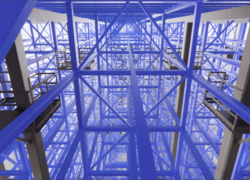
The conveyor bridge network spans approximately 1.2 km across the Mladá Boleslav automotive plant, passing through existing facilities, over rooftops, and across exterior areas. The project also includes a high-rise warehouse with a capacity for 900 car bodies, designed to support a planned new paint shop.

According to Ing. Tomáš Zelenka, senior project engineer at Obermeyer Helika, the project integrates the conveyor bridges into existing site infrastructure while addressing utility relocations and road improvements. He emphasized the system’s automation and efficiency in managing car body transport within production processes.

The project represents a major contract for Obermeyer Helika, reaffirming its expertise in industrial facility design. Collaboration with Škoda Auto and the use of advanced technologies have enabled the project team to meet targets and deadlines effectively. A team of specialists is managing the project’s technical and organizational aspects to ensure seamless execution and coordination with stakeholders.

Project Manager and Deputy Director of the Architecture and Civil Engineering Division, Ing. Jan Korbut, MBA, highlighted the complexity and strategic importance of the project. He noted that collaboration with the automotive sector, known for its technological innovation, has required continuous planning and adaptation to meet client requirements.

The introduction of automated conveyor bridges and a high-rise body storage facility at Škoda Auto Mladá Boleslav is expected to enhance production efficiency and competitiveness at the automotive plant.

Mortgage payments and rents converging in the Czech Republic, but renting remains cheaper

The gap between mortgage payments and rents in the Czech Republic has narrowed in recent months, making rental housing a more viable financial option. In some regions with lower housing demand, taking out a mortgage has become increasingly cost-effective. Experts note that homeownership offers long-term security and wealth accumulation, particularly for retirement, whereas renting provides greater flexibility.

According to data from Banky.cz and Hyponamíru.cz, in 2020, the average monthly mortgage payment in the Czech Republic was CZK 10,567, compared to CZK 12,817 for rent. The biggest discrepancy between renting and mortgage payments occurred in August 2022, when the monthly cost of a mortgage for an average 52.6 square meter apartment exceeded rent by more than CZK 10,000.

Recent figures indicate a shift in affordability. In the Ústí Region, mortgage payments are now CZK 1,494 lower than rent. In the Central Bohemian and Moravian-Silesian Regions, rents remain CZK 2,000 cheaper than mortgages. However, in high-demand areas like the South Moravian Region, homeownership remains significantly more expensive. A 60 square meter apartment in this region costs approximately CZK 4.72 million. With 20% savings of CZK 944,484 and a mortgage of CZK 3.78 million, the monthly installment reaches CZK 21,603, compared to a rental price of CZK 15,300 per month.

Interest rates have declined by 1.2 percentage points over the past two years, currently standing at 4.78%, with further reductions expected. House price growth has slowed, bringing the housing market closer to equilibrium. However, rental prices continue to rise, increasing six to seven percent annually, a trend that is expected to accelerate in 2025, according to Miroslav Majer, Executive Director of Hyponamíru.cz.

Despite these trends, Jakub Vysocký, President of the Association of Rental Housing (ANB) and owner of SIAN, disagrees that mortgages have become more attractive than renting. He notes that the average mortgage payment rose six percent year-on-year in the third quarter of 2024. By the end of 2025, mortgage interest rates are projected to be around four percent, while housing prices are expected to rise by at least ten percent.

According to the Swiss Life Hypoindex, the average mortgage rate declined slightly in early February 2025, dropping by 0.02 percentage points to 5.11%, the lowest level since spring 2022. At this rate, the monthly payment for a CZK 3.5 million mortgage (covering 80% of a property’s value) with a 25-year maturity is CZK 20,692, approximately CZK 1,000 less year-on-year.

An analysis by UlovDomov.cz revealed that rental prices increased by seven percent year-on-year, averaging CZK 16,473 per month in the fourth quarter of 2024. While the costs of homeownership and renting continue to converge, the financial advantages of each option remain dependent on location, market conditions, and individual preferences.

Source: CTK

Renewable energy production in Czech Republic increases by 11.5% in 2024

Renewable energy sources (RES) in the Czech Republic produced 9.3 gigawatt hours (GWh) of electricity in 2024, marking an 11.5% increase compared to the previous year. Most of this energy was generated by photovoltaic power plants, which saw the most significant growth among renewable sources. Despite this increase, industry representatives indicate that the overall development of renewable energy remains slow, with solar energy being the only sector showing substantial progress, while others remain stagnant. According to data from the Chamber of Renewable Energy Sources, renewables now account for 16.5% of total electricity consumption. The Czech government aims to raise this share to 30% by 2030.

The expansion of renewable energy is primarily driven by new photovoltaic installations, which contributed nearly 3.6 GWh to the national grid in 2024, reflecting a 24% year-on-year increase. According to Štěpán Chalupa, Chairman of the Chamber of Renewable Energy, a significant portion of new solar capacity consists of self-consumption and local installations, typically constructed on rooftops. This decentralized model is beneficial for both system owners and grid stability.

Other renewable sources also showed varying trends. Hydropower production increased by 12.4% year-on-year, reaching 2.65 GWh, primarily due to higher rainfall. Wind power generation experienced a slight increase of 0.5%, totaling 705 MWh. Meanwhile, biogas plant production declined by 1.4% to 2.38 GWh. Chalupa noted that the stagnation in wind, hydro, and biogas energy is concerning, as biogas could serve as an essential alternative to imported natural gas and provide electricity during periods of low wind and solar output. He highlighted the potential for more than 1,200 additional wind power plants across the country, which, if realized, could cover nearly one-third of the Czech Republic’s annual electricity consumption. Encouragingly, municipal and regional interest in wind energy projects has been increasing.

Looking ahead, the Czech government envisions renewable energy as a key component of the national energy mix, complementing nuclear power. At the end of 2024, the government approved a climate-energy plan, outlining a strategy to increase the share of renewables in total energy consumption to more than 30% in the coming years.

Source: CTK

PPF Group acquires Hilton Prague, the largest hotel in the Czech Republic

PPF Group, owned by Renáta Kellnerová and her family, has completed the acquisition of Quinn Hotels Praha, the owner of Hilton Prague, the largest hotel in the Czech Republic. The transaction, facilitated by CBRE, represents the largest single hotel property sale in Central and Eastern Europe. Although the purchase price was not disclosed, previous estimates by Hospodářské noviny suggest the deal was worth several billion Czech crowns.

“There are few hotels in Europe as well-equipped to serve the needs of today’s global congress tourism market as Hilton Prague. Investor interest was high throughout the selection process, as we anticipated last July,” said Kenneth Hatton, head of CBRE’s European Hotels Division.

Since 2018, Hilton Prague has received over €50 million (approximately 1.3 billion CZK) in investments aimed at modernization, according to CBRE. The Czech Office for the Protection of Competition approved the sale in late January. Originally built as the Atrium Hotel, the property was completed in 1991 by Čedok in collaboration with French company CBC Paris. The hotel spans 11 floors and features 791 rooms, having hosted numerous dignitaries, including U.S. Presidents Bill Clinton, George Bush, and Barack Obama, along with various film and music celebrities. The congress center within the hotel offers approximately 5,000 square meters of conference space.

Quinn Hotels Praha is owned by Irish investors, with its sole shareholder being Quinn Group Luxembourg Hotels, according to its 2023 annual report. The company reported a net turnover of 1.3 billion CZK in the previous financial year but ended 2023 with a loss of 160 million CZK, compared to a 239 million CZK profit in 2022. The company’s valuation, based on an independent CBRE assessment, stood at €250.4 million (over six billion CZK) as of December 2022.

PPF Group has confirmed that PPF Real Estate facilitated the acquisition of Quinn Hotels Praha. Reports indicate that PPF Group and billionaire Michal Strnad have formed a joint venture for real estate investments. Since December 19, 2023, Majestic Hospitality has been registered in the Commercial Register, with PPF Real Estate holding 70% and Strnad’s Industry SPV owning 30%. This partnership was established shortly after PPF announced the agreement to acquire Quinn Hotels Praha.

Czech pension system reports deficit of CZK 50.7 billion in 2024, marking year-on-year improvement

The Czech pension insurance system recorded a deficit of CZK 50.7 billion in 2024, representing an improvement of CZK 22.1 billion compared to the previous year. This reduction marks the first time in years that revenue from contributions has grown faster than pension expenditures and administrative costs. Total revenues amounted to CZK 716.5 billion, reflecting a CZK 24.1 billion increase from the previous year. Contributions from employees, employers, and certain self-employed individuals totaled CZK 665.8 billion, an increase of CZK 46.2 billion over 2023, according to data released by the Ministry of Finance.

Despite the improvement, the system remains in deficit. In January 2025 alone, the pension fund showed a negative balance of CZK 5.3 billion, although this shortfall was smaller than those recorded in the past two years. At the end of 2024, the Czech Social Security Administration (CSSA) distributed 2.37 million old-age pensions, 415,600 disability pensions, and 65,300 survivor pensions. The average old-age pension stood at CZK 20,680, while pension schemes managed by the Ministries of Defense, Interior, and Justice provided higher benefits to tens of thousands of beneficiaries.

Total pension expenditures reached nearly CZK 710 billion in 2024, a year-on-year increase of CZK 24.7 billion. Administrative costs amounted to CZK 6.5 billion, down from CZK 7 billion in the previous year. Overall spending increased by 3.5%, while revenue from pension contributions rose by 7.5%, amounting to CZK 665.8 billion. Historically, pension expenditures have outpaced revenue growth, but in 2024, the trend reversed due to economic recovery, high employment, wage increases, and government-led adjustments to pension policies. The opposition ANO movement opposed these reforms and filed a complaint with the Constitutional Court, which was ultimately dismissed.

As of January 2025, pensions increased by an average of CZK 358, bringing the average old-age pension to CZK 20,680. Pension system expenditures for January amounted to CZK 62.2 billion, CZK 1.2 billion higher than in the same month the previous year. Revenue also rose, surpassing CZK 57.4 billion, an increase of CZK 4 billion year-on-year.

The government aims to curb further pension system deficits through a pension reform enacted in 2025. The reform introduces slower pension growth rates, a gradual reduction in new pension calculations, and the establishment of a minimum pension floor equivalent to 20% of the average wage, ensuring that pension benefits do not fall below a certain threshold.

The 2024 pension deficit was the fourth highest since 2000 in nominal terms. The record deficit of CZK 72.8 billion was recorded in 2023, followed by deficits of approximately CZK 55 billion in 2012 and 2013. However, during those years, total expenditures and contribution revenues were significantly lower, making the deficit equivalent to 16% of revenue in 2012, 11% in 2023, and 7.6% in 2024.

Source: CTK

The Shire Beyond Coworking expands to Unity Tower in Cracow

The Shire Beyond Coworking, a growing provider of premium serviced office space, has leased 1,800 square meters in Unity Tower, a key component of the Unity Centre complex in Cracow. The newly leased space spans the 22nd, 23rd, and 24th floors, marking the highest office levels in the building. The transaction was facilitated with advisory support from Walter Herz representing the tenant and JLL representing the landlord, a company controlled by UNIQA Real Estate with GD&K as a local partner.

The Shire Beyond Coworking operates in multiple locations across Poland, including Warsaw Spire, Malachowski Square, and Wilanów Office Park. The brand is also expanding its presence in Cracow and Wroclaw, with additional premium spaces set to open in a modernized building on Poznańska Street in Warsaw this March. The company’s flexible office spaces are known for high-quality services, offering tenants access to IT, HR, recruitment, legal, and marketing solutions, as well as networking opportunities through business events.

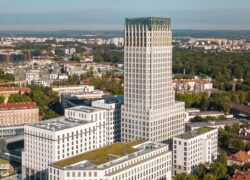
Unity Centre is one of Cracow’s major mixed-use business hubs, located on Lubomirskiego Street. It consists of five buildings, including Unity Tower, a 102.5-meter Class AA office building, two additional office structures, a four-star Radisson RED Hotel, a luxury apartment building, and an array of retail and dining options. The development offers 50,000 square meters of space, with Unity Tower alone comprising 17,000 square meters dedicated to office and retail use. The complex also features Unity Square, a green public space designed for meetings and cultural events. The environmentally friendly project has received LEED certification for its sustainability efforts.

According to Pavel Novák, Managing Partner at The Shire Beyond Coworking, Unity Tower was selected due to its prime location and high visibility in Cracow’s competitive office market. The top floors provide panoramic city views, making it a strategic choice for businesses looking for premium serviced office space. Oskar Odziemczyk, also Managing Partner at The Shire Beyond Coworking, emphasized that the transaction allows the company to create prestigious flexible office spaces that will attract both domestic entrepreneurs and international firms seeking modern, well-designed work environments.

The leasing process required extensive negotiations to meet both parties’ requirements. Mateusz Strzelecki, Partner and Head of Tenant Representation at Walter Herz, stated that securing this deal involved complex preparations to ensure optimal conditions. He noted that the expansion of The Shire Beyond Coworking into Unity Tower will enhance the range of high-end office options available in Cracow.

The location of Unity Tower in central Cracow, near Mogilskie Roundabout, the city’s largest transport hub, further adds to its appeal. Agnieszka Majka-Pietruszka, New Clients Director at JLL, highlighted that this will be Cracow’s tallest coworking space, offering access to conference facilities, hotels, and restaurants within the Unity Centre. Włodzimierz Jędruszak, Leasing and Marketing Director at GD&K Consulting, stated that securing this contract represents a significant milestone for Unity Tower, reinforcing its position as a symbol of modernity and success in Cracow’s commercial landscape.

Prague’s office market faces supply shortage amid record demand

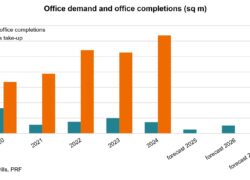
The demand for office space in Prague reached an unprecedented level in 2024, with companies seeking a total of 637,000 square meters. However, only 24,600 square meters of new office space is expected to be delivered in 2025, exacerbating the existing supply shortage. Analysis by Savills indicates that office development in Prague has been in steady decline since 2021, with just 72,800 square meters of office space completed in 2024. This ongoing reduction in supply has created a significant imbalance in the market.

Before 2020, annual office development in Prague averaged 150,000 square meters, but has since declined by more than 50%. Currently, around 164,000 square meters of office space is under construction across the city, but much of this has already been secured. Approximately 60% of the new space is pre-leased, with an additional 25% reserved, leaving less than 15% available for new tenants. The most pronounced shortages are in prime locations, including Prague’s city center and Karlín, where modern office occupancy rates exceed 95%, according to Pavel Novák, Head of Office Agency at Savills.

Larger office projects are not expected to enter the Prague market before 2027 to 2029. Novák notes that while several projects are in advanced planning stages, no substantial increase in supply is anticipated over the next two to three years. Companies planning future expansions have the opportunity to assess these upcoming projects now, securing key details and gaining early access to available spaces. Additionally, extensive experience among local developers, architects, and construction firms will likely contribute to the quality of these new office developments.

One of the primary reasons for the decline in new office construction is the lengthy and complex permitting process in the Czech Republic. In some cases, project approvals can take ten years or longer, during which time costs continue to rise. Increased expenses for labor, materials, and energy further contribute to higher development costs. Although interest rates have declined, they remain elevated compared to previous levels, adding to financial pressures. These cost increases translate into higher rental prices, which must align with market expectations to ensure project viability. Prague’s competitiveness is also affected by faster approval processes in neighboring Central European countries such as Poland.

The persistent demand for premium office space in the city center, combined with construction cost increases, has led to further rental price growth. By the end of 2024, headline rents for modern office spaces in central Prague ranged from €28.50 to €29.50 per square meter per month, reflecting a 7% year-on-year increase. In other districts of Prague, headline rents have risen by an average of 4% over the past year, reaching €18.50 to €19.50 per square meter per month.

The market is also experiencing the effects of deferred demand, where companies unable to secure office spaces with required specifications choose to extend their existing leases instead. This delay in decision-making could lead to additional market pressure once new office spaces become available, further shaping the office sector in the coming years, according to Novák. The Prague office market is now at a critical juncture, with demand continuing to outstrip supply and development constraints limiting future expansion.

Source: Savills Czech Republic

Future Mind Study: Generative AI usage and public perception in Poland

A recent study by Future Mind reveals that generative artificial intelligence (GenAI) is increasingly becoming part of everyday life in Poland. According to the report titled How Does AI Change the Everyday Life of Poles? Artificial Intelligence in Work and Personal Life, 7% of Poles use GenAI daily, while 17% interact with such tools at least once a week. Every fourth respondent reported using GenAI at least once a month or less.

The study highlights that GenAI applications extend beyond the professional sphere, assisting individuals in developing personal interests, managing daily responsibilities, and organizing leisure activities. Respondents envision AI playing an even greater role in the future, with 44% believing it will aid in knowledge expansion and skill development, 30% anticipating its role as a personal assistant, and 14% seeing AI as a potential co-worker. Additionally, 12% of respondents suggested that AI could take on the role of a therapist, reflecting a growing acceptance of its application in mental well-being support.

Jakub Nawrocki, lead UX researcher at Future Mind, noted that generative AI has established a strong presence in the lives of younger users, particularly those aged 20 to 34. Among this demographic, 55% reported using GenAI to some extent, ranging from daily to sporadic interactions. The percentage decreases with age, with 45% usage among respondents aged 35 to 49 and 37% among those aged 50 to 65. This trend indicates that familiarity with innovative technologies significantly influences adoption rates across different age groups.

Despite the benefits associated with GenAI, concerns remain regarding its potential risks. Privacy violations were identified as the most significant concern by 44% of respondents. Additionally, 43% pointed to the risks of disinformation and manipulation, 37% expressed fears about the development of advanced weaponry, and 34% cited surveillance by AI algorithms as a major issue. Beyond these global-scale concerns, respondents also highlighted potential societal consequences, such as the dehumanization of interpersonal relationships (35%) and the reduction of critical thinking skills (25%). Nawrocki emphasized that while AI presents vast innovative potential, careful regulation is essential. According to the study, 50% of participants support stricter legal standards for AI development and implementation.

The introduction of the Artificial Intelligence Act, which came into force on 1 August 2024, represents the world’s first regulatory framework specifically addressing AI governance. The legislation is based on a risk assessment approach, requiring compliance measures proportional to the level of potential threats posed to citizens, societies, and economies. However, debates surrounding AI regulation persist, particularly regarding the extent of governmental oversight. The study found that 48% of respondents believe AI should be more strictly regulated by public institutions such as national governments or the European Union, while 28% consider the current regulatory framework sufficient. In contrast, 10% of respondents believe that AI should be subject to fewer legal restrictions. This division of opinion underscores the necessity for a balanced approach to regulation that aligns with both public concerns and technological progress.

The study was conducted by SW Research on behalf of Future Mind using computer-assisted web interviewing (CAWI). The data was collected from an online panel between 25 October and 5 November 2024, with a sample size of 1,020 respondents. These findings provide valuable insights into how AI is reshaping daily life in Poland while highlighting the ongoing discourse on its ethical, societal, and regulatory implications.

Source: Future Mind and ISBnews

LATEST NEWS