Galeria Amber reaches full occupancy and adds new tenants

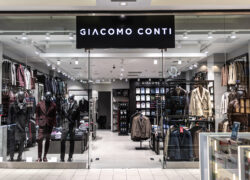
Galeria Amber in Kalisz has reached 100% occupancy, according to centre manager EPP. The shopping centre has recently secured several new tenants, including the first Starbucks café in Kalisz and a compact-format concept from furniture retailer Agata Meble, which will be the chain’s first such store in the region. Other new leases include Worldbox, Giacomo Conti and Alpine Pro.

Alongside new brands, the centre has also extended lease agreements with existing tenants. Since September 2024, 25 renewal agreements have been signed, covering more than 5,900 sqm of space. Some existing stores have expanded or relocated within the centre, including Greenpoint and Top Secret following refurbishment, and Diverse, which will increase its store size by 100 sqm.

EPP stated that the leasing progress reflects demand for retail space in the centre and ongoing cooperation with long-term tenants.

HIH Invest Secures Newly Completed Logistics Facility in Bensheim for Institutional Mandate

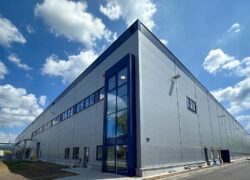
HIH Invest Real Estate has completed the acquisition of a newly built logistics property in Bensheim, southern Hesse, for an individual mandate from an institutional investor. The asset, developed by Panattoni on a 28,700 sqm revitalised brownfield site, was purchased through a forward-funding agreement signed in 2023 and financed entirely with equity.

The property offers 13,010 sqm of rental space, including 11,286 sqm of logistics space, 1,347 sqm of offices and 377 sqm of mezzanine areas, along with 45 parking spaces prepared for electric charging. Designed to current sustainability standards, the scheme features a heat pump system, enhanced insulation, PV-ready infrastructure and partial green roofing, with a DGNB Gold certification targeted.

MSK Pharma Group has taken the entire facility on a long-term lease, consolidating one of its Bensheim locations while maintaining headquarters in nearby Heppenheim. According to HIH Invest, the building’s layout allows for future third-party or multi-tenant use if required.

The site benefits from direct access to the A5 and A67 motorways and regional highways, with Frankfurt Airport and major regional cities reachable in approximately 30 minutes. Legal and tax due diligence for the acquisition was carried out by Ashurst, with technical and ESG due diligence provided by Stane Consulting.

Poland’s Future Inflation Index signals continued stability

Poland’s Future Inflation Index (Wskaźnik Przyszłej Inflacji – WPI), published by the Bureau for Investments and Economic Cycles (BIEC), remained unchanged in November, marking the third consecutive month without significant movement. The indicator suggests that inflationary pressures are stabilising around levels close to the National Bank of Poland’s medium-term target.

Survey data shows that consumer views on price developments have remained broadly consistent. Around 84% of respondents expect prices to continue rising, with roughly half anticipating that the pace of increases will remain similar to current levels. A slightly larger share than in the previous month now expects faster price growth, while fewer expect a slowdown. According to BIEC, a stable distribution of expectations may support steady household consumption as supply and demand adjust.

Industrial sentiment surveys indicate that businesses are increasingly cautious about further price increases. The share of firms planning price reductions has risen throughout 2025 and is now close to the share of firms planning increases. Larger companies show the strongest tendency to limit or reduce prices, while producers of durable consumer goods are more likely to consider price hikes.

Other indicators point to easing cost pressures. Capacity utilisation in industry has not increased, suggesting that fixed operating costs are stable. Slower wage growth and lower interest rates have also reduced labour and financing costs. On global markets, commodity prices have generally been falling or stable since the beginning of the year. The IMF commodity index rose slightly in October due to higher precious-metal prices, while energy and industrial metals continue to trend lower or remain steady.

The Polish zloty has strengthened against the US dollar in recent months, making dollar-denominated imports cheaper and limiting the scope for domestic producers to raise prices on goods competing with imports.

BIEC concludes that these factors collectively signal a period of reduced inflationary pressure heading into the end of the year.

Geosan Development completes infrastructure works and releases final plots in Choťánky near Poděbrady

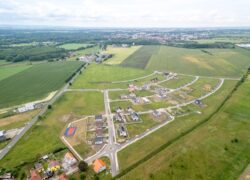
Geosan Development has completed another stage of technical infrastructure in the village of Choťánky in the Central Bohemian Region. The latest phase (1.C) has delivered 30 serviced residential plots ranging from 566 to 934 sqm, now connected to water, sewerage, electricity, and public lighting. New internal roads and sidewalks have also been finished to provide access to the plots. According to the company, eight plots remain available.

The land is prepared for individual family house construction, and the developer plans to launch the next phase of the project in spring 2026, with completion scheduled by the end of that year.

Choťánky is located approximately three kilometres from Poděbrady, with daily services available in the village and wider amenities—including schools, retail, and healthcare—provided in Poděbrady. Travel to Prague takes around 30 minutes by car to Černý Most or approximately one hour by direct public transport.

The surrounding area offers recreational options such as the Elbe cycling route, the golf course in Poděbrady and leisure activities around Jezero Poděbrady.

Study: Germany’s GHG quota system favours hydrogen trucks over battery-electric models

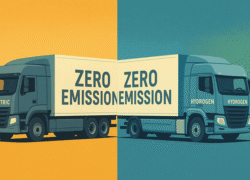
A new study from the German Institute for Economic Research (DIW Berlin) and the Institute for Energy and Environmental Research Heidelberg (ifeu) concludes that Germany’s current greenhouse gas reduction quota (GHG quota) creates uneven incentives for zero-emission heavy vehicles, favouring hydrogen fuel cell trucks over battery-electric models.

The GHG quota requires fuel suppliers to reduce emissions from the fuels they place on the market and allows them to meet targets by supporting the use of alternative drive systems. According to the DIW/ifeu analysis, the quota methodology currently overestimates the emissions associated with power supplied to battery-electric trucks and underestimates their efficiency advantages. In addition, the system applies flat-rate mileage assumptions that do not reflect the typical use of heavy battery trucks, resulting in a lower calculated emission reduction compared to hydrogen vehicles.

The report notes that battery-electric trucks have recently recorded the strongest growth in the German heavy-duty segment and represent the most energy-efficient option for decarbonising freight transport. However, under the current quota mechanism, fuel cell trucks receive a greater quota benefit, which could influence fleet investment decisions.

The authors recommend a short-term adjustment of default electricity emissions and consumption assumptions, followed by a broader reform to ensure that the quota accurately reflects real energy efficiency and climate impact.

IWG Reports Solid Q3 Growth in Managed & Franchised Network as Occupancy Strengthens Across Portfolio

International Workplace Group (IWG), the world’s largest hybrid workspace operator, reported steady network expansion in the third quarter of 2025, supported by strong growth in its Managed & Franchised segment and continued improvements in occupancy across its company-owned centres. The company generated $1.1 billion in system-wide revenue, up 4% year-on-year, with performance underpinned by a capital-light expansion strategy and rising demand for flexible workspace.

The Managed & Franchised portfolio delivered the strongest contribution, with 36% system-wide revenue growth and an 83% increase in recurring management fees, reflecting the acceleration in new signings and openings following increased H1 investment. The group signed 335 new centre deals during the quarter and opened 215 locations, representing year-on-year growth of more than 40% in both categories. By the end of September, IWG operated 245,000 rooms and 1,519 centres across its managed and franchised network.

Company-owned operations remained broadly stable, recording $806 million in revenue, in line with Q3 2024. Occupancy improvements from the first half of the year continued to feed into performance, with management expecting these trends to support revenue growth into 2026. RevPAR softened slightly by 3%, consistent with the company’s strategy to prioritise occupancy gains before pricing adjustments.

Digital & Professional Services reported revenue of $106 million, an 8% decline year-on-year, though underlying revenue remained stable after adjusting for an exited contract.

The group continued to return capital to shareholders, with more than $100 million distributed year-to-date. Net financial debt rose to $813 million, driven by a share repurchase of 16.7 million shares for $47 million during the quarter. IWG confirmed that $173 million of its 2027 convertible bond will be repaid on 9 December, leaving no material debt maturities until 2029.

Management reiterated full-year 2025 guidance, including expectations for higher centre growth than in 2024, stable adjusted EBITDA and net debt forecasts, and continued commitment to achieving at least $1 billion in medium-term EBITDA. The company will outline its updated strategic framework at an Investor Day in New York on 4 December.

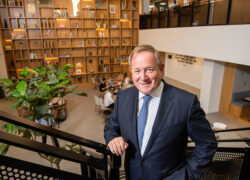
Mark Dixon, Chief Executive of IWG, said the quarter’s results demonstrate the strength of the group’s hybrid operating model. “The incremental investment we have made in our Managed & Franchised segment has already led to an acceleration in the number of locations we have opened and added to the pipeline,” he said. “The evolution of occupancy and pricing sets us up well for further growth in the remainder of the year and into 2026.”

Photo: Mark Dixon, Chief Executive of IWG

Kamco Invest posts KWD 7.9 million net profit for first nine months of 2025

Kamco Invest has reported a net profit of KWD 7.9 million for the nine months ending 30 September 2025, up from KWD 3.5 million in the same period last year. Earnings per share increased to 23.07 fils, compared to 10.14 fils in 2024.

Total revenues rose 35.1% year-on-year to KWD 25.0 million. Fee and commission income amounted to KWD 11.5 million, slightly below the KWD 12.1 million recorded in the first nine months of 2024. The increase in total revenues was mainly attributed to investment portfolio performance and proceeds from a legal case in favour of the company.

Assets under management totalled USD 16.4 billion as of the end of September, a 3% increase since the beginning of the year. Kamco Invest said its managed portfolios outperformed their benchmarks, with equity funds ranking among the stronger performers on Boursa Kuwait and Tadawul, based on public disclosures.

In the alternatives segment—which includes real estate, private equity, and structured products—the company completed the acquisition of a 60% stake in European Green Logistics Space (EGLS), a developer and manager of logistics properties in Europe. Kamco Invest also exited its investment in Turkish fashion retailer Yargici, selling the stake to TIMS Group.

The firm continued to deploy capital through its private equity platform, with investments in technology companies Foodics and Unifonic. Its closed-end JEDI Fund, focused on U.S. technology investments, reported a multiple on invested capital of 1.3x.

Kamco Invest’s investment banking division advised on several transactions during the period, including acting as joint lead manager on USD 4.3 billion of bond and sukuk issuances across Kuwait, Saudi Arabia, the UAE, and Qatar.

The brokerage subsidiary continued to expand its client base through digital trading services. Meanwhile, the company’s operations in Saudi Arabia and Dubai International Financial Centre reported growth in asset management activities. Kamco Invest – Saudi signed a partnership with Flexam Invest to offer leasing investment products and relocated to new offices in Riyadh’s King Abdullah Financial District.

Total assets rose 4.8% to KWD 136.1 million, while shareholders’ equity increased 10.1% to KWD 68.5 million. The company maintained a “BBB” long-term credit rating and “A3” short-term rating with a stable outlook from Capital Intelligence as of May 2025.

Company representatives said the year-to-date results reflect disciplined execution of the firm’s strategy and continued expansion of investment offerings.

Garbe Industrial and Logicenters mark progress on new light industrial project in Leipheim

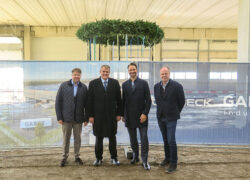
Garbe Industrial and Logicenters, the logistics development platform of Urban Partners, have held a topping-out ceremony for a new light industrial building in Leipheim, Germany. The project, located on a former military airfield that is being redeveloped into the 112-hectare “Areal Pro” industrial park, will provide approximately 11,600 sqm of space on a 20,000-sqm plot. The investment value is roughly €17 million.

Construction began in Q2 2025 following a rapid permitting process and preparatory demolition works. The scheme will offer around 10,400 sqm of hall space and 1,200 sqm of office and ancillary areas, along with ten loading docks, one ground-level door, 40 car parking spaces and two truck parking spaces. Completion is planned for early Q2 2026. Goldbeck is serving as general contractor.

The project includes several sustainability-focused features, such as photovoltaic panels designed for up to 1 MWp of power generation and heating via air-source heat pumps. Certification under the DGNB Gold standard is being pursued.

Garbe Industrial reports ongoing leasing discussions for the new premises. The site benefits from proximity to the A8 motorway and direct access to the A7 via the Ulm/Elchingen junction, linking the location to the Ulm, Stuttgart, Augsburg and Munich metropolitan areas.

Romania: Real estate transactions edge up in October, but remain below last year’s level

Romania recorded 58,502 real estate transactions in October 2025, according to data from the National Agency for Cadastre and Land Registration (ANCPI). The monthly total represents an increase of 3,242 transactions compared with September, but activity remained lower than a year earlier. The number of properties traded — including houses, land and apartments — was 9,496 fewer than in October 2024.

Bucharest continued to lead the market with 8,829 transactions, followed by Ilfov (3,981) and Cluj (2,929). The lowest activity was reported in Teleorman (56 transactions), Covasna (394) and Sălaj (411).

At city level, most sales were recorded in Cluj-Napoca (1,096 transactions), Brașov (1,079) and Iași (877). The smallest number of transfers took place in Alexandria (21), Slatina (64) and Slobozia (71).

Mortgage activity also slowed. A total of 34,084 mortgages were registered nationwide in October, down 4,268 compared to the same month of 2024. Bucharest again led with 4,381 mortgages, followed by Constanța (2,942) and Ilfov (2,876). The lowest numbers were recorded in Sălaj (82), Harghita (88) and Covasna (102).

Sales of agricultural land were most active in Dolj (1,341 transactions), Timiș (613) and Buzău (580).

Source: ANCPI

Strategic Shift in Slovakia’s Industrial Market: Efficiency Over Expansion

Rising vacancy rates, cautious occupiers and a slowdown in automotive production have reshaped Slovakia’s industrial and logistics market. Speculative projects completed in 2025 added significant new supply, just as demand from Germany weakened and e-commerce occupiers became more selective.

To explore how developers and investors are adjusting, CIJ EUROPE sat down with Tomáš Ostatník, Real Estate Executive at Holland & Company, a commercial leasing and development specialist active across Slovakia.

After an unprecedented wave of new industrial completions, Slovakia’s logistics property market has entered a new phase — one defined less by rapid expansion and more by strategic consolidation and technical efficiency. The surge in supply collided with a shift in tenant behaviour and weaker leasing activity from automotive suppliers, forcing both developers and occupiers to rethink how space is planned and used.

According to Ostatník, the market continues to function, but the conversation has changed. Instead of competing for any available space, tenants are now focused on specifications that support automation, lower operating costs and meet ESG requirements. “Demand hasn’t stopped,” he says. “But tenants now focus on quality — clear height, automation readiness, ESG — not just square meters.”

A recent relocation of a major e-commerce company from GLP Senec to Mountpark Bratislava illustrates this shift. The decision was driven not by rent levels, but by technical parameters: ceiling height, layout, and the ability to integrate automation systems.

The investment market is undergoing a similar transformation. Institutional demand is high, but buyers want long-term income security. The sale-and-leaseback transaction involving DSV in Senec demonstrated that assets leased for ten years or more remain highly competitive. Ostatník notes that more logistics and production companies are exploring built-to-own and then sell models: developing a tailored facility that fits their needs, then selling the property to an investor once it is operational. “This allows tenants to monetize development gains instead of simply committing to a long lease with a third-party developer,” he explains.

Geography is also evolving. Historically, development concentrated on the Bratislava–Trnava corridor. Now, attention is shifting eastward, driven by new investments connected to the Volvo automotive plant and, longer term, the anticipated reconstruction of Ukraine. While the western region will stay strong due to established logistics routes, Ostatník says the east “is where the new opportunities are forming.”

At the same time, tenant behaviour reflects a more cautious economic environment. Rather than moving into new facilities, many occupiers are renegotiating existing leases or seeking small expansions. Higher vacancy rates mean developers with speculatively completed stock are more willing to offer incentives to attract tenants, while build-to-suit landlords are maintaining firmer positions.

Sustainability and efficiency have become universal themes in negotiations. Tenants expect modern buildings to be energy-efficient, solar-ready and adaptable to advanced automation. Consolidation is accelerating, with companies looking to bring multiple smaller units into one larger, more efficient facility to reduce energy costs and transportation complexity.

Ostatník believes that the stabilization seen at the end of 2025 is healthy for market maturity. “Well-located assets will remain competitive, but the next wave will come from new regions and new occupier profiles,” he says. Urban-adjacent last-mile logistics and strategically positioned projects in eastern Slovakia are expected to generate the next phase of investment and leasing activity.

Slovakia’s industrial and logistics sector is no longer driven by the speed of development, but by performance. The focus has shifted toward flexibility, efficiency, ESG compliance and the ability to adapt to new supply chain models. In a maturing market, one constant remains: strong tenants and good locations always find capital.

© 2025 cij.world

LATEST NEWS