Brose expands production in Ostrava with lease at Airport Multimodal Park

Brose, the international automotive supplier, has signed a lease agreement with Concens Investments for the entire Hall D at Ostrava Airport Multimodal Park (OAMP). The facility, located near Leoš Janáček Airport in Mošnov, is part of the park’s ongoing Phase II development. The leased space covers 12,000 square meters of industrial area and 1,500 square meters of office space. Production at the new facility is expected to begin in September 2025, focusing on the development, testing, and manufacturing of car seat structures for various automotive manufacturers.

Brose has been active in the Czech Republic for more than two decades, operating plants in Kopřivnice and Rožnov, along with an office in Ostrava. The company currently employs approximately 2,990 people in the country. Niclas Pfüller, General Manager of Brose Czech Republic, highlighted the strategic advantages of the Ostrava region and the company’s continued expansion. He noted that the Mošnov site will include production facilities as well as a testing and development department, along with social facilities for employees.

Ostrava Airport Multimodal Park offers direct connections to air, rail, and road transport, including access to the D1, D48, and D56 motorways. Tomáš Novotný, CEO of Concens Investments, emphasized that this multimodal connectivity is a key factor for tenants such as Brose, which supplies automotive manufacturers in both the Czech Republic and Slovakia. He described the project as an example of how the park serves not only as a logistics hub but also as a base for manufacturing companies that require skilled labor.

Phase II of the OAMP project is currently under construction and includes four halls designed for logistics and light manufacturing. The development is aiming for BREEAM environmental certification at the Very Good level, with a focus on energy efficiency. Planned sustainability measures include rooftop photovoltaic panels, LED lighting, and the potential replacement of conventional gas heating with heat pumps.

Concens Investments began the development of OAMP in 2018, with the first phase comprising four industrial halls totaling 138,000 square meters. A portion of the complex, including a logistics park in Nošovice, was sold to the US real estate investment fund EQT Exeter in 2021. The second phase, now under construction, will add 120,000 square meters of A-class commercial space across four additional halls. Completion is expected in the first half of 2024, with leasing opportunities available.

In parallel, the third phase of development is underway on a 513,000-square-meter site acquired from the Statutory City of Ostrava. This phase will include three new halls, serving as a distribution center for BMW Group under a 10-year pre-lease agreement. The development includes access roads and a private railway terminal. A fourth phase is also being prepared on a 155,000-square-meter site, where a 97,500-square-meter industrial hall has received a building permit.

Upon full completion, the Ostrava Airport Multimodal Park is projected to exceed 550,000 square meters of gross leasable area, reinforcing its role as a key industrial and logistics hub in the region.


Nearly 80% of Romanian employees use AI tools at work

A growing number of employees in Romania are integrating artificial intelligence into their daily work, with nearly 80% using AI-powered tools, according to a survey conducted by Genesis Property, a leading office building owner. The study, which surveyed 1,175 respondents nationwide, found that 77% of employees use AI either daily or occasionally, while 88% believe that more automation tools should be introduced in office environments. Additionally, 70% expressed a desire to develop new skills in AI and automation systems.

For many employees, AI is seen as a tool that enhances productivity rather than a replacement for human work. About 41% of respondents believe AI should function as a virtual mentor, providing answers and guidance, while 37% view it as an advanced system capable of handling complex tasks with minimal human intervention. Looking ahead, nearly half of those surveyed expect AI to be increasingly used in 2025 to improve efficiency, though they do not foresee it fully replacing human roles.

Ionel Purice, CEO of Genesis Property, highlighted the shifting role of AI in modern workplaces. “Artificial intelligence is becoming a crucial part of professional life, especially in streamlining repetitive tasks. This allows employees to focus on more creative and collaborative activities that add greater value. Offices are evolving beyond spaces for routine work into hubs of innovation, where technology complements human capabilities rather than competing with them. The future of work is not about doing more, but about working smarter and more efficiently,” Purice said.

Beyond productivity, AI is also seen as a tool for fostering workplace communities. The survey found that 68% of employees believe AI can help create stronger connections within workspaces. When asked about measures that companies should take to support this transformation, 52% emphasized the need for greater flexibility, 45% called for better workplace amenities, and 38% suggested that access to cultural and social events would enhance workplace engagement.

Genesis Property is currently finalizing the development of YUNITY Park, a campus designed to integrate work, technology, and community experiences. The project, initiated by entrepreneur Liviu Tudor, includes an open-air amphitheater with 1,500 seats, pedestrian pathways, water features, an urban forest, and creative meeting spaces. The first two phases of the development, completed in 2023, involved an investment of over €30 million. The third phase, the Innovation Center, is scheduled to open later this year following an additional €20 million investment.

The survey, conducted via the iVox platform between January and February 2025, aimed to assess employee expectations for the future workplace. It included a sample of 1,175 internet users in Romania, with nearly 57% reporting a net income above 5,000 lei per month.

Heitman expands European self-storage portfolio with Swedish acquisition

Heitman LLC, a global real estate investment management firm, has strengthened its presence in the European self-storage market by acquiring a majority stake in Servistore, Sweden’s third-largest self-storage operator. The deal, completed in February 2025, is part of Heitman’s broader strategy to expand its portfolio in the sector.

Servistore currently operates 31 self-storage facilities across 14 cities in Sweden, with 25 locations already open and six more set to launch soon. The company’s network includes more than 4,000 storage units, covering approximately 330,000 square feet.

This latest acquisition aligns with Heitman’s continued investment in self-storage, a sector that has seen growing demand across Europe. The firm has previously expanded in Ireland (2022), Germany (2021), and the United Kingdom (2020). Heitman has been active in self-storage investments since 1996 and currently manages more than 600 self-storage assets globally, with a combined value of approximately $7.8 billion.

A key aspect of Servistore’s operations is its technology-driven model, with facilities running on an unmanned basis. Heitman plans to scale this approach in Sweden by integrating advanced revenue management software and expanding ancillary services such as storage insurance offerings.

Tony Smedley, Managing Director and Head of European Private Equity at Heitman, highlighted the firm’s extensive experience in self-storage, which has allowed it to secure off-market acquisitions in Europe. Caleb Mercer, Managing Director of European real estate investments at Heitman, pointed to Sweden’s strong market fundamentals—driven by population growth, urbanization, and increased household mobility—as key factors in the decision to invest.

This acquisition reinforces Heitman’s commitment to expanding its footprint in the European self-storage sector, positioning Servistore for further growth under its new ownership.

Photo: Tony Smedley, Managing Director and Head of European Private Equity at Heitman

German companies continue to cut jobs as employment barometer declines

German businesses are continuing to reduce their workforce, with the ifo Institute’s employment barometer dropping slightly to 93 points in February from 93.4 points in January. Despite a modest upward trend in the German Institute for Economic Research’s (DIW Berlin) economic barometer, which rose to 90.4 points, the labour market remains under pressure.

Job Cuts in Key Sectors

The industrial sector faces particularly severe job reductions, even as its employment barometer showed a slight increase in February. Service providers are also scaling back their workforce planning, with IT service companies making significant reductions. Meanwhile, the retail sector continues to struggle, according to the ifo Institute.

The Institute for Employment Research (IAB) also highlighted concerns over the weakening labour market. Its labour market barometer declined for the sixth consecutive month in February, dropping by 0.4 points to 98.3 points.

Unemployment Expected to Rise

Despite a slight increase in the European Labour Market Barometer to 99.5 points in February—the first rise in five months—experts remain cautious. Enzo Weber, an analyst at IAB, warned that unemployment is likely to increase while overall employment levels stagnate.

“The outlook is clearly negative,” Weber stated, pointing to the fact that the employment component of the IAB index has fallen below the neutral 100-point mark for the first time outside of the COVID-19 pandemic. In February, it dropped by 0.4 points to 99.9.

While DIW Berlin suggests that domestic demand may provide a modest boost to the economy, declining exports during the winter months are seen as a worrying sign. However, the institute notes that some degree of stabilisation may be emerging in the labour market.

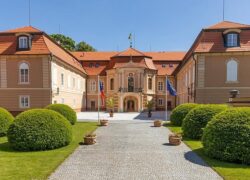
Štiřín Castle fails to sell for the fifth time

The Štiřín Castle in Central Bohemia has once again failed to attract a buyer, marking the fifth unsuccessful attempt to sell the historic estate. No bidders registered for the latest electronic auction, which had a starting price of 1.156 billion crowns, according to information published on the auction website.

The Office for the Representation of the State in Property Affairs (ÚZSVM) confirmed the lack of interest and announced that it will now assess the next steps regarding the management of the property. The state office initially put the castle up for sale last September with an asking price of 3.3 billion crowns. Since then, it has gradually lowered the price and removed some parcels from the castle park from the offering.

Despite the price reductions, the property has not found a buyer. At a parliamentary control committee meeting in early February, ÚZSVM director Kateřina Arajmu reiterated that the office would not sell the property below its appraised value. On the same occasion, the committee recommended that the office begin discussions with the municipality of Kamenice, which has expressed interest in acquiring certain plots from the estate. The municipality hopes to obtain land along a road managed by the Central Bohemian Region to build a sidewalk, as well as the former hostel building and an old civil protection shelter to establish an additional kindergarten.

Located about 25 kilometers from Prague, Štiřín Castle previously functioned as a hotel with a restaurant, wellness center, and golf course. The Ministry of Foreign Affairs originally managed the property but transferred it to the state property office in June last year, having deemed it no longer necessary for its operations. At the time of the transfer, the site was already closed. This year, the property office confirmed that no other state institution had expressed interest in acquiring the castle, prompting the decision to offer it for private sale.

Štiřín Castle was constructed in the mid-18th century and underwent significant renovations around 1900, based on the designs of architect Jiří Stibral. The estate became state property after World War II when it was confiscated. Previously, it had been owned by the Ringhoffer family for decades. After the war, the castle was briefly used by scouts before undergoing a major restoration between 1985 and 1993 to be repurposed as a hotel.

The unsuccessful sale of Štiřín Castle is not an isolated case. Other state-owned properties have also struggled to find buyers. This year, auctions for the Veleslavín Chateau and the Broadway Palace in Prague ended without success. However, in mid-January, the auction of the Hanácká Barracks in Olomouc concluded successfully. After ten attempts, the property was sold to the Brno-based company Salibary for 91 million crowns.

Source: CTK
Photo: Štiřín Castle

Tesco opens modernized store in Čerčany with sustainable solutions

Tesco has unveiled its newly modernized store in Čerčany, marking the first major refurbishment of the year as part of its ongoing efforts to enhance its retail network. The renovation introduces a refreshed shopping environment, sustainable technologies, and improvements for both customers and employees.

The Čerčany store has undergone a complete transformation, including updated furniture, shelving, and signage, along with a new façade and logo. A key focus of the refurbishment was the fresh food section, where fruit, vegetables, and baked goods have been reorganized for greater convenience. The store has also implemented environmentally friendly refrigeration systems using CO₂ gas and installed doors on refrigerators to significantly reduce energy consumption.

As part of the modernization, the checkout area now features the Scan&Shop system, which allows for faster and more convenient transactions. Employee facilities have also been upgraded to create a more comfortable working environment. The store currently employs 23 staff members, supported by 17 temporary workers.

At the reopening ceremony, Tesco ČR CEO Katarína Navrátilová emphasized the company’s commitment to community engagement. To mark the occasion, Tesco donated CZK 50,000 to the DRáČe – Dětská radost Čerčany organization, which supports children and young people. Additionally, surplus food from the store will be regularly donated to the Food Bank Central to assist those in need.

Local officials and company representatives attended the reopening, including Čerčany Mayor Michal Tupý, DRáČe director Jana Reichelová, and Tesco executives Navrátilová, Patrik Dojčinovič (Chief Operating Officer), and Artur Beňa (Store Manager).

To celebrate the reopening, Tesco is offering a 10% discount on all purchases for Clubcard holders from February 26 to March 4. In the following weeks, the store will introduce additional promotions on selected product categories.

With its modernized layout and energy-efficient solutions, the Čerčany store aims to enhance the shopping experience while promoting sustainability and community engagement.

Rising costs and competition challenge confectionery businesses in Poland

As Fat Thursday sees an annual surge in the consumption of doughnuts, Polish confectioners continue to face financial difficulties amid rising costs and increasing competition. The cost of essential ingredients such as butter, flour, and sugar has risen steadily, while consumer preferences shift toward healthier alternatives. Data from the Register of Debtors BIG InfoMonitor and the BIK database indicate a growing burden of overdue debt for confectionery businesses, highlighting the challenges faced by the industry.

Rising Ingredient Costs and VAT Increase Impact Prices

The traditional recipe for doughnuts has remained largely unchanged since the 18th century, but production costs have increased significantly. Inflation at the end of 2024 stood at 4.7%, but certain food products experienced sharper price hikes. Butter, for example, saw a 27.1% increase in Poland, exceeding the EU average of 21.3%, as reported by Eurostat.

The rising costs of butter, eggs, and other key ingredients were compounded by a VAT increase on food from 0% to 5%, leading to higher prices for consumers. Despite this, the increased cost of doughnuts did not reduce the financial difficulties faced by confectionery businesses. Overdue debts in the sector grew by 23% in 2024, reaching over PLN 21 million.

Competition from Large Retailers and Consumer Shifts

Beyond rising costs, confectionery businesses face growing competition from large retail chains and discount stores. Doughnuts and other baked goods are widely available at supermarkets, often at significantly lower prices. A doughnut in a large store costs around PLN 3, while artisan confectioneries charge over PLN 20 for handcrafted alternatives. This pricing disparity has influenced consumer behavior, with many choosing cheaper alternatives or limiting their purchases, even on Fat Thursday.

Debt Trends in the Confectionery Industry

Unlike retailers, doughnut producers (PKD 1071Z – bread and confectionery production) have seen a decline in outstanding debt, which fell by 12% year-on-year. However, the total unpaid debt in this sector remains high at PLN 200 million, ten times more than that of confectionery retailers.

Producers of raw materials for confectionery, such as butter, flour, and fruit fillings, have seen improvements in their financial standing. The overdue non-credit debt of dairy product manufacturers (PKD 105) declined by 57%, while flour producers (PKD 1061Z) reduced their liabilities by 62.7%. The most significant improvement was recorded in the oil and fat production sector (PKD 104), where outstanding debt decreased by 72% year-on-year, falling from PLN 100 million to under PLN 30 million.

Future Outlook for the Industry

According to Waldemar Rogowski, chief analyst at BIG InfoMonitor, several factors contribute to the varying financial conditions within the sector. Producers who own their sales networks and supply frozen bakery products to supermarkets have more financial stability than smaller artisan bakeries. Additionally, industrial-scale confectioneries benefit from automation, which reduces labor costs, while craft bakeries rely on more expensive raw materials and manual labor.

Despite some improvements in raw material production, the long-term outlook for traditional confectionery businesses remains uncertain. The shift in consumer preferences toward health-conscious choices and continued financial pressures may reshape the industry in the coming years.

Source: InfoMonitor

CDU/CSU leads coalition talks as Germany navigates post-election landscape

In the recent German federal elections held on February 23, 2025, the conservative Christian Democratic Union (CDU) and its Bavarian sister party, the Christian Social Union (CSU), led by Friedrich Merz, secured the largest share of the vote with 28.5%, translating to 208 seats in the Bundestag.

The far-right Alternative for Germany (AfD) experienced a significant surge, obtaining 20.8% of the vote and 152 seats, marking their strongest post-war performance.

The Social Democratic Party (SPD), previously the ruling party under Chancellor Olaf Scholz, saw a substantial decline, receiving 16.4% of the vote and securing 120 seats, their worst result since 1887.

Friedrich Merz has expressed intentions to form a coalition government, likely seeking partnership with the SPD, despite their electoral losses. Merz emphasized the need for swift coalition negotiations focusing on foreign policy, migration, and economic issues.

The AfD’s significant gains, particularly in Eastern Germany, have raised concerns among mainstream parties. Merz has reiterated his refusal to collaborate with the AfD, maintaining a political cordon sanitaire around the far-right party.

This election underscores a shifting political landscape in Germany, with traditional centrist parties facing challenges from both the right and left, necessitating careful coalition-building to ensure stable governance.

Source: comp.

Florian Goldgruber appointed Managing Director of Periskop Opportunities GmbH

Periskop Partners, a brand of DLE Group AG, has appointed Florian Goldgruber as Managing Director of the newly established Periskop Opportunities GmbH. He will lead the subsidiary alongside Managing Partner Dominik Brambring, contributing to the development of the Opportunities Fund and supporting the firm’s strategic expansion.

Goldgruber will collaborate with Periskop Partners’ specialized investment teams, covering Senior Living, Logistics, Land Development, and Mezzanine Capital. His role will involve transaction management, operational implementation, and long-term investment project optimization.

Before joining Periskop, Goldgruber served as CFO at ambelin GmbH, a startup specializing in asset and property management, overseeing a portfolio of approximately 6,000 residential and commercial units for Blackstone Group funds. He played a key role in the company’s financial structuring, digitalization, and growth.

Goldgruber has extensive experience in private equity, real estate, and capital markets, with expertise in business development, transactions, and investor relations. His previous positions include serving as CFO at ADO Properties S.A., where he helped expand the company’s portfolio to €4.4 billion, and leadership roles at Arbireo Capital AG, Vonovia SE, and Terra Firma Capital Partners. He is a certified banker with a degree in business administration.

Goldgruber highlighted the investment focus of Periskop Opportunities as a key factor in his decision to join, emphasizing the firm’s platform as a strong foundation for targeted growth in real estate and operational private equity investments.

Brambring welcomed Goldgruber’s appointment, citing his experience in fund structuring and operational real estate development as valuable assets for leading the new subsidiary.

Periskop Opportunities GmbH focuses on investments in metropolitan areas and high-growth regions in Germany, particularly in residential, logistics, medical offices, and data centers. The company aims to deliver risk-adjusted returns through a strategic and tactical investment approach in an evolving market environment.

Global real estate investment rebounds in 2024, signaling market recovery

In 2024, global real estate investment experienced a notable resurgence, reversing a two-year downward trend. Investment volumes increased by 14% year-over-year, totaling approximately US$703 billion.

This growth was particularly evident in the fourth quarter, where investment activity surged by 37% compared to the same period in the previous year. The Americas led this upward trajectory with a 45% year-over-year increase in Q4, culminating in an annual total of US$372 billion, marking a 10% rise from 2023. The Europe, Middle East, and Africa (EMEA) region also demonstrated robust performance, with full-year volumes reaching US$199 billion, a 17% increase, and a remarkable 40% surge in Q4 alone. The Asia Pacific region followed suit, recording a 10% uptick in Q4, bringing its annual total to US$131 billion, up 23% year-over-year.

Several factors contributed to this positive momentum. Central banks initiated rate cuts in 2024, enhancing financing conditions and bolstering investor confidence. This monetary easing, coupled with diminished inflation risks, is anticipated to continue through 2025 and into 2026, further supporting investment activities.

Despite these gains, the market faced challenges. Global cross-regional capital flows among North America, Europe, and Asia-Pacific totaled US$26.7 billion in the first half of 2024, representing a 10% decline year-over-year.  Additionally, private real estate fundraising experienced a slowdown, with approximately US$98 billion raised in 2024, a significant decrease from recent levels.

Looking ahead, the global real estate market is poised for a gradual recovery in 2025. The improved financing environment, combined with sustained investor interest, is expected to drive continued growth in investment volumes across regions. However, market participants remain vigilant, monitoring economic indicators and geopolitical developments that could influence investment decisions.

LATEST NEWS