Europe’s Security: A shared responsibility, says Polish PM Donald Tusk

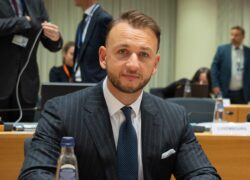
Following a high-level meeting in London, Polish Prime Minister Donald Tusk emphasized the broad support among European leaders for Ukraine in its ongoing conflict with Russia. Tusk underscored that there was no ambiguity regarding where Europe stands in the war, asserting that Ukraine must receive continuous and unwavering backing.

Europe Stands with Ukraine

“The Polish position was exactly in line with the mood in the room. Ukraine requires constant support and the strongest possible position before negotiations with Russia. No one doubts who the aggressor is, who the victim is, and whose side Europe supports in this conflict. Europe stands firmly with Ukraine,” Tusk stated after the meeting.

He reaffirmed that Poland’s national interest demands steadfast and long-term support for Ukraine in its defense against Russian aggression. “This is not up for debate,” the Polish Prime Minister added.

Poland’s Role in European Security

Tusk highlighted Poland’s critical role in ensuring security on the eastern borders of both the European Union and NATO, stressing that this responsibility extends beyond military preparedness to political engagement.

“Our country bears a special responsibility for securing the EU’s eastern frontier. This is not just a military challenge but a political one as well. As a front-line state, Poland must be ready for all scenarios. Our security is directly linked to Europe’s stability,” he said.

The Prime Minister also acknowledged growing defense commitments among European nations. “Poland remains a model in this regard, but I am pleased to see more countries translating their commitments into action by increasing defense spending. Strengthening the eastern flank of Europe must be an absolute priority,” Tusk noted.

Strengthening Europe’s Defense Capabilities

Amid increasing geopolitical threats, Tusk called for a stronger European self-defense capability. He argued that while Europe is a formidable economic and military power, it must believe in its own strength and act in unison to guarantee its security.

“Europe, together with Ukraine, possesses twice as many warplanes as Russia and has a clear advantage in terms of professional soldiers. The issue is not numbers but the lack of belief in our own strength,” Tusk pointed out, citing data from the International Institute for Strategic Studies.

According to the figures presented by the Polish Prime Minister:
– Europe and Ukraine have 2.6 million professional soldiers, compared to Russia’s 1.1 million.
– Europe and Ukraine field 2,991 combat aircraft, significantly more than Russia’s 1,224.
– In terms of artillery, Europe and Ukraine have 14,400 units, compared to Russia’s 5,157.

Transatlantic Cooperation and Future Initiatives

Tusk reaffirmed Poland’s commitment to strengthening ties with the United States, emphasizing that European defense expansion does not contradict the transatlantic alliance. Instead, both objectives must be pursued simultaneously.

“There is no question of doubt. We support Ukraine and strengthen our alliance with the United States, regardless of the challenges we face,” Tusk stated.

The Polish Prime Minister also backed an initiative by Italian Prime Minister Giorgia Meloni to organize a Europe-U.S. summit. He stressed that such a forum could reinforce transatlantic security cooperation and help align European and American positions on Ukraine.

“I have strongly supported Prime Minister Meloni’s proposal to establish a continuous and open dialogue between Europe and the U.S. before negotiations between Ukraine and Russia begin. We must ensure that Europe and the United States speak with one voice,” Tusk remarked.

Ongoing Discussions Among European Leaders

In London, Tusk met with leaders from France, Germany, Denmark, Italy, the Netherlands, Norway, Spain, Sweden, the Czech Republic, Romania, Turkey, as well as the President of the European Council, the President of the European Commission, NATO Secretary General, Ukrainian President Volodymyr Zelensky, and Canadian Prime Minister Justin Trudeau.

Discussions among European leaders will continue on March 6 in Brussels at an extraordinary European Council meeting, where key decisions on Ukraine’s support and Europe’s defense capabilities are expected to be made.

Source: gov.pl
Stropkov delivers 14 new rental apartments, plans Mier department store reconstruction

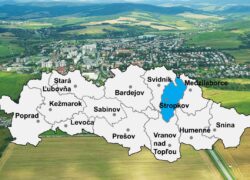
From early March, new tenants will move into 14 newly acquired city apartments in Stropkov. The municipality purchased an apartment building on Chotčanská Street from a private investor who completed construction last year. The total investment, covering the purchase of apartments, technical equipment, and land, amounted to EUR 1.55 million.

Funded by State Housing Development Fund

The acquisition was financed through a loan from the State Housing Development Fund (ŠFRB) and a subsidy from the Ministry of Transport. The city’s financial contribution amounted to less than EUR 40,000. According to city spokesperson Peter Novák, the apartment building is located outside the city center in a residential area with family homes.

At a city council meeting last year, representatives approved an application for the building’s purchase through the ŠFRB loan. Following approval and the transfer of ownership to the city, the Commission for Social Affairs, Health, and Housing allocated the apartments to new tenants.

Apartment Layout and Sizes

The newly acquired building consists of 14 apartments, including one one-room apartment, five two-room apartments, and eight three-room apartments, with sizes ranging from 35 to 70 square meters.

“In the middle of last year, we handed over 22 new city apartments on Hrnčiarska Street. Now, more tenants will have a new home on Chotčanská Street. I am very pleased that we are expanding rental housing opportunities in Stropkov, and we are preparing further projects in this regard,” said Stropkov Mayor Ondrej Brendz.

Future Development: Mier Department Store Reconstruction

At the end of last year, the municipality completed project documentation for the comprehensive reconstruction of the Mier department store. Currently, the zoning process for the building is underway, and this year, the city plans to apply for a loan from ŠFRB to fund the construction of new apartments. Additionally, using its own resources, the city intends to undertake a large-scale investment to renovate the building’s facade and surrounding areas, including the development of a new parking lot.

“I believe that in the near future, an attractive residential center with business establishments and 34 new rental apartments will be created within the former premises of the library, the Delta restaurant, and the superstructure of the entire building,” Mayor Brendz concluded.

Source: SITA

Šutaj Eštok: Slovakia and the U.S. aligned on Ukraine peace interests

Slovak Minister of the Interior and party chairman Matúš Šutaj Eštok stated that in the event of peace in Ukraine, the interests of Slovakia and the United States are in alignment. He made the remarks during a political discussion on television, emphasizing that the European Union must return to its original negotiation formats and that all member states should be involved in the process.

“When I see some enchantment by Trump on the Slovak scene, we must realize that many interests are contrary to those of the Slovak Republic, for example, in tariffs. But on the subject of peace in Ukraine, its national interests are absolutely consistent with what Slovakia also wants,” Šutaj Eštok said.

The opposition leader of the Progressive Slovakia (PS) movement, Michal Šimečka, countered by asserting that Ukraine must be stronger in negotiations with Russia to secure a fair and stable peace. He argued that military support for Ukraine is necessary to achieve this. “The minister said a while ago that Ukraine and Russia should sit down at the negotiating table, but President Putin does not want Ukraine at the table because he only deals with Trump. That is the obstacle to peace – Vladimir Putin,” Šimečka added.

He further criticized the Slovak government for not actively participating in discussions on Europe’s future security framework. “It is not true that Slovakia is only absent from today’s summit in London. Three weeks ago, there was a dinner of European leaders where the Slovak prime minister did not attend, even though he was invited,” he said.

Šutaj Eštok reiterated that the European Union should return to its traditional negotiation structures, ensuring that all member states are involved. “If we go down the path of selective engagement, where I call these friends of mine and not others, then we are heading towards a divided Europe,” he warned.

Source: TASR

GCC stock markets experience mixed performance in February 2025

The GCC stock markets saw a mixed performance in February 2025, with three of the seven regional exchanges posting gains despite the overall decline in the MSCI GCC index. The market downturn was largely influenced by a global economic slowdown, geopolitical tensions, and declining crude oil prices.

Market Performance Overview

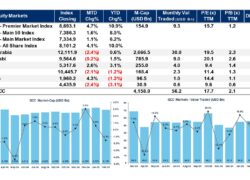
The MSCI GCC index dropped by 0.4% in February, primarily due to losses in large-cap stocks. The best-performing markets were Bahrain (+4.3%), Kuwait (+4.1%), and Dubai (+2.6%), while Saudi Arabia (-2.4%), Oman (-2.4%), and Qatar (-2.1%) registered declines. Abu Dhabi posted a marginal 0.2% loss.

Despite February’s downturn, the year-to-date (YTD) performance of the GCC markets remained positive, with a 2.6% gain overall. Kuwait led the region with an impressive 10% increase since the start of 2025.

Sectoral Performance

The Real Estate sector outperformed other industries with a 2.5% gain, followed by Telecommunications (+2.0%) and Banks (+1.9%). In contrast, the Insurance, Healthcare, and Utilities sectors faced mid-single-digit declines, while the Materials and Energy sectors dropped by 5.1% and 1.7%, respectively.

Country-Specific Highlights

Kuwait: Market Continues Strong Growth

Kuwait’s Premier Market Index led the gains, rising 4.7% to 8,693.1 points. The All-Share Market Index broke the 8,000-point mark, closing at 8,101.2 points (+4.1%). Trading volume surged 47.1%, reaching its highest monthly level since June 2009.

Saudi Arabia: Index Faces Decline Amid Oil Price Volatility

Saudi Arabia’s TASI index fell 2.4% in February, closing at 12,111.9 points. This decline was attributed to weak earnings reports and falling crude oil prices. The Media sector was the worst performer, down 19%, while Telecommunications and Banking sectors gained 4.6% and 0.7%, respectively.

UAE: Mixed Results for Abu Dhabi and Dubai

Abu Dhabi’s ADX saw a slight 0.2% drop, but its Real Estate sector recorded a strong 15.5% gain.

Dubai’s DFM gained 2.6%, driven by strong performances in the Financial and Real Estate sectors. Emirates Islamic Bank was the top gainer with a 25.7% share price increase.

Qatar: Broad-Based Declines

The QE 20 index fell 2.1%, while the broader QE All Share Index managed a 0.1% increase. The Real Estate sector was the worst performer (-3.3%), while the Transportation sector was the best (+3.3%).

Bahrain: Strongest Market in February

Bahrain’s All Share Index jumped 4.3%, making it the top-performing market in the GCC. The Real Estate sector led with a 10.4% gain, driven by Seef Properties (+13%).

Oman: Continued Weakness

Oman’s MSX 30 index dropped 2.4%, extending its losses from January. The Financial and Services sectors posted declines, while the Industrial sector surged 7.8%. Oman’s first IPO of 2025, Asyad Shipping, is expected to raise OMR 128.1 million.

Outlook for GCC Markets

Despite February’s volatility, GCC markets remain in a strong position due to economic diversification efforts, stable corporate earnings, and positive investor sentiment. Kuwait’s robust growth, the UAE’s economic resilience, and strong performances in Bahrain and Dubai indicate that market confidence is holding firm. However, ongoing geopolitical uncertainties and fluctuating oil prices may continue to impact regional markets in the months ahead.

Source: GCC Markets Monthly Report, Kamco Invest Research

Czech economy grew by 1% in 2024, driven by household consumption

The Czech economy recorded a 1% increase in 2024, with household consumption emerging as the primary driver of growth. In the fourth quarter alone, gross domestic product (GDP) expanded by 1.8% year-on-year and 0.7% quarter-on-quarter, according to updated data from the Czech Statistical Office (ČSÚ). The growth figures were slightly more favorable than initial estimates released in January.

While domestic consumption provided a boost to the economy, weak foreign demand remained a limiting factor. Analysts and the Czech National Bank (CNB) agreed that economic activity was weighed down by challenges in export markets, particularly in Germany. However, analysts expect GDP growth to accelerate to around 2% in 2025 as domestic spending continues to recover.

Household final consumption expenditure rose by 2% for the full year, while general government spending increased by 3.8%. In contrast, gross fixed capital formation declined by 1.3%. The balance of foreign trade showed a notable improvement, rising by CZK 141.2 billion year-on-year to reach CZK 525.6 billion.

Economists attribute the recovery in household spending to improving real incomes, supported by solid wage growth and a stable labor market. According to Vít Hradil, chief economist at Cyrrus, consumer confidence is beginning to return after years of economic uncertainty triggered by the COVID-19 pandemic and inflationary pressures. However, he noted that caution persists among consumers, who continue to prioritize savings despite increased spending.

The CNB’s expectations for economic performance in the fourth quarter were surpassed, particularly in household consumption, which increased by 3.2% year-on-year—well above the central bank’s forecast of 1.9%. Jakub Matějů, Deputy Director of the CNB’s Monetary Section, stated that the positive trend reflects rising real incomes in a low-inflation environment. He added that household consumption remains below pre-pandemic levels by approximately 3%, suggesting further room for recovery.

Despite strong domestic demand, sluggish export performance and weak investment activity held back growth. Net exports declined by 1.2% year-on-year in the fourth quarter, in line with CNB forecasts. Investment activity also fell, with gross fixed capital formation down 2.4%, exceeding the central bank’s anticipated 0.2% decline.

Pavel Sobíšek, chief economist at UniCredit Bank, described the fourth quarter’s year-on-year growth as the strongest in nine quarters, suggesting that momentum from the second half of 2024 could help GDP surpass 2% growth in 2025. However, some analysts remain cautious. Petr Dufek, chief economist at Creditas Bank, pointed out that while GDP growth accelerated, it was not accompanied by an increase in overall value creation. “The added value generated during this period remained stagnant, which limits the broader economic impact of the growth,” Dufek noted.

Looking ahead, analysts expect household consumption to continue driving economic growth in 2025, but external risks remain a concern. Global trade tensions, particularly the potential for a trade war between the United States and the European Union, could significantly impact export-dependent sectors of the Czech economy. While domestic factors point toward continued recovery, uncertainty in foreign markets may shape the pace of growth in the coming year.

Source: ČSÚ, CNB, Cyrrus, UniCredit Bank, Creditas Bank and CTK

Rents in the Czech Republic decline slightly at end of 2024, Prague remains most expensive

At the end of 2024, rental prices in the Czech Republic saw a slight quarter-on-quarter decline, with the average rent falling by 0.3% to CZK 309 per square meter per month. While the overall drop was minimal, regional variations were evident. Rents in Karlovy Vary and Brno decreased by less than one percent, while in most regions, prices either stagnated or experienced a modest increase. The Central Bohemian Region and Zlín saw the most notable growth, with rental prices rising by approximately five percent compared to the third quarter. These findings are based on data from Deloitte’s Rent Index.

Despite the overall slight decrease, Prague remained the most expensive region in the country, with average rents rising by 0.7% in the fourth quarter to CZK 425 per square meter. The highest rental costs were recorded in Prague 1 and Prague 2, where prices reached approximately CZK 468 per square meter. Prague 3 followed closely at CZK 466 per square meter, while other central districts such as Prague 7, 8, and 5 saw rental costs ranging from CZK 430 to CZK 442 per square meter.

Some of the sharpest increases were seen in Prague 3, where rents surged by 5.4% quarter-on-quarter, and Prague 4, which experienced a 4.4% rise. On the other hand, Prague 9 and Prague 6 saw rental prices drop by around 2.5%. In Prague 2, where rents had previously spiked by 5.5% in the third quarter, prices declined by nearly 2% in the final quarter of the year. This adjustment, coupled with rising rental costs in Prague 1, caused rental prices in these two districts to even out.

Outside of Prague, the Ústí Region continued to have the cheapest rental housing, with average rents increasing slightly by 0.5% to CZK 204 per square meter. According to the index, rents in Prague remain 208% more expensive than in Ústí. Rental prices stagnated in Liberec and Jihlava, where rates ranged from CZK 251 to CZK 263 per square meter. However, growth was observed in multiple regions. Apart from the Central Bohemian Region and Zlín, where prices exceeded CZK 290 per square meter, rents in Hradec Králové rose by 3.9% quarter-on-quarter, bringing the region closer in price to the aforementioned areas.

The year-end rental market was also shaped by renewed interest in homeownership. Increased interest rates and an improving economic outlook prompted more people to consider purchasing property, leading to a shift in demand away from rentals. Additionally, the growing supply of newly completed apartments designated for rental housing contributed to price stabilization. Seasonal trends also played a role, as rental demand typically declines during certain periods of the year.

“In addition to redirecting people’s focus towards home purchases, the stagnation of rental prices was likely influenced by the increasing supply of newly completed apartments intended for rental housing. Seasonal factors also contributed, as demand for rentals tends to decrease at specific times of the year,” explained Petr Hána, director of Deloitte’s Real Estate and Construction Department.

Source: Deloitte and CTK

Major overhaul planned for Prague airport as preparatory work begins

Prague’s Václav Havel Airport is set to undergo a significant transformation in the coming years as part of a modernization project aimed at increasing capacity and efficiency. The plan includes the demolition and reconstruction of several parking structures, the rebuilding of the elevated roadway leading to Terminal 2, and the expansion of both airport terminals. A key component of the project is the introduction of a railway connection and the construction of a train station to improve accessibility.

The modernization effort, which carries a preliminary budget of CZK 32 billion, is expected to be completed by 2033. Along with road modifications and reconstructions, preparatory work has begun on a new cable duct and a transformer station to enhance the airport’s electricity supply. Denisa Hejtmánková, spokesperson for the airport police, confirmed these developments to the Czech News Agency.

Starting Monday, March 3, and running until the end of June, access to the Aviatická street and the PB parking lot will be restricted due to road repairs in front of Terminal 1. Another key project planned for this year is the construction of a supply corridor beneath Terminal 1 to improve the efficiency of deliveries to shops and restaurants. The corridor is expected to cost approximately CZK 90 million.

Last August, work began on extending the bridge in Aviatická Street, which runs over K Street near the airport. That project is slated for completion in May. In November, construction commenced on the cable duct and transformer station, a project valued at over CZK 1 billion, with completion scheduled for December 2026.

The airport plans to unveil a visualization of Terminal 2’s expansion and modernization in May, with the final architectural study now being completed. Terminal 1 is also set for an expansion. Following the completion of these upgrades, flight operations will be reorganized. Flights to Schengen area countries will be handled from Terminal 1, while Terminal 2 will serve non-Schengen destinations and low-cost airlines. Currently, non-Schengen flights are managed from Terminal 1.

Looking ahead, the airport also has plans for the construction of a parallel runway after 2030. Although no major updates have been made on this front, Hejtmánková confirmed that the Central Bohemian Region’s Building Authority initiated a zoning procedure last year, a necessary step before applying for building permits. A final land-use decision is expected this year.

The parallel runway is expected to increase airport capacity during peak times while allowing for stricter nighttime closures. The main runway will be closed between midnight and 5:30 a.m., while the parallel runway will be out of operation from 10:00 p.m. to 6:00 a.m. Once the parallel runway is completed, an existing perpendicular side runway—currently directing flights over densely populated areas of Prague and Kladno—will be decommissioned, reducing noise pollution for hundreds of thousands of residents.

The modernization will be financed entirely through the airport’s own resources or external commercial funding, without any contributions from the state budget. According to Hejtmánková, the upgrades are expected to increase the country’s gross domestic product (GDP) by 3.2 percent and create nearly 4,000 full-time jobs. The improvements are also aimed at boosting tourism and business opportunities.

Each year, the state-owned airport contributes at least 20 percent of its net profit as dividends, with the precise amount determined after the closure of audited financial statements. The current dividend policy, agreed upon with the Ministry of Finance, remains in effect until 2028. After that, the company will adjust its financial strategy to account for investments in airport modernization.

Václav Havel Airport handled 16.35 million passengers last year, marking an 18 percent year-on-year increase. In 2024, it aims to process 18.4 million passengers, surpassing the pre-pandemic record of 17.8 million travelers in 2019.

Source: CTK

Number of foreigners in Czech Republic continues to rise, now one in ten residents

At the end of 2024, the number of foreigners living in the Czech Republic reached 1,094,090, meaning one in ten people in the country is now a foreign national. The latest figures, published in a quarterly migration report by the Ministry of the Interior, indicate a steady increase in the foreign population, which grew by 28,350 people—or 2.7 percent—compared to the previous year.

The majority of foreigners in the country continue to be Ukrainian citizens, numbering 589,456. They are followed by 121,472 Slovak nationals and 69,015 Vietnamese citizens. The highest concentration of foreign residents is traditionally found in Prague, which accounts for almost a third of all legally residing foreigners. The Central Bohemian Region follows with a share of 14.2 percent.

By the end of 2024, 332,994 foreigners held temporary residence status in the Czech Republic, while 372,217 were registered as permanent residents. The total number of foreigners in the country surpassed one million for the first time in 2022, largely due to an influx of people seeking temporary protection after fleeing the Russian invasion of Ukraine. As of December 31, 2024, the number of temporary protection holders stood at 388,879—around 14,000 more than at the end of 2023.

Since the beginning of the conflict in Ukraine, the Czech Republic has issued temporary protection to a total of 659,970 people. Relative to its population, the country has hosted the most Ukrainian refugees of any EU member state. By December 2024, there were 36 Ukrainian refugees for every 1,000 inhabitants in the Czech Republic.

Meanwhile, the number of illegal migrants transiting through the country has dropped dramatically. Authorities detained 420 people attempting unauthorized transit in 2024, representing a 90 percent decrease from the previous year. The majority of those detained were from Syria, making up two-thirds of all cases, while others originated from Turkey, Russia, Afghanistan, Ethiopia, and Mongolia. Most entered the country by air—219 people in total—primarily on flights from Greece, often using irregular documents. Others arrived from Slovakia and Austria, with Germany, the Netherlands, and France being the most common destinations for onward travel.

Last year, Czech authorities processed a total of 1,363 asylum applications. The largest group of applicants were Uzbek nationals (224), followed by Ukrainians (205), Vietnamese (186), Turks (99), and Russians (91).

The government also facilitated the return of hundreds of individuals to their home countries. In 2024, a total of 748 people left through the Ministry of the Interior’s assisted voluntary return program, while the refugee facility administration aided in the return of 38 individuals. Additionally, 201 people were forcibly removed by Czech authorities, with Slovakia, Romania, and Ukraine being the primary destinations for these deportations.

The latest data highlights the Czech Republic’s role as a key host country for refugees and foreign workers, while also demonstrating shifting migration patterns and an evolving demographic landscape.

Source: CTK

Solida Capital Europe enters Romanian real estate market with acquisition of Victoria Center

On February 28, 2025, investment company Solida Capital Europe announced its entry into the Romanian real estate market with the acquisition of the Victoria Center office building from Manova Partners, formerly Macquarie Group. Colliers acted as the buyer’s advisor in the transaction.

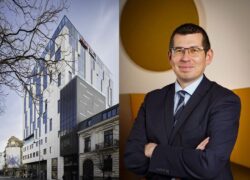
Victoria Center is located on Calea Victoriei in the heart of Bucharest’s business district. The property offers approximately 8,600 square meters of premium office space and holds a BREEAM In-Use certification with an Excellent rating, reflecting its modern and sustainable design. It is home to leading tenants from the legal, IT, and financial services sectors, including Aon Romania, nShift, Botezatu Estrade & Asociații, and Eversheds Lina & Guia. Additionally, the Embassy of the United Mexican States in Romania recently selected the building as its headquarters. The Central Business District continues to be the most sought-after location in Bucharest, experiencing a nearly 20% rise in rental rates over the past two years, the highest increase in the city.

Joao Saracho, Managing Director of Solida Capital Europe, emphasized the strategic importance of this acquisition, describing it as part of the company’s broader plan to expand its real estate portfolio in Central and Eastern Europe. He noted that the investment aligns with Solida’s mission to capitalize on growth opportunities in dynamic markets and create value through asset management expertise. This transaction, the company’s first in Bucharest, signals further expansion opportunities in the region.

Colliers played a key role in facilitating the transaction, providing advisory services from the initial stages through to completion. Robert Miklo, Head of Capital Markets at Colliers, highlighted Solida Capital’s well-planned entry into the Romanian market and expressed confidence in the investment’s potential. He also emphasized Colliers’ anticipation of Solida’s continued expansion in the country. Stefania Baldovinescu, Senior Partner for Asset Services at Colliers, welcomed Solida Capital to the market and announced that Colliers would be providing property management services for Victoria Center.

The Romanian real estate investment market concluded 2024 with a total transaction volume of EUR 750 million, recording the highest transactional activity growth among the six largest economies in Central and Eastern Europe, including Bulgaria, the Czech Republic, Hungary, Poland, and Slovakia. Colliers consultants predict a strong performance for 2025, supported by an active transaction pipeline. Ongoing negotiations, valued at approximately EUR 500 million, suggest that investment volumes this year may surpass those of 2024.

Dino Polska reports strong growth and expansion in 2024

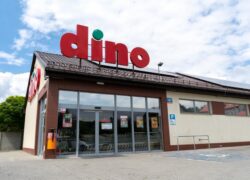
Dino Polska concluded 2024 with remarkable growth, reporting a total revenue of PLN 29.3 billion, reflecting a 14.1% increase compared to the previous year. The company continued its rapid expansion, closing the year with 2,688 stores across Poland, demonstrating its strong market presence. To support its ongoing development, Dino allocated PLN 1.6 billion in capital expenditures while creating 8,000 new jobs, bringing the total workforce to 49,900 employees.

The fourth quarter of 2024 saw the opening of 116 new stores, contributing to a total of 283 new outlets throughout the year. With its distinctive red logo, Dino stores have become a trusted part of the Polish retail landscape, offering consumers a uniform shopping experience and easy access to essential groceries and daily necessities. By the end of the year, the total selling area of Dino stores expanded to 1,061.2 thousand square meters, marking a 12% growth from the previous year.

Capital investments in Dino’s development over the past five years reached PLN 6.6 billion, underlining the company’s commitment to long-term expansion. Fresh products remained a major revenue driver, accounting for nearly 40% of total sales. The category includes fruit, vegetables, bread, and fresh meat supplied by the Agro-Rydzyna meat processing plant. Dino’s well-structured logistics ensure that fresh products are delivered to stores every morning. The like-for-like (LfL) sales growth in stores operating for more than a year reached 5.3% in 2024.

In line with its sustainability efforts, Dino Polska continued to prioritize renewable energy, equipping newly opened stores with photovoltaic (PV) installations. By the end of 2024, 2,476 stores, representing 92% of the entire network, were outfitted with PV installations. The total renewable energy capacity within the Dino Group reached 98.9 MW, with 86.6 GWh of solar power sourced in 2024, marking a 30.5% increase from the previous year.

Dino Polska’s continued focus on expansion, efficiency, and sustainability reinforces its position as one of Poland’s leading retail chains, catering to growing consumer demand while advancing its environmental initiatives.

LATEST NEWS