Intersport Voswinkel leases 2,000 sqm at Limbecker Platz shopping centre in Essen

Union Investment has secured a new tenant for the Limbecker Platz shopping centre in Essen. Intersport Voswinkel has signed a ten-year lease for 2,000 square meters on the first floor, which is now fully occupied. This marks another step in the re-letting of space previously occupied by Galeria Karstadt Kaufhof, with 50 percent of the former tenant’s area now leased.

Galeria Karstadt Kaufhof had rented approximately 19,000 square meters across four floors before filing for insolvency in January 2024, leading to the termination of its lease. The vacated space is being divided into multiple sections to accommodate different retailers.

Union Investment and ECE have already secured P&C* Düsseldorf, which will occupy 6,400 square meters over two floors. The store is expected to open in spring 2026 with an updated shop design. The redevelopment of the space, carried out in partnership with ECE, represents an investment of approximately EUR 30 million through Union Investment’s open-ended real estate fund, UniImmo: Europa.

Discussions are ongoing with potential tenants from various sectors to fill the remaining vacant areas. Limbecker Platz has recently added new tenants, including Bershka, Pull&Bear, Zara, and the first German store of Japanese brand MINISO.

With over 200 stores, Limbecker Platz is one of Germany’s largest inner-city shopping centres. Designed by architect Gunter Henn, the building features a distinctive metal façade inspired by a Marilyn Monroe dress, decorated with illuminated sequins that change colour at night.

LEG Immobilien SE reports strong 2024 results with stable portfolio valuation and earnings growth

LEG Immobilien SE reported strong financial results for 2024, with AFFO reaching EUR 200.4 million, slightly exceeding the company’s mid-year forecast. The company maintained steady performance, benefiting from strong demand for affordable housing and solid leasing activity. The completion of the majority acquisition of Brack Capital Properties on January 3, 2025, expanded LEG’s portfolio by approximately 9,000 apartments, further strengthening its position in the residential real estate sector.

The company saw improvements in key operational indicators, with the like-for-like vacancy rate decreasing to 2.3 percent and rental income increasing by 3.4 percent. The rise in rental income was driven by the free-market segment, as regulated rental rates in the subsidized housing sector remained stable. The average rent for LEG’s properties now stands at EUR 6.80 per square meter. Throughout the year, the company focused on maintaining cost efficiency, with total investments amounting to EUR 436.5 million, in line with the previous year.

The proposed dividend for 2024 is EUR 2.70 per share, reflecting a full distribution of AFFO in line with the company’s dividend policy. This corresponds to a yield of 3.3 percent based on the share price at the end of 2024. The company’s financial stability was reinforced by the stabilization of portfolio valuation, with a slight increase of 0.4 percent in the second half of the year. At year-end, the valuation of LEG’s residential portfolio averaged EUR 1,629 per square meter, and the gross yield of the portfolio stood at 4.9 percent.

LEG continued its asset management strategy by selling approximately 2,500 apartments for EUR 255 million to strengthen its balance sheet. Additional sales of 1,800 units are expected to generate EUR 62 million in net proceeds. The company remains cautious with acquisitions but continues to assess opportunities in the transaction market. Financing costs averaged 1.49 percent at the end of 2024, supported by the issuance of a EUR 700 million convertible bond and the repayment of higher-interest debt. Net debt declined by 2.2 percent to EUR 8.8 billion, with the loan-to-value ratio improving to 47.9 percent.

Looking ahead to 2025, LEG expects further stability in property values and continued demand for rental housing. AFFO is projected to be between EUR 205 million and EUR 225 million, potentially reflecting a 7 percent increase per share compared to 2024. The company plans to increase investment per square meter for the first time in two years, from EUR 34 to over EUR 35. LEG also aims to integrate sustainability with financial performance, targeting CO2 reductions and long-term revenue contributions from its green business initiatives.

Kamco Invest reports KWD 4.4 million (USD 14.4 million) net profit for 2024

Kamco Invest, a regional non-banking financial services provider, reported a net profit of KWD 4.4 million (USD 14.4 million) for the financial year ending 31 December 2024, a significant increase from KWD 748 thousand (USD 2.4 million) in 2023. Earnings per share rose to 12.72 fils, up from 2.19 fils the previous year.

Total revenue for the year reached KWD 25.4 million (USD 83.1 million), compared to KWD 18.0 million (USD 58.9 million) in 2023. The company’s fee and commission income grew by 15% to KWD 16.9 million (USD 55.3 million), accounting for 66.5% of total income, reinforcing its position as the primary revenue driver. Kamco Invest raised over USD 1.2 billion for various products and transactions and increased its assets under management by USD 1.0 billion, bringing the total to USD 15.9 billion, a 7% growth over the year.

The company’s equity funds and managed portfolios continued to perform strongly. Kamco Investment Fund was ranked the best-performing fund in Kuwait, while Kamco Islamic Fund was the second-best-performing Islamic equity fund, based on data published by Boursa Kuwait.

In alternative investments, which include real estate, private equity, and structured products, the firm distributed USD 58.1 million to clients and assessed new investment opportunities. Kamco Invest also expanded into private debt investments in real estate projects alongside its existing equity investments in real estate assets.

The investment banking division completed 11 transactions worth USD 4.9 billion, including nine bond and sukuk issuances for financial institutions and corporates in Kuwait, Saudi Arabia, the UAE, and Bahrain. The company also managed Kuwait’s largest mandatory tender offer in the insurance sector and an Initial Public Offering (IPO) of an Omani sovereign-owned oil company.

Kamco Invest continued to expand its network and strengthen its global presence, contributing to increased fee-based income. The company’s brokerage arm, First Securities Brokerage Company, grew its client base by leveraging online trading platforms.

The company ended 2024 with KWD 62.3 million (USD 203.9 million) in shareholders’ equity, reflecting a 4.3% increase from the previous year. Capital Intelligence, in its May 2024 review, maintained Kamco Invest’s long-term credit rating at “BBB” and short-term rating at “A3” with a stable outlook.

The Board of Directors has proposed a cash dividend of 5 fils per share, pending shareholder approval at the Annual General Meeting.

Chairman Sheikh Talal Ali Abdullah Al Jaber Al Sabah highlighted the company’s performance despite market challenges, emphasizing its focus on asset management and investment banking as key factors in maintaining its competitive position. He reaffirmed the company’s commitment to expanding in key markets and delivering value to stakeholders.

CEO Faisal Mansour Sarkhou attributed the strong financial performance to business growth across multiple areas, including revenue expansion, managed product performance, and successful transactions. He stressed the importance of fee and commission-based income in sustaining the company’s financial stability, describing it as a differentiating factor in Kamco Invest’s business model.

Photo: Faisal Mansour Sarkhou, Chief Executive Officer and Sheikh Talal Ali Abdullah Al Jaber Al Sabah, Chairman of Kamco Investment Company K.S.C

UK planning reforms aim to halve approval time for major Ppojects

The UK government has unveiled a comprehensive overhaul of the national planning system, aiming to speed up approvals for major infrastructure and housing projects. Central to this initiative is the forthcoming Planning and Infrastructure Bill, which seeks to reduce the current average approval time of four years for significant developments such as wind farms and power stations. Housing and Planning Minister Matthew Pennycook has described the reforms as a “radical evolution” designed to streamline processes, boost economic growth, and address the housing crisis.

A key element of the bill is the simplification of bureaucratic processes, which will remove unnecessary administrative hurdles and improve efficiency in planning applications. The reforms also include limitations on judicial reviews, preventing repeated legal challenges from delaying critical projects. In addition, the introduction of a Nature Restoration Fund aims to balance infrastructure growth with environmental sustainability, ensuring that development aligns with long-term ecological goals. These measures support the government’s ambition to generate most of the UK’s electricity from low-carbon sources by 2030 while also delivering 1.5 million new homes over the next five years.

The government is also implementing new strategies to improve the efficiency of local councils in the planning process. Planning officers will be granted greater authority, reducing the reliance on council committees, which often slow decision-making. In addition, mandatory training for councillors involved in planning committees will ensure they make informed and efficient decisions. Another significant measure is the government’s plan to address land banking, a practice where developers hold onto land without proceeding with construction. A “use it or lose it” policy is being considered, which could impose financial penalties or revoke planning permissions for stalled projects, ensuring that housing targets are met.

Environmental considerations are also a crucial aspect of the reforms. Local councils will now be required to review green belt boundaries, particularly areas classified as “grey belt”, which have lower environmental value and could be used for development. This reassessment aims to strike a balance between protecting green spaces and addressing the severe housing shortage. Prime Minister Keir Starmer has emphasized that while environmental protection is essential, housing development must take priority in some areas to meet the country’s growing demand.

The bill outlines an ambitious strategy for national infrastructure development, with the government pledging to fast-track decisions on 150 major projects within the current parliamentary term. This acceleration is expected to double the approvals compared to the previous administration, particularly in sectors such as transportation, energy, and public services. The Justice Secretary has also announced a push to expand prison capacity by securing sites for new facilities, utilizing existing Crown development legislation to bypass previous bureaucratic delays.

Chancellor Rachel Reeves has underscored that these planning reforms are a fundamental part of the government’s economic growth strategy. By making it easier for developers to build, particularly near key transport hubs, the government aims to stimulate investment in housing and infrastructure, improve workforce mobility, and enhance economic competitiveness. This “presumption in favour of building” is expected to create long-term economic benefits, making Britain a more attractive destination for investors.

In summary, the UK’s proposed Planning and Infrastructure Bill represents a significant transformation in how major projects are approved. By halving approval times, empowering local authorities, and balancing development with environmental concerns, the government is aiming to create a more efficient, responsive, and forward-thinking planning system. These reforms signal a major shift in the UK’s approach to urban development, paving the way for more streamlined and sustainable growth.

Source: FT and Times

Romania’s retail sector performance in January 2025: Mixed trends across categories

The retail sector in January 2025 experienced notable fluctuations in turnover, with significant month-on-month declines yet year-on-year growth across key categories. Data from the latest statistical report highlights contrasting trends, where short-term seasonal effects caused sharp decreases in retail sales compared to December 2024, while long-term trends indicated a steady increase from January 2024.

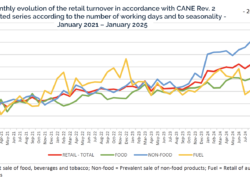
Retail turnover volume, excluding trade in motor vehicles and motorcycles, declined by 19.4% as a gross series from December 2024. However, after adjusting for the number of working days and seasonal variations, the decline was largely mitigated, with a marginal increase of 0.1% on a monthly basis. The drop was primarily driven by lower sales in food, beverages, and tobacco, which fell by 21.3%, while non-food products registered a decline of 20.5%. The retail of automotive fuel in specialized stores also recorded a decrease, though at a lower rate of 12.0%.

On a year-over-year basis, the retail sector presented a more optimistic picture. Compared to January 2024, the total retail turnover volume increased by 4.1% in gross series and by 3.2% in seasonally adjusted terms. This growth was largely driven by a strong performance in non-food retail, which recorded a 7.0% increase. The automotive fuel segment also contributed positively, with a rise of 7.3% in gross series and 1.2% in adjusted terms. Conversely, food, beverage, and tobacco sales declined by 0.9% in gross figures and showed a marginal decrease of 0.2% in seasonally adjusted data.

Breaking down the sector further, food, beverage, and tobacco sales, despite a steep month-on-month drop of 21.3%, showed near stability over the year, reflecting a minor decline in demand. Non-food product sales experienced a sharp monthly decrease but exhibited strong growth over the longer term, with a 5.8% increase in adjusted figures from January 2024. Meanwhile, automotive fuel sales, despite a short-term contraction, maintained resilience in annual performance, growing by 7.3% in gross terms and 1.2% in seasonally adjusted figures.

The contrasting trends in retail performance reflect the typical seasonal effects observed in January, following a peak in consumer spending during the holiday season in December. The sharp month-on-month decline is consistent with historical patterns, where post-holiday spending tightens across retail categories. However, the year-on-year growth suggests a steady expansion in consumer activity, particularly in non-food and fuel sales, which continue to drive overall retail sector performance.

The report also provides insight into the methodological framework used to calculate turnover figures. The retail turnover indices are based on Laspeyres-type indices, which adjust for price fluctuations and maintain comparability over time. The turnover volume is derived by aggregating invoiced revenues from sales while excluding excise duties, subsidies, and non-retail transactions such as land and fixed asset sales.

Looking ahead, analysts will closely monitor whether the retail sector can sustain its year-on-year growth amid economic uncertainties. While the beginning of the year has seen a typical seasonal decline in turnover, consumer demand for non-food products and fuel has shown resilience. If this trend continues, it may indicate stable economic conditions that support further growth in retail trade.

The next retail turnover report is scheduled for release on April 7, 2025, and will provide further insights into consumer spending trends and market conditions in the coming months. For more comparative data across European Union member states, additional reports from Eurostat will complement the national statistics.

Mixed economic trends in Poland: Industry struggles, services resilient in February 2025

Economic sentiment in Poland’s regions showed a mixed picture in February 2025, with negative trends dominating in manufacturing, construction, and wholesale and retail trade. The regional business climate indicator (R-BCI) recorded negative values in most voivodeships for these sectors. However, services, particularly in information and communication, displayed greater resilience, with several regions reporting positive business sentiment.

Compared to the same period in 2024, the overall economic climate improved in the services sector, with at least half of the voivodeships reporting an increase in the R-BCI. Retail trade also experienced an improvement in eight voivodeships, reflecting a modest recovery in consumer confidence.

Month-on-month comparisons indicate a gradual improvement in business sentiment across multiple sectors. At least seven voivodeships reported higher values of the regional business climate indicator in all analyzed economic areas compared to January 2025. Despite this, most entrepreneurs across sectors (except for those in information and communication) anticipated a deterioration in their firms’ economic conditions over the next three months.

Industrial and Construction Sectors Under Pressure

The manufacturing sector remained under strain, with most voivodeships reporting negative business sentiment. The most pessimistic assessments came from the Podlaskie, Łódzkie, and Śląskie voivodeships, where the R-BCI fell to -8.3, -6.9, and -6.4, respectively. These declines were primarily driven by concerns over current economic conditions and uncertainty about the future.

However, some positive signs emerged. Entrepreneurs in Mazowieckie (6.8), Małopolskie (4.9), and Podkarpackie (2.4) voiced more optimism, citing stable business conditions and expectations of gradual improvement.

In the construction sector, economic sentiment was predominantly negative across most regions. The worst assessments came from Pomorskie (-14.5) and Zachodniopomorskie (-13.7), where businesses struggled with declining orders and reduced construction activity. Positive evaluations were rare, with Podlaskie (9.3) and Mazowieckie (0.9) standing out as the only regions where expectations for the industry remained stable or slightly optimistic.

Entrepreneurs in construction indicated a continued decline in new orders and anticipated further reductions in activity over the coming months. While a few regions showed improvements compared to January 2025, overall business sentiment remained weaker than a year ago.

Rising Costs and Uncertainty as Key Barriers for Businesses

The primary constraint on business operations across all regions continued to be rising labor costs. This was particularly burdensome for companies in the accommodation and food services sector, where the percentage of businesses reporting labor costs as a major challenge ranged from over 7% to nearly 93%, depending on the region.

Economic uncertainty was another significant concern, especially for wholesale trade and transport businesses. Entrepreneurs cited unpredictable market conditions and unclear regulatory policies as key issues affecting their operations.

The burden of high state-imposed payments was also a major issue for construction firms, as well as for businesses in accommodation and food services. Despite these challenges, a small percentage of businesses in manufacturing and retail trade reported facing no significant barriers to their operations.

Retail Trade Sees Modest Growth Amid Challenges

Despite the challenging economic environment, the retail sector exhibited moderate signs of recovery. The volume of retail trade in February 2025 increased by 4.7% compared to the same period in 2024, both in raw and calendar-adjusted terms. Growth was recorded across various retail segments, with food sales rising by 4.7%, non-food retail expanding by 5.6%, and fuel sales increasing by 1.9%.

Sales growth was particularly strong in pharmaceutical, medical goods, and cosmetics shops (9.7%), furniture and electrical goods stores (7.8%), and shops selling manufactured goods (6.7%). However, second-hand goods stores and bookshops saw only marginal increases, reflecting a divergence in consumer spending habits.

E-commerce remained a key driver of retail expansion, with mail order and internet retailing growing by 3.9%, accounting for 8.8% of total retail sales. Automotive fuel sales also experienced a slight boost, rising by 1.9%.

Wholesale Trade Struggles Amid Excess Inventory

While retail trade showed some resilience, the wholesale sector faced a more difficult environment. The R-BCI for wholesale trade was negative in most voivodeships, with Zachodniopomorskie (-11.6), Warmińsko-Mazurskie (-8.7), and Pomorskie (-7.4) showing the most pessimistic outlooks.

Businesses in wholesale trade reported declining sales and excess inventory levels as primary concerns. Many also expressed worries about deteriorating financial conditions. Forecasts for the coming months remained cautious, with expectations of continued weak demand and further economic difficulties.

Despite these concerns, business sentiment improved slightly in several regions compared to January, particularly in Lubelskie, where the R-BCI rose by 9.1 points. However, year-on-year comparisons showed a worsening outlook in nine voivodeships, with the sharpest declines recorded in Podkarpackie, Podlaskie, and Zachodniopomorskie.

Services Sector Shows Stronger Performance

In contrast to the difficulties faced by industry and trade, the services sector demonstrated greater resilience. The information and communication sector, in particular, recorded positive business sentiment in most voivodeships. Lubuskie (28.6), Świętokrzyskie (20.2), and Małopolskie (17.7) reported the most optimistic assessments.

Entrepreneurs in this sector expressed confidence in their current economic conditions, though forecasts for the coming months were mixed. In four voivodeships, business owners expected a downturn, while in six others, opinions were evenly split between optimism and pessimism.

Accommodation and food services also showed positive signs, with nine voivodeships reporting an overall optimistic outlook. Lubelskie (37.7) and Podkarpackie (34.2) recorded the highest R-BCI values. However, businesses in Pomorskie, Małopolskie, and Zachodniopomorskie were more cautious about the future, citing concerns over declining demand and financial uncertainty.

Investment Trends in 2025: Stability Over Expansion

An additional survey on investment expectations for 2025 revealed that most businesses anticipate maintaining investment levels similar to those in the previous year. This was especially pronounced in the information and communication sector, where over 70% of entrepreneurs planned to sustain their investment levels.

However, among firms expecting changes, more predicted a decline in investment than an increase. This trend was observed across nearly all economic sectors and regions.

Investment priorities for 2025 remain focused on machinery, equipment, and tools, particularly in manufacturing and construction. In the information and communication sector, companies plan to invest primarily in computer and telecommunications equipment, as well as research and development activities. Transport and storage businesses are expected to focus on upgrading their transportation infrastructure, while employee training remains a key investment area across all industries.

Outlook for the Coming Months

While February 2025 saw some improvement in business sentiment compared to January, economic uncertainty continues to weigh heavily on companies across various sectors. Rising labor costs, concerns about financial stability, and fluctuating demand are among the key challenges facing businesses.

Although the services sector, particularly information and communication, shows signs of resilience, manufacturing, construction, and wholesale trade remain under pressure. Entrepreneurs remain cautious in their outlook for the coming months, with most expecting further economic difficulties.

The investment climate remains stable but lacks strong growth momentum, indicating a wait-and-see approach among businesses. How these trends evolve in the coming months will depend on broader economic developments and policy measures to address business concerns.

Source: GUS

Hungary: Industrial production declines by 3.9% in January, while retail sales show growth

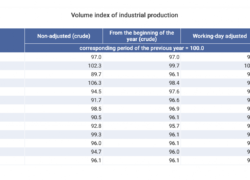
Industrial production in January 2025 fell by 3.9% compared to the same month in the previous year. The working-day adjusted index showed no variation from the unadjusted figures. However, seasonally and working-day adjusted data indicated a 0.8% increase in output compared to December 2024, suggesting a slight month-on-month improvement despite the annual decline.

A decrease in production volume was observed across most manufacturing subsections. Among the largest industrial segments, declines were recorded in the manufacture of transport equipment, electrical equipment, and food products, including beverages and tobacco. However, growth was noted in the production of computer, electronic, and optical products, providing some balance within the sector.

Despite the annual contraction, the industrial sector registered a modest recovery compared to the previous month, with adjusted indices reflecting a 0.8% rise in output. Meanwhile, the retail sector presented a contrasting picture, with sales volumes demonstrating significant growth both on an annual and monthly basis.

Retail trade in January 2025 saw a 4.7% increase compared to the same period in 2024, based on both raw and calendar-adjusted data. Sales expanded across multiple categories, with a 4.7% rise in specialized and non-specialized food shops, a 5.6% increase in non-food retailing, and a 1.9% uptick in automotive fuel retailing. When measured against the previous month, seasonally and calendar-adjusted data showed a 2.2% increase in retail sales, signaling continued consumer demand.

Food retailing, which accounts for a substantial portion of total retail trade, grew by 4.7%. Non-specialized food and beverage stores, making up 76% of the sector, saw a 5.1% rise in sales, while specialized food, beverage, and tobacco stores recorded a 3.2% increase.

Non-food retailing also experienced strong growth, with total sales volumes rising by 5.6%. The most notable increases were observed in pharmaceutical, medical goods, and cosmetics shops, where sales climbed by 9.7%. Furniture and electrical goods stores recorded a 7.8% increase, while non-specialized shops dealing in manufactured goods saw a 6.7% rise. Sales in textiles, clothing, and footwear stores increased by 4.7%, second-hand goods shops by 2.9%, and books, computer equipment, and other specialized stores by 0.3%.

E-commerce and mail-order sales, which represent 8.8% of total retail trade, expanded by 3.9%, reflecting steady consumer engagement in online shopping. The volume of sales at automotive fuel stations also rose, increasing by 1.9%.

Sales in motor vehicles and parts, which are not included in retail trade data, surged by 19% in January, highlighting a robust demand for automotive products.

In total, domestic retail sales for January 2025 amounted to HUF 1,477 billion at current prices. Specialized and non-specialized food shops accounted for 49% of total national retail turnover, while non-food retail trade contributed 35% and automotive fuel stations represented 16%.

While industrial production faced challenges at the start of the year, the steady expansion in retail sales suggests resilient consumer activity, potentially supporting broader economic stability in the coming months.

Source: Hungarian Central Statistical Office

New culinary experiences arrive at FORUM Shopping Centre in Gliwice

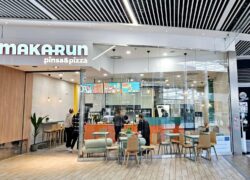
The FORUM Shopping Centre in Gliwice continues to evolve, expanding its range of offerings with fresh and diverse dining options. As part of this ongoing development, two well-known restaurant brands have recently joined the centre’s gastronomic lineup. In February and March, visitors gained access to new culinary experiences with the arrival of Makarun Pinsa & Pizza, which opened on February 27, and Pasibus, which welcomed customers on March 7.

Both establishments mark their first locations in Gliwice, bringing unique flavors and dining experiences to the city. Their introduction not only diversifies the food options available at FORUM but also coincides with the unveiling of a newly designed dining area above Pasibus. This new food court provides seating for 50 guests and offers a panoramic view of the shopping gallery, creating a comfortable and inviting atmosphere for visitors looking to relax and enjoy their meals.

Makarun Pinsa & Pizza introduces a modern take on Italian cuisine. As a well-established Polish restaurant chain specializing in pasta, Makarun has built a reputation for offering both traditional Italian recipes and innovative flavor combinations. Customers can create their own meals by selecting from a variety of pasta types, fresh ingredients, and aromatic sauces, ensuring a personalized dining experience. With a growing presence across Poland, Makarun has become the country’s largest spaghetteria chain. The new restaurant at FORUM, however, offers more than just pasta. Under its expanded name, Makarun Pinsa & Pizza, the menu now includes freshly baked pinsa and crispy pizza, bringing additional variety to Italian cuisine enthusiasts. Guests can also opt for fresh and colorful salads as a lighter alternative. Located on level +1 next to McDonald’s, the restaurant combines a modern interior with a welcoming ambiance, making it a great spot for both quick meals and leisurely dining.

Pasibus, another highly anticipated addition, has built a strong reputation in Poland’s fast-casual dining scene, particularly for its signature burgers. Known for using high-quality ingredients and bold flavor combinations, the brand has redefined the burger experience by continually introducing new and seasonal menu items. While best known for its burgers, Pasibus also offers an extended selection that includes lunch specials, wraps, and chicken sandwiches, catering to a broader range of tastes. The brand’s roots trace back to its beginnings as a food truck in Wrocław in 2013, where it quickly gained popularity and a loyal following. Since then, it has grown into a national chain with locations in major Polish cities, maintaining its original street food character while providing professional service and high-standard dining spaces. With the opening of its Gliwice branch on March 7, Pasibus has now made its mark in yet another key urban centre.

To accommodate the increasing number of dining visitors, FORUM Shopping Centre has expanded its food court with a new seating area on level +2. Positioned above Pasibus, this newly designed space provides seating for 50 guests and offers a scenic overlook of the shopping centre. The addition of this seating area enhances the overall experience, giving visitors a comfortable and aesthetically pleasing environment to enjoy their meals.

According to Patrycja Duczmal, Director of the FORUM Shopping Centre, these changes reflect a broader strategy to enhance both the shopping and dining experience at the centre. She emphasizes that the goal is not only to provide a diverse selection of retail stores but also to create a vibrant space where visitors can enjoy high-quality cuisine and a welcoming atmosphere. She highlights that the recent openings, along with the newly added seating area, are part of a deliberate effort to elevate the overall experience for customers.

With these latest developments, the FORUM Shopping Centre continues to reinforce its status as a dynamic destination for both shopping and dining. Visitors are encouraged to explore the new restaurants and enjoy the expanded culinary offerings available within the centre.

Croatia’s industrial production rises 7.5% in January 2025, driven by manufacturing growth

The industrial sector in the Republic of Croatia recorded a notable increase in production at the beginning of 2025. In January, industrial production rose by 7.5% compared to the same month in the previous year, after adjusting for working days. This growth was primarily driven by the manufacturing sector, which experienced a 7.7% increase. The electricity, gas, steam, and air conditioning supply sector also contributed to the overall expansion, growing by 3.4%. However, the mining and extraction industry saw a decline of 2.0% over the same period.

On a month-to-month basis, total industrial production, adjusted for seasonal effects and working days, increased by 2.1% in January 2025 compared to December 2024. This suggests a steady upward trend in the sector’s output.

Inventory levels also reflected this growth. At the end of January 2025, total stocks of finished industrial products were 1.3% higher than at the end of the previous month. Compared to January 2024, inventories increased by 5.2%, indicating a buildup of goods ready for sale or further processing.

Despite the expansion in production, employment in the industrial sector continued to decline. The total number of employed persons in the industry fell by 0.7% in January 2025 compared to December 2024. On an annual basis, employment in the sector decreased by 2.2% from January 2024, suggesting ongoing structural adjustments or efficiency improvements that may be reducing labor demand.

These figures highlight the strength of Croatia’s industrial output at the start of the year, with manufacturing leading the way. However, the decline in employment indicates potential challenges in workforce dynamics, even as production volumes increase.

P3 Group reports strong financial performance for 2024, portfolio reaches €10 Billion

P3 Group S.à r.l has reported strong financial results for the year ended December 31, 2024, with its portfolio reaching a milestone of €10 billion. The company recorded an 11% portfolio growth, primarily driven by acquisitions and development projects, alongside a 17% increase in Net Operating Income (NOI) to €493 million, up from €423 million in 2023. The growth was attributed to a combination of like-for-like rental income expansion, lease indexation, and higher re-leasing rates.

P3 maintained a high occupancy rate of 98% across its portfolio, which expanded to approximately 9.7 million square meters of Gross Lettable Area (GLA), up from 8.4 million square meters in 2023. The company added 1.3 million square meters through acquisitions and completed developments, while minor disposals were made. Western Europe continues to represent the majority of P3’s holdings, accounting for approximately 60% of its assets, with the remaining 40% located in Central and Eastern Europe.

In 2024, P3 completed several key transactions, including the acquisition of 18 yielding assets in Germany, Czechia, and Italy, adding around 500,000 square meters to its portfolio. Additionally, the company completed 23 development projects across Europe, contributing approximately 800,000 square meters of new GLA. P3 also maintained a strong development pipeline with 11 projects under construction, totaling 410,000 square meters.

CEO Frank Pörschke commented on the company’s performance, stating, “Despite ongoing economic uncertainties, the structural tailwinds in the logistics real estate sector remain strong. In 2024, we successfully navigated the macroeconomic landscape, achieving rental growth and strategic acquisitions that increased our portfolio value to €10 billion. Our ability to maintain high occupancy rates and deliver robust operational performance underscores P3’s resilience and long-term strategic vision.”

CFO Thilo Kusch highlighted the company’s financial achievements, noting, “P3 delivered a strong financial performance in 2024, marked by a 17% increase in Net Operating Income and an improved EBITDA margin of 85%. These results reflect our disciplined approach to growth, efficient re-leasing strategies, and prudent financial management. We successfully raised €1.57 billion in new debt, including two significantly oversubscribed Green bond issuances in February and September, which collectively amounted to €1.1 billion. Our liquidity remained strong at €1 billion by year-end, reinforcing our ability to sustain long-term growth.”

Financial Highlights for 2024:

– Occupancy and Leasing: P3 maintained a high like-for-like occupancy rate of 98%, with 96% of leases linked to inflation, ensuring continued rent indexation.

– Income Growth: NOI increased by 17% to €493 million, supported by a 5% like-for-like NOI growth, acquisitions, and completed developments.

EBITDA Performance: EBITDA improved to €430 million, with a higher EBITDA margin of 85%, up from 84% in 2023.

– Leasing Activity: A record 2.2 million square meters were leased in 2024, driven by both renewals and new leases, with rental rates increasing by 21% on re-leasing events.

– Portfolio Valuation: The company’s portfolio value rose to €10 billion, reflecting acquisitions, development gains, and a 1.5% like-for-like revaluation of the operating portfolio.

– Development Pipeline: P3 maintained growth momentum with 11 projects under construction, covering 410,000 square meters of GLA.

– Liquidity and Debt Issuance: P3 secured €1.57 billion in new debt, including two Green bond issuances totaling €1.1 billion, priced at fixed coupons of 4.625% and 4.000%.

P3 Group’s results demonstrate the company’s ability to sustain growth despite economic headwinds, positioning it well for continued expansion in the logistics real estate sector.

LATEST NEWS