Panattoni leases 56,000 sqm to fashion retailer at Legnica Logistics Park

Panattoni has leased 56,000 square metres of warehouse and logistics space at Panattoni Park Legnica to a global fashion retailer. This new agreement follows a recent lease with the same tenant in Głogów, bringing the client’s total leased space in Lower Silesia across Panattoni developments to approximately 95,000 square metres.

The Legnica facility is part of Panattoni’s broader presence in the region, where the company has delivered 2.5 million square metres of industrial space, accounting for roughly half of Lower Silesia’s logistics supply. In 2024 alone, Panattoni leased nearly 400,000 square metres in the region, with a large portion allocated to e-commerce operations.

The tenant has already taken early access to the Legnica site and is preparing to begin operations. The combined leases reflect continued demand for distribution and fulfilment centres in locations with direct connections to key transport routes.

Panattoni Park Legnica is located near the S3 expressway, which runs along Poland’s western corridor and connects with the A4 motorway, facilitating access across southwestern and southeastern Poland. The site is positioned as an alternative to the more developed Wrocław logistics market.

Once completed, the Legnica park will include nearly 120,000 square metres of space. The development features flexible layout options, manoeuvring areas, ground-level loading gates, and on-site parking. The project is being developed with BREEAM certification, aimed at meeting energy efficiency and environmental performance standards.

PATRIZIA acquires two logistics assets in Tuscany, expanding Italian portfolio

PATRIZIA, an international real asset investment manager, has acquired two logistics properties in Tuscany, further expanding its logistics footprint in Italy. The assets were acquired through the PATRIZIA Logistik-Invest Europa fund for approximately EUR 30 million and add to the company’s EUR 7 billion European logistics portfolio.

The acquisition includes a last-mile logistics facility in Prato, near Florence, currently leased to UPS, and a cross-docking facility in Lucca leased to Essity. The properties were developed in 2020 and 2021 and are built to Grade A specifications. Both buildings include rooftop photovoltaic systems and other sustainability features.

The Prato facility is located near major transport routes, including the A1 and A11 motorways, and serves last-mile distribution operations in Tuscany and Emilia-Romagna. The Lucca property is positioned along infrastructure corridors linking Florence, Pisa, and Livorno and supports logistics in a region with a strong industrial base, particularly in paper production. Both properties are located in areas with low warehouse vacancy rates and limited availability of modern logistics space.

PATRIZIA has indicated that the assets are fully let under long-term leases to their respective tenants. The Prato facility processes over 14,000 packages daily and connects to regional airports. The Lucca site supports Essity’s local distribution needs and is located near one of the company’s key Italian production sites. Both buildings feature clear heights of up to 12 metres and high floor load capacities.

The acquisition supports PATRIZIA’s broader strategy of investing in logistics real estate in established markets with stable income and growth potential. The company plans to enhance sustainability performance further, including expanding rooftop solar energy systems.

PATRIZIA’s recent logistics acquisitions reflect continued demand for well-located and technically modern industrial assets in areas with strong transport infrastructure and growing supply chain needs. Tuscany remains an active logistics region, supported by road, port, and airport access and steady demand for contemporary distribution space.

New leases and renewals signed at Galeria Młociny covering over 9,500 sqm

Galeria Młociny, a shopping and mixed-use centre in Warsaw’s Bielany district, has recently signed 12 new lease agreements and renewed contracts with 27 existing tenants. In total, the transactions cover more than 9,500 square metres of space, representing approximately 12% of the retail and office area in the complex.

The property is jointly owned by EPP (70%) and Echo Investment (30%). According to EPP, the leasing activity reflects the centre’s focus on maintaining relationships with existing tenants while introducing new retail concepts.

Since late August 2024, Galeria Młociny has signed leases with 12 new tenants. These include dm, a large European drugstore chain; Mr. DYI, specialising in home improvement and furnishings; and INTERSPORT, offering a range of sports brands. Additionally, Dreslow, a retailer focused on circular fashion, will also open a store. These new agreements account for a total of 3,800 square metres.

In parallel, lease extensions have been concluded with 27 existing brands, covering 5,700 square metres. Tenants who have renewed include MediaMarkt, SMYK, JYSK, Flying Tiger Copenhagen, and TOUS. The renewals suggest continued demand for space within the centre from long-standing tenants.

Galeria Młociny comprises approximately 81,000 square metres of leasable area, including retail, office, and service space. It houses over 200 retail units and more than 30 restaurants and cafés. Located near a key transportation hub, the centre is positioned to serve a high volume of pedestrian and commuter traffic.

Since opening, Galeria Młociny has hosted several brand debuts on the Polish market, including Primark and MODIVO. Other major tenants include brands from the Inditex group (Zara, Bershka, Stradivarius, and others), H&M, TK Maxx, C&A, CCC, RTV EURO AGD, and VAN GRAAF.

The property includes a range of facilities beyond retail. These include a multiplex cinema, a two-level fitness club, a bowling alley, a medical centre, and several children’s activity areas. The food and entertainment zone on the +2 level is connected to a green roof terrace and features themed areas such as Hutnik Hall, which incorporates industrial design elements inspired by a nearby steelworks.

Galeria Młociny continues to develop its offer in line with changing consumer needs, with a mix of retail, leisure, and dining options in a high-footfall location.

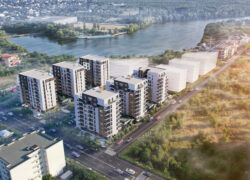
RRG Real Estate Group enters new era with family ownership and flagship project Lakeside 11

RRG Real Estate Group is undergoing a significant transformation marked by a rebranding initiative, a shift in ownership, and the launch of a landmark development—Lakeside11. With a clear vision toward modern, sustainable, and community-focused living, the company is positioning itself as a rising force in Bucharest’s residential real estate sector. CIJ EUROPE caught up President Pavel Kodzik and Siarhei Artemenko, Project Manager at RRG.

New Ownership and Strategic Direction

In 2024, RRG Real Estate Group became a family-owned business under the leadership of Maxim Iakovlev. A Yale graduate with experience at big companies like Lehman Brothers and Goldman Sachs, Iakovlev brings a fresh strategic direction rooted in long-term value, sustainability, and lifestyle integration.

“RRG is no longer just about developing buildings,” said Kodzik. “We are focused on creating communities that balance urban convenience with green living—projects that genuinely enhance the lives of our residents.”
The company’s renewed identity, launched under the RRG Real Estate Group brand, reflects this evolution. Significant investment was made in marketing, branding, and product design to elevate market recognition and project quality.

Lakeside 11: A Milestone Development

The centerpiece of RRG’s transformation is the Lakeside11 project, launched in September 2024. Located on a 2.5-hectare site in northern Bucharest, the development is the result of nearly two decades of strategic land acquisition and planning. The project is expected to unfold over seven years and feature multiple phases. The first phase, consisting of three blocks, is already under construction and set for completion in December 2026.
With eight floors and a unique architectural identity, Lakeside11 is distinguished by its attention to detail and commitment to quality. The sales office, fully designed in-house, showcases elements of the future development—including custom furniture and landscaping features—as a tangible representation of the final product.

Design Philosophy and Business Class Positioning

The design of Lakeside11 follows Le Corbusier’s principles, elevating the living areas above ground level to separate pedestrian and vehicle traffic and create a floating community courtyard—referred to as the “Float Spot.” This raised space will include landscaped areas, playgrounds, and communal spaces for all residents.
What further sets Lakeside11 apart is the scale and layout of its apartments. Units are significantly larger than market averages—studio apartments begin at 50 sqm, while two-bedroom units reach 70 sqm or more. The low-density design includes only 160 apartments per hectare, in contrast to typical projects in Bucharest that range from 300 to 400.

“Each element, from the door swing to the landscaping, has been thoughtfully considered,” said Siarhei Artemenko, Project Manager at RRG. “We design from the inside out, ensuring every apartment layout is efficient and livable.”

Top-floor penthouses boast panoramic lake views and generous terraces of up to 64 sqm. Prices start from €105,000 + VAT for one-bedroom units and range up to €460,000 + VAT for penthouses, with full interior fit-outs included.

Innovative Sales and Investment Model

RRG has introduced a phased payment model called “#InvestWithRRG,” allowing buyers to partner in the development process. Clients pay in installments tied directly to construction progress—starting with down payment, followed by additional payments as key milestones are reached.

“This structure gives our clients security and control,” explained Kodzik. “They only pay as the building progresses. It creates a partnership model rather than a transactional one.”

Buyers who choose this option benefit from partnership pricing and, for investor clients, potential returns up to 20% annually if reselling upon project completion.

Administrative Challenges and Market Risks

Despite its optimism, RRG acknowledges the broader difficulties in Bucharest’s real estate landscape. Lengthy and unpredictable permitting processes have delayed development and driven up costs, disproportionately affecting small and mid-sized developers.

“Administrative blockages are having a serious impact,” said Kodzik. “Permitting delays can freeze construction for months if not years, risking financial viability. Without reform, the market risks monopolization by large players, reduced competition, and less affordable housing.”

RRG calls for a more transparent and collaborative dialogue with local authorities, aiming to balance regulatory oversight with efficient processing. “We’re ready to comply with any regulation,” Kodzik added, “but the administration must also commit to timely approvals.”

Building Trust through Transparency

Transparency is central to RRG’s sales and investor relations. Buyers receive bi-monthly video updates from the site, titled Inside Lakeside, providing a detailed view of construction progress. In addition, RRG makes its financial records available to buyers and has increased its group capital to over €10 million to reinforce financial credibility.

“People want more than an apartment—they want trust,” said Kodzik. “That’s why we show our progress, provide open financials, and keep communication consistent.”

Future Growth and Local Integration

RRG is considering expanding Lakeside 11 with nearby land parcels but remains focused on responsibly executing the current phases. The company also highlights the advantages of the location, which includes access to a metro station, commercial centers, and potential integration into Bucharest’s future “Promenada Verde” lakeside walking and cycling network.

“This area is still evolving, but we see its enormous potential,” said the team. “Our residents will benefit not just from what’s already here, but from the city’s long-term development plans.”

As RRG Real Estate Group moves forward under new leadership, it is clearly positioning itself as a modern, customer-focused, and quality-driven developer in Romania’s evolving residential market.

© Roberts Publishing

Penta reports record CZK 15.6 billion profit in 2024, highest since founding

The Penta investment group posted a record net profit of CZK 15.6 billion in 2024, marking a 29% increase compared to the previous year and the highest earnings in the company’s history since its establishment in 1994. The strong financial performance was driven primarily by its pharmacy chain Dr. Max, alongside contributions from other key segments including healthcare, betting, banking, and real estate.

According to figures released by Penta today, the group achieved a return of 16.1% last year. Its total consolidated turnover reached CZK 274.2 billion, a year-on-year rise of approximately 25%. The company also paid CZK 20.2 billion in taxes and levies in 2024.

Dr. Max remained the largest contributor to Penta’s profits, followed by the Fortuna Entertainment Group, the Penta Hospitals network, financial services, and real estate developments. Penta Real Estate, a major player in the group’s portfolio, currently manages assets worth nearly CZK 43 billion.

“We significantly strengthened our position in healthcare and social services in the Czech Republic last year,” said Penta co-founder Marek Dospiva. “Penta Real Estate continues to play a key role in transforming Prague and Bratislava into modern metropolises and is now preparing for expansion into the London market.”

In a major strategic shift, Penta opened its fund to qualified investors at the end of 2024. According to Dospiva, the group exceeded its annual fundraising target within the first two months of the initiative.

Penta, founded by Marek Dospiva and Jaroslav Haščák in September 1994, is a Central European investment group operating in more than ten countries. It focuses on long-term investments across retail, healthcare, real estate, financial services, manufacturing, and media. The group currently employs over 50,000 people and maintains key offices in Prague, Bratislava, Warsaw, and Cyprus.

Source: CTK

Ústí nad Labem region offers most affordable housing in Czech Republic

The Ústí nad Labem Region in northwest Czech Republic remains the most affordable place in the country to buy an apartment, according to a new analysis by the RE/MAX real estate network. At the end of 2024, residents earning the average regional salary of CZK 42,203 could afford to purchase 1.47 square meters of an older apartment—making homeownership significantly more accessible than in any other region.

In stark contrast, Prague continues to be the least affordable location for prospective homebuyers. With an average salary of CZK 59,870, it was only possible to purchase around half a square meter of an older flat in the capital. The average price per square meter in Prague reached CZK 112,000 last year, nearly three times higher than in Ústí nad Labem.

RE/MAX Czech and Slovak CEO Jan Hrubý noted that housing affordability across the country remains among the worst in the European Union. He attributed this to sluggish construction rates, an undersupply of new housing, and wages that have not kept pace with property price growth. Over the past decade, real estate prices in the Czech Republic have surged by 123%, while disposable incomes have increased by just 83%.

Hrubý explained that the high housing accessibility in the Ústí Region is largely due to persistently low property prices, influenced by low demand, aging housing stock, and broader socio-economic challenges. Paradoxically, these conditions have made the region an attractive destination for property investors. He added that future investment potential is expected to grow with the planned construction of a high-speed rail line linking Ústí nad Labem to Prague, which would significantly shorten commuting times.

The analysis also identified the Moravian-Silesian, Liberec, and Karlovy Vary regions as areas where average wages still allow the purchase of at least one square meter of an older apartment. According to Hrubý, these regions face similar structural and economic challenges to the Ústí Region, which helps moderate pressure on real estate prices. Among the most affordable towns are Litvínov, Most, Bílina, Chomutov, Orlová, and Karviná.

Meanwhile, the South Moravian Region follows Prague as one of the least affordable areas. In this region, with an average monthly income of CZK 48,804, residents could afford just 0.62 square meters of housing. The situation in Brno, the regional capital, is reportedly even worse than the regional average.

“In Prague, demand for housing is driven by attractive employment opportunities, higher salaries, well-developed infrastructure, and a wide range of civic amenities,” Hrubý explained. “Property prices for new apartments are now so high that only the upper middle class, entrepreneurs, or wealthy foreign buyers can afford them. In the most desirable parts of the city, prices often exceed CZK 200,000 per square meter.”

Due to soaring prices in the capital, buyer interest has shifted to surrounding areas in the Central Bohemian Region. Cities like Kladno, Brandýs nad Labem, and Beroun have seen significant real estate development in recent years. According to the analysis, homebuyers can save up to a third on property prices in these areas compared to Prague and are increasingly opting to commute to the city for work.

Source: RE/MAX and CTK

Slovak mortgage market eases, but housing prices expected to climb

The Slovak mortgage market is showing early signs of relief following the European Central Bank’s recent decision to cut key interest rates. However, analysts warn that this easing could lead to rising property prices, particularly in urban areas.

Peter Horčiak, a financial analyst with the Simplea Group, noted that the ECB’s move to reduce all three benchmark rates by 25 basis points in early March will result in cheaper borrowing conditions for both households and businesses. For prospective homeowners, this could mean access to lower interest rates on new loans. For those with existing mortgages, the decision opens the door to potentially beneficial refinancing options.

“Clients who are waiting for even lower rates may want to reconsider. While further rate cuts could materialize more rapidly in 2025, the impact of ongoing fiscal consolidation is likely to exert upward pressure on property prices,” Horčiak said. “Given these dynamics, now is a sensible time to consider purchasing property.”

He emphasized the importance of preparation and financial resilience for those planning to finance home purchases through a mortgage. “Buying a home is often a once-in-a-lifetime financial decision. It’s essential to build a sufficient buffer to handle unexpected life situations that may affect repayment capacity,” he added.

Horčiak also highlighted state support programs for younger buyers. Slovak residents under the age of 35 may be eligible for mortgage subsidies of up to €100 per month, provided they meet certain criteria. In addition, the State Housing Development Fund offers favorable financing options for young families, helping to ease entry into the housing market.

For clients unable to meet the financial requirements for a mortgage, Horčiak recommends considering rental housing as a short-term alternative. “Paying rent can offer the flexibility needed to build savings and assess one’s ability to eventually manage long-term debt,” he said.

On the topic of refinancing, Horčiak urged caution. “Refinancing can result in significant savings, but it is not suitable for every borrower. Before pursuing this option, clients should explore existing state support measures such as mortgage subsidies. These can reduce monthly payments by up to €150—or €1,800 annually—under the right conditions.”

He also advised borrowers to consult their current lenders about revising interest rates before seeking a new loan from another institution. “Refinancing should only be considered if the new interest rate is at least one percentage point lower than the existing rate,” he stated.

Borrowers should also be aware of additional costs tied to refinancing, including account setup fees at new banks, loan processing charges, and administrative fees related to property registration.

Source: TASR

Poland and the Euro: A decision best left for the future

Poland’s potential entry into the eurozone remains a recurring topic in public debate, and with good reason. The implications of adopting the euro extend far beyond simple currency exchange; they touch on the country’s long-term economic trajectory, financial stability, and political alignment within the European Union. Yet despite these stakes, the prevailing sentiment among the Polish public is clear: now is not the time.

A recent survey by the Warsaw Enterprise Institute shows that 74% of Poles are opposed to adopting the euro, while just 26% are in favor. The trend is steadily moving away from support. A similar poll in 2024 showed 33% in favor, and in 2023, 35%. The sharp decline in approval suggests that economic uncertainty and concerns about national autonomy continue to shape public attitudes. Supporters of the euro tend to be older or business-oriented individuals who emphasize benefits like reduced currency risk, easier international trade, and greater macroeconomic stability. Meanwhile, critics worry primarily about rising prices and reduced living standards (51%), loss of monetary sovereignty (26%), and increased dependence on Brussels (17%).

The debate, however, is more complex than a binary choice between adopting or rejecting the common currency. The euro is not a panacea, nor is it an inherent threat. It can offer real benefits—but only if Poland joins under the right circumstances. Entering the eurozone prematurely, without the economic resilience and institutional strength required for such a transition, could do more harm than good.

Poland is still in a phase of convergence with Western economies. Its growth cycle, inflation profile, and wage dynamics differ significantly from those of countries already using the euro. Giving up control over monetary policy—especially in times of crisis—would remove a vital lever of national economic management. This is a risk that cannot be overlooked.

Beyond economics, social and political readiness must also be considered. The euro remains a divisive issue domestically, and public trust in European institutions fluctuates. Pushing ahead with euro adoption in the face of widespread skepticism could undermine confidence and create deeper divisions.

Poland’s goal should not be to join the eurozone as a quick fix or a political gesture, but to enter as a strong and prepared partner. That means prioritizing economic development, fiscal discipline, and institutional reform. Once those foundations are in place, the euro can serve as the next logical step in Poland’s European integration—not the beginning of the journey, but its culmination.

Author: Łukasz Wojdyga, Director of the Center for Strategic, WEI

Slovakia falls behind as wage growth lags behind regional neighbours and the EU average

Salary growth in Slovakia continues to trail not only the wealthier nations of Western Europe but also some of its closest Central and Eastern European neighbours, raising concerns about the country’s long-term competitiveness and ability to retain skilled workers. While Slovaks grapple with stagnant wages and rising costs of living, other countries in the region—particularly Poland and Austria—are seeing wages rise at a much faster pace, widening the income gap even further.

The contrast is most striking when compared with neighbouring Austria, where wages are not only significantly higher but are also growing more rapidly. The disparity between the two economies has become increasingly difficult to ignore for Slovak workers, especially those living near the border or commuting daily to Austria for better-paid jobs. According to recent Eurostat data, Austria remains among the top performers in wage growth within the European Union, offering a level of income and living standards that Slovakia is struggling to match or catch up with.

Across the EU, wage costs per hour show stark differences between member states. At the top of the list is Luxembourg, where companies paid an average of €55.20 per hour worked in 2024. The country, known for its thriving financial sector and favourable tax environment, has attracted a concentration of international banks, insurance providers, and investment firms, which in turn contributes to its exceptionally high wage levels. Luxembourg’s competitiveness in finance has driven up salaries in that sector and, by extension, across its broader economy.

At the other end of the spectrum, companies in Bulgaria paid an average of only €10.60 per hour last year. The Bulgarian economy, heavily reliant on tourism, is subject to seasonal fluctuations and a high proportion of low-wage employment. Unlike Slovakia, Bulgaria lacks a significant industrial base, particularly in automotive manufacturing, which often drives higher wage sectors in Central Europe. The absence of large industrial employers has contributed to an ongoing outflow of skilled Bulgarian workers seeking better pay abroad.

Even among post-communist EU members, Slovakia is not keeping pace. Slovenia, long considered the most successful of the former Eastern Bloc countries in terms of economic transformation, reported average hourly labour costs of €27.10—more than double Slovakia’s figures. Slovenia’s wage levels have now surpassed those in Spain (€25.50), Malta (€19.10), and Portugal (€18.20), countries with longer EU membership and more developed social safety nets.

Brussels remains aware of these disparities and continues to channel cohesion funds toward newer member states to help close the gap. These funds have been critical in supporting infrastructure, healthcare, and education in countries like Poland, where smart allocation of EU resources has driven substantial development. Poland has invested heavily in roads, railways, hospitals, and research parks—projects that have both improved public services and increased the country’s economic appeal to returning professionals.

This strategic use of European funds has also bolstered Poland’s labour market. As of 2024, Poland reported the fastest wage growth in the European Union, with average hourly pay rising by 19 percent year-on-year to €17.30. This remarkable performance not only signals a stronger domestic economy but also reflects a successful model of wage growth that hasn’t deterred private sector competitiveness. The increase comes amid a continent-wide labour shortage, with Polish employers proving capable of managing higher labour costs while maintaining business viability.

In Slovakia, by contrast, wage growth remains tepid. Despite a relatively strong industrial base—particularly in the automotive sector—the country has yet to see substantial gains in real wages for workers across key sectors. Many experts attribute this to structural issues in the labour market, a lack of investment in high-value industries, and insufficient innovation in wage-setting practices. Additionally, slower wage growth may discourage talent retention, with younger and more skilled workers increasingly eyeing opportunities abroad.

The consequences of slow wage growth extend beyond economic frustration. Slovakia risks deepening its dependency on external labour markets while losing domestic productivity. With inflation putting additional pressure on household budgets, the urgency for meaningful wage reform is growing.

As Poland and other regional peers continue to surge ahead, the message is becoming clear: catching up will require more than just economic stability—it demands a coordinated national strategy focused on wage competitiveness, innovation, and effective use of EU development tools. Without decisive action, Slovakia may find itself increasingly isolated in a fast-converging European economy.

Source: Eurostat

BEOS acquires office and warehouse complex near Düsseldorf airport

BEOS AG has acquired a commercial property located in the Lichtenbroich district of Düsseldorf from MEAG, the asset manager for Munich Re and ERGO. The site, situated near Düsseldorf Airport at Wanheimer Straße and Mündelheimer Weg, includes approximately 26,200 square metres of total space, comprising 17,000 square metres of office space and 9,200 square metres of hall space.

The acquisition process was supported by Loschelder Rechtsanwälte Partnerschafts mbB, Baker Tilly Steuerberatungsgesellschaft mbH & Co. KG, TÜV Süd Advimo GmbH, and Landplus GmbH on behalf of BEOS. MEAG received advisory support from Savills and Norton Rose Fulbright.

According to BEOS, the company plans to focus on improving the energy efficiency of the site, upgrading the space to modern standards, and reducing vacancy levels. Sandra Sievernich, project manager at BEOS, noted that the property’s layout and structural condition provide a solid foundation for these plans.

Jochen Butz, Deputy Branch Manager at BEOS, highlighted the potential for repurposing vacant office areas to accommodate a broader range of commercial uses. He emphasized the flexibility of the property and the company’s intent to engage with the existing tenant mix as part of its asset management strategy.

The commercial park benefits from a strategic location, close to Düsseldorf Airport and approximately ten minutes by car from the city centre. It is also near the Düsseldorf Nord motorway junction, offering access to the A40, A52, and A3 highways. Public transport links, including nearby bus and train connections, further enhance the site’s accessibility.

LATEST NEWS